

P1185 on 2013-2016 Dodge Dart: Solving General Pressure Sensor Correlation Faults
On a 2013-2016 Dodge Dart, P1185 is most often caused by outdated powertrain software or a faulty Manifold Absolute Pressure (MAP) sensor. The first step should be checking with a dealer for a software update, which often resolves the issue per multiple TSBs. If the software is current, replacing the MAP sensor is the next logical step and costs around $30-$80 for the part.
- P1185 on a Dodge Dart means the MAP sensor's reading doesn't match what the car's computer expects to see.
- Before buying parts, check with a Dodge dealer if your car needs a software update, as multiple TSBs identify this as the primary fix.
- If a software update doesn't apply or doesn't fix the issue, the most likely failed part is the Manifold Absolute Pressure (MAP) sensor.
- This code is related to air pressure management, not fuel pressure, despite what some generic online resources may claim.
- Always check the MAP sensor's wiring and connector for damage before replacing the sensor itself.
What's Unique About the 2013-2016 Dodge DART
Unlike many other vehicles where a P1xxx code might point directly to a single failed part, on the Dodge Dart, P1185 is frequently a software issue. Chrysler issued multiple Technical Service Bulletins (TSBs) indicating that the original PCM software was overly sensitive and could set this code erroneously. Therefore, the first step is often a dealer software reflash, not immediate part replacement. This contrasts with generic interpretations of P1185, which can incorrectly link it to fuel pressure problems on other brands like Hyundai. On the Dart and its platform mates with the 2.4L MultiAir engine, this code is definitively related to the MAP sensor correlation check.
Diagnostic Flowchart
Tap your situation to follow the diagnostic path that matches what you're seeing on this vehicle.
Symptoms You May Notice
- Check Engine Light is on
- Rough or unstable idle, especially on a cold start
- Hesitation or poor acceleration
- Reduced engine power
- Increased fuel consumption
- Engine may feel sluggish or lack power when pressing the gas pedal.
- Replacing the fuel pressure sensor or fuel pump. Generic code definitions incorrectly associate P1185 with the fuel system, but on a Dodge, it relates to air pressure correlation.
- Replacing oxygen (O2) sensors. While O2 sensor codes can appear with P1185 (like P0133), they are usually a separate issue or a symptom of the root cause, not the cause of P1185 itself. The TSBs often address these codes with the same software update.
Most Likely Causes
- Outdated Powertrain Control Module (PCM) Software 🔴 High Probability Manufacturer TSBs #18-009-16 REV. B, #18-023-16 REV. D, and #18-022-17 REV. A explicitly state that a PCM software update is required to correct this and other diagnostic trouble codes on 2.4L engines. The original software logic was too sensitive.
How to confirm: A Chrysler/Dodge dealership or a properly equipped independent shop can check the current software version of your PCM against the latest available version using a wiTECH scan tool.
Typical fix: Reprogramming (flashing) the PCM with the latest software version. This is typically a dealer-only or specialist repair. The TSBs also note that the Transmission Control Module (TCM) should be checked for updates at the same time.
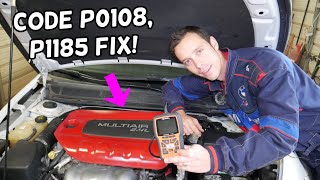
Est. part cost: $0 (software) - Faulty Manifold Absolute Pressure (MAP) Sensor 🔴 High Probability The MAP sensor is a critical input for the correlation check and is the most common hardware failure. It is exposed to engine heat and vibration, making it a common failure point over time. This is a frequent cause when the code appears with P0108. 🎬 Watch: How to fix codes P0108 and P1185 on your Dart.
How to confirm: A mechanic can use a scan tool to monitor the MAP sensor's live data for erratic or out-of-range readings. It can also be tested with a vacuum pump and multimeter. A visual inspection for oil contamination is also recommended.
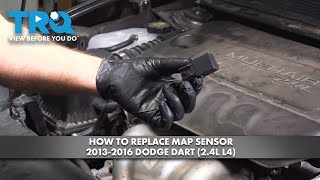
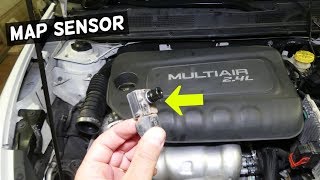
Typical fix: Replace the MAP sensor. On the 2.4L engine, it is located on the back of the intake manifold and can be accessed from underneath the vehicle. It requires a 90-degree counter-clockwise turn to remove after unplugging.
Est. part cost: $30-$80 - Wiring or Connector Issue 🟡 Medium Probability The wiring harness to the MAP sensor can become brittle or damaged from engine heat and vibration, leading to a poor connection. The connector's locking tab can also break, causing a loose fit.
How to confirm: Visually inspect the MAP sensor's connector and wiring for any signs of damage, corrosion, or loose pins. Wiggle the connector while the engine is running to see if it affects engine behavior. Check for a secure click when plugging it in.
Typical fix: Repair the damaged section of wiring or replace the connector pigtail. Pigtail repair kits are available.
Est. part cost: $15-$30
Rare But Worth Checking
- Faulty Variable Valve Timing (VVT) Solenoid: The TSBs list P1185 alongside oil supply solenoid codes (e.g., P106C). A malfunctioning VVT system, often due to dirty oil or a failed solenoid, could cause intake pressure readings that the PCM deems implausible, indirectly triggering P1185.
- Vacuum Leak: TSB #18-023-16 REV. D also lists P2172 - High Airflow/Vacuum Leak Detected as a related code fixed by the software update. A significant vacuum leak could cause the MAP sensor readings to be out of the expected range, triggering the P1185 correlation fault.
Diagnosis Steps
- Check for TSBs: The first and most important step is to determine if your vehicle's VIN is covered by TSBs #18-009-16, #18-023-16, or #18-022-17. A dealership can confirm this. If the update has not been performed, a PCM reflash is the manufacturer's recommended first step.
- Scan for Other Codes: Use an OBD-II scanner to check for other codes. If P0108 is present, it strongly suggests a fault with the MAP sensor or its circuit.
- Inspect MAP Sensor Wiring: Visually inspect the MAP sensor connector and its wiring harness for any signs of cracks, melting, or corrosion. Ensure the connector is securely plugged in and the locking tab is intact.
- Analyze Live Data: Use a capable scan tool to monitor the live data from the MAP sensor. Check if the reading changes smoothly with engine RPM and throttle input. At idle, it should read a low voltage/pressure, which increases as the throttle opens. Compare this to the barometric pressure reading with the key on, engine off; they should be similar.
- Test the MAP Sensor: If the readings are suspect, remove the sensor. On the 2.4L, this is done from under the car by turning the sensor 90 degrees counter-clockwise. Test it with a hand-held vacuum pump and a multimeter to verify its output matches its specifications. 🎬 See this step-by-step 2.4L MAP sensor replacement walkthrough.
- Replace the MAP Sensor: If the sensor fails testing, is visibly contaminated with oil, or if the code persists after a software update has been performed, replace the MAP sensor.
- Clear Codes and Test Drive: After any repair, clear the DTCs and perform a test drive, including cold starts and acceleration, to ensure the code does not return.
Parts You'll Likely Need
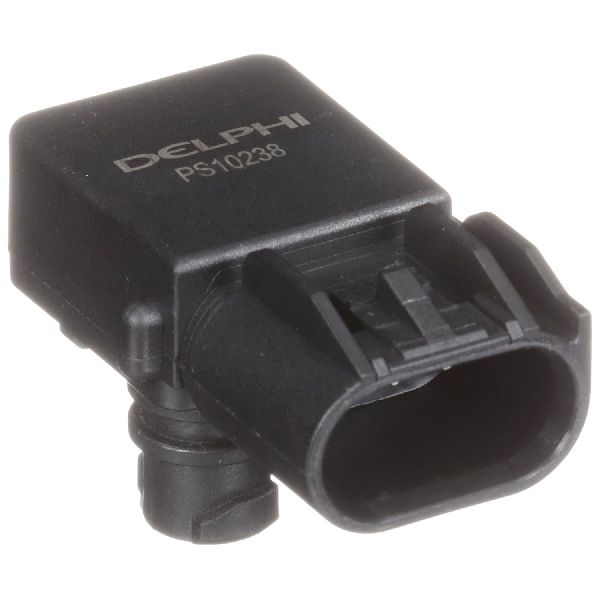
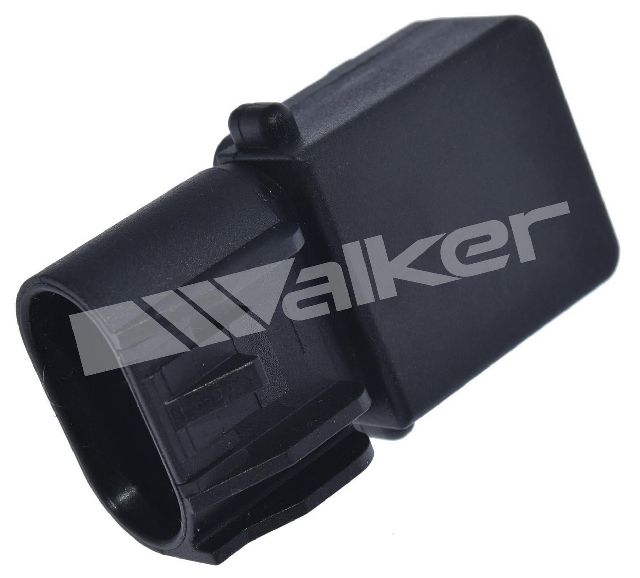
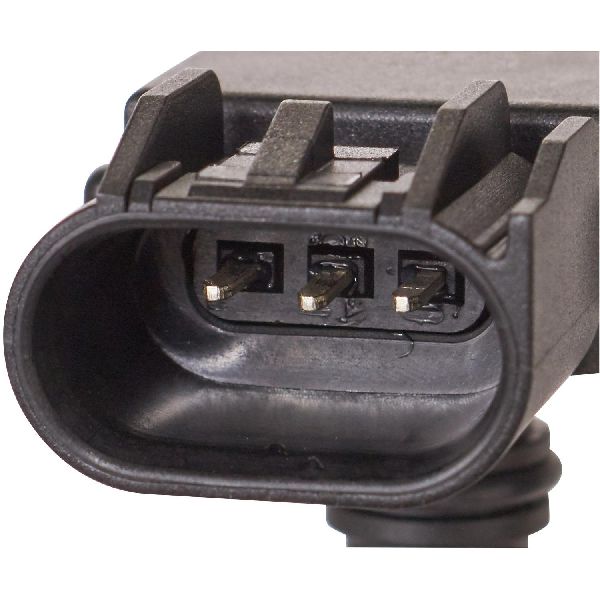
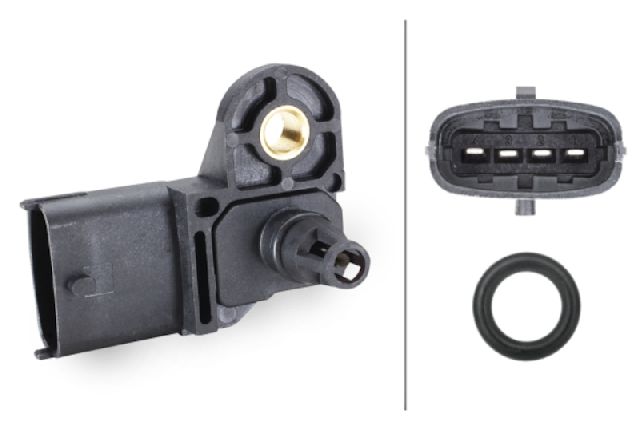
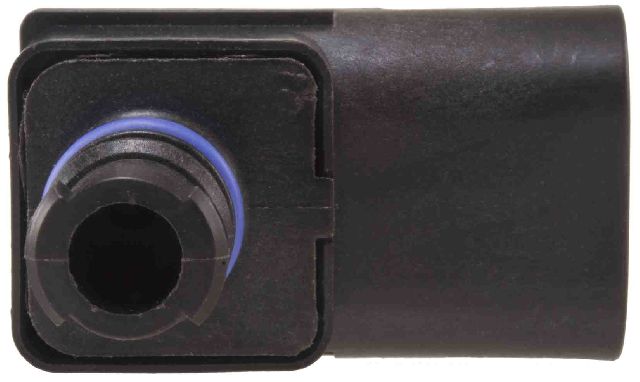
- Manifold Absolute Pressure (MAP) Sensor
(OEM #68199324AB (supercedes 5033310AC, 68199324AA))— This sensor is the most common hardware component to fail and cause the P1185 code, often in conjunction with P0108.
Trusted brands: Mopar, Bosch, Standard Motor Products (SMP), Delphi
OEM price range: $50-$85
Aftermarket price range: $30-$60
Related Codes That Often Appear With This One
- P0108 — Stands for 'Manifold Absolute Pressure / Barometric Pressure Circuit High'. This code directly points to a problem with the MAP sensor circuit and is very commonly seen with P1185, as the MAP sensor is the primary component in the correlation check.
- P050D — Stands for 'Cold Start Rough Idle'. This is a symptom that can be caused by the same software issue or faulty sensor that triggers P1185, as noted in TSB #18-023-16.
- P106C — Stands for 'Cylinder 4 Oil Supply Solenoid Valve Switch Off Time Out Of Range'. Its inclusion with P1185 in TSBs suggests the PCM's correlation logic may involve cross-checks with the VVT/MultiAir oiling system.
- P0456 — Stands for 'Evap System Small Leak'. This code is frequently listed in the same TSBs as P1185, indicating it is another fault corrected by the same PCM software update.
Technical Service Bulletins (TSBs) & Recalls
- 18-009-16 REV. B: Mentions P1185 as one of several codes addressed by a PCM software update for the 2016 Dart 2.4L.
- 18-023-16 REV. D: Lists P1185 as a code fixed by a PCM reflash for 2013-2015 Darts with the 2.4L engine.
- 18-023-16 REV. C: An earlier revision of the above TSB, also citing P1185 as being resolved by a software update.
- 18-022-17 REV. A: Supersedes an earlier TSB and includes P1185 for 2013-2015 Darts, again pointing to a PCM flash.
- 18-051-16 REV. B: While for the Chrysler 200, it shows the same P1185 code on the same 2.4L engine is fixed by a PCM flash, confirming the platform-wide nature of the issue.
Platform-Specific Known Issues
- A primary issue for the 2013-2016 Dart is that the original PCM software logic was flawed, leading to false positives for P1185. FCA released multiple TSBs (e.g., 18-023-16 REV. D) to fix this via a software update.
- The 2.4L MultiAir engine is known for oil consumption issues, which can lead to low or dirty oil. This condition can potentially cause VVT system faults, which may indirectly trigger a P1185 code if the engine's pressure state becomes implausible to the PCM.
Mechanic-Grade Diagnostic Values
- MAP Sensor 5V Reference — expected: Approximately 5.0 Volts DC with key on, engine off.. Failure: Voltage is below 4.9V or is absent. This indicates a wiring or PCM issue, not a sensor failure.
- MAP Sensor Ground Circuit — expected: Less than 0.1 Volts (100 millivolts).. Failure: Voltage significantly higher than 0.1V indicates a poor ground connection, which can skew sensor readings.
- MAP Sensor Signal Voltage (Key On, Engine Off) — expected: 4.5V - 4.7V DC. This reflects atmospheric pressure.. Failure: Voltage is significantly different, or does not match the BARO sensor reading on a scan tool.
- MAP Sensor Signal Voltage (Engine Idling) — expected: 1.0V - 1.8V DC. This reflects high engine vacuum at idle.. Failure: Voltage is stuck high (near the KOEO reading) or does not respond smoothly as the throttle is pressed.
- MAP Sensor Vacuum Pump Test (Bench Test) — expected: Voltage should decrease smoothly as vacuum is applied. At 0 in. Hg: ~4.7V; 5 in. Hg: ~3.9V; 10 in. Hg: ~3.0V; 15 in. Hg: ~2.1V; 20 in. Hg: ~1.2V.. Failure: Voltage does not change, or jumps erratically, as vacuum is applied and released.
Scan Tool Commands That Help
- wiTECH (OEM Tool): PCM Reprogramming/Flash — This is the first step in diagnosis if the vehicle's software is outdated, as per multiple TSBs. It corrects overly sensitive diagnostic logic that can falsely trigger P1185.
- wiTECH (OEM Tool): Network Test (Bus Diagnostics) — Useful for diagnosing intermittent U-codes that may appear alongside P1185, this function checks for communication errors between all vehicle control modules.
- wiTECH or advanced aftermarket scanner: MAP Sensor Live Data Monitoring — Observe the MAP sensor voltage while snapping the throttle. A healthy sensor will show voltage change from below 2.0V at idle to above 3.5V at wide-open throttle, confirming its responsiveness.
Wiring & Ground Locations
- MAP Sensor Location — On the back of the intake manifold, facing the firewall. It is typically accessed from underneath the vehicle on the 2.4L engine.. This is the primary sensor involved in the P1185 code. Its location makes it susceptible to heat and vibration, and difficult access can lead to poor connections during other repairs.
- PCM Location (2.4L) — Left front of the engine compartment.. This is the location of the Powertrain Control Module that receives the signal from the MAP sensor. All sensor wiring terminates here, making it a central point for advanced circuit testing.
- G109 — Left side of the engine compartment, on the wheel well.. This is a major engine compartment ground point. A loose or corroded G109 could potentially cause erratic sensor readings, including for the MAP sensor, leading to correlation codes.
Real Owner Repair Stories
- YouTube channel 'Electrical Car Repair LIVE' (2015 Dodge Dart with 2.4L MultiAir engine) — Check Engine Light on with codes P0108 (Manifold Absolute Pressure / Barometric Pressure Circuit High) and P1185 (General Pressure Sensor Correlation).
❌ Tried (didn't work) The video immediately identifies the MAP sensor as the likely culprit, noting that checking the connector first is important.
✅ What actually fixed it Replacing the Manifold Absolute Pressure (MAP) sensor. After replacement and clearing the codes, the Check Engine Light remained off during a test start.
OEM Part Supersession History
5033310AC, 5149091AA, 68199324AA→68199324AB— Part has been updated by the manufacturer over time for improved reliability or to consolidate inventory.
Model Year Variations Within This Range
- 2013-2015 vs. 2016: Different TSBs apply to different model year ranges (e.g., TSB 18-023-16 for '13-'15, TSB 18-009-16 for '16), indicating different software baselines from the factory that require specific update packages.
- 2013 vs. 2014+: In 2014, the 2.4L engine (most affected by this code) became standard on more trims like the SXT and Limited, whereas in 2013 it was mainly on the GT. This increases the prevalence of this code on non-GT models from 2014 onward.
Helpful Videos
We Have This Part in Stock


The information in this article is provided for general reference and educational purposes only. Vehicle specifications, procedures, and part compatibility can vary by production date, trim level, and region. Always consult your vehicle's factory service manual and verify part numbers before purchasing or performing repairs. Safety-critical components such as airbags, seat belts, and braking systems should be installed by a qualified professional.
- Dodge DART:
- 🎬 Helpful Videos
- 🛍️ Shop This Part
- What's Unique About the 2013-2016 Dodge DART
- Diagnostic Flowchart
- Symptoms You May Notice
- Most Likely Causes
- Rare But Worth Checking
- Diagnosis Steps
- Parts You'll Likely Need
- Related Codes That Often Appear With This One
- Technical Service Bulletins (TSBs) & Recalls
- Platform-Specific Known Issues
- Mechanic-Grade Diagnostic Values
- Scan Tool Commands That Help
- Wiring & Ground Locations
- Real Owner Repair Stories
- OEM Part Supersession History
- Model Year Variations Within This Range
- 🎟️ Get 5% Off