

P1185 on 2015-2016 Chrysler 200: General Pressure Sensor Correlation Causes and Fixes
On a 2015-2016 Chrysler 200 with the 2.4L engine, code P1185 is overwhelmingly caused by outdated Powertrain Control Module (PCM) software. Chrysler released multiple Technical Service Bulletins (TSBs) for this, making a dealer software update the primary fix. If the software is current, the next most likely cause is a failed Manifold Absolute Pressure (MAP) sensor, which is located on the back of the intake manifold.
- For a 2015-2016 Chrysler 200, P1185 is almost always a software issue, not a bad part.
- Your first step should be to contact a Chrysler dealer to see if your vehicle needs a PCM software update, as specified in multiple TSBs.
- Do not replace the fuel pressure sensor; this code relates to the Manifold Absolute Pressure (MAP) sensor.
- If a software update doesn't fix it, the MAP sensor itself is the next most likely culprit.
What's Unique About the 2015-2016 Chrysler 200
The 2015-2016 Chrysler 200, particularly with the 2.4L MultiAir engine, is highly prone to this code due to flaws in the original factory software. Chrysler (FCA) released multiple Technical Service Bulletins (TSBs), such as 18-023-16 and 18-051-16, to address this specific issue. The recommended repair is not to replace a part, but to reprogram the PCM with updated software that refines the sensor correlation logic. This makes checking for a software update the most critical first step, distinguishing it from many other vehicles where a sensor fault would be the immediate suspect.
Diagnostic Flowchart
Tap your situation to follow the diagnostic path that matches what you're seeing on this vehicle.
Symptoms You May Notice
- Check Engine Light (MIL) is on
- Rough idle, especially during a cold start. [Bulletin #18-023-16]
- Poor or hesitant acceleration. [Bulletin #18-023-16]
- Reduced engine performance
- Decreased fuel economy
- Erratic engine behavior or stalling in some cases
- Replacing the fuel pressure sensor. Some generic code definitions incorrectly link P1185 to fuel pressure, but on this Chrysler, it relates to air pressure sensors (MAP/BARO).
- Replacing the MAP sensor without first checking for a required PCM software update. This is the most common mistake, leading to the code returning.
Most Likely Causes
- Outdated Powertrain Control Module (PCM) Software 🔴 High Probability Numerous TSBs were released by Chrysler to correct overly sensitive or flawed software logic that incorrectly triggers this code. TSBs 18-023-16 and 18-051-16 specifically call out P1185 as being resolved by a PCM reflash.
How to confirm: A Chrysler dealership or a qualified independent shop with a wiTECH scan tool can check the current software calibration ID against the latest available version for your vehicle's VIN.
Typical fix: Reprogramming (flashing) the PCM with the latest manufacturer software. This is typically a 1-hour labor charge at a dealership. 🎬 Watch: See how a technician reflashes a Chrysler PCM.
Est. part cost: $0 - Faulty Manifold Absolute Pressure (MAP) Sensor 🟡 Medium Probability The MAP sensor provides the critical intake manifold pressure reading for the correlation check. Like any sensor, it can fail, become contaminated with oil, or degrade over time, providing incorrect readings that conflict with the BARO sensor.
How to confirm: Using a scan tool, check the MAP sensor reading with the Key On, Engine Off (KOEO). It should match the Barometric Pressure (BARO) reading and local atmospheric pressure. If the reading is stuck high or low, or doesn't change when the engine is started, the sensor is likely bad.
Typical fix: Replace the MAP sensor. It is located on the back of the intake manifold and can be difficult to access.
Est. part cost: $30-$80 - Wiring or Connector Issue ⚪ Low Probability The MAP sensor is located on the back of the intake manifold, and its wiring can be subject to heat and vibration, potentially leading to loose connections, chafing, or corrosion at the connector.
How to confirm: Visually inspect the MAP sensor's wiring harness and connector for signs of damage, corrosion, or loose pins. Wiggle the connector with the engine running to see if it affects idle.
Typical fix: Repair the damaged wiring or replace the connector pigtail.
Est. part cost: $10-$30
Rare But Worth Checking
- Faulty Powertrain Control Module (PCM): While rare, the PCM itself can fail. The internal BARO sensor can fail, or the driver circuit for the MAP sensor can malfunction. This should only be considered after all other possibilities, including software updates and sensor/wiring issues, have been exhaustively ruled out.
- Vacuum Leak: A significant vacuum leak from a cracked hose or faulty intake manifold gasket could theoretically cause the MAP sensor reading to be irrational at idle, but this would typically be accompanied by other codes like P2172 (High Airflow/Vacuum Leak Detected).
Diagnosis Steps
- Check for TSBs: First, verify with a dealer or using an online service if TSB #18-023-16, #18-051-16, or any superseding bulletin applies to your vehicle's VIN. This is the most critical first step.
- Perform PCM Update: If a software update is available, have it performed by a dealer or qualified shop with a wiTECH tool. This is the most common fix and should be done before replacing any parts. The cost is typically one hour of labor.
- Scan Tool Analysis: If the code returns after the update, connect a scan tool. With Key On, Engine Off (KOEO), compare the MAP sensor and BARO sensor readings. They should be within 0.5 psi (1 inHg) of each other.
- Inspect MAP Sensor and Wiring: Turn the vehicle off. Locate the MAP sensor on the rear of the intake manifold. It can be hard to see and reach. Inspect its electrical connector for a secure fit and look for any signs of damage, corrosion, or frayed wires in the harness.
- Test the MAP Sensor Circuit: If the wiring looks okay, use a multimeter to check for 5V reference, a good ground, and a signal wire that changes voltage with vacuum at the sensor connector.
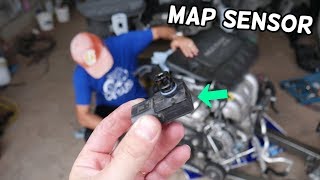
- Replace MAP Sensor: If the sensor is determined to be faulty (e.g., stuck reading, no output), replace it. The Mopar part number is 68199324AB. 🎬 See this walkthrough for locating and replacing the MAP sensor. To remove it, you must turn it 90 degrees counter-clockwise before pulling it out to avoid breaking the intake manifold.
- Clear Codes and Test Drive: After replacement, clear the codes with a scan tool and perform a test drive to ensure the code does not return.
Parts You'll Likely Need
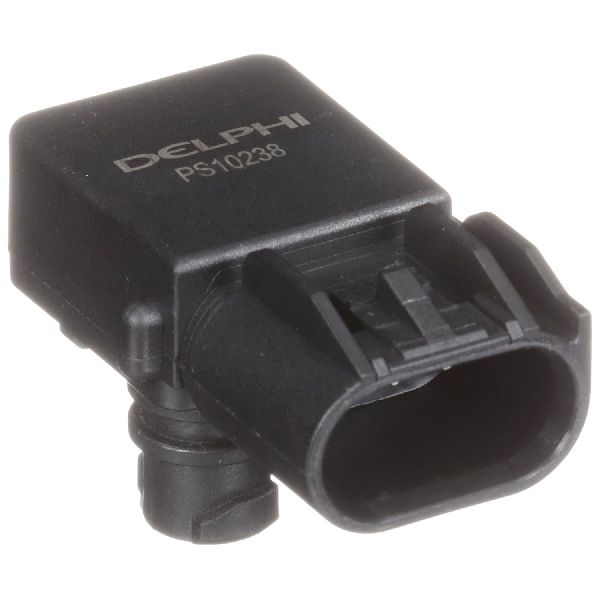
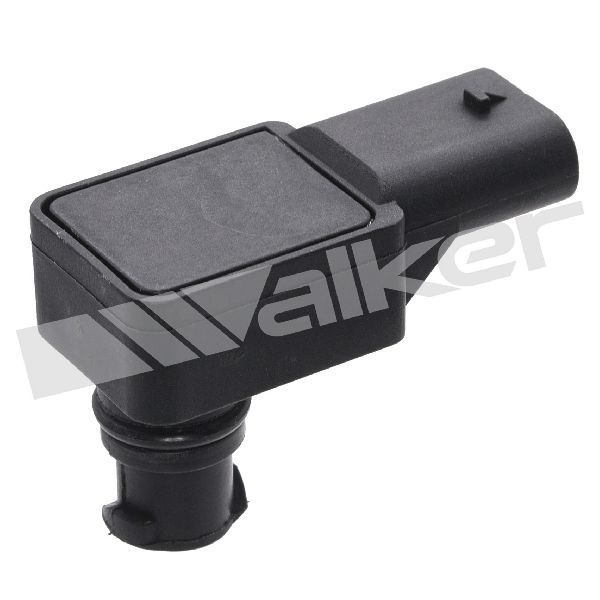
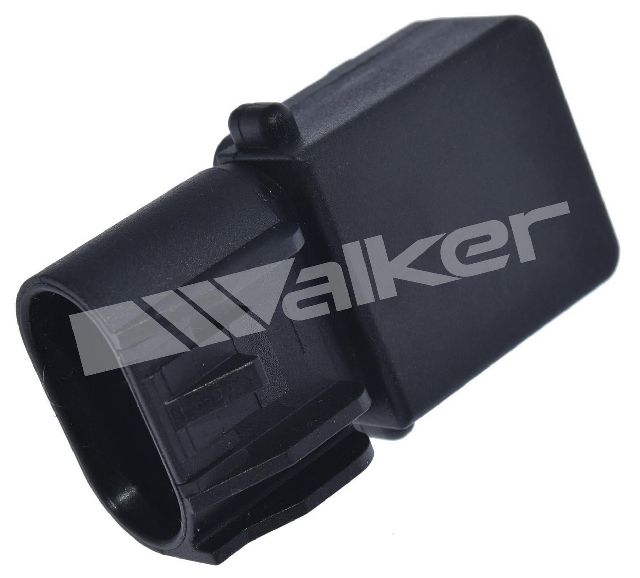
- Manifold Absolute Pressure (MAP) Sensor
(OEM #68199324AB)— This is the most likely physical component to fail if a PCM software update does not resolve the issue. It provides one of the key pressure readings that the PCM correlates.
Trusted brands: Mopar, Bosch, Standard Motor Products (SMP), NTK
OEM price range: $60-$100
Aftermarket price range: $30-$80
Related Codes That Often Appear With This One
- P0101 — Mass Air Flow Sensor Performance; often included in the same TSBs for software updates, indicating a related software logic issue. [Bulletin #1805116]
- P050D — Cold Start Rough Idle; a direct symptom that the PCM software updates are designed to fix. [Bulletin #18-023-16]
- U0401 — Implausible Data Received From ECM/PCM; points to communication or data rationality faults that are often software-based. [Bulletin #18-023-16]
- P0456 — EVAP System Small Leak; frequently listed in the same TSBs for PCM updates, suggesting a bundled software fix. [Bulletin #18-023-16]
- P0133 — O2 Sensor 1/1 Slow Response; another code addressed by the same PCM software updates. [Bulletin #18-023-16]
- P0108 — Manifold Absolute Pressure / Barometric Pressure Circuit High; A more specific MAP sensor code that can trigger P1185 as a secondary, correlation fault. 🎬 Watch: How to fix codes P0108 and P1185 on Chrysler engines.
Technical Service Bulletins (TSBs) & Recalls
- 18-051-16 REV. B: Lists P1185 - General Pressure Sensor Correlation along with other DTCs addressed by a software update for 2016 models.
- 18-023-16 REV. C: Mentions P1185 as a code that can be resolved by a PCM software update intended to improve vehicle acceleration and fix rough idle on 2015 models.
- 18-014-17: A similar TSB for the Jeep Cherokee with the same 2.4L engine, also listing P1185 as being fixed by a PCM flash.
- 18-063-17 REV. A: TSB for the Ram ProMaster City with the 2.4L engine, again citing P1185 as a code fixed by a software update.
Platform-Specific Known Issues
- A high volume of Technical Service Bulletins (e.g., #18-051-16, #18-023-16) were issued by Chrysler for the 2015-2016 Chrysler 200 with the 2.4L engine, specifically calling for a PCM software update to resolve P1185 and other related codes.
- The 2.4L Tigershark MultiAir engine in this platform is also known for other issues like excessive oil consumption, which owners should be aware of.
Mechanic-Grade Diagnostic Values
- MAP Sensor 5V Reference Voltage — expected: Approximately 5.0 Volts. Failure: A reading of 0V or significantly less than 5V indicates a wiring issue or a problem with the PCM's 5V reference circuit.
- MAP Sensor Ground Circuit — expected: Less than 0.1 Volts (100 millivolts). Failure: A voltage higher than 0.1V indicates a poor ground connection, which can skew sensor readings.
- MAP Sensor Signal Voltage (Key On, Engine Off) — expected: Approximately 4.5 - 5.0 Volts. Failure: A voltage significantly lower than this range indicates a faulty sensor or a wiring issue. This reading should reflect barometric pressure.
- MAP Sensor Signal Voltage (Engine Running at Idle) — expected: 1.0 - 2.0 Volts (A specific example cites 1.4V - 1.8V as a good range). Failure: Voltage that remains high (near the KOEO reading) or is too low (below 1.0V) at idle suggests the sensor is not reading engine vacuum correctly. A reading above 4.4V may trigger a P0108, while a reading below 0.6V may trigger a P0107.
Wiring & Ground Locations
- Engine Ground Strap — A primary ground strap connects from the engine block to the top of the passenger-side (right side) engine mount, which is then bolted to the chassis.. This is a critical ground path for the engine and its sensors. Corrosion (often appearing as green buildup) on this strap can cause intermittent and strange electrical issues, including faulty sensor readings that could contribute to correlation codes like P1185.
- PCM Location — Located on the passenger side (right side) of the engine bay, near the battery and fuse box.. The PCM houses the internal barometric pressure sensor and provides the power, ground, and signal processing for the MAP sensor. Knowing its location is necessary for any circuit testing at the PCM connectors.
Real Owner Repair Stories
- YouTube channel 'Electrical Car Repair LIVE' (2015 Dodge Dart with 2.4L MultiAir engine (same engine family as the Chrysler 200)) — Check Engine Light with codes P0108 (Manifold Absolute Pressure / Barometric Pressure Circuit High) and P1185 (General Pressure Sensor Correlation).
❌ Tried (didn't work) The video directly proceeds to replacing the sensor as the likely cause.
✅ What actually fixed it Replacing the Manifold Absolute Pressure (MAP) sensor. After replacing the sensor and clearing the codes, the P1185 code did not return upon restarting the engine and re-scanning for pending codes.
OEM Part Supersession History
5033310AC, 5149091AA, 68199324AA→68199324AB— Part has been updated or revised by the manufacturer over time. The newest part number is generally the most reliable version.
Helpful Videos
We Have This Part in Stock


The information in this article is provided for general reference and educational purposes only. Vehicle specifications, procedures, and part compatibility can vary by production date, trim level, and region. Always consult your vehicle's factory service manual and verify part numbers before purchasing or performing repairs. Safety-critical components such as airbags, seat belts, and braking systems should be installed by a qualified professional.
- Chrysler 200:
- 🎬 Helpful Videos
- 🛍️ Shop This Part
- What's Unique About the 2015-2016 Chrysler 200
- Diagnostic Flowchart
- Symptoms You May Notice
- Most Likely Causes
- Rare But Worth Checking
- Diagnosis Steps
- Parts You'll Likely Need
- Related Codes That Often Appear With This One
- Technical Service Bulletins (TSBs) & Recalls
- Platform-Specific Known Issues
- Mechanic-Grade Diagnostic Values
- Wiring & Ground Locations
- Real Owner Repair Stories
- OEM Part Supersession History
- 🎟️ Get 5% Off