

OBD-II Code P1181: Comprehensive Guide to Fuel System, O2 Sensor & TPMS Faults
What P1181 means, why it triggers, and how to fix it on your GM, Hyundai, Kia, Saab, BMW, VW, or Ford.
- P1181 requires manufacturer-specific diagnosis: it indicates a fuel system issue on GM/Hyundai, a vacuum leak on Saab, an O2 sensor fault on BMW/VW, or a TPMS problem on Ford.
- Always verify your vehicle's exact P1181 definition using an OBD-II scanner before buying parts, as misdiagnosis guarantees wasted money.
- Stop driving immediately if you experience stalling or hard starting with a fuel-related P1181 code, as the ECU will intentionally shut off the engine to prevent catastrophic damage.
- Check the cheapest fixes first: a $20 cracked vacuum hose on a Saab or a $40 clogged fuel filter on a GM resolves over 50% of P1181 codes.
- Ignoring a rich-running P1181 condition destroys the catalytic converter within 3 to 6 months, turning a $150 sensor replacement into a $2,500 exhaust repair.
What Does P1181 Mean?

P1181 is a manufacturer-specific code with entirely different definitions depending on your vehicle. On General Motors, Hyundai, and Kia vehicles, it indicates a fuel delivery system malfunction, usually excessively high pressure. On Saab, it points to a severe lean air/fuel mixture caused by a vacuum leak. On BMW and Volkswagen, it indicates a failed Oxygen (O2) sensor. On Ford vehicles, it indicates either a Tire Pressure Monitoring System (TPMS) fault or a fuel delivery issue.
Technical definition: The SAE/ISO definition for P1181 varies by manufacturer. Common definitions include Fuel Delivery System Malfunction - High (General Motors, Ford), Fuel Pressure Monitoring Malfunction (Hyundai/Kia), Long Term Fuel Trim Additive Max Value / Air/Fuel too Lean (Saab), TPMS Receiver RF Circuit (Ford), O2 Sensor Signal Circuit Slow Switching From Rich to Lean (BMW), and Linear Oxygen Sensor Reference Voltage Open Circuit (Volkswagen).
Can I Drive With P1181?
No — Do Not Drive. Do not drive. For fuel-related issues on GM and Hyundai models, continued driving causes sudden engine stalling, creating a major safety risk in traffic. On Hyundai/Kia diesels, the ECU intentionally shuts the engine off as a fail-safe. Ignoring a fuel or O2 sensor fault forces a rich condition, which overheats and destroys the catalytic converter, resulting in a $2,500 repair.
Common Causes

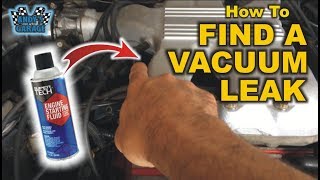
- Vacuum Leak (Saab) (Very Common) — On Saabs, unmetered air entering through cracked PCV or brake booster vacuum hoses causes a severe lean condition, maxing out the fuel trims. 🎬 Watch: Identifying common Saab vacuum leaks causing P1181.
- Clogged Fuel Filter (GM, Hyundai/Kia) (Very Common) — Dirt and debris restrict fuel flow, forcing the fuel pump to overwork and causing severe pressure abnormalities.
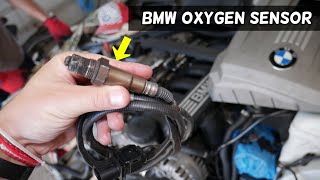
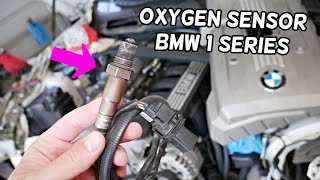
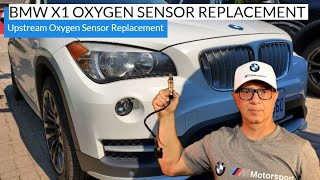
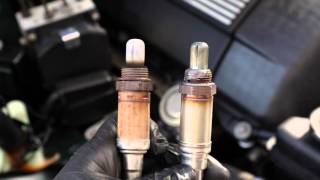
- Faulty Oxygen (O2) Sensor (BMW & Volkswagen) (Common) — On BMW and VW models, P1181 indicates a slow-responding O2 sensor, a failed internal heater circuit, or an open wiring circuit.
- Failing Fuel Pump or Fuel Pump Relay (Common) — A worn in-tank fuel pump or relay fails to provide correct pressure, causing stalling, hard starting, or a complete no-start condition.
- Faulty Fuel Pressure Regulator or Sensor (Common) — A failed regulator or sensor sends incorrect data to the ECU, resulting in excessively high or low fuel rail pressure.
- Contaminated Fuel or HPFP Failure (Diesel) (Less Common) — Metallic particles from a failing high-pressure fuel pump (HPFP) contaminate the system, destroying injectors on diesel engines like the GM Duramax.
- Leaking or Clogged Fuel Injectors (Less Common) — A stuck-open or clogged injector disrupts fuel pressure and the air/fuel balance, a frequent failure point on high-mileage diesels.
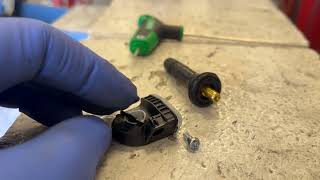
- Faulty TPMS Components (Ford) (Less Common) — On specific Ford models, P1181 indicates a dead Tire Pressure Monitoring System sensor battery or a faulty receiver module. 🎬 Watch: How to diagnose and replace Ford TPMS sensors.
Symptoms
- Check Engine Light is On — The ECU detects a fault and illuminates the dashboard warning light.
- Engine Stalls, is Hard to Start, or Will Not Start — The engine cuts out under load, cranks excessively, or fails to start due to fuel starvation.
- Poor Engine Performance and Hesitation — Incorrect fuel pressure or a faulty O2 sensor causes hesitation, sputtering, surging, or jerking during acceleration.
- Reduced Fuel Economy and/or Strong Fuel Smell — High fuel pressure forces a rich running condition, wasting gas and creating a strong raw fuel smell from the exhaust.
- TPMS Warning Light (Ford only) — On Ford models, the tire pressure warning light illuminates instead of engine performance issues.
Diagnostic Flowchart

Tap your situation to follow the diagnostic path that matches what you're seeing on this code.
Common Fixes & Costs
- Repair Vacuum Leak (Replace Hoses)
— Parts: $10-$60, Labor: $100-$300, ~2 hr book time
(DIY)
Saab 9-3 / 9-5: OEM 9188336 (PCV Nipple), 55560441 (PCV Hose) (Alt: eSaabParts Silicone Hose Kit) - Replace Fuel Filter
— Parts: $20-$80, Labor: $80-$160, ~1.5 hr book time
(DIY)
Chevrolet Silverado (2011-2016 Duramax): OEM GM TP3018 / ACDelco TP3018 (Alt: Wix WF10112, Baldwin BF7967) - Replace Oxygen (O2) Sensor (BMW/VW)
— Parts: $75-$250, Labor: $100-$320, ~1 hr book time
(Intermediate)
BMW 3-Series E46 (prod. after 03/2003): OEM BMW 11787514927 (Bank 2, Post-Cat) (Alt: Bosch 15681)
Volkswagen Jetta (1999-2005 1.8T): OEM VW 06A906262AN (Bank 1, Sensor 1) (Alt: Bosch 17014) - Replace Fuel Pressure Sensor
— Parts: $60-$200, Labor: $85-$270, ~1.2 hr book time
(Intermediate)
Hyundai Santa Fe (2013-2018 2.4L/2.0T): OEM Hyundai 31435-2J000 (Alt: Standard Motor Products AS528) - Replace Fuel Pressure Regulator — Parts: $50-$250, Labor: $100-$250, ~1.5 hr book time (Intermediate)
- Replace In-Tank Fuel Pump
— Parts: $300-$900, Labor: $300-$700, ~2.5 hr book time
(Professional)
GMC Sierra 1500 (2007-2013): OEM GM 19369800 / ACDelco M10099 (Alt: Delphi FG0815) - Replace TPMS Sensor (Ford)
— Parts: $40-$185, Labor: $50-$125, ~0.5 hr book time
(Professional)
Ford Focus (2012-2018): OEM Ford DE8T-1A180-AA (Alt: Schrader 20398)
DIY vs Professional
- Replace Fuel Filter — Beginner:
Tools: Wrench set, pliers, drain pan, safety glasses, fuel line disconnect tool. - Repair Vacuum Leak (Replace Hoses) — Beginner:
Tools: Pliers, screwdriver, flashlight. - Replace Oxygen (O2) Sensor — Beginner:
Tools: Ratchet, penetrating oil, 22mm O2 sensor socket. - Replace Fuel Pressure Sensor — Beginner:
Tools: Wrench set, rags, safety glasses. - Replace In-Tank Fuel Pump — Beginner:
Tools: Full socket set, floor jack, jack stands, fuel siphon, fuel tank locking ring tool.
Used vs. New Parts: Buying Guide
When a used part is worth it: Never buy used O2 or fuel pressure sensors due to their limited lifespan. A used fuel pump assembly from a low-mileage donor vehicle is a viable budget option.
Donor-vehicle mileage cap: roughly under 60000 miles for the part to have meaningful remaining life.
Donor quality checklist:
- Verify the part number matches exactly.
- For fuel pumps, ensure the donor vehicle was not scrapped due to a fuel system issue.
- Check for signs of corrosion or damage to connectors.
Decision logic:
- If The part is an O2 sensor or other electronic sensor → Buy new. The risk of premature failure on a used sensor is high, and the labor to replace it again negates any savings.
- If The part is a complete fuel pump assembly and the vehicle has over 150K miles → A used part from a low-mileage donor is a reasonable risk, but a new aftermarket unit often provides a better warranty for a similar price.
- If The part is safety-critical and labor-intensive to replace (e.g., in-tank fuel pump) → Favor a new OEM or high-quality aftermarket part to avoid the high cost of repeat labor.
Warranty tradeoff: Used parts from salvage yards typically have a 30-90 day warranty, covering the part only, not labor. New aftermarket parts often carry a 1-year to lifetime warranty. New OEM parts offer the best guarantee but at the highest price.
Worst-case if a used part fails: $500-$1000 if a used fuel pump fails after installation, factoring in repeat labor costs and the price of another pump.
What Happens If You Wait — Timeline
- 0-1 month: Check Engine Light illuminates. Fuel pressure issues cause occasional hard starting; O2 sensor faults show no immediate drivability symptoms. (MPG impact: 0-5%% · Added cost: $0)
- 1-3 months: A consistent rich condition drops fuel economy by 15%. The catalytic converter runs excessively hot, risking internal damage. (MPG impact: 5-15%% · Added cost: $50-$150 in wasted fuel.)
- 3-6 months: Sustained high temperatures melt the catalytic converter's internal substrate. The exhaust restricts, severely reducing engine power under load. (MPG impact: 10-20%% · Added cost: $1,000-$2,500)
- 6+ months: The catalytic converter blocks the exhaust entirely, preventing the engine from starting. On GM diesels, the CP4 pump disintegrates, requiring a $10,000 fuel system overhaul. (MPG impact: 20-50%+% · Added cost: $2,000-$15,000)
Cost of Not Fixing It
- 0-1 month: Reduced fuel economy (up to 20% drop), poor engine performance, and stalling. Failed emissions test is guaranteed. (Added cost: $20-$100 in wasted fuel.)
- 1-6 months: A rich-running fuel fault overheats and melts the catalytic converter, causing severe exhaust restriction and power loss. (Added cost: $1,000-$3,000+)
- Ongoing: A failing CP4 pump on a GM Duramax disintegrates, sending metal shrapnel through the entire fuel system. This requires replacing the pump, injectors, rails, and lines. (Added cost: $8,000-$12,000+)
Diagnosis Steps

- Identify Your Vehicle's Specific Code Definition
Use an OBD-II scanner to confirm the P1181 code definition for your specific make (GM, Hyundai, Saab, Ford, BMW, VW) to isolate the affected system. This is the most critical first step.
Tools: OBD-II Scanner (Beginner) - Perform a Thorough Visual Inspection
Inspect the fuel rail and injectors for leaks. On Saabs, check PCV and intake vacuum lines for cracks. On BMW/VW, check O2 sensor wiring for melted insulation or corrosion.
Tools: Flashlight (Beginner) - Perform a Smoke Test for Vacuum Leaks (Saab)
Introduce smoke into the intake system via a vacuum hose. Smoke instantly reveals hard-to-see cracked hoses or leaking intake manifold gaskets.
Tools: Smoke Machine (Intermediate) - Test Fuel Pressure (GM, Hyundai/Kia)
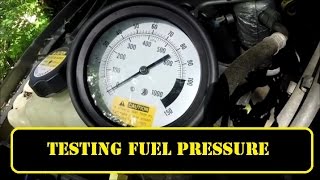
Connect a mechanical fuel pressure gauge to the fuel rail service port. Compare KOEO pressure to the service manual (typically 55-62 PSI for GM). If the mechanical gauge reads normal but the scanner reads high, replace the sensor.
Tools: Fuel Pressure Gauge, Service Manual, OBD-II Scanner (Intermediate) - Pro Tip: Test Oxygen Sensor (BMW & VW)
Graph the pre-catalyst O2 sensor voltage on a scan tool; it must fluctuate rapidly between 0.1V and 0.9V. Test the internal heater circuit resistance with a multimeter; infinite resistance means a dead sensor.
Tools: OBD-II Scanner with Live Data, Multimeter (Advanced) - Pro Tip: Test Fuel Pressure Sensor Circuit
Back-probe the fuel pressure sensor connector with a multimeter. Verify a 5V reference, a solid ground (<1 ohm), and a signal voltage (0.5V-4.5V) that matches the mechanical gauge pressure.
Tools: Multimeter, Back-probe kit (Advanced) - Pro Tip: Inspect Fuel for Contamination (Diesel)
Pull a fuel sample from the filter housing into a clear container. Use a magnet to check for metallic debris. Metal shavings confirm a destroyed high-pressure fuel pump (HPFP).
Tools: Wrench, Clear container, Magnet (Advanced) - Pro Tip: Perform an Injector Leak-Back Test (Diesel)
Disconnect the leak-off pipes from the injectors and attach measurement bottles. Crank the engine. An injector returning significantly more fuel than the others is leaking internally and requires replacement.
Tools: Injector leak-off test kit (Advanced)
When This Code Triggers (Freeze-Frame Conditions)
- Engine Coolant Temp: 170-220°F (Engine at full operating temperature.)
- RPM: 1500-2500 (Steady cruise or light acceleration.)
- Engine Load: 20-50% (Maintaining speed on a flat road or slight incline.)
- Fuel System Status: Closed Loop (The ECU is actively using sensor feedback to control fueling.)
Related Codes
- P0087 — Indicates 'Fuel Rail Pressure Too Low.' Differentiate from P1181 (High Pressure) using a mechanical gauge.
- P0171 — Indicates 'System Too Lean.' On Saabs, P1181 sets when the ECU maxes out fuel trims trying to correct a P0171 vacuum leak.
- P0191 — Indicates a sensor circuit fault. If a mechanical gauge reads normal but the scanner reads erratic, the sensor (P0191) failed, not the pump.
- P0088 — Generic 'Fuel Rail Pressure Too High.' Manufacturers use P1181 to provide more specific diagnostic criteria for high-pressure faults.
Climate & Environmental Factors
- Cold Weather: Freezing temperatures harden rubber components, instantly exposing vacuum leaks on Saab vehicles that sealed adequately in warm weather.
How to Talk to a Mechanic About This Code
Say this: "I have a P1181 code on my [Make, Model, Year]. Because this is a manufacturer-specific code, I need a diagnostic to confirm whether it indicates a fuel system, O2 sensor, or vacuum leak issue before authorizing repairs."
This proves you are an informed customer and forces the shop to verify the exact definition for your vehicle, preventing costly misdiagnosis.
Avoid saying:
- 'My check engine light is on, can you just fix it?'
- 'I think I need a new fuel pump.'
- 'Just do whatever you think is best.'
Questions to ask before authorizing the repair:
- Can you confirm the specific definition of P1181 for my vehicle?
- For a fuel issue: What were the readings from the mechanical pressure gauge versus the scan tool? Did you test the sensor and regulator before condemning the pump?
- For a vacuum leak: Did you perform a smoke test to find the leak? Can you show me the damaged hose?
- For an O2 sensor issue: Can I see the live data graph showing the sensor's slow response?
- For a GM Duramax: Did you check the fuel filter housing for metal shavings?
- Will you provide a written estimate that itemizes parts and labor before starting the work?
- What is the warranty on the proposed parts and labor?
Where to Take It: Dealer vs Independent vs Chain
- Dealer:
Recommended for warranty work or if a brand-specialist independent is unavailable. Their access to factory service bulletins is a major advantage for known issues.
Best for: Vehicles under warranty or with a potential safety recall (e.g., GM Duramax CP4 pump)., Complex, manufacturer-specific issues on German brands (BMW, VW) where specialized diagnostic tools are essential., If an independent shop has already failed to diagnose the problem correctly.
Downsides: Significantly higher labor rates, often 40-50% more than independent shops., May recommend replacing entire assemblies instead of smaller, failed components. (Typical cost: +40% vs. baseline) - Independent Shop:
Best overall fit, especially a brand-specialist. An experienced independent technician is more likely to have seen the various forms of P1181 and can diagnose it efficiently without the high overhead of a dealership.
Best for: Out-of-warranty vehicles where cost is a major factor., Shops that specialize in your vehicle's brand (e.g., a European auto specialist for Saab, BMW, VW) often have comparable expertise to a dealer at a lower cost., Common, well-documented P1181 causes like Saab vacuum leaks or GM fuel filters.
Downsides: Quality and diagnostic capabilities vary widely; look for ASE certification and positive reviews., May not have the latest, most expensive manufacturer-specific diagnostic software for very new models. (Typical cost: +0% vs. baseline) - Chain Shop:
AVOID for diagnosis. While they might be able to replace a simple part like a fuel filter or O2 sensor once it's been correctly diagnosed elsewhere, they are not the right choice for identifying the root cause of this particular code.
Best for: Simple, unrelated maintenance like oil changes or tire rotations.
Downsides: Technicians may lack the specific knowledge for a manufacturer-dependent code like P1181, leading to misdiagnosis (e.g., quoting a fuel system repair on a BMW)., High pressure to upsell services; may recommend unnecessary part replacements. (Typical cost: -10% vs. baseline)
When to Walk Away From the Repair
Sell or trade the vehicle if the estimated repair cost exceeds 50% of its current private-party value.
- Car worth $3000, fix is $250: Fix it. A vacuum hose repair on a Saab is a minor cost relative to the car's value.
- Car worth $4500, fix is $2500: Walk away. The repair cost is over 55% of the car's value. It's not a sound financial decision.
- Car worth $18000, fix is $10000: Borderline / Walk away. This represents a catastrophic failure (like a GM Duramax CP4 pump). The repair cost is over 55% of the vehicle's value. Before proceeding, check for any class-action settlement relief that may cover a portion of the cost.
What Scan Tool You Need for This Code
Minimum: A scanner that can read manufacturer-specific code definitions and display live data streams (e.g., fuel pressure, O2 sensor voltage).
A basic $20 code reader only displays 'P1181' without the manufacturer-specific definition. You must have live data capabilities to differentiate between a GM fuel problem and a BMW O2 sensor fault.
Budget: BlueDriver Pro (~$99) — Connects to your smartphone and provides manufacturer-specific code definitions, freeze-frame data, and live data graphing for O2 sensors and fuel pressure. This is enough to correctly diagnose the most common causes.
Mid-range: Foxwell NT510 Elite / Innova 5610 (~$180) — These handheld units offer OEM-level diagnostics for specific brands (Foxwell) or strong bi-directional controls (Innova). They allow you to not just read data, but actively test components, which is crucial for confirming a faulty sensor or module.
Professional: Autel MaxiCOM MK808 / XTOOL D7S (~$450-600) — These are professional-grade tablets that provide full bidirectional control, comprehensive live data, and access to all vehicle modules. They are essential for complex diagnostics like an injector leak-back test or analyzing fuel pump control module data.
Rent vs buy: For a one-time diagnosis, use the free loaner tool programs at stores like AutoZone or O'Reilly Auto Parts. You pay a deposit which is fully refunded upon return. Buy a scanner only if you plan to perform your own diagnostics regularly.
How to Clear the Code After You Fix It
- Use an OBD-II scan tool to clear the fault codes.
- Perform a complete drive cycle to allow readiness monitors to run.
- Check readiness monitor status with a scan tool before going for an emissions test.
Drive cycle (~20 minutes): A typical GM drive cycle involves a cold start (coolant temp below 122°F), 2-3 minutes of idling, gentle acceleration to 55 mph, holding that speed for 3-5 minutes, and then coasting down without using the brakes.
Readiness monitors affected: Catalyst Monitor, Oxygen (O2) Sensor Monitor, Fuel System Monitor, EVAP System Monitor
Before emissions retest: drive at least 50 miles to fully set monitors.
Watch out for:
- Disconnecting the battery clears the code but also resets all readiness monitors to 'Not Ready', guaranteeing an emissions test failure.
- The code will return immediately if the root cause was not fixed.
- The EVAP monitor is often the most difficult to set and requires fuel levels between 1/4 and 3/4 tank.
Will This Fail Emissions / State Inspection?
Yes — this code typically fails an OBD-II emissions inspection.
- California: An active Check Engine Light triggers an automatic smog check failure. You must complete a full drive cycle to set all readiness monitors before retesting.
- New York: An active Check Engine Light guarantees an automatic NYS emissions failure. Vehicles 2001 and newer require all but one readiness monitor to be set before passing.
- Texas: An active Check Engine Light is an automatic fail in emissions-testing counties. Vehicles 2001 and newer pass with a maximum of one 'Not Ready' monitor.
Most Commonly Affected Vehicles
- Chevrolet Silverado, Malibu, Impala, Equinox (1995-2017) — Indicates fuel delivery faults. On 2011-2016 LML Duramax engines, P1181 signals catastrophic CP4 high-pressure fuel pump failure, confirmed by metal shavings in the fuel filter.
- GMC Sierra, Yukon (1995-2017) — Mirrors Chevrolet issues. The 2011-2016 Sierra HD LML Duramax suffers from the same CP4 pump disintegration.
- Saab 9-3, 9-5 (1999-2011) — Triggered almost exclusively by vacuum leaks from aged rubber PCV hoses and brake booster lines, especially in cold climates.
- Hyundai Santa Fe, Tucson, Getz, Matrix (2003-2015) — On CRDi diesels, points to a fuel pressure monitoring malfunction caused by a failing low-pressure pump, HPFP, or leaking injector.
- Kia Sorento (2003-2017) — Triggers a fail-safe mode on 2.5L CRDi diesels, shutting the engine off in traffic if fuel pressure deviates from the target.
- BMW 3-Series (E46), 5-Series (E39), X-Series (1998-2006) — Indicates a failing post-catalyst oxygen sensor (Bank 2, Sensor 2). Check for SULEV warranty coverage extending replacement up to 15 years/150,000 miles.
- Volkswagen Jetta, Golf, Passat (1999-2010) — Indicates an electrical open circuit or failure in the pre-catalyst O2 sensor (Bank 1, Sensor 1).
- Ford Focus, various models (2005-2018) — Indicates either 'Fuel Delivery System - High' (Focus TDCi) or 'TPMS Receiver RF Circuit'. Verify the definition before diagnosing.
Manufacturer-Specific Notes

- General Motors: P1181 on 2011-2016 LML Duramax engines strongly indicates a self-destructing Bosch CP4 pump. Always check the fuel filter for metal shavings before replacing parts.
- Saab: A constant running electric vacuum pump with the key 'on' (engine off) confirms a massive vacuum leak, the primary cause of P1181.
- Hyundai / Kia: The ECU triggers a hard fail-safe, shutting the engine off while driving if fuel pressure deviates by 250-300 bar from the target.
- Ford: Ford uses P1181 for both 'Fuel Delivery High' and 'TPMS Receiver Circuit'. Scanning the specific module is mandatory to avoid diagnosing the wrong system.
- BMW: P1181 is strictly an O2 sensor code (Bank 2 Sensor 2 slow switching). Do not diagnose the fuel system.
- Volkswagen: P1181 is strictly an O2 sensor code (Bank 1 Sensor 1 open circuit). Do not diagnose the fuel system.
Real Owner Stories
2008 Saab 9-5 with P1181 (Lean Condition)
Check Engine Light appeared with code P1181. Car ran fine, but the owner knew this code on a Saab points to a lean mixture, often from a vacuum leak.
What they tried:
- Cleaned the Mass Airflow (MAF) sensor, but the code remained.
- Performed a visual inspection of all vacuum hoses in the engine bay.
Outcome: The owner discovered a cracked check valve on the brake booster vacuum hose. Replacing the $20 part resolved the vacuum leak and permanently cleared the code.
Lesson: On Saabs, P1181 is almost always a vacuum leak. A thorough visual inspection of all rubber hoses, especially around the brake booster and PCV system, reveals the problem without expensive tools.
2011 Chevy Silverado 2500HD (LML Duramax) with Fuel Pressure Codes
The Check Engine Light came on at 40,000 miles. The owner took it to the dealer, who immediately began looking for metal shavings in the fuel system.
What they tried:
- The dealer inspected the fuel for contamination as per a service bulletin related to CP4 high-pressure fuel pump failures.
Outcome: The fuel system was clean of metal debris. The actual failure was a faulty fuel pressure sender, saving the owner thousands in unnecessary CP4 pump repairs.
Lesson: While P1181 on an LML Duramax indicates catastrophic CP4 pump failure, it's not a guarantee. Checking for metal shavings is the correct first step, but the issue could be a less severe component like a sensor.
2001 Saab 9-3 with P1181 after other repairs
Immediately after having the fuel pump and Direct Ignition Cassette (DIC) replaced, the car threw a P1181 code and began smoking intermittently from the engine/exhaust area.
What they tried:
- The owner, frustrated with constant repairs, posted on a forum seeking advice.
Outcome: Forum members correctly identified that a vacuum hose was accidentally disconnected during the recent fuel pump replacement, triggering the lean code.
Lesson: If a new code appears immediately after a repair, the most likely cause is related to the work just performed. Re-inspect the area for disconnected hoses before starting a new diagnosis.
BMW E46 with P1181 - Misdiagnosis Story
A BMW owner with a P1181 code was told by a general repair shop that they needed a new fuel pump because P1181 is a 'fuel delivery system' code.
What they tried:
- The owner was skeptical and researched the code specifically for their BMW.
Outcome: The owner verified the BMW-specific definition: 'O2 Sensor Signal Circuit Slow Switching'. Replacing the failing post-catalyst oxygen sensor fixed the issue, avoiding a useless fuel pump replacement.
Lesson: Never assume the code's definition. Always verify it for your specific make and model before buying parts or authorizing repairs.
How to Prevent This Code From Triggering
- Use high-quality diesel fuel and a lubricity additive. (Every fill-up.) — Use high-quality diesel fuel and a lubricity additive every fill-up to prevent CP4 pump failure.
- Replace fuel filters on or before the recommended interval. (Every 15,000-20,000 miles.) — Replace fuel filters every 15,000 miles to prevent restrictions and protect sensitive high-pressure injectors.
- Replace upstream O2 sensors as a maintenance item. (Every 80,000-100,000 miles.) — Replace upstream O2 sensors every 100,000 miles to maintain accurate air-fuel ratios and protect the catalytic converter.
- Periodically inspect and replace aging vacuum hoses. (Inspect annually.) — Inspect and replace aging rubber vacuum hoses annually with silicone lines to prevent lean codes.
- Avoid running the fuel tank below 1/4 tank. (Daily habit.) — Keep the fuel tank above 1/4 full to cool the in-tank electric fuel pump and extend its lifespan.
Frequently Asked Questions
Can I fix a P1181 code myself?
Yes, replacing a cracked Saab vacuum hose, a fuel filter, or an accessible O2 sensor is highly manageable for DIYers. Stop DIY and tow to a professional if diagnosing complex diesel injection systems or dropping a fuel tank. Handling high-pressure fuel or heavy tanks poses severe safety risks.
What is the most common cause of P1181?
The cause depends entirely on the manufacturer. Saabs suffer from vacuum leaks, while GM and Hyundai vehicles typically have clogged fuel filters or failing pumps. BMW and VW models trigger this code for faulty oxygen sensors.
How much does it cost to fix P1181?
A simple vacuum hose repair costs under $50 in parts, while an O2 sensor replacement averages $200 to $400. Replacing a contaminated high-pressure diesel fuel system exceeds $8,000.
What are common misdiagnosis mistakes for P1181?
The biggest mistake is failing to verify the manufacturer-specific definition, leading to diagnosing the fuel system on a BMW instead of the O2 sensor. Another error is replacing an expensive fuel pump without testing the $40 fuel filter first.
My car is a BMW/VW and I have a P1181, but my fuel system seems fine. Why?
This is expected behavior. On BMW and VW models, P1181 strictly indicates an oxygen sensor failure, not a fuel system issue. Focus diagnostics entirely on the O2 sensors and their wiring harnesses.
Will P1181 cause my car to fail an emissions test?
Yes. An active Check Engine Light guarantees an automatic emissions test failure. The underlying rich/lean condition or faulty O2 sensor directly increases harmful exhaust pollutants.
Can a bad O2 sensor cause other damage?
Yes. A faulty O2 sensor forces the engine to run rich, dumping unburnt fuel into the exhaust. This overheats and melts the catalytic converter, turning a $200 sensor fix into a $2,500 exhaust replacement.
What does 'Fuel Trim' mean in relation to P1181 on a Saab?
Fuel trim is the ECU's adjustment to the air-fuel ratio. A vacuum leak introduces unmetered air, forcing the ECU to add maximum fuel to compensate. P1181 triggers when the ECU hits its absolute limit and can no longer correct the severe lean condition.
Key Takeaways
- P1181 requires manufacturer-specific diagnosis: it indicates a fuel system issue on GM/Hyundai, a vacuum leak on Saab, an O2 sensor fault on BMW/VW, or a TPMS problem on Ford.
- Always verify your vehicle's exact P1181 definition using an OBD-II scanner before buying parts, as misdiagnosis guarantees wasted money.
- Stop driving immediately if you experience stalling or hard starting with a fuel-related P1181 code, as the ECU will intentionally shut off the engine to prevent catastrophic damage.
- Check the cheapest fixes first: a $20 cracked vacuum hose on a Saab or a $40 clogged fuel filter on a GM resolves over 50% of P1181 codes.
- Ignoring a rich-running P1181 condition destroys the catalytic converter within 3 to 6 months, turning a $150 sensor replacement into a $2,500 exhaust repair.
Helpful Videos


The information in this article is provided for general reference and educational purposes only. Vehicle specifications, procedures, and part compatibility can vary by production date, trim level, and region. Always consult your vehicle's factory service manual and verify part numbers before purchasing or performing repairs. Safety-critical components such as airbags, seat belts, and braking systems should be installed by a qualified professional.
- 🎬 Helpful Videos
- What Does P1181 Mean?
- Can I Drive With P1181?
- Common Causes
- Symptoms
- Diagnostic Flowchart
- Common Fixes & Costs
- DIY vs Professional
- Used vs. New Parts: Buying Guide
- What Happens If You Wait — Timeline
- Cost of Not Fixing It
- Diagnosis Steps
- When This Code Triggers (Freeze-Frame Conditions)
- Related Codes
- Climate & Environmental Factors
- How to Talk to a Mechanic About This Code
- Where to Take It: Dealer vs Independent vs Chain
- When to Walk Away From the Repair
- What Scan Tool You Need for This Code
- How to Clear the Code After You Fix It
- Will This Fail Emissions / State Inspection?
- Most Commonly Affected Vehicles
- Manufacturer-Specific Notes
- Real Owner Stories
- 2008 Saab 9-5 with P1181 (Lean Condition)
- 2011 Chevy Silverado 2500HD (LML Duramax) with Fuel Pressure Codes
- 2001 Saab 9-3 with P1181 after other repairs
- BMW E46 with P1181 - Misdiagnosis Story
- How to Prevent This Code From Triggering
- Frequently Asked Questions
- Can I fix a P1181 code myself?
- What is the most common cause of P1181?
- How much does it cost to fix P1181?
- What are common misdiagnosis mistakes for P1181?
- My car is a BMW/VW and I have a P1181, but my fuel system seems fine. Why?
- Will P1181 cause my car to fail an emissions test?
- Can a bad O2 sensor cause other damage?
- What does 'Fuel Trim' mean in relation to P1181 on a Saab?
- Key Takeaways
- 🎟️ Get 5% Off