

OBD-II Code P1174: Fuel-Air Mixture Imbalance
What P1174 means, why it triggers, and how to fix it
- Vacuum leaks, faulty upstream oxygen sensors, and clogged fuel injectors cause over 80% of P1174 codes.
- On Ford vehicles, P1174 indicates a Camshaft Position Sensor fault, requiring electrical diagnosis rather than fuel system repairs.
- Expect a 5% to 15% drop in fuel economy, accompanied by a rough idle and sluggish acceleration.
- Driving with an active P1174 code for more than a month risks melting the catalytic converter, adding $800 to $2,500 to your final repair bill.
- Analyze live Long-Term Fuel Trim (LTFT) data; readings that drop to normal at 2,500 RPM confirm a vacuum leak, while readings that worsen indicate fuel starvation.
What Does P1174 Mean?

The P1174 code means the Powertrain Control Module (PCM) detects an air-to-fuel ratio imbalance on Bank 1. The engine runs either too 'lean' (excess air) or too 'rich' (excess fuel). The computer has reached its limit for compensating for the imbalance between individual cylinders, triggering the check engine light.
Technical definition: P1174 relates to 'Fuel Trim Cylinder Balance Bank 1.' The PCM detects a cylinder-to-cylinder air/fuel ratio imbalance on the bank containing cylinder #1 and has reached its maximum compensation limit. Unlike a general lean code (P0171), P1174 isolates the problem to specific cylinders deviating significantly from others on the same bank.
Can I Drive With P1174?
Yes, But With Caution. You can drive with this code, but prolonged driving damages the catalytic converter. You will experience poor fuel economy, rough idling, and reduced engine power. Ignoring the issue melts the catalytic converter over time, a repair costing $800 to $2,500. Drive only short distances, like to a repair shop, to prevent severe engine problems.
Common Causes

- Vacuum Leaks (Including PCV System) (Very Common) — Unmetered air entering the engine through cracked hoses, a stuck-open PCV valve, or a faulty intake manifold gasket is the primary cause. This extra air creates a lean condition. Even microscopic cracks trigger the code.
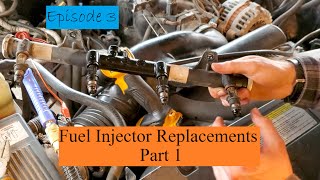
- Clogged Fuel Injectors (Very Common) — Restricted fuel injectors on Bank 1 fail to deliver the proper fuel volume. This creates a lean condition and an imbalance across the engine. This is the most frequent cause on GM 2.4L and 5.3L engines. 🎬 Watch this step-by-step guide for replacing fuel injectors.
- Faulty Upstream Oxygen (O2) Sensor (Common) — The upstream O2 sensor measures exhaust oxygen to control the fuel mixture. Incorrect readings force the PCM to make improper fuel adjustments. Non-OEM sensors frequently cause false codes.
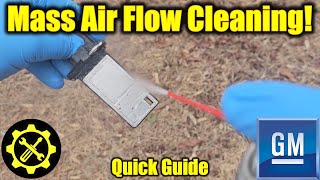
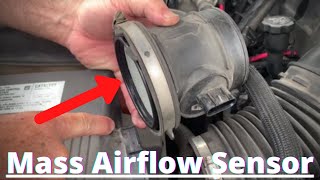
- Dirty Mass Airflow (MAF) Sensor (Common) — The MAF sensor measures air entering the engine. A dirty sensor under-reports airflow, causing the computer to command less fuel and create a lean mixture.
- Low Fuel Pressure (Less Common) — A weak fuel pump, clogged fuel filter, or faulty pressure regulator reduces overall fuel pressure. This starves the engine of fuel, causing a lean condition.
- Exhaust Leaks (Less Common) — A leak in the exhaust manifold before the upstream O2 sensor pulls outside air into the exhaust stream. This tricks the O2 sensor into reporting a false lean condition, causing the PCM to over-fuel the engine.
- Faulty Powertrain Control Module (PCM) (Very Rare) — The PCM itself can fail or require a software update to correct over-sensitive diagnostics. Only consider this after exhaustively ruling out all mechanical and sensor failures.
Symptoms

- Check Engine Light is On — The PCM logs a fault and illuminates the Malfunction Indicator Lamp (MIL) on your dashboard.
- Rough or Fluctuating Idle — The engine shakes, stumbles, or has an unstable RPM at idle due to the imbalanced air-fuel mixture.
- Poor Fuel Economy — Your vehicle burns 5% to 15% more fuel as the PCM attempts to compensate for the lean or rich condition.
- Reduced Engine Power — The car feels hesitant, stumbles, or weak during acceleration because the engine runs inefficiently.
- Engine Misfires (also visible on scanner) — Severe imbalances cause engine misfires, felt as a shudder or hesitation. This triggers a companion P030x code.
Diagnostic Flowchart

Tap your situation to follow the diagnostic path that matches what you're seeing on this code.
Common Fixes & Costs
- Repairing a Vacuum Leak (Hose, Gasket)
— Parts: $10-$100, Labor: $100-$300, ~1.5 hr book time
(DIY)
: OEM - Replacing Clogged Fuel Injector(s)
— Parts: $50-$200 (per injector), Labor: $200-$500, ~2.5 hr book time
(Professional)
: OEM - Replacing the Mass Airflow (MAF) Sensor
— Parts: $100-$300, Labor: $50-$100, ~0.5 hr book time
(DIY)
: OEM - Replacing the Upstream Oxygen (O2) Sensor
— Parts: $50-$250, Labor: $100-$300, ~0.8 hr book time
(Intermediate)
: OEM - Replacing Intake Manifold Gasket
— Parts: $30-$80, Labor: $250-$450, ~3.5 hr book time
(Professional)
: OEM
DIY vs Professional
- Replacing the Mass Airflow (MAF) Sensor — Beginner:
Tools: Screwdriver or small socket set - Replacing the Upstream Oxygen (O2) Sensor — Beginner:
Tools: O2 sensor socket, ratchet, extension, penetrating oil. - Repairing a Vacuum Leak (Hose) — Beginner:
Tools: Pliers, screwdrivers, utility knife. - Replacing Clogged Fuel Injector(s) — Beginner:
Tools: Socket set, torque wrench, fuel line disconnect tool. - Replacing Intake Manifold Gasket — Beginner:
Tools: Extensive socket set, torque wrench, gasket scraper, drain pan.
Used vs. New Parts: Buying Guide
When a used part is worth it: Used parts are a budget-friendly option for older vehicles where new OEM parts are cost-prohibitive. Avoid used electronic sensors.
Donor-vehicle mileage cap: roughly under 80000 miles for the part to have meaningful remaining life.
Donor quality checklist:
- Buy 'remanufactured' fuel injectors, not 'refurbished'. Remanufactured implies new internal components.
- Match part numbers exactly. A visual match is insufficient.
Decision logic:
- If The part is an electronic sensor (O2, MAF). → Buy new (OEM or reputable aftermarket like Bosch, Denso) for reliability.
- If The vehicle is over 150,000 miles and you are on a tight budget. → Purchase a remanufactured fuel injector from a trusted supplier with a warranty.
- If The part requires O-rings or seals. → Ensure the part comes with new seals. Never reuse old seals.
Warranty tradeoff: Salvage yard parts have a 30-day warranty. Remanufactured parts carry a 1-year warranty. New OEM parts offer multi-year warranties.
Worst-case if a used part fails: 400-800. If a used injector fails, you pay for labor twice plus a new part.
What Happens If You Wait — Timeline
- 0-1 month: Check Engine Light illuminates. You experience a 5% drop in fuel economy and a slightly unstable idle. The issue is intermittent. (MPG impact: 3-7%% · Added cost: $20-60 in wasted fuel)
- 1-4 months: Rough idle becomes constant. Hesitation during acceleration is obvious. The lean/rich condition stresses the catalytic converter, forcing it outside its ideal temperature range. (MPG impact: 7-15%% · Added cost: $100-250 in wasted fuel and fouled spark plugs)
- 4-8 months: The catalytic converter sustains permanent damage. The internal ceramic honeycomb cracks or melts from thermal stress. You hear a rattling sound from the exhaust. (MPG impact: 15-25%% · Added cost: $800-2,500 (catalytic converter replacement required))
- 8+ months: Catastrophic catalytic converter failure. Extreme exhaust backpressure causes severe power loss, stalling, and potential internal engine damage to pistons and valves. (MPG impact: >25%% · Added cost: $2,500-5,000+)
Cost of Not Fixing It
- 0-1 month: Noticeable drop in fuel economy, rough idle, and poor acceleration. Minimal risk of permanent damage. (Added cost: 50-150)
- 1-6 months: A persistent lean or rich condition overheats the catalytic converter, damages oxygen sensors, and fouls spark plugs. (Added cost: 1200-2800)
- 6+ months: Severe catalytic converter damage. A clogged converter creates backpressure, causing internal engine damage to pistons or valves. (Added cost: 2500-5000)
Diagnosis Steps
- Read Codes and Freeze Frame Data
Use an OBD-II scanner to confirm P1174 and check for related codes. Codes like P0171, P1175, or P0301-P0308 provide critical clues. Save the freeze frame data showing engine RPM, temperature, and load when the code set.
Tools: OBD-II Scanner (Beginner) - Analyze Live Data (Fuel Trims)
View short-term (STFT) and long-term (LTFT) fuel trims for Bank 1. High positive numbers (>10%) confirm a lean condition. If fuel trims return to normal at 2,500 RPM, a vacuum leak is the cause. If they worsen at higher RPMs, diagnose a fuel delivery issue.
Tools: OBD-II Scanner with Live Data (Intermediate) - Perform a Smoke Test
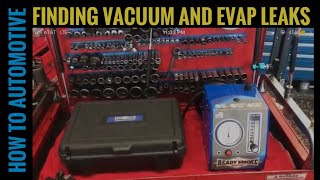
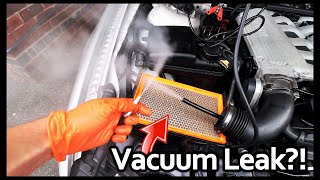
Force low-pressure smoke into the intake system to find hidden vacuum leaks. Smoke escaping from gaskets, seals, or hoses pinpoints the exact failure point. Focus on the intake manifold gasket and PCV hoses.
Tools: Smoke Machine (Intermediate) - Test the Fuel Injectors
Use a mechanic's stethoscope to listen to each injector; they must have a consistent, rapid clicking sound. An inconsistent or silent injector is faulty. For advanced diagnosis, perform an injector balance test.
Tools: Mechanic's Stethoscope, Injector Balance Tester (Advanced) - Test the MAF Sensor
With the engine warm and idling, verify the MAF reading matches manufacturer specifications (e.g., 4-6 g/s for a 5.3L GM V8). A significantly lower reading indicates a dirty or faulty sensor. Clean it with dedicated MAF cleaner and retest.
Tools: OBD-II Scanner with Live Data, MAF Sensor Cleaner (Intermediate) - Check Fuel Pressure
Connect a fuel pressure gauge to the fuel rail test port. Compare the reading to spec (e.g., 55-62 PSI for GM trucks). Low pressure indicates a failing fuel pump or clogged filter.
Tools: Fuel Pressure Gauge (Intermediate) - Analyze O2 Sensor Waveform
Monitor the upstream O2 sensor voltage on Bank 1. A healthy sensor fluctuates rapidly between 0.1V and 0.9V. A slow-switching sensor, or one stuck rich/lean, requires replacement.
Tools: Oscilloscope or Graphing Scan Tool (Advanced) - Visually Inspect for Exhaust Leaks
Inspect the exhaust manifold and pipe leading to the first O2 sensor. Look for black soot or listen for ticking sounds indicating a leak. Exhaust leaks draw in outside air, causing false lean readings.
Tools: Flashlight, Mechanic's Mirror (Beginner)
When This Code Triggers (Freeze-Frame Conditions)
- Engine Coolant Temp: 180-210°F (Engine fully warmed up and in closed loop operation.)
- RPM: 1000-4000 RPM (Above idle but not at high RPM, often during light cruise.)
- Engine Load: 20-70% (Steady throttle, not during heavy acceleration or deceleration.)
- Vehicle Speed: 35-65 mph (Constant or highway cruise speed.)
Related Codes
- P1175 — Identical code for Bank 2. Seeing both P1174 and P1175 confirms a system-wide issue affecting both banks, such as a faulty MAF sensor or major vacuum leak.
- P0171 — System Too Lean (Bank 1). P0171 is the general bank lean code; P1174 specifies a cylinder imbalance on that same bank. They frequently appear together.
- P0174 — System Too Lean (Bank 2). Paired with P1174, it confirms a dual-bank issue like low fuel pressure or a torn intake boot.
- P0300-P0308 — Misfire codes. Paired with P1174, they isolate the exact cylinder causing the imbalance (e.g., P0301 means cylinder 1 has a bad injector or runner leak).
Climate & Environmental Factors
- Cold Weather: Cold temperatures cause plastic and rubber vacuum hoses to become brittle and crack. On BMWs, the CCV system freezes and clogs with oil sludge in cold weather, causing severe pressure imbalances.
- High Altitude: Less dense air at high altitudes exacerbates borderline issues like a slightly dirty MAF sensor or minor vacuum leak, pushing fuel trims beyond acceptable limits.
How to Talk to a Mechanic About This Code
Say this: "I have a P1174 code. I need you to look at the live fuel trim data for Bank 1 at idle and at 2,500 RPM, and perform a smoke test if trims drop under load."
This guides the technician toward an efficient diagnosis of a vacuum leak vs. a fuel delivery problem, preventing expensive guesswork.
Avoid saying:
- 'Just fix whatever's wrong'
- 'My check engine light is on, can you look at it?'
- 'Replace the O2 sensor'
Questions to ask before authorizing the repair:
- What were the long-term fuel trim readings at idle and under load?
- Did you perform a smoke test to confirm a vacuum leak?
- If recommending fuel injectors, did you perform an injector balance test?
- What is your warranty on this specific repair for parts and labor?
Where to Take It: Dealer vs Independent vs Chain
- Dealer:
Best for: Vehicles under powertrain warranty., Manufacturer-specific quirks (Ford Cam Sensor issue or GM injector TSBs)., Complex PCM software updates.
Downsides: Labor rates are 50% to 100% higher than independent shops., Tendency to replace whole assemblies rather than individual components. (Typical cost: +50% vs. baseline) - Independent Shop:
Best fit for most vehicles. An experienced independent mechanic diagnoses vacuum leaks and fuel issues effectively at a lower cost.
Best for: Out-of-warranty vehicles., Common diagnostic tasks like smoke testing and analyzing fuel trims.
Downsides: Diagnostic equipment varies; vet shops by ASE certifications., May lack access to the latest manufacturer software updates. (Typical cost: +0% vs. baseline) - Chain Shop:
Avoid for initial diagnosis. Acceptable only for a straightforward O2 or MAF sensor replacement if you are certain of the failure.
Best for: Routine maintenance like oil changes.
Downsides: Technician diagnostic skill varies dramatically., Incentivized to upsell parts, leading to misdiagnosis of complex codes. (Typical cost: -10% vs. baseline)
When to Walk Away From the Repair
If the estimated repair cost exceeds 40% of the car's Kelley Blue Book (KBB) private-party value, sell the car as-is or trade it in.
- Car worth $4000, fix is $2000: Borderline — get a 2nd opinion before authorizing.
- Car worth $12000, fix is $1800: Fix it — well below the threshold.
- Car worth $2500, fix is $1500: Walk away — list for sale or scrap.
What Scan Tool You Need for This Code
Minimum: A scanner that reads and graphs live data, specifically Long-Term and Short-Term Fuel Trims (LTFT/STFT).
A basic $20 code reader shows the P1174 code but lacks the live fuel trim data needed to differentiate a vacuum leak from a fuel delivery problem.
Budget: BlueDriver Pro (~$100) — Connects via Bluetooth to graph live fuel trims and O2 sensor data, allowing a DIYer to diagnose the most common causes.
Mid-range: Foxwell NT510 Elite (~$180) — Offers manufacturer-specific diagnostics and bidirectional controls to command components, confirming diagnosis without swapping parts.
Professional: Autel MaxiCOM MK808S (~$400) — Provides full bidirectional control for active tests on fuel pumps and injectors, plus access to injector coding functions.
Rent vs buy: Auto parts store loaner tools typically do not offer live data graphing. Buying a tool like the BlueDriver is mandatory for diagnosing P1174.
How to Clear the Code After You Fix It
- Use an OBD-II scan tool to clear the trouble codes.
- Perform a complete drive cycle to allow readiness monitors to run.
Drive cycle (~30 minutes): Start with a cold engine. Idle for 3 minutes with A/C on. Drive for 15 minutes mixing steady highway speed (55 mph) and stop-and-go city driving. Ensure four 30-second idle periods. Coast down from highway speed without braking.
Readiness monitors affected: Catalyst Monitor, O2 Sensor Monitor, Fuel System Monitor
Before emissions retest: drive at least 100 miles to fully set monitors.
Watch out for:
- Clearing the code without a drive cycle results in 'Not Ready' monitors, causing an automatic emissions test failure.
- The code returns immediately if the underlying fuel imbalance was not repaired.
Will This Fail Emissions / State Inspection?
Yes — this code typically fails an OBD-II emissions inspection.
- California: An illuminated Check Engine Light is an automatic Smog Check failure. Clearing the code requires a 100+ mile drive cycle before retesting.
- New York: Automatically fails the emissions inspection. A full drive cycle must be completed post-repair before re-inspection.
- Texas: In the 17 counties requiring emissions testing, an active P1174 code causes an automatic OBD-II test failure.
Most Commonly Affected Vehicles
- Chevrolet Silverado, Suburban, Tahoe (2007-2013) — Frequently related to fuel injector issues, intake manifold gasket leaks, or a dirty MAF sensor. For 2007-2011 6.0L engines, this code is commonly associated with a faulty O2 sensor.
- GMC Sierra, Yukon (2007-2013) — Shares the same platform and engines as Chevrolet trucks, making it prone to identical fuel system and vacuum leak issues.
- BMW 3-Series (E46, E90), 5-Series (E39, E60) (1998-2010) — Defined as 'Fuel System Malfunction Cylinder Bank 1'. Points to air leaks from a cracked intake boot, a failed PCV (CCV) system, or restricted fuel injectors.
- Ford Transit, Ranger (2011-Present) — CRITICAL: On Ford models, P1174 means 'Cam Sensor Fault.' This indicates a problem with the camshaft position sensor or circuit, not a fuel mixture issue.
- Volkswagen Jetta, Golf, Passat (2005-2015) — Defined as 'Fuel measurement system, injection timing incorrect.' Points toward fuel pressure problems, faulty injectors, or EGR/EVAP system leaks.
- Land Rover Discovery II (2003-2004) — Points to vacuum leaks from aged crankcase breather hoses or exhaust leaks near the O2 sensors.
- Chevrolet HHR (2006-2007) — Caused by clogged fuel injectors on the 2.4L engine. GM TSB #08-06-04-001B requires replacing all four injectors and reprogramming the ECM.
- Pontiac Pursuit, G5, G6 (2006-2007) — Shares the 2.4L Ecotec engine with the Chevy HHR. TSB #08-06-04-001B applies, requiring injector replacement and an ECM reflash.
Manufacturer-Specific Notes
- General Motors (Chevrolet/GMC/Pontiac): On mid-2000s 2.4L and 5.3L/6.0L engines, clogged fuel injectors are the primary cause. TSB #08-06-04-001B mandates injector replacement and a PCM software update. Cleaning is ineffective.
- Ford: CRITICAL: P1174 does NOT relate to fuel trim on Fords. It is a 'Cam Sensor Fault,' indicating a camshaft position sensor or circuit failure. Diagnose the electrical system, not fuel.
- Land Rover: Triggered almost exclusively by vacuum leaks from deteriorated rubber PCV hoses or intake manifold gaskets.
- BMW: Defined as 'Fuel System Malfunction Cylinder Bank 1'. Points directly to air leaks after the MAF sensor (cracked intake boot) or a failed CCV system.
- Honda: Defined as 'front AF sensor circuit out of range high,' pointing specifically to a failed air-fuel ratio sensor rather than a general mixture imbalance.
Real Owner Stories
2009 GMC Envoy with intermittent P1174 for two years
Check Engine Light was on for years. The owner replaced the MAF and O2 sensors and used fuel additives with no success. A shop misdiagnosed it as needing a new engine.
What they tried:
- Replaced MAF and O2 sensors.
- Used professional in-tank fuel injector cleaner.
- Received a misdiagnosis for engine replacement.
Outcome: The owner replaced all six fuel injectors using OEM parts for $210. The P1174 code cleared permanently, and the engine ran perfectly.
Lesson: On GM trucks, P1174 is frequently caused by failing fuel injectors. If sensors and smoke tests show no faults, replace the injectors.
2007 Chevy HHR 2.4L with P1174 and P0301
Check Engine Light illuminated with P1174 and a cylinder 1 misfire code (P0301) on a high-mileage vehicle.
What they tried:
- Swapped the spark plug and ignition coil from cylinder 1 to cylinder 2 to see if the misfire moved.
Outcome: The misfire stayed on cylinder 1. The combination of P1174 and a stationary P0301 confirmed a clogged fuel injector on cylinder 1.
Lesson: When P1174 pairs with a specific misfire code (P030x), the problem is isolated to that cylinder. Swap coils and plugs; if the misfire remains, replace the injector.
2009 Chevy Trailblazer with P1174
The P1174 code appeared intermittently. The owner tried tightening intake bolts and cleaning the MAF sensor without success.
What they tried:
- Checked for vacuum leaks.
- Ran fuel injector cleaner.
- Cleaned the MAF sensor.
Outcome: Disconnecting the MAF sensor made the P1174 code disappear (setting a MAF circuit code instead). This proved the MAF sensor was reporting false data. Replacing the MAF sensor resolved the issue.
Lesson: A faulty MAF sensor causes false lean conditions. Disconnecting it forces the PCM into a default fuel map; if the fuel trim code vanishes, the MAF sensor is bad.
How to Prevent This Code From Triggering
- Use Top Tier certified gasoline (Every fill-up) — Top Tier gas contains detergent additives that prevent carbon deposits on fuel injectors, maintaining correct spray patterns and preventing fuel imbalances.
- Clean the Mass Airflow (MAF) sensor (Every 1-2 years or with every air filter change) — Dust and oil vapor coat the MAF's sensing wire, causing it to under-report airflow. Cleaning restores accurate readings and prevents lean fuel commands.
- Replace upstream oxygen (O2) sensors (Every 100,000 miles) — O2 sensors become slow and inaccurate with age. Replacing them prevents lazy fuel trim adjustments and protects the catalytic converter.
- Perform professional fuel system cleaning (Every 40,000 miles) — Pressurized cleaners connected directly to the fuel rail remove stubborn deposits from injectors and intake valves, ensuring proper atomization.
Frequently Asked Questions
I replaced the O2 sensor but the P1174 code came back. What now?
The O2 sensor was likely reporting the problem, not causing it. The root cause is a vacuum leak, a faulty fuel injector, or a dirty MAF sensor. Diagnose the underlying fuel trim issue using live data.
Can a tune or performance modification cause a P1174 code?
Yes. Aftermarket intakes or ECU remapping alter airflow characteristics beyond factory fuel map limits. This causes fuel trim imbalances and triggers P1174.
Can a bad gas cap cause a P1174 code?
No. A bad gas cap causes EVAP system codes like P0442 or P0455. It does not cause a P1174 fuel trim code.
Will a fuel injector cleaner fix a P1174 code?
Bottled fuel injector cleaner is rarely strong enough to clear heavily clogged injectors causing a P1174 code. Professional off-car ultrasonic cleaning or full replacement is required.
What is 'Bank 1'?
On a V-shaped engine, Bank 1 is the side containing cylinder number 1. On an inline 4-cylinder engine, there is only one bank, which is Bank 1.
How is P1174 different from P0171?
P0171 is a general code stating the entire Bank 1 is running lean. P1174 is a specific code indicating an imbalance between individual cylinders on that bank. One cylinder is running significantly leaner or richer than its neighbors.
Can I fix a P1174 code myself?
You can fix simple causes like a dirty MAF sensor or cracked vacuum hose with basic tools. Diagnosing complex causes requires a smoke machine or live data scanner. Replacing fuel injectors or intake gaskets requires professional experience.
Key Takeaways
- Vacuum leaks, faulty upstream oxygen sensors, and clogged fuel injectors cause over 80% of P1174 codes.
- On Ford vehicles, P1174 indicates a Camshaft Position Sensor fault, requiring electrical diagnosis rather than fuel system repairs.
- Expect a 5% to 15% drop in fuel economy, accompanied by a rough idle and sluggish acceleration.
- Driving with an active P1174 code for more than a month risks melting the catalytic converter, adding $800 to $2,500 to your final repair bill.
- Analyze live Long-Term Fuel Trim (LTFT) data; readings that drop to normal at 2,500 RPM confirm a vacuum leak, while readings that worsen indicate fuel starvation.
Helpful Videos


The information in this article is provided for general reference and educational purposes only. Vehicle specifications, procedures, and part compatibility can vary by production date, trim level, and region. Always consult your vehicle's factory service manual and verify part numbers before purchasing or performing repairs. Safety-critical components such as airbags, seat belts, and braking systems should be installed by a qualified professional.
- 🎬 Helpful Videos
- What Does P1174 Mean?
- Can I Drive With P1174?
- Common Causes
- Symptoms
- Diagnostic Flowchart
- Common Fixes & Costs
- DIY vs Professional
- Used vs. New Parts: Buying Guide
- What Happens If You Wait — Timeline
- Cost of Not Fixing It
- Diagnosis Steps
- When This Code Triggers (Freeze-Frame Conditions)
- Related Codes
- Climate & Environmental Factors
- How to Talk to a Mechanic About This Code
- Where to Take It: Dealer vs Independent vs Chain
- When to Walk Away From the Repair
- What Scan Tool You Need for This Code
- How to Clear the Code After You Fix It
- Will This Fail Emissions / State Inspection?
- Most Commonly Affected Vehicles
- Manufacturer-Specific Notes
- Real Owner Stories
- 2009 GMC Envoy with intermittent P1174 for two years
- 2007 Chevy HHR 2.4L with P1174 and P0301
- 2009 Chevy Trailblazer with P1174
- How to Prevent This Code From Triggering
- Frequently Asked Questions
- I replaced the O2 sensor but the P1174 code came back. What now?
- Can a tune or performance modification cause a P1174 code?
- Can a bad gas cap cause a P1174 code?
- Will a fuel injector cleaner fix a P1174 code?
- What is 'Bank 1'?
- How is P1174 different from P0171?
- Can I fix a P1174 code myself?
- Key Takeaways
- 🎟️ Get 5% Off