

OBD-II Code P1170: Manufacturer-Specific Fuel & Air Control Fault
What P1170 means, why it triggers, and how to fix it
- P1170 definitions vary by brand, meaning a Land Rover requires an O2 sensor check while a Toyota needs a port fuel injector test.
- European vehicles trigger P1170 primarily due to a failing upstream O2 sensor or unmetered air entering through cracked vacuum hoses.
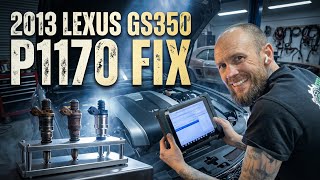
- Toyota and Lexus models log P1170 specifically for port fuel injector failures, requiring a resistance test to find the dead 12-Ohm injector.
- Never replace an O2 sensor before checking live fuel trim data; long-term fuel trims above +10% confirm a vacuum leak, not a bad sensor.
What Does P1170 Mean?

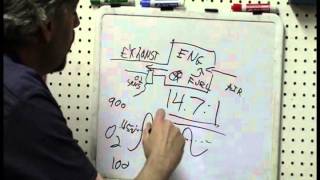
P1170 is a manufacturer-specific code, meaning its exact definition depends on your vehicle's make. For most brands, it signals an air-fuel mixture problem on Bank 1. The Engine Control Unit (ECU) detects it can no longer adjust the fuel trim to maintain the ideal 14.7:1 ratio, or a specific fuel/exhaust component has stopped responding.
Technical definition: The formal definition for P1170 varies by manufacturer. Common definitions include: * **Land Rover, BMW, Mazda:** "HO2S (Heated O2 Sensor) Bank 1 Sensor Aging or Slow Response" or "Circuit No Inversion." The primary oxygen sensor on Bank 1 is not switching between rich and lean readings quickly enough. * **Toyota, Lexus, Scion:** "Port Injector Fuel Performance." The ECU detects a malfunction in the port fuel injection system. * **Ford, Peugeot, Citroen:** "ESO - Engine Shut Off Solenoid Fault." Indicates a problem with the solenoid responsible for cutting fuel supply to the engine. * **Saab:** A general fault code indicating a problem with closed-loop fuel control, often accompanied by P1171 (too rich) or P1172 (too lean). * **GM / Chevrolet:** "Bank to Bank Fuel Trim Offset." The ECU detects a significant difference in the fuel adjustments needed between the two engine banks. * **Hyundai / Kia:** Relates to a faulty MAP (Manifold Absolute Pressure) sensor or a stuck front oxygen sensor. * **Volkswagen:** "Bank 2 MAF Sensor Incorrect Voltage Supply," indicating an issue with the Mass Airflow sensor's circuit on the second bank.
Can I Drive With P1170?
Yes, But With Caution. You can drive with this code temporarily, but you will experience poor fuel economy, rough idling, or hesitation. Prolonged driving with an uncorrected air-fuel imbalance forces the engine to run excessively rich, which overheats and destroys the catalytic converter. This turns a minor repair into a major one, adding $1,000 to $2,500 to the final bill.
Common Causes

- Faulty or Slow Oxygen (O2) Sensor (Very Common) — This is the most frequent cause on Land Rover, BMW, and Mazda vehicles. The sensor becomes contaminated or old and responds slowly to changes in the exhaust's oxygen content, leading the ECU to register a fuel mixture problem.
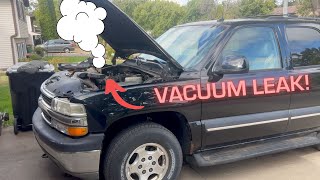
- Vacuum Leaks (Includes PCV System) (Common) — Unmetered air entering the engine through cracked hoses, a stuck-open PCV valve, a poorly seated air filter housing, or a bad intake manifold gasket throws off the air-fuel ratio. This forces the ECU to make extreme fuel trim adjustments, triggering the code.
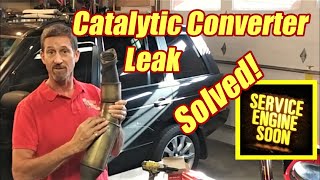
- Exhaust Leaks (Common) — On Land Rovers, hairline cracks in the catalytic converter welds are a known issue. Leaks anywhere between the cylinder head and the upstream O2 sensor draw in outside air, causing false lean readings.
- Clogged or Faulty Fuel Injectors (Common) — A primary cause on Toyota, Lexus, and Scion models. A dirty or failing fuel injector on Bank 1 fails to deliver the correct amount of fuel, causing a lean or rich condition.
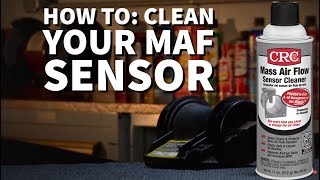
- Dirty or Faulty Mass Airflow (MAF) Sensor (Less Common) — A contaminated MAF sensor misreports the amount of air entering the engine, causing the ECU to calculate the wrong amount of fuel to inject. Oil from aftermarket reusable air filters is a frequent source of contamination. 🎬 See how to clean your MAF sensor properly
- Faulty Fuel Pressure Regulator (Less Common) — A failing fuel pressure regulator causes inconsistent fuel pressure, leading to lean or rich conditions that trigger fuel trim-related codes.
- Weak or Failing Battery (Rare) — A battery providing low voltage during engine cranking causes unpredictable glitches in the ECU, leading to a variety of erroneous stored codes, including P1170.
- Engine Shut-Off Solenoid Failure (Rare) — Specific to brands like Ford and Peugeot, this indicates the solenoid itself or its control circuit is malfunctioning.
Symptoms
- Check Engine Light is On — The primary indicator is a steady illumination of the Malfunction Indicator Lamp (MIL) on your dashboard.
- Reduced Fuel Economy — Your vehicle consumes more fuel than usual as the ECU struggles to maintain the proper air-fuel balance or runs in a default rich condition.
- Rough or Uneven Idle — The engine shakes, hunts for idle, or runs erratically when stopped, especially once it warms up.
- Hesitation or Stumbling During Acceleration — The vehicle hesitates, bogs down, or lacks power when you press the gas pedal due to the incorrect air-fuel mixture.
- Smell of Gasoline — If the ECU compensates for a perceived lean condition by adding too much fuel, or if an injector sticks open, you smell raw gasoline from the exhaust.
Diagnostic Flowchart
Tap your situation to follow the diagnostic path that matches what you're seeing on this code.
Common Fixes & Costs
- Replace Front (Upstream) Oxygen Sensor — Parts: $50-$250, Labor: $100-$250, ~1.2 hr book time (DIY)
- Repair Vacuum Leak (e.g., replace hose, intake gasket) — Parts: $10-$100, Labor: $100-$300, ~1.5 hr book time (DIY)
- Repair Exhaust Leak (e.g., weld catalytic converter, replace gasket) — Parts: $20-$100, Labor: $150-$400, ~2 hr book time (Professional)
- Clean or Replace Mass Airflow (MAF) Sensor — Parts: $15-$300, Labor: $50-$100, ~0.5 hr book time (DIY)
- Replace Fuel Injector(s) — Parts: $80-$300, Labor: $300-$700, ~4.5 hr book time (Professional)
- Replace Fuel Pressure Regulator — Parts: $50-$250, Labor: $150-$300, ~2.5 hr book time (Intermediate)
Used vs. New Parts: Buying Guide
When a used part is worth it: For expensive components like catalytic converters or engine computers (ECU), a used part from a low-mileage vehicle offers significant savings. It makes less sense for wear items like O2 sensors or fuel injectors, where a new part with a full warranty is better.
Donor-vehicle mileage cap: roughly under 80000 miles for the part to have meaningful remaining life.
Donor quality checklist:
- Verify the donor vehicle was not scrapped due to engine or emissions problems.
- For electronic parts, ensure the part number matches exactly.
- For mechanical parts, look for signs of low wear and minimal corrosion, especially from rust-belt states.
Decision logic:
- If Part is a sensor or injector (wear item) → Buy new. The reliability and warranty of a new part outweigh the minor savings of a used one.
- If Part is a catalytic converter and vehicle is > 10 years old → A used OEM converter from a low-mileage, accident-damaged vehicle is a good value, but check state laws (e.g., California) which prohibit installing used converters.
- If Part is an ECU/module → Used is an option, but be aware that it requires professional reprogramming to work with your vehicle, adding to the cost.
Warranty tradeoff: Used parts from a salvage yard typically offer a 30-90 day warranty. New aftermarket parts often have a 1-year to limited lifetime warranty. New OEM parts carry a 1-year/12,000-mile warranty.
Worst-case if a used part fails: $500-1500 if a major used component like a catalytic converter fails after installation, requiring repeat labor costs and the purchase of another part.
What Happens If You Wait — Timeline
- 0-1 month: Check Engine Light (MIL) is on. The car shows no noticeable symptoms, or a very slight decrease in fuel economy. The ECU compensates within its limits. (MPG impact: 0-5%% · Added cost: $0-$50 in wasted fuel)
- 1-4 months: Symptoms become more noticeable: intermittent rough idle, slight hesitation on acceleration, and a consistent 5-10% drop in MPG. The air-fuel mixture runs consistently rich or lean, stressing the catalytic converter. (MPG impact: 5-10%% · Added cost: $50-$200 in wasted fuel)
- 4-8 months: The catalytic converter sustains damage. If running rich, the substrate overheats and melts. If lean, it also overheats. You hear a rattling noise from the exhaust or notice a distinct 'rotten egg' smell. Engine performance suffers noticeably. (MPG impact: 10-15%% · Added cost: $1,000-$2,500 (catalytic converter replacement is now required).)
- 8+ months: The catalytic converter becomes fully clogged or melted, creating significant exhaust backpressure. The engine has a major loss of power, stalls frequently, and is hard to start. This backpressure causes further engine damage to exhaust valves or piston rings. (MPG impact: 15-25%+% · Added cost: $2,500-$5,000+ (cost of catalytic converter replacement plus potential for major engine repairs).)
Cost of Not Fixing It

- 0-1 month: Reduced fuel economy by 5-15% and potential for failed emissions test. (Added cost: $20-$60 per month in extra fuel costs)
- 1-6 months: The engine running rich or lean overheats the catalytic converter, causing irreversible damage to the internal substrate. (Added cost: $1,000-$3,000 for catalytic converter replacement.)
- 6+ months: A clogged catalytic converter creates excessive exhaust backpressure, leading to engine damage, including burnt exhaust valves or damaged piston rings. (Added cost: $2,500-$5,000+ for major engine repairs on top of catalytic converter replacement)
Diagnosis Steps

- Check for Other Codes
Before focusing on P1170, check for any other stored trouble codes. Codes for misfires (P030x), lean/rich conditions (P0171/P0172), or specific sensors provide valuable clues to the root cause. Always address these accompanying codes first.
Tools: OBD-II Scanner (Beginner) - Analyze Fuel Trim Data
Using a scanner with live data, observe the Short-Term (STFT) and Long-Term Fuel Trim (LTFT) values at idle and at 2500 RPM. Consistently high positive numbers (>10%) indicate the ECU is adding fuel to correct a lean condition, pointing toward a vacuum leak. High negative numbers (< -10%) indicate a rich condition.
Tools: OBD-II Scanner with Live Data (Intermediate) - Analyze O2 Sensor Data
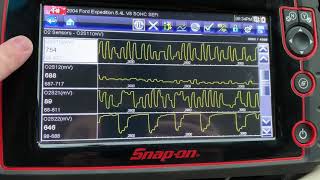
Monitor the voltage of the Bank 1, Sensor 1 O2 sensor on a warm engine at idle. It must fluctuate rapidly between 0.1V (lean) and 0.9V (rich). A sensor that switches slowly, sticks at a specific voltage, or flatlines has failed.
Tools: OBD-II Scanner with Live Data (Intermediate) - Inspect for Vacuum and Air Intake Leaks
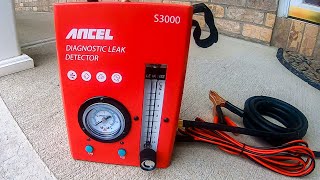
Visually inspect all vacuum hoses, the PCV valve, and the air intake boot for cracks or loose connections. Pay close attention to the air filter housing; an improper seal is a common cause. A smoke test is the most effective way to find hard-to-see leaks.
Tools: Flashlight, Smoke Machine (optional) (Beginner) - Inspect the Exhaust System
Carefully check the exhaust manifold gaskets and the area around the catalytic converter for cracks or soot trails indicating a leak, especially upstream of the O2 sensors. On Land Rovers, hairline cracks on the catalytic converter welds are a frequent cause.
Tools: Flashlight, Inspection Mirror (Intermediate) - Clean the Mass Airflow (MAF) Sensor
A dirty MAF sensor sends incorrect data. Carefully remove the sensor and clean it using only dedicated MAF sensor cleaner. Do not touch the sensitive wires inside the sensor. Allow it to dry completely before reinstalling.
Tools: Screwdriver/Socket Set, MAF Sensor Cleaner (Intermediate) - Check Fuel Pressure
Connect a fuel pressure gauge to the fuel rail's Schrader valve. Specifications vary by vehicle (e.g., Toyota V6 engines require 44-50 PSI; Land Rover Discovery II requires 43 PSI). Check your service manual for the exact specification. Low pressure points to a weak pump or clogged filter; high pressure indicates a faulty regulator.
Tools: Fuel Pressure Gauge, Service Manual (Advanced) - [PRO TIP] Perform Fuel Injector Resistance Test
For a definitive electrical check of the injectors (especially on Toyota/Lexus models), use a multimeter set to Ohms. Disconnect an injector's electrical connector and place a probe on each pin. For the Toyota 2GR-FE/FSE V6, injectors must read between 11.6-12.4 Ohms at 68°F (20°C). All injectors must be within about 1 Ohm of each other. A reading of 'OL' means the injector coil is open.
Tools: Digital Multimeter, Socket Set (Advanced) - [PRO TIP] Analyze O2 Sensor Waveform with an Oscilloscope
An oscilloscope is superior to a scanner's live data for sensor diagnosis. A healthy, warm upstream O2 sensor waveform is a clean, rapid sine wave, switching from below 0.2V to above 0.8V at least once per second (1 Hz) at idle, and 5-7 times per second at 2500 RPM. A 'lazy' sensor has a much slower switching frequency.
Tools: Automotive Oscilloscope (Advanced) - [PRO TIP] Test Mass Airflow (MAF) Sensor PID
Using a scan tool's live data, monitor the MAF sensor's Parameter ID (PID). At idle, a typical V6 or V8 engine reads between 2 and 7 grams per second (g/s). This value must rise smoothly with engine RPM, reaching 15 to 25 g/s at 2500 RPM. An abnormally low reading at idle indicates a vacuum leak, while readings that don't rise linearly suggest a faulty sensor.
Tools: OBD-II Scanner with Live Data (Advanced)
When This Code Triggers (Freeze-Frame Conditions)
- Engine Coolant Temp: 170-220°F (Engine at normal operating temperature)
- RPM: 1500-2500 (Cruise / steady throttle)
- Engine Load: 20-40% (Light to moderate load, not heavy acceleration)
- Vehicle Speed: 40-60 mph (Steady highway or arterial road driving)
Related Codes
- P0171 — System Too Lean (Bank 1). This code frequently appears with P1170. If both codes are present with high positive fuel trims, it strongly indicates an unmetered air leak (vacuum/exhaust) or a fuel delivery problem (clogged injector, weak fuel pump). P1170 indicates the sensor fault, while P0171 confirms the resulting lean condition.
- P1173 — This is the equivalent code for Bank 2 on Land Rover and some GM vehicles. Seeing P1170 (Bank 1) and P1173 (Bank 2) together strongly suggests a problem affecting both sides of the engine, such as a faulty MAF sensor, low fuel pressure, or a large intake leak after the throttle body.
- P0420 — Catalyst System Efficiency Below Threshold (Bank 1). A slow or failing O2 sensor (causing P1170) cannot properly monitor the catalytic converter, leading to a false P0420 code. To differentiate, watch live data: if the downstream O2 sensor voltage graph mimics the fluctuating upstream sensor, the catalyst is bad. If the downstream sensor is flatlined or erratic, the sensor itself is the culprit.
- P117B — Direct Injector Fuel Performance (Bank 1). On vehicles with both port and direct injection (like the Scion FR-S/Toyota 86), this code appears alongside P1170. P1170 points to the port injection system, while P117B points to the direct injection system. A scan tool with active test capabilities is needed to isolate which system is at fault.
Climate & Environmental Factors
- Cold Climates: Extreme temperature cycles (hot exhaust to freezing cold) accelerate metal fatigue, causing hairline cracks in exhaust manifolds and catalytic converter welds, a primary cause of P1170 on brands like Land Rover.
- High Altitude: At higher altitudes, the air is less dense. While the ECU compensates for this, a pre-existing marginal issue like a small vacuum leak or a slightly lazy O2 sensor is exacerbated, pushing fuel trims beyond the acceptable threshold and triggering the code.
- High Humidity: Moisture is detrimental to electrical connectors. In persistently humid environments, corrosion builds up on the pins of the O2 sensor, MAF sensor, or injector connectors, leading to poor signals and intermittent faults.
How to Talk to a Mechanic About This Code
Say this: "I have a P1170 code and I'd like to schedule a diagnostic. I want to authorize one hour of diagnostic time to check the long and short-term fuel trims, perform a smoke test for vacuum or exhaust leaks, and check the live data from the upstream O2 sensor before replacing any parts."
This signals that you have done your research and want a proper diagnosis, not just a part replacement. It directs the technician to perform the specific tests needed to find the root cause of a fuel-control issue and prevents them from simply 'shotgunning' an O2 sensor at your expense.
Avoid saying:
- 'My check engine light is on, can you just fix it?' (This is too vague and invites unnecessary repairs).
- 'I think it's the O2 sensor, can you replace it?' (Don't diagnose for the mechanic; you pay for a part you don't need).
- 'Just do whatever you think is best.'
Questions to ask before authorizing the repair:
- What were the long-term fuel trim values at idle and at 2500 RPM?
- Did the smoke test show any vacuum or exhaust leaks? If so, where?
- Can you provide a printout or screenshot of the freeze-frame data and the O2 sensor's live data graph?
- What is the warranty on the proposed repair, including both parts and labor?
Where to Take It: Dealer vs Independent vs Chain
- Dealer:
Best for: Vehicles still under a powertrain or emissions warranty., Known, complex manufacturer-specific quirks (e.g., Land Rover catalytic converter cracks, Toyota injector driver modules)., Very new or electronically complex vehicles where independent shops lack the latest software.
Downsides: Significantly higher labor rates, often 1.5x to 2x an independent shop., Recommends replacing a whole assembly when only one component has failed. (Typical cost: +50% vs. baseline) - Independent Shop:
Best overall fit. The causes of P1170 (leaks, O2 sensors, injectors) are bread-and-butter diagnostics for a competent independent shop. They offer the best balance of expertise and value for this type of repair.
Best for: Most out-of-warranty vehicles., Diagnosing common issues like vacuum leaks, faulty sensors, and fuel delivery problems., Building a long-term relationship with a technician who knows your car's history.
Downsides: Quality and expertise vary widely; it's crucial to find a shop with good reviews and ASE-certified technicians., Lacks awareness of very niche, brand-specific technical service bulletins (TSBs). (Typical cost: +0% vs. baseline) - Chain Shop:
Use with caution. Acceptable if you need a simple, confirmed O2 sensor replacement. AVOID for initial diagnosis of P1170, as they misdiagnose a leak as a bad sensor.
Best for: Simple, clear-cut part replacements where the diagnosis is already certain (e.g., 'I have tested the O2 sensor and it is faulty, please replace it').
Downsides: Technician skill is inconsistent., High pressure to upsell services and parts is common., Lacks the advanced diagnostic equipment or in-depth experience for a tricky P1170 fault. (Typical cost: -10% vs. baseline)
When to Walk Away From the Repair
If the estimated repair cost exceeds 50% of the car's private-party value (from a source like Kelley Blue Book), you should seriously consider selling or trading in the vehicle instead of repairing it.
- Car worth $4000, fix is $2200: Walk away. The repair cost is over 50% of the car's value. It's not a sound financial decision.
- Car worth $12000, fix is $1800: Fix it. The repair cost is only 15% of the car's value and is a worthwhile investment to maintain its function and value.
- Car worth $2500, fix is $1500: Walk away. The repair cost is 60% of the vehicle's value. Put that money toward a more reliable replacement vehicle.
What Scan Tool You Need for This Code
Minimum: A scanner that reads and graphs live data, specifically O2 sensor voltage and both short-term (STFT) and long-term (LTFT) fuel trims. Access to freeze-frame data is also essential.
A basic $20 code reader only tells you the P1170 code exists. It won't provide the live data needed to determine if the cause is a lazy sensor, a vacuum leak (high fuel trims), or a rich condition. Without this data, you are just guessing and wasting money replacing good parts.
Budget: BlueDriver Pro Bluetooth Scanner (~$99) — Connects to your smartphone and provides excellent live data graphing for O2 sensors and fuel trims. It reads freeze-frame data and accesses Mode $06 test results, which is more than enough to differentiate between a sensor, leak, or fuel delivery issue.
Mid-range: Foxwell NT510 Elite (~$180) — A dedicated handheld unit that offers manufacturer-specific diagnostics for one chosen brand. It provides detailed live data and performs some bidirectional controls, allowing you to test specific components directly, which is useful for diagnosing faulty injectors or solenoids.
Professional: Autel MaxiCOM MK808 / Launch CRP919E (~$500-700) — These are professional-level tablet scanners that offer full bidirectional controls. For a P1170 code, this allows a user to command a fuel pressure regulator or individually test injectors, providing the most definitive diagnosis without having to remove parts.
Rent vs buy: For a one-time diagnosis, many auto parts stores like AutoZone and O'Reilly offer a free loaner tool program. You pay a deposit equal to the tool's cost, which is fully refunded upon return. This is a great way to access a scanner without purchasing one. Buy a scanner only if you plan to perform your own diagnostics more than once or twice a year.
How to Clear the Code After You Fix It
- Use an OBD-II scan tool to clear the code
- Perform a complete drive cycle to reset readiness monitors
Drive cycle (~30 minutes): A universal drive cycle involves a cold start (engine temp below 122°F), 2-3 minutes of idling, 5-10 minutes of steady highway driving (around 55 mph), and 15-20 minutes of mixed stop-and-go city driving.
Readiness monitors affected: Catalyst monitor, O2 sensor monitor, O2 sensor heater monitor
Before emissions retest: drive at least 100 miles to fully set monitors.
Watch out for:
- Disconnecting the battery clears the code, but it also resets all readiness monitors to 'Not Ready', causing an immediate emissions test failure.
- The code returns if the underlying mechanical or electrical fault is not properly fixed.
Will This Fail Emissions / State Inspection?
Yes — this code typically fails an OBD-II emissions inspection.
- California: An illuminated Check Engine Light is an automatic failure. All required readiness monitors must be 'complete' to pass. Driving for a week or two (100+ miles) is needed after a repair to set the monitors.
- New York: An illuminated 'check engine' light causes the vehicle to fail the OBD-II emissions inspection. For 2001 and newer vehicles, only one readiness monitor is allowed to be 'not ready'.
- Texas: In the 17 counties requiring emissions testing, an illuminated Check Engine Light is an automatic failure. After a repair, you can have only one monitor 'not ready' (two for 1996-2000 models) to pass.
Most Commonly Affected Vehicles
- Land Rover Range Rover, Discovery II (2003-2005) — Extremely prone to P1170 due to hairline cracks in the catalytic converter welds, which causes false O2 sensor readings. Also caused by aging O2 sensors. An O2 sensor replacement costs between $383 and $892.
- Lexus / Toyota IS350, GS350, Sienna (2006-2014) — Commonly triggers P1170 related to port fuel injector performance. A professional replacement of port injectors costs between $830 and $1,350. Note: A 2018 safety recall (NHTSA #18V-432) was issued for failing fuel pulsation dampers on many 2006-2014 models, which causes fuel leaks and affects fuel pressure readings.
- Subaru / Scion / Toyota BRZ, FR-S, 86 (2013-2017) — Shares the same engine and P1170 code definition (Port Injector Performance). Often appears with P0171/P0172. Common causes are intake leaks from an improperly sealed airbox after a filter change, exhaust leaks from aftermarket header gaskets, or a dying battery causing ECU glitches.
- Chevrolet / GMC Silverado, Sierra, Tahoe (2007-2014) — Sets P1170 for "Bank to Bank Fuel Trim Offset," indicating a large discrepancy between the two engine banks. Common causes include MAF sensor issues or vacuum leaks affecting one bank more than the other.
- Hyundai / Kia Elantra, Optima, Sonata, Forte (2010-2016) — On many models, P1170 is linked to a faulty Manifold Absolute Pressure (MAP) sensor or its wiring. It also points to a stuck upstream O2 sensor.
- Volkswagen Jetta, Golf, Passat (1999-2005) — Defines P1170 as an issue with the MAF sensor's voltage supply, pointing diagnosis toward the sensor's circuit rather than just the sensor itself.
- BMW Various models with M62 engine (e.g., X5) (1999-2003) — Often sets P1170 for O2 sensor aging, similar to Land Rovers that used BMW engines.
- Mazda MX-5 Miata, Millenia (1998-2002) — P1170 points to a faulty O2 sensor, but is also linked to issues with the EGR system or Engine Shut-Off Solenoid on some models.
Manufacturer-Specific Notes

- Land Rover: A hairline crack on the weld at the front of the passenger-side catalytic converter is a frequent cause for P1170. A smoke test on the exhaust is required to find it. This is a well-documented issue in owner forums.
- Toyota/Lexus (V6): The code specifically points to a performance issue with the *port* injectors, not the direct injectors (which would be P117B). Diagnosis must focus on the port injection system first, though a scan tool active test confirms this.
- Toyota/Lexus (V8): On V8 models like the LS460 and IS F, the direct injectors are powered by two identical 'Injector Driver Modules.' A failure of one module causes an entire bank of cylinders to misfire and trigger codes. Swap the two modules and see if the fault codes move to the other bank. If they do, the module is the problem, not the injectors.
- Saab: On Saabs, P1170 is an all-embracing code for a closed-loop fuel control problem. It is almost always accompanied by P1171 (adaptation to rich) or P1172 (adaptation to lean), which gives a better diagnostic direction.
- Honda: While P1170 is not a common Honda code, the related codes P0170/P0171 often are. A Technical Service Bulletin (TSB) was issued for some models pointing to a faulty fuel pressure regulator as a potential cause for these fuel trim issues.
- Ford: The definition "Engine Shut Off Solenoid Fault" is less common but points directly to a specific part, making diagnosis more straightforward than the fuel trim issues seen on other brands. On Transit diesels, this is related to a seal on the plunger in the injection pump.
- Toyota/Lexus: Safety Recall 18V-432 (Manufacturer code JLF) was issued for many 2006-2015 V6 models for fuel pulsation dampers that crack and leak fuel. This leak affects fuel pressure and contributes to fuel trim-related codes. The remedy involves replacing the fuel delivery pipe with an improved version.
Real Owner Stories
2004 Land Rover Discovery at ~100K miles
P1170 code appeared intermittently over several months. No major symptoms other than the Check Engine Light.
What they tried:
- Replaced all 4 O2 sensors with new Bosch parts; code returned.
- Performed a smoke test and found a vacuum leak at the brake servo line and throttle body bolt; fixed leaks.
- Code changed to P0420 (Catalyst Efficiency) after fixing leaks, but P1170 eventually returned.
Outcome: The owner continued to clear the code, which reappeared every few months. The root cause was a hairline crack in the catalytic converter, a common problem on these vehicles.
Lesson: On Land Rovers, P1170 is rarely a simple O2 sensor fix. Always perform a smoke test for both vacuum and exhaust leaks before replacing parts. If sensors are replaced and leaks are fixed, suspect catalytic converter issues.
2016 Subaru BRZ at 12K miles (Supercharged)
P1170 and P117B codes appeared suddenly on a modified vehicle that had been running well. No immediate performance issues were noted.
What they tried:
- Initial checks of the MAF sensor, air filter, and header gasket were considered.
- A week after the codes appeared, the car failed to start.
Outcome: The original OEM battery was dying. After replacing the battery, the codes disappeared and the long-term fuel trim returned to normal.
Lesson: A weak or failing battery causes the ECU to throw random, misleading codes. If P1170 appears with other seemingly unrelated codes or electrical gremlins, test the battery's health before chasing sensor or fuel system faults.
2000 Mazda Miata (Supercharged) with rough idle
Car idled very rough, dipping from 950 RPM to 500 RPM, and hesitated badly on light acceleration until fully warmed up.
What they tried:
- Replaced the front O2 sensor based on forum advice; no change.
- Cleaned the EGR valve; no change.
- Replaced the MAF sensor; no change.
- Replaced the PCV valve and spark plugs; no change.
- Replaced the Idle Air Control (IAC) valve; no change.
Outcome: The owner replaced multiple components without resolving the issue. The lean condition shown on an A/F gauge pointed to an unmetered air leak as the true culprit.
Lesson: Do not replace parts one by one without a clear diagnosis. Symptoms like a lean condition and rough idle strongly point to a vacuum leak. A smoke test is far cheaper than replacing multiple sensors and valves.
2013 Scion FR-S at 143K miles
Check Engine Light with codes P1170 and P0171 (System Too Lean) after running a "burble tune" with catless headers.
What they tried:
- Visually inspected O2 sensors and noted they looked "burnt up."
- Ordered new O2 sensors and exhaust gaskets.
Outcome: The combination of P1170 and P0171 points strongly to a lean condition. The causes are an exhaust leak from the aftermarket header gaskets or a vacuum leak. The burnt appearance of the O2 sensors is a symptom of the lean condition, not the cause.
Lesson: When P1170 is paired with P0171, the root cause is almost always unmetered air. Before replacing sensors, thoroughly check for intake vacuum leaks and exhaust leaks, especially if you have aftermarket parts.
How to Prevent This Code From Triggering
- Use Top Tier certified gasoline (Every fill-up) — Top Tier fuels contain a higher concentration of detergent additives that prevent and clean carbon deposits from fuel injectors and intake valves. Clogged injectors are a primary cause of P1170 on many vehicles.
- Replace upstream O2 sensors as a maintenance item (Every 100,000 miles) — O2 sensors become slow and less accurate with age, even before they fail completely and trigger a code. A sluggish sensor causes poor fuel economy and leads to long-term damage to the catalytic converter.
- Clean the Mass Airflow (MAF) sensor (Every time the air filter is changed (approx. once a year)) — Dust and oil vapors contaminate the MAF sensor, causing it to send inaccurate airflow readings to the ECU. Cleaning it with a dedicated MAF cleaner ensures proper air-fuel ratio calculation.
- Perform regular visual inspections of vacuum hoses (During every oil change) — Rubber hoses in the engine bay become brittle and crack over time due to heat and age. Catching a cracked or loose vacuum hose early prevents a lean code like P1170 from appearing.
- Address engine misfires immediately (As soon as they occur) — An engine misfire dumps raw, unburned fuel into the exhaust system. This unburned fuel superheats and melts the internal structure of the catalytic converter in a very short amount of time, leading to a much more expensive repair.
Frequently Asked Questions
I replaced the O2 sensor but the P1170 code came back. What now?
This means the O2 sensor correctly reported a problem rather than causing it. The next most likely culprits are vacuum leaks from old hoses or exhaust leaks upstream of the sensor. Always perform a smoke test to find unmetered air leaks before replacing parts.
What is a common misdiagnosis for P1170?
The most common misdiagnosis is immediately replacing the upstream oxygen sensor without further testing. The code often indicates a slow sensor, which happens due to contamination from an existing rich or lean condition. Mechanics must analyze fuel trims and perform a smoke test before condemning the sensor.
I just changed my air filter and now P1170 appeared. What happened?
This almost always means the air filter box is not sealed correctly, allowing unmetered air to bypass the MAF sensor. This creates a lean condition that triggers the code. Re-open the airbox and ensure the filter and housing seat perfectly with no gaps.
I installed an aftermarket header and now I have a P1170 code. Why?
Aftermarket headers often leak at the new gaskets, allowing oxygen into the exhaust stream and causing the O2 sensor to report a false lean condition. The ECU then adds excess fuel, triggering the code. Re-check the torque on all bolts and replace the gaskets if necessary.
Can a weak or dying car battery cause a P1170 code?
During engine start-up, a weak battery's voltage drops significantly, causing temporary glitches in the Engine Control Unit (ECU). This leads the ECU to store random and unrelated fault codes like P1170. Test your battery's health if this code appears alongside other strange electrical symptoms.
Can a dirty or over-oiled air filter cause P1170?
A severely clogged filter restricts airflow enough to create a lean condition. More commonly, excess oil from aftermarket reusable filters contaminates the Mass Airflow (MAF) sensor's hot wire. This causes inaccurate readings and triggers fuel trim codes.
Can I fix a P1170 code by just clearing it?
No, clearing the code only turns the light off temporarily. The underlying mechanical or electrical fault remains active. The Check Engine Light will return within a few drive cycles.
My car has P1170 but seems to run fine. Can I ignore it?
You must not ignore it. The incorrect air-fuel mixture causes poor fuel economy and permanently damages your catalytic converter over time. Fixing it early saves thousands in secondary repairs.
What does 'Bank 1' mean?
Bank 1 is the side of the engine containing cylinder number one. For V6 or V8 engines, this is one side of the 'V' block. Inline engines only have one bank, so Bank 1 refers to the entire engine.
How much does it cost to diagnose a P1170 code?
Most repair shops charge a diagnostic fee ranging from $120 to $200. This covers the initial code scan and visual inspection. A smoke test to find vacuum or exhaust leaks usually costs extra.
Key Takeaways
- P1170 definitions vary by brand, meaning a Land Rover requires an O2 sensor check while a Toyota needs a port fuel injector test.
- European vehicles trigger P1170 primarily due to a failing upstream O2 sensor or unmetered air entering through cracked vacuum hoses.
- Toyota and Lexus models log P1170 specifically for port fuel injector failures, requiring a resistance test to find the dead 12-Ohm injector.
- Never replace an O2 sensor before checking live fuel trim data; long-term fuel trims above +10% confirm a vacuum leak, not a bad sensor.
Helpful Videos



The information in this article is provided for general reference and educational purposes only. Vehicle specifications, procedures, and part compatibility can vary by production date, trim level, and region. Always consult your vehicle's factory service manual and verify part numbers before purchasing or performing repairs. Safety-critical components such as airbags, seat belts, and braking systems should be installed by a qualified professional.
- 🎬 Helpful Videos
- What Does P1170 Mean?
- Can I Drive With P1170?
- Common Causes
- Symptoms
- Diagnostic Flowchart
- Common Fixes & Costs
- Used vs. New Parts: Buying Guide
- What Happens If You Wait — Timeline
- Cost of Not Fixing It
- Diagnosis Steps
- When This Code Triggers (Freeze-Frame Conditions)
- Related Codes
- Climate & Environmental Factors
- How to Talk to a Mechanic About This Code
- Where to Take It: Dealer vs Independent vs Chain
- When to Walk Away From the Repair
- What Scan Tool You Need for This Code
- How to Clear the Code After You Fix It
- Will This Fail Emissions / State Inspection?
- Most Commonly Affected Vehicles
- Manufacturer-Specific Notes
- Real Owner Stories
- 2004 Land Rover Discovery at ~100K miles
- 2016 Subaru BRZ at 12K miles (Supercharged)
- 2000 Mazda Miata (Supercharged) with rough idle
- 2013 Scion FR-S at 143K miles
- How to Prevent This Code From Triggering
- Frequently Asked Questions
- I replaced the O2 sensor but the P1170 code came back. What now?
- What is a common misdiagnosis for P1170?
- I just changed my air filter and now P1170 appeared. What happened?
- I installed an aftermarket header and now I have a P1170 code. Why?
- Can a weak or dying car battery cause a P1170 code?
- Can a dirty or over-oiled air filter cause P1170?
- Can I fix a P1170 code by just clearing it?
- My car has P1170 but seems to run fine. Can I ignore it?
- What does 'Bank 1' mean?
- How much does it cost to diagnose a P1170 code?
- Key Takeaways
- 🎟️ Get 5% Off