

OBD-II Code P1168: Comprehensive Diagnosis and Repair Guide
What P1168 means, why it triggers, and how to fix it for good
- P1168 indicates the engine computer lost control of the air-fuel mixture due to a missing or incorrect sensor signal.
- Verify your vehicle's specific P1168 definition before buying parts, as it means a faulty A/F sensor on Hondas but a failing fuel pressure sensor on Fords.
- The three most common culprits are a dead upstream Air/Fuel Ratio sensor, a cracked exhaust manifold leaking unmetered air, or a faulty fuel rail pressure sensor.
- Driving more than 100 miles with an active P1168 code forces the engine to run rich, which destroys the catalytic converter and causes a $1,500+ repair.
- If replacing the sensor does not clear the code, perform a smoke test to find hidden exhaust leaks or replace cheap aftermarket sensors with OEM parts.
What Does P1168 Mean?

P1168 is a manufacturer-specific code indicating the Engine Control Unit (ECU) lost control of the air-to-fuel ratio. The computer lacks feedback from a key sensor because the signal is missing, incorrect, or the system cannot enter 'closed-loop' operation. To prevent engine damage, the ECU defaults to a rich fuel mixture, causing poor performance, failed emissions, and increased fuel consumption.
Technical definition: Because P1168 is a non-standardized code, its official definition varies drastically by manufacturer. On Honda and Acura vehicles, it means 'Air/Fuel Ratio (A/F) Sensor (Sensor 1) LABEL Low Voltage'. 🎬 Watch: How to fix the P1168 fault on Honda vehicles. On Nissan and Infiniti, it indicates 'Closed Loop Control Function Bank 2'. For Ford, Lincoln, and Hyundai, it means 'Fuel Rail Sensor In-Range Low Failure'. Volkswagen and Audi define it as 'Mass Air Flow (MAF) Sensor, Bank 2 - Low Input'. Always verify the exact definition for your specific make and model before diagnosing.
Can I Drive With P1168?
Yes, But With Caution. You can drive short distances to a repair shop, but long-term driving destroys your catalytic converter—an $800 to $2,500 repair. If the engine stalls, loses power, or smells like raw fuel, do not drive the vehicle at all. Limit driving to under 100 miles to prevent catastrophic exhaust damage.
Common Causes

- Faulty Air/Fuel Ratio (A/F) Sensor or Heated Oxygen Sensor (HO2S) (Very Common) — The upstream sensor, located on the exhaust before the catalytic converter, fails and stops sending accurate oxygen data to the ECU.
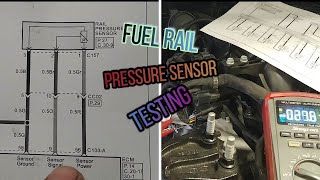
- Faulty Fuel Rail Pressure Sensor (Common) — On Ford and Hyundai models, this code directly indicates the fuel rail pressure sensor is reporting abnormally low pressure. 🎬 See this guide on diagnosing a fuel rail pressure sensor.
- Exhaust System Leak (Common) — A crack in the exhaust manifold or pipes before the sensor introduces unmetered oxygen. 🎬 Watch: How to find an exhaust leak in under five minutes. This skews the sensor's readings, causing a persistent low-voltage signal.
- Faulty Mass Air Flow (MAF) Sensor (Less Common) — On VW and Audi models, a dirty or failing MAF sensor provides incorrect airflow data, completely disrupting the ECU's air-fuel calculations.
- Damaged Wiring or Corroded Connectors (Less Common) — Extreme exhaust heat melts sensor wires, or moisture corrodes connectors, causing an open circuit or a short to ground.
- Blown Fuse for Sensor Heater Circuit (Less Common) — The A/F sensor's built-in heater circuit is protected by a fuse (often labeled 'LAF' or 'A/F HTR'). If this fuse blows, the sensor cannot reach operating temperature and fails to send a signal.
- Intake Air (Vacuum) Leaks (Less Common) — A cracked vacuum hose or intake manifold gasket allows unmetered air into the engine. This creates a lean condition the ECU cannot correct.
- Fuel Delivery Issues (Pump, Filter, or Injectors) (Less Common) — A failing fuel pump, clogged fuel filter, or dirty injectors restrict fuel flow. This causes low fuel pressure, triggering P1168 on vehicles where the code monitors the fuel rail.
- Faulty Powertrain Control Module (PCM) (Rare) — The engine computer itself suffers a faulty driver circuit or internal logic failure. This is extremely rare and only diagnosed after eliminating all other hardware.
Symptoms

- Check Engine Light is On — The ECU detects a fault and illuminates the dashboard warning light.
- Worse Gas Mileage — The engine defaults to a rich fuel mixture to prevent damage, drastically increasing fuel consumption.
- Rough Idle, Hesitation, and Stalling — The unstable air-fuel mixture causes the engine to run unevenly, hesitate during acceleration, or stall completely at low speeds.
- Hard Starting — The engine takes longer to crank and start, especially in cold weather, due to an incorrect initial fuel mixture.
- Black Smoke or Fuel Smell from Exhaust — The rich default mixture forces unburnt fuel into the exhaust, producing visible black smoke and a strong raw gasoline odor.
- Failed Emissions Test — The skewed air-fuel ratio spikes hydrocarbon (HC) and carbon monoxide (CO) emissions, resulting in an automatic smog check failure.
Diagnostic Flowchart
Tap your situation to follow the diagnostic path that matches what you're seeing on this code.
Common Fixes & Costs
- Replace the Air/Fuel Ratio Sensor (Upstream Oxygen Sensor) — Parts: $50-$250, Labor: $75-$200, ~1.2 hr book time (Intermediate)
- Replace the Fuel Rail Pressure Sensor — Parts: $70-$180, Labor: $50-$150, ~1.0 hr book time (DIY)
- Repair an Exhaust Leak — Parts: $20-$100, Labor: $150-$400, ~2.5 hr book time (Professional)
- Replace the Mass Air Flow (MAF) Sensor — Parts: $100-$300, Labor: $50-$100, ~0.7 hr book time (DIY)
- Replace a Clogged Fuel Filter — Parts: $20-$70, Labor: $60-$150, ~1.2 hr book time (DIY)
Used vs. New Parts: Buying Guide
When a used part is worth it: For electronic sensors like an A/F or O2 sensor, buying used is strongly discouraged. They are wear items with a finite lifespan, and a used part may fail quickly or be faulty from the start. A used sensor only makes sense for temporary testing to confirm a diagnosis.
Donor-vehicle mileage cap: roughly under 20000 miles for the part to have meaningful remaining life.
Donor quality checklist:
- For sensors, there are few external quality cues; it's a gamble.
- Avoid parts from vehicles scrapped due to engine or emissions failures.
- Match the part number exactly; even OEM sensors for different trims can have different calibrations.
Decision logic:
- If The part is an electronic sensor (O2, A/F, MAF, Fuel Pressure). → Buy new from a reputable brand (OEM, Denso, NTK, Bosch). The savings from a used part are not worth the risk of repeat labor costs.
- If The part is a simple mechanical component like an exhaust hanger or heat shield. → A used part from a rust-free donor is acceptable.
- If The part has a known wear-out failure mode (e.g., O2 sensor element). → Always buy new.
Warranty tradeoff: Used sensors from salvage yards typically have a 30-day warranty at best, which may not be long enough for a problem to reappear. New aftermarket parts offer 1-year to limited-lifetime warranties. OEM parts offer a 1-year/12,000-mile warranty.
Worst-case if a used part fails: $200-$500 if a used sensor fails after installation, covering the cost of a new quality part plus repeat labor charges.
What Happens If You Wait — Timeline
- 0-2 weeks: Check Engine Light illuminates with P1168. The ECU defaults to a pre-programmed 'limp mode' fuel map. Often no noticeable symptoms other than the light. (MPG impact: 0-5%% · Added cost: $0)
- 2 weeks - 3 months: Owner notices a consistent 5-15% drop in fuel economy. Possible rough idle on cold starts or slight hesitation during acceleration as the default fuel map is not ideal for all conditions. (MPG impact: 5-15%% · Added cost: $30-$90 in wasted fuel)
- 3-8 months: The consistently rich fuel mixture overheats the catalytic converter's internal substrate. The converter's efficiency drops, and it begins to clog. A P0420 (Catalyst Efficiency) code appears. (MPG impact: 10-20%% · Added cost: $1200-$2500 (Catalytic converter replacement is now required))
- 8+ months: The catalytic converter substrate melts or breaks apart, causing a significant exhaust blockage. The engine experiences severe power loss, stalls frequently, and fails to start. The car is undrivable and requires towing. (MPG impact: 20-40%+% · Added cost: $1500-$3500+ (Cost to replace the destroyed converter, fouled downstream O2 sensor, and diagnose engine damage from excessive backpressure))
Cost of Not Fixing It
- 0-1 month: Fuel economy drops by 5-15% and the vehicle automatically fails state emissions tests. (Added cost: $20-$60 per month in extra fuel costs.)
- 1-6 months: The rich air-fuel ratio overheats and degrades the catalytic converter substrate. Spark plugs become heavily fouled with carbon. (Added cost: $1,200-$2,800 for catalytic converter replacement if it fails.)
- 6+ months: The catalytic converter melts completely, creating an exhaust blockage. This causes severe power loss, frequent stalling, and potential internal engine damage from extreme backpressure. (Added cost: $1,500-$3,500+ to replace the converter and potentially other damaged exhaust or engine components.)
Diagnosis Steps

- Check for Other Codes
Scan for additional codes like P1148, P0135, or fuel trim faults. Always diagnose and fix other codes first, as P1168 is frequently a secondary symptom of another failure.
Tools: OBD-II Scanner (Beginner) - Visually Inspect the System
Inspect the area dictated by your vehicle's specific code definition. Look for black soot indicating exhaust cracks, check the fuel rail for leaks, and examine sensor wiring harnesses for melted insulation or fraying.
Tools: Flashlight, Gloves (Beginner) - Check the Sensor's Fuse
Locate the O2 or A/F sensor heater circuit fuse (labeled 'LAF' or 'HO2S HTR') in your owner's manual. A blown fuse instantly points to a shorted sensor or damaged wiring.
Tools: Owner's Manual, Fuse Puller or Pliers (Intermediate) - Analyze Live Sensor Data (A/F and O2 Sensors)
Monitor the upstream A/F or O2 sensor live data. A healthy narrowband sensor fluctuates rapidly between 0.1V and 0.9V. A faulty sensor sticks at a constant low voltage (< 0.2V). For wideband sensors (Honda/Nissan), the Lambda PID must read exactly 1.0 at idle.
Tools: Advanced OBD-II Scan Tool (Advanced) - Test Fuel Pressure (Ford, Hyundai, etc.)
Connect a fuel pressure gauge to the fuel rail service port. With the key on and engine off, pressure must meet the manufacturer's specification (typically 35-55 PSI). Low pressure confirms a weak fuel pump or clogged filter.
Tools: Fuel Pressure Gauge, Service Manual (Intermediate) - Test MAF Sensor Live Data (VW/Audi)
Monitor the Mass Air Flow sensor reading in grams per second (g/s). A healthy 2.0L engine reads 2-4 g/s at idle and increases smoothly when revved. Erratic or stuck readings confirm a faulty MAF sensor or severe intake leak.
Tools: Advanced OBD-II Scan Tool (Advanced) - Test the Sensor Heater Circuit Resistance
Disconnect the sensor and measure resistance between the two heater pins using a multimeter. A healthy circuit reads 10-30 Ohms when cold. Infinite or near-zero resistance confirms a destroyed heater element, requiring immediate sensor replacement.
Tools: Multimeter, Service Manual (Advanced) - Perform a Rich/Lean Test
Graph the upstream sensor voltage while safely introducing a vacuum leak; the voltage must drop. Next, spray a small amount of brake cleaner into the intake; the voltage must spike. A sensor that reacts sluggishly is failing and must be replaced.
Tools: Advanced OBD-II Scan Tool, Propane Torch (unlit) or Brake Cleaner (Advanced) - Check for Exhaust or Vacuum Leaks with a Smoke Machine
Connect a smoke machine to the intake system to expose hidden vacuum leaks. Next, seal the tailpipe and pump smoke into the exhaust to reveal hairline cracks or blown gaskets before the upstream sensor.
Tools: Smoke Machine (Professional)
When This Code Triggers (Freeze-Frame Conditions)
- Engine Coolant Temp: 180-205°F (Fully warmed up, system is attempting closed-loop operation.)
- RPM: 1500-2500 RPM (Steady cruise or light acceleration.)
- Engine Load: 25-60% (Maintaining speed on a flat road or slight incline.)
- Vehicle Speed: 40-65 mph (Highway or city cruising speeds.)
Related Codes
- P1148 — The direct counterpart to P1168 on Nissan vehicles, indicating 'Closed Loop Control Function Bank 1'. Having both codes simultaneously proves a common problem affecting both engine banks, such as a massive vacuum leak or dual sensor failure.
- P1169 — The 'high' failure counterpart to P1168 on Ford vehicles (e.g., fuel pressure too high). Seeing both codes together indicates an erratically failing component, like a sticking fuel pressure regulator, rather than a dead sensor.
- P0135 — Indicates an 'O2 Sensor Heater Circuit Malfunction'. A dead heater prevents the sensor from reaching operating temperature, triggering P1168. If you have both codes, the broken heater circuit is the root cause.
- P0420 — Indicates 'Catalyst System Efficiency Below Threshold'. This is a direct consequence of ignoring P1168. The rich fuel mixture overheats and melts the catalytic converter. You must fix P1168 before replacing the converter, or the new unit will melt.
Climate & Environmental Factors
- Cold Weather: Extreme cold delays O2/A/F sensors from reaching operating temperature, preventing closed-loop control. Rapid temperature cycling from sub-zero to 1,000°F+ stresses exhaust manifolds, causing cracks. Metal contraction also widens existing exhaust gasket leaks.
- High Humidity / Road Salt: Road salt and high humidity aggressively corrode sensor electrical connectors, destroying signal integrity. Salt also rusts exhaust manifold flanges and welds, creating the exhaust leaks that trigger this code.
How to Talk to a Mechanic About This Code
Say this: "I have a P1168 code on my [Your Car's Year, Make, Model]. I'd like to schedule a diagnostic. Based on my vehicle, this could be an A/F sensor, an exhaust leak, or a fuel pressure issue. Can you please verify the specific cause and not just replace parts?"
This signals to the shop that you are an informed consumer. It directs them to perform a proper diagnosis rather than starting with the most expensive guess, and it shows you understand the code is manufacturer-specific.
Avoid saying:
- 'My check engine light is on.'
- 'Just fix it.'
- 'A friend told me to replace the O2 sensor.'
Questions to ask before authorizing the repair:
- What was the specific failure you found that is causing the P1168 code?
- Can you show me the faulty part or the data (like live sensor readings or smoke test results) that confirms the diagnosis?
- What is the warranty on the parts and labor for this repair?
- If the fix is replacing a sensor, are you using an OEM or a quality aftermarket brand like Denso/NTK?
Where to Take It: Dealer vs Independent vs Chain
- Dealer:
Best for: Vehicles under warranty, Complex, manufacturer-specific electrical issues or TSBs (e.g., Nissan ECM reprogram), German vehicles (VW, Audi, BMW) where the code has ambiguous definitions
Downsides: Highest labor rates, May recommend replacing a whole assembly instead of a smaller component (Typical cost: +50% vs. baseline) - Independent Shop:
Best choice for most common P1168 scenarios, offering a good balance of expertise and cost, provided the shop is reputable and has modern diagnostic tools.
Best for: Out-of-warranty vehicles with common P1168 causes (e.g., Honda A/F sensor, Ford fuel pressure sensor), Getting a second opinion on a dealer's quote
Downsides: Shop quality and diagnostic skill can vary widely. Look for ASE certifications and good reviews. (Typical cost: +0% vs. baseline) - Chain Shop:
High risk for misdiagnosis. Acceptable only if you are 100% certain a specific sensor needs replacing and you just need the labor. AVOID for initial diagnosis of a P1168 code.
Best for: Very simple, clear-cut sensor replacements where you have already confirmed the diagnosis.
Downsides: Technician skill varies dramatically., High pressure to upsell services like fuel system cleanings or unnecessary tune-ups., Often lack the advanced diagnostic tools or experience for complex issues like intermittent wiring faults or exhaust leaks. (Typical cost: -10% vs. baseline)
When to Walk Away From the Repair
If the estimated repair cost exceeds 50% of the car's private-party value, you should seriously consider replacing the vehicle.
- Car worth $4000, fix is $2200: Walk away. The repair cost is over 50% of the car's value, and other age-related repairs are likely imminent.
- Car worth $12000, fix is $1800: Fix it. The repair is a reasonable percentage of the car's value and will restore its function and efficiency.
- Car worth $2500, fix is $1500: Walk away. A $1,500 repair on a $2,500 car is a poor investment, as you will not get that money back in resale value.
What Scan Tool You Need for This Code
Minimum: A scanner that can read and graph live O2 sensor data and read freeze frame data. A simple code reader is not enough.
A basic $20 reader will only show you the P1168 code, leading you to guess at the cause. To properly diagnose it, you need to see what the sensors are actually doing in real-time to differentiate between a bad sensor, an exhaust leak, or a fuel pressure problem.
Budget: BlueDriver Pro (~$100) — Connects to your smartphone via Bluetooth and the app can display live data for O2 sensors, fuel pressure, and MAF readings. It also provides freeze frame data and can access Mode 6 for deeper diagnostics.
Mid-range: Foxwell NT510 Elite (~$180) — A handheld unit that provides manufacturer-specific diagnostics for one chosen car brand. It offers robust live data graphing, can perform some active tests (bi-directional controls) to command components like a fuel pump, and can access advanced service functions.
Professional: Autel MaxiCOM MK808 / MK808BT (~$450-550) — Offers comprehensive, all-system diagnostics with extensive bi-directional control to test nearly any sensor or actuator related to P1168. Provides OE-level data and functions for a wide range of vehicles, making it ideal for diagnosing the code across different brands.
Rent vs buy: Many auto parts stores (like AutoZone) will read your codes for free, but their basic tools won't provide the live data needed for a full diagnosis. If this is a one-time issue, consider paying a shop for a 1-hour diagnostic fee. Buy a scanner if you plan to do your own maintenance and repairs more than once a year.
How to Clear the Code After You Fix It
- Fix the underlying mechanical or electrical fault.
- Use an OBD-II scan tool to clear the diagnostic trouble codes.
- Perform a complete drive cycle to allow readiness monitors to run.
Drive cycle (~30 minutes): A generic drive cycle includes a cold start, idling for 2-3 minutes, 10-15 minutes of mixed city driving (stops, starts, varied speeds), followed by 5-10 minutes of steady highway speed (55-60 mph), and then allowing the vehicle to cool down. The specific procedure can vary by manufacturer.
Readiness monitors affected: Catalyst Monitor, Oxygen Sensor Monitor, Oxygen Sensor Heater Monitor
Before emissions retest: drive at least 100 miles to fully set monitors.
Watch out for:
- Simply disconnecting the battery will clear the code, but it also resets all readiness monitors to 'Not Ready', which causes an automatic emissions test failure.
- The code will return quickly if the root cause (e.g., an exhaust leak or faulty sensor) was not properly repaired.
Will This Fail Emissions / State Inspection?
Yes — this code typically fails an OBD-II emissions inspection.
- California: An active P1168 code is an automatic failure of the smog check. Additionally, all OBD readiness monitors must be set to 'Ready'. After a repair, you may need to drive 50-100 miles through varied conditions before the monitors will complete, allowing you to retest.
- New York: The NYS DMV emissions inspection includes an OBD-II scan. A Check Engine Light with code P1168 will result in an automatic test failure.
- Texas: In counties requiring emissions testing (like Harris and Travis), an illuminated Check Engine Light is an automatic failure. Even if the light is cleared, the test will fail if too many readiness monitors are 'Not Ready'.
Most Commonly Affected Vehicles
- Nissan Titan, Altima, Quest, Maxima, G35 (2004-2006) — These models set P1168 for a faulty Bank 2 closed-loop control, almost always due to a failing A/F sensor. Nissan issued TSBs for 2004-2005 models requiring an ECM reprogram alongside sensor replacement.
- Honda CR-V, Accord, Civic (2002-2011) — On these popular models, P1168 directly points to a failure of the primary (upstream) Air/Fuel Ratio sensor reporting low voltage.
- Acura TL, MDX (2003-2008) — Sharing platforms with Honda, these vehicles experience the exact same primary A/F sensor failures that trigger the code.
- Ford Focus, Mondeo, Kuga (TDCi) (2001-2012) — On many gasoline models, P1168 is triggered by a 'Fuel Rail Sensor In-Range Low Failure'.
- BMW 3-Series (E46), 5-Series (E39) (1995-2010) — For BMW, P1168 defines as 'Fuel Trim, Bank 1, Post-Catalyst' or relates to various sensor inputs, requiring deep live data diagnosis.
- Volkswagen / Audi Golf, Passat, A3, A4 (1999-2010) — On VAG models, the code means 'Mass Air Flow (MAF) Sensor, Bank 2 - Low Input', pointing to a dead MAF sensor or severe intake leak.
- Kia Cee'd, Sportage (2005-2012) — For some Kia models, P1168 indicates a 'Heated oxygen sensor (HO2S), heater circuit malfunction' for the rear sensor (Bank 1, Sensor 2).
- Hyundai Various Models (2000-2010) — For Hyundai, P1168 indicates a malfunction in the heater control circuit for the oxygen sensor or a fuel pressure issue.
Manufacturer-Specific Notes

- Honda/Acura: The code almost always refers to the primary (upstream) Air/Fuel Ratio sensor having low voltage. The heater circuit fuse for this sensor is often labeled 'LAF' in the fuse box. Honda TSB #SB-08-067 notes that on some 2008 CR-V models, grease melts from a fuse box connector and contaminates the A/F sensor wiring.
- Nissan/Infiniti: This code points to a problem with the 'Closed Loop' fuel control on Bank 2, typically caused by the A/F sensor. These vehicles are highly sensitive to aftermarket sensors; using OEM or Denso/NTK sensors is mandatory. TSB NTB05-069a requires an ECM reprogram for some 2004-2005 models.
- Ford/Lincoln/Mercury: Commonly defines P1168 as a 'Fuel Rail Sensor In-Range Low Failure'. On older models, this code bizarrely points to a fault in the fog lamp circuit, making it critical to use a high-quality scanner with accurate definitions.
- Volkswagen/Audi: For VAG, this code points to a low input signal from the Bank 2 Mass Air Flow (MAF) sensor, not an oxygen sensor. Diagnosis must start with the MAF sensor and checking the air intake system for leaks.
- GM (Chevrolet/Buick/Cadillac): On GM vehicles, P1168 means the oxygen sensor system detects low voltage during power enrichment (heavy acceleration) on Bank 2.
- BMW: The definition is ambiguous, pointing to fuel trim issues post-catalyst. Diagnosis requires checking multiple inputs including fuel pressure, MAF, and oxygen sensors to isolate the fault.
Real Owner Stories
2005 Honda CR-V with 155K miles - The Simple Fix
Check Engine Light came on with code P1168. The owner noticed a slight decrease in gas mileage but no other major symptoms.
What they tried:
- Initially checked the wiring and fuse for the O2 sensor, which were both fine.
Outcome: Replaced the upstream Air/Fuel ratio sensor (Bank 1, Sensor 1) with a new Denso sensor. The code was cleared and did not return, and fuel economy improved.
Lesson: For many Hondas, P1168 directly points to the upstream A/F sensor. Starting with the most likely cause, especially on a high-mileage vehicle, saves time and money.
2004 Nissan Titan at 120K miles - The Misdiagnosis
Check Engine Light appeared with P1168 (Closed Loop Control, Bank 2). The owner also had a P1148 (Bank 1) code, and the truck felt sluggish.
What they tried:
- Based on forum advice, the owner replaced both upstream A/F sensors with budget aftermarket parts. The codes returned within a week.
Outcome: After the codes returned, the owner took the truck to a shop. The mechanic noted that Nissans are notoriously picky about sensors and replaced the cheap parts with OEM-quality Denso sensors. The mechanic also found a small exhaust leak at the manifold flange, which was repaired. The codes were cleared and have not come back.
Lesson: Never use cheap aftermarket sensors on sensitive brands like Nissan. If the code returns after a sensor replacement, the root cause is an exhaust leak or an incompatible part.
2007 Ford Focus with 95K miles - The Fuel System Culprit
Car experienced intermittent stalling at idle and hard starting, eventually throwing code P1168.
What they tried:
- The owner, thinking it was an O2 sensor issue, was about to order one but decided to research the Ford-specific definition first. They discovered for this car, P1168 means 'Fuel Rail Sensor In-Range Low Failure'.
Outcome: The owner replaced the Fuel Rail Pressure Sensor, which was a relatively simple DIY job. This immediately fixed the stalling and hard starting issues, and the P1168 code did not return.
Lesson: P1168 is manufacturer-specific. Always verify the code's definition for your exact make and model before buying any parts. What is an O2 sensor code for a Honda is a fuel pressure code for a Ford.
2005 Infiniti G35 with 140K miles - The Wiring Issue
P1168 code appeared intermittently over several months. Sometimes the car ran fine, other times it had a rough idle.
What they tried:
- Replaced the Bank 2 upstream A/F sensor, but the code eventually returned.
Outcome: A mechanic performed a detailed inspection and found that the wiring harness for the A/F sensor had been rubbing against a metal bracket, causing an intermittent short. The mechanic repaired the damaged wires and secured the harness away from the bracket. The problem was solved permanently.
Lesson: If a new sensor doesn't fix the problem, a wiring issue is a likely culprit. Inspect the full length of the sensor's wiring harness for signs of melting, chafing, or corrosion, especially if the fault is intermittent.
How to Prevent This Code From Triggering
- Use Top-Tier certified gasoline at every fill-up. (Continuous) — Top-Tier fuels contain higher levels of detergents that prevent and clean carbon deposits from fuel injectors and intake valves. Clogged injectors cause an imbalanced air-fuel ratio, leading to conditions that trigger P1168.
- Proactively replace upstream O2/A-F sensors. (Every 100,000 miles for modern heated sensors.) — Oxygen sensors degrade over time, becoming 'lazy' or slow to respond long before they fail completely. A slow sensor leads to poor fuel control, reduced gas mileage, and shortens the life of the catalytic converter.
- Perform regular engine air filter replacements. (Per vehicle manufacturer's schedule (typically 15,000-30,000 miles).) — A clogged air filter restricts airflow, creating a rich fuel mixture. The ECU struggles to compensate, stressing emissions components like the O2 sensors and catalytic converter.
- Address engine oil and coolant leaks promptly. (As needed) — Oil or coolant burning in the combustion chamber contaminates and destroys an oxygen sensor's delicate sensing element, leading to premature failure. This is a common cause of repeat sensor failures.
- Avoid using fuel additives that are not 'O2 sensor safe'. (Always) — Certain chemical compounds, especially silicones and excessive metallic additives, permanently foul the oxygen sensor, rendering it useless. Always check that any additive explicitly states it is safe for oxygen sensors and catalytic converters.
Frequently Asked Questions
I replaced the O2 sensor but P1168 came back. What now?
If the code returns, you likely have an exhaust leak before the sensor or used an incompatible aftermarket part. Perform a smoke test on the exhaust manifold to locate hidden cracks. Always use OEM or high-quality direct-fit sensors (like Denso or NTK) to ensure proper calibration.
Can a vacuum leak cause P1168?
Yes, a vacuum leak allows unmetered air into the engine, creating a lean mixture. If the leak is large enough, the ECU cannot add enough fuel to compensate. This forces the system out of 'closed-loop' operation and triggers the P1168 code.
What if I have both P1168 and P1169 codes at the same time?
Getting both 'low' (P1168) and 'high' (P1169) codes simultaneously indicates an erratically failing component rather than a dead one. This points to a failing fuel pressure regulator causing wild pressure swings or a severe wiring short. Inspect the wiring harness and test fuel pressure stability.
What does 'Bank 2' mean in the code definition?
'Bank 2' refers to the side of a V-shaped engine (V6, V8) that does not contain the number one cylinder. Inline four-cylinder engines only have one bank (Bank 1).
Will ignoring P1168 damage my engine?
While it won't cause immediate engine failure, continuously driving with a bad air-fuel mixture destroys your catalytic converter. Replacing a melted catalytic converter costs between $800 and $2,500. The rich mixture also fouls spark plugs and causes severe carbon buildup.
Can I just clean my oxygen sensor instead of replacing it?
No, cleaning is not an effective or recommended repair. The failure is almost always internal to the sensor's delicate sensing element or its integrated heating element. Replacement is the only reliable solution.
What is the difference between an Air/Fuel Ratio sensor and an Oxygen sensor?
An Air/Fuel (A/F) ratio sensor is a more advanced, 'wideband' type of oxygen sensor, typically used upstream (before the catalytic converter). It provides a precise and fast range of readings, allowing for much finer control of the fuel mixture. A traditional 'narrowband' oxygen sensor, usually found downstream, can only detect if the mixture is rich or lean.
Can bad fuel cause a P1168 code?
Yes, contaminated fuel clogs injectors and fuel filters. This causes low fuel pressure, triggering the P1168 code on vehicles like Fords where the code monitors the fuel rail sensor. Always use Top-Tier gasoline to prevent fuel system clogs.
Key Takeaways
- P1168 indicates the engine computer lost control of the air-fuel mixture due to a missing or incorrect sensor signal.
- Verify your vehicle's specific P1168 definition before buying parts, as it means a faulty A/F sensor on Hondas but a failing fuel pressure sensor on Fords.
- The three most common culprits are a dead upstream Air/Fuel Ratio sensor, a cracked exhaust manifold leaking unmetered air, or a faulty fuel rail pressure sensor.
- Driving more than 100 miles with an active P1168 code forces the engine to run rich, which destroys the catalytic converter and causes a $1,500+ repair.
- If replacing the sensor does not clear the code, perform a smoke test to find hidden exhaust leaks or replace cheap aftermarket sensors with OEM parts.
Helpful Videos





The information in this article is provided for general reference and educational purposes only. Vehicle specifications, procedures, and part compatibility can vary by production date, trim level, and region. Always consult your vehicle's factory service manual and verify part numbers before purchasing or performing repairs. Safety-critical components such as airbags, seat belts, and braking systems should be installed by a qualified professional.
- 🎬 Helpful Videos
- What Does P1168 Mean?
- Can I Drive With P1168?
- Common Causes
- Symptoms
- Diagnostic Flowchart
- Common Fixes & Costs
- Used vs. New Parts: Buying Guide
- What Happens If You Wait — Timeline
- Cost of Not Fixing It
- Diagnosis Steps
- When This Code Triggers (Freeze-Frame Conditions)
- Related Codes
- Climate & Environmental Factors
- How to Talk to a Mechanic About This Code
- Where to Take It: Dealer vs Independent vs Chain
- When to Walk Away From the Repair
- What Scan Tool You Need for This Code
- How to Clear the Code After You Fix It
- Will This Fail Emissions / State Inspection?
- Most Commonly Affected Vehicles
- Manufacturer-Specific Notes
- Real Owner Stories
- 2005 Honda CR-V with 155K miles - The Simple Fix
- 2004 Nissan Titan at 120K miles - The Misdiagnosis
- 2007 Ford Focus with 95K miles - The Fuel System Culprit
- 2005 Infiniti G35 with 140K miles - The Wiring Issue
- How to Prevent This Code From Triggering
- Frequently Asked Questions
- I replaced the O2 sensor but P1168 came back. What now?
- Can a vacuum leak cause P1168?
- What if I have both P1168 and P1169 codes at the same time?
- What does 'Bank 2' mean in the code definition?
- Will ignoring P1168 damage my engine?
- Can I just clean my oxygen sensor instead of replacing it?
- What is the difference between an Air/Fuel Ratio sensor and an Oxygen sensor?
- Can bad fuel cause a P1168 code?
- Key Takeaways
- 🎟️ Get 5% Off