

OBD-II Code P1151: Lack of HO2S21 Switch - Sensor Indicates Lean (Bank 2)
The Ultimate Guide to What P1151 Means, Why It Triggers, and How to Fix It for Good
- P1151 is a Ford-specific code triggered when the Bank 2 upstream oxygen sensor fails to switch voltages, locking into a lean reading below 0.2V.
- Do not blindly replace the oxygen sensor; in over 50% of cases, the sensor is correctly reporting a genuine lean condition caused by unmetered air.
- Inspect the PCV hoses and intake manifold gaskets first, as these are the source of vacuum leaks in 4.0L, 4.6L, and 5.4L Ford engines.
- Use a scan tool to monitor live Long Term Fuel Trim (LTFT); a reading above +15% on Bank 2 confirms a severe lean condition requiring a smoke test.
- Driving with an active P1151 code for more than 3 months forces the engine to run hot, risking a $1,500+ catalytic converter replacement.
What Does P1151 Mean?

P1151 is a Ford-specific code indicating the Powertrain Control Module (PCM) detects a malfunction with the upstream oxygen sensor on Engine Bank 2. During a routine self-test, the PCM expects the sensor's voltage to switch rapidly between rich (0.9V) and lean (0.1V). If the sensor fails to switch and flatlines in a lean state, the PCM triggers P1151, signaling too much oxygen and insufficient fuel in the exhaust.
Technical definition: Lack of HO2S21 Switch - Sensor Indicates Lean. The PCM sets this code when the Bank 2, Sensor 1 Heated Oxygen Sensor (HO2S) fails to transition from lean to rich when commanded. The PCM concludes the sensor is either dead or accurately reporting a severe, persistent lean condition.
Can I Drive With P1151?
Yes, But With Caution. Yes, but driving with a P1151 code for extended periods damages the catalytic converter. The engine runs inefficiently, causing a 10-15% drop in fuel economy and an automatic emissions test failure. A replacement catalytic converter costs $800 to $2,500, making immediate diagnosis the cheapest option.
Common Causes

- Vacuum Leaks (PCV and Hoses) (Very Common) — Unmetered air bypassing the Mass Airflow (MAF) sensor causes a severe lean condition. Cracked PCV elbows, disconnected vacuum hoses, or a loose oil dipstick force the O2 sensor to read lean, triggering the code.
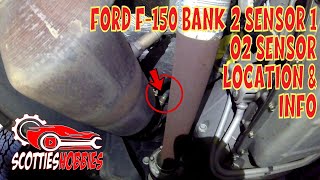
- Defective Upstream Oxygen Sensor (Bank 2, Sensor 1) 🎬 Watch: Locate the Bank 2 Sensor 1 on your Ford F150 (Very Common) — Sensors degrade over time. Carbon or silicone deposits coat the sensor tip, causing it to become 'lazy' and fail the PCM's voltage switching test.
- Leaking Intake Manifold Gaskets (Common) — Ford 4.0L V6 and 5.4L V8 engines notoriously blow intake manifold gaskets and isolator bolts. This creates a massive vacuum leak directly at the cylinder head, frequently triggering P1151 and P1131.
- Low Fuel Pressure (Common) — A weak fuel pump, clogged fuel filter, or dirty injectors starve the engine of fuel. This creates a genuine lean mixture that the O2 sensor accurately reports.
- Dirty Mass Airflow (MAF) Sensor (Less Common) — A contaminated MAF sensor under-reports incoming air. The PCM delivers too little fuel as a result. This usually affects both banks (triggering P1131 alongside P1151).
- Exhaust Leaks Before the O2 Sensor (Less Common) — Cracks in the exhaust manifold draw outside oxygen into the exhaust stream. The O2 sensor reads this extra oxygen and falsely reports a lean condition to the PCM.
- Damaged Wiring or Connectors (Rare) — Melted wires or water-logged connectors interrupt the O2 sensor's signal to the PCM, locking the voltage reading and failing the switch test.
- Faulty Powertrain Control Module (PCM) (Very Rare) — An internal PCM failure prevents it from interpreting the O2 sensor signal. Rule out all mechanical and wiring faults before replacing the computer.
Symptoms

- Check Engine Light is On — The PCM immediately illuminates the MIL when the sensor fails the switching test.
- Reduced Fuel Economy — The vehicle consumes 10-15% more fuel because the PCM defaults to a rich fuel map to protect the engine from lean detonation.
- Rough Idle or Engine Stumble — The engine shakes or idles unevenly due to the imbalanced air-fuel mixture on Bank 2.
- Hesitation or Lack of Power — The vehicle exhibits a noticeable 'flat spot' during acceleration as the engine struggles with fuel starvation.
- Engine Misfires (also visible on scanner) — Severe lean conditions cause misfires, triggering flashing check engine lights and codes like P0300 or P0302.
Diagnostic Flowchart
Tap your situation to follow the diagnostic path that matches what you're seeing on this code.
Common Fixes & Costs
- Replace Upstream Oxygen Sensor (Bank 2)
— Parts: $50-$150, Labor: $100-$200, ~1 hr book time
(Intermediate)
Ford F-150 (1997-2008): OEM - Repair Vacuum Leak (PCV Hose/Elbow)
— Parts: $10-$50, Labor: $100-$200, ~1 hr book time
(DIY)
Ford F-150 (5.4L V8): OEM - Replace Intake Manifold Gaskets
— Parts: $50-$150, Labor: $400-$800, ~4.5 hr book time
(Professional)
Ford Explorer (4.0L V6): OEM - Replace Fuel Filter
— Parts: $20-$50, Labor: $75-$150, ~1 hr book time
(DIY)
Ford F-150 (1997-2003): OEM - Replace Fuel Pump
— Parts: $200-$400, Labor: $300-$600, ~3.5 hr book time
(Professional)
Ford F-150: OEM
Used vs. New Parts: Buying Guide
When a used part is worth it: Never buy a used oxygen sensor, fuel pump, or intake gasket. Only consider a used catalytic converter if the vehicle is over 150,000 miles and a new OEM unit exceeds the car's value.
Donor-vehicle mileage cap: roughly under 80000 miles for the part to have meaningful remaining life.
Donor quality checklist:
- Verify the donor vehicle was not scrapped for engine fires or blown head gaskets.
- Ensure the catalytic converter part numbers match exactly.
- Avoid exhaust parts from Rust Belt states due to severe corrosion.
Decision logic:
- If The fix requires an O2 sensor, fuel pump, or gaskets. → Buy new OEM or premium aftermarket parts. The labor cost makes used parts too risky.
- If The fix requires a catalytic converter on a high-mileage car. → A used OEM converter from a low-mileage wreck saves $1,000+ over buying new.
Warranty tradeoff: Used catalytic converters carry a 30-day warranty. New aftermarket converters offer 1-5 years. New OEM converters offer 2 years/24,000 miles.
Worst-case if a used part fails: 1500. A failed used catalytic converter requires paying for the part and 3 hours of labor a second time.
What Happens If You Wait — Timeline
- 0-2 weeks: Check Engine Light illuminates. The vehicle drives normally with no noticeable symptoms. (MPG impact: 0-3%% · Added cost: $0)
- 1-3 months: Fuel economy drops noticeably. The engine idles roughly on cold starts and hesitates during acceleration. (MPG impact: 5-10%% · Added cost: $50-$100 in wasted fuel)
- 3-9 months: The persistent lean condition drastically raises combustion temperatures, overheating the catalytic converter's internal honeycomb. (MPG impact: 10-15%% · Added cost: $100-$250 in wasted fuel)
- 9+ months: The catalytic converter melts and clogs. The vehicle loses severe power and requires a full exhaust replacement. (MPG impact: 15-25%+% · Added cost: $1200-$2500)
Cost of Not Fixing It
- 0-1 Month: Fuel economy drops by 10-15%. The vehicle fails state emissions testing. (Added cost: 50-100)
- 1-6 Months: The persistent lean condition raises combustion temperatures, slowly degrading the catalytic converter's internal honeycomb structure. (Added cost: 0)
- 6+ Months: The catalytic converter melts and clogs, causing severe power loss and requiring full replacement. (Added cost: 1200-2500)
Diagnosis Steps

- Read Codes and Analyze Fuel Trims
Scan for codes. If P1131 (Bank 1) or P0174 (Bank 2 Lean) are present, you have a confirmed air/fuel imbalance, not just a bad sensor. Check Long Term Fuel Trim (LTFT) for Bank 2. A reading above +15% confirms the PCM is dumping fuel to fight a massive lean condition.
Tools: OBD-II Scanner with Live Data (Beginner) - Analyze Live O2 Sensor Data
Graph the voltage for Bank 2, Sensor 1 (B2S1). A healthy sensor switches rapidly between 0.1V and 0.9V. If B2S1 flatlines below 0.2V or switches sluggishly compared to Bank 1, the sensor is either dead or reading a massive vacuum leak.
Tools: Advanced OBD-II Scanner with Graphing (Intermediate) - Force the Mixture Rich (Propane Test)
While watching the live B2S1 voltage, spray a small burst of carburetor cleaner into the intake. If the voltage instantly spikes to 0.9V, the sensor works perfectly and is reporting a real vacuum leak. If the voltage remains stuck low, the sensor is dead.
Tools: Carburetor Cleaner, Advanced OBD-II Scanner (Intermediate) - Perform a Visual Inspection
Inspect the PCV valve, PCV hoses, and intake manifold for cracks. Listen for hissing sounds. Check for black soot around the exhaust manifold, which indicates an exhaust leak.
Tools: Flashlight (Beginner) - Conduct a Smoke Test
Pump smoke into the intake manifold via the brake booster vacuum line with the engine off. Smoke escaping from hoses, the throttle body, or intake gaskets pinpoints the exact location of unmetered air.
Tools: Automotive Smoke Machine (Intermediate) - Test Fuel Pressure
Connect a gauge to the fuel rail test port. Ford V8s typically require 35-45 PSI with the key on, engine off. Pressure below 30 PSI indicates a failing fuel pump or clogged filter causing the lean condition.
Tools: Fuel Pressure Gauge Kit (Intermediate) - Test the O2 Sensor Heater Circuit
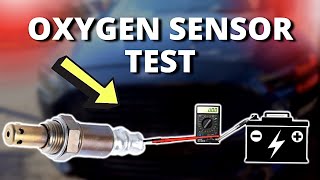
Disconnect the O2 sensor. Measure resistance across the two heater pins (usually the two same-colored wires). Resistance should be 3-25 ohms. An 'OL' (open loop) reading means the internal heater is broken and the sensor must be replaced.
Tools: Digital Multimeter (Advanced) - Analyze MAF Sensor g/s
Monitor the Mass Airflow PID at hot idle. It should read roughly 1 gram per second per liter of engine displacement (e.g., 4.6 g/s for a 4.6L engine). Readings significantly lower indicate unmetered air bypassing the sensor.
Tools: OBD-II Scanner with Live Data (Advanced)
When This Code Triggers (Freeze-Frame Conditions)
- Engine Coolant Temp: 170-210°F (Engine fully warmed up and operating in closed loop.)
- RPM: 1500-2500 RPM (Steady cruise or light acceleration, not at idle.)
- Engine Load: 20-60% (Vehicle is under a stable load, maintaining speed.)
- Vehicle Speed: 40-60 mph (Typically set during highway or steady suburban driving.)
Related Codes
- P1131 — The identical code for Bank 1. Seeing P1131 and P1151 together rules out a bad O2 sensor. It guarantees a global issue like a massive vacuum leak, low fuel pressure, or a dead MAF sensor.
- P0174 — The generic code for 'System Too Lean (Bank 2)'. P1151 means the sensor failed a test; P0174 means the PCM maxed out fuel trims trying to fix it. Seeing both confirms a severe, persistent lean condition.
- P0171 — The generic code for 'System Too Lean (Bank 1)'. Seeing P1151 and P0171 together indicates a global lean issue affecting both sides of the engine.
- P0153 — Means 'O2 Sensor Circuit Slow Response (Bank 2)'. Appearing alongside P1151, this confirms the O2 sensor is heavily contaminated, sluggish, and requires replacement.
Climate & Environmental Factors
- Cold Weather: Sub-freezing temperatures shrink and harden rubber vacuum lines and plastic PCV elbows. P1151 codes frequently trigger during the first winter cold snap as these brittle parts crack and introduce unmetered air.
- High Altitude: Thinner air reduces the PCM's margin for error. A minor vacuum leak that the computer compensates for at sea level triggers a P1151 code at 5,000+ feet.
- Corrosive Environments (Rust Belt): Road salt rusts exhaust manifolds and rots O2 sensor wiring harnesses, leading to false lean readings and electrical shorts.
How to Talk to a Mechanic About This Code
Say this: "I have a P1151 code on my Ford. I know this means the Bank 2 sensor is reading lean. Before replacing any sensors, I need you to check the live fuel trims, perform a smoke test for vacuum leaks, and verify the fuel pressure."
This proves you understand the code is often caused by vacuum leaks, not bad sensors. It forces the shop to perform a real diagnostic rather than firing the parts cannon at your wallet.
Avoid saying:
- 'My check engine light is on, can you just fix it?'
- 'I think I need a new oxygen sensor.'
- 'Just do whatever you think is necessary.'
Questions to ask before authorizing the repair:
- What were the Long Term Fuel Trim values for Bank 2?
- Did you perform a smoke test, and did you find any leaks?
- What was the fuel pressure reading at idle?
- Can you show me the live voltage graph for the Bank 2 O2 sensor?
Where to Take It: Dealer vs Independent vs Chain
- Dealer:
Best for: Vehicles under the 8-year/80,000-mile federal emissions warranty., Complex PCM software updates.
Downsides: Labor rates are $150-$250+ per hour., Service writers push expensive assembly replacements over pinpoint repairs. (Typical cost: +50% vs. baseline) - Independent Shop:
Take the vehicle to an independent shop if you lack a smoke machine or if live fuel trims remain above +15% after replacing cracked vacuum hoses.
Best for: Out-of-warranty Fords., Performing smoke tests and fuel pressure diagnostics at reasonable rates.
Downsides: Diagnostic capabilities vary; ensure they have a smoke machine before booking. (Typical cost: +0% vs. baseline) - Chain Shop:
Avoid for initial diagnosis. They will likely just replace the O2 sensor, which fails to fix the root cause in 50% of cases.
Best for: Simple O2 sensor replacements if you have already diagnosed the issue yourself.
Downsides: Technicians lack the tools and training for deep vacuum leak diagnostics., High pressure to upsell unnecessary fluid flushes. (Typical cost: -10% vs. baseline)
When to Walk Away From the Repair
If the estimated repair cost exceeds 40-50% of your car's private-party value, seriously consider selling the vehicle.
- Car worth $4000, fix is $2000: Borderline. The repair is 50% of the car's value. Get a second opinion and consider the car's overall health before proceeding.
- Car worth $12000, fix is $800: Fix it. The repair cost is only 6% of the car's value.
- Car worth $2500, fix is $1500: Walk away. The repair is 60% of the car's value. Put this money toward a replacement vehicle.
What Scan Tool You Need for This Code

Minimum: A scanner that reads Ford-specific codes, displays live Long Term Fuel Trims, and graphs live O2 sensor voltage.
A $20 code reader only shows the P1151 code. Without live O2 voltage graphs and fuel trim data, you cannot tell if the sensor is dead or if you have a massive vacuum leak.
Budget: BlueDriver Pro (~$100) — Connects to your smartphone via Bluetooth. Graphs live O2 sensor data, reads Ford-specific codes, and provides a database of verified fixes.
Mid-range: Foxwell NT510 Elite (with Ford software) (~$180) — A powerful handheld unit offering full-system Ford diagnostics, live data graphing, and bidirectional controls to command the fuel pump on for testing.
Professional: Autel MaxiCOM MK808S (~$450) — A professional tablet with extensive bidirectional controls and full-system diagnostics for over 150 brands. Overkill for a single code, but invaluable for serious DIYers.
Rent vs buy: Borrow a free basic scanner from AutoZone to confirm the code. If you plan to diagnose the vacuum leak or sensor yourself, buy the BlueDriver to access live fuel trims.
How to Clear the Code After You Fix It
- Fix the underlying vacuum leak, fuel issue, or replace the sensor.
- Clear the P1151 code using an OBD-II scanner.
- Complete a Ford drive cycle to reset readiness monitors.
Drive cycle (~30 minutes): Keep the fuel tank between 1/4 and 3/4 full. Cold start and idle for 3 minutes. Drive at a steady 45 MPH for 5 minutes. Accelerate to 60 MPH and cruise for 10 minutes. Perform 10 minutes of stop-and-go city driving. Let the vehicle cool completely and repeat.
Readiness monitors affected: Oxygen (O2) Sensor Monitor, Catalyst Monitor, Evaporative (EVAP) System Monitor
Before emissions retest: drive at least 50 miles to fully set monitors.
Watch out for:
- Disconnecting the battery clears the code but resets all monitors to 'Not Ready', guaranteeing an emissions failure.
- The code returns within 50 miles if you replaced the sensor but ignored a vacuum leak.
Will This Fail Emissions / State Inspection?
Yes — this code typically fails an OBD-II emissions inspection.
- California: An active P1151 triggers an automatic BAR-OIS failure. All readiness monitors must read 'Ready' after the repair to pass.
- New York: The NY VIP system fails any vehicle with an illuminated Check Engine Light or stored P1151 code.
- Texas: Vehicles 2001 and newer can pass with exactly one readiness monitor set to 'Not Ready', provided the Check Engine Light is off.
Most Commonly Affected Vehicles
- Ford F-150 (1997-2008) — Extremely common on 4.2L, 4.6L, and 5.4L engines. The primary culprit is a cracked PCV hose elbow at the rear of the intake manifold.
- Ford Explorer (1997-2010) — The 4.0L SOHC V6 notoriously leaks at the intake manifold gaskets and isolator bolts, triggering P1151 and P1131 simultaneously.
- Ford Ranger (1998-2011) — Shares the 4.0L V6 intake gasket issues with the Explorer. Failing DPFE sensors also contribute to lean conditions on these trucks.
- Ford Mustang (1999-2004) — Aging O2 sensors and brittle vacuum lines cause the majority of P1151 codes on both V6 and V8 models.
- Lincoln LS (2000-2006) — Ford-derived powertrains suffer from identical PCV system vacuum leaks and age-related sensor failures.
- BMW Various (1996-2013) — On BMWs, P1151 means 'O2 Sensor Heater Circuit Signal Intermittent'. This is an electrical fault in the sensor's heater, not a lean condition.
- Volkswagen / Audi Various (1999-2015) — Translates to 'Long Term Fuel Trim Additive Air; Bank 1; System too Lean'. Note this refers to Bank 1, not Bank 2.
- Subaru Various (2000-2009) — Means 'Rear Oxygen Sensor Heater Circuit High Input'. This points to a short in the downstream sensor, requiring a completely different diagnostic path.
Manufacturer-Specific Notes
- Ford: P1151 is triggered by an active PCM test that forces the mixture rich, then lean, to measure sensor reaction time. On 4.0L engines, leaking intake manifold isolator bolts are the #1 cause of failing this test.
- Jaguar: S-Type and X-Type models use Ford engines and suffer the exact same brittle PCV hose failures that trigger P1151.
- Toyota: On Prius models, P1151 indicates a fault in the Coolant Heat Storage Tank system, completely unrelated to oxygen sensors or fuel trims.
Real Owner Stories
1997 Ford F-150 with 4.2L V6
Check Engine Light came on, truck ran rough and stalled at stops. P1151 and cylinder 4 misfire codes present.
What they tried:
- Reset the computer, but codes returned immediately.
- Inspected the engine bay and smelled raw fuel.
- Discovered a massive fuel leak from the fuel rail bleeder valve.
Outcome: The leaking valve caused a total loss of fuel pressure on that bank, triggering the lean code and misfires. Replacing the valve fixed all codes.
Lesson: Strong fuel odors indicate mechanical fuel delivery failures. Don't focus solely on electronic sensors when physical evidence points to fuel starvation.
2002 Ford F-150 with 4.2L V6 at 95K miles
Sudden drop in fuel economy and loss of power. Codes P1131 and P1151 appeared together.
What they tried:
- Replaced the Bank 2 O2 sensor, fuel filter, and spark plugs.
- The light returned four days later.
- Performed an exhaustive smoke test but found zero vacuum leaks.
Outcome: The issue was a 'lazy' Bank 1 O2 sensor that failed shortly after the Bank 2 sensor. Replacing both aging sensors with Motorcraft units resolved the dual codes.
Lesson: While dual codes usually mean a vacuum leak, O2 sensors installed at the factory degrade at the exact same rate and often fail within weeks of each other.
2003 Mercury Sable (Ford Duratec V6)
Check Engine Light on with P1131 and P1151. The engine had a slightly unstable idle.
What they tried:
- Considered buying $150 worth of O2 sensors.
- Decided to inspect the PCV system first.
- Found a massive crack in the rubber PCV boot connecting to the intake manifold.
Outcome: Replaced the cracked $22 PCV boot (Dorman 46023). The vacuum leak vanished, the idle smoothed out, and the codes permanently cleared.
Lesson: Always inspect cheap rubber PCV hoses before buying expensive sensors. Heat cycles destroy these hoses, making them the #1 cause of lean codes on older Fords.
1999 Ford F-150 with 5.4L V8
P1151 code appeared two days after a transmission rebuild. The truck had a slight misfire at 50 mph.
What they tried:
- Blamed the transmission shop for the issue.
- Checked for disconnected vacuum lines near the transmission bellhousing.
- Scanned for misfire codes.
Outcome: The root cause was a failing coil-on-plug causing an intermittent misfire. The unfired cylinder dumped raw oxygen into the exhaust, which the O2 sensor correctly read as a lean condition.
Lesson: Misfires cause lean codes. Always diagnose and fix misfire codes (P030x) before attempting to diagnose a P1151 code.
How to Prevent This Code From Triggering
- Clean the Mass Airflow (MAF) Sensor (Every 30,000 miles) — Removes dirt that causes the sensor to under-report airflow, preventing the PCM from starving the engine of fuel.
- Inspect vacuum hoses and PCV elbows (Annually) — Catches hardening and cracking rubber before it splits open and causes massive vacuum leaks.
- Replace upstream O2 sensors (Every 100,000 miles) — Prevents sensors from becoming sluggish, ensuring the PCM maintains perfect fuel trims and maximum fuel economy.
Frequently Asked Questions
What is Bank 2 and where is it?
On a V-type engine, Bank 2 is the side that does NOT contain cylinder #1. For most rear-wheel-drive Ford vehicles (like the F-150 or Mustang), Bank 1 is the passenger side, making Bank 2 the driver's side.
What is the difference between an upstream and downstream O2 sensor?
The upstream sensor (Sensor 1) sits before the catalytic converter and dictates real-time air-fuel mixture adjustments. The downstream sensor (Sensor 2) sits after the converter and solely monitors the converter's health and efficiency.
I replaced the O2 sensor but P1151 came back. What's next?
This means the old sensor was working perfectly and reporting a genuine lean condition. Stop replacing sensors and perform a smoke test to find the vacuum leak, or test the fuel rail pressure to identify fuel delivery issues.
What is the diagnostic difference between P1151 and P0174?
P1151 is a sensor activity code indicating the O2 sensor failed a specific voltage switching test. P0174 is a fuel system code indicating the PCM maxed out its fuel trims trying to fix the lean condition. P1151 is the immediate symptom; P0174 confirms a long-term lean state.
Can a bad gas cap cause a P1151 code?
No. A loose gas cap triggers an Evaporative Emission (EVAP) code like P0455. It does not alter the engine's air-fuel ratio and cannot cause a P1151.
Is it okay to use a cheaper aftermarket oxygen sensor?
No. Ford PCMs are highly sensitive to O2 sensor resistance and switching rates. Always use an OEM Motorcraft sensor or a direct-fit premium alternative from Bosch or NTK to prevent the code from returning.
Can a dirty MAF sensor cause a lean code on only one bank?
Yes, but it is rare. While a failing MAF usually triggers lean codes for both banks (P1131 and P1151), specific intake manifold designs can channel unmetered air predominantly to one side. However, a vacuum leak on Bank 2 is far more likely.
Key Takeaways
- P1151 is a Ford-specific code triggered when the Bank 2 upstream oxygen sensor fails to switch voltages, locking into a lean reading below 0.2V.
- Do not blindly replace the oxygen sensor; in over 50% of cases, the sensor is correctly reporting a genuine lean condition caused by unmetered air.
- Inspect the PCV hoses and intake manifold gaskets first, as these are the source of vacuum leaks in 4.0L, 4.6L, and 5.4L Ford engines.
- Use a scan tool to monitor live Long Term Fuel Trim (LTFT); a reading above +15% on Bank 2 confirms a severe lean condition requiring a smoke test.
- Driving with an active P1151 code for more than 3 months forces the engine to run hot, risking a $1,500+ catalytic converter replacement.
Helpful Videos

The information in this article is provided for general reference and educational purposes only. Vehicle specifications, procedures, and part compatibility can vary by production date, trim level, and region. Always consult your vehicle's factory service manual and verify part numbers before purchasing or performing repairs. Safety-critical components such as airbags, seat belts, and braking systems should be installed by a qualified professional.
- 🎬 Helpful Videos
- What Does P1151 Mean?
- Can I Drive With P1151?
- Common Causes
- Symptoms
- Diagnostic Flowchart
- Common Fixes & Costs
- Used vs. New Parts: Buying Guide
- What Happens If You Wait — Timeline
- Cost of Not Fixing It
- Diagnosis Steps
- When This Code Triggers (Freeze-Frame Conditions)
- Related Codes
- Climate & Environmental Factors
- How to Talk to a Mechanic About This Code
- Where to Take It: Dealer vs Independent vs Chain
- When to Walk Away From the Repair
- What Scan Tool You Need for This Code
- How to Clear the Code After You Fix It
- Will This Fail Emissions / State Inspection?
- Most Commonly Affected Vehicles
- Manufacturer-Specific Notes
- Real Owner Stories
- 1997 Ford F-150 with 4.2L V6
- 2002 Ford F-150 with 4.2L V6 at 95K miles
- 2003 Mercury Sable (Ford Duratec V6)
- 1999 Ford F-150 with 5.4L V8
- How to Prevent This Code From Triggering
- Frequently Asked Questions
- What is Bank 2 and where is it?
- What is the difference between an upstream and downstream O2 sensor?
- I replaced the O2 sensor but P1151 came back. What's next?
- What is the diagnostic difference between P1151 and P0174?
- Can a bad gas cap cause a P1151 code?
- Is it okay to use a cheaper aftermarket oxygen sensor?
- Can a dirty MAF sensor cause a lean code on only one bank?
- Key Takeaways
- 🎟️ Get 5% Off