

OBD-II Code P1150: Air/Fuel Sensor Circuit Malfunction
The Ultimate Guide to Understanding, Diagnosing, and Fixing P1150
- Verify your vehicle's specific P1150 definition before buying parts, as it means a faulty Bank 2 Air/Fuel sensor on a Toyota but indicates a Coolant Heat Storage failure on a 2004-2009 Prius.
- Perform a smoke test to rule out vacuum and exhaust leaks before spending $250+ on a new Air/Fuel sensor, as unmetered air frequently triggers false sensor codes.
- Fix a P1150 code within 1 to 3 months to prevent the resulting rich fuel mixture from melting your catalytic converter, which escalates a $300 repair into a $2,000+ replacement.
- Use an advanced OBD-II scanner to monitor live voltage data; a healthy Bank 2 Sensor 1 should fluctuate around 3.3V, while a flat or stuck reading confirms the sensor is dead.
What Does P1150 Mean?

P1150 indicates the Powertrain Control Module (PCM) detects a problem with the signal from the air-fuel ratio (A/F) sensor on Engine Bank 2. This wideband oxygen sensor measures exhaust oxygen levels so the PCM can precisely adjust the fuel mixture. When P1150 sets, the sensor's signal is out of range, responding too slowly, or stuck, preventing the PCM from maintaining the correct air-fuel balance.
Technical definition: The official SAE definition for P1150 is manufacturer-specific. Toyota and Lexus define it as 'Air/Fuel Ratio Sensor Circuit Range/Performance Malfunction (Bank 2, Sensor 1)'. Ford defines it as 'Lack of Upstream Heated Oxygen Sensor Switch Adaptive Fuel Limit Bank 2', meaning the sensor reading is stuck. Other manufacturers like Hyundai, BMW, and Subaru use this code for entirely different systems, referencing MAP sensors, downstream O2 sensors, or heater circuits respectively.
Can I Drive With P1150?

Yes, But With Caution. You can drive for short distances, but it is strongly discouraged. Your vehicle will suffer from poor fuel economy, rough performance, and higher emissions. Continuing to drive with a P1150 code causes unburned fuel to enter the exhaust, which overheats and melts the internal components of the catalytic converter. This turns a relatively inexpensive sensor repair into a catalytic converter replacement costing between $800 and $2,500.
Common Causes

- Faulty Air/Fuel Ratio (A/F) Sensor (Very Common) — The sensor itself is the most frequent culprit. The sensing element degrades from carbon, oil, coolant, or heat cycles. An internal heater element failure also prevents it from reaching operating temperature, causing a performance fault.
- Exhaust Leak (Common) — A crack in the exhaust manifold or a leaking gasket before the A/F sensor allows outside oxygen into the exhaust stream. This fools the sensor into reporting a lean condition, causing the PCM to inject excess fuel and trigger the code. 🎬 Watch: The fastest way to find a hidden exhaust leak.
- Vacuum Leak (Common) — A leak in the intake manifold, vacuum hoses, or PCV system allows unmetered air into the engine. The A/F sensor correctly reports this lean condition, but the PCM interprets the extreme out-of-range signal as a sensor performance issue.
- Damaged Wiring or Connectors (Less Common) — The wiring harness is exposed to extreme heat and road debris. Brittle, frayed, or melted wires, along with corroded connector pins, create poor or shorted circuits that disrupt the signal.
- Contaminated or Faulty Mass Airflow (MAF) Sensor (Less Common) — A dirty MAF sensor under-reports incoming air. The PCM calculates an incorrect fuel delivery, creating a lean condition that the A/F sensor detects.
- Faulty Manifold Absolute Pressure (MAP) Sensor (Rare) — On certain Hyundai and Kia vehicles, a faulty MAP sensor is the specific cause of P1150. It sends incorrect engine load data to the PCM, leading to improper fueling.
- Blown Fuse (Rare) — If the A/F sensor heater circuit fuse blows, the sensor cannot warm up and will not send a correct signal.
- Fuel Delivery Issues (Rare) — A clogged Bank 2 fuel injector, weak fuel pump, or faulty fuel pressure regulator creates a lean or rich condition. The A/F sensor accurately detects this imbalance, but the fault lies with the fuel system.
- Faulty Powertrain Control Module (PCM) (Very Rare) — In extremely rare cases, the PCM itself has a faulty driver circuit for the A/F sensor. Consider this only after exhaustively ruling out all other possibilities.
Symptoms

- Check Engine Light is On — This is the most common symptom. On many Toyota and Lexus vehicles, the Vehicle Stability Control (VSC) or Traction Control light also illuminates as a secondary warning.
- Decreased Fuel Economy — The PCM reverts to a default rich fuel mixture when it cannot trust the A/F sensor, significantly increasing fuel consumption.
- Rough Idle or Engine Hesitation — The engine runs unevenly, stumbles at idle, or hesitates during acceleration. Lexus RX300 models often exhibit a very high cold idle (1700-1800 RPM).
- Audible Exhaust Leak — A ticking or puffing sound from the engine bay, especially when cold, indicates an exhaust manifold leak.
- Failed Emissions Test (scan-tool only — no driver-felt sign) — An incorrect air-fuel ratio produces excessive hydrocarbons and carbon monoxide, guaranteeing an emissions test failure.
Diagnostic Flowchart
Tap your situation to follow the diagnostic path that matches what you're seeing on this code.
Common Fixes & Costs
- Replace Air/Fuel Ratio Sensor (Bank 2, Sensor 1)
— Parts: $150-$300, Labor: $100-$200, ~1.2 hr book time
(Intermediate)
Lexus RX300 (1999-2003): OEM Toyota P/N 89467-48011 (Alt: Denso P/N 234-9009, NTK P/N 24623)
Toyota Camry V6 (1998-2003): OEM Toyota P/N 89467-48011 (Alt: Denso P/N 234-9009, NTK P/N 24623)
Toyota Sienna/Highlander V6 (2004-2007, 3.3L): OEM Toyota P/N 89467-08030 / 89467-48060 (Alt: Denso P/N 234-9042, NTK P/N 24687) - Repair Vacuum Leak — Parts: $5-$150, Labor: $100-$400, ~2.5 hr book time (Intermediate)
- Repair Exhaust Leak — Parts: $20-$250, Labor: $100-$350, ~2.8 hr book time (Professional)
- Clean or Replace Mass Airflow (MAF) Sensor — Parts: $15-$300, Labor: $50-$100, ~0.5 hr book time (DIY)
- Replace Blown Fuse and Inspect Wiring — Parts: $1-$20, Labor: $50-$200, ~0.8 hr book time (DIY)
Used vs. New Parts: Buying Guide
When a used part is worth it: It is strongly discouraged to buy a used Air/Fuel or Oxygen sensor. They are wear-and-tear items with a finite lifespan. The risk of installing a faulty used sensor and repeating the labor outweighs any potential savings.
Donor-vehicle mileage cap: roughly under 20000 miles for the part to have meaningful remaining life.
Donor quality checklist:
- Only consider if from an extremely low-mileage vehicle that was wrecked.
- Verify the part number is an exact OEM match for your vehicle.
- Avoid parts with any visible corrosion, oil contamination, or physical damage.
Decision logic:
- If The part is an Air/Fuel (O2) Sensor → Buy a new, high-quality OEM (Denso, NTK) part. The cost savings of a used sensor are not worth the high risk of premature failure.
- If The required part is an exhaust manifold or other non-sensor component → A used part from a low-mileage, non-corroded donor is a viable option if inspected for cracks or warping.
Warranty tradeoff: Used sensors typically have no warranty or a 30-day max warranty. New OEM-quality sensors carry a warranty of 1 year or more.
Worst-case if a used part fails: $150-$300, representing the cost of repeat labor to diagnose and replace the faulty used sensor with a new one.
What Happens If You Wait — Timeline
- 0-2 weeks: Check Engine Light is on. The PCM defaults to a safe, slightly rich fuel map. No other symptoms are likely to be perceived by the driver. (MPG impact: 0-5%% · Added cost: $0)
- 2 weeks - 3 months: A noticeable drop in fuel economy becomes apparent. The engine exhibits a slightly rough or high idle, especially on cold starts. The rich fuel mixture begins to stress the catalytic converter. (MPG impact: 5-10%% · Added cost: $20-$80 in wasted fuel)
- 3-6 months: Sustained rich conditions cause the catalytic converter to consistently overheat. Its internal ceramic substrate begins to crack or get coated. Spark plugs become fouled with carbon. (MPG impact: 10-15%% · Added cost: $100-$300 (spark plug replacement) + irreversible catalyst damage)
- 6+ months: Catastrophic failure of the catalytic converter. The internal substrate melts into a solid block, creating a major exhaust restriction. The engine loses significant power and stalls. (MPG impact: >15%% · Added cost: $1,200 - $2,800 for catalytic converter and potentially O2 sensor replacement)
Cost of Not Fixing It
- 0-1 month: Noticeable drop in fuel economy (5-15%) and potential for failed emissions test. (Added cost: $20-$60 per month in extra fuel costs)
- 1-6 months: Excess fuel overheats the catalytic converter, reducing its efficiency. Spark plugs become fouled. (Added cost: $100-$300 for spark plug replacement)
- 6+ months: Catastrophic failure of the catalytic converter. The internal substrate melts, creating a severe exhaust blockage and loss of power. (Added cost: $1200-$2800 for catalytic converter replacement)
Diagnosis Steps
- Verify All Trouble Codes and Review Freeze Frame Data
Using an OBD-II scanner, read all stored codes. Pay close attention to related codes like P0174 (Lean Bank 2), P1130 (Bank 1 equivalent), or P1155 (Heater Circuit). Review the freeze frame data to see the exact engine conditions when the code was set.
Tools: OBD-II Scanner (Beginner) - Thorough Visual Inspection
Visually inspect the Bank 2 Sensor 1 A/F sensor and its wiring harness for melting, fraying, or corrosion. Inspect the air intake system for cracked hoses. Check the exhaust manifold near the sensor for black soot trails indicating an exhaust leak.
Tools: Flashlight, Safety Glasses, Inspection Mirror (Beginner) - Analyze Live A/F Sensor Voltage Data
Use a scan tool with live data capabilities. On Toyota/Lexus, graph the 'A/F SENSOR B2S1' voltage. A healthy sensor fluctuates slightly around 3.3V. A voltage stuck high (> 3.8V) or low (< 2.8V), or a flat line unresponsive to throttle changes, confirms the sensor is faulty.
Tools: Advanced OBD-II Scanner (Advanced) - Test for Vacuum and Exhaust Leaks
Use a smoke machine to feed pressurized smoke into the intake system; smoke pours out of any vacuum leak. To find an exhaust leak, start the cold engine and feel for puffs of air around the exhaust manifold gaskets.
Tools: Smoke Machine, Gloves, Safety Glasses (Intermediate) - Test the Sensor Heater Circuit Resistance
Disconnect the sensor and use a multimeter set to Ohms. Measure the resistance between the two heater pins on the sensor side. For a typical Denso sensor at room temperature, resistance should be 1.8 to 3.4 ohms. An open circuit or direct short confirms the internal heater has failed.
Tools: Multimeter, Wiring Diagram (Advanced) - Check for Reference Voltage and Ground at the Harness
With the sensor unplugged and the key 'On' (engine off), test the vehicle's harness connector. On a Toyota/Lexus, you should find approximately 3.0V on one signal pin and 3.3V on the other. The absence of these voltages points to a wiring or PCM issue.
Tools: Multimeter, Wiring Diagram (Advanced) - Check Fuel Pressure and MAF Sensor Reading
Connect a fuel pressure gauge; pressure should be ~41 PSI above intake manifold pressure on a Toyota V6. Monitor the MAF sensor PID. A healthy 3.0L V6 MAF reads 3.0-6.0 g/s at warm idle. Incorrect readings point to fuel or air metering issues.
Tools: Fuel Pressure Gauge, Advanced OBD-II Scanner (Advanced) - Inspect the 'Tuning Resistor' (Toyota/Lexus)
Some older Toyota/Lexus A/F sensors have a calibration resistor built into the wiring connector. Inspect the connector for damage. If a universal sensor was installed without the correct resistor, it will not work properly.
Tools: Flashlight (Professional)
When This Code Triggers (Freeze-Frame Conditions)
- Engine Coolant Temp: 170-210°F (Fully warmed up)
- RPM: 1500-3000 (Cruise or steady throttle)
- Engine Load: 25-60% (Light to moderate acceleration or maintaining speed)
- Vehicle Speed: 40-70 mph (Highway driving)
Related Codes
- P1130 — Identical performance fault for Bank 1. Seeing both indicates a systemic issue like low fuel pressure or a bad MAF sensor.
- P0174 — System Too Lean (Bank 2). Often accompanies P1150. If seen together, the A/F sensor is likely faulty and providing false lean readings.
- P1155 — Heater circuit malfunction for Bank 2, Sensor 1. If paired with P1150, the sensor has failed internally and must be replaced.
- P1153 — Response Malfunction. The sensor signal is not changing quickly enough. Confirms a failed sensor.
Climate & Environmental Factors
- Cold Weather: Freezing temperatures delay the A/F sensor's internal heater from reaching its 1200°F operating temperature, causing sluggish response and triggering the code.
- High Humidity / Road Salt: Accelerates corrosion of the sensor's electrical connector, increasing resistance and disrupting the signal.
- Extreme Thermal Cycles: Repeated expansion and contraction causes the exhaust manifold to crack or warp, creating an exhaust leak.
How to Talk to a Mechanic About This Code
Say this: "I have a P1150 code on my [Make, Model, Year]. I'd like to schedule a diagnostic. Before replacing the A/F sensor, please perform a smoke test to check for vacuum and exhaust leaks, and analyze the live sensor data to confirm it's faulty."
This signals you know that the sensor isn't the only cause and that proper diagnosis involves more than just reading the code. It prevents a shop from immediately selling you an expensive sensor without checking for cheaper problems like a cracked hose.
Avoid saying:
- 'My check engine light is on, can you just fix it?'
- 'My car is running rough, I think it's the oxygen sensor.'
- 'Just do whatever you think is best.'
Questions to ask before authorizing the repair:
- Did you find any vacuum or exhaust leaks with the smoke test?
- What did the live data from the A/F sensor look like? Was it stuck, or just slow?
- Can you provide me with the freeze-frame data for the code?
- What is the warranty on the recommended part and the labor?
Where to Take It: Dealer vs Independent vs Chain
- Dealer:
Recommended for specific, quirky vehicles like the Prius or if the vehicle is under warranty. Otherwise, not the most cost-effective choice for a common Toyota/Lexus.
Best for: Vehicles under warranty, Complex manufacturer-specific quirks (like the P1150 code on a Gen 2 Prius or certain Hyundai models), When you want a guaranteed OEM part and are less sensitive to cost.
Downsides: Highest labor rates, typically 1.5-2x more than independent shops., May recommend replacing related parts as a 'precaution', increasing the bill. (Typical cost: +50% vs. baseline) - Independent Shop:
Best overall fit. A reputable independent shop easily diagnoses and repairs the common causes of P1150 for a fair price.
Best for: Most out-of-warranty vehicles, especially for common codes like P1150 on a Toyota or Lexus., Building a relationship with a trusted mechanic for future needs., Cost-conscious owners seeking good value.
Downsides: Quality and diagnostic skill vary greatly; vet shops based on reviews and ASE certifications., May not be aware of very specific manufacturer TSBs without access to dealer-level information systems. (Typical cost: +0% vs. baseline) - Chain Shop:
Use with caution. Acceptable if you are 100% certain the A/F sensor is the only problem. AVOID for initial diagnosis, as they are more likely to replace parts without proper troubleshooting.
Best for: Simple, straightforward part replacements when you've already diagnosed the issue yourself.
Downsides: Technician skill varies dramatically., High pressure to upsell services (e.g., fuel system cleanings, flushes) that may not be necessary., May lack the advanced diagnostic tools to differentiate between a bad sensor and a vacuum leak. (Typical cost: -10% vs. baseline)
When to Walk Away From the Repair
If the estimated repair cost exceeds 50% of the car's private-party value, seriously consider selling or trading it in instead of repairing it.
- Car worth $3500, fix is $2200: Walk away. The repair cost is over 60% of the car's value. It's not a sound financial decision.
- Car worth $8000, fix is $550: Fix it. The repair is well below the 50% threshold and is necessary for the vehicle's performance and emissions compliance.
- Car worth $2800, fix is $1500: Borderline. The cost is just over the 50% threshold. Get a second opinion and assess the car's overall condition before deciding.
What Scan Tool You Need for This Code

Minimum: A scanner that can read and clear codes, and display live data streams for sensor voltages.
A basic $20 code reader only gives you the 'P1150' code. To properly diagnose it, you MUST watch the A/F sensor's live voltage to see if it's lazy, stuck, or responding correctly. Without live data, you can't tell a bad sensor from a vacuum leak.
Budget: BlueDriver Pro (~$100) — Connects to your smartphone via Bluetooth and provides excellent live data graphing capabilities. This is enough to watch the A/F sensor voltage and compare it to the Bank 1 sensor, which is the key diagnostic step for P1150.
Mid-range: Foxwell NT510 Elite (~$180) — A handheld unit that provides manufacturer-specific code definitions and live data PIDs. This is crucial for P1150, as it helps you know if your Hyundai's code means MAP sensor or if your Prius's code means coolant system.
Professional: Autel MaxiCOM MK808 (~$500) — A professional-level tablet scanner that offers full system access and bidirectional controls. It allows a technician to command specific tests and access deeper levels of data for complex diagnostic situations.
Rent vs buy: Auto parts stores will read your code for free, but they won't let you diagnose with their tool. For P1150, since live data is critical, buying a budget pick like the BlueDriver is a smart investment for any DIYer.
How to Clear the Code After You Fix It
- Reconnect battery if disconnected
- Use OBD-II scan tool to clear diagnostic trouble codes
- Perform a complete drive cycle to allow readiness monitors to run
Drive cycle (~30 minutes): From a cold start, idle for 5-10 minutes. Drive for 10-15 minutes at a steady highway speed (55-65 mph). Then, drive for 5-10 minutes in stop-and-go city traffic. Allow the vehicle to cool down completely (8+ hours) and repeat if necessary.
Readiness monitors affected: Catalyst monitor, O2 sensor monitor, O2 sensor heater monitor
Before emissions retest: drive at least 100 miles to fully set monitors.
Watch out for:
- Clearing the code with a scanner resets all readiness monitors to 'Not Ready', causing an automatic emissions test failure.
- The code returns quickly if the underlying root cause was not correctly repaired.
- Not driving long enough under varied conditions prevents monitors from completing their self-tests.
Will This Fail Emissions / State Inspection?
Yes — this code typically fails an OBD-II emissions inspection.
- California: An active P1150 code is an automatic failure. After repair, all readiness monitors must be set to 'Ready', which requires driving 50-100 miles before a re-test.
- New York: A vehicle with an illuminated Check Engine Light automatically fails the NYS OBDII emissions inspection. For 2001 and newer vehicles, only one readiness monitor is allowed to be 'Not Ready'.
- Texas: In the 17 counties requiring emissions testing, an illuminated Check Engine Light from a P1150 code results in an automatic failure.
Most Commonly Affected Vehicles
- Toyota Camry (V6) (1998-2006) — Extremely common on the 1MZ-FE and 3MZ-FE V6 engines for a failed Bank 2 (front, by the radiator) A/F sensor.
- Lexus RX300 (1999-2003) — Frequently experiences P1150 due to a failed front A/F sensor (Denso P/N 234-9009). Symptoms include a high cold idle (1700-1800 RPM) and an illuminated VSC light.
- Toyota Highlander / Sienna (V6) (2001-2007) — Uses the same 1MZ-FE or 3MZ-FE engine as the Camry and RX300, making it equally susceptible to this code from a failed front A/F sensor.
- Ford F-150 / Explorer (V8) (1997-2008) — On Ford vehicles, this code means the Bank 2 sensor is not switching its voltage correctly as the PCM adjusts fuel trim, indicating a stuck sensor.
- Hyundai Sonata / Santa Fe (2006-2014) — For many Hyundai models, P1150 is defined as a Manifold Absolute Pressure (MAP) sensor issue, not an oxygen sensor fault.
- Kia Optima / Sorento (2006-2015) — Similar to Hyundai, P1150 on a Kia is frequently related to the Manifold Absolute Pressure (MAP) sensor's performance.
- Subaru Impreza / Forester / Outback (1999-2005) — For Subaru, P1150 means 'Front Oxygen Sensor Heater Circuit High Input', pointing specifically to an electrical problem with the sensor's internal heater.
- Toyota Prius (2004-2009) — Uniquely, P1150 on a Gen 2 Prius indicates a fault in the Coolant Heat Storage System ('thermos'), such as a bad pump or stuck valve. It is not related to the air-fuel sensor.
Manufacturer-Specific Notes
- Toyota / Lexus: Almost always refers to the Bank 2, Sensor 1 A/F Sensor. Use OEM Denso sensors for longevity.
- Ford: Means 'Lack of HO2S21 Switch', indicating the upstream sensor is stuck lean or rich.
- Hyundai / Kia: Points to a Manifold Absolute Pressure (MAP) sensor fault, not the A/F sensor. Verify the code definition for your specific year.
- BMW: Translates to a downstream (post-catalyst) sensor signal issue, requiring a completely different diagnostic approach.
- Subaru: Defined as 'Front Oxygen Sensor Heater Circuit High Input', pointing to an electrical problem with the internal heater.
- Toyota Prius (Gen 2): Indicates a problem with the Coolant Heat Storage System (bad pump, stuck valve, or faulty temp sensor), not the A/F sensor.
- All (Warranty Note): A/F sensors are typically covered under the 2-year/24,000-mile Federal Emissions Warranty, not the 8-year/80,000-mile major component warranty.
Real Owner Stories
2001 Lexus RX300 with 139K miles - The Textbook Fix
Check Engine and VSC lights came on. Scanner pulled codes P1150 and P1155.
Outcome: The owner purchased the recommended OEM-equivalent part (Denso 234-9009) to replace the Bank 2, Sensor 1 A/F sensor, resolving both codes.
Lesson: When a sensor performance code appears with its own heater circuit fault code, it is a strong confirmation that the sensor is the root cause.
2001 Lexus RX300 with 123K miles - The Repair That Didn't Stick
P1150 code appeared, along with Check Engine and VSC lights.
Outcome: Forum members advised the owner to re-check the electrical connector for a solid connection and to consider the possibility of a counterfeit or faulty new sensor.
Lesson: If a code returns immediately after a part replacement, ensure the electrical connector is fully seated and clean. Be aware that counterfeit auto parts are common online.
2007 Toyota Prius with ~80K miles - The Most Common Misdiagnosis
Check Engine Light and Red Triangle warning on, scanner shows P1150.
Outcome: The P1150 code on a 2004-2009 Toyota Prius does NOT refer to the A/F sensor. It specifically indicates a fault in the Coolant Heat Storage System.
Lesson: Always verify the code definition for your exact make, model, AND year. Manufacturer quirks lead to expensive incorrect repairs if you rely on generic code definitions.
Lexus RX300 with an Exhaust Leak
Check Engine Light came on with codes P1130 (Bank 1) and P1150 (Bank 2), accompanied by a louder-than-usual exhaust noise.
Outcome: The community advised that having A/F sensor codes for both banks simultaneously, combined with exhaust noise, points to an exhaust leak before the sensors.
Lesson: If you get codes for the same sensor on both engine banks, look for a single root cause affecting both, like an exhaust leak, vacuum leak, or fuel pressure problem.
How to Prevent This Code From Triggering
- Use Top-Tier certified gasoline (Every fill-up) — Gasolines with higher levels of detergents prevent carbon deposits on fuel injectors and intake valves, reducing the contaminants that foul the A/F sensor.
- Fix engine oil and coolant leaks immediately (As they occur) — Oil or coolant burning in the combustion chamber or leaking externally onto the sensor body contaminates the delicate sensing element, causing premature failure.
- Clean the Mass Airflow (MAF) sensor (Every 30,000 miles or with air filter change) — A dirty MAF sensor under-reports airflow, causing the engine to run lean. A $15 can of MAF cleaner prevents the PCM from misdiagnosing this as a bad A/F sensor.
- Address engine misfires instantly (As they occur) — A misfiring cylinder dumps raw, unburned fuel into the exhaust. This fuel superheats and destroys both the A/F sensor and the catalytic converter in a very short time.
- Avoid frequent short trips (Daily habit) — Short drives prevent the exhaust system from reaching full operating temperature, allowing condensation and carbon to build up on the sensor. Occasional highway drives burn off these deposits.
Frequently Asked Questions
What is the most common misdiagnosis for P1150?
The most common mistake is immediately replacing the expensive A/F sensor without ruling out simpler causes. A professional technician always checks for vacuum and exhaust leaks first. An exhaust leak before the sensor is a frequent cause that is often overlooked.
Can a vacuum leak cause a P1150 code?
Yes. A vacuum leak introduces unmetered air, causing a lean condition. If the lean condition is severe enough, the PCM interprets the sensor's extreme out-of-range signal as a sensor performance fault, triggering P1150.
Why did my VSC or Traction Control light come on with the P1150 code?
On many Toyota and Lexus vehicles, the engine management system disables the VSC and traction control systems as a precaution when an engine fault occurs. This illuminates their respective warning lights alongside the Check Engine Light.
My scanner shows P1150 and P1155 together. What does that mean?
This combination strongly indicates the Air/Fuel sensor itself has failed. P1155 points specifically to a fault in the sensor's internal heater circuit, which prevents the sensor from producing a valid signal (P1150). Seeing both codes makes the sensor the prime suspect and nearly eliminates external causes.
What does 'Bank 2, Sensor 1' mean?
On a V-shaped engine, 'Bank 1' is the side containing cylinder #1, and 'Bank 2' is the opposite side. 'Sensor 1' refers to the upstream sensor located before the catalytic converter, which controls the engine fuel mixture.
Should I use a cheaper universal oxygen sensor or an OEM sensor?
Always use an OEM or OEM-quality (Denso or NTK) direct-fit sensor. Universal sensors require splicing wires and lack the correct internal calibration resistor. This leads to persistent codes and poor performance.
What happens if I ignore code P1150?
Ignoring the code causes the engine to run inefficiently on a default rich fuel mixture, leading to poor gas mileage. Over time, excess unburned fuel ignites inside the catalytic converter, melting its internal structure. This turns a $300 repair into a $2,500+ repair.
Key Takeaways
- Verify your vehicle's specific P1150 definition before buying parts, as it means a faulty Bank 2 Air/Fuel sensor on a Toyota but indicates a Coolant Heat Storage failure on a 2004-2009 Prius.
- Perform a smoke test to rule out vacuum and exhaust leaks before spending $250+ on a new Air/Fuel sensor, as unmetered air frequently triggers false sensor codes.
- Fix a P1150 code within 1 to 3 months to prevent the resulting rich fuel mixture from melting your catalytic converter, which escalates a $300 repair into a $2,000+ replacement.
- Use an advanced OBD-II scanner to monitor live voltage data; a healthy Bank 2 Sensor 1 should fluctuate around 3.3V, while a flat or stuck reading confirms the sensor is dead.
Helpful Videos
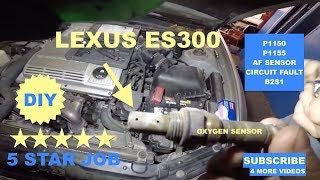
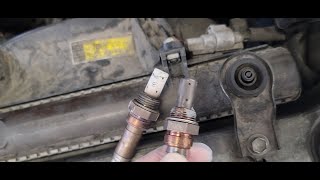




The information in this article is provided for general reference and educational purposes only. Vehicle specifications, procedures, and part compatibility can vary by production date, trim level, and region. Always consult your vehicle's factory service manual and verify part numbers before purchasing or performing repairs. Safety-critical components such as airbags, seat belts, and braking systems should be installed by a qualified professional.
- 🎬 Helpful Videos
- What Does P1150 Mean?
- Can I Drive With P1150?
- Common Causes
- Symptoms
- Diagnostic Flowchart
- Common Fixes & Costs
- Used vs. New Parts: Buying Guide
- What Happens If You Wait — Timeline
- Cost of Not Fixing It
- Diagnosis Steps
- When This Code Triggers (Freeze-Frame Conditions)
- Related Codes
- Climate & Environmental Factors
- How to Talk to a Mechanic About This Code
- Where to Take It: Dealer vs Independent vs Chain
- When to Walk Away From the Repair
- What Scan Tool You Need for This Code
- How to Clear the Code After You Fix It
- Will This Fail Emissions / State Inspection?
- Most Commonly Affected Vehicles
- Manufacturer-Specific Notes
- Real Owner Stories
- 2001 Lexus RX300 with 139K miles - The Textbook Fix
- 2001 Lexus RX300 with 123K miles - The Repair That Didn't Stick
- 2007 Toyota Prius with ~80K miles - The Most Common Misdiagnosis
- Lexus RX300 with an Exhaust Leak
- How to Prevent This Code From Triggering
- Frequently Asked Questions
- What is the most common misdiagnosis for P1150?
- Can a vacuum leak cause a P1150 code?
- Why did my VSC or Traction Control light come on with the P1150 code?
- My scanner shows P1150 and P1155 together. What does that mean?
- What does 'Bank 2, Sensor 1' mean?
- Should I use a cheaper universal oxygen sensor or an OEM sensor?
- What happens if I ignore code P1150?
- Key Takeaways
- 🎟️ Get 5% Off