

OBD-II Code P1147: Rear Oxygen Sensor Maximum Voltage Not Reached
The Ultimate Guide to Diagnosing and Fixing P1147 on Nissan, Infiniti, and More
- P1147 is a Nissan and Infiniti-specific code indicating the Bank 1 rear oxygen sensor failed to reach the required 0.62V peak during a self-test.
- Replacing the Bank 1 Sensor 2 oxygen sensor resolves this code in over 80% of cases, costing between $150 and $450 at a repair shop.
- Driving with an active P1147 code drops fuel economy by 5-15% and guarantees an automatic emissions test failure.
- If a new sensor fails to clear the code, inspect the 15-amp O2 heater circuit fuse and check for exhaust leaks upstream of the sensor.
- Do not apply this diagnostic logic to Hyundai, VW, or diesel vehicles, as they use P1147 for entirely different throttle or fuel pressure faults.
What Does P1147 Mean?

P1147 means the Engine Control Module (ECM) is not receiving the correct voltage from the oxygen sensor located after the catalytic converter on engine bank 1. This sensor monitors catalytic converter efficiency. When the sensor's signal fails to reach a specific high-voltage threshold during a diagnostic self-test, the computer triggers the Check Engine Light.
Technical definition: Heated Oxygen Sensor 2 (Rear) Maximum Voltage Monitoring (Bank 1). The ECM performed a self-test on the rear oxygen sensor (Bank 1, Sensor 2) and detected the maximum voltage output did not reach the minimum required peak, indicating a faulty sensor or circuit issue.
Can I Drive With P1147?
Yes, But With Caution. Yes, you can drive with this code, but you will experience poor gas mileage and fail an emissions test. Fix it promptly. Driving for hundreds of miles with a faulty sensor forces a rich fuel mixture, overheating and damaging your catalytic converter—a repair costing between $800 and $2,500.
Common Causes

- Faulty Heated Oxygen Sensor (Bank 1, Sensor 2) (Very Common) — The sensor wears out over time from constant exposure to hot exhaust gases and fails to produce the correct voltage signal.
- Damaged Wiring or Connectors (Common) — Road debris, exhaust heat, or corrosion damages the wiring harness or electrical connector, causing a short, open, or high-resistance circuit. Wires also become brittle and break internally.
- Exhaust System Leaks (Common) — A crack or leak in the exhaust manifold, gaskets, or pipes near the sensor lets unmetered oxygen into the exhaust stream. This fools the sensor, preventing it from reaching the expected voltage.
- Blown Fuse for O2 Sensor Heater Circuit (Less Common) — The oxygen sensor uses a built-in heater to reach operating temperature quickly. If the 15-amp heater circuit fuse blows, the sensor stays cold, outputs incorrect readings, and triggers the code.
- Use of Aftermarket 'Test Pipes' or High-Flow Catalytic Converters (Less Common) — Replacing the stock catalytic converter with a straight 'test pipe' or high-flow converter alters exhaust flow. The ECM expects a specific voltage change that these aftermarket parts prevent.
- Intake Air Leaks (Rare) — A vacuum leak from a cracked intake manifold gasket or hose throws off the engine's air-fuel ratio, altering exhaust composition and triggering P1147.
- Incorrect Fuel Pressure or Faulty Fuel Injectors (Rare) — A leaking injector or weak fuel pump forces the engine to run too rich or too lean, causing the downstream oxygen sensor to output abnormal readings.
- Faulty Engine Control Module (ECM) (Very Rare) — The ECM itself fails to correctly interpret O2 sensor signals. Consider this only after exhaustively testing the sensor, wiring, and exhaust system.
Symptoms
- Check Engine Light is On — This is the first and often only symptom the driver notices.
- Failed Emissions Test — An active P1147 code automatically fails any state-mandated OBD-II emissions inspection.
- Worse Gas Mileage — The engine defaults to a richer fuel trim, forcing you to fill up your gas tank more often.
- Excessive Smoke or Rotten Egg Smell — An incorrect air-fuel mixture produces black tailpipe smoke or a sulfur smell, indicating an overworked catalytic converter.
- Sluggish Engine Performance or Rough Idle — The engine feels weak, hesitates during acceleration, or idles roughly. 🎬 Watch: How to spot symptoms and test your Nissan O2 sensor.
Diagnostic Flowchart
Tap your situation to follow the diagnostic path that matches what you're seeing on this code.
Common Fixes & Costs
- Replace Heated Oxygen Sensor (Bank 1, Sensor 2) — Parts: $50-$200, Labor: $100-$250, ~0.7 hr book time (Intermediate)
- Replace Blown O2 Sensor Fuse — Parts: $1-$5, Labor: $0-$50, ~0.2 hr book time (DIY)
- Repair Damaged Wiring or Connector — Parts: $10-$50, Labor: $100-$300, ~1.5 hr book time (Intermediate)
- Repair Exhaust Leak — Parts: $20-$100, Labor: $150-$400, ~2.5 hr book time (Professional)
- Reprogram Engine Control Module (ECM) — Parts: $0, Labor: $100-$200, ~1 hr book time (Professional)
Used vs. New Parts: Buying Guide
When a used part is worth it: Buying a used oxygen sensor is never recommended. They are wear-and-tear items with a finite lifespan, and a used one fails shortly after installation. Buy a new OEM or reputable aftermarket sensor (e.g., Denso, Bosch, NTK).
Donor-vehicle mileage cap: roughly under 20000 miles for the part to have meaningful remaining life.
Donor quality checklist:
- If forced to use a used sensor, source it from a very low-mileage wrecked vehicle.
- Avoid sensors from vehicles in the 'rust belt' as corrosion damages the body and connector.
- Never buy a 'universal' sensor that requires splicing wires; always get a direct-fit model.
Decision logic:
- If The part is an oxygen sensor. → Buy new. The reliability of a used sensor is unknown and failure is common.
- If The part is a catalytic converter. → A used OEM converter from a low-mileage, non-emissions-failed donor is a cost-effective option, but new aftermarket is safer.
- If The vehicle is a PZEV model under 15 years/150,000 miles. → Check with a dealer first, as the sensor is likely covered under an extended emissions warranty.
Warranty tradeoff: Used sensors typically have no warranty or a 30-day max warranty. New aftermarket sensors come with a 1-year to limited lifetime warranty. New OEM sensors carry a manufacturer's warranty (typically 12 months/12,000 miles).
Worst-case if a used part fails: $150-$300 if a used sensor fails after installation, requiring repeat labor and the purchase of a new part.
What Happens If You Wait — Timeline
- 0-1 month: Code P1147 is set, and the Check Engine Light is on. The downstream sensor is not providing a correct signal, but the upstream sensor is still managing the fuel mixture. No other symptoms are likely to be noticed. (MPG impact: 0-5%% · Added cost: $0-$25 in wasted fuel)
- 1-3 months: A noticeable drop in fuel economy occurs as the ECM defaults to a richer fuel map. You notice a faint sulfur or 'rotten egg' smell from the exhaust after a long drive. (MPG impact: 5-15%% · Added cost: $50-$150 in wasted fuel)
- 3-8 months: The persistently rich fuel mixture overheats the catalytic converter. The internal ceramic substrate starts to glaze over or develop cracks from thermal stress. You notice sluggish acceleration or hesitation. (MPG impact: 10-20%% · Added cost: $800-$2,000 (Catalytic converter is now likely damaged and requires replacement))
- 8+ months: The catalytic converter substrate melts and breaks apart, creating a major exhaust restriction. The engine experiences significant power loss, stalls, and rattles from under the car. Excessive backpressure causes further engine damage. (MPG impact: 20-40%% · Added cost: $1,500-$3,000+ (Catalytic converter replacement is mandatory; potential for additional exhaust or engine repairs))
Cost of Not Fixing It
- 0-1 month: Noticeable drop in fuel economy (5-15%). Vehicle automatically fails emissions tests. (Added cost: $20-$60 in wasted fuel per month.)
- 1-6 months: The faulty sensor forces a rich fuel mixture. Unburnt fuel enters the exhaust and overheats the catalytic converter, melting the internal ceramic substrate. (Added cost: $1,200-$2,800 for catalytic converter replacement.)
- 6+ months: A completely clogged catalytic converter creates excessive exhaust backpressure, causing severe engine performance loss, stalling, and internal engine damage. (Added cost: $3,000+ for catalytic converter and potential engine repairs.)
Diagnosis Steps

- Read the Code and Freeze Frame Data
Use an OBD-II scanner to confirm P1147. Note any other codes and analyze freeze frame data to see engine conditions (RPM, temperature, speed) when the code triggered.
Tools: OBD-II Scanner (Beginner) - Inspect the O2 Sensor and Wiring
Visually inspect the Bank 1 Sensor 2 downstream oxygen sensor. Look for a cracked sensor body, burnt wires, or a corroded connector. Check where the harness rubs against the chassis.
Tools: Flashlight, Safety Glasses (Beginner) - Check the O2 Sensor Fuse
Locate the fuse box and find the emissions or O2 heater fuse. On Infiniti and Nissan models, a blown 15-amp fuse causes multiple O2 sensor codes.
Tools: Owner's Manual, Fuse Puller or Pliers (Beginner) - Check for Exhaust Leaks
Start the engine cold and listen for hissing or ticking around the exhaust manifold and catalytic converter. Briefly block the tailpipe with a shop towel; immediate pressure buildup is normal, while hissing indicates a leak.
Tools: Shop Towel, Safety Glasses (Intermediate) - Pro Tip: Test the Sensor's Voltage Manually
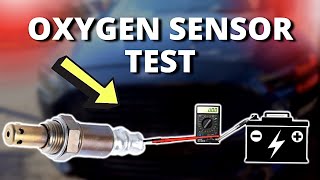
Monitor the sensor's signal wire using a scanner with live data. Rev the engine to 4,000 RPM multiple times; a healthy downstream sensor voltage spikes above 0.62V at least once. If it stays near 0V, replace the sensor.
Tools: OBD-II Scanner with Live Data (Advanced) - Pro Tip: Test the Heater Circuit Resistance
Disconnect the O2 sensor and measure resistance between the two heater circuit pins on the sensor side. Nissan sensors typically read around 13.6 ohms. Infinite resistance (open) or zero resistance (short) means the internal heater failed.
Tools: Multimeter, Service Manual (Advanced) - Check for Bias Voltage at the Connector
With the sensor disconnected and key 'ON' (engine off), check for bias voltage on the signal wire pin in the harness connector. The ECM supplies 0.35V to 0.5V. No voltage indicates wiring or ECM failure.
Tools: Multimeter (Advanced) - Test Fuel Pressure and Injectors
Connect a fuel pressure gauge to the fuel rail. Nissan VQ35DE engines require a steady 51 PSI. Low pressure causes a lean condition affecting the O2 sensor reading. Inspect injectors for leaks.
Tools: Fuel Pressure Gauge, Nissan/Infiniti Fuel Tap Adapter (Advanced)
When This Code Triggers (Freeze-Frame Conditions)
- Engine Coolant Temp: 160-200°F (70-95°C) (Fully warmed up. The self-test will not run on a cold engine.)
- RPM: 2000-4000 RPM (During acceleration or holding revs. The diagnostic test specifically looks for a voltage spike when revving the engine.)
- Vehicle Speed: 40-60 mph (70-100 km/h) (Steady highway driving, often for at least 2 minutes to enable the diagnostic monitor.)
- Engine Load: 20-50% (Light to moderate acceleration or cruising, not under heavy load or full throttle.)
Related Codes
- P1167 — This is the identical code but for Bank 2. Seeing both P1147 and P1167 together points to a common cause like a blown fuse, an exhaust leak affecting both banks, or a shared wiring problem.
- P0139 — This code means 'O2 Sensor Circuit Slow Response (Bank 1 Sensor 2)'. It frequently appears with P1147 and confirms the sensor is failing to respond quickly. Seeing both strongly suggests replacing the sensor.
- P0420 — This code means 'Catalyst System Efficiency Below Threshold (Bank 1)'. P1147 indicates the sensor monitoring the cat is faulty. A bad sensor falsely triggers a P0420. Fix P1147 first; if P0420 returns, the catalytic converter is failing.
- P0158 — This code indicates 'O2 Sensor Circuit High Voltage (Bank 2, Sensor 2)'. Seeing a high voltage code on the opposite bank suggests a systemic issue, such as a problem with the shared heater circuit fuse or fuel pressure.
Climate & Environmental Factors
- Road Salt / Winter Climates: Road salt is highly corrosive and a major contributor to sensor and wiring failure. Salt spray degrades the sensor's metal body and seeps into electrical connectors, causing shorts or high resistance.
- Thermal Shock: Oxygen sensors operate at up to 900°F. Rapid temperature changes, such as splashing through a cold puddle with a hot exhaust, cracks the sensor's internal ceramic element over time.
- High Humidity / Water Exposure: Driving through high water allows moisture to penetrate weathered connector seals. This causes a temporary malfunction or permanent corrosion on the connector pins, disrupting the voltage signal.
How to Talk to a Mechanic About This Code
Say this: "I have a Check Engine Light on and my scanner shows a P1147 code. I'd like to book a diagnostic appointment. Please check the Bank 1 Sensor 2 oxygen sensor, its wiring, and look for exhaust leaks before considering other issues. If you also see a P0420, diagnose the P1147 first."
This signals you understand the common causes. It directs the mechanic to follow a logical diagnostic path instead of immediately suggesting a $2,000 catalytic converter replacement, which is a common upsell.
Avoid saying:
- 'My check engine light is on, can you look at it?' (This is too vague and invites a broad, expensive diagnostic process).
- 'Just fix whatever is wrong.' (This gives the shop a blank check to replace parts without your approval).
- 'A guy on a forum said it's the catalytic converter.' (This leads the mechanic to skip diagnosing the actual, and often cheaper, root cause).
Questions to ask before authorizing the repair:
- What were the live data readings from the Bank 1 Sensor 2, and did you test its response?
- Did you inspect the wiring harness and connector for that sensor for any damage or corrosion?
- Did you check for any exhaust leaks upstream of the sensor?
- If you are recommending a catalytic converter replacement, can you show me the Mode $06 data or 5-gas analyzer results that confirm it has failed?
- What is the warranty on the parts and labor for this repair?
Where to Take It: Dealer vs Independent vs Chain
- Dealer:
Recommended only for warranty claims or if a specific TSB-related ECM reprogram is required. Otherwise, an independent shop is more cost-effective.
Best for: Vehicles still under an emissions warranty (check for 8yr/80k federal or 15yr/150k PZEV coverage)., Cases where a known Technical Service Bulletin (TSB) requires an ECM reprogram, like on a 2002 Maxima/I35.
Downsides: Typically the highest labor rate, often 1.5-2x more than an independent shop., Quicker to recommend replacing a whole assembly rather than repairing a smaller component like a wire. (Typical cost: +50% vs. baseline) - Independent Shop:
Best fit. An experienced independent mechanic is the ideal choice for a reliable and cost-effective diagnosis and repair of a P1147 code.
Best for: Out-of-warranty Nissan and Infiniti vehicles., Cost-conscious owners who want experienced technicians., Shops specializing in Japanese imports will have extensive experience with this specific code.
Downsides: Quality and expertise vary widely; it's important to find a shop with good reviews and ASE-certified technicians., May not have the latest manufacturer-specific programming tools for very new models. (Typical cost: +0% vs. baseline) - Chain Shop:
Use with caution. Acceptable for a straightforward O2 sensor replacement, but AVOID for initial diagnosis, especially if other codes like P0420 are present.
Best for: Simple, clear-cut part replacements if you are 100% certain the O2 sensor itself is the only problem.
Downsides: Technician skill and experience are inconsistent., High pressure to upsell services, and they misdiagnose P1147 as a need for a new catalytic converter. (Typical cost: -10% vs. baseline)
When to Walk Away From the Repair
If the total estimated repair cost exceeds 40% of your car's current private-party value, consider selling or trading it in instead of fixing it.
- Car worth $4000, fix is $2000: Borderline. The repair cost is 50% of the car's value. Get a second opinion before authorizing, as another major repair could be right around the corner.
- Car worth $12000, fix is $1800: Fix it. The repair cost is only 15% of the vehicle's value, which is well below the threshold.
- Car worth $2500, fix is $1500: Walk away. The repair cost is 60% of the car's value. This is a poor investment.
What Scan Tool You Need for This Code

Minimum: A scanner that reads and graphs live O2 sensor data and accesses Mode $06 diagnostic monitor test results.
A cheap, basic code reader only tells you the P1147 code is present. It won't let you see the live voltage from the sensor to confirm it's failing, nor will it show you the underlying catalyst monitor data from Mode $06. Without this data, you are guessing and may replace a good sensor or pay for a catalytic converter you don't need.
Budget: BlueDriver Pro (~$100) — Connects to your smartphone via Bluetooth. Graphs live O2 sensor voltage to see if it is stuck and provides Mode $06 data.
Mid-range: Foxwell NT510 Elite (with Nissan software) (~$180) — Offers manufacturer-specific diagnostics for Nissan/Infiniti. Provides live data graphing and bidirectional controls to run active tests on heater circuits.
Professional: Autel MaxiCOM MK808S (~$450) — Professional tablet scanner with full-system diagnostics and bidirectional control. Performs nearly all dealership tool functions.
How to Clear the Code After You Fix It
- Use an OBD-II scan tool to clear the diagnostic trouble codes (DTCs).
- Perform a complete drive cycle to allow the readiness monitors to run.
Drive cycle (~20 minutes): To run the O2 sensor and catalyst monitors: 1) Cold start and warm up to operating temperature (>160°F). 2) Drive at a steady speed of 50-60 mph for 3-5 minutes. 3) Let the vehicle coast (decelerate with foot off the gas) for at least 10 seconds. 4) Accelerate again to 50-60 mph. 5) Repeat steps 2-4 a few times.
Readiness monitors affected: Catalyst (CAT) monitor, Oxygen (O2) Sensor monitor, Oxygen Sensor Heater monitor
Before emissions retest: drive at least 50 miles to fully set monitors.
Watch out for:
- Clearing the code and immediately going for an emissions test results in a 'Not Ready' failure.
- If the underlying issue (like a small exhaust leak) was not fixed, the code returns after the drive cycle completes.
- Disconnecting the battery clears the code but erases all readiness monitors, guaranteeing an emissions test failure.
Will This Fail Emissions / State Inspection?
Yes — this code typically fails an OBD-II emissions inspection.
- California: An active P1147 code is an automatic failure. After repair, all OBD readiness monitors must be set to 'Ready'. Complete a full drive cycle (50-100 miles of mixed driving) before the smog check.
- New York: A vehicle with an illuminated Check Engine Light automatically fails the emissions portion of the NYS inspection. After clearing the code, perform a full drive cycle before re-inspection.
- Texas: In counties requiring emissions testing, an illuminated Check Engine Light results in an automatic failure. Texas allows for one 'Not Ready' monitor on vehicles model year 2001 and newer to pass.
Most Commonly Affected Vehicles
- Nissan Maxima (2000-2004) — Extremely common on the 5th generation Maxima. TSB NTB02-051a addresses this code for 2002 models, requiring an ECM reprogram after sensor replacement.
- Infiniti G35 (2003-2007) — Frequently reported by G35 owners, often in conjunction with P1167 for the opposite bank. Wiring harness damage near the transmission is a common culprit.
- Nissan 350Z (2003-2006) — A well-documented issue, especially on cars with aftermarket exhaust systems like test pipes which cause incorrect readings.
- Nissan Pathfinder (2001-2004) — The VQ35DE engine is prone to this O2 sensor code. The diagnostic procedure specifies checking for a voltage spike above 0.62V.
- Infiniti I35 (2002-2004) — Shares the same platform and engine as the Nissan Maxima, making it equally susceptible. TSB NTB02-051a also applies to the 2002 I35.
- Nissan Frontier (1998-2004) — Commonly seen on Frontiers with the VG33E (3.3L V6) and QR25DE engines.
- Nissan Xterra (2000-2004) — Shares the same VG33E engine as the Frontier, making it prone to the same O2 sensor issues. Check for corrosion on connectors.
- Nissan Micra (2002-2010) — P1147 is a known code for the K12 generation Micra, pointing to the downstream O2 sensor (Sensor 2).
Manufacturer-Specific Notes
- Nissan / Infiniti: This code is almost exclusively used by Nissan and Infiniti for gasoline engines. Nissan issued Technical Service Bulletins (e.g., NTB02-051a) for some models requiring an ECM reprogram to correct issues triggering this code.
- Hyundai: On Hyundai models, P1147 means 'Accelerator Pedal Position (APP) Sensor 1, circuit malfunction'. This relates to the throttle system, not the exhaust.
- Volkswagen / Audi: On VW and Audi vehicles, P1147 indicates 'Bank 2, O2S B1, Lambda Control, System Too Lean'. This relates to the upstream sensor, not the downstream sensor.
- Diesel Engines (General): In diesel applications, P1147 refers to 'Fuel Rail / System Bank 1 Pressure - Moderately Too High'. This relates to the high-pressure fuel system and has nothing to do with oxygen sensors.
Real Owner Stories
2003 Nissan 350Z with test pipes
Check Engine Light came on with codes P1147 and P1167 a few days after installing aftermarket test pipes (catalytic converter delete).
What they tried:
- Resetting the ECU cleared the codes, but they returned within a few days of driving.
Outcome: Installed O2 sensor spacers (defoulers) on the downstream sensor bungs. This pulled the sensor tip out of the direct exhaust stream, tricking the computer into seeing a reading similar to a functioning catalytic converter. The codes cleared and did not return.
Lesson: If you have aftermarket test pipes or high-flow cats, P1147/P1167 is a common result. O2 sensor spacers are a cheap and effective solution to prevent these specific codes.
2002 Nissan Maxima with 46k miles
Service Engine Soon light appeared suddenly during highway driving. Scan at an auto parts store revealed codes P1147 and P0139 (O2 Sensor Circuit Slow Response).
What they tried:
- The owner was concerned about the low mileage. They contacted a Nissan dealership to check for warranty coverage.
Outcome: The dealership confirmed the O2 sensor was covered under the federal emissions warranty (8 years/80,000 miles). The faulty Bank 1 Sensor 2 was replaced at no charge, and the ECM was reprogrammed per a TSB, resolving the issue.
Lesson: Always check for potential emissions warranty coverage on lower-mileage vehicles. A P1147 code on certain Nissan models requires an ECM reprogram (TSB NTB02-051a) in addition to sensor replacement.
2004 Infiniti G35, mileage unknown
P1147 code returned shortly after replacing the Bank 1 Sensor 2 oxygen sensor with a new aftermarket part.
What they tried:
- The owner initially assumed the new sensor was faulty and cleared the code, but it kept coming back.
Outcome: The owner inspected the wiring harness and discovered a small crack in the exhaust pipe just before the sensor. The leak allowed outside air to hit the sensor, preventing it from reaching the correct voltage. Repairing the exhaust leak permanently fixed the code.
Lesson: If a new sensor doesn't fix P1147, the problem is the environment around it. Meticulously check for exhaust leaks and test the wiring for continuity and correct voltage at the connector.
How to Prevent This Code From Triggering
- Use Top Tier certified gasoline (Every fill-up) — Top Tier gas contains a higher level of detergents that prevent carbon buildup on fuel injectors and intake valves. This ensures complete combustion, reducing unburnt fuel that fouls O2 sensors and overloads the catalytic converter.
- Replace engine air filter at recommended intervals (Every 15,000-30,000 miles) — A clogged air filter restricts airflow, causing the engine to run rich. This rich condition creates excess carbon and soot in the exhaust, coating the O2 sensor's tip and causing it to fail.
- Address engine oil leaks or high consumption promptly (As needed) — Burning oil sends contaminants like phosphorus and zinc into the exhaust system. These deposits permanently poison the active elements on both the oxygen sensor and the catalytic converter.
- Avoid short trips; allow the engine to fully warm up (Daily habit) — Short trips don't allow the exhaust system to get hot enough to burn off condensation. This moisture damages the O2 sensor's internal heater and ceramic element over time.
- Replace upstream (Air/Fuel) O2 sensors as a maintenance item (Every 100,000 miles) — Upstream sensors become slow and lazy with age, long before they set a code. A lazy sensor causes poor fuel control, leading to long-term thermal stress on the catalytic converter and downstream O2 sensor.
Frequently Asked Questions
Where is the Bank 1, Sensor 2 oxygen sensor located?
Bank 1 is the side of the engine containing cylinder #1. On V6 engines like those in most affected Nissans, this is the bank closer to the firewall. Sensor 2 is the 'downstream' sensor located on the exhaust pipe after the catalytic converter.
I replaced the O2 sensor, but the P1147 code came back. What now?
If a new sensor doesn't fix the problem, the issue is in the wiring, a blown fuse, or an exhaust leak. Carefully inspect the wiring harness for hidden damage and check for continuity from the sensor connector to the ECM. Confirm there are no exhaust leaks.
What is the most common misdiagnosis for P1147?
The most common misdiagnosis is replacing the catalytic converter when a P0420 code appears alongside P1147. The P1147 code indicates the sensor itself is not reporting correctly. Resolve the sensor fault (P1147) first before evaluating the catalytic converter.
Can I replace a P1147 oxygen sensor myself?
Yes, it is possible for someone with moderate DIY skills. However, O2 sensors seize in the exhaust pipe due to rust and heat, requiring a special O2 sensor socket and significant force to remove. Soak the sensor threads with penetrating oil overnight before attempting removal.
I pressure washed my engine bay and now I have a P1147 code. What happened?
Water entered the oxygen sensor's electrical connector, causing a short or poor connection. Disconnect the sensor, thoroughly dry both ends of the connector with compressed air, and apply dielectric grease before reconnecting. Clear the code and see if it returns.
Does this code mean my catalytic converter is bad?
Not necessarily. P1147 points to a problem with the sensor monitoring the converter, not the converter itself. However, ignoring the code causes rich running conditions that permanently damage the converter over time. Always fix the P1147 code first.
What's the difference between an upstream and downstream O2 sensor?
The upstream sensor (Sensor 1) is before the catalytic converter and controls the engine's air-fuel mixture. The downstream sensor (Sensor 2) is located after the catalytic converter and monitors the converter's efficiency.
Key Takeaways
- P1147 is a Nissan and Infiniti-specific code indicating the Bank 1 rear oxygen sensor failed to reach the required 0.62V peak during a self-test.
- Replacing the Bank 1 Sensor 2 oxygen sensor resolves this code in over 80% of cases, costing between $150 and $450 at a repair shop.
- Driving with an active P1147 code drops fuel economy by 5-15% and guarantees an automatic emissions test failure.
- If a new sensor fails to clear the code, inspect the 15-amp O2 heater circuit fuse and check for exhaust leaks upstream of the sensor.
- Do not apply this diagnostic logic to Hyundai, VW, or diesel vehicles, as they use P1147 for entirely different throttle or fuel pressure faults.
Helpful Videos

The information in this article is provided for general reference and educational purposes only. Vehicle specifications, procedures, and part compatibility can vary by production date, trim level, and region. Always consult your vehicle's factory service manual and verify part numbers before purchasing or performing repairs. Safety-critical components such as airbags, seat belts, and braking systems should be installed by a qualified professional.
- 🎬 Helpful Videos
- What Does P1147 Mean?
- Can I Drive With P1147?
- Common Causes
- Symptoms
- Diagnostic Flowchart
- Common Fixes & Costs
- Used vs. New Parts: Buying Guide
- What Happens If You Wait — Timeline
- Cost of Not Fixing It
- Diagnosis Steps
- When This Code Triggers (Freeze-Frame Conditions)
- Related Codes
- Climate & Environmental Factors
- How to Talk to a Mechanic About This Code
- Where to Take It: Dealer vs Independent vs Chain
- When to Walk Away From the Repair
- What Scan Tool You Need for This Code
- How to Clear the Code After You Fix It
- Will This Fail Emissions / State Inspection?
- Most Commonly Affected Vehicles
- Manufacturer-Specific Notes
- Real Owner Stories
- 2003 Nissan 350Z with test pipes
- 2002 Nissan Maxima with 46k miles
- 2004 Infiniti G35, mileage unknown
- How to Prevent This Code From Triggering
- Frequently Asked Questions
- Where is the Bank 1, Sensor 2 oxygen sensor located?
- I replaced the O2 sensor, but the P1147 code came back. What now?
- What is the most common misdiagnosis for P1147?
- Can I replace a P1147 oxygen sensor myself?
- I pressure washed my engine bay and now I have a P1147 code. What happened?
- Does this code mean my catalytic converter is bad?
- What's the difference between an upstream and downstream O2 sensor?
- Key Takeaways
- 🎟️ Get 5% Off