

OBD-II Code P1145: A Comprehensive Guide to Intake Valve Timing Control Performance
The Ultimate Resource for Understanding, Diagnosing, and Fixing P1145
- Check your engine oil level and condition immediately; low or dirty oil is the primary cause of P1145 and an oil change is the cheapest fix.
- Swap the Bank 1 and Bank 2 camshaft position sensors to definitively test the part; if the code changes to P1140, the sensor is faulty.
- Use only genuine OEM (Hitachi) replacement sensors for Nissan and Infiniti vehicles, as aftermarket parts have a near-100% failure rate for this specific code.
- Perform a mechanical oil pressure test if new sensors do not clear the code; readings below 14 PSI at warm idle indicate a catastrophic internal gallery gasket failure.
What Does P1145 Mean?

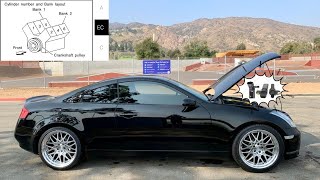
P1145 is a manufacturer-specific diagnostic trouble code (DTC), meaning its definition varies significantly between car brands. For Nissan and Infiniti vehicles, where it is exceptionally common, P1145 signifies the Engine Control Module (ECM) detects a performance problem with the intake valve timing control system on Bank 2. This system, often called VTC (Variable Timing Control) or VVT (Variable Valve Timing), dynamically adjusts the engine's camshaft timing to optimize performance, fuel economy, and emissions. Bank 2 refers to the side of a V-style engine that does not contain cylinder #1; on most V6 and V8 Nissans and Infinitis, this is the driver's side.
Technical definition: For Nissan/Infiniti: Intake Valve Timing Control Position Sensor Circuit Malfunction (Bank 2). The ECM commands the intake camshaft to advance or retard its timing via an oil-pressure-controlled solenoid. A camshaft position sensor reports the camshaft's actual position back to the ECM. This code sets when the ECM detects that the sensor's reported position does not match the commanded position, indicating a performance lag or incorrect reading from the sensor, solenoid, or underlying mechanical system.
Can I Drive With P1145?
Yes, But With Caution. You can drive with P1145, but expect significant performance issues like rough idling, stalling, poor acceleration, and increased fuel consumption. Diagnose and repair this within 100 miles. Continuing to drive with a rich fuel mixture sends unburnt fuel into the exhaust, overheating and destroying the catalytic converter—a repair costing between $800 and $2,500.
Common Causes

- Low or Dirty Engine Oil (Very Common) — The entire VTC/VVT system is hydraulic and relies on clean engine oil at the proper pressure. Low oil level, old/sludgy oil, or using the incorrect viscosity clogs the tiny passages in the VTC solenoid and phaser, preventing the camshaft from adjusting its timing correctly.
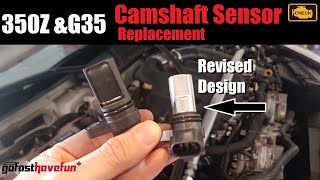
- Failed Camshaft Position Sensor (Bank 2) (Very Common) — This is the most frequent hardware culprit. 🎬 Watch: Step-by-step guide to replacing the camshaft position sensor. The Hall effect sensor that reads the camshaft's position degrades over time due to heat and oil exposure, or fails outright, sending erratic or incorrect data to the ECM.
- Failed Intake Valve Timing (VTC) Solenoid (Bank 2) (Common) — This electronically controlled solenoid directs oil flow to the camshaft phaser. It becomes clogged with debris from dirty oil, fails electrically, or gets stuck, preventing proper timing adjustments.
- Failed Rear Timing Cover Oil Gallery Gasket (Less Common) — A notorious issue on Nissan's VQ-series V6 engines. Internal paper gaskets on the rear timing cover blow out, causing a severe internal oil leak. This leads to a catastrophic loss of oil pressure specifically to the VVT system, often triggering both P1145 (Bank 2) and P1135 (Bank 1) simultaneously. This is a highly labor-intensive repair.
- Damaged Wiring or Connectors (Less Common) — The wiring harnesses for the camshaft sensor or VTC solenoid fray, melt from engine heat, or corrode. The connector pins loosen or become contaminated, leading to a poor connection and intermittent signal.
- Failed Crankshaft Position Sensor (Rare) — The crankshaft and camshaft position sensors work in tandem. A failing crankshaft sensor provides faulty data that makes the ECM incorrectly flag a problem with the camshaft's timing.
- Stretched Timing Chain or Failed VVT Sprocket (Phaser) (Rare) — With high mileage, the timing chain stretches, or the VVT phaser fails mechanically. This creates a discrepancy between the crankshaft's position and the camshaft's actual position that the ECM cannot correct, triggering a performance code even if the sensors and solenoids are functional.
- Failing Engine Control Module (ECM) (Very Rare) — In very rare cases, the fault lies within the ECM itself. The internal driver circuit that processes the camshaft sensor signal fails, leading to a false P1145 code.
Symptoms
- Check Engine Light is On — As with any powertrain DTC, the Malfunction Indicator Lamp (MIL) or 'Service Engine Soon' light illuminates on the dashboard.
- Rough Idle and Stalling — The engine idles erratically, hunts for a stable RPM, or stalls completely when coming to a stop. This happens because the camshaft is stuck in a position unsuited for low-speed operation.
- Reduced Engine Power, Hesitation, and Misfiring — The vehicle feels noticeably sluggish and unresponsive. Acceleration is poor, and the engine stumbles, hesitates, or misfires when you press the accelerator pedal due to incorrect valve timing.
- Poor Fuel Economy — With the valve timing out of sync, the engine runs inefficiently, leading to a measurable 10-20% decrease in miles per gallon (MPG).
- Engine Rattling on Startup — A brief rattling or knocking sound from the top of the engine upon starting indicates a problem with the VTC system, often caused by low oil pressure or a failing VTC solenoid.
Diagnostic Flowchart
Tap your situation to follow the diagnostic path that matches what you're seeing on this code.
Common Fixes & Costs
- Change Engine Oil and Filter — Parts: $30-$80, Labor: $30-$60, ~0.5 hr book time (DIY)
- Replace Bank 2 Camshaft Position Sensor — Parts: $40-$150 (OEM Recommended), Labor: $75-$125, ~0.8 hr book time (DIY)
- Replace Bank 2 Intake Valve Timing (VTC) Solenoid — Parts: $150-$350, Labor: $60-$150, ~1.1 hr book time (Intermediate)
- Replace Bank 2 Camshaft and Crankshaft Sensors Together — Parts: $150-$400, Labor: $150-$300, ~2 hr book time (Intermediate)
- Repair Damaged Wiring or Connectors — Parts: $5-$50, Labor: $100-$300, ~1.5 hr book time (Intermediate)
- Replace Timing Chain, Guides, and Phasers — Parts: $400-$1000, Labor: $1000-$2000+, ~12.5 hr book time (Professional)
DIY vs Professional
- Change Engine Oil and Filter — Beginner: Yes
Tools: Wrench for drain plug, oil filter wrench, drain pan, funnel. - Replace Bank 2 Camshaft Position Sensor — Beginner: Yes, with patience.
Tools: 10mm socket, ratchet, possibly a universal joint or extension. - Replace Bank 2 VTC Solenoid — Beginner: No, better for intermediate DIYer.
Tools: Socket set, torque wrench, rags. - Replace Timing Cover Gallery Gaskets — Beginner: No.
Tools: Full professional mechanic's tool set, engine hoist, timing chain tools, extensive service manuals.
Used vs. New Parts: Buying Guide
When a used part is worth it: For a camshaft position sensor, a used OEM part from a reputable dismantler with a warranty and verified low mileage is a good value, especially for an older, high-mileage vehicle. Avoid used sensors from unknown sources or vehicles scrapped for engine failure.
Donor-vehicle mileage cap: roughly under 80000 miles for the part to have meaningful remaining life.
Donor quality checklist:
- Ensure the part is a genuine OEM part (e.g., Hitachi for Nissan), not an aftermarket part from a salvaged car.
- Verify the exact part number matches; small revisions affect compatibility.
- Ask for the donor vehicle's mileage and reason for being salvaged (accident damage is preferable to engine/electrical failure).
Decision logic:
- If The cost of a new OEM sensor is less than $100. → Buy new OEM. The small savings on a used part isn't worth the risk and labor to potentially replace it again.
- If Vehicle is over 150,000 miles and the budget is very tight. → A tested, warranted used OEM sensor is an acceptable choice over a cheap, new aftermarket sensor.
- If The part is a known high-failure item with a wear-out mode (like this sensor). → Strongly favor new OEM or a top-tier OEM supplier part (Hitachi) for longevity.
Warranty tradeoff: Used parts typically offer a 30-90 day functional warranty. New aftermarket parts often have a 1-year to limited lifetime warranty. New OEM parts usually carry a 12-month/12,000-mile warranty.
Worst-case if a used part fails: 300-500. If a used or cheap aftermarket sensor fails, the cost includes repeat labor charges plus the price of another, better-quality sensor.
What Happens If You Wait — Timeline
- 0-1 month: Check Engine Light is on. Driver notices a slightly rougher idle or a minor hesitation when accelerating. The issue is contained within the timing control system. (MPG impact: 5-10%% · Added cost: $0-40 in wasted fuel)
- 1-3 months: Performance issues become more consistent: noticeable power loss, poor acceleration, and possible stalling at stops. The engine runs inefficiently, causing the fuel mixture to be consistently rich. (MPG impact: 10-20%% · Added cost: $50-150 in wasted fuel)
- 3-6 months: The rich fuel mixture begins to damage other components. Unburnt fuel enters the exhaust, overheating the catalytic converter. The substrate inside melts or fouls, reducing its efficiency. (MPG impact: 15-25%% · Added cost: $1,200-2,800 (Catalytic converter replacement is now likely needed).)
- 6+ months: Catastrophic failure of the catalytic converter is probable. It becomes completely clogged, causing severe backpressure that leads to engine damage, or the substrate breaks apart and gets sucked back into the engine. The car stops running entirely. (MPG impact: >25%% · Added cost: $2,500+ (Includes catalytic converter and potential for additional engine or exhaust sensor repairs).)
Cost of Not Fixing It
- 0-1 Month: Noticeable drop in fuel economy (10-20%), rough idle, and poor acceleration. High risk of stalling in traffic. (Added cost: 25-50)
- 1-6 Months: Continued inefficient combustion causes unburnt fuel to enter the exhaust, overheating and damaging the catalytic converter. (Added cost: 1200-2800)
- 6+ Months: Internal engine damage occurs due to prolonged improper timing and fuel mixture. Increased stress on other engine components leads to widespread and costly repairs. (Added cost: 3000+)
Diagnosis Steps

- Check Engine Oil Level and Condition
This is the first and most crucial step. The VVT system is entirely dependent on oil pressure. Pull the dipstick, clean it, reinsert, and check the level. The oil must be within the 'full' range and should not be black, gritty, or smell burnt. If the oil is low or dirty, an oil and filter change is the cheapest and easiest potential fix.
Tools: Rag or paper towel (Beginner) - Scan and Swap Sensors (The Pro DIY Trick)
This code is for Bank 2. Locate the identical camshaft position sensor on Bank 1 (passenger side). Swap the two sensors. Clear the codes with an OBD-II scanner and drive the vehicle. If the code returns as P1140 (the equivalent code for Bank 1), you have definitively proven the sensor is faulty. If P1145 returns, the sensor is good, and the problem lies elsewhere.
Tools: OBD-II scanner, basic socket set (10mm) (Intermediate) - Visually Inspect Sensors and Wiring
Locate the Bank 2 camshaft position sensor and VTC solenoid. On a Nissan/Infiniti V6, this is the driver's side, at the rear of the cylinder head. Look for obvious signs of damage like melted plastic on the connectors, frayed wires, or oil leaking into the connectors. Ensure they are plugged in securely. A poor ground connection also causes this code.
Tools: Flashlight (Beginner) - Test Sensor Circuit Voltage with a Multimeter
Disconnect the sensor and turn the ignition to 'ON' (engine off). Using a multimeter set to DC Volts, probe the connector terminals. On a typical 3-wire Nissan sensor, you must find: one terminal with 5V or 12V reference from the ECM, one ground terminal (must have continuity to chassis ground), and one signal terminal. If the reference voltage is missing or the ground is bad, the problem is in the wiring or ECM, not the sensor.
Tools: Multimeter, vehicle wiring diagram (Advanced) - Test the VTC Solenoid Resistance and Actuation
Check the solenoid's internal resistance with a multimeter. Disconnect the solenoid and measure across its two pins. A healthy VQ35DE VTC solenoid has a resistance of approximately 8-12 Ohms. An open circuit (infinite resistance) or a short (near zero Ohms) indicates failure. Perform an active test by carefully applying a 12V source to the solenoid's terminals; a healthy solenoid produces an audible 'click' as the internal plunger moves. No click means it is seized or electrically dead.
Tools: Multimeter, 12V power source, vehicle service manual (Advanced) - Check Live Data for Cam Angle (Advanced Scan Tool)
Use an advanced OBD-II scanner that displays live data. Monitor the PID for 'INT/V TIM (B2)' or 'Intake Cam Angle Bank 2'. At a stable, warm idle, this value must be near 0 degrees (+/- 2 degrees). As you raise the engine RPM to 2000-3000 RPM, the value must advance smoothly. If the value is stuck at an abnormal number (e.g., 109 degrees), reads an illogical number, or doesn't change with RPM, it confirms a fault in the control system.
Tools: Advanced OBD-II scanner (Advanced) - Check Engine Oil Pressure (Mechanical Gauge Test)
If all electronics test good, the issue is hydraulic. Tap into the engine's oil system with a mechanical pressure gauge. Per the Nissan VQ35DE factory service manual, minimum oil pressure must be above 14 PSI at warm idle and above 43 PSI at 2000 RPM. Pressures significantly below these thresholds point to a worn oil pump, a clogged pickup tube, or most commonly, internal leaks from failed timing cover gallery gaskets.
Tools: Mechanical oil pressure gauge set, vehicle service manual (Professional) - Analyze the Waveform with an Oscilloscope (Definitive Test)
Back-probe the signal wire of the camshaft position sensor with an oscilloscope. A healthy Hall effect sensor produces a clean square wave pattern that changes frequency with engine RPM. The voltage switches cleanly between approximately 0V and 5V. A missing signal, a noisy/garbled pattern, or a distorted waveform indicates a failed sensor or a problem with the reluctor wheel on the camshaft.
Tools: Oscilloscope, back-probe kit (Professional)
When This Code Triggers (Freeze-Frame Conditions)
- Engine Coolant Temp: 180-200°F (The engine must be fully warmed up for the VVT monitor to run.)
- RPM: 1500-4000 RPM (The code sets during steady-state cruising or light acceleration, not typically at idle.)
- Engine Load: 20-60% (Occurs under moderate load; the system is not heavily tested during full-throttle acceleration or deceleration.)
- Vehicle Speed: 40-65 mph (Highway driving conditions commonly trigger this performance-based code.)
Related Codes
- P1140 — This is the identical fault but for Bank 1 (passenger side). Swapping the Bank 1 and Bank 2 camshaft sensors is the definitive DIY test; if your P1145 code becomes a P1140 after the swap, the sensor is confirmed to be the faulty part.
- P0345 — This is the generic OBD-II code for 'Camshaft Position Sensor 'A' Circuit (Bank 2)'. P0345 points to a hard electrical failure (e.g., no signal, open/short circuit), while the Nissan-specific P1145 indicates a 'performance' failure where a signal is present but incorrect. You can have P1145 without P0345.
- P1135 — This is the Nissan-specific code for Intake Valve Timing Control Performance on Bank 1. If you have P1145 and P1135 simultaneously, it strongly suggests a systemic problem affecting both engine banks. This makes a single bad sensor unlikely and points directly to issues like low/dirty engine oil, incorrect oil viscosity, or failing internal oil gallery gaskets causing a global loss of oil pressure.
- P0014 / P0024 — These codes relate to 'Exhaust Valve Timing Control Performance' for Bank 1 and Bank 2, respectively. While P1145 is for the intake side, seeing these codes together indicates a more severe timing system issue, such as a stretched timing chain, failing phasers, or significant oil pressure problems affecting the entire VVT system.
Climate & Environmental Factors
- Cold Weather: Low ambient temperatures increase engine oil viscosity ('thickness'). On cold starts, the thicker oil does not flow quickly enough through the VVT system's small passages, causing a delay in camshaft timing adjustments that triggers P1145. Using the manufacturer-recommended oil viscosity is critical in cold climates.
- High Engine Bay Temperatures: Camshaft position sensors are located on the cylinder heads and are constantly exposed to high temperatures. Over many years and heat cycles, the plastic and internal electronics of the sensor degrade, leading to intermittent or total failure.
- Altitude: High altitude itself does not directly cause P1145. However, it exacerbates existing performance issues. Thinner air at altitude reduces engine power, making the performance loss from compromised valve timing much more noticeable to the driver.
How to Talk to a Mechanic About This Code
Say this: "I have a P1145 code on my Nissan and the oil level is correct. I'd like to book a diagnostic appointment. Please start by testing the Bank 2 camshaft position sensor circuit and the VTC solenoid. If those are good, I'd like an estimate for a mechanical oil pressure test."
This signals you understand the common causes for this specific code and have already checked the basics. It directs the technician to follow a logical diagnostic path (sensor -> solenoid -> oil pressure) instead of just replacing parts, and shows you are aware of the more serious potential failures.
Avoid saying:
- 'Just fix whatever's wrong'
- 'My check engine light is on, can you look at it?'
- 'My car is running rough, I think it's a sensor'
Questions to ask before authorizing the repair:
- Did you confirm the sensor failed by swapping it with Bank 1 and seeing if the code changed to P1140?
- Are you recommending an OEM/Hitachi sensor? I'd prefer not to use a generic aftermarket part for this.
- If you're recommending a VTC solenoid, what were the results of the resistance and actuation tests?
- If you suspect an internal oil pressure issue, what pressure readings did you get at warm idle and at 2000 RPM?
- What is the warranty on the recommended parts and labor?
Where to Take It: Dealer vs Independent vs Chain
- Dealer:
A safe but expensive choice. They are best equipped for the worst-case-scenario (gallery gaskets) but charge a premium for common sensor or solenoid fixes.
Best for: Vehicles still under powertrain warranty, Complex diagnostics like the timing cover gallery gasket failure, Owners who want a guaranteed OEM part and are less sensitive to cost
Downsides: Highest labor rates, often 1.5-2x an independent shop., Often recommends replacing related parts as a precaution, increasing cost. (Typical cost: +50% vs. baseline) - Independent Shop:
The best fit for most owners. An experienced independent technician is very familiar with P1145 on a Nissan VQ engine, knows the sensor-swap trick, and understands the importance of using OEM parts, all at a lower cost than the dealer.
Best for: Out-of-warranty vehicles where cost is a factor., Diagnosing common, well-documented codes like P1145., Shops that specialize in Nissan/Infiniti or Japanese imports.
Downsides: Quality and expertise vary widely; vetting the shop's reputation is crucial., Often lacks immediate access to OEM parts, potentially causing delays. (Typical cost: +0% vs. baseline) - Chain Shop:
High risk, not recommended for diagnosis. Only consider them for a simple oil change or if you have already definitively diagnosed a bad sensor yourself and just need it installed. Avoid them for any further diagnostics.
Best for: Simple, non-diagnostic work like an oil change (a potential fix for P1145).
Downsides: Technician skill varies dramatically., High pressure to upsell and uses low-quality aftermarket parts to keep costs down, which is a known issue for this specific repair., Unlikely to have the expertise for deeper hydraulic or mechanical diagnosis. (Typical cost: -10% vs. baseline)
When to Walk Away From the Repair
If the estimated repair cost exceeds 40-50% of the car's private-party value (from KBB or Edmunds), you should seriously consider selling or trading it in instead of repairing it.
- Car worth $3500, fix is $2200: Walk away. The repair cost (for likely gallery gaskets) is over 60% of the car's value. Sell as a 'mechanic's special' or to a junk car buyer.
- Car worth $8000, fix is $450: Fix it. A sensor or solenoid replacement is a minor cost relative to the car's value and restores its performance and reliability.
- Car worth $2500, fix is $250: Fix it. This is a low-cost repair that makes the car drivable and sellable for its full, albeit low, value.
What Scan Tool You Need for This Code
Minimum: A scanner that reads manufacturer-specific live data for Nissan/Infiniti. A basic code reader is not sufficient.
A $20 code reader only tells you the P1145 code is present. It cannot display the live 'Intake Valve Timing Angle' for Bank 2, which is essential to see if the sensor is reporting bad data or if the timing isn't physically changing as commanded by the ECM. Without this, you are just guessing at the cause.
Budget: BlueDriver Pro (~$99) — Connects to a smartphone app and displays vehicle-specific live data, including Nissan's VVT angles. This is enough to watch the cam angle at idle and while revving the engine to see if it's stuck or unresponsive, which is a key diagnostic step.
Mid-range: Foxwell NT510 Elite (with Nissan software) (~$180) — Offers full-system diagnostics and bidirectional control. This allows you to not only read the live cam angle data but also to command the VTC solenoid to activate, letting you hear if it 'clicks' and works electrically. This is a powerful tool for differentiating a bad solenoid from a wiring or oil pressure problem.
Professional: Autel MaxiCOM MK808 / MK906BT (~$500-1200) — Provides full, professional-level bidirectional controls, comprehensive live data graphing, and a faster, more user-friendly interface. It performs all the functions of the midrange pick but is better suited for a professional or serious DIYer who works on multiple car brands.
Rent vs buy: For a one-time diagnosis, many auto parts stores (like AutoZone) have a free loaner tool program. If you plan to do your own car maintenance regularly, buying a budget or midrange scanner is a worthwhile investment.
How to Clear the Code After You Fix It
- Use an OBD-II scan tool to clear the diagnostic trouble codes.
- Disconnecting the battery for 10-15 minutes clears the code, but it resets all readiness monitors.
- Perform a complete drive cycle to allow the ECU to run its self-tests.
Drive cycle (~20 minutes): A general Nissan drive cycle involves: 1) Cold start, idle for 2-3 minutes. 2) Drive at a steady speed of 55-60 mph for at least 10 minutes to warm up the catalytic converter. 3) Perform several slow decelerations (coast down) without using the brake. 4) Drive in stop-and-go city traffic for several minutes.
Readiness monitors affected: Catalyst Monitor, EVAP System Monitor, Oxygen (O2) Sensor Monitor
Before emissions retest: drive at least 50 miles to fully set monitors.
Watch out for:
- Disconnecting the battery erases all readiness monitors, causing an automatic emissions test failure if not reset by driving.
- The code returns within a few drive cycles if the underlying mechanical or electrical fault is not properly fixed.
- Not having the fuel tank between 1/4 and 3/4 full prevents the EVAP monitor from running.
Will This Fail Emissions / State Inspection?
Yes — this code typically fails an OBD-II emissions inspection.
- California: An active Check Engine Light is an automatic failure. After repair, all readiness monitors must be set to 'Ready'. Driving 50-100 miles is usually required before a retest.
- New York: The NYS inspection includes an OBD-II scan. An illuminated Check Engine Light for code P1145 causes an automatic failure of the emissions portion of the test.
- Texas: In the 17 counties requiring emissions testing, an active P1145 code causes an automatic failure. If the code was recently cleared, the vehicle also fails if the required readiness monitors are 'Not Ready'.
Most Commonly Affected Vehicles

- Nissan Pathfinder (2001-2004) — Extremely common on Pathfinders with the 3.5L VQ35DE engine. Using non-OEM sensors leads to a quick return of the code.
- Infiniti QX4 (2001-2003) — Mechanically identical to the Pathfinder, it shares the same VQ35DE engine and a high frequency of P1145. There are two sensors on Bank 2; the one for this code is typically mounted radially (from the top).
- Infiniti G35 (2003-2007) — The G35's VQ35DE engine is highly susceptible to camshaft sensor and solenoid failures that trigger P1145.
- Nissan 350Z (2003-2006) — Shares the VQ35DE engine with the G35 and is a common recipient of P1145 due to sensor, solenoid, or oil pressure issues.
- Nissan Altima (2002-2006) — Models equipped with the 3.5L V6 (VQ35DE) engine frequently experience this code.
- Infiniti M45 (2006-2010) — The 4.5L V8 engine in the M45 sets P1145 and its Bank 1 equivalent, P1140, for the same intake valve timing control issues.
- Nissan Titan (2004-2015) — The 5.6L VK56DE V8 engine in the Titan triggers P1145, pointing to a fault with the Bank 2 intake valve timing position sensor.
- Hyundai Santa Fe, Sonata, i10 (2006-2008) — On these Hyundai models, P1145 means 'Overrun Monitoring Error.' This is an internal ECM fault where the computer fails to perform fuel cut during deceleration and is completely unrelated to camshafts.
- Volkswagen / Audi Golf, Passat, Jetta, A4 (1998-2015) — For VW and Audi, P1145 indicates 'Mass Air Flow Sensor (G70): Short to Plus,' pointing to an electrical fault in the MAF sensor circuit, not the valve timing system.
- BMW 3-Series (E46), 5-Series (E39), Z4 (1998-2013) — On many BMWs, this code means 'Solenoid Valve Running Losses Control Circuit Electrical' related to the EVAP system, or points to a failing intake VANOS solenoid, which is BMW's version of VVT. A BMW-specific scanner is crucial for accurate diagnosis.
Manufacturer-Specific Notes
- Nissan / Infiniti: This code is famously associated with the VQ35DE 3.5L V6. Technicians universally recommend using only genuine OEM (Hitachi is the supplier) sensors. Aftermarket sensors are notorious for failing quickly or being dead-on-arrival, causing the code to return and frustrating the diagnostic process.
- Nissan / Infiniti: Nissan issued a voluntary recall campaign (ID R3022 / NHTSA 03V-345) for some 2000-2003 vehicles for failing camshaft/crankshaft sensors that cause stalling. The campaign advised replacing the crank and both cam sensors as a set to prevent communication issues between old and new parts.
- BMW: On a BMW, P1145 refers to an EVAP system solenoid or a VANOS (VVT) solenoid. Using a generic OBD-II scanner is highly misleading; a BMW-specific diagnostic tool (like INPA/ISTA) is required to correctly identify the faulted component.
- Ford / Lincoln: P1145 on Ford/Lincoln vehicles is unrelated to the engine. It indicates a 'Passenger Seat Belt Retractor Pretensioner Deployment Loop Resistance' issue or a 'Battery Charger Control Module Lost Communication' error on hybrid models.
- General Motors (Chevy, Buick, Cadillac): For many GM vehicles, P1145 is defined as 'HO2S Cross Counts Bank 1 Sensor 3,' indicating a performance problem with a downstream oxygen sensor, not a camshaft or timing issue.
Real Owner Stories
2003 Infiniti G35 at 150K miles - The Easy Fix
Check Engine Light came on, car had a slightly rough idle and seemed hesitant to accelerate. Code scanner showed P1145.
What they tried:
- Owner first checked the engine oil and found it was about a quart low and dark in color.
Outcome: Performed a complete oil and filter change with a quality 5W-30 synthetic oil. After clearing the code, the light did not return and the car's performance went back to normal.
Lesson: Always check the simplest and cheapest thing first. The entire VVT system relies on oil pressure, and low or dirty oil is a primary cause of P1145.
2004 Nissan 350Z at 110K miles - The Misdiagnosis Trap
P1145 appeared. The owner immediately bought a cheap aftermarket camshaft sensor from an online marketplace for $20.
What they tried:
- Replaced the Bank 2 camshaft sensor with a cheap aftermarket part. The code was cleared but returned within two days.
- Assuming the new sensor was good, they then replaced the VTC solenoid, but the code came back again.
- Swapped the new aftermarket sensor from Bank 2 with the original OEM sensor from Bank 1. The code changed to P1140, proving the cheap aftermarket sensor was faulty out of the box.
Outcome: Purchased a genuine Hitachi (OEM) sensor. After installation, the code was cleared and did not return. The owner wasted time and money on the solenoid replacement due to a faulty new part.
Lesson: For Nissan/Infiniti VQ engines, using cheap aftermarket cam sensors is a major pitfall. They have a high failure rate and lead to incorrect diagnoses. Stick with OEM or a known OEM supplier like Hitachi.
2001 Nissan Pathfinder at 209K miles - The Deeper Problem
Car initially threw code P1145. Owner replaced the Bank 2 camshaft sensor.
What they tried:
- Replaced the Bank 2 cam sensor with a new part. After clearing, the code P1145 was gone, but a new code, P1135 (Bank 1), appeared after about 50 miles of driving.
Outcome: The appearance of codes for both banks after replacing a sensor on one side strongly suggests a global oil pressure issue. This is a classic symptom of failed rear timing cover gallery gaskets, a major repair. The initial sensor may have been failing, but its replacement revealed the more serious underlying problem that affected the whole VVT system.
Lesson: If you get codes for both Bank 1 (P1135/P1140) and Bank 2 (P1145) simultaneously, or if one appears after fixing the other, the problem is almost certainly not the individual sensors. The issue is systemic, pointing directly to oil pressure. A mechanical oil pressure test is required before proceeding.
How to Prevent This Code From Triggering
- Perform regular oil changes with high-quality oil. (Every 3,750-5,000 miles, or as recommended by the manufacturer for severe service.) — Clean oil at the proper viscosity is essential for the hydraulic VVT system. Frequent changes prevent the formation of sludge that clogs the tiny passages in the VTC solenoids and phasers.
- Use the manufacturer-specified oil viscosity (e.g., 5W-30 for most VQ35DE engines). (Every oil change.) — Using oil that is too thick or too thin alters the hydraulic pressure and response time of the VVT system, triggering performance codes like P1145.
- Use a quality full-synthetic oil. (Recommended for every oil change, especially on higher-mileage engines.) — Synthetic oils are more resistant to breakdown and sludge formation at high temperatures, providing better protection for the VVT system components. Brands like Mobil 1 and Castrol Edge are often recommended for VQ engines.
- Replace the PCV valve. (Every 30,000-50,000 miles.) — A clogged PCV valve increases crankcase pressure and accelerates oil contamination and sludge buildup, which is a primary enemy of the VVT system.
Frequently Asked Questions
What is Bank 2 on a Nissan V6?
Bank 2 is the side of a V-shaped engine that does not contain cylinder number 1. On most Nissan and Infiniti front-engine, rear-wheel-drive vehicles (like the 350Z, G35, Pathfinder), Bank 2 is on the driver's side.
What happens if I don't fix code P1145?
Ignoring P1145 leads to persistently bad fuel economy, rough running, and stalling. Long-term, unburnt fuel damages your catalytic converters. This turns a $100 sensor fix into a $2,000 exhaust repair.
Can I just clean the camshaft sensor or solenoid?
Cleaning a sludge-covered component provides a temporary fix at best. Flush solenoids with brake cleaner or wipe sensors clean to test them. If the code returns, the internal electronics have failed and require replacement.
Why is using an OEM sensor so important for this repair?
Aftermarket camshaft sensors for Nissan and Infiniti vehicles have an extremely high failure rate out of the box. The code returns within days or weeks. Use a genuine OEM part (Hitachi) to ensure a lasting repair.
I replaced the sensor and the solenoid, but P1145 came back. What now?
If you used quality OEM parts, the problem is hydraulic. Mechanically verify oil pressure reaches the cylinder head (minimum 14 PSI at idle). Low pressure on Nissan VQ engines indicates failed internal oil gallery gaskets, requiring professional repair.
What is the most common misdiagnosis for P1145?
The most common mistake is replacing the camshaft sensor without checking the engine oil level first. Another major pitfall is using a cheap aftermarket sensor that fails immediately. For BMW or VW, the biggest error is trusting the generic P1145 definition instead of a brand-specific scanner.
Will P1145 cause me to fail an emissions test?
Yes, any active trouble code that illuminates the Check Engine Light results in an automatic failure of an OBD-II-based emissions or smog test.
Key Takeaways
- Check your engine oil level and condition immediately; low or dirty oil is the primary cause of P1145 and an oil change is the cheapest fix.
- Swap the Bank 1 and Bank 2 camshaft position sensors to definitively test the part; if the code changes to P1140, the sensor is faulty.
- Use only genuine OEM (Hitachi) replacement sensors for Nissan and Infiniti vehicles, as aftermarket parts have a near-100% failure rate for this specific code.
- Perform a mechanical oil pressure test if new sensors do not clear the code; readings below 14 PSI at warm idle indicate a catastrophic internal gallery gasket failure.
Helpful Videos



The information in this article is provided for general reference and educational purposes only. Vehicle specifications, procedures, and part compatibility can vary by production date, trim level, and region. Always consult your vehicle's factory service manual and verify part numbers before purchasing or performing repairs. Safety-critical components such as airbags, seat belts, and braking systems should be installed by a qualified professional.
- 🎬 Helpful Videos
- What Does P1145 Mean?
- Can I Drive With P1145?
- Common Causes
- Symptoms
- Diagnostic Flowchart
- Common Fixes & Costs
- DIY vs Professional
- Used vs. New Parts: Buying Guide
- What Happens If You Wait — Timeline
- Cost of Not Fixing It
- Diagnosis Steps
- When This Code Triggers (Freeze-Frame Conditions)
- Related Codes
- Climate & Environmental Factors
- How to Talk to a Mechanic About This Code
- Where to Take It: Dealer vs Independent vs Chain
- When to Walk Away From the Repair
- What Scan Tool You Need for This Code
- How to Clear the Code After You Fix It
- Will This Fail Emissions / State Inspection?
- Most Commonly Affected Vehicles
- Manufacturer-Specific Notes
- Real Owner Stories
- 2003 Infiniti G35 at 150K miles - The Easy Fix
- 2004 Nissan 350Z at 110K miles - The Misdiagnosis Trap
- 2001 Nissan Pathfinder at 209K miles - The Deeper Problem
- How to Prevent This Code From Triggering
- Frequently Asked Questions
- What is Bank 2 on a Nissan V6?
- What happens if I don't fix code P1145?
- Can I just clean the camshaft sensor or solenoid?
- Why is using an OEM sensor so important for this repair?
- I replaced the sensor and the solenoid, but P1145 came back. What now?
- What is the most common misdiagnosis for P1145?
- Will P1145 cause me to fail an emissions test?
- Key Takeaways
- 🎟️ Get 5% Off