

Ultimate Guide to OBD-II Code P1138: Fuel Mixture Malfunction
The Most In-Depth P1138 Resource: Causes, Manufacturer-Specific Fixes, and Pro-Level Diagnostics
- Verify your vehicle's specific P1138 definition before buying parts, as this code means 'Vacuum Leak' on a VW but 'Bad O2 Sensor' on a Ford.
- Check live data for Long Term Fuel Trim (LTFT) values above +10% at idle to instantly confirm a vacuum leak on Audi and VW models.
- Inspect the swirl control valve actuator on 2001-2006 Nissan Sentras, as P1138 on these vehicles points directly to this $150-$300 part, not an oxygen sensor.
- Fix a rich-running P1138 within 30 days to prevent unburnt fuel from melting your catalytic converter, which escalates a $200 repair into a $2,000 replacement.
What Does P1138 Mean?

P1138 is a manufacturer-specific OBD-II code indicating a severe air-fuel mixture imbalance. The Engine Control Unit (ECU) detects this via oxygen sensors, but the exact failure point depends entirely on your car's brand. It flags a rich condition (excess fuel), a lean condition (excess air), or a specific failed emissions component.
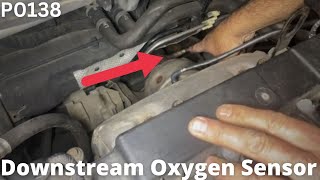
Technical definition: Because P1138 is manufacturer-controlled, its definition is not standardized. On Fords, it means 'Lack of HO2S Switches, Sensor at Rich Limit,' pointing to a stuck downstream oxygen sensor. 🎬 Watch: Step-by-step guide to replacing a downstream oxygen sensor. On Audi/VW, it means 'Long Term Fuel Trim, Bank 2 - System Too Lean,' indicating a vacuum leak. On 2001-2006 Nissan Sentras, it flags a failed Swirl Control Valve.
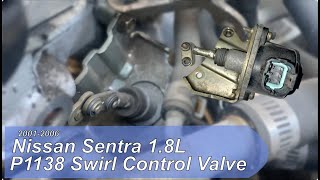
🎬 Watch: How to diagnose the Nissan swirl valve actuator failure.Can I Drive With P1138?
yes_but_with_caution. You can drive for a short period, but do not exceed 100 miles. Ignoring a rich condition dumps unburnt fuel into the exhaust, melting the catalytic converter. A new catalytic converter costs between $800 and $2,500, so address the code immediately to prevent catastrophic repair bills.
Common Causes

- Faulty Oxygen (O2) Sensor (Very Common) — O2 sensors measure exhaust oxygen and degrade after 100,000 miles. A failing sensor sends incorrect voltage signals, making it the primary cause for P1138 on Ford, Honda, and Toyota vehicles.
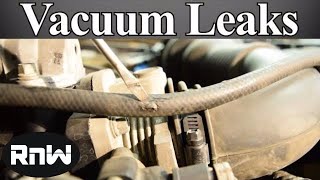
- Engine Vacuum Leak (Including PCV System) (Very Common) — Cracked hoses, failing intake gaskets, or a stuck-open PCV valve allow unmetered air into the engine. This is the absolute most frequent cause of the lean-condition P1138 on Audi and VW models.
- Faulty Swirl Control Valve (Nissan Specific) (Common) — On 2001-2006 Nissan Sentras (1.8L, California emissions), P1138 points directly to a dead swirl control valve actuator motor or circuit, completely unrelated to O2 sensors.
- Faulty Mass Air Flow (MAF) Sensor (Common) — A dirty or failing MAF sensor miscalculates incoming air, forcing the ECU to deliver the wrong amount of fuel. This triggers both lean and rich variants of the code.
- Fuel Delivery Issues (Low Pressure or Leaking Injectors) (Less Common) — A weak fuel pump or clogged filter starves the engine (lean condition). Conversely, a leaking fuel injector dumps excess fuel into the cylinder (rich condition).
- Exhaust System Leak (Less Common) — A cracked exhaust manifold before the oxygen sensor draws in outside air. The sensor detects this false oxygen and commands the ECU to run the engine rich.
Symptoms

- Check Engine Light is On — The Malfunction Indicator Lamp (MIL) illuminates immediately upon the ECU detecting the fault.
- Poor Fuel Economy — The engine runs inefficiently, causing a sudden and noticeable 10-20% decrease in gas mileage.
- Rough Idle or Stalling — The engine shakes at a stoplight or stalls completely due to a severe vacuum leak or fuel imbalance.
- Unusual Exhaust Smell — A rich condition causes a strong raw gasoline or sulfur (rotten egg) smell. A lean condition produces a sharp, hot chemical odor.
Diagnostic Flowchart
Tap your situation to follow the diagnostic path that matches what you're seeing on this code.
Common Fixes & Costs
- Replace Oxygen (O2) Sensor — Parts: $50 - $150, Labor: $100 - $200, ~1.2 hr book time (Intermediate)
- Repair Engine Vacuum Leak (PCV Valve/Hoses) — Parts: $20 - $100, Labor: $150 - $300, ~2.0 hr book time (Diy|professional)
- Replace Mass Air Flow (MAF) Sensor — Parts: $100 - $300, Labor: $50 - $100, ~0.5 hr book time (DIY)
- Replace Nissan Swirl Control Valve Actuator — Parts: $150 - $300, Labor: $150 - $300, ~1.5 hr book time (Intermediate)
DIY vs Professional
- Replace Oxygen (O2) Sensor — Beginner:
Tools: ['Jack and jack stands', 'O2 sensor socket (22mm or 7/8")', 'Penetrating oil', 'Torque wrench'] - Repair Engine Vacuum Leak — Beginner:
Tools: ['Pliers', 'Screwdriver set', 'Smoke machine'] - Replace Mass Air Flow (MAF) Sensor — Beginner:
Tools: ['Screwdriver set', 'Pliers']
Used vs. New Parts: Buying Guide
When a used part is worth it: Never buy used O2 or MAF sensors; they are wear items. Buying a used intake manifold assembly (for the Nissan swirl valve) from a low-mileage donor car is a smart, cost-effective choice.
Donor-vehicle mileage cap: roughly under 60000 miles for the part to have meaningful remaining life.
Donor quality checklist:
- Verify the donor vehicle was not scrapped for an engine fire or flood damage.
- Ensure the part number matches your exact engine code and emissions standard (e.g., California vs. Federal).
Decision logic:
- If The part is an electronic sensor (O2, MAF). → Buy new OEM or premium aftermarket (Bosch/Denso). Used sensors fail too quickly to justify the labor.
- If The part is a mechanical actuator (Nissan Swirl Valve). → Buy a certified used part from a reputable salvage yard to save $150+.
Warranty tradeoff: Used parts carry a 30-day warranty covering the part only. New OEM sensors carry a 12-month warranty.
Worst-case if a used part fails: $200 if a used sensor fails, requiring you to pay for the part and labor twice.
What Happens If You Wait — Timeline
- 0-2 weeks: Check Engine Light illuminates. The ECU defaults to a safe fuel map. No major drivability symptoms are present. (MPG impact: 0-5%% · Added cost: $0)
- 2 weeks - 2 months: Fuel economy drops noticeably. A rich condition begins depositing heavy soot on spark plugs and O2 sensors. (MPG impact: 10-15%% · Added cost: $50-$100 in wasted fuel and fouled spark plugs.)
- 2-6 months: A persistent rich condition overheats the catalytic converter, melting the internal ceramic honeycomb. Drivability issues like hesitation and stalling occur. (MPG impact: 15-25%% · Added cost: $800-$2,500 (Catalytic converter replacement is now mandatory).)
- 6+ months: The melted catalytic converter completely blocks exhaust flow, causing the engine to stall and refuse to start. Severe lean conditions burn exhaust valves. (MPG impact: 30-50%% · Added cost: $2,500-$5,000+ (Requires cylinder head rebuild or engine replacement).)
Cost of Not Fixing It
- 0-1 month: Failed emissions test and a 10-15% drop in fuel economy. The engine may idle roughly. (Added cost: $50-$100 in wasted fuel.)
- 1-6 months: Excess unburnt fuel enters the exhaust and ignites inside the catalytic converter, melting the substrate. (Added cost: $1,200-$2,500 for a new catalytic converter.)
- 6+ months: Severe engine damage. A rich condition causes 'cylinder wash,' stripping oil from cylinder walls and destroying piston rings. (Added cost: $3,000-$6,000 for an engine rebuild.)
Diagnosis Steps
- Confirm the Code's Meaning for Your Brand
Never assume P1138 means a bad O2 sensor. Look up the exact definition for your vehicle's make, model, and year. This dictates your entire diagnostic path.
Tools: ['OBD-II Scanner', 'Vehicle Service Manual or Internet Access'] (Beginner) - Analyze Live Fuel Trim Data
Observe Short-Term (STFT) and Long-Term Fuel Trim (LTFT). High positive LTFT (+10% or more) at idle that drops to near 0% at 2,500 RPM guarantees a vacuum leak. Persistently high trims across all RPMs indicate a bad MAF sensor or weak fuel pump.
Tools: ['OBD-II Scanner with Live Data'] (Intermediate) - Perform a Smoke Test for Vacuum Leaks
If fuel trims indicate a leak (especially on Audi/VW), pump low-pressure smoke into the intake manifold. Watch for smoke escaping from cracked PCV hoses, brake booster lines, or intake gaskets.
Tools: ['Automotive Smoke Machine', 'Flashlight'] (Intermediate) - Test Oxygen Sensor Voltage
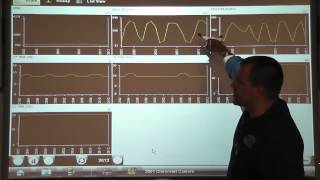
Graph the upstream O2 sensor (Sensor 1) voltage. A healthy sensor switches rapidly between 0.1V and 0.9V. A sensor stuck high (e.g., 0.8V on a Ford) or flatlined has failed and requires replacement.
Tools: ['OBD-II Scanner with Live Data'] (Intermediate) - Test O2 Sensor Heater Circuit Resistance
Disconnect the O2 sensor. Measure resistance (Ohms) across the two heater wires. A healthy circuit reads between 3 and 20 ohms. An infinite reading confirms an open circuit inside the sensor.
Tools: ['Digital Multimeter', 'Vehicle-specific wiring diagram'] (Advanced) - Test the MAF Sensor
Check the MAF g/s reading at idle. It should roughly match engine displacement (e.g., 2.0 g/s for a 2.0L engine). Tap the sensor housing gently with a screwdriver handle; if the engine stumbles, the sensor is internally broken.
Tools: ['OBD-II Scanner with Live Data', 'Screwdriver'] (Intermediate) - Diagnose Nissan Swirl Control Valve
For 2001-2006 Sentras, locate the swirl control valve actuator on the intake manifold. Verify 12V power at the connector and check the actuator motor for continuity. Manually actuate the linkage to ensure it isn't physically jammed.
Tools: ['Digital Multimeter', 'Screwdriver'] (Intermediate)
When This Code Triggers (Freeze-Frame Conditions)
- Engine Coolant Temp: 180-200°F (82-93°C) (The engine must be fully warmed up and operating in closed-loop fuel control.)
- RPM: 650-800 (Idle) or 2000-3000 (Cruise) (Triggers at idle for the VW/Audi lean variant, or during steady-state cruising when the ECU tests sensor response.)
- Engine Load: 15-40% (Sets under light to moderate engine load, avoiding heavy acceleration or deceleration.)
- Vehicle Speed: 0 mph (Idle) or 45-65 mph (Cruise) (Detected while stationary or during steady highway driving, depending on the manufacturer's test criteria.)
Related Codes
- P1137 — On Ford vehicles, this is the lean counterpart to P1138. P1138 means stuck rich; P1137 means stuck lean. Seeing both simultaneously indicates a wiring short or ECU failure, not a bad sensor.
- P1136 — On Audi/VW, this is the Bank 1 companion to P1138 (Bank 2). Seeing both together guarantees a massive vacuum leak affecting the entire engine, like a blown PCV valve.
- P0171 / P0174 — Generic codes for 'System Too Lean'. If they appear alongside P1138 on a VW/Audi, focus entirely on finding unmetered air entering the intake manifold.
- P0172 / P0175 — Generic codes for 'System Too Rich'. If present with a Ford P1138, the engine is genuinely running rich. Stop looking at the sensor and check for leaking fuel injectors.
Climate & Environmental Factors

- Cold Weather: Freezing temperatures shrink and harden plastic PCV hoses and rubber intake boots, exposing micro-cracks. This frequently triggers the Audi/VW lean variant of P1138 during winter.
- High Altitude: Thinner air at high altitudes pushes marginal MAF sensors or weak fuel pumps outside their normal operating parameters, triggering fuel mixture codes.
How to Talk to a Mechanic About This Code
Say this: "I have a P1138 code on my [Make, Model]. I know this code is manufacturer-specific, so please start by checking live data for fuel trims and O2 sensor voltage. If it indicates a lean condition, please perform a smoke test to find the vacuum leak."
This proves you understand the code's complexity. It directs the technician to use live data rather than blindly replacing the O2 sensor.
Avoid saying:
- 'My check engine light is on, can you look at it?'
- 'I read online it's the O2 sensor, just replace that.'
Questions to ask before authorizing the repair:
- Can you show me the live fuel trim numbers that led to this diagnosis?
- If it's a vacuum leak, did the smoke test pinpoint the exact hose?
- If you are replacing a sensor, did you verify the wiring harness is intact?
Where to Take It: Dealer vs Independent vs Chain
- Dealer:
Best for: Vehicles under warranty., Complex manufacturer quirks, like the Nissan Sentra swirl control valve.
Downsides: Highest labor rates, often $150-$200+ per hour., Tendency to replace entire expensive assemblies rather than individual components. (Typical cost: +50% vs. baseline) - Independent Shop:
Best overall fit. A qualified independent shop provides the necessary live data analysis and smoke testing without the dealership markup.
Best for: Out-of-warranty vehicles., Diagnosing vacuum leaks via smoke testing.
Downsides: Diagnostic equipment quality varies; ensure they specialize in your vehicle's brand. (Typical cost: +0% vs. baseline) - Chain Shop:
AVOID for diagnosis. Only use a chain shop if a qualified mechanic has already diagnosed the exact part needed.
Best for: Basic oil changes and tire rotations.
Downsides: High likelihood of misdiagnosing manufacturer-specific codes., Pressure to upsell unnecessary O2 sensors. (Typical cost: -10% vs. baseline)
When to Walk Away From the Repair
If the estimated repair cost exceeds 50% of the car's private-party value, sell or trade in the vehicle.
- Car worth $3000, fix is $2000: Walk away. The repair (likely a melted catalytic converter) exceeds 50% of the car's value.
- Car worth $10000, fix is $300: Fix it. The repair is a fraction of the vehicle's value.
What Scan Tool You Need for This Code
Minimum: An OBD-II scanner that graphs LIVE DATA for O2 sensor voltage and Short/Long-Term Fuel Trims (STFT/LTFT).
A $20 code reader only provides 'P1138'. Because this code means different things on different cars, you must see live fuel trims to determine if the engine is actually running lean or rich.
Budget: BlueDriver Pro Scan Tool (~$100) — Connects to your smartphone to graph live O2 sensor voltage and fuel trims, allowing you to confirm a vacuum leak or dead sensor.
Mid-range: Innova 5610 (~$350) — Provides OEM-level live data and bidirectional controls, essential for diagnosing complex manufacturer-specific faults on European cars.
Professional: Autel MaxiCOM MK808 (~$450) — Allows full bidirectional control to command specific valves and actuators (like the Nissan swirl valve) to test their function instantly.
Rent vs buy: Auto parts stores read codes for free, but their basic tools lack live data. If you want to diagnose P1138 yourself, buying a $100 live-data scanner is mandatory.
How to Clear the Code After You Fix It
- Use an OBD-II scan tool to clear the code.
- Start the engine and verify live fuel trims return to normal (-5% to +5%).
- Perform a complete OBD-II drive cycle to reset readiness monitors.
Drive cycle (~30 minutes): Cold start the engine and idle for 3 minutes with the A/C on. Drive in stop-and-go traffic for 15 minutes. Drive at a steady 55-60 mph on the highway for 10 minutes. Let the vehicle cool down completely.
Readiness monitors affected: Catalyst (CAT) monitor, Oxygen (O2) Sensor monitor, Oxygen Sensor Heater monitor
Before emissions retest: drive at least 50 miles to fully set monitors.
Watch out for:
- Clearing the code resets all emissions monitors to 'Not Ready', guaranteeing an automatic failure at the inspection station.
- If you clear the code without fixing the root cause, P1138 will return within 20 miles.
Will This Fail Emissions / State Inspection?
Yes — this code typically fails an OBD-II emissions inspection.
- California: An illuminated Check Engine Light is an automatic failure. You must complete a full drive cycle to set all readiness monitors to 'Ready' before re-testing.
- New York: Vehicles 2001 or newer will fail the NYS inspection if the Check Engine Light is on or if more than one readiness monitor reads 'Not Ready'.
- Texas: In emissions-testing counties, clearing the code right before pulling into the inspection bay results in an automatic rejection due to unset monitors.
Most Commonly Affected Vehicles
- Audi / Volkswagen A4, A8, Passat (1.8T, V6, V8 engines) (1999-2008) — P1138 means 'System Too Lean' on Bank 2 at idle. It is almost exclusively caused by vacuum leaks from aging plastic PCV components and brake booster lines.
- Ford Focus, Mustang, F-150 (1995-2010) — Indicates the downstream O2 sensor (Bank 1, Sensor 2) is stuck reading rich. Usually requires replacing the sensor. Avoid cheap aftermarket sensors on Fords.
- Nissan Sentra (1.8L QG18DE engine) (2001-2006) — Specific to California emissions models. Points to a failed swirl control valve actuator motor, not an O2 sensor.
- Chevrolet / GM Cavalier, S-10 (1998-2005) — Defined as 'HO2S High Voltage' for the rear O2 sensor. Caused by a faulty sensor, melted wiring, or a hard-to-find exhaust leak.
- Honda Civic, Accord, CR-V (1995-2008) — Points to a fault with the primary heated oxygen sensor (Bank 1, Sensor 1) or its internal heater circuit.
Manufacturer-Specific Notes

- Audi / Volkswagen: The definition includes the word 'Additive', meaning the fuel trim is adjusting at idle. This is the smoking gun for a vacuum leak, as leaks impact the engine heavily at idle but disappear at highway speeds.
- Ford: The definition 'Lack Of HO2S12 Switch' means the post-catalytic converter sensor is flatlined. Fords are notoriously picky about O2 sensor brands; stick to Motorcraft, Bosch, or NTK.
- Nissan: On 1.8L Sentras, P1138 has zero connection to fuel mixture or O2 sensors. It strictly monitors the swirl control valve actuator. Nissan previously issued a 10-year warranty extension for this exact part.
Real Owner Stories
2004 Audi A8 Quattro with 110K miles
Check Engine Light illuminated with codes P1136 and P1138. The car had a slightly rough idle.
What they tried:
- Replaced the MAF sensor, but codes returned immediately.
- Checked live data and saw +6.0% additive fuel trims at idle.
Outcome: The owner heard a hissing sound from the rear of the engine. Replacing the $70 PCV valve fixed the vacuum leak and permanently cleared both codes.
Lesson: On Audi/VW, P1136 and P1138 together always mean a vacuum leak. Listen for hissing and check the PCV system before buying expensive sensors.
2005 Nissan Sentra 1.8L with 150K miles
P1138 appeared. A local mechanic suggested replacing all O2 sensors for $600.
What they tried:
- Researched the code specifically for the 2005 Sentra.
- Located the swirl control valve actuator on the intake manifold.
Outcome: The owner bought a used actuator motor from a salvage yard for $40. Swapping it out cleared the code.
Lesson: Generic code readers mislead mechanics. Always verify the manufacturer-specific definition to avoid spending $600 on parts that aren't broken.
How to Prevent This Code From Triggering
- Proactively replace upstream O2 sensors (Every 100,000 miles) — O2 sensors degrade and become 'lazy' over time. Replacing them restores accurate fuel trim adjustments, improving MPG and protecting the catalytic converter.
- Inspect and replace PCV valves and hoses (Every 60,000 miles) — Plastic PCV components become brittle from engine heat. Replacing them before they crack prevents the massive vacuum leaks that trigger P1138 on European cars.
- Use Top Tier certified gasoline (Every fill-up) — Detergents in Top Tier fuel prevent carbon buildup on fuel injectors. Clean injectors atomize fuel properly, preventing the rich conditions that foul O2 sensors.
Frequently Asked Questions
What is the difference between 'additive' and 'multiplicative' fuel trim?
Additive fuel trim refers to adjustments made at idle, while multiplicative refers to adjustments under load. An Audi/VW P1138 is an 'additive' code. This strongly points to a vacuum leak, which impacts the engine most at idle.
Can I just replace the O2 sensor to fix P1138?
Only if live data confirms the sensor is dead. On an Audi/VW, the cause is almost always a vacuum leak, while on a Nissan Sentra, it is the swirl control valve. Replacing the O2 sensor without diagnosis wastes money.
What happens if I ignore a P1138 code?
Ignoring the code causes poor fuel economy, failed emissions tests, and severe engine damage. A prolonged rich condition overheats and melts the catalytic converter, costing over $2,000 to replace. A lean condition overheats the engine and burns exhaust valves.
Can a bad gas cap cause code P1138?
No, a bad gas cap triggers an EVAP system code like P0440, not an air-fuel mixture code like P1138. Do not replace the gas cap to fix this specific issue.
Is it safe to clean an oxygen sensor?
No. Oxygen sensors are delicate and solvents or wire brushes cause permanent damage. If a multimeter or scanner confirms a sensor is faulty, you must replace it.
Why does the P1138 repair cost vary so much?
The cost varies because the code points to completely different problems depending on the car brand. A cracked vacuum hose costs $20 to fix, while a high-pressure fuel pump costs over $1,000. Accurate, brand-specific diagnosis determines the final price.
What is a swirl control valve?
It is a system of butterfly flaps in the intake manifold used on specific Nissan engines. The flaps close at low RPM to create a 'swirl' in the air, improving combustion and emissions. When the actuator motor fails, it triggers P1138.
Key Takeaways
- Verify your vehicle's specific P1138 definition before buying parts, as this code means 'Vacuum Leak' on a VW but 'Bad O2 Sensor' on a Ford.
- Check live data for Long Term Fuel Trim (LTFT) values above +10% at idle to instantly confirm a vacuum leak on Audi and VW models.
- Inspect the swirl control valve actuator on 2001-2006 Nissan Sentras, as P1138 on these vehicles points directly to this $150-$300 part, not an oxygen sensor.
- Fix a rich-running P1138 within 30 days to prevent unburnt fuel from melting your catalytic converter, which escalates a $200 repair into a $2,000 replacement.
Helpful Videos

The information in this article is provided for general reference and educational purposes only. Vehicle specifications, procedures, and part compatibility can vary by production date, trim level, and region. Always consult your vehicle's factory service manual and verify part numbers before purchasing or performing repairs. Safety-critical components such as airbags, seat belts, and braking systems should be installed by a qualified professional.
- 🎬 Helpful Videos
- What Does P1138 Mean?
- Can I Drive With P1138?
- Common Causes
- Symptoms
- Diagnostic Flowchart
- Common Fixes & Costs
- DIY vs Professional
- Used vs. New Parts: Buying Guide
- What Happens If You Wait — Timeline
- Cost of Not Fixing It
- Diagnosis Steps
- When This Code Triggers (Freeze-Frame Conditions)
- Related Codes
- Climate & Environmental Factors
- How to Talk to a Mechanic About This Code
- Where to Take It: Dealer vs Independent vs Chain
- When to Walk Away From the Repair
- What Scan Tool You Need for This Code
- How to Clear the Code After You Fix It
- Will This Fail Emissions / State Inspection?
- Most Commonly Affected Vehicles
- Manufacturer-Specific Notes
- Real Owner Stories
- 2004 Audi A8 Quattro with 110K miles
- 2005 Nissan Sentra 1.8L with 150K miles
- How to Prevent This Code From Triggering
- Frequently Asked Questions
- What is the difference between 'additive' and 'multiplicative' fuel trim?
- Can I just replace the O2 sensor to fix P1138?
- What happens if I ignore a P1138 code?
- Can a bad gas cap cause code P1138?
- Is it safe to clean an oxygen sensor?
- Why does the P1138 repair cost vary so much?
- What is a swirl control valve?
- Key Takeaways
- 🎟️ Get 5% Off