

OBD-II Code P1132: Diagnosis and Repair Guide
The Ultimate P1132 Resource: What It Means, Why It Happens, and How to Fix It for Good
- P1132 on a Ford indicates the Bank 1 upstream O2 sensor is stuck reporting a rich condition, most often caused by a failed sensor, a dirty MAF, or a vacuum leak.
- Expect a 10-25% drop in fuel economy, a rough idle, and a strong raw fuel smell from the exhaust while this code is active.
- Limit driving to under 50 miles to prevent unburned fuel from melting the catalytic converter, which turns a $150 sensor replacement into a $2,000 repair.
- If P1152 (Bank 2 Rich) appears alongside P1132, do not replace the O2 sensors; diagnose systemic issues like a failing fuel pressure regulator or a disconnected PCV hose.
- Verify your vehicle's specific code definition, as P1132 means a heater circuit failure on VW/Audi and an intake manifold issue on Nissan models.
What Does P1132 Mean?

P1132 is a Ford-specific code indicating the Bank 1 upstream oxygen sensor is stuck 'rich'. The sensor's voltage remains consistently high, signaling too much fuel and not enough oxygen in the exhaust. The PCM triggers this code when the sensor fails to switch between rich and lean states during closed-loop operation.
Technical definition: P1132 stands for "Lack of HO2S11 Switch - Sensor Indicates Rich." The upstream Heated Oxygen Sensor for Bank 1 (Sensor 1) stopped oscillating its voltage signal. The PCM interprets this persistent high voltage as an uncorrectable rich fuel mixture.
Can I Drive With P1132?

Yes, But With Caution. Yes, but limit driving to under 50 miles. A persistent rich condition floods the engine with excess fuel, causing poor gas mileage, failed emissions tests, and spark plug fouling. The greatest risk is irreversible catalytic converter damage from overheating, turning a minor fix into a $2,500 repair.
Common Causes

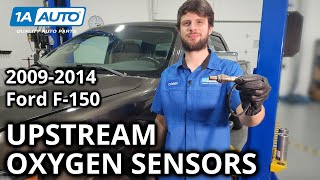
- Faulty upstream oxygen (O2) sensor (Very Common) — The sensor itself is the most frequent culprit. Age, silicone contamination, or internal coolant leaks degrade the sensor's ability to react, causing it to stick at a high-voltage 'rich' signal.
- Vacuum Leaks (Common) — A leak in a vacuum hose, intake manifold gasket, or PCV system allows unmetered air into the engine. The PCM overcompensates by adding excessive fuel, creating a genuinely rich condition.
- Dirty Mass Airflow (MAF) sensor (Common) — A MAF sensor contaminated with dirt or oil under-reports entering air. The PCM injects fuel based on this incorrect reading, resulting in a rich mixture. 🎬 See how to clean your MAF sensor and clear the code.
- Leaking fuel injectors (Less Common) — An injector stuck partially open drips uncommanded fuel into the cylinder, causing a localized rich condition on Bank 1.
- High fuel pressure (Less Common) — A failing fuel pressure regulator forces excess fuel through the injectors, creating a systemic rich mixture.
- Exhaust leaks before the O2 sensor (Less Common) — A cracked exhaust manifold or leaking gasket pulls outside air into the exhaust stream, confusing the sensor into commanding incorrect fuel trim adjustments.
- Wiring or Connector Issues (Rare) — Damage to the O2 sensor's wiring harness or water inside the connector corrupts the signal, forcing a constant high-voltage reading.
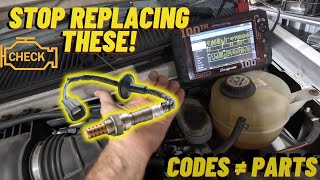
- Faulty Powertrain Control Module (PCM) (Very Rare) — Faulty driver circuits inside the PCM misinterpret the sensor signal. This is a last-resort diagnosis. 🎬 Watch: Why you shouldn't just throw parts at these codes.
Symptoms

- Check Engine Light is on — The PCM illuminates the Check Engine Light to alert the driver of the fault.
- Poor fuel economy — A rich condition burns excess fuel, causing a 10-25% decrease in gas mileage.
- Black smoke or fuel smell from exhaust — A strong smell of unburned gasoline from the tailpipe, sometimes accompanied by visible black smoke.
- Rough idle or stalling — The unbalanced air/fuel mixture causes the engine to run unevenly, shake, or stall at stops.
- Hesitation or loss of power — The vehicle feels sluggish, stumbles, or lacks throttle response during closed-loop operation.
- Engine runs better when cold — Symptoms worsen after a few minutes of driving when the PCM starts using the faulty O2 sensor data for fuel control.
Diagnostic Flowchart

Tap your situation to follow the diagnostic path that matches what you're seeing on this code.
Common Fixes & Costs
- Replace Bank 1 Upstream Oxygen Sensor — Parts: $50-$150, Labor: $100-$250, ~1.2 hr book time (Intermediate)
- Repair Vacuum Leak (e.g., PCV hose, intake gasket) — Parts: $15-$50, Labor: $100-$250, ~1.5 hr book time (DIY)
- Clean or Replace Mass Airflow (MAF) Sensor — Parts: $10-$150, Labor: $50-$150, ~0.5 hr book time (DIY)
- Replace Fuel Pressure Regulator — Parts: $50-$180, Labor: $150-$300, ~1.8 hr book time (Intermediate)
- Replace Leaking Fuel Injector(s) — Parts: $60-$250 per injector, Labor: $200-$500+, ~2.5 hr book time (Advanced)
DIY vs Professional
- Replace Bank 1 Upstream Oxygen Sensor — Beginner: Yes, with caution.
Tools: Jack and jack stands, penetrating oil, O2 sensor socket, torque wrench, anti-seize compound. - Repair Vacuum Leak (PCV hose) — Beginner: Yes.
Tools: Basic hand tools (pliers, screwdriver set). - Clean or Replace Mass Airflow (MAF) Sensor — Beginner: Yes.
Tools: Screwdriver or security bit set, dedicated MAF cleaner spray. - Replace Fuel Pressure Regulator (Rail-Mounted) — Beginner: No, recommended for intermediate DIYers.
Tools: Fuel pressure gauge, fuel line disconnect tool, basic socket/wrench set, safety glasses.
Used vs. New Parts: Buying Guide
When a used part is worth it: Buying a used oxygen sensor is never recommended. They are wear-and-tear items with a finite lifespan, and a used part will likely fail shortly after installation.
Donor-vehicle mileage cap: roughly under 40000 miles for the part to have meaningful remaining life.
Donor quality checklist:
- Source from a very low-mileage vehicle wrecked in a non-engine-related accident.
- Avoid sensors from vehicles with known engine problems or high mileage.
- Ensure the part number is an exact match for your vehicle's year, make, model, and engine.
Decision logic:
- If The part is an electronic sensor with a known wear pattern (like an O2 sensor) → Buy new from an OEM or reputable aftermarket brand (e.g., Bosch, Denso, NGK/NTK).
- If The cost of a new OEM part is prohibitive → A new aftermarket part is a better choice than a used OEM part.
- If The vehicle is very old and has low value → A used part is a last-resort budget option, but carries a high risk of premature failure.
Warranty tradeoff: Salvage yard parts typically have a 30-90 day warranty. New aftermarket parts carry a 1-year to limited lifetime warranty. New OEM parts usually have a 12-month/12,000-mile warranty.
Worst-case if a used part fails: $150-$350 if a used sensor fails after installation, requiring repeat labor costs plus the price of another sensor.
What Happens If You Wait — Timeline
- 0-2 weeks: Check Engine Light illuminates. Fuel trims on Bank 1 go highly negative as the PCM tries to compensate. No other symptoms are noticeable. (MPG impact: 5-10%% · Added cost: $0-$25 in wasted fuel)
- 2 weeks - 3 months: Consistent drop in MPG, a faint smell of fuel from the exhaust, and a slightly rough idle. Unburned fuel begins to intermittently super-heat the catalytic converter. (MPG impact: 10-20%% · Added cost: $50-$150 in wasted fuel)
- 3-6 months: Catalytic converter suffers permanent damage. The internal ceramic substrate cracks or melts from sustained temperatures over 1600°F. Misfire codes appear as spark plugs foul. (MPG impact: 15-25%% · Added cost: $800-$1,700 (Catalytic converter replacement required).)
- 6+ months: Complete catalytic converter meltdown blocks the exhaust. Extreme backpressure causes severe engine damage, frequent stalling, and total power loss. (MPG impact: 25-50%% · Added cost: $1,500-$3,000+ (Converter replacement plus engine repairs).)
Cost of Not Fixing It
- 0-1 month: Noticeable drop in fuel economy (10-25%), strong fuel smell, and fouled spark plugs leading to misfires. (Added cost: $50-$200)
- 1-6 months: Severe risk of overheating and permanently damaging the catalytic converter due to unburned fuel igniting inside it. (Added cost: $800-$2500)
- 6+ months: Engine oil dilution from excess fuel causes premature engine wear. The vehicle suffers severe driveability issues like stalling and hesitation. (Added cost: $2500+)
Diagnosis Steps
- Verify Code and Review Live Data
Use an OBD-II scanner to confirm P1132 is active and check for other codes. View live data, focusing on Short Term (STFT) and Long Term (LTFT) Fuel Trims for Bank 1. High negative numbers (e.g., -10% to -25% or more) confirm the PCM is subtracting fuel to correct a perceived rich condition.
Tools: OBD-II Scanner with Live Data (Beginner) - Analyze Live O2 Sensor Voltage
Graph the voltage for the Bank 1, Sensor 1 O2 sensor (HO2S11) on your scan tool. A healthy sensor switches rapidly between 0.1V (lean) and 0.9V (rich). If the voltage is stuck high (above 0.8V), intentionally create a small vacuum leak. If the voltage drops, the sensor works and the engine is truly running rich. If it remains high, the sensor is faulty.
Tools: OBD-II Scanner with Live Data (Intermediate) - Inspect for Vacuum Leaks
Visually inspect all vacuum lines, the air intake tube, and gaskets for cracks or loose connections. Pay special attention to the PCV valve hose and elbow, especially on Ford V8s where the elbow behind the intake manifold is a common failure point. A smoke machine is the most effective tool for finding elusive leaks.
Tools: Flashlight, Smoke Machine (recommended) (Beginner) - Inspect and Clean the Mass Airflow (MAF) Sensor
Remove and inspect the MAF sensor in the air intake path. Look for dirt or oil on the delicate hot wires. Clean it ONLY with dedicated MAF sensor cleaner spray and allow it to dry completely. An over-oiled K&N-style filter is a frequent cause of contamination.
Tools: Screwdriver/Socket set, MAF Sensor Cleaner (Intermediate) - Inspect O2 Sensor Wiring and Connectors
Visually inspect the HO2S11 wiring harness for melting, chafing, or physical damage. Unplug the connector and check for corrosion, moisture, or pushed-out pins. A clean, secure connection is critical for a proper signal.
Tools: Flashlight, Jack and Jack Stands (Intermediate) - [ADVANCED] Quantitative Fuel Pressure Test
Connect a fuel pressure gauge to the fuel rail's test port. Check pressure with Key On, Engine Off (KOEO) and at idle (KOER). Specs vary by model: expect 55-65 PSI for many returnless systems. Pressure significantly above spec points to a faulty regulator. If pressure drops quickly after turning the engine off, suspect a leaking injector.
Tools: Fuel Pressure Gauge (Advanced) - [ADVANCED] Check for Leaking Fuel Injectors
After shutting the engine off, watch the fuel pressure gauge. If the pressure drops quickly, it indicates a leaking injector. Use a scan tool to perform an injector power balance test, or remove the fuel rail with injectors attached, place paper towels under each nozzle, and pressurize the system to see which one drips.
Tools: Fuel Pressure Gauge, Advanced Scan Tool (optional) (Advanced) - [ADVANCED] Test the O2 Sensor Heater Circuit Resistance
A failed heater causes slow sensor response. Unplug the sensor and use a multimeter set to Ohms. Measure the resistance across the two heater circuit pins. A healthy heater reads between 2 and 30 Ohms. An open circuit or a short indicates a failed heater, requiring sensor replacement.
Tools: Multimeter (Advanced) - [ADVANCED] Analyze MAF Sensor Live Data
Using a scan tool, monitor the MAF sensor PID. At a stable, warm idle, the reading in grams per second (g/s) should roughly equal the engine's displacement in liters (e.g., a 4.6L V8 reads 4-5 g/s). The reading should increase smoothly as you increase RPM. Erratic readings suggest a faulty MAF sensor.
Tools: OBD-II Scanner with Live Data (Advanced)
When This Code Triggers (Freeze-Frame Conditions)
- Engine Coolant Temp: 180-210°F (The engine must be fully warmed up and operating in closed-loop mode.)
- Engine RPM: 1500-2500 RPM (The code sets during steady-state cruising, rarely at idle or heavy acceleration.)
- Engine Load: 20-60% (Occurs under normal driving conditions, not under high load or full throttle.)
- Fuel System Status: Closed Loop (The PCM must be actively using O2 sensor data for fuel control.)
Related Codes
- P1152 — The identical code for Bank 2. If both P1132 and P1152 are present, the cause is a single issue affecting the entire engine, not two simultaneously failed O2 sensors. Suspect the MAF sensor, fuel pressure regulator, or a large vacuum leak.
- P0172 — The generic OBD-II code for 'System Too Rich (Bank 1)'. P1132 explains *why* the PCM sets P0172—it sees the O2 sensor signal stuck high. They point to the same core problem.
- P1131 — The opposite code for Bank 1, indicating the sensor is stuck lean. Seeing P1131 and P1132 together indicates a severe wiring issue or a completely failed O2 sensor sending erratic signals.
- P0175 — The generic OBD-II code for 'System Too Rich (Bank 2)'. Often seen with P1132 and P0172 when a problem affects both engine banks.
Climate & Environmental Factors
- High Altitude: Less dense air contains less oxygen, causing the engine to run inherently richer. This exacerbates an existing rich condition and triggers P1132 sooner than at sea level.
- Cold Weather: The engine remains in 'open-loop' mode longer after startup, running on a pre-set rich fuel map and ignoring O2 sensor data. This masks P1132 symptoms until the engine fully warms up.
How to Talk to a Mechanic About This Code
Say this: "I have a P1132 code on my Ford and I'd like to schedule a diagnostic. I want to confirm if the O2 sensor has failed or if it's correctly reporting a rich condition from another cause, like a vacuum leak or a MAF sensor issue."
This signals you understand the code's complexity and prevents a shop from just replacing the O2 sensor without proper diagnosis. It directs them to test, not just swap parts.
Avoid saying:
- 'My check engine light is on, can you just fix it?' (This is too vague and invites unnecessary repairs).
- 'I'm pretty sure it's the oxygen sensor, can you just replace it?' (This authorizes a repair that might not solve the problem).
- 'Just do whatever you think is best.' (This gives up your right to approve specific costs and repairs).
Questions to ask before authorizing the repair:
- How did you determine the O2 sensor was faulty versus reporting a true rich condition? (e.g., Did you check fuel trims and live sensor data?)
- Can you provide a written estimate that breaks down the cost of parts and labor?
- If the proposed repair doesn't fix the P1132 code, what is the next step and will I be charged for this part?
- What is the warranty on the parts and the labor for this specific repair?
Where to Take It: Dealer vs Independent vs Chain
- Dealer:
Best for: Vehicles still under a factory or emissions warranty., Complex electrical issues or when manufacturer-specific software updates are required., Recalls and warranty-covered work.
Downsides: Significantly higher labor and diagnostic rates, often 40-50% more than independent shops., May recommend replacing an entire assembly when a smaller component has failed. (Typical cost: +50% vs. baseline) - Independent Shop:
Best fit. P1132 on a Ford is a very common problem. A reputable independent shop with good diagnostic skills accurately identifies the cause more cost-effectively than a dealer.
Best for: Out-of-warranty vehicles where cost is a major factor., Common codes like P1132 on popular domestic vehicles, as experienced techs have likely seen the issue repeatedly., Building a long-term relationship with a trusted mechanic.
Downsides: Quality and diagnostic capabilities vary greatly; vetting the shop's reputation and certifications (like ASE) is crucial., May lack the latest OEM-specific diagnostic tools for very new models. (Typical cost: +0% vs. baseline) - Chain Shop:
Acceptable for a straightforward O2 sensor replacement if you have already performed the diagnosis yourself. AVOID for initial diagnosis.
Best for: Simple, routine maintenance like oil changes, tires, and brakes.
Downsides: Technician skill varies dramatically., High pressure to upsell services leads to misdiagnosis of codes like P1132. (Typical cost: -10% vs. baseline)
When to Walk Away From the Repair
If the estimated repair cost exceeds 50% of the car's private-party market value, seriously consider replacing the vehicle instead of repairing it.
- Car worth $4000, fix is $2200: Walk away. The repair cost is 55% of the car's value, making it a poor investment.
- Car worth $12000, fix is $1800: Fix it. The repair cost is only 15% of the vehicle's value and is a reasonable investment to keep a more valuable car running well.
- Car worth $2500, fix is $800: Borderline. At 32% of the car's value, the decision depends on other factors. If the car is otherwise reliable, the repair is likely worth it. If it needs other work soon, it may be time to move on.
What Scan Tool You Need for This Code
Minimum: A scanner that reads and graphs live data, specifically for O2 sensor voltage and fuel trims.
A basic $20 code reader only shows the P1132 code. It cannot show the live sensor data (voltage stuck high) or the fuel trims (high negative numbers) needed to confirm if the sensor is lying or telling the truth about a rich condition.
Budget: BlueDriver Pro (~$100) — Connects to your smartphone via Bluetooth and provides excellent live data graphing for O2 sensors and fuel trims. It offers repair reports based on a database of fixes for the same code and vehicle.
Mid-range: Innova 5610 / Foxwell NT604 Elite (~$150-350) — Powerful handheld units that offer live data graphing, freeze frame data, and diagnostics for other systems. The Innova 5610 performs some actuator tests, useful for advanced diagnostics.
Professional: Autel MaxiCOM MK808S (~$500-800) — Provides full bidirectional control, allowing a technician to command specific vehicle functions. For P1132, this includes tests like an injector power balance test to diagnose a leaking injector without disassembly.
Rent vs buy: AutoZone's 'Loan-A-Tool' program allows you to borrow an OBD-II scanner for free after paying a refundable deposit. If you only need to diagnose this single issue, renting is the most cost-effective option.
How to Clear the Code After You Fix It
- Use an OBD-II scan tool to clear the diagnostic trouble codes.
- Perform a complete drive cycle to allow the vehicle's readiness monitors to run.
- Re-scan the vehicle to ensure the P1132 code does not return.
Drive cycle (~20 minutes): A typical Ford drive cycle involves: a cold start, 2-3 minutes of idling, 5-8 minutes of stop-and-go city driving, and 5-8 minutes of steady highway speed (55 mph). This allows the engine to warm up completely and run under various load conditions.
Readiness monitors affected: Oxygen Sensor Monitor, Catalyst Monitor, Fuel System Monitor
Before emissions retest: drive at least 50 miles to fully set monitors.
Watch out for:
- Disconnecting the battery clears the code but resets all readiness monitors to 'Not Ready', causing an automatic emissions test failure.
- If the underlying rich condition remains, the code returns as soon as the O2 sensor monitor completes its self-test.
Will This Fail Emissions / State Inspection?
Yes — this code typically fails an OBD-II emissions inspection.
- California: An illuminated Check Engine Light results in an automatic smog check failure. All readiness monitors must be set to 'Ready'.
- New York: A vehicle automatically fails the NYS inspection if the Check Engine Light is on. Clearing the code right before the test results in a 'Not Ready' status, also leading to a failure.
- Texas: In the 17 counties requiring emissions testing, an active P1132 code causes an automatic failure of the OBD-II test.
Most Commonly Affected Vehicles
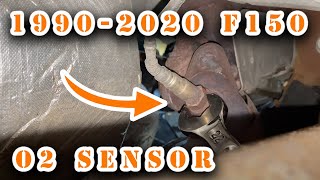
- Ford F-150 (1997-2003) — Extremely common on 4.6L and 5.4L V8s. Often caused by a deteriorated PCV hose elbow behind the intake manifold or a failed O2 sensor.
- Ford Explorer (1997-2005) — Frequently appears with P1152 (Bank 2 Rich), strongly suggesting a systemic problem like a faulty MAF sensor, high fuel pressure, or a major vacuum leak.
- Ford Ranger (1996-2008) — Common on V6 models. In addition to vacuum leaks and O2 sensor failure, some cases resolve by replacing a faulty PCM after ruling out all other causes.
- Ford Mustang (1996-2004) — V6 and V8 models are susceptible. O2 sensor failure is the most common cause, but fuel delivery issues and contaminated sensors after engine work are also seen.
- Mazda B-Series Truck (1996-2008) — Mechanically identical to the Ford Ranger, sharing the same powertrains and common failures leading to P1132.
- Volkswagen / Audi Jetta, Golf, A4, etc. (1999-2005) — CRITICAL: On VW/Audi, P1132 means 'Heated Oxygen Sensor (HO2S) Heater Control - Circuit High'. Diagnosis must focus on the heater circuit's electrical integrity, NOT the fuel mixture.
- Nissan Various (1996-Present) — CRITICAL: P1132 refers to an 'Intake manifold air control solenoid' or a 'Swirl Control Valve'. Always verify the definition for the specific vehicle model.
- Hyundai Various (1996-Present) — CRITICAL: On many Hyundai vehicles, P1132 is defined as 'Liquid Fuel Solenoid Malfunction', related to alternative fuel systems and completely unrelated to the Ford definition.
Manufacturer-Specific Notes
- Ford: This code is a hallmark of 1990s and 2000s Fords. Technicians check for vacuum leaks at the PCV hoses and intake manifold gaskets first. TSB 01-12-5 suggests checking for silicone contamination on the O2 sensor from internal engine leaks.
- Mazda: On vehicles with Ford-based powertrains (like the B-Series trucks), the definition is 'Heated oxygen sensor (HO2S) rich mixture indicated,' functionally identical to Ford's definition.
- Audi/Volkswagen: P1132 means 'Heated oxygen sensor (HO2S) heater control - circuit high.' Diagnosis focuses on testing the heater element's resistance and checking the wiring for a short to power.
- Nissan: P1132 means 'Intake manifold air control solenoid - circuit malfunction' or 'Swirl Control Valve,' completely unrelated to O2 sensors.
Real Owner Stories
1998 Ford Ranger 3.0L with P1132 & P1152
Truck ran rough with black soot in the exhaust. Codes indicated rich conditions on both banks.
What they tried:
- Replaced both upstream O2 sensors - no change.
- Replaced DPFE sensor and coolant temp sensor - no change.
- Observed abnormally high calculated load value at idle on a scan tool.
Outcome: The abnormal load reading pointed to a faulty MAF sensor providing incorrect data to the PCM, causing a systemic rich condition.
Lesson: When you have rich codes on both banks (P1132 and P1152), the problem is never two failed O2 sensors. Look for a single cause affecting the whole engine, like the MAF sensor.
2000 Ford Ranger with P1132 - The Misdiagnosis Saga
Check Engine Light with P1132 and an intermittent idle drop/surge.
What they tried:
- Replaced the passenger side O2 sensor twice - code returned.
- Replaced Temp Sender, TPS, PCV valve, and EGR pressure sensor.
- Cleaned the MAF sensor and throttle body.
- Performed normal fuel pressure and compression tests.
Outcome: After extensive part replacement, the issue was traced to a simple collapsed vacuum hose.
Lesson: Don't throw parts at a code. P1132 often means the O2 sensor is accurately reporting a rich condition. Inspect for cheap-to-fix issues like vacuum leaks before replacing expensive sensors.
1997 Ford F-150 with P1132 - The Self-Inflicted Wound
Owner got a P1132 code and replaced the upstream and downstream O2 sensors.
What they tried:
- Replaced O2 sensors to fix the initial code.
Outcome: Applying excessive force to remove the seized O2 sensors cracked the rusted exhaust manifold, creating a new exhaust leak that triggered further codes.
Lesson: Be careful when working on old, rusted exhaust components. Seized O2 sensors require penetrating oil and heat to prevent damaging the exhaust pipe.
2001 Ford F-150 4.6L with P1132 & P1152 after Upgrades
After installing new fuel injectors and exhaust headers, the truck threw P1132 and P1152 codes with a significant loss of power.
What they tried:
- Punched out catalytic converters and installed non-foulers - no change.
- Performed a fuel pressure test showing 30-35 PSI, but pressure dropped to zero immediately after shutdown.
Outcome: The rapid loss of fuel pressure after shutdown proved one or more of the new injectors were leaking fuel into the engine.
Lesson: If a code appears immediately after a repair, the new parts are the most likely suspect. A fuel pressure bleed-down test is critical to diagnose leaking injectors.
How to Prevent This Code From Triggering
- Use Top-Tier certified gasoline. (Every fill-up) — Enhanced detergent packages prevent carbon deposits on fuel injectors, ensuring proper spray patterns and preventing rich conditions.
- Replace upstream oxygen sensors as a maintenance item. (Every 80,000 to 100,000 miles) — O2 sensors are wear items. As they age, their response time slows, impairing the PCM's ability to maintain an optimal air-fuel ratio.
- Clean the Mass Airflow (MAF) sensor periodically. (Every 20,000-30,000 miles or with every air filter change.) — Using a dedicated MAF sensor cleaner removes contaminants that cause the sensor to under-report airflow, preventing overly rich fuel mixtures.
- Inspect and/or replace the PCV valve. (Inspect every 30,000 miles; replace every 60,000-100,000 miles.) — A stuck-open PCV valve creates a significant unmetered vacuum leak. It is an inexpensive component that prevents hard-to-diagnose vacuum issues.
Frequently Asked Questions
I replaced the O2 sensor and P1132 came back. What now?
This means the old sensor was accurately reporting a true rich condition. Shift your focus to systemic causes like a dirty MAF sensor, a vacuum leak, or incorrect fuel pressure. Do not replace the sensor again.
Can I just replace the oxygen sensor to fix P1132?
While the O2 sensor is the most common fix, it is not a guaranteed solution. The code indicates the sensor is reporting a rich condition, which is often accurate. Determine if the sensor failed or if a vacuum leak is causing a true rich mixture before replacing parts.
What is 'Bank 1'?
Bank 1 is the side of the engine containing cylinder #1. On an inline engine, there is only one bank. For most Ford V8s, Bank 1 is the passenger side of the vehicle.
How much does it cost to fix code P1132?
Costs vary widely based on the root cause. A DIY MAF sensor cleaning costs under $20, while a professional vacuum hose repair runs $150-$350. An oxygen sensor replacement typically costs $150-$350 at a shop.
Will P1132 cause me to fail an emissions test?
Yes. The code indicates a failure in the fuel control system, resulting in high emissions of hydrocarbons and carbon monoxide. This guarantees an automatic emissions test failure.
Can a bad gas cap cause P1132?
No. A loose gas cap relates to the EVAP system and triggers codes like P0442 or P0455. It does not cause a rich running condition or a P1132 code.
I have P1132 and misfire codes on the same bank. Are they related?
Yes, they are directly related. A severe rich condition fouls the spark plugs with excess fuel and carbon, preventing them from firing properly. The root cause is the rich condition, and the misfires are a symptom.
My scanner shows 'OL-Fault' with P1132. What does that mean?
OL-Fault stands for 'Open Loop - Fault'. It means the PCM detected a critical sensor failure and prevents the system from entering Closed Loop fuel control. The engine reverts to a default, less efficient fuel map, destroying fuel economy.
Key Takeaways
- P1132 on a Ford indicates the Bank 1 upstream O2 sensor is stuck reporting a rich condition, most often caused by a failed sensor, a dirty MAF, or a vacuum leak.
- Expect a 10-25% drop in fuel economy, a rough idle, and a strong raw fuel smell from the exhaust while this code is active.
- Limit driving to under 50 miles to prevent unburned fuel from melting the catalytic converter, which turns a $150 sensor replacement into a $2,000 repair.
- If P1152 (Bank 2 Rich) appears alongside P1132, do not replace the O2 sensors; diagnose systemic issues like a failing fuel pressure regulator or a disconnected PCV hose.
- Verify your vehicle's specific code definition, as P1132 means a heater circuit failure on VW/Audi and an intake manifold issue on Nissan models.
Helpful Videos



The information in this article is provided for general reference and educational purposes only. Vehicle specifications, procedures, and part compatibility can vary by production date, trim level, and region. Always consult your vehicle's factory service manual and verify part numbers before purchasing or performing repairs. Safety-critical components such as airbags, seat belts, and braking systems should be installed by a qualified professional.
- 🎬 Helpful Videos
- What Does P1132 Mean?
- Can I Drive With P1132?
- Common Causes
- Symptoms
- Diagnostic Flowchart
- Common Fixes & Costs
- DIY vs Professional
- Used vs. New Parts: Buying Guide
- What Happens If You Wait — Timeline
- Cost of Not Fixing It
- Diagnosis Steps
- When This Code Triggers (Freeze-Frame Conditions)
- Related Codes
- Climate & Environmental Factors
- How to Talk to a Mechanic About This Code
- Where to Take It: Dealer vs Independent vs Chain
- When to Walk Away From the Repair
- What Scan Tool You Need for This Code
- How to Clear the Code After You Fix It
- Will This Fail Emissions / State Inspection?
- Most Commonly Affected Vehicles
- Manufacturer-Specific Notes
- Real Owner Stories
- 1998 Ford Ranger 3.0L with P1132 & P1152
- 2000 Ford Ranger with P1132 - The Misdiagnosis Saga
- 1997 Ford F-150 with P1132 - The Self-Inflicted Wound
- 2001 Ford F-150 4.6L with P1132 & P1152 after Upgrades
- How to Prevent This Code From Triggering
- Frequently Asked Questions
- I replaced the O2 sensor and P1132 came back. What now?
- Can I just replace the oxygen sensor to fix P1132?
- What is 'Bank 1'?
- How much does it cost to fix code P1132?
- Will P1132 cause me to fail an emissions test?
- Can a bad gas cap cause P1132?
- I have P1132 and misfire codes on the same bank. Are they related?
- My scanner shows 'OL-Fault' with P1132. What does that mean?
- Key Takeaways
- 🎟️ Get 5% Off