

P1128 on 2012-2015 Fiat 500: Closed Loop Fueling Causes and Fixes
On a 2012-2015 Fiat 500, P1128 means the engine can't adjust its fuel mixture correctly. The most common causes are a failing upstream oxygen (O2) sensor or issues with engine oil level/type affecting the MultiAir system. Check your oil first, ensuring it meets the Chrysler MS-12991 specification, then inspect the O2 sensor and for vacuum leaks.
- P1128 on a Fiat 500 means the engine's fuel management system is stuck in 'open loop'.
- Before suspecting expensive parts, check your engine oil level and ensure you are using the correct type specified for the MultiAir engine. This is a very common and platform-specific cause.
- The most likely part to have failed is the upstream oxygen (O2) sensor, which provides the data for closed-loop control.
- This code is often accompanied by P1524 (Oil Pressure Out Of Range), strongly suggesting the root cause is related to the oil system affecting the MultiAir valve train.
What's Unique About the 2012-2015 Fiat 500
On the Fiat 500's 1.4L MultiAir engine, P1128 is uniquely and frequently linked to engine oil issues. Manufacturer Technical Service Bulletins (TSBs) consistently pair P1128 with code P1524, "Oil Pressure Out Of Range - Camshaft Advance/Retard Disabled". This is because the MultiAir valve actuation system, often called the "brick," is a complex electro-hydraulic system that uses engine oil to control the intake valves. If the oil level is low, the wrong type is used (not meeting Chrysler spec MS-12991), or the oil is old and degraded, it can disrupt the MultiAir brick's function. This leads to improper engine breathing and combustion, which the PCM interprets as a fueling problem, thus triggering P1128.
Diagnostic Flowchart
Tap your situation to follow the diagnostic path that matches what you're seeing on this vehicle.
Symptoms You May Notice
- Check Engine Light is on
- Decreased fuel efficiency
- Rough or fluctuating idle
- Poor engine performance or hesitation
- Engine misfires
- Failing an emissions test
- Engine cranks but may not start, especially after sitting for a long time
- Replacing the downstream (post-cat) O2 sensor. This sensor's primary function is to monitor catalytic converter efficiency and it does not control the closed-loop fuel trim. The upstream sensor is the correct one to inspect for this code.
Most Likely Causes
- Failing Upstream Oxygen (O2) Sensor 🔴 High Probability The upstream O2 sensor is the primary input for closed-loop fueling and is a common failure point on most vehicles as it ages. It lives in a high-heat environment and its sensing element degrades over time.
How to confirm: Monitor the O2 sensor voltage with an OBD-II scanner. A healthy sensor will show rapidly fluctuating voltage between approximately 0.1V and 0.9V. A slow, stuck, or unresponsive reading indicates a problem. You can also inspect the sensor and its wiring for physical damage.
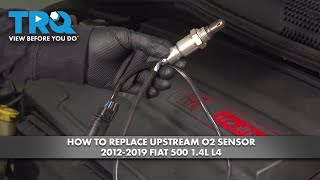
Typical fix: Replace the upstream (pre-cat) Bank 1 oxygen sensor. This is located on the front of the exhaust manifold. 🎬 Watch: Step-by-step guide to replacing your upstream O2 sensor.
Est. part cost: $50-$150 - Incorrect or Low Engine Oil 🔴 High Probability The MultiAir system, which controls the intake valves, uses engine oil pressure to function. Incorrect viscosity, low levels, or degraded oil can cause it to malfunction, leading to improper combustion and setting fuel trim codes like P1128. This is a well-documented issue on this platform, often accompanied by code P1524.
How to confirm: Check the oil level on the dipstick. Verify the correct oil type is being used. The 1.4L MultiAir requires a full synthetic 5W-40 oil that meets the Chrysler MS-12991 specification. If the oil is old, low, or the wrong type, an oil change is the first and most critical step.
Typical fix: Perform an oil and filter change using the manufacturer-specified oil (SAE 5W-40 synthetic that meets Chrysler MS-12991) and a quality filter.
Est. part cost: $50-$100 - Vacuum Leak 🟡 Medium Probability Aging rubber and plastic hoses, like the PCV hose, and gaskets can crack or become loose, allowing unmetered air to enter the engine after the MAP sensor. This creates a lean condition that the PCM struggles to correct, preventing closed-loop operation.
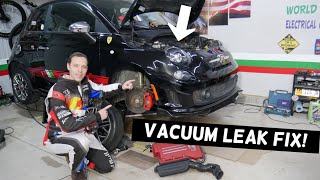
How to confirm: Visually inspect all vacuum lines, especially the PCV hose running to the intake manifold, for cracks and brittleness. Listen for a hissing sound at idle. A smoke test is the most effective way to find hidden leaks. 🎬 See how to identify and fix common Fiat 500 vacuum leaks.
Typical fix: Replace the cracked vacuum hose or leaking gasket (e.g., intake manifold gasket).
Est. part cost: $10-$100 - Exhaust Leak (before O2 sensor) ⚪ Low Probability Cracks in the exhaust manifold or a leaking manifold-to-head gasket can allow oxygen to be pulled into the exhaust stream. This causes the upstream O2 sensor to send false lean readings, confusing the PCM.
How to confirm: Listen for ticking or tapping noises from the engine bay, especially when the engine is cold. Visually inspect the exhaust manifold for cracks or black soot marks indicating a leak.
Typical fix: Replace the exhaust manifold or the manifold gasket.
Est. part cost: $100-$300 - Faulty Engine Coolant Temperature (ECT) Sensor ⚪ Low Probability The engine must reach a specific operating temperature (typically above 180°F) to enter closed loop. If the ECT sensor is faulty and incorrectly tells the PCM the engine is still cold, it will prevent the switch to closed-loop operation.
How to confirm: Use an OBD-II scanner to monitor the coolant temperature reading. If it's stuck at a low value (e.g., -40°F) or doesn't rise as the engine warms up, the sensor is likely bad.
Typical fix: Replace the engine coolant temperature sensor.
Est. part cost: $25-$60
Rare But Worth Checking
- Clogged or Weak Fuel Pump/Injectors: If the PCM commands more fuel but the fuel system can't deliver it due to a weak pump, clogged filter, or failing injector, closed loop cannot be achieved. This is less common than sensor or oil issues.
- Clogged MultiAir Oil Filter: A small, often overlooked mesh filter for the MultiAir brick can become clogged with sludge, especially if oil changes are neglected. This restricts oil flow to the actuator, causing P1524 and subsequently P1128. Cleaning or replacing this filter is an advanced diagnostic step.
- Failing MultiAir Actuator ('Brick'): In severe cases, particularly after a major oil pressure loss event or prolonged use of incorrect oil, the MultiAir actuator itself can fail internally. This is an expensive repair and should be considered only after all other possibilities are exhausted.
- Faulty Powertrain Control Module (PCM): This is extremely rare and should only be considered after all other possibilities have been exhaustively ruled out. Sometimes a software update (flash) is required per a TSB, rather than a full replacement.
Diagnosis Steps
- Read all fault codes with an OBD-II scanner. Note if P1524 is also present, as this is a major clue.
- CRITICAL: Check the engine oil level and condition. Verify the oil meets Chrysler specification MS-12991 (typically a 5W-40 full synthetic). If the oil is low, old, or of unknown type, perform a full oil and filter change with the correct spec oil. This resolves the issue in a high number of cases.
- Using a scan tool, monitor the live data for the upstream O2 sensor (Bank 1, Sensor 1). The voltage should fluctuate rapidly between approximately 0.1V and 0.9V. If it's slow, stuck, or unresponsive, it's likely faulty.
- Inspect all accessible vacuum hoses, particularly the PCV lines connected to the intake manifold, for cracks, brittleness, or loose connections.
- Inspect the exhaust manifold and the gasket between it and the cylinder head for any signs of leaks (soot trails, audible ticking when cold).
- Monitor the Engine Coolant Temperature sensor data. Ensure it rises steadily to operating temperature (around 195-220°F) and doesn't give erratic readings.
- If a vacuum or exhaust leak is suspected but not visible, perform a smoke test to pinpoint the exact source.
- If P1524 persists after an oil change, investigate the small MultiAir oil filter screen. It is located under a plug on the front of the cylinder head and can become clogged. 🎬 Watch this video to learn how to clean the MultiAir filter.
- If all else fails, investigate fuel pressure and injector function, or consider a PCM software update as recommended by several TSBs.
Parts You'll Likely Need
- Upstream Oxygen Sensor
(OEM #68070702AB)— This is the most direct sensor related to the fault and a very common failure item that causes P1128. Note: Some parts catalogs incorrectly list this as a downstream sensor; verify position before purchase.
Trusted brands: Mopar, Bosch, Denso, NTK
OEM price range: $220-$325
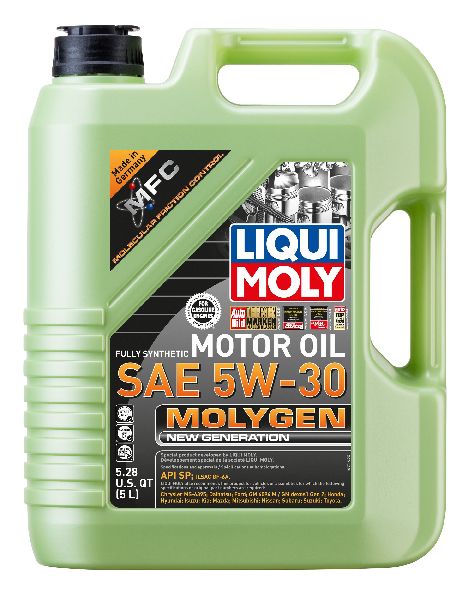
Aftermarket price range: $50-$150 - Engine Oil and Filter — Due to the MultiAir system's sensitivity, using the correct specification of oil is critical. Incorrect or old oil is a known cause of P1128 in conjunction with P1524. Must be 5W-40 Full Synthetic meeting Chrysler MS-12991.
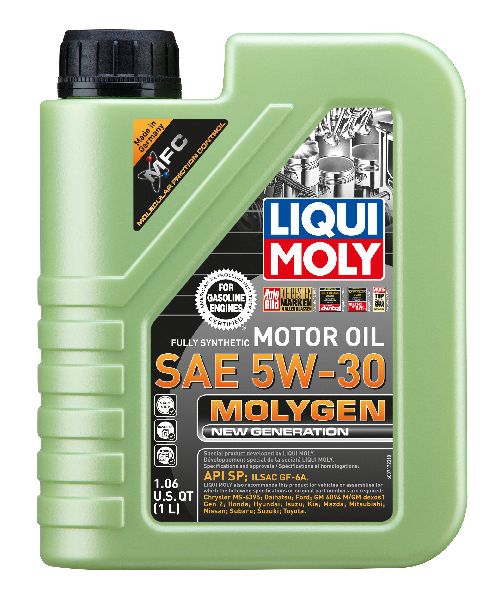
Trusted brands: Pennzoil Platinum Euro, Liqui Moly
Related Codes That Often Appear With This One
- P1524 — This code for 'Oil Pressure Out Of Range - Camshaft Advance/Retard Disabled' is the most common companion to P1128 on Fiats. The TSBs confirm they are linked, pointing to an underlying oil pressure or MultiAir system issue affecting fuel control. Seeing both codes together strongly suggests starting your diagnosis with the engine oil level, type, and the MultiAir system's health.
Technical Service Bulletins (TSBs) & Recalls
- 18-010-15 REV. D
- 18-027-15 REV. B
- 18-053-16
Platform-Specific Known Issues
- Fiat has issued multiple Technical Service Bulletins (TSBs) for 2012-2015 models that mention P1128. These bulletins, including #18-010-15 REV. D, #18-027-15 REV. B, and #18-053-16, consistently show P1128 appearing alongside P1524. The primary fix recommended in these TSBs is not a part replacement, but rather reprogramming the Powertrain Control Module (PCM) with updated software to improve diagnostic logic and system performance.
Mechanic-Grade Diagnostic Values
- Upstream Oxygen Sensor (Bank 1 Sensor 1) Voltage — expected: Rapidly fluctuating between approximately 0.1V and 1.0V (or 0.9V) in closed loop.. Failure: Voltage is stuck, slow to respond, or stays consistently low (e.g., below 0.2V) or high (e.g., above 0.8V). A reading of 0.45V indicates a perfect air-fuel ratio.
- Upstream Oxygen Sensor Torque Specification — expected: 33 ft-lb. Failure: Improper torque can lead to exhaust leaks if too loose or damaged threads/sensor if too tight.
- MAP Sensor Reading at Idle — expected: Approximately 35 kPa at idle.. Failure: Significant deviation from this value could indicate a vacuum leak or sensor issue.
Scan Tool Commands That Help
- MultiECUScan / wiTECH: Oil Change (Adaptive Parameters Reset) — After performing an oil change on a MultiAir engine. This function resets the ECU's adaptive parameters to account for the new oil's properties, which is critical for the proper function of the MultiAir system. Failing to do this may leave the system in a state that could contribute to setting P1524 and P1128.
- MultiECUScan / wiTECH: UniAir Actuator Replacement — After replacing the MultiAir 'brick' actuator. This is a mandatory procedure to calibrate the new unit to the engine.
Wiring & Ground Locations
- G102A — Left front of engine compartment.. This is a primary ground point for the engine and its related components. A loose or corroded ground here can cause erratic behavior from sensors and the PCM, potentially leading to incorrect readings and codes like P1128.
- Upstream O2 Sensor Connector — Yellow clip connector located in front of the battery tray, below the mounting bolt.. This is the direct connection for the sensor controlling closed-loop fueling. A loose, corroded, or damaged connector will interrupt the signal and immediately cause P1128. The yellow clip is a safety lock that must be disengaged before the connector can be separated.
Real Owner Repair Stories
- FIAT 500 (2007+) Forum user 'Seth110' (2015 Fiat 500 Pop 1.2L 8V (Note: Not the 1.4L MultiAir, but diagnosis is relevant)) — Check engine light, misfires (P0302), then O2 sensor fault (P0136) after fixing a loose ECU ground.
❌ Tried (didn't work) Replacing plugs, leads, coil pack. Swapping injectors. Replacing the upstream O2 sensor did not fix the low voltage reading.
✅ What actually fixed it The user found and tightened a loose earth lead on the ECU, which resolved the initial misfire. The subsequent O2 sensor code (P0136 for downstream, but the diagnostic process is similar for P1128 upstream) was still being diagnosed, but the upstream sensor voltage was noted to be extremely low (0.01V to 0.15V), indicating a lean condition or sensor fault, which is a key diagnostic step for P1128.
OEM Part Supersession History
68070702AB→Check with dealer for latest revision.— Standard part evolution for improved reliability or manufacturing efficiency.
Heads up: While the base part number is for the upstream sensor, some catalogs have reportedly mislabeled it. Mopar part 68070689AA is also listed for the 1.4L Turbo upstream sensor, highlighting the need to verify by VIN.
Model Year Variations Within This Range
- 2015: A new instrument panel featuring a 7-inch thin-film-transistor (TFT) display became available. This may change how service reminders are reset, often requiring a scan tool (like MultiECUScan) instead of a manual pedal-dance procedure.
- 2014 Vehicles only: TSB #18-010-15 REV. D specifically calls out P1128 for 2014 vehicles in conjunction with P1524, suggesting a potential software or calibration issue unique to that model year that was later addressed.
Helpful Videos

We Have This Part in Stock


The information in this article is provided for general reference and educational purposes only. Vehicle specifications, procedures, and part compatibility can vary by production date, trim level, and region. Always consult your vehicle's factory service manual and verify part numbers before purchasing or performing repairs. Safety-critical components such as airbags, seat belts, and braking systems should be installed by a qualified professional.
- Fiat 500:
- 🎬 Helpful Videos
- 🛍️ Shop This Part
- What's Unique About the 2012-2015 Fiat 500
- Diagnostic Flowchart
- Symptoms You May Notice
- Most Likely Causes
- Rare But Worth Checking
- Diagnosis Steps
- Parts You'll Likely Need
- Related Codes That Often Appear With This One
- Technical Service Bulletins (TSBs) & Recalls
- Platform-Specific Known Issues
- Mechanic-Grade Diagnostic Values
- Scan Tool Commands That Help
- Wiring & Ground Locations
- Real Owner Repair Stories
- OEM Part Supersession History
- Model Year Variations Within This Range
- 🎟️ Get 5% Off