

OBD-II Code P1125: Comprehensive Guide to Accelerator & Throttle Position Faults
The Ultimate Expert Guide to Diagnosing and Fixing P1125 Faults
- P1125 triggers a dangerous 'Reduced Engine Power' mode by flagging an intermittent fault in your vehicle's throttle control system.
- Diagnosis depends entirely on your vehicle's brand: GM points to the accelerator pedal, Toyota targets the throttle body motor, and Hyundai flags a fuel pressure issue.
- Replacing the Accelerator Pedal Position (APP) sensor resolves the issue in over 50% of GM cases, costing between $145 and $550 total.
- Never replace parts without verifying live scanner data; APP sensor voltages must sweep smoothly from 0.5V at idle to 4.5V at full throttle without dropping out.
What Does P1125 Mean?

P1125 is a manufacturer-specific diagnostic trouble code (DTC) signaling an intermittent, erratic, or unreliable signal from the engine's throttle control sensors. The Powertrain Control Module (PCM) relies on the Accelerator Pedal Position (APP) sensor to know your pedal input, and the Throttle Position Sensor (TPS) to verify the throttle plate's angle. When these signals drop out or fail to correlate, the PCM loses certainty about driver intent, triggers P1125, and initiates a fail-safe limp mode.
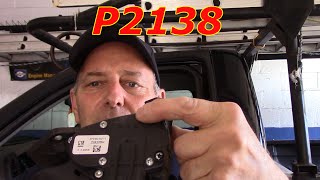
🎬 Watch: Diagnosing GM reduced engine power and APP sensor faultsTechnical definition: The official SAE/OBD-II definition for P1125 varies by manufacturer. For General Motors, it indicates an 'Accelerator Pedal Position (APP) System' correlation error between sensors in the pedal assembly. For Toyota and Lexus, it means 'Throttle Control Motor Circuit Malfunction', pointing to the electronic throttle body motor. For Volkswagen/Audi, it flags the electronic throttle actuator. For Hyundai and Kia, it refers to a 'Fuel Pressure Sensor 1 Malfunction'. For Ford and Land Rover, it is a 'Throttle Position Sensor Circuit Intermittent Malfunction'.
Can I Drive With P1125?
Yes, But With Caution. Driving is possible but strongly discouraged. Your vehicle enters a 'Reduced Engine Power' or 'limp' mode, severely limiting acceleration and speed. This is unsafe in traffic and causes stalling. Continuing to drive forces unburned fuel into the exhaust, destroying the catalytic converter—a repair costing between $900 and $4,000.
Common Causes

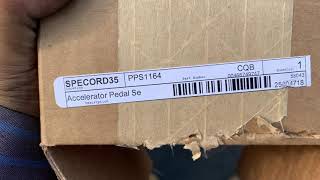
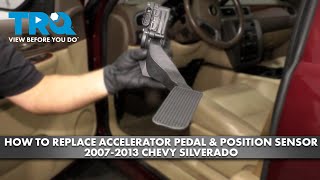
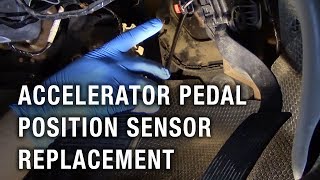
- Faulty Accelerator Pedal Position (APP) Sensor or Throttle Position Sensor (TPS) (Very Common) — As potentiometers, these sensors wear out from millions of movements, developing dead spots or sending erratic voltage signals. The APP sensor is integrated into the accelerator pedal assembly and must be replaced as a complete unit. 🎬 See this step-by-step accelerator pedal assembly replacement guide
- Damaged Wiring, Connectors, or Grounds (Common) — Engine bay heat and vibrations fray, melt, or short circuit wires. Corroded connector pins or a loose engine ground strap introduce electrical noise and voltage fluctuations, leading to intermittent sensor dropouts.
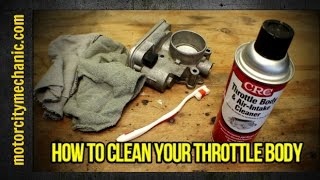
- Dirty or Binding Throttle Body (Common) — Carbon and oil residue buildup inside the throttle body prevents the throttle plate from moving smoothly or closing properly. This causes the TPS readings to mismatch the PCM's commanded position. 🎬 Watch: How to clean a throttle body the right way
- Internal Throttle Body Motor Failure (Less Common) — The electronic throttle body contains plastic gears and a small electric motor. These internal components wear out, causing a delay or inability to move the throttle plate as commanded by the PCM.
- Failed Throttle Relearn Procedure (Less Common) — After replacing a battery, cleaning the throttle body, or replacing a component, the PCM's learned throttle values become inaccurate. Failing to perform a 'throttle relearn' causes the PCM to misinterpret normal sensor readings.
- Vacuum Leaks (Less Common) — A significant leak from a cracked vacuum hose or faulty intake manifold gasket causes unstable idle and unpredictable throttle response. The PCM flags this as a throttle system fault while trying to compensate for unmetered air.
- Failing Powertrain Control Module (PCM) (Rare) — The PCM itself suffers an internal driver circuit failure. This is a last-resort diagnosis considered only after exhaustively testing sensors, wiring, and grounds.
Symptoms

- Reduced Engine Power or 'Limp Mode' — The vehicle feels extremely sluggish, with severely limited acceleration and speed. A 'Reduced Engine Power' message appears on the dashboard.
- Check Engine and Traction Control Lights On — The Malfunction Indicator Lamp (MIL) illuminates. The Traction Control (TCS) or Vehicle Stability Control (VSC) lights also turn on, as these systems disable themselves when throttle data is unreliable.
- Hesitation or Jerky Acceleration — The vehicle stumbles, hesitates, or surges unpredictably when you press the accelerator pedal.
- Rough Idle and Stalling — The engine's idle speed fluctuates, stays excessively high, or runs so roughly that the engine shuts off unexpectedly in traffic.
- Failure to Start — Severe faults prompt the PCM to prevent the engine from starting entirely as a safety precaution.
- Harsh Gear Shifting — The automatic transmission shifts harshly or at incorrect times because it lacks accurate throttle position data to calculate shift points.
Diagnostic Flowchart
Tap your situation to follow the diagnostic path that matches what you're seeing on this code.
Common Fixes & Costs
- Replace the Accelerator Pedal Position (APP) Sensor Assembly
— Parts: $70-$400, Labor: $75-$150, ~1 hr book time
(DIY)
2003-2007 Chevrolet Silverado: OEM 15107594, 19370349 (Alt: Dorman 699-118, Standard Motor Products APS111, Walker 200-1060) - Replace the Throttle Body Assembly
— Parts: $250-$600, Labor: $100-$250, ~1.5 hr book time
(Intermediate)
1998-2005 Lexus GS300 / IS300: OEM 22030-46220 (Alt: Aisan TBT-001, Beck/Arnley 158-0845)
2006-2010 VW Jetta/Golf (2.5L): OEM 07K133062A (Alt: VDO 408238327002Z, Bosch 0280750467, URO Parts 07K133062A) - Clean the Throttle Body — Parts: $10-$20, Labor: $75-$200, ~0.8 hr book time (DIY)
- Repair Damaged Wiring or Connectors — Parts: $10-$75, Labor: $125-$400, ~2 hr book time (Professional)
- Perform a Throttle Body Relearn Procedure — Parts: $0, Labor: $0-$100, ~0.5 hr book time (DIY)
DIY vs Professional
- Replace APP Sensor — Beginner:
Tools: Basic socket set, screwdriver. - Clean Throttle Body — Beginner:
Tools: Socket set, throttle body cleaner, soft rags, screwdriver. - Replace Throttle Body — Beginner:
Tools: Socket set, torque wrench, pliers for hose clamps, gasket scraper, new gasket. - Repair Wiring — Beginner:
Tools: Multimeter, wiring diagram, wire strippers, soldering iron, heat shrink tubing.
Used vs. New Parts: Buying Guide
When a used part is worth it: For electronic parts like an Accelerator Pedal Assembly or Throttle Body, a used part from a low-mileage vehicle (under 80K miles) is a cost-effective option for older vehicles where savings are significant.
Donor-vehicle mileage cap: roughly under 80000 miles for the part to have meaningful remaining life.
Donor quality checklist:
- Verify the exact part number matches, as electronic modules are vehicle-specific.
- Ask the salvage yard if the part was tested and if the donor vehicle's mileage is known.
- Avoid parts with any signs of physical damage, corrosion, or water intrusion on the connectors.
Decision logic:
- If The vehicle is over 10 years old and the budget is tight. → A used part with a 90-day warranty is a reasonable choice.
- If The cost of a new aftermarket part is less than 50% more than the used part. → Buy the new part for its longer warranty and guaranteed lifespan.
- If The part is for a high-performance or critical-use vehicle. → Favor a new OEM part to ensure maximum reliability and correct calibration.
Warranty tradeoff: Used parts from professional salvage yards typically come with a 30-90 day part-only warranty. Labor for installation is not covered if the part fails. New aftermarket parts carry a 1-year to limited lifetime warranty.
Worst-case if a used part fails: $200-$500 if a used part fails after the warranty period, requiring repeat labor and a second replacement part.
What Happens If You Wait — Timeline
- Immediate: Check Engine Light illuminates and the vehicle enters 'Reduced Engine Power' or 'Limp Mode'. Acceleration is severely limited, making driving in traffic unsafe. (MPG impact: 5-10%% · Added cost: $0)
- 1-3 months: Erratic throttle signals cause an inefficient air-fuel mixture. This leads to a noticeable drop in fuel economy, fouled spark plugs, and potential damage to oxygen sensors. (MPG impact: 10-20%% · Added cost: $100-$400 (Wasted fuel, new spark plugs/O2 sensors))
- 3-6 months: A persistent rich fuel mixture from poor throttle control overheats the catalytic converter, causing the internal ceramic substrate to melt and crack. Damage is irreversible. (MPG impact: 15-25%% · Added cost: $900-$2,500 (Catalytic converter replacement is now necessary))
- 6+ months: The catalytic converter becomes completely clogged, causing extreme backpressure that leads to severe engine damage. The vehicle becomes undrivable. (MPG impact: 25-50%% · Added cost: $2,000-$5,000+ (Cost of catalytic converter plus potential engine repairs))
Cost of Not Fixing It
- Immediate: Vehicle is unsafe to drive in traffic due to 'limp mode,' which severely limits speed and acceleration, and causes stalling. (Added cost: Negligible)
- 1-3 months: Faulty throttle control causes a consistently rich or lean fuel mixture, leading to fouled spark plugs, damaged oxygen sensors, and a 5-15% drop in fuel economy. (Added cost: $150-$500)
- 3+ months: Driving with a persistent rich condition overheats and destroys the catalytic converter, a critical and expensive emissions component. (Added cost: $1,000-$4,000+)
Diagnosis Steps

- Scan for All Fault Codes & Review Freeze Frame Data
Using an OBD-II scanner, confirm P1125 is present. Document any other codes (e.g., P2135, P2138, C1278) as they dictate the diagnosis. Analyze the freeze frame data to see the exact engine conditions when the fault triggered.
Tools: OBD-II Scanner (Beginner) - Analyze Live Sensor Data
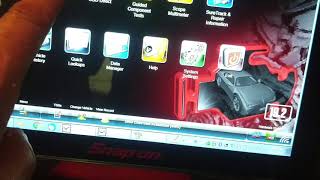
With an advanced scanner, graph the live data for APP Sensor 1, APP Sensor 2, and the TPS. Slowly press and release the accelerator pedal. Voltage readings must be smooth and linear. Any sudden jumps, dropouts, or flat spots confirm a failing sensor.
Tools: Advanced OBD-II Scanner (Intermediate) - Perform a 'Wiggle Test'
With the engine running and the live data graph on your scanner, gently wiggle the wiring harness and connectors at the APP sensor, throttle body, and PCM. If the voltage reading drops out or spikes, you have pinpointed an intermittent open or short in the wiring.
Tools: Advanced OBD-II Scanner (Intermediate) - Perform a Thorough Visual Inspection
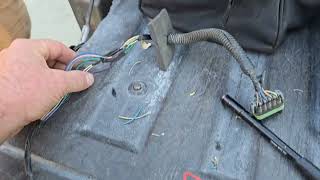
Inspect the wiring harnesses for the accelerator pedal and throttle body. Look for chafed, melted, or broken wires. Check that connectors are fully seated and free of corrosion. On GM trucks, check the harness rubbing against the valve cover or firewall.
Tools: Flashlight, Inspection Mirror (Beginner) - Inspect and Clean the Throttle Body
Remove the air intake hose and inspect the throttle body bore and plate for heavy carbon buildup. Clean it with dedicated throttle body cleaner and a soft cloth. Manually operate the plate to feel for sticking or binding.
Tools: Screwdriver/ratchet set, Throttle Body Cleaner, Rags (Intermediate) - [PRO TIP] Verify Sensor Voltages with a Multimeter
Back-probe the sensor connector with a multimeter. With the key on (engine off), check the reference wire for a steady 5 volts (4.75V-5.25V) and the ground wire for <0.1V. Probe the signal wire and operate the pedal; APP sensors read ~0.5V at idle and ~4.5V at full throttle. Divergence greater than 0.2V between dual sensors triggers a fault.
Tools: Multimeter, Wiring Diagram, Back-probe Kit (Advanced) - [PRO TIP] Perform Resistance (Ohm) Test on Components
For Toyota/Lexus P1125, disconnect the throttle body and measure resistance between the throttle motor terminals (M+ and M-). A healthy motor reads between 0.3 and 100 ohms at 68°F. An open circuit or a dead short confirms a failed motor.
Tools: Multimeter, Wiring Diagram, Service Manual (Advanced) - Check for Wiring Continuity and Shorts
If a sensor has correct power and ground but the signal is faulty, disconnect the sensor and the PCM. Use a multimeter in Ohms mode to check the signal wire for continuity from end to end (<1 Ohm). Check for a short to ground or power on the signal wire.
Tools: Multimeter, Wiring Diagram (Advanced) - Perform a Throttle Relearn Procedure
If you cleaned or replaced the throttle body, you must perform a relearn procedure to allow the PCM to learn the new closed-throttle position. VW/Audi requires a scan tool for 'Throttle Body Adaptation' with battery voltage >11.5V.
Tools: OBD-II Scanner (model dependent) (Intermediate) - [PRO TIP] Analyze Waveforms with an Oscilloscope
On Toyota/Lexus models with a P1125 'Throttle Control Motor' fault, probe the motor control wires (M+ and M-). You must see square wave duty cycle signals when the throttle is commanded to move. The absence of this signal points to a bad motor or faulty ECM driver.
Tools: Oscilloscope (Lab Scope), Wiring Diagram (Advanced)
When This Code Triggers (Freeze-Frame Conditions)
- Engine Coolant Temp: 170-210°F (Fully warmed up, in closed loop operation.)
- RPM: 1,300-2,500 (Steady cruise or light acceleration.)
- Engine Load: 25-60% (Maintaining speed on a flat road or slight incline.)
- Vehicle Speed: 30-60 mph (City or highway driving, not stop-and-go.)
Related Codes
- P2138 — Indicates a voltage correlation problem between the sensors inside the Accelerator Pedal Position (APP) sensor assembly. It is a primary trigger for P1125 on GM vehicles.
- P2135 — Points to a voltage correlation problem between the two Throttle Position Sensors (TPS 'A' and 'B') located on the throttle body.
- C1278 — A chassis code from the Traction Control System (TCS). When the PCM sets P1125, it tells the TCS module the throttle signal is untrustworthy, so the TCS disables itself and sets C1278.
- P0120 - P0124 — Generic codes relating to general malfunctions in the TPS 'A' circuit, such as low input (P0122) or range/performance problems (P0121).
Climate & Environmental Factors
- High Heat: Heat soak in the engine bay causes electrical components to fail intermittently. As components heat up, microscopic cracks in circuit boards or solder joints expand and break connections, causing the fault to appear only after the vehicle warms up.
- High Humidity and Road Salt: Moisture and winter road salt accelerate corrosion on wiring harnesses and connector pins. Saltwater seeps into connectors, causing high resistance, shorts to ground, or intermittent open circuits that trigger P1125.
How to Talk to a Mechanic About This Code
Say this: "I have a P1125 code and the car is in 'Reduced Engine Power' mode. I'd like to schedule a diagnostic. Based on the vehicle, it's likely an issue with the accelerator pedal sensor, throttle body, or the wiring between them. Please check the live data for the APP and TPS sensors for any dropouts or correlation errors before recommending part replacement."
This shows you've done your research and guides the mechanic toward a specific, data-driven diagnostic path. It prevents them from starting with expensive guesswork replacements and focuses them on proving the failure with scan tool evidence.
Avoid saying:
- 'My check engine light is on, can you look at it?'
- 'The car is acting weird and feels slow.'
- 'Just fix whatever is wrong with it.'
Questions to ask before authorizing the repair:
- Did you see the voltage drop out from the sensor on the live data graph?
- Did you perform a wiggle test on the wiring harness for the pedal and throttle body?
- If you're recommending a new throttle body, was a throttle relearn procedure attempted first?
- Can you show me the old part and point out the failure?
- What is the warranty on this repair, including both parts and labor?
Where to Take It: Dealer vs Independent vs Chain
- Dealer:
A good option if you suspect a complex wiring or module issue, but the most expensive.
Best for: Vehicles still under a powertrain or emissions warranty., Complex, manufacturer-specific electrical issues, especially on German brands (VW, Audi)., If a specific Technical Service Bulletin (TSB) for the P1125 code exists for your model.
Downsides: Highest labor rates, often 1.5x to 2x more than independent shops., Defaults to replacing an entire assembly (e.g., throttle body) when only a sensor or wiring is bad. (Typical cost: +50% vs. baseline) - Independent Shop:
The best fit for most P1125 repairs. An experienced independent mechanic diagnoses this efficiently without high dealer overhead.
Best for: Out-of-warranty vehicles where cost is a major factor., Common P1125 failures on popular domestic and Japanese brands (e.g., GM pedal sensor, Toyota throttle body).
Downsides: Shop quality and diagnostic skill varies widely. Vet the shop by checking for ASE certification and online reviews. (Typical cost: +0% vs. baseline) - Chain Shop:
Acceptable for a straightforward pedal or throttle body replacement, but AVOID for initial diagnosis of an intermittent or wiring-related P1125 code.
Best for: Simple, clear-cut part replacements where the diagnosis is already certain (e.g., you've diagnosed a bad APP sensor yourself).
Downsides: Technician skill varies dramatically; lacks the deep electrical diagnostic experience needed for intermittent P1125 faults., Often work on commission, leading to upselling unnecessary services. (Typical cost: -10% vs. baseline)
When to Walk Away From the Repair
If the estimated repair cost for the P1125 fault exceeds 40-50% of your car's private-party value, pause and reconsider the repair.
- Car worth $4000, fix is $1800: Borderline. The repair is 45% of the car's value. Get a second opinion and consider if the car has other pending maintenance needs before proceeding.
- Car worth $12000, fix is $900: Fix it. The repair cost is well below the threshold and is a worthwhile investment to keep a valuable car running safely.
- Car worth $2500, fix is $1500: Walk away. The repair cost is 60% of the vehicle's value. It is not financially sensible to invest this much into an older, low-value car.
What Scan Tool You Need for This Code
Minimum: An OBD-II scanner that reads and clears codes, and displays live sensor data for parameters like 'APP Sensor 1', 'APP Sensor 2', and 'Throttle Position'.
A basic $20 code reader only gives you the P1125 code, leaving you guessing whether the problem is the pedal, throttle body, or wiring. You MUST watch sensor voltage readings in real-time to see which one fails.
Budget: BlueDriver Pro or ANCEL BD310 (~$75) — These Bluetooth dongles connect to a smartphone app, providing a user-friendly way to view and graph live sensor data. You watch the APP and TPS voltages as you press the pedal to easily spot jumps or dropouts.
Mid-range: Innova 5610 or Foxwell NT510 Elite (~$300) — These handheld scanners offer robust features, including bidirectional controls. This is critical for P1125 diagnosis on brands like VW/Audi, allowing you to command a 'Throttle Body Adaptation' after cleaning or replacement.
Professional: Autel MaxiCOM MK808S / MK900 (~$500-600) — Provides full bidirectional control for all vehicle systems, allowing you to perform throttle relearns and access manufacturer-specific codes and data that cheaper scanners miss. This definitively diagnoses complex wiring or module-related faults.
Rent vs buy: For a one-time diagnosis, auto parts stores like AutoZone loan basic OBD-II scanners for free. However, these loaner tools lack the live data capability needed for P1125. Buying a budget pick like a BlueDriver is a mandatory investment for this code.
How to Clear the Code After You Fix It
- Use an OBD-II scan tool to clear the P1125 and any related fault codes.
- Perform a throttle relearn procedure if the throttle body was cleaned or replaced.
- Perform a complete OBD-II drive cycle to allow all readiness monitors to run.
Drive cycle (~30 minutes): A general drive cycle includes a cold start (after sitting 8+ hours), 2-3 minutes of idling, 10-15 minutes of steady highway driving (55-65 mph), followed by 15-20 minutes of stop-and-go city driving. Do not use cruise control or A/C during the cycle.
Readiness monitors affected: Catalyst Monitor, Oxygen (O2) Sensor Monitor, EVAP System Monitor
Watch out for:
- Clearing codes with a scanner resets all readiness monitors to 'Not Ready', causing an immediate emissions test failure.
- The code returns quickly if the root cause (e.g., bad wiring, faulty sensor) was not correctly repaired.
- The EVAP monitor requires the fuel level to be between 1/4 and 3/4 full to run.
Will This Fail Emissions / State Inspection?
Yes — this code typically fails an OBD-II emissions inspection.
- California: An active P1125 code is an automatic smog check failure. After repair, a full drive cycle must be completed. California is strict and may only allow the EVAP monitor to be 'Not Ready'.
- New York: A vehicle fails the NYS vehicle inspection if the Check Engine Light is on for any reason. After clearing the code, readiness monitors must be set before re-inspection.
- Texas: In counties requiring emissions testing, an illuminated Check Engine Light results in an automatic failure. You cannot pass until the fault is repaired and the code is cleared.
Most Commonly Affected Vehicles
- Chevrolet / GMC Silverado, Avalanche, Tahoe, Suburban (2003-2007) — Extremely common. Caused by a failing APP sensor in the pedal assembly or a chafed wiring harness. 2003 models uniquely use a three-potentiometer pedal sensor.
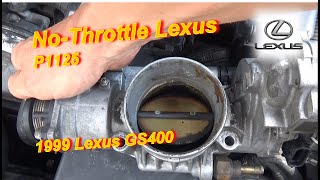
- Lexus / Toyota GS300, GS400, IS300, Land Cruiser, Corolla, Camry (1998-2015) — P1125 means 'Throttle Control Motor Circuit Malfunction'. The issue is the motor inside the throttle body. Early GS models allow partial throttle via a physical cable in limp mode.
- Volkswagen / Audi Golf (IV, V), Jetta, Passat (B5, B6), A3 (8L, 8P), TT (8N) (1999-2010) — The code points to the electronic throttle actuator. Cleaning the throttle body and performing a 'Throttle Body Adaptation' with a scan tool is the standard fix.
- MINI Cooper S (R53) (2002-2006) — Points to a failing electronic throttle body. Often appears with P1126 and P0638. A throttle adaptation reset is needed after replacement.
- Honda Civic, Accord (2001-2010) — Frequently traced back to a failing Throttle Position Sensor or corrosion in the wiring connectors.
- Ford Focus, Explorer, F-150 (2000-2010) — Indicates an intermittent signal from the Throttle Position Sensor (TPS) due to sensor failure or a wiring issue.
- Peugeot / Citroën Various Models (2000-2012) — Points to an intermittent fault with the throttle position sensor or its wiring.
- Land Rover Various Models (2002-2008) — Logged as a generic 'Throttle Position Sensor Intermittent' fault, requiring diagnosis of the sensor, wiring, and throttle body.
Manufacturer-Specific Notes
- General Motors (Chevrolet, GMC, Pontiac): P1125 triggers 'Reduced Engine Power' mode, almost always due to a correlation fault (P2138) in the accelerator pedal assembly. TSBs exist for wiring harnesses rubbing through on brackets or the valve cover.
- Toyota / Lexus: P1125 is defined as 'Throttle Control Motor Circuit Malfunction.' This points directly to the motor inside the electronic throttle body, not the pedal sensor. Diagnosis requires resistance tests of the throttle body motor.
- Volkswagen / Audi: P1125 relates to the electronic throttle actuator within the throttle body. Cleaning the throttle body and performing a 'Throttle Body Adaptation' using a scan tool (with battery voltage >11.5V) is the standard fix.
- Hyundai / Kia: P1125 is completely unrelated to the throttle system. It is defined as 'Fuel Pressure Sensor 1 Malfunction.' Diagnosis must focus on the fuel delivery system.
- Ford: P1125 points directly to an intermittent signal from the Throttle Position Sensor (TPS). Test the TPS and its wiring.
- MINI: Called a 'Throttle Body Plausibility' fault. It indicates a failing electronic throttle body, a common failure item on supercharged R53 models. Often accompanied by P1126 and P0638.
Real Owner Stories
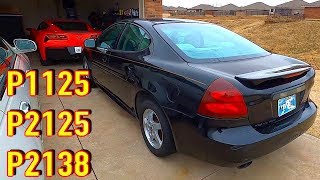
2004 Pontiac Grand Prix 3.8L V6 - Misdiagnosis leads to wiring discovery
Car entered 'Reduced Engine Power' mode, throwing codes P1125 and P2138. The owner initially suspected common component failures.
What they tried:
- Replaced the throttle body with a used part - no change.
- Replaced the accelerator pedal assembly - no change.
Outcome: A wiring harness rubbed through on the valve cover, severing five wires completely. Repairing the damaged wires and protecting the harness with a coil pack boot permanently fixed the issue.
Lesson: Before replacing expensive components, perform a thorough visual inspection of the wiring harness for common rub points, especially on GM 3800 engines.
2002 Lexus IS300 - Throttle motor failure
Car had no throttle response unless the pedal was pressed past 60%, with a high idle around 1500 RPM. Codes P1125 ('Throttle Control Motor Circuit Malfunction'), VSC, and TRC lights were on.
What they tried:
- Replaced the IACV and cleaned the throttle body - no change.
- Attempted to re-solder the APP sensor - no change.
- Tested the throttle motor resistance, which appeared normal.
Outcome: The owner discovered burnt marks on the wiring leading to the throttle motor. A few strands of copper were barely making a connection. Repairing the burnt wiring resolved the throttle response issue.
Lesson: On Toyota/Lexus vehicles, P1125 points directly to the throttle motor circuit. Even if a resistance test passes, a visual inspection for burnt or damaged wiring is critical.
2006 GMC Denali XL - Simple part replacement after codes P1125 & P2138
Immediately after an oil change, the 'Reduced Engine Power' message appeared. The codes present were P1125 and P2138, pointing to a fault in the accelerator pedal position system.
What they tried:
- The owner decided to replace the most likely component first based on the codes.
Outcome: Replacing the accelerator pedal assembly and clearing the codes resolved the issue immediately. The warning lights did not return.
Lesson: When P1125 pairs with P2138 on a GM vehicle, the accelerator pedal assembly is the definitive culprit. Starting with this component is a high-probability fix.
2005 Volvo S40 T5 - Intermittent issue caused by internal motor wear
Vehicle had multiple codes (P2281, P0300, P2188) and constant misfires for nearly two years. The owner replaced numerous parts without success.
What they tried:
- Replaced spark plugs, coils, injectors, VVT solenoids, and camshaft sensors.
- Cleaned the throttle body and MAF sensor.
- Repaired failing insulation on the main engine wiring harness.
Outcome: The owner disassembled the throttle body and found significant carbon buildup on the internal motor's commutator, causing high resistance (28-35 Ohms instead of <2 Ohms). Cleaning the commutator restored conductivity and fixed all codes.
Lesson: Testing the internal motor resistance of the throttle body reveals failures that a simple external cleaning won't fix.
How to Prevent This Code From Triggering
- Clean the throttle body periodically. (Every 50,000 miles or as needed.) — Removes carbon and oil buildup that causes the throttle plate to stick or bind, preventing the TPS from reporting accurate positions.
- Apply dielectric grease to key electrical connectors. (When servicing or replacing related parts.) — Seals out moisture and prevents corrosion on the pins of the APP sensor, throttle body, and PCM connectors, ensuring a stable electrical signal.
- Inspect and secure wiring harnesses in the engine bay. (During routine oil changes.) — Engine vibration causes wiring harnesses to rub against brackets or the firewall, wearing through insulation and causing shorts. Ensure harnesses are secured in their clips.
- Check and clean main engine ground straps. (Every 30,000 miles or if electrical issues are suspected.) — Low-voltage APP and TPS sensors require a clean ground reference. A corroded engine-to-chassis ground strap introduces electrical noise and phantom sensor faults.
Frequently Asked Questions
I replaced the sensor but the P1125 code came back. What now?
This common frustration points to wiring or a failed relearn procedure. Meticulously inspect the wiring using a 'wiggle test' while watching live data to find intermittent shorts. Verify the sensor receives a stable 5-volt reference and has a clean ground.
What is a 'throttle body relearn' and do I need to do one?
A throttle body relearn allows the PCM to learn the new resting and range of motion of the throttle plate. It is mandatory after cleaning or replacing the throttle body. Many vehicles use a manual key-turn sequence, while others require a bidirectional scan tool.
Can a bad ground cause a P1125 code?
Yes. The APP and TPS sensors operate on a low-voltage 5V signal, so a poor ground introduces electrical noise that the PCM interprets as a sensor fault. Always check the main engine-to-chassis ground straps and the sensor connector grounds.
Can I just clear the code by disconnecting the battery?
Disconnecting the battery temporarily clears the Check Engine Light but does not fix the underlying physical or electrical problem. The PCM will detect the fault again—often within minutes—and immediately return the vehicle to limp mode.
What is 'Reduced Engine Power' mode?
It is a protective fail-safe mode triggered by the PCM when a critical throttle fault is detected. It severely restricts engine power to allow you to 'limp' to a safe location without causing unintended acceleration.
Is the Accelerator Pedal Position (APP) sensor the same as the Throttle Position Sensor (TPS)?
No. The APP sensor connects to your gas pedal to tell the PCM how much you want to accelerate, while the TPS sits on the engine's throttle body to report the actual opening angle of the throttle plate.
My car only gets the code when it's hot or after driving for a while. Why?
This is a classic symptom of a failing electrical component or a poor connection. As engine bay temperatures rise, wires and circuit boards expand. This expansion causes hairline cracks or loose pins to temporarily lose contact, triggering the P1125 code.
Key Takeaways
- P1125 triggers a dangerous 'Reduced Engine Power' mode by flagging an intermittent fault in your vehicle's throttle control system.
- Diagnosis depends entirely on your vehicle's brand: GM points to the accelerator pedal, Toyota targets the throttle body motor, and Hyundai flags a fuel pressure issue.
- Replacing the Accelerator Pedal Position (APP) sensor resolves the issue in over 50% of GM cases, costing between $145 and $550 total.
- Never replace parts without verifying live scanner data; APP sensor voltages must sweep smoothly from 0.5V at idle to 4.5V at full throttle without dropping out.
Helpful Videos


The information in this article is provided for general reference and educational purposes only. Vehicle specifications, procedures, and part compatibility can vary by production date, trim level, and region. Always consult your vehicle's factory service manual and verify part numbers before purchasing or performing repairs. Safety-critical components such as airbags, seat belts, and braking systems should be installed by a qualified professional.
- 🎬 Helpful Videos
- What Does P1125 Mean?
- Can I Drive With P1125?
- Common Causes
- Symptoms
- Diagnostic Flowchart
- Common Fixes & Costs
- DIY vs Professional
- Used vs. New Parts: Buying Guide
- What Happens If You Wait — Timeline
- Cost of Not Fixing It
- Diagnosis Steps
- When This Code Triggers (Freeze-Frame Conditions)
- Related Codes
- Climate & Environmental Factors
- How to Talk to a Mechanic About This Code
- Where to Take It: Dealer vs Independent vs Chain
- When to Walk Away From the Repair
- What Scan Tool You Need for This Code
- How to Clear the Code After You Fix It
- Will This Fail Emissions / State Inspection?
- Most Commonly Affected Vehicles
- Manufacturer-Specific Notes
- Real Owner Stories
- 2004 Pontiac Grand Prix 3.8L V6 - Misdiagnosis leads to wiring discovery
- 2002 Lexus IS300 - Throttle motor failure
- 2006 GMC Denali XL - Simple part replacement after codes P1125 & P2138
- 2005 Volvo S40 T5 - Intermittent issue caused by internal motor wear
- How to Prevent This Code From Triggering
- Frequently Asked Questions
- I replaced the sensor but the P1125 code came back. What now?
- What is a 'throttle body relearn' and do I need to do one?
- Can a bad ground cause a P1125 code?
- Can I just clear the code by disconnecting the battery?
- What is 'Reduced Engine Power' mode?
- Is the Accelerator Pedal Position (APP) sensor the same as the Throttle Position Sensor (TPS)?
- My car only gets the code when it's hot or after driving for a while. Why?
- Key Takeaways
- 🎟️ Get 5% Off