

OBD-II Code P1123: Your Ultimate Guide to a Complex Code
What P1123 means for your specific car, why it triggers, and exactly how to fix it
- Always look up the exact P1123 definition for your vehicle's make and year before buying parts, as it is a manufacturer-specific code.
- For Ford, Hyundai, and Nissan vehicles, P1123 almost always indicates a failing Throttle Position Sensor (TPS) requiring a $105-$275 replacement.
- On 2004-2009 Toyota Prius models, P1123 guarantees a failed 3-way coolant control valve, a repair costing $350-$700.
- For Porsche and VW models, P1123 signals a maximum rich fuel condition (LTFT beyond -25%), most commonly fixed by replacing a contaminated MAF sensor.
- Never ignore a rich-condition P1123 code for more than 1-3 months, as unburnt fuel destroys the catalytic converter and causes over $2,000 in secondary damage.
What Does P1123 Mean?

P1123 is a manufacturer-specific diagnostic trouble code (DTC), meaning its definition changes based on the car brand. A P1123 on a Ford is a completely different problem than on a Toyota or Porsche. Most often, it signals the engine control unit (ECU) detects an abnormally high or intermittent voltage from the Throttle Position Sensor (TPS). However, it also indicates a rich fuel system, a faulty coolant control valve, or a Power Take-Off (PTO) error depending on the manufacturer.
Technical definition: The official SAE/OBD-II definition for P1123 varies by manufacturer. Common definitions include: Throttle Position Sensor (TPS) Circuit Intermittent High Voltage (Ford, Hyundai, Nissan), Long Term Fuel Trim Additive Air System Too Rich (Porsche, Volkswagen), Coolant Flow Control Valve Position Sensor Circuit High (Toyota), Accelerator Pedal Position (APP) Sensor High Input (BMW), or Power Take Off (PTO) System Monitor Control Error (Dodge/RAM).
Can I Drive With P1123?
Yes, But With Caution. You can drive short distances, but we do not recommend it. Depending on the cause, you will experience sudden stalling, poor acceleration, or enter a reduced-power 'limp mode'. If the code indicates a rich fuel condition (common in Porsche/VW), continued driving overheats and destroys the catalytic converter, a repair costing over $2,000. Drive fewer than 50 miles and diagnose the vehicle promptly to prevent expensive secondary damage.
Common Causes

- Faulty Throttle Position Sensor (TPS) (Very Common) — The most frequent cause for Ford, Hyundai, and Nissan. The sensor monitors the throttle plate angle and sends erratic, intermittent, or excessively high voltage signals to the ECU.
- Faulty or Contaminated Mass Airflow (MAF) Sensor (Common) — On Porsche and VW models where P1123 signifies a rich fuel mixture, a dirty or failing MAF sensor is the primary suspect. It under-reports incoming air, causing the ECU to inject too much fuel.
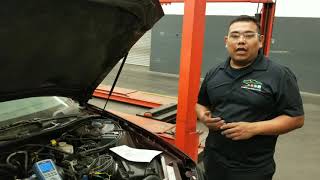
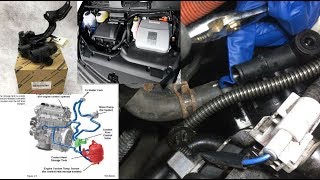
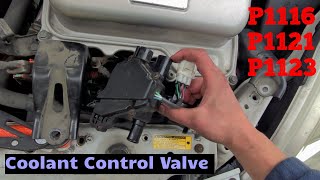
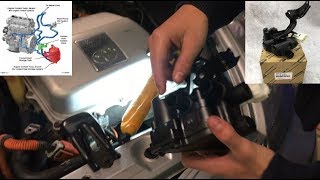
- Faulty Coolant Flow Control Valve (Common) — On 2004-2009 Toyota Prius models, P1123 points directly to a 'Circuit High' fault in the three-way coolant flow control valve's position sensor. 🎬 See how to diagnose Prius coolant control valve codes.
- Wiring or Connector Issues (Common) — The electrical wiring or connector for the TPS, MAF sensor, or coolant valve becomes loose, corroded, frayed, or shorted to power, causing the high voltage reading.
- Dirty or Faulty Throttle Body (Common) — Carbon and oil buildup inside the throttle body restricts the throttle plate. This causes the TPS reading to be higher than the ECU expects at idle.
- Vacuum Leaks (Less Common) — On vehicles defining P1123 as a rich condition, a significant vacuum leak causes the ECU to overcompensate for unmetered air, eventually pushing fuel trims to their rich limit.
- High Fuel Pressure or Leaking Fuel Injectors (Less Common) — For Porsche or VW models, a faulty fuel pressure regulator or leaking injectors dump excess fuel into the engine, pushing the long-term fuel trim past its maximum allowable limit.
- Outdated PCM Software (Rare) — On 2011-2012 Ram 3500-5500 trucks, overly sensitive software logic triggers this code for the Power Take-Off (PTO) system monitor. A dealer software update resolves it.
Symptoms

- Check Engine Light is On — The Malfunction Indicator Lamp (MIL) illuminates on the dashboard immediately after the fault is detected.
- Poor, Hesitant, or No Acceleration — The vehicle feels sluggish, stumbles upon acceleration, or fails to accelerate entirely due to incorrect throttle demand signals.
- Rough Idle or Stalling — The engine idles erratically, hunts for a stable RPM, or stalls completely when coming to a stop.
- Black Smoke or Strong Fuel Smell — On vehicles where P1123 indicates a 'too rich' condition, black smoke exits the tailpipe and raw gasoline smells permeate the exhaust.
- Engine Enters 'Limp Mode' — The ECU activates a fail-safe mode, severely limiting engine power and vehicle speed to prevent mechanical damage.
Diagnostic Flowchart
Tap your situation to follow the diagnostic path that matches what you're seeing on this code.
Common Fixes & Costs
- Replace Throttle Position Sensor (TPS) — Parts: $30-$150, Labor: $75-$125, ~1 hr book time (DIY)
- Replace Mass Airflow (MAF) Sensor — Parts: $75-$350, Labor: $75-$150, ~0.5 hr book time (DIY)
- Replace Coolant Flow Control Valve — Parts: $100-$250, Labor: $250-$450, ~3 hr book time (Intermediate)
- Clean Throttle Body — Parts: $10-$20, Labor: $100-$175, ~0.8 hr book time (DIY)
- Repair Damaged Wiring or Connector — Parts: $10-$60, Labor: $125-$250, ~1.5 hr book time (Intermediate)
- Reprogram Powertrain Control Module (PCM) — Parts: $0, Labor: $100-$200, ~1 hr book time (Pro)
DIY vs Professional
- Replace Throttle Position Sensor (TPS) — Beginner: Yes
Tools: Basic screwdriver/socket set. - Replace Mass Airflow (MAF) Sensor — Beginner: Yes
Tools: Screwdriver or Torx driver. - Replace Coolant Flow Control Valve (Toyota Prius) — Beginner: No
Tools: Socket set, long-reach pliers, coolant drain pan, spill-free funnel, Toyota Super Long Life Coolant. - Clean Throttle Body — Beginner: Yes
Tools: Throttle body cleaner, soft brush/cloth, basic hand tools. - Repair Damaged Wiring or Connector — Beginner: No
Tools: Multimeter, wire strippers, crimpers, heat shrink tubing, wiring diagrams.
Used vs. New Parts: Buying Guide
When a used part is worth it: Buying used electronic sensors (TPS or MAF) is not recommended due to their finite lifespan. It only makes sense if the part is a mechanical assembly with an integrated sensor (like the Toyota coolant valve) and the cost savings are significant.
Donor-vehicle mileage cap: roughly under 50000 miles for the part to have meaningful remaining life.
Donor quality checklist:
- Verify the exact part number matches.
- Avoid parts from vehicles with high mileage or from regions with extreme weather.
- Ensure the seller offers a functional warranty.
Decision logic:
- If The part is a simple, wear-prone electronic sensor (TPS, MAF). → Buy new. The risk of premature failure outweighs the small cost savings.
- If The part is a mechanical assembly with an integrated sensor (e.g., Toyota coolant valve). → A low-mileage used OEM part is a viable alternative to a new, non-OEM part.
Warranty tradeoff: Used parts typically have a 30-90 day warranty. New aftermarket parts offer 1-year to limited lifetime warranties. New OEM parts carry a 12-month manufacturer's warranty.
Worst-case if a used part fails: 200-500
What Happens If You Wait — Timeline
- 0-1 month: Check Engine Light is on. For TPS faults, occasional hesitation or rough idle occurs. For rich faults, no other symptoms may be apparent. (MPG impact: 0-5%% · Added cost: $0-40 in wasted fuel)
- 1-3 months: Drivability issues become consistent. Stalling, poor acceleration, or 'limp mode' occurs. For rich faults, fuel smell is noticeable and fuel economy drops significantly. (MPG impact: 5-15%% · Added cost: $50-150 in wasted fuel and fouled spark plugs.)
- 3-6 months: For rich-condition codes, the catalytic converter begins to melt internally due to unburnt fuel. The car feels sluggish from exhaust backpressure. (MPG impact: 15-25%% · Added cost: $1,000 - $2,500)
- 6+ months: Complete catalytic converter meltdown causes a major exhaust blockage. Severe running rich leads to 'cylinder wash,' stripping oil from cylinder walls and causing internal engine damage. (MPG impact: 25-50%% · Added cost: $2,500 - $4,000+)
Cost of Not Fixing It
- 0-1 month: Reduced fuel economy (5-15% drop), poor drivability (hesitation, stalling), and failed emissions tests. (Added cost: 50-150)
- 1-6 months: For 'rich condition' codes, unburnt fuel overheats and destroys the catalytic converter. It also fouls spark plugs and O2 sensors. (Added cost: 1200-2800)
- 6+ months: Catastrophic catalytic converter failure, severe exhaust blockages, and potential internal engine damage from 'cylinder wash'. (Added cost: 3000+)
Diagnosis Steps
- Crucial Research: Manufacturer Definition and TSBs
Before touching the car, search the exact code meaning for your specific make, model, and year. Look up Technical Service Bulletins (TSBs) to see if a known software update or specific part failure applies.
Tools: Internet Access (Beginner) - Read Codes and Freeze Frame Data
Connect an OBD-II scanner and retrieve P1123. Analyze the freeze-frame data to view engine parameters (RPM, load, coolant temp, fuel trims) at the exact moment the fault occurred.
Tools: OBD-II Scanner (Beginner) - Thorough Visual Inspection
Locate the relevant component based on your research (TPS, MAF, or Coolant Valve). Inspect its electrical connector and wiring harness for broken wires, corrosion, or heat damage.
Tools: Flashlight (Beginner) - Test Sensor Voltage with a Multimeter
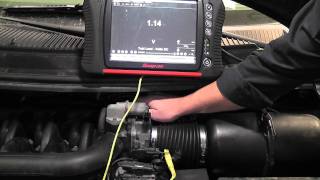
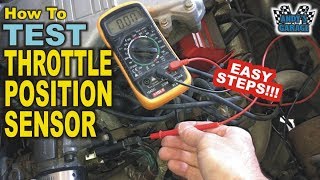
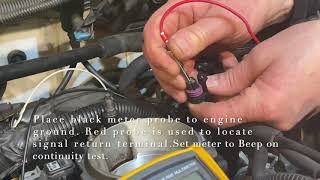
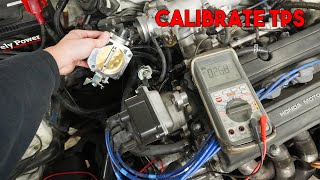
Back-probe the signal wire at the sensor's connector. For a TPS, voltage must sweep smoothly from ~0.5V (closed) to ~4.5V (wide-open). Spikes, drops, or readings above 4.8V indicate a faulty sensor or a short to power.
Tools: Multimeter, Back-probe Kit (Advanced) - Analyze Fuel Trim Data (For Rich Codes)
If your code indicates a rich condition (Porsche/VW), view live data. A P1123 sets when Long-Term Fuel Trim (LTFT) goes excessively negative (beyond -25%). If P1125 is also present, the problem affects both engine banks.
Tools: OBD-II Scanner with Live Data (Advanced) - Inspect and Clean the Throttle Body
Remove the air intake hose. If the throttle body and plate are coated in heavy carbon, clean them with dedicated throttle body cleaner. A sticking plate causes incorrect TPS readings.
Tools: Screwdriver, Throttle Body Cleaner, Soft Brush (Intermediate) - Test MAF Sensor Live Data
Monitor the Mass Airflow (MAF) sensor reading in grams per second (g/s) at idle. A 2.0L-3.0L engine reads 3-6 g/s at a warm idle. Unplug the MAF sensor; if the idle smoothes out, the MAF is faulty.
Tools: OBD-II Scanner with Live Data (Advanced) - Test for Vacuum Leaks
With the engine running, spray short bursts of brake cleaner around the intake manifold and vacuum lines. Any change in engine RPM or fuel trim values pinpoints a leak.
Tools: Brake Cleaner (Intermediate) - Check Fuel Pressure
Connect a fuel pressure gauge to the fuel rail. Compare the idle reading to manufacturer specs. High pressure points to a faulty fuel pressure regulator.
Tools: Fuel Pressure Gauge (Intermediate)
When This Code Triggers (Freeze-Frame Conditions)
- Engine Coolant Temp: 180-200°F (Fully warmed up, indicating the fault is not related to cold-start operation.)
- Engine RPM: 700-2500 RPM (Often triggers at idle or during steady-state cruise, not typically during hard acceleration.)
- Long Term Fuel Trim (Bank 1): -25% or more (For rich codes, this value sits at its absolute limit, showing the ECU is maxed out on its correction.)
Related Codes
- P0123 — The generic OBD-II code for 'TPS Circuit High Input'. If seen with P1123, the problem is almost certainly the TPS or its circuit.
- P1125 — On Porsche and VW, this is the companion code to P1123. P1123 indicates a rich mixture on Bank 1; P1125 indicates the same on Bank 2. Seeing both strongly suggests a faulty MAF sensor.
- P1121 — On Toyota Prius models, this code for 'Coolant Flow Control Valve Position Sensor Stuck' is commonly seen with P1123. Seeing them together guarantees the valve assembly needs replacement.
- P0172 — The generic code for 'System Too Rich'. On Porsche/VW, P1123 is a more severe version of P0172, indicating the long-term fuel trim has hit its maximum corrective limit.
Climate & Environmental Factors
- Cold Weather: Cold temperatures exacerbate wear on a TPS's internal resistive tracks, creating 'dead spots'. The engine stalls or hesitates when first started and runs normally once warmed up.
- High Humidity / Water Intrusion: Moisture leads to corrosion on electrical connector pins. This alters electrical resistance, leading to intermittent high voltage readings that trigger the code.
How to Talk to a Mechanic About This Code
Say this: "I have a check engine light and my scanner shows code P1123. I know this code means different things on different cars, so I'd like to authorize one hour of diagnostic time to identify the specific cause for my [Your Car's Make, Model, Year]. My main symptoms are [describe symptoms]."
This language shows you understand the code's complexity. You are authorizing a specific, paid diagnostic task, not giving the shop a blank check. Describing symptoms helps the technician diagnose the issue correctly.
Avoid saying:
- 'My car has a P1123, please replace the throttle position sensor.'
- 'My check engine light is on, can you just fix it?'
- 'Just do whatever you think is necessary.'
Questions to ask before authorizing the repair:
- Can you explain what diagnostic steps you took to confirm that [the specific part] is the root cause?
- Will you provide a written estimate that breaks down the cost of parts and labor?
- Is the recommended part an OEM or aftermarket part, and what is the warranty?
Where to Take It: Dealer vs Independent vs Chain
- Dealer:
Best for: Vehicles under warranty., Manufacturer-specific quirks like a required PCM software update (e.g., Dodge Ram PTO issue)., Complex diagnostics on German brands (Porsche, VW, BMW).
Downsides: Highest labor rates, typically 1.5-2x more than independent shops., May recommend replacing a whole assembly when only a smaller component has failed. (Typical cost: +50% vs. baseline) - Independent Shop:
Best overall fit for most P1123 scenarios, especially if you find a shop specializing in your car's brand.
Best for: Out-of-warranty vehicles where cost is a factor., Well-documented P1123 causes (e.g., TPS on a Ford, MAF on a Porsche, Coolant Valve on a Prius).
Downsides: Quality and expertise vary widely; vet shops based on reviews and ASE certifications. (Typical cost: +0% vs. baseline) - Chain Shop:
AVOID for diagnosing a P1123 code. The risk of misdiagnosis is very high due to the code's complexity.
Best for: Simple services like oil changes, tires, and batteries.
Downsides: Technician skill and experience are highly variable., Likely to use a generic P1123 definition, leading to misdiagnosis and unnecessary parts replacement. (Typical cost: -10% vs. baseline)
When to Walk Away From the Repair
If the estimated repair cost exceeds 50% of the car's private-party value, it's time to seriously consider not fixing it. For older, higher-mileage (150k+) vehicles, a stricter 40% threshold is wiser.
- Car worth $4000, fix is $2200: Walk away. The repair cost is 55% of the car's value, which is a poor investment in an older vehicle.
- Car worth $12000, fix is $1800: Fix it. The repair cost is only 15% of the car's value, which is a sound investment.
What Scan Tool You Need for This Code

Minimum: A scanner that can read and graph LIVE DATA. A basic code reader that only gives the P-code is not enough for P1123.
P1123 has multiple meanings. For a TPS fault, you must watch the live voltage graph for spikes. For a 'rich condition' fault, you must read live Fuel Trim percentages. A simple code reader cannot do this.
Budget: BlueDriver Pro (~$100) — Connects to your smartphone and graphs live data for the TPS, MAF, and O2 sensors. It reads fuel trim values, making it capable of diagnosing the most common P1123 causes.
Mid-range: Foxwell NT510 Elite (~$180) — Offers brand-specific software providing dealer-level diagnostics, including bi-directional controls to test specific components and perform resets after a part is replaced.
Professional: Autel MaxiCOM MK808S (~$450) — A full-tablet scanner providing all-system diagnostics, extensive bi-directional controls, and dozens of service functions for a huge range of makes and models.
Rent vs buy: You can borrow a basic scanner for free from auto parts stores, but it will likely only read the code. For P1123, you need live data capabilities, so buy at least a budget-level scanner.
How to Clear the Code After You Fix It
- Use an OBD-II scan tool to formally clear the diagnostic trouble codes.
- Perform a drive cycle to allow the ECU to relearn and confirm the fix.
Drive cycle (~20 minutes): A typical drive cycle involves a cold start, 2-3 minutes of idling, 5-10 minutes of city driving with stops, and 5-10 minutes of steady highway-speed driving (55-60 mph).
Readiness monitors affected: Catalyst (CAT), Evaporative System (EVAP), Oxygen (O2) Sensor
Before emissions retest: drive at least 50 miles to fully set monitors.
Watch out for:
- Clearing the code without fixing the root cause results in the code returning quickly.
- Disconnecting the battery erases all readiness monitors, guaranteeing an immediate emissions test failure.
- Some vehicles require a specific idle relearn procedure after replacing the TPS or throttle body.
Will This Fail Emissions / State Inspection?
Yes — this code typically fails an OBD-II emissions inspection.
- California: An illuminated Check Engine Light results in an automatic failure. All readiness monitors must be set to 'Ready', which is impossible until the P1123 fault is repaired.
- New York: The NYS Vehicle Inspection Program includes an OBD-II scan. A P1123 code causes an automatic failure.
Most Commonly Affected Vehicles

- Toyota Prius (2004-2009) — P1123 almost exclusively means 'Coolant Flow Control Valve Position Sensor Circuit High'. Often seen with P1121.
- Ford Explorer, F-150, Ranger, Taurus (1996-2008) — Typically means 'Throttle Position Sensor Circuit Intermittent High Voltage'. Caused by a failing TPS or a chafed wiring harness.
- Porsche Boxster (986), 911 (996) (1997-2005) — Means 'Long Term Fuel Trim Additive Air (Bank 1) System Too Rich'. Commonly caused by a failing MAF sensor and paired with P1125.
- Hyundai Elantra, Accent, Sonata (1996-2011) — Definitions vary between 'TPS Circuit Intermittent High Voltage' or a rich/lean fuel mixture problem. Research is critical.
- Volkswagen Jetta, Golf, Passat (1999-2006) — Typically means 'Long Term Fuel Trim System Too Rich', pointing towards a faulty MAF sensor or vacuum leaks.
- Dodge / RAM Ram 3500/4500/5500 Cab Chassis (2011-2012) — Indicates a 'Power Take Off (PTO) System Monitor Control Error'. Fixed via a PCM software update.
Manufacturer-Specific Notes
- Toyota: On the 2004-2009 Prius, P1123 is never about the throttle. It points exclusively to the three-way coolant control valve's position sensor circuit.
- Ford / Hyundai / Nissan: These brands define P1123 as a high or intermittent voltage signal from the throttle position sensor (TPS), making the sensor the primary suspect.
- Porsche / Volkswagen: Defines P1123 as 'Long Term Fuel Trim System Too Rich.' The ECU has reached its maximum limit trying to correct an overly rich fuel mixture, pointing to a bad MAF sensor.
- Dodge / RAM: On 2011-2012 Ram 3500-5500 trucks, P1123 refers to the Power Take-Off (PTO) system. The fix is a software update, not a hardware replacement.
Real Owner Stories
1999 Porsche Boxster at 53K miles
Check Engine Light came on with hesitation during hard acceleration. Codes P1123 and P1125 were present.
What they tried:
- Cleared codes, but they returned after 100 miles.
- Cleaned the Mass Airflow (MAF) sensor and replaced a dirty K&N air filter with a standard paper filter.
Outcome: Cleaning the MAF provided only a temporary fix. The owner replaced the MAF sensor, permanently resolving the rich condition.
Lesson: On Porsche/VW vehicles, P1123/P1125 points to a fuel mixture issue, not an O2 sensor. Over-oiled aftermarket air filters contaminate and ruin MAF sensors.
2006 Toyota Prius with P1121 & P1123
Check Engine Light appeared before a road trip. The car drove fine, but codes P1121 and P1123 were active.
What they tried:
- Scanned the codes and researched Prius-specific definitions.
- Avoided cheap aftermarket valves after reading about repeat failures from other owners.
Outcome: The owner replaced the 3-way coolant control valve with a Genuine Toyota part (16670-21010), fixing the issue.
Lesson: For a Gen 2 Prius, ignore the generic 'throttle sensor' definition. P1121/P1123 is a near-certain diagnosis for the coolant control valve.
How to Prevent This Code From Triggering
- Clean the throttle body. (Every 60,000-75,000 miles, or when the air filter is replaced.) — Prevents carbon buildup that causes the throttle plate to stick, leading to incorrect TPS readings.
- Clean the Mass Airflow (MAF) sensor. (Every 30,000 miles or with every air filter change.) — Removes dust and oil residue. A contaminated sensor under-reports airflow, causing the ECU to inject too much fuel.
- Use high-quality, OEM-spec air filters. (Per manufacturer's schedule.) — Poorly fitting filters allow debris to bypass and contaminate the MAF sensor. Avoid over-oiling reusable filters.
Frequently Asked Questions
What is the most common fix for P1123?
This completely depends on the car. For Fords, Hyundais, and Nissans, replacing the throttle position sensor (TPS) is the most frequent repair. For a Gen 2 Toyota Prius, it's replacing the coolant control valve, and for a Porsche, it's the MAF sensor.
Can I just clear the code P1123?
No. Clearing the code only extinguishes the check engine light temporarily. The underlying fault still exists, and the ECU will re-trigger the light within a few drive cycles.
Is P1123 expensive to fix?
Costs vary widely based on the manufacturer definition. A DIY throttle body cleaning is under $20, while a professional TPS replacement costs $105-$275. Replacing a Prius coolant control valve or a Porsche MAF sensor ranges from $350 to over $700.
What's the biggest mistake when diagnosing P1123?
The number one mistake is replacing parts without researching the code's specific definition for that vehicle. You cannot trust a generic scanner definition for a manufacturer-specific code.
My scanner says P1123 is a throttle sensor, but I have a Toyota Prius. Is my scanner wrong?
Yes. Many generic OBD-II scanners default to the most common definition (TPS fault). For a Prius, P1123 is always related to the coolant control valve.
What does Long-Term Fuel Trim (LTFT) mean in relation to P1123?
LTFT is the ECU's learned adjustment to the amount of fuel it injects. For Porsche and VW, P1123 triggers when the LTFT reaches its maximum negative value (e.g., -25%) because it cannot reduce fuel any further.
Can I clean a throttle position sensor?
No, the TPS is a sealed electronic component and cannot be cleaned internally. You should, however, clean the throttle body it attaches to.
Key Takeaways
- Always look up the exact P1123 definition for your vehicle's make and year before buying parts, as it is a manufacturer-specific code.
- For Ford, Hyundai, and Nissan vehicles, P1123 almost always indicates a failing Throttle Position Sensor (TPS) requiring a $105-$275 replacement.
- On 2004-2009 Toyota Prius models, P1123 guarantees a failed 3-way coolant control valve, a repair costing $350-$700.
- For Porsche and VW models, P1123 signals a maximum rich fuel condition (LTFT beyond -25%), most commonly fixed by replacing a contaminated MAF sensor.
- Never ignore a rich-condition P1123 code for more than 1-3 months, as unburnt fuel destroys the catalytic converter and causes over $2,000 in secondary damage.
Helpful Videos



The information in this article is provided for general reference and educational purposes only. Vehicle specifications, procedures, and part compatibility can vary by production date, trim level, and region. Always consult your vehicle's factory service manual and verify part numbers before purchasing or performing repairs. Safety-critical components such as airbags, seat belts, and braking systems should be installed by a qualified professional.
- 🎬 Helpful Videos
- What Does P1123 Mean?
- Can I Drive With P1123?
- Common Causes
- Symptoms
- Diagnostic Flowchart
- Common Fixes & Costs
- DIY vs Professional
- Used vs. New Parts: Buying Guide
- What Happens If You Wait — Timeline
- Cost of Not Fixing It
- Diagnosis Steps
- When This Code Triggers (Freeze-Frame Conditions)
- Related Codes
- Climate & Environmental Factors
- How to Talk to a Mechanic About This Code
- Where to Take It: Dealer vs Independent vs Chain
- When to Walk Away From the Repair
- What Scan Tool You Need for This Code
- How to Clear the Code After You Fix It
- Will This Fail Emissions / State Inspection?
- Most Commonly Affected Vehicles
- Manufacturer-Specific Notes
- Real Owner Stories
- 1999 Porsche Boxster at 53K miles
- 2006 Toyota Prius with P1121 & P1123
- How to Prevent This Code From Triggering
- Frequently Asked Questions
- What is the most common fix for P1123?
- Can I just clear the code P1123?
- Is P1123 expensive to fix?
- What's the biggest mistake when diagnosing P1123?
- My scanner says P1123 is a throttle sensor, but I have a Toyota Prius. Is my scanner wrong?
- What does Long-Term Fuel Trim (LTFT) mean in relation to P1123?
- Can I clean a throttle position sensor?
- Key Takeaways
- 🎟️ Get 5% Off