

P1115 on 2014 Dodge Challenger: General Temperature Rationality Explained
P1115 on a 2014 Dodge Challenger means the engine computer (PCM) has detected an illogical difference between the Engine Coolant (ECT), Intake Air (IAT), and Ambient Air (AAT) temperature sensors after a long engine-off period. This is often caused by a faulty sensor (most commonly the ECT), a wiring issue, or may require a PCM software update as specified in TSB 18-094-16.
- P1115 means your car's computer is confused by conflicting temperature readings from the coolant, intake air, and ambient air sensors.
- The first step is to check the live data from all three sensors on a completely cold engine to see which one is providing an incorrect reading.
- The most common fix is replacing a single faulty temperature sensor (ECT or IAT).
- Be aware that a software update for the engine computer (PCM) is a known fix for this code, as per TSB #18-094-16, and may be required even after replacing a sensor.
What's Unique About the 2014-2014 Dodge CHALLENGER
On this generation of Dodge vehicles, the P1115 code is part of a complex diagnostic strategy the PCM uses to verify sensor accuracy before running other critical tests, like those for the EVAP system. A Technical Service Bulletin (TSB #18-094-16) specifically links P1115 with EVAP codes P0456 and P0441, indicating that a temperature rationality fault can prevent these other monitors from running correctly. The fix often involves a PCM software update in addition to any hardware repairs, as the original software logic could be overly sensitive.
Diagnostic Flowchart
Tap your situation to follow the diagnostic path that matches what you're seeing on this vehicle.
Symptoms You May Notice
- Check Engine Light (MIL) is on
- Inaccurate or non-functional coolant temperature gauge
- Reduced fuel economy
- Engine may run rough, especially when cold
- Cooling fans may run constantly or not at all
- Possible hard starting
- Inability to pass emissions testing due to EVAP monitor not running
- Replacing the thermostat. While a faulty thermostat can cause other temperature-related codes like P0128, it does not directly cause the P1115 rationality code, which compares sensor inputs at cold start before the thermostat has an effect.
Most Likely Causes
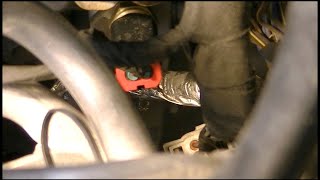
- Faulty Engine Coolant Temperature (ECT) Sensor 🔴 High Probability The ECT sensor is a common failure point and directly contributes to the temperature rationality check. On the 3.6L V6, it is in a difficult-to-access location at the rear of the engine near the firewall, which can make it susceptible to heat and vibration damage over time. On V8 models, it is easier to access on the front of the engine. 🎬 See this walkthrough for replacing the sensor on V8 HEMI models.
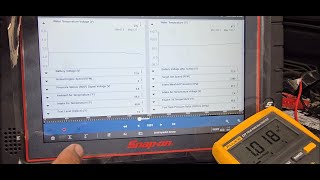
How to confirm: With a scan tool, compare the ECT, IAT, and AAT readings on a cold engine (off for 8+ hours). They should be within a few degrees of each other. If the ECT reading is wildly different, the sensor is likely faulty. You can also test the sensor's resistance with a multimeter and compare it to a temperature/resistance chart. 🎬 Watch: How to test your coolant temperature sensor with a multimeter.
Typical fix: Replace the Engine Coolant Temperature sensor and its sealing washer. For the 3.6L V6, this can be a difficult job due to the tight location.
Est. part cost: $20-$50 - Faulty Intake Air Temperature (IAT) Sensor 🟡 Medium Probability
How to confirm: With a scan tool, compare the IAT reading to the ambient and coolant temperatures on a cold engine. If the IAT reading is stuck at a very high or low temperature (e.g., -40°F or 284°F), the sensor or its circuit is faulty.
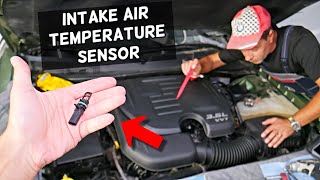
Typical fix: Replace the Intake Air Temperature sensor, which is typically located in the air intake tube just before the throttle body. It is usually a simple twist-and-pull replacement. 🎬 Watch: How to locate and replace the intake air temperature sensor.
Est. part cost: $15-$40 - Faulty Ambient Air Temperature (AAT) Sensor 🟡 Medium Probability
How to confirm: Compare the AAT reading on a scan tool or the vehicle's external temperature display to the actual outside temperature. If it is significantly off, the sensor is likely bad. This sensor is often located behind the front grille, near the radiator support, making it susceptible to damage from front-end impacts.
Typical fix: Replace the Ambient Air Temperature sensor.
Est. part cost: $15-$35 - Powertrain Control Module (PCM) Software Update Needed 🟡 Medium Probability Manufacturer TSB #18-094-16 explicitly lists P1115 as a code that may be resolved with a PCM software update. The original software logic may be too sensitive, especially on 6.4L engine models.
How to confirm: A Dodge dealership or a qualified shop with a wiTECH scan tool can check if the PCM has the latest software version by checking the vehicle's VIN against the TSB.
Typical fix: Reprogram the PCM with the latest available software. This must be done by a dealer or a properly equipped independent shop.
Est. part cost: $0-$200 - Wiring or Connector Issue ⚪ Low Probability
How to confirm: Visually inspect the wiring and connectors for the ECT, IAT, and AAT sensors for damage, corrosion, or loose pins. Rodent damage to harnesses is also a possibility. Perform a wiggle test on the harnesses while monitoring sensor data on a scan tool to check for intermittent connections. Check for excessive resistance in the signal or ground circuits.
Typical fix: Repair the damaged section of the wiring harness or clean/replace the faulty connector.
Est. part cost: $5-$100
Rare But Worth Checking
- Faulty Powertrain Control Module (PCM): This is very rare. All sensors, wiring, and software updates should be thoroughly checked before considering PCM replacement.
- Low Engine Coolant Level or Air in System: While less common for causing a cold-soak rationality code, air pockets in the cooling system can cause erratic readings from the ECT sensor once the engine is running, potentially contributing to the fault.
Diagnosis Steps
- Connect a scan tool and check for P1115 and any other stored codes. Note the freeze frame data.
- With the engine completely cold (off for at least 8 hours), use the scan tool to view live data for the Engine Coolant Temperature, Intake Air Temperature, and Ambient Air Temperature sensors.
- Compare the three readings. They should all be within about 10°C (18°F) of each other and the actual ambient temperature.
- If one sensor reads drastically different from the other two, suspect that sensor is faulty. For example, if AAT and IAT are 70°F and ECT is 150°F on a cold engine, the ECT sensor is the likely culprit.
- If a sensor is suspect, inspect its wiring and connector for any visible damage, corrosion, or rodent chew marks.
- If wiring looks good, test the suspected sensor's resistance with a multimeter and compare it to the manufacturer's specifications for the measured temperature.
- If all sensors and wiring appear to be good, check with a Dodge dealer for any available PCM software updates, specifically referencing TSB #18-094-16 for 6.4L engines.
- After repairs, clear the codes and perform a drive cycle, including letting the vehicle sit for another cold soak (8+ hours), to confirm the fix.
Parts You'll Likely Need
- Engine Coolant Temperature (ECT) Sensor
(OEM #5149077AB)— This is one of the three primary sensors involved in the rationality check and is a common failure item. This part number is widely used across Chrysler/Dodge/Jeep platforms.
Trusted brands: Mopar, Standard Motor Products, Delphi
OEM price range: $30-$60
Aftermarket price range: $20-$50 - Intake Air Temperature (IAT) Sensor
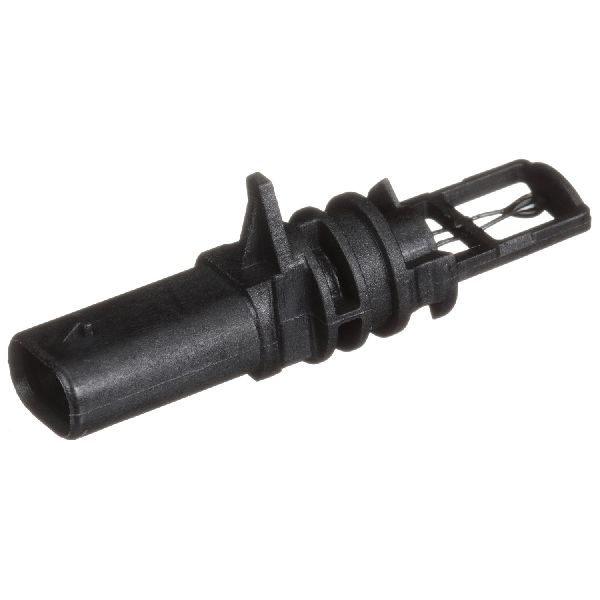
(OEM #05149279AC)— The second of the three sensors involved in the check. It's relatively inexpensive and easy to replace.
Trusted brands: Mopar, Bosch, Denso
OEM price range: $25-$50
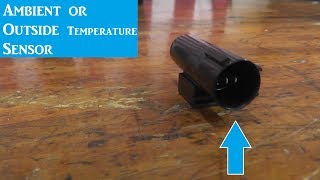
Aftermarket price range: $15-$40 - Ambient Air Temperature (AAT) Sensor — The third sensor in the rationality check. Its location behind the grille makes it vulnerable to damage.
Trusted brands: Mopar, Dorman, Duralast
OEM price range: $20-$40
Aftermarket price range: $15-$35
Related Codes That Often Appear With This One
- P0456 — EVAP System Small Leak. The temperature rationality check is often a prerequisite for the EVAP monitor to run. If the P1115 fault is present, the EVAP test may not run correctly, leading to associated codes. TSB #18-094-16 directly links these codes.
- P0441 — EVAP Purge System Performance. Similar to P0456, this code is linked to P1115 in TSB #18-094-16, suggesting the temperature fault interferes with EVAP system diagnostics.
- P2610 — PCM Internal Engine Off Timer Performance. The PCM uses temperature sensor data to validate its engine-off timer ('soak time'). A temperature rationality fault can cause the timer performance check to fail. This code is also listed in TSB #18-094-16.
Technical Service Bulletins (TSBs) & Recalls
- 18-094-16: Mentions P1115 in conjunction with P0456, P0441, and P2610, recommending a PCM software update for 2014 6.4L models.
Platform-Specific Known Issues
- A known issue documented in TSB #18-094-16 indicates that a PCM software update may be required to correct the logic that triggers P1115, often in conjunction with EVAP system codes. This TSB specifically applies to 2014 models with the 6.4L engine.
- On the 3.6L V6 engine, the ECT sensor is notoriously difficult to access, located at the rear of the engine block near the firewall. Special tools like a swivel socket and extension are required.
- Owners have reported confusion when ordering a replacement ECT sensor for the 3.6L V6, as some designs use a washer for sealing while others use thread sealant. It is recommended to remove the old part first to ensure a match.
Mechanic-Grade Diagnostic Values
- ECT/IAT Sensor Resistance — expected: ~2000-3000 Ω at 20°C (68°F). Failure: Resistance is significantly outside this range at a known temperature, or shows an open/short circuit.
- ECT/IAT Sensor Resistance — expected: ~200-300 Ω at 90°C (194°F). Failure: Resistance is significantly outside this range when the engine is at operating temperature.
- ECT/IAT Sensor Signal Voltage (Cold Engine) — expected: ~2.0V - 4.5V. Failure: Voltage is stuck near 0V (short to ground) or 5V (open circuit).
- ECT/IAT Sensor Signal Voltage (Warm Engine) — expected: ~0.5V - 1.5V. Failure: Voltage does not drop as the engine warms up.
- Sensor Reference Voltage (Key On, Engine Off) — expected: Approximately 5.0V. Failure: Voltage is significantly lower or absent, indicating a PCM or wiring issue.
- Sensor Ground Circuit Resistance — expected: Below 5.0 ohms. Failure: Resistance higher than 5.0 ohms indicates a poor ground connection, which can skew sensor readings.
Scan Tool Commands That Help
- wiTECH: View DTCs / Environmental Data — This is the first step to see the freeze frame data, which shows the exact conditions (temperatures, engine state) when the P1115 code was set.
- wiTECH: ECU View / Data / Graph Data — To monitor live data streams from the ECT, IAT, and AAT sensors simultaneously. This is crucial for the cold soak comparison test and for watching sensor behavior as the engine warms up.
- wiTECH: Flash an ECU — Used by a dealer or qualified shop to perform the software update specified in TSB #18-094-16 if the vehicle's current software is outdated.
Wiring & Ground Locations
- Engine Coolant Temperature (ECT) Sensor — On 3.6L V6: Left rear of the engine. On V8 engines (5.7L/6.4L): Left front of the engine.. This is one of the three primary sensors checked for the P1115 rationality test. Its physical location affects ease of access for testing and replacement.
- Intake Air Temperature (IAT) Sensor — In the air intake tube, just before the throttle body.. This is the second primary sensor in the rationality check. It is generally easy to access.
- Ambient Air Temperature (AAT) Sensor — At the right front of the engine compartment, typically mounted on the radiator support behind the grille.. This is the third sensor in the rationality check. Its location makes it vulnerable to damage from front-end impacts or debris.
- Powertrain Control Module (PCM) — Located at the right rear of the engine compartment.. The PCM receives and interprets the signals from all three temperature sensors. All sensor wiring terminates here, making its connectors a key inspection point for corrosion or damage.
- G31 / G2a — A primary engine compartment ground point, located at the left front of the engine compartment.. A poor engine ground can cause erratic voltage readings and sensor signal interference, potentially leading to a rationality code.
OEM Part Supersession History
5149096AB→5149077AB— Part number consolidation and potential design update.
Heads up: 5149077AB is the current replacement for the ECT sensor on this platform. Using the older number is not advised.
Model Year Variations Within This Range
- 2014: TSB #18-094-16 specifically calls out the 6.4L engine as potentially needing a PCM software update to correct over-sensitive logic for P1115, especially when seen with EVAP codes.
Helpful Videos

We Have This Part in Stock


The information in this article is provided for general reference and educational purposes only. Vehicle specifications, procedures, and part compatibility can vary by production date, trim level, and region. Always consult your vehicle's factory service manual and verify part numbers before purchasing or performing repairs. Safety-critical components such as airbags, seat belts, and braking systems should be installed by a qualified professional.
- Dodge CHALLENGER:
- 🎬 Helpful Videos
- 🛍️ Shop This Part
- What's Unique About the 2014-2014 Dodge CHALLENGER
- Diagnostic Flowchart
- Symptoms You May Notice
- Most Likely Causes
- Rare But Worth Checking
- Diagnosis Steps
- Parts You'll Likely Need
- Related Codes That Often Appear With This One
- Technical Service Bulletins (TSBs) & Recalls
- Platform-Specific Known Issues
- Mechanic-Grade Diagnostic Values
- Scan Tool Commands That Help
- Wiring & Ground Locations
- OEM Part Supersession History
- Model Year Variations Within This Range
- 🎟️ Get 5% Off