

OBD-II Code P1111: Ultimate Guide to System Pass vs. Critical Fault
The most comprehensive guide to understanding, diagnosing, and fixing P1111 on any vehicle.
- Verify your vehicle's specific P1111 definition immediately, as this manufacturer-specific code means 'System Pass' on a Ford but indicates a critical VVT failure on a Nissan.
- Leave the code alone if you drive a Ford, Jaguar, or Mazda; clearing this 'System Pass' code triggers a P1000 'System Not Ready' status and guarantees an emissions test failure.
- Perform an immediate oil and filter change on Nissan or Infiniti vehicles, as dirty oil causing low pressure is the primary trigger for their P1111 VVT solenoid fault.
- Conduct a 'wiggle test' on the sensor wiring harness while watching live scanner data to pinpoint the exact location of intermittent electrical faults common to GM and Chevy vehicles.
What Does P1111 Mean?

P1111 is a special, manufacturer-specific code with two opposite meanings. For Ford, Jaguar, and Mazda, it is a 'System Pass' code, indicating all on-board diagnostic tests successfully completed. For most other manufacturers, P1111 is a fault code. The most common generic definition is 'Intake Air Temperature (IAT) Sensor Circuit Intermittent High Voltage,' meaning the sensor measuring engine air temperature sends erratic high-voltage signals. The definition varies widely by brand.
Technical definition: The definition of P1111 varies significantly by manufacturer. The most common interpretations are: * **Jaguar, Ford, Mazda:** System Pass – All on-board diagnostic readiness monitors completed their self-tests. * **Generic SAE / Chevrolet / Kia:** Intake Air Temperature (IAT) Sensor Circuit Intermittent High Voltage. * **Nissan / Infiniti:** Intake Valve Timing (IVT) Control Solenoid Valve Circuit Bank 1. This points to a variable valve timing system failure. * **Hyundai:** Intake Air Temperature (IAT) Sensor Circuit Intermittent Low or High Input. * **BMW:** Engine Coolant Temperature (ECT) Radiator Outlet Sensor Low Input, indicating a cooling system sensor issue. * **Subaru:** Atmospheric Pressure Sensor High Input. * **Volkswagen / Audi:** HO2S (Heated Oxygen Sensor) Control System Too Lean, Bank 1, indicating a fuel mixture problem.
Can I Drive With P1111?
Yes, But With Caution. For Ford, Jaguar, and Mazda, driving is perfectly safe as this code indicates a system pass. For other vehicles, drive only short distances to a repair shop. Ignoring a Nissan VVT fault causes timing chain wear, while a persistent lean condition on VWs burns engine valves and destroys the catalytic converter, costing $800-$2500. Diagnose and fix the underlying issue immediately to prevent escalating repair costs.
Common Causes

- Normal System Operation (System Pass) (Very Common) — On Ford, Jaguar, and Mazda vehicles, the PCM intentionally sets this code after all readiness monitors complete, often after clearing codes or disconnecting the battery. It is not a fault.
- Dirty or Low Engine Oil (Nissan/Infiniti) (Very Common) — The VVT system relies on clean oil and proper pressure. Infrequent oil changes create sludge buildup, which clogs the VVT solenoid and triggers a P1111 fault.
- Faulty VVT Control Solenoid (Nissan/Infiniti) (Common) — The solenoid controlling oil flow to the camshaft phasers fails electrically or sticks mechanically, a widespread issue on these vehicles.
- Faulty Intake Air Temperature (IAT) Sensor (Common) — The sensor fails internally, causing it to send intermittent or incorrect high-voltage signals to the engine computer.
- Damaged Wiring or Corroded Connector (Common) — The wiring harness leading to the sensor is chafed, broken internally, or the connector is corroded. This creates a poor connection and intermittent signal spikes, especially common in humid or salt-belt regions.
- Vacuum Leak (Volkswagen/Audi) (Less Common) — For VW/Audi's 'System Too Lean' definition, a leak in a vacuum hose or intake gasket introduces unmetered air, causing the O2 sensor to report a lean condition.
- Faulty Powertrain Control Module (PCM) (Rare) — The vehicle's main computer has an internal fault. Consider this only after exhaustively testing all wiring and sensors.
Symptoms
- Check Engine Light is On — For all fault-related definitions (IAT, VVT, ECT), the Malfunction Indicator Lamp (MIL) illuminates on the dashboard.
- Engine Rattling or Ticking — On Nissan vehicles, a failing VVT system causes a distinct rattling or ticking noise from the top of the engine as timing components operate without proper oil pressure.
- Drivability Issues (Rough Idle, Hesitation, Stalling) — A faulty VVT solenoid or incorrect IAT readings cause the engine to idle erratically, hesitate during acceleration, or stall completely at stops.
- Decreased Fuel Economy — An incorrect air-fuel mixture from a bad IAT sensor or inefficient valve timing forces the engine to consume 5-15% more fuel than necessary.
- No Symptoms at All (scan-tool only — no driver-felt sign) — For the 'System Pass' meaning (Ford/Jaguar/Mazda), there are no drivability symptoms. The Check Engine Light remains off, and the code is only visible with a scan tool.
Diagnostic Flowchart
Tap your situation to follow the diagnostic path that matches what you're seeing on this code.
Common Fixes & Costs
- No Repair Needed - Understand the Code — Parts: $0, Labor: $0 (DIY)
- Change Engine Oil and Filter (Nissan) — Parts: $30-$60, Labor: $40-$70, ~0.5 hr book time (DIY)
- Replace VVT Control Solenoid (Nissan) — Parts: $50-$210, Labor: $170-$290, ~1.5 hr book time (Intermediate)
- Replace the Intake Air Temperature (IAT) Sensor — Parts: $20-$75, Labor: $50-$100, ~0.5 hr book time (DIY)
- Replace Radiator Outlet ECT Sensor (BMW) — Parts: $25-$80, Labor: $100-$180, ~1.0 hr book time (Intermediate)
- Repair Damaged Wiring or Connector — Parts: $10-$50, Labor: $100-$400, ~2.0 hr book time (Professional)
Used vs. New Parts: Buying Guide
When a used part is worth it: For simple electronic sensors like an IAT or ECT sensor, a used OEM part is a reliable alternative. For mechanical parts like VVT solenoids, a used part is risky.
Donor-vehicle mileage cap: roughly under 80000 miles for the part to have meaningful remaining life.
Donor quality checklist:
- Verify the exact OEM part number matches.
- For VVT solenoids, avoid parts from engines with sludge issues.
- Inspect connector pins for corrosion or bending.
Decision logic:
- If The part is a simple sensor (IAT/ECT) and a used OEM part is under 50% of a new OEM part. → Used OEM part is a good value.
- If The part is a VVT solenoid and the vehicle has over 100K miles. → Buy a new OEM or high-quality aftermarket part. Labor costs outweigh used part savings.
- If The part has a known high failure rate. → Favor a new OEM part with the latest design revisions.
Warranty tradeoff: Salvage yards offer 30-90 day warranties. New aftermarket parts offer 1-year to lifetime warranties.
Worst-case if a used part fails: $250-$500 if a used VVT solenoid fails after installation, requiring repeat labor costs.
What Happens If You Wait — Timeline
- 0-1 month: Fault code P1111 is stored. For VVT faults (Nissan), a slight rattle occurs on startup. For IAT/Lean faults, a minor drop in fuel economy occurs. (MPG impact: 0-5%% · Added cost: $0-$40 in wasted fuel.)
- 1-4 months: Symptoms become consistent. Nissan engines experience rough idle and hesitation. VW/Audi lean conditions begin stressing the catalytic converter. (MPG impact: 5-10%% · Added cost: $50-$150 in wasted fuel. Minor carbon buildup on spark plugs.)
- 4-8 months: A rich/lean condition from a bad IAT or O2 sensor overheats the catalytic converter. A failing VVT solenoid puts continuous strain on the timing chain. (MPG impact: 10-15%% · Added cost: $800-$2,500 as catalytic converter replacement becomes likely.)
- 8+ months: Severe damage occurs. Ignored VVT issues lead to a stretched timing chain. A persistent lean condition burns engine valves. (MPG impact: 15-25%% · Added cost: $1,500-$4,000+ for timing chain replacement or internal engine repairs.)
Cost of Not Fixing It
- 0-1 Month: Noticeable drop in fuel economy (5-15%), rough idle, and hesitation. (Added cost: $20-$60 in extra fuel costs.)
- 1-6 Months: A persistent rich or lean condition overheats the catalytic converter. Nissan VVT faults increase strain on timing components. (Added cost: $800-$2500 for catalytic converter replacement.)
- 6+ Months: Severe engine damage occurs, including timing chain failure on Nissans or burnt engine valves on VWs. (Added cost: $1500-$4000+ for timing chain or internal engine repairs.)
Diagnosis Steps

- Identify Your Vehicle's Definition for P1111
Confirm what P1111 means for your specific make, model, and year before opening the hood. For Ford, Jaguar, or Mazda, it is a 'System Pass' code requiring no repairs. For other brands, identify the implicated system (e.g., IAT, VVT, ECT, O2).
Tools: Internet Search (Beginner) - Analyze Scan Tool Data
Connect an OBD-II scanner. Check for accompanying codes (e.g., P0011 on a Nissan confirms a VVT fault). Use live data to monitor the relevant sensor. For an IAT fault, a reading of -38°F (-39°C) on a warm day proves an open circuit.
Tools: OBD-II Scanner (Beginner) - Perform a Thorough Visual Inspection
Inspect the identified sensor, its connector, and surrounding wiring for cracks, corrosion, or frayed wires. For a Nissan VVT fault, pull the dipstick to check engine oil level and condition; sludgy oil is the primary cause.
Tools: Flashlight, Dipstick (Beginner) - Perform a 'Wiggle Test' for Intermittent Faults
Because P1111 denotes an intermittent fault, the problem is not always present. With the scanner displaying live sensor data, start the engine and gently wiggle the wiring harness. If the voltage spikes or drops out, you have an intermittent open or short in the harness. 🎬 Watch: Expert tips for finding intermittent electrical faults
Tools: OBD-II Scanner with Live Data (Intermediate) - Test VVT Solenoid Actuation (Nissan)
Remove the VVT solenoid. Apply 12V power directly from the battery to its two pins. A healthy solenoid makes a distinct 'click' as the plunger moves. If it fails to click, it is seized. Inspect the mesh screens for sludge.
Tools: Jumper Wires, 12V Power Source (Advanced) - Test Sensor Resistance (IAT/ECT)
Disconnect the sensor and connect multimeter probes to its pins. A typical IAT/ECT sensor reads approx. 2,500 Ohms at room temperature (68°F) and drops to 300 Ohms at operating temperature (176°F). Infinite resistance confirms a dead sensor.
Tools: Multimeter, Manufacturer's Resistance Chart (Intermediate) - Test Circuit Reference Voltage
With the sensor unplugged and the key 'On' (engine off), test the connector. A two-wire IAT/ECT sensor must have a 5-volt reference signal. A Nissan VVT solenoid must show battery voltage (approx. 12 volts). Missing voltage proves a wiring or PCM issue.
Tools: Multimeter (Intermediate) - Analyze Live Data Against Specs (Advanced)
Compare live data to known-good values. For GM IATs, voltage must stay between 0.2V and 4.5V; spikes above 4.9V trigger P1111. For VW O2 sensors, Bank 1 voltage stuck below 0.40V confirms a lean condition.
Tools: OBD-II Scanner with Live Data (Advanced) - Perform a Voltage Drop Test (Advanced)
Back-probe the sensor connector with the engine running. Connect the positive multimeter lead to the battery positive and the negative lead to the sensor's voltage supply pin. A reading above 0.5 volts proves excessive resistance in the power wire.
Tools: Multimeter with Back-Probes (Advanced)
When This Code Triggers (Freeze-Frame Conditions)
- Engine Coolant Temp: 175-210°F (79-99°C) (The engine is fully warmed up and running for several minutes.)
- RPM: 1500-2500 RPM (The fault logs during steady-state cruising, not during hard acceleration.)
- Engine Load: 25-60% (Light to moderate engine load, consistent with highway driving.)
- Vehicle Speed: 40-65 mph (64-105 km/h) (Constant speed driving allows the ECU to run diagnostic self-tests.)
Related Codes
- P1000 — The direct counterpart to P1111 on Ford, Jaguar, and Mazda. P1000 means readiness tests are NOT complete, while P1111 means they ARE complete.
- P0011 — On Nissan/Infiniti, P0011 ('Intake Camshaft Position Timing - Over-Advanced') frequently accompanies P1111. P1111 points to the electrical circuit, while P0011 indicates the mechanical timing is out of range.
- P0113 — P0113 means 'IAT Sensor Circuit High Input,' indicating a constant high voltage. P1111 specifies an 'intermittent' high signal.
- P0112 — P0112 means 'IAT Sensor Circuit Low Input.' It points to a short to ground, showing voltage stuck near zero, whereas P1111 shows intermittent spikes toward 5 volts.
Climate & Environmental Factors
- High Humidity / Road Salt: Accelerates corrosion on sensor connector pins. This corrosion creates unwanted resistance, a primary trigger for intermittent high voltage codes like P1111.
- Extreme Temperature Cycles (Hot/Cold): Causes wiring insulation to become brittle. Engine vibration then breaks the wire internally near the connector, a common failure mode that is not visually apparent.
- High Altitude: Directly impacts vehicles where P1111 relates to the Atmospheric Pressure Sensor (e.g., Subaru). A marginal sensor falls out of its expected range and triggers the code more frequently at high altitude.
How to Talk to a Mechanic About This Code
Say this: "For a Nissan: 'I have a P1111 code and suspect an issue with the VVT solenoid circuit. Please check the oil condition and test the solenoid.' For a GM: 'I have an intermittent P1111 for the IAT circuit. Please perform a wiggle test of the sensor harness before replacing parts.' For a BMW: 'I have a P1111 code for the radiator outlet temp sensor. I need a diagnosis of that specific circuit.'"
This language directs the technician to the most likely cause for your specific vehicle and avoids wasted diagnostic time or incorrect parts replacement.
Avoid saying:
- 'My check engine light is on, can you just fix it?'
- 'I looked it up online and I need a new IAT sensor.'
- 'Just do whatever you think is best.'
Questions to ask before authorizing the repair:
- Can you show me the test results, like the voltage drop reading or failed solenoid test?
- Is the recommended part OEM or aftermarket, and what is the warranty?
- If the problem is wiring, will you repair the harness or replace the connector pigtail?
- Will the diagnostic fee be applied to the final repair cost?
Where to Take It: Dealer vs Independent vs Chain
- Dealer:
Best for: Vehicles still under powertrain or emissions warranty., Complex, manufacturer-specific electrical quirks., Access to proprietary diagnostic tools and TSBs.
Downsides: Significantly higher labor rates and diagnostic fees ($100-$500+)., May prefer to replace an entire assembly rather than perform a targeted repair. (Typical cost: +40% vs. baseline) - Independent Shop:
Best fit for most P1111 fault scenarios. A competent independent shop diagnoses and repairs these effectively at a lower cost. For BMW, use a specialized independent BMW shop.
Best for: Out-of-warranty vehicles where cost is a major factor., Common, well-documented P1111 issues like a Nissan VVT solenoid or GM IAT wiring problem., Building a long-term relationship with a technician.
Downsides: Quality and expertise vary greatly., May lack expensive, brand-specific diagnostic tools for complex models. (Typical cost: +0% vs. baseline) - Chain Shop:
Acceptable for a simple oil change. AVOID for initial diagnosis of a P1111 code, especially for wiring or brand-specific issues.
Best for: Simple maintenance like an oil change on a Nissan.
Downsides: Technician skill varies dramatically., High pressure to upsell unnecessary services., Lack in-depth diagnostic experience for intermittent electrical faults. (Typical cost: -10% vs. baseline)
When to Walk Away From the Repair
If the total estimated repair cost exceeds 50% of your car's private-party value, seriously consider selling or trading in the vehicle instead of repairing it.
- Car worth $4000, fix is $2200: Walk away. The repair cost is over 50% of the car's value.
- Car worth $12000, fix is $1800: Fix it. The repair cost is only 15% of the vehicle's value.
- Car worth $2500, fix is $1500: Walk away. The repair cost is 60% of the car's value.
What Scan Tool You Need for This Code
Minimum: A scanner that reads manufacturer-specific codes and displays live sensor data. A generic $20 reader only shows the 'P1111' number without the crucial brand-specific definition.
To diagnose P1111 effectively, you must see what the sensor does in real-time. For a GM IAT fault, watch the voltage while wiggling wires. For a Nissan VVT fault, command the solenoid on/off.
Budget: BlueDriver Pro (~$99) — Connects to your smartphone and provides manufacturer-specific code definitions, freeze-frame data, and live data graphing to diagnose IAT faults.
Mid-range: Foxwell NT510 Elite / Innova 5610 (~$150) — Offers live data and bidirectional controls to command the Nissan VVT solenoid to click, directly confirming if the component works.
Professional: Autel MaxiCOM MK808 (~$500) — Provides full bidirectional control and advanced functions to diagnose complex wiring issues and interact with nearly every module.
Rent vs buy: For a one-time check, auto parts stores offer free loaner tools. If you do your own maintenance regularly, buying a scanner like the BlueDriver Pro is a worthwhile investment.
How to Clear the Code After You Fix It
- Reconnect any disconnected components.
- Use an OBD-II scan tool to erase the Diagnostic Trouble Codes (DTCs).
- Perform a complete drive cycle to allow readiness monitors to run.
Drive cycle (~20 minutes): Cold start and idle for 3 minutes. Drive in mixed conditions, including steady cruising between 40-60 mph for 10 minutes. Perform smooth accelerations and decelerations.
Readiness monitors affected: Catalyst (CAT) Monitor, Evaporative System (EVAP) Monitor, Oxygen (O2) Sensor Monitor, Oxygen Sensor Heater Monitor
Before emissions retest: drive at least 50 miles to fully set monitors.
Watch out for:
- Disconnecting the battery does not guarantee codes clear.
- For Ford/Jaguar/Mazda, clearing P1111 resets monitors to 'Not Ready' (P1000) and fails emissions tests.
- The code returns immediately if the root cause remains unfixed.
Will This Fail Emissions / State Inspection?
Yes — this code typically fails an OBD-II emissions inspection.
- California: A stored P1111 fault code causes an automatic Smog Check failure. A full drive cycle must be completed after repair.
- New York: The NYS DMV inspection includes an OBD-II scan. Any stored fault code results in an emissions failure.
- Texas: In the 17 counties requiring emissions testing, a vehicle fails the OBD-II inspection if a fault code is present.
Manufacturer-Specific Notes

- Jaguar / Ford / Mazda: P1111 is a 'good' code confirming all system self-checks are complete. Clearing it generates a P1000 code and causes an emissions test failure.
- Nissan / Infiniti: The code relates to the VVT control solenoid, not the IAT sensor. Oil sludge is the primary cause. Perform an engine flush and oil change before replacing parts.
- BMW: P1111 points to the radiator outlet coolant temperature sensor, not the intake air. A fault here affects cooling fan operation.
- Chevrolet / GM: The IAT sensor wiring fatigues and breaks internally near the connector due to engine movement. A wiggle test is highly effective for diagnosing this.
- Generic / Other: P1111 specifies an INTERMITTENT condition. The 'wiggle test' is the most effective way to find the root cause. Always check for Technical Service Bulletins (TSBs).
Real Owner Stories
2004 Nissan Sentra 1.8L with 115K miles
Check Engine Light illuminated with a pending P1111 code. The car had a noticeable grinding noise during acceleration from a cold start.
What they tried:
- Confirmed the code meant 'Intake Valve Timing Control Solenoid Valve'.
- Identified that dirty oil is the most common cause.
Outcome: Performed an engine oil and filter change. This resolved the issue without replacing the solenoid, as sludgy oil was the culprit.
Lesson: On a Nissan with P1111, always address oil condition first. An inexpensive oil change fixes the problem and prevents unnecessary VVT solenoid replacement.
2000 Chevrolet Corvette with 31K miles
Check Engine Light appeared with codes P1111 and P0113. The car developed an extended cranking issue.
What they tried:
- Replaced the IAT sensor, but the code returned.
- Replaced the pigtail connector for the IAT sensor.
Outcome: The wiring harness near the connector was the fault. Engine movement fatigued and broke the wire internally, causing an intermittent signal.
Lesson: For intermittent electrical faults, the wiring is often the problem. A 'wiggle test' confirms a wiring issue before you spend money on parts.
2002 Jaguar X-Type 3.0L
The car intermittently went into 'limp mode' with a 'Gearbox Fault' warning, but the only stored code was P1111.
What they tried:
- Used a basic scan tool and found only P1111.
- Learned P1111 on a Jaguar is a 'System Pass' code.
Outcome: The P1111 code was a red herring indicating a healthy emissions system. The owner needed an advanced scanner to pull the actual transmission fault codes.
Lesson: On a Ford, Jaguar, or Mazda, P1111 is good news. If you have drivability problems, the cause is something else.
2003 BMW 3-series (E46)
P1111 code present. The owner mistakenly believed it was for the Intake Air Temperature sensor based on generic definitions.
What they tried:
- Considered replacing the IAT sensor.
Outcome: Discovered P1111 on their car means 'Engine Coolant Temperature Radiator Outlet Sensor Low Input'. The correct part was on the lower radiator hose.
Lesson: Never assume the generic definition of P1111. A quick search for your specific make saves you from replacing the wrong part.
How to Prevent This Code From Triggering
- Perform regular oil changes with high-quality synthetic oil (Nissan/Infiniti). (Every 3,500-5,000 miles.) — Prevents engine sludge formation, the primary cause of VVT solenoid failure. Clean oil is essential for the VVT system.
- Apply dielectric grease to sensor connector seals. (Whenever a connector is disconnected for service.) — Seals the connector from moisture and oxygen, preventing pin corrosion that causes intermittent electrical faults.
- Perform periodic visual inspections of wiring harnesses. (During every oil change.) — Securing loose harnesses prevents chafing and internal wire breaks that trigger intermittent codes.
- Avoid excessive engine idling (Nissan VVT). (Daily habit.) — Nissan VQ engines run hot and bake the oil during long idle periods, accelerating sludge formation.
- Replace O2 sensors proactively (VW/Audi). (Every 60,000 to 100,000 miles.) — Prevents slow or incorrect signals that trigger P1111 lean codes and protects the catalytic converter.
Frequently Asked Questions
Is P1111 a good code or a bad code?
It depends entirely on your car's manufacturer. On a Jaguar, Ford, or Mazda, it's a good code that means 'All Systems Go.' On almost any other car, it's a bad code indicating a fault.
Why do I have code P1111 but no Check Engine Light?
This is normal for Ford, Jaguar, and Mazda owners, as P1111 confirms all diagnostic tests passed. For other manufacturers, an intermittent fault stores the code without illuminating the light until it occurs repeatedly.
Can I pass an emissions test with a P1111 code?
If it is the 'System Pass' code on a Ford, Jaguar, or Mazda, you will pass. If it is a fault code on another brand, you will fail the emissions test because a Diagnostic Trouble Code is stored.
Should I clear the P1111 code?
If it is a 'System Pass' code, do not clear it, as this generates a P1000 code and fails your emissions test. If it is a fault code and you fixed the issue, clear it to turn off the Check Engine Light.
What is the most common misdiagnosis with P1111?
The most common mistake is replacing the IAT sensor on a vehicle where P1111 means something else. Replacing the IAT sensor on a Nissan, BMW, or VW wastes money, as the code points to the VVT, cooling, or O2 systems.
I replaced the sensor but the P1111 code came back. What now?
If the code returns, the problem is almost certainly a broken wire or corroded pin inside the connector. Perform a 'wiggle test' and a voltage drop test to pinpoint the circuit problem.
How much does it cost to fix a P1111 fault?
A 'System Pass' code costs $0, while a Nissan VVT solenoid replacement costs $220-$500. An IAT sensor replacement averages $70-$175. Complex wiring repairs cost $150-$400 depending on labor rates.
Can a bad VVT solenoid damage my engine?
Yes. While you might drive briefly with a bad solenoid, ignoring it leads to serious issues. Prolonged incorrect timing causes severe wear on the timing chain and camshaft phasers, resulting in catastrophic engine failure.
Key Takeaways
- Verify your vehicle's specific P1111 definition immediately, as this manufacturer-specific code means 'System Pass' on a Ford but indicates a critical VVT failure on a Nissan.
- Leave the code alone if you drive a Ford, Jaguar, or Mazda; clearing this 'System Pass' code triggers a P1000 'System Not Ready' status and guarantees an emissions test failure.
- Perform an immediate oil and filter change on Nissan or Infiniti vehicles, as dirty oil causing low pressure is the primary trigger for their P1111 VVT solenoid fault.
- Conduct a 'wiggle test' on the sensor wiring harness while watching live scanner data to pinpoint the exact location of intermittent electrical faults common to GM and Chevy vehicles.
Helpful Videos


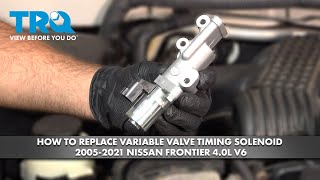




The information in this article is provided for general reference and educational purposes only. Vehicle specifications, procedures, and part compatibility can vary by production date, trim level, and region. Always consult your vehicle's factory service manual and verify part numbers before purchasing or performing repairs. Safety-critical components such as airbags, seat belts, and braking systems should be installed by a qualified professional.
- 🎬 Helpful Videos
- What Does P1111 Mean?
- Can I Drive With P1111?
- Common Causes
- Symptoms
- Diagnostic Flowchart
- Common Fixes & Costs
- Used vs. New Parts: Buying Guide
- What Happens If You Wait — Timeline
- Cost of Not Fixing It
- Diagnosis Steps
- When This Code Triggers (Freeze-Frame Conditions)
- Related Codes
- Climate & Environmental Factors
- How to Talk to a Mechanic About This Code
- Where to Take It: Dealer vs Independent vs Chain
- When to Walk Away From the Repair
- What Scan Tool You Need for This Code
- How to Clear the Code After You Fix It
- Will This Fail Emissions / State Inspection?
- Manufacturer-Specific Notes
- Real Owner Stories
- 2004 Nissan Sentra 1.8L with 115K miles
- 2000 Chevrolet Corvette with 31K miles
- 2002 Jaguar X-Type 3.0L
- 2003 BMW 3-series (E46)
- How to Prevent This Code From Triggering
- Frequently Asked Questions
- Is P1111 a good code or a bad code?
- Why do I have code P1111 but no Check Engine Light?
- Can I pass an emissions test with a P1111 code?
- Should I clear the P1111 code?
- What is the most common misdiagnosis with P1111?
- I replaced the sensor but the P1111 code came back. What now?
- How much does it cost to fix a P1111 fault?
- Can a bad VVT solenoid damage my engine?
- Key Takeaways
- 🎟️ Get 5% Off