

P1101 on 2018-2022 GMC Terrain: Intake Air Flow Performance Causes & Fixes
On a 2018-2022 GMC Terrain, P1101 almost always indicates the charge air cooler (CAC) tube has disconnected from the throttle body. The fix is often as simple as reconnecting the tube and securely tightening the clamp, which is a no-cost, 5-minute DIY job. If the tube is secure, the next most likely causes are a contaminated MAF sensor or a faulty PCV system within the valve cover.
- Before buying any parts, check if the large air hose is connected to the throttle body. This is the most common fix and is free.
- P1101 is an airflow performance code, not necessarily a bad sensor code. It means the system's airflow is not what the computer expects.
- This code is often accompanied by P0299 (Turbo Underboost) because the underlying cause is often a massive boost leak.
- If the intake hoses are secure, the next logical step is to clean the MAF sensor with dedicated cleaner.
What's Unique About the 2018-2022 Gmc TERRAIN

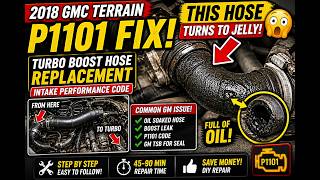
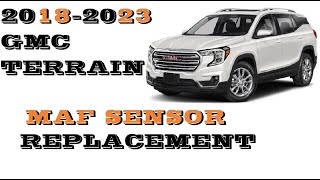
The 2018-2022 GMC Terrain, equipped with turbocharged engines (1.5L LYX or 2.0L LTG), is particularly known for this issue. Multiple General Motors Technical Service Bulletins (TSBs) have been issued because the charge air cooler (CAC) outlet hose has a tendency to pop off the throttle body. This creates a massive, unmetered air leak after the MAF sensor, which is the primary trigger for the P1101 code on this specific platform. 🎬 Watch: A quick fix for the infamous P1101 code. A secondary, but also common, issue is a clogged PCV orifice inside the valve cover, leading to incorrect crankcase pressure.
Diagnostic Flowchart

Tap your situation to follow the diagnostic path that matches what you're seeing on this vehicle.
Symptoms You May Notice
- Check Engine Light is on
- Message for 'Reduced Engine Power' on the driver information center
- Sluggish or poor acceleration.
- Rough or unstable idle.
- Loud hissing or whooshing sound from the engine bay, especially under acceleration when the turbo is creating boost.
- Increased fuel consumption.
- Replacing the MAF sensor without first checking for a disconnected charge air cooler tube. The sensor is often working correctly but is accurately reporting the effects of a massive air leak downstream.
- Replacing the throttle body when the issue is just a disconnected CAC tube. TSBs advise inspecting for physical damage to the throttle body inlet from the hose blowing off, but replacement is only necessary if it's cracked or broken.
Most Likely Causes


- Charge Air Cooler (CAC) Tube Disconnected 🔴 High Probability As documented in multiple GM TSBs (#PIP5710A, #PIP5651G, #22-NA-224), the clamp securing the CAC outlet hose to the throttle body can be insufficient or improperly seated, allowing the pressurized hose to disconnect. Oil residue from the PCV system can lubricate the connection, making it more likely to slip off.
How to confirm: Visually inspect the large-diameter black plastic or rubber tube that connects to the metal throttle body on the engine. If it has popped off, this is your cause. The connection is often low and towards the front of the engine bay, sometimes requiring a flashlight to see clearly.
Typical fix: Loosen the hose clamp, clean any oil residue from the inside of the hose and the outside of the throttle body inlet, then firmly push the tube back onto the throttle body until it is fully seated. Securely tighten the clamp. Some owners and technicians recommend replacing the original spring clamp with a worm-gear style clamp for better holding force.
Est. part cost: $0-$20 for an upgraded clamp - Clogged or Faulty PCV System 🟡 Medium Probability GM TSB #20-NA-047 links P1101 to high crankcase pressure caused by a plugged PCV orifice, which is integrated into the valve cover. This pressure can cause oil leaks and disrupt the engine's air/fuel calculations. This is a known issue on the 1.5L LYX and other similar GM Ecotec engines.
How to confirm: A mechanic can test crankcase pressure using an EEST (Evaporative Emissions System Tester) connected to the oil dipstick tube; a positive pressure reading indicates a blockage. For a DIY check, with the engine running, removing the oil cap and feeling for significant pressure instead of a slight vacuum can suggest a problem. A real-world case on Reddit confirmed a PCV valve replacement fixed the issue after other attempts failed.
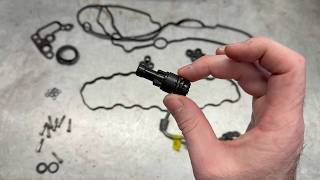
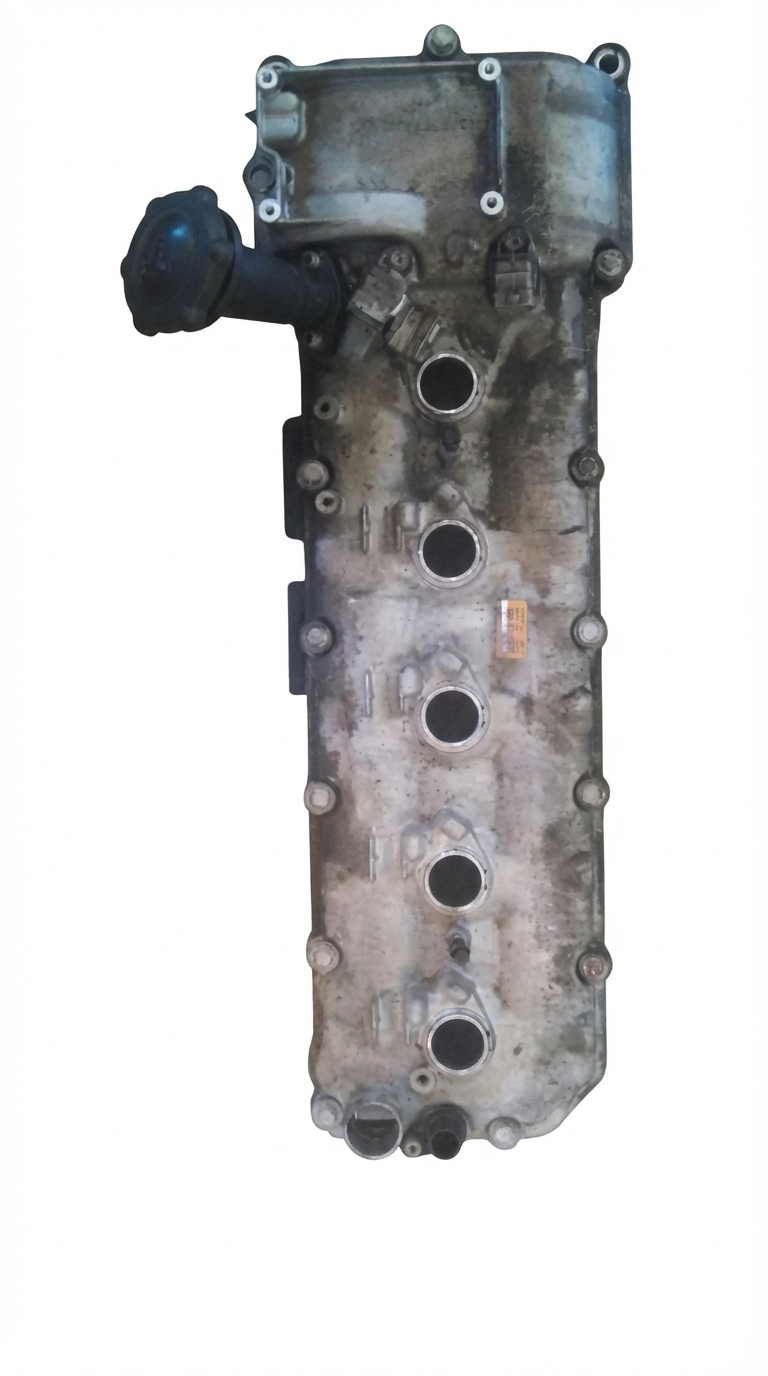
Typical fix: The PCV orifice itself is not serviced separately. The entire valve cover (cam cover) must be replaced. This is a more involved repair but is well-documented in DIY videos. 🎬 See this step-by-step PCV valve and cover replacement guide.
Est. part cost: $80-$250 - Dirty or Contaminated Mass Airflow (MAF) Sensor 🟡 Medium Probability Oil vapor from the PCV system is common in these direct-injected, turbocharged engines and can contaminate the MAF sensor's sensitive wires over time, causing inaccurate readings.
How to confirm: Remove the sensor from the intake tube after the air filter box. Visually inspect the small wires inside for a film of dirt or oil. A scan tool may also show erratic g/s readings at idle.
Typical fix: Clean the sensor wires carefully using only dedicated MAF sensor spray cleaner. Do not touch the wires. Let it dry completely before reinstalling. Replace the sensor only if cleaning does not resolve the issue and other causes have been ruled out.
Est. part cost: $10-$15 for cleaner, $80-$150 for a new sensor - Dirty or Clogged Engine Air Filter ⚪ Low Probability
How to confirm: Visually inspect the engine air filter. If it is black, wet, or full of debris, it is restricting airflow. An improperly installed aftermarket filter can also cause turbulence and trigger the code.
Typical fix: Replace the engine air filter with a quality OEM or equivalent part to ensure proper fitment.
Est. part cost: $20-$40
Rare But Worth Checking
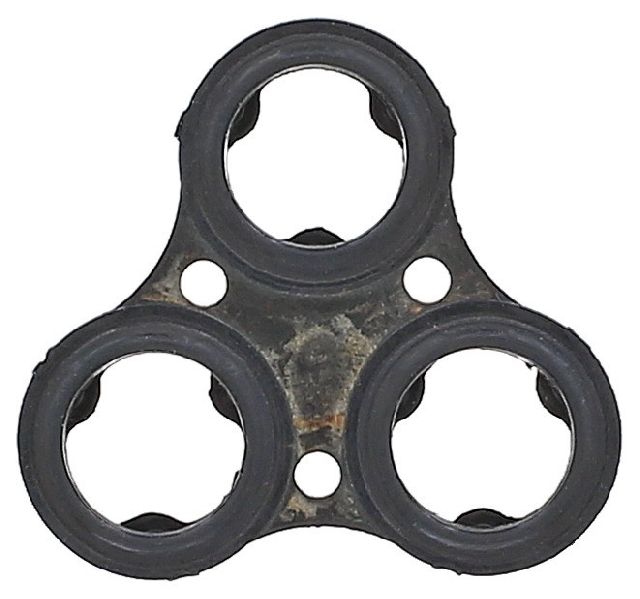
- Cracked Intake Hose or Leaking Gasket: Any air leak that occurs between the MAF sensor and the engine cylinders can cause this code. This includes a cracked charge air cooler itself, or damaged O-rings/seals at connection points. TSB PIP5651E notes that the CAC tube or its O-ring can be damaged when it blows off the throttle body.
- Incorrect or Poorly Seated Air Filter: A technician in a YouTube video diagnosed a P1101 caused by a cheap, deformed aftermarket air filter that was not sealing correctly in the airbox. This created air turbulence across the MAF sensor, leading to inaccurate readings even though there were no vacuum leaks. Replacing it with an OEM filter fixed the issue.
- Dirty Throttle Body: Carbon and oil buildup around the throttle plate can prevent it from closing properly or restrict airflow, confusing the PCM's calculated airflow model. This is a more common cause on other GM vehicles but can still occur on the Terrain.
Diagnosis Steps
- Open the hood and locate the throttle body. Visually inspect the large air intake tube (charge air cooler outlet) connected to it. Confirm it is securely attached. This is the most common fix.
- If the tube is connected, inspect all other intake ducting between the air filter box and the engine for cracks, loose clamps, or damage. Pay close attention to all connection points.
- Inspect the engine air filter. Ensure it is clean and, just as importantly, seated correctly in the airbox with a good seal.
- Locate the MAF sensor in the intake tube right after the air filter housing. Unplug it and remove the two Torx screws holding it in. 🎬 Watch: How to properly remove and replace the MAF sensor.
- Carefully clean the MAF sensor elements with a dedicated MAF sensor cleaner spray. Do not touch the wires. Let it dry completely before reinstalling.
- If the code persists, the issue may be a clogged PCV system. A professional diagnosis using a pressure gauge is recommended, but you can check for pressure at the oil fill cap as a preliminary test.
- If all else fails, a smoke test of the intake system is the best way to find hidden vacuum or boost leaks.
Parts You'll Likely Need
- No parts needed — The most common cause is a disconnected hose that simply needs to be reattached and its clamp tightened.
OEM price range: $0
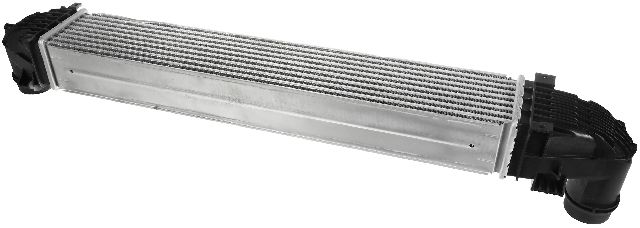
Aftermarket price range: $0 - Charge Air Cooler Outlet Tube
(OEM #84940481 (for 1.5L engine))— If the tube itself is cracked or the end is damaged from blowing off the throttle body, it will need to be replaced.
Trusted brands: ACDelco (GM Genuine)
OEM price range: $150-$230
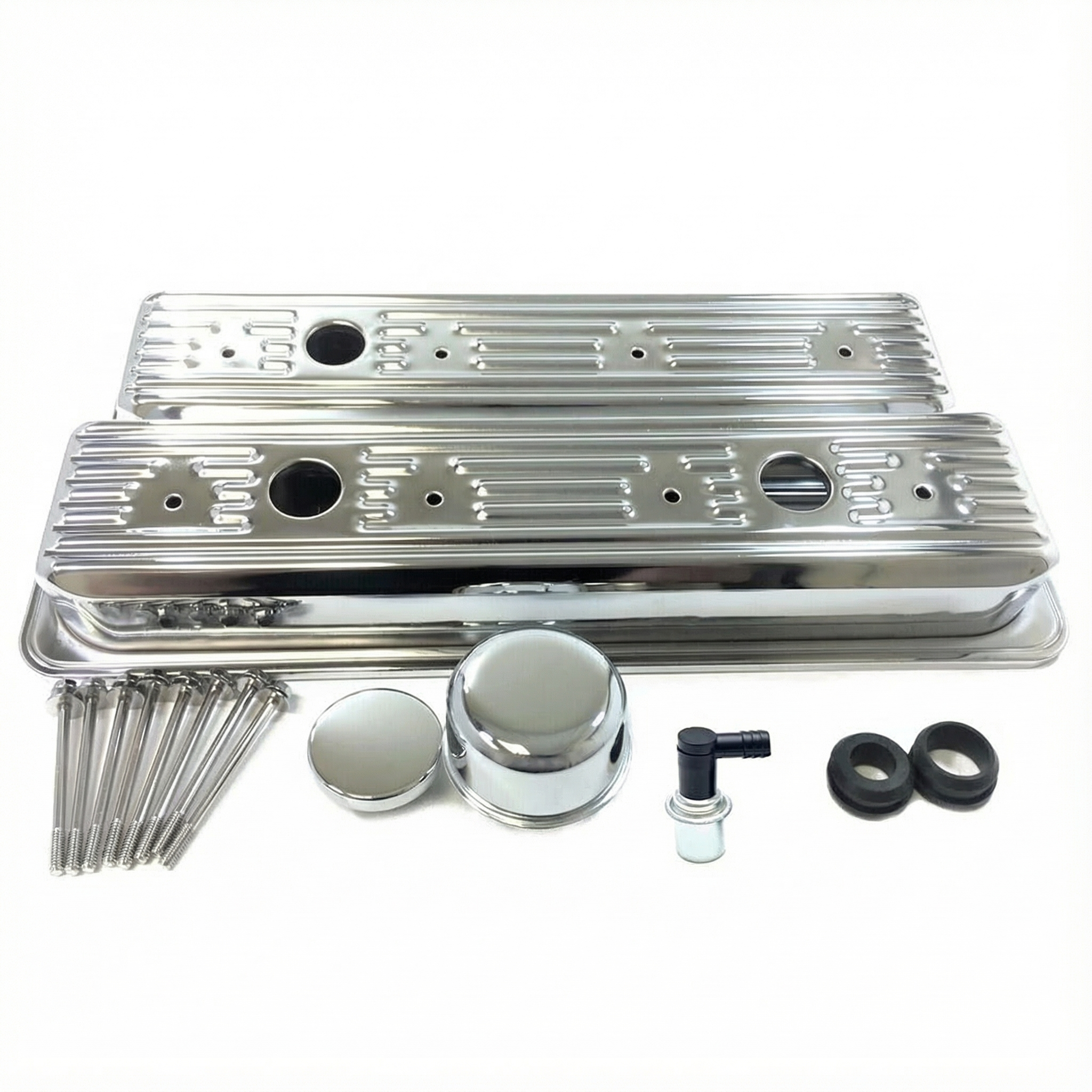
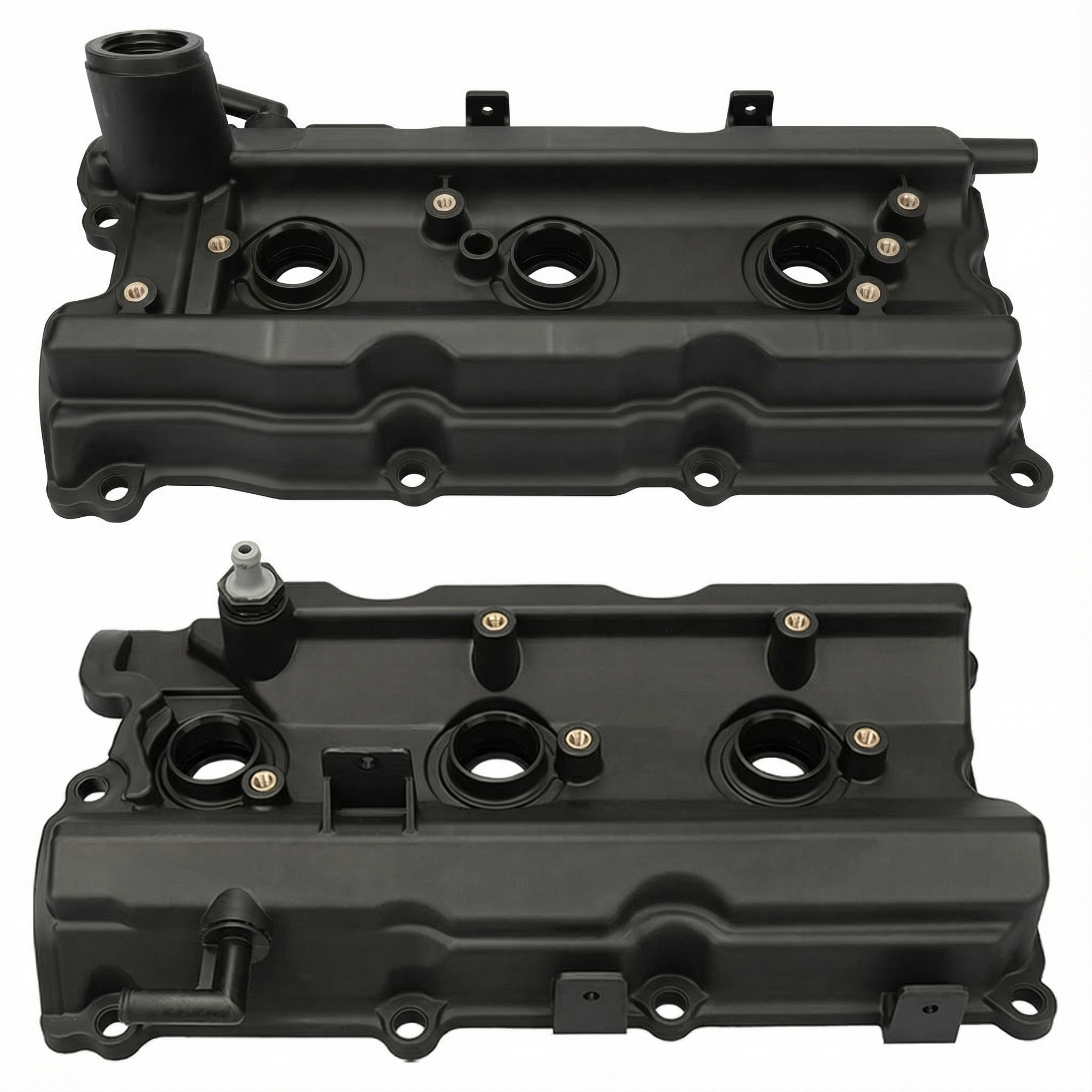
Aftermarket price range: $100-$180 - Valve Cover / Cam Cover
(OEM #55351452 (Check VIN for exact match))— On the 1.5L and 2.0L engines, the PCV valve/orifice is integrated into the valve cover. If the PCV system fails (clogs), the entire cover must be replaced.
Trusted brands: ACDelco, Dorman
OEM price range: $150-$250
Aftermarket price range: $80-$150 - Hose Clamp
(OEM #42651298 (example, verify size))— If the original clamp is weak or lost, a new one is required. Many owners upgrade to a s
Related Codes That Often Appear With This One
- P0101 — This code also relates to MAF sensor range/performance and is often set for the same reason as P1101, as they both indicate a discrepancy between measured and expected airflow.
- P0299 — This code indicates a turbocharger 'underboost' condition. A disconnected charge air cooler tube means the pressurized air from the turbo is escaping into the engine bay instead of entering the engine, causing a critical loss of boost pressure.
- P0172 — This code means 'System Too Rich'. When the CAC tube blows off, the MAF sensor reports very low airflow, but other sensors (like MAP and O2) detect a lean condition. The PCM's conflicting data and attempts to compensate can sometimes lead to a rich condition being flagged.
- P0506 — This code means 'Idle Air Control System RPM Lower Than Expected'. The massive, unmanaged air leak makes it impossible for the PCM to control the idle speed, often causing it to be unstable or stall.
Technical Service Bulletins (TSBs) & Recalls
- 20-NA-047: Service procedure for MIL Illuminated with DTC P1101 Set, sometimes related to crankshaft oil leaks due to high crankcase pressure from a clogged PCV orifice.
- PIP5710A: Addresses a disconnected charge air cooler tube from the throttle body causing reduced power and DTC P1101.
- PIP5651G / PIP5651E: Also cites the charge air cooler tube disconnecting from the throttle body as a cause for P1101 and other codes. Provides images of normal vs. damaged throttle bodies.
- 22-NA-224: Procedure to correct Reduced Engine Power with DTC P1101 (and others) set, often pointing back to the CAC tube connection.
Platform-Specific Known Issues
- A disconnected charge air cooler (CAC) tube at the throttle body is the number one cause for P1101 on this vehicle, as noted in TSBs #PIP5710A, #PIP5651G, and #22-NA-224.
- GM has also issued TSB #20-NA-047, which provides a detailed diagnostic procedure for P1101 caused by a plugged PCV orifice inside the valve cover, leading to excessive crankcase pressure.
Mechanic-Grade Diagnostic Values
- Crankcase Pressure at Hot Idle (1.5L LYX Engine) — expected: -1 to -5 inches of water (slight vacuum). Failure: Pressure is positive (above 0 inches of water), indicating a blockage in the PCV system.
- Mass Airflow (MAF) Sensor Reading at Idle — expected: Approximately equal to the engine's displacement in liters (e.g., ~1.5 g/s for the 1.5L engine). A general range is 2-7 g/s depending on load.. Failure: Reading is significantly different from the expected value, or does not increase smoothly with RPM.
- Mass Airflow (MAF) Sensor Voltage (KOEO) — expected: 0.2V to 0.3V. Failure: Voltage is outside of this range with the key on and engine off.
- Mass Airflow (MAF) Sensor Voltage (KOER) — expected: 0.46V to 2.44V. Failure: Voltage is outside of this range during the Key On Engine Running self-test.
- Long Term Fuel Trim at Idle — expected: Close to 0% (+/- 10%). Failure: Highly negative value (e.g., -20% to -30%) can indicate the PCM is trying to correct a rich condition perceived due to inaccurate MAF readings.
Scan Tool Commands That Help
- GM GDS2: Intake System Learn Values Reset — After cleaning or replacing the throttle body or intake components to clear learned adaptations and force the ECM to relearn airflow characteristics.
- GM GDS2: Throttle Body Idle Air Flow Compensation Reset — Used after throttle body service to reset the idle airflow compensation value back to zero, allowing the system to properly relearn the idle position.
- GM GDS2 or equivalent: Fuel Trim Reset — After a repair that affects the air-fuel mixture (like fixing a vacuum leak or replacing a MAF sensor), this command resets long-term fuel corrections to zero, allowing for a faster evaluation of the fix's effectiveness.
Wiring & Ground Locations
- G101 — Left front of the engine compartment.. This ground point is listed as providing the ground for the Engine Control Module (ECM), Mass Air Flow (MAF) Sensor, and Intake Air Temperature (IAT) Sensor. A poor connection here could cause erratic sensor readings and trigger a P1101.
- G103 — Left front of the engine compartment, under the battery tray, or on the cowl above the brake booster depending on the specific GM model/year.. Provides a ground for various modules including the Body Control Module (BCM) and the Data Link Connector (DLC). While not a direct cause, a poor ground here can create various electrical issues that may complicate diagnosis.
- MAF Sensor Connector — On the MAF sensor body, located in the air intake tube just after the air filter box.. This is the direct electrical connection for the MAF sensor. Check for corrosion, bent pins, or a loose connection. The connector is typically a 5-pin or 8-pin female connector.
Real Owner Repair Stories
- YouTube channel 'Rainman Ray's Repairs' (GM vehicle with 1.4L Turbo (similar architecture to Terrain's 1.5L)) — Check Engine Light with codes P1101, P0101, and P0172 (System Rich).
❌ Tried (didn't work) Initial visual inspection for disconnected hoses showed nothing obvious.
✅ What actually fixed it The cause was a cheap, deformed aftermarket air filter that was not sealing correctly inside the airbox. This created air turbulence across the MAF sensor, causing it to read inaccurately. Replacing the filter with a proper OEM part and cleaning the MAF sensor resolved the codes. - YouTube channel 'That FI Guy' (GM vehicle with P1101 code.) — Check Engine Light, P1101 code, high negative fuel trims.
❌ Tried (didn't work) A smoke test would not have found this issue.
✅ What actually fixed it The air filter was not properly seated on the tube inside the airbox, allowing it to flop around. This caused turbulent airflow and inaccurate MAF readings. The fix was to properly seat the air filter and clean the MAF sensor. - Reddit user 'AfrshTD' in r/AskMechanics (Unspecified GM vehicle) — P1101 code.
❌ Tried (didn't work) Checked crankcase pressure per TSB PIP54173 (superseded by 20-NA-047), and it was within the normal range.
✅ What actually fixed it Replacing the entire valve cover assembly, which contains the non-serviceable PCV components, finally fixed the code. This suggests the PCV system can fail in ways not always detectable by a simple pressure test.
"I Checked Everything" — The Actual Cause
- In multiple documented cases, the root cause of P1101 was not an air leak that a smoke test would find, but rather turbulent airflow across the MAF sensor. This was caused by a cheap, deformed, or improperly seated engine air filter inside the airbox. The poor fitment disturbed the smooth flow of air, leading to incorrect sensor readings even though no unmetered air was entering the system.
Helpful Videos
Used OEM Parts in Stock
New Aftermarket Parts Available



The information in this article is provided for general reference and educational purposes only. Vehicle specifications, procedures, and part compatibility can vary by production date, trim level, and region. Always consult your vehicle's factory service manual and verify part numbers before purchasing or performing repairs. Safety-critical components such as airbags, seat belts, and braking systems should be installed by a qualified professional.
- Gmc TERRAIN:
- 🎬 Helpful Videos
- 🛍️ Shop This Part
- What's Unique About the 2018-2022 Gmc TERRAIN
- Diagnostic Flowchart
- Symptoms You May Notice
- Most Likely Causes
- Rare But Worth Checking
- Diagnosis Steps
- Parts You'll Likely Need
- Related Codes That Often Appear With This One
- Technical Service Bulletins (TSBs) & Recalls
- Platform-Specific Known Issues
- Mechanic-Grade Diagnostic Values
- Scan Tool Commands That Help
- Wiring & Ground Locations
- Real Owner Repair Stories
- "I Checked Everything" — The Actual Cause
- 🎟️ Get 5% Off