

P1101 on 2016-2019 Chevrolet Camaro: Intake Air Flow Fault Causes and Fixes
On turbocharged or supercharged 2016-2019 Camaros, code P1101 almost always indicates an air leak in the intake system after the turbo/supercharger. The most common fix is inspecting and replacing a missing or damaged O-ring in the charge air cooler (CAC) coupler, typically on the passenger side, a known issue cited in GM Technical Service Bulletin (TSB) PIP5402E.
- For a 2016-2019 Camaro with a turbo or supercharger, P1101 strongly suggests an air leak, not a bad sensor.
- The most likely cause is a faulty seal at the charge air cooler (intercooler) connection, as noted in GM TSB #PIP5402E.
- Before buying any parts, perform a thorough visual inspection and, if possible, a smoke test of the entire intake tract.
- Do not replace the MAF sensor unless you have definitively ruled out all possible air leaks.
- This issue will likely put the car in 'limp mode' with reduced power, so it should be addressed promptly.
What's Unique About the 2016-2019 Chevrolet CAMARO

On the sixth-generation Camaro's forced-induction engines (the 2.0L Turbo and the ZL1's 6.2L Supercharged V8), this code is very frequently caused by leaks in the pressurized charge pipes that run from the turbo/supercharger to the engine. General Motors issued a Technical Service Bulletin (PIP5402E) specifically pointing to a faulty O-ring seal in the charge air cooler coupler as a primary culprit for this code and the associated reduced engine power message. The TSB explicitly mentions to check the coupler on the passenger side of the charge air cooler.
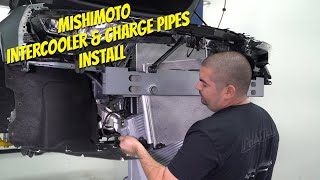
🎬 Watch: Step-by-step guide to replacing Camaro intercooler pipes and couplers.Diagnostic Flowchart
Tap your situation to follow the diagnostic path that matches what you're seeing on this vehicle.
Symptoms You May Notice
- Check Engine Light is on
- Reduced engine power or "limp mode" message
- Hesitation or sluggish acceleration, especially under heavy throttle or load.
- Rough or erratic idle
- Possible whooshing or hissing noise from the engine bay under acceleration.
- Symptom may only appear under hard acceleration or high RPMs.
- Decreased fuel economy.
- Replacing the Mass Airflow (MAF) sensor without first checking for air leaks. On this platform, an air leak is a much more probable cause than a failed sensor. A user on Reddit with a 2016 Camaro 2.0L replaced the MAF and MAP sensors without success before finding the charge air cooler seal leak.
Most Likely Causes

- Missing, Damaged, or Dislodged Charge Air Cooler (CAC) Coupler Seal 🔴 High Probability This is a well-documented issue for GM's turbocharged and supercharged engines, as cited in TSB #PIP5402E. The constant pressure and temperature changes can cause the O-ring seals to fail, become brittle, or get dislodged during previous service. The TSB specifically directs technicians to inspect the coupler on the passenger side of the charge air cooler.
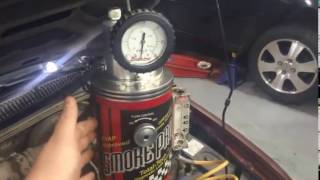
How to confirm: Visually inspect the charge pipe connections at the intercooler (charge air cooler), focusing on the passenger side outlet. A Reddit user with a 2016 2.0L Camaro confirmed this fixed their P1101 code after trying multiple other fixes. A smoke test of the intake system is the most definitive way to show a leak at this location; the TSB recommends using a tool like the GE-52250 Power Smoke Diagnostic Leak Detector.
Typical fix: Replace the damaged or missing O-ring seal and ensure the coupler is securely seated and clamped.
Est. part cost: $10-$30 - Cracked or Loose Charge Pipe/Intake Duct 🟡 Medium Probability The intake tract on a forced-induction engine is under positive pressure, which can expose weaknesses in plastic or rubber components over time, leading to cracks or loose connections, especially at the seams or clamps.
How to confirm: Perform a thorough visual inspection of all intake piping between the MAF sensor and the throttle body. A smoke test is the most effective method to find leaks that are not obvious. Pay attention to aftermarket intake installations, as improper clamping is a common cause of leaks.
Typical fix: Tighten any loose clamps or replace the cracked section of the intake duct.
Est. part cost: $50-$250 - Dirty or Contaminated Mass Airflow (MAF) Sensor 🟡 Medium Probability Oil vapor from the PCV system or fine dust that gets past the air filter can coat the MAF sensor's delicate wires, causing it to read airflow inaccurately. Over-oiled aftermarket air filters (like K&N) are a frequent cause of MAF sensor contamination.
How to confirm: Remove the MAF sensor and visually inspect it for contamination. If dirty, cleaning it is a common first step before replacement. Unplugging the MAF sensor and observing if fuel trims correct towards zero can be a quick diagnostic test pointing to a faulty sensor reading.
Typical fix: Clean the sensor with a dedicated MAF sensor cleaner spray. Do not touch the sensor wires. If cleaning does not resolve the issue, the sensor may need to be replaced.
Est. part cost: $10 (cleaner) - $150 (sensor) - Clogged or Dirty Air Filter ⚪ Low Probability A severely restricted air filter can starve the engine of air, creating a discrepancy between expected and measured airflow. An improperly installed air filter can also cause turbulence that leads to inaccurate MAF readings.
How to confirm: Remove and inspect the engine air filter. If it is visibly dirty, clogged, or improperly seated, it should be replaced.
Typical fix: Replace the engine air filter and ensure it is installed correctly.
Est. part cost: $20-$50
Rare But Worth Checking
- Faulty PCV System: While a more common cause on other GM models like the Cruze or Volt, a faulty PCV valve or clogged orifice can cause abnormal crankcase pressure, leading to unmetered airflow and triggering P1101. GM has a separate TSB (PIP54173) for other models advising a crankcase pressure check for P1101.
- Dirty Throttle Body: Heavy carbon buildup around the throttle plate can disrupt airflow, especially at low speeds, potentially contributing to the airflow calculation error.
- Aftermarket Modifications/Tune: Aggressive aftermarket tunes, especially with modified intakes or larger throttle bodies, can cause the measured airflow to exceed the expected parameters set in the stock ECU calibration, triggering a P1101 code. This often requires a tuner to adjust the airflow diagnostic tables.
Diagnosis Steps
- Read the code with an OBD-II scanner to confirm P1101 is present and note any other codes.
- Visually inspect the entire air intake system, from the air filter box to the throttle body. Check for loose clamps, disconnected hoses, or obvious cracks.
- Specifically check the charge air cooler couplers for proper seating, paying extremely close attention to the passenger side connection as highlighted in TSB #PIP5402E. Look for the O-ring seal and ensure it is present and not damaged.
- If no visual faults are found, perform a smoke test on the intake system. Introduce smoke into the system after the MAF sensor and look for any escaping smoke, which will pinpoint the exact location of the leak.
- If no leaks are detected, remove and inspect the MAF sensor. If it appears dirty (especially if an aftermarket oiled filter is used), clean it with a dedicated MAF sensor cleaner. Do not touch the sensor wires.
- Check the engine air filter and replace it if it is dirty or clogged. Ensure the new filter is seated correctly in the housing.
- If the vehicle is modified, consult with a tuner, as the code may be caused by airflow exceeding the limits in the stock engine calibration.
- After any repairs, clear the codes and perform a test drive, including some hard acceleration, to see if the code returns.
Parts You'll Likely Need

- Charge Air Cooler Coupler Seal (O-Ring)
(OEM #12637353 (For 2.0L LTG))— This is the most likely failure point according to GM's own Technical Service Bulletin (PIP5402E) for the P1101 code on this vehicle.
Trusted brands: ACDelco, GM Genuine
OEM price range: $10-$30
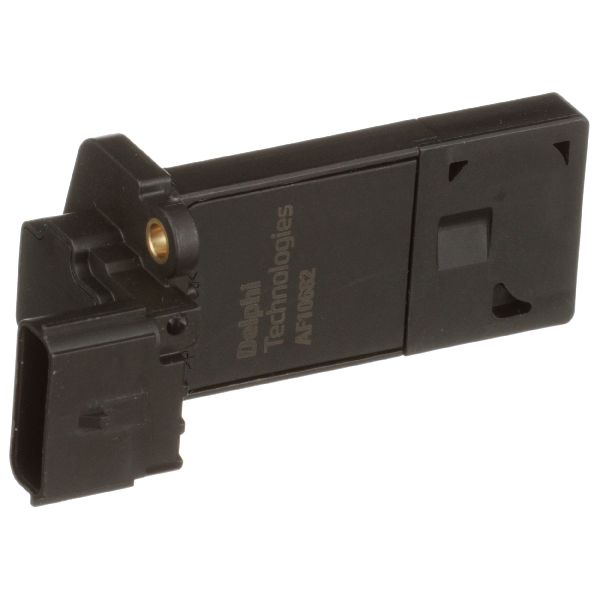
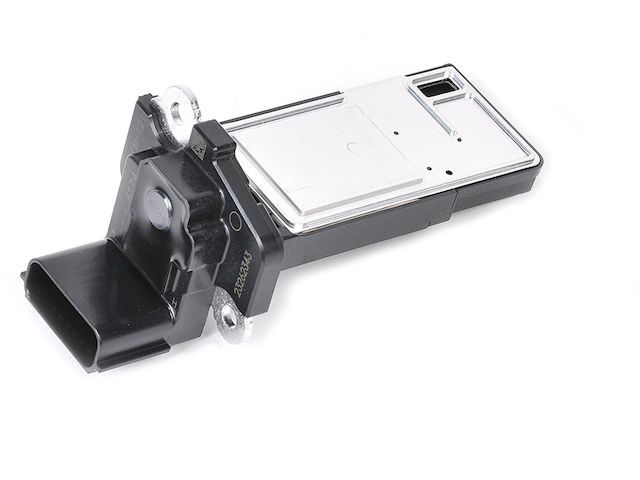
Aftermarket price range: $5-$20 - Mass Airflow (MAF) Sensor
(OEM #12671624 (ACDelco 213-4691))— If the sensor is contaminated and cleaning doesn't resolve the issue, it may need replacement. This should only be done after confirming there are no air leaks.
Trusted brands: ACDelco, Bosch, Delphi
OEM price range: $100-$180
Aftermarket price range: $50-$120 - Intake Air Duct / Charge Pipe — A crack in the plastic or rubber piping of the intake system is a common source of air leaks that trigger this code.
Trusted brands: ACDelco, GM Genuine
OEM price range: $100-$250
Aftermarket price range: $70-$180
Related Codes That Often Appear With This One
- P015B — This code for "O2 Sensor Delayed Response – Lean to Rich (Bank 1 Sensor 1)" is mentioned in the same TSB (PIP5402E) as P1101, indicating they are often caused by the same intake air leak issue.
- P0171 — If there is a significant leak of unmetered air, the engine will run lean (too much air, not enough fuel), which can trigger a "System Too Lean" code.
- P0121 — A "Throttle Position Sensor Performance" code can appear alongside P1101, especially if aftermarket parts like a larger throttle body are installed, as the airflow characteristics change significantly.
- P0101 — This code for "Mass Air Flow (MAF) Circuit Range/Performance" is also mentioned in some versions of the TSB alongside P1101, as a large air leak can cause the MAF reading to be out of its expected performance range.
Technical Service Bulletins (TSBs) & Recalls

- PIP5402E: States that for a P1101 code (sometimes with P015B or P0101) and a reduced engine power message, technicians should inspect for a missing or damaged O-ring seal in the charge air cooler coupler on the passenger side. The bulletin has been updated several times to include more models.
Platform-Specific Known Issues
- GM Technical Service Bulletin #PIP5402E specifically addresses an issue on these vehicles where a P1101 code and a reduced engine power message can be caused by a missing or damaged O-ring seal in the charge air cooler coupler.
Mechanic-Grade Diagnostic Values
- MAF Sensor Voltage (Key On, Engine Running Self-Test) — expected: 0.46 V to 2.44 V. Failure: A voltage reading below 0.46 V during the KOER self-test can trigger P1101.
- Long Term and Short Term Fuel Trims — expected: Within +/- 10%. Failure: High positive fuel trims (e.g., +20% or higher) indicate the ECM is adding excess fuel to compensate for a lean condition, often caused by an unmetered air leak.
- Fuel Trims after unplugging MAF sensor — expected: Fuel trims should correct and move towards 0%.. Failure: If trims do not correct towards 0%, the issue is less likely to be the MAF sensor itself and more likely a significant vacuum/air leak. If they do correct, it points to an inaccurate reading from the MAF sensor (due to contamination, failure, or air turbulence).
Hidden / Shadow Codes Worth Checking
- P1101-00: The '-00' suffix indicates a standard P1101 fault without any additional manufacturer-specific sub-faults. (see via Standard OBD-II scanner.)
Scan Tool Commands That Help
- GDS2 / Professional Scan Tool: Key On Engine Running (KOER) Verification Test — To manually trigger the ECU's self-test routine to confirm the abort condition that sets the P1101 code. A failure during this commanded test confirms the fault is active.
- GDS2 / Professional Scan Tool: Fuel Injector Balance Test — Useful for diagnosing secondary issues. For example, if a P1101 was caused by a PCV failure that also fouled spark plugs or injectors, this test can help identify a resulting misfire.
Wiring & Ground Locations
- G101 — On the engine block, near the starter, under the passenger exhaust manifold. A short cable connects from here to the fuse block area.. This ground is critical for the MAF sensor. It is notoriously under-tightened from the factory and can cause erratic sensor behavior, leading to various codes including P1101.
- MAF Sensor Connector — On the air intake tube, connected to the MAF sensor.. Provides power, ground, and signal for the MAF sensor. Typical wire colors are Pink (12V Power), Black (Ground), and a signal wire. A poor connection or damaged wire here directly causes MAF-related codes.
- Cylinder Head Grounds — Two small ground points on the back of the passenger-side cylinder head.. Poor engine grounds can cause a host of sensor issues. While not the primary ground for the MAF, ensuring all engine grounds are clean and tight is a key step in diagnosing elusive electronic faults.
Real Owner Repair Stories
- Camaro6 Forum user 'federal' (2019 Camaro ZL1 (supercharged)) — P1101 and P0171 (System Too Lean) appeared after a high-speed run at a track, reaching ~175 mph. No limp mode or audible issues were present.
❌ Tried (didn't work) Checked intercooler piping for looseness (none found).
✅ What actually fixed it The user cleared the code, which did not immediately return after spirited driving. As a precaution, they cleaned the throttle body and later removed and cleaned the MAF sensor. The final outcome was not posted, but the immediate fix was clearing the code and cleaning components. - YouTube comment on 'INFAMOUS P1101 code…' (Opel Meriva 1.4L Turbo (engine family shared with some GM models)) — Check engine light with only code P1101.
❌ Tried (didn't work) Replacing the MAF sensor four separate times.
✅ What actually fixed it The problem was resolved by replacing the throttle body, even though the original part appeared to be perfectly clean and functional. - ANCEL blog, citing a Chevrolet Malibu owner story (Chevrolet Malibu (likely 1.5L Turbo, similar PCV design)) — Persistent P1101 code, oil buildup in the intake duct.
❌ Tried (didn't work) Cleaning both the throttle body and the MAF sensor.
✅ What actually fixed it The root cause was a clogged PCV valve located inside the camshaft cover. Replacing the PCV valve and related seals resolved the code.
"I Checked Everything" — The Actual Cause
- In cases where a smoke test of the intake and charge pipes reveals no leaks, the P1101 code can be caused by non-leak issues. A common example is a ruptured PCV valve diaphragm inside the valve cover, which introduces unmetered air internally but won't show up as an external smoke leak. Another cause can be an improperly seated or cheap aftermarket air filter that creates air turbulence across the MAF sensor, causing it to read incorrectly without an actual air leak.
When the Usual Fixes Don't Work
- While the official GM TSB for the Camaro (PIP5402E) correctly identifies the charge air cooler O-ring as a primary cause of P1101, numerous owner experiences show this is not the only possibility. In cases where inspecting or replacing the O-ring does not resolve the code, the root cause has often been found to be a faulty PCV system (specifically a ruptured diaphragm in the valve cover) or, less commonly, a defective throttle body. Technicians should not stop diagnosis at the charge air cooler if that fix does not work, and should proceed to check crankcase vacuum and throttle body function.
OEM Part Supersession History
13432262, 13505433→12671624— Standard part revision and consolidation by the manufacturer.
Model Year Variations Within This Range
- 2019+: For SS models, the automatic transmission was updated from the 8-speed 8L90 to the 10-speed 10L80. V6 models received the 10-speed automatic for the 2020 model year. This does not directly affect the cause of P1101 but is a significant powertrain difference.
- 2019: The 2019 model year featured a controversial front-end styling 'refresh' on SS models that was altered for 2020 due to poor reception. This is purely cosmetic.
- 2019+: The infotainment system (Chevrolet Infotainment 3) was updated, offering a revised interface and improved performance over the 2016-2018 MyLink system.
Helpful Videos
![How to Fix P1101 Engine Code in 3 Minutes [2 DIY Methods / Only $7.47]](https://img.youtube.com/vi/AWGlibhplBc/mqdefault.jpg)
Used OEM Parts in Stock


New Aftermarket Parts Available



The information in this article is provided for general reference and educational purposes only. Vehicle specifications, procedures, and part compatibility can vary by production date, trim level, and region. Always consult your vehicle's factory service manual and verify part numbers before purchasing or performing repairs. Safety-critical components such as airbags, seat belts, and braking systems should be installed by a qualified professional.
- Chevrolet CAMARO:
- 🎬 Helpful Videos
- 🛍️ Shop This Part
- What's Unique About the 2016-2019 Chevrolet CAMARO
- Diagnostic Flowchart
- Symptoms You May Notice
- Most Likely Causes
- Rare But Worth Checking
- Diagnosis Steps
- Parts You'll Likely Need
- Related Codes That Often Appear With This One
- Technical Service Bulletins (TSBs) & Recalls
- Platform-Specific Known Issues
- Mechanic-Grade Diagnostic Values
- Hidden / Shadow Codes Worth Checking
- Scan Tool Commands That Help
- Wiring & Ground Locations
- Real Owner Repair Stories
- "I Checked Everything" — The Actual Cause
- When the Usual Fixes Don't Work
- OEM Part Supersession History
- Model Year Variations Within This Range
- 🎟️ Get 5% Off