

P1101 on 2013-2018 Cadillac ATS: Causes and Fixes for Intake Airflow Faults
On a 2013-2018 Cadillac ATS with the 2.0L turbo engine, code P1101 is most often caused by a failed or missing O-ring seal on a charge air cooler pipe. This is a known issue documented in a GM Technical Service Bulletin. The fix is replacing a very inexpensive seal, though diagnosis may require a smoke test.
- For a P1101 code on a 2013-2018 Cadillac ATS 2.0T, suspect an air leak in the charge air system before suspecting a bad MAF sensor.
- The most likely cause is a small, inexpensive O-ring seal on the passenger side of the charge air cooler, as documented in GM TSB PIP5402E.
- A smoke test is the most effective diagnostic tool to confirm the leak.
- This issue is common across many GM vehicles that use the 2.0L LTG engine, including the Chevy Camaro and Buick Regal.
What's Unique About the 2013-2018 Cadillac ATS

The Cadillac ATS, particularly with the 2.0L LTG turbocharged engine, relies on a pressurized intake system. Unlike non-turbo cars where intake leaks are simple vacuum leaks, a leak in the ATS's charge air system (after the turbo) causes pressurized air to escape. GM has issued a specific Technical Service Bulletin (PIP5402E) that points directly to a common failure point: a small O-ring seal in the charge air cooler coupler, which is prone to damage or being misplaced during service. This makes air leaks in the turbo piping, not a bad MAF sensor, the most likely culprit for P1101 on this platform.
Diagnostic Flowchart

Tap your situation to follow the diagnostic path that matches what you're seeing on this vehicle.
Symptoms You May Notice
- Check Engine Light is on
- "Reduced Engine Power" message displayed
- Poor or sluggish acceleration
- Hesitation during acceleration
- Rough or unstable idle
- Audible hissing or whooshing sound from the engine bay during acceleration
- Replacing the Mass Airflow (MAF) sensor without first checking for intake system leaks. Many owners and shops replace the MAF sensor as a first step, but on this vehicle, the problem is very often a physical leak in the charge pipe system.
Most Likely Causes

- Missing or Damaged Charge Air Cooler (CAC) Coupler O-Ring Seal 🔴 High Probability This is a well-documented failure point identified in GM Technical Service Bulletin PIP5402E for the 2.0L LTG engine. The seal can be easily damaged, forgotten during repairs, or become brittle over time.
How to confirm: Visually inspect the charge air cooler coupler on the passenger side of the charge air cooler. A smoke test of the intake system is the most effective way to confirm this or any other boost leak. The TSB specifically mentions using a tool like the GE-52250 Power Smoke Diagnostic Leak Detector. 🎬 Watch: How to perform a smoke test to find leaks
Typical fix: Replace the O-ring seal in the charge air cooler coupler. The part is inexpensive and the fix is straightforward.
Est. part cost: $10-$25 - Cracked or Loose Charge Air Cooler Pipe or Hose 🟡 Medium Probability The plastic and rubber components of the charge air system can become brittle over time with exposure to heat and pressure cycles, leading to cracks or loose connections.
How to confirm: Visually inspect all intake piping between the turbocharger and the throttle body for cracks, loose clamps, or signs of damage. A smoke test will definitively identify any leaks.
Typical fix: Tighten clamps or replace the cracked pipe or hose section.
Est. part cost: $50-$250 - Dirty or Contaminated Mass Airflow (MAF) Sensor ⚪ Low Probability While less common than intake leaks on this platform, oil from the PCV system or from an over-oiled aftermarket air filter can contaminate the MAF sensor's delicate wire, causing inaccurate readings. Many owners mistakenly replace the MAF first.
How to confirm: After confirming there are no air leaks, remove the MAF sensor and inspect it for dirt or oil film. Test its output with a scan tool to see if readings are erratic.
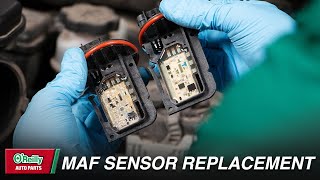
Typical fix: Clean the sensor with dedicated MAF sensor cleaner. 🎬 See this guide on cleaning and replacing your MAF sensor If cleaning doesn't work, replace the sensor.
Est. part cost: $15 for cleaner, $80-$150 for a new sensor
Rare But Worth Checking
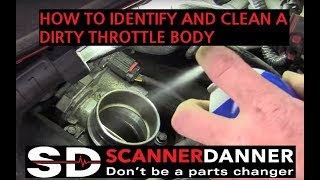
- Dirty or Faulty Throttle Body: Heavy carbon buildup can restrict airflow or cause the throttle plate to stick, leading to an airflow calculation mismatch. 🎬 Watch: How a dirty throttle body can trigger code P1101
- Clogged Engine Air Filter: A severely clogged air filter can restrict airflow enough to trigger the code, though this is uncommon.
Diagnosis Steps
- Read all stored trouble codes. Note if P015B, P0101, or P0172 are also present.
- Perform a thorough visual inspection of the entire air intake system, from the air filter box to the throttle body.
- Pay close attention to the charge air cooler pipes and their connections. Specifically inspect the coupler on the passenger side of the charge air cooler for a missing or damaged O-ring, as detailed in TSB PIP5402E.
- If no obvious faults are found, perform a diagnostic smoke test on the intake system to check for leaks. This is the most reliable way to find cracks or seal failures in the charge air piping. The TSB recommends a specific tool (GE-52250) for this purpose.
- If no leaks are detected, remove and inspect the MAF sensor for contamination.
- Clean the MAF sensor using a dedicated electronic parts or MAF sensor cleaner. Do not touch the internal wires.
- If the code persists after cleaning the MAF and confirming no leaks, monitor the MAF sensor's live data on a scan tool to check for erratic or out-of-spec readings that would indicate a failed sensor.
- Inspect the throttle body for heavy carbon buildup and clean if necessary.
Parts You'll Likely Need
- Charge Air Cooler Inlet Duct Seal (O-Ring)
(OEM #12654059)— This is the most common cause of P1101 on the 2.0L Turbo ATS, as identified by GM's own service bulletin PIP5402E.
Trusted brands: ACDelco, GM Genuine
OEM price range: $10-$25
Aftermarket price range: $5-$15 - Mass Airflow (MAF) Sensor
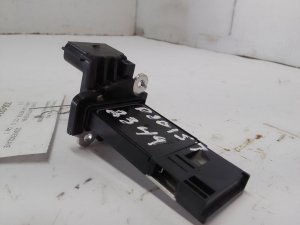
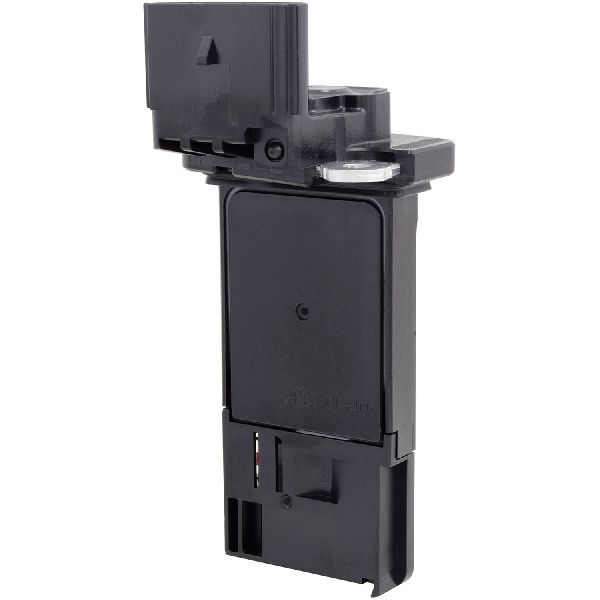
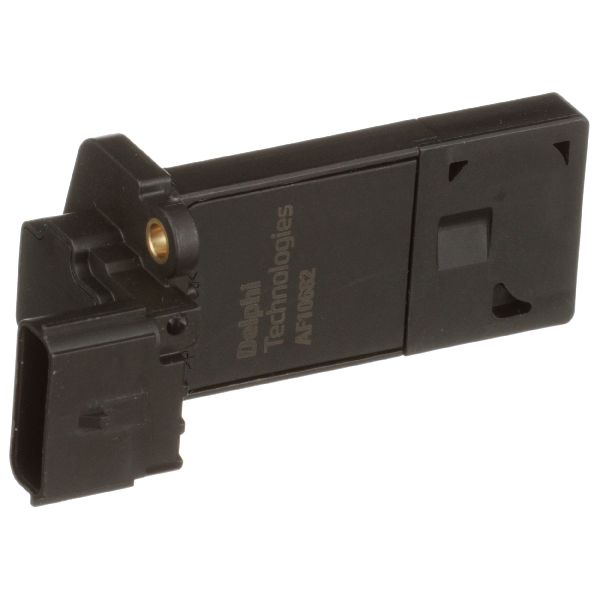
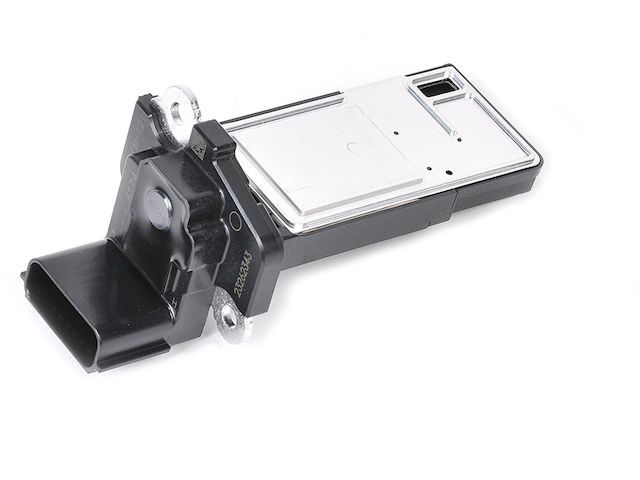
(OEM #23262343 (ACDelco))— This is a common misdiagnosis, but can be the cause if all air leaks have been ruled out.
Trusted brands: ACDelco, Bosch, Delphi
OEM price range: $120-$180
Aftermarket price range: $70-$130 - Charge Air Cooler Hose/Pipe — If a smoke test reveals a crack in the plastic or rubber piping, the entire section will need to be replaced.
Trusted brands: ACDelco, GM Genuine
OEM price range: $100-$250
Aftermarket price range: $60-$150
Related Codes That Often Appear With This One
- P015B — This code for O2 Sensor Delayed Response is explicitly mentioned in TSB PIP5402E. The unmetered air from the leak causes a lean condition, and the PCM flags the oxygen sensor for not responding as expected to the incorrect air/fuel mixture.
- P0101 — This is a more generic MAF Sensor Performance code. It often appears with P1101 as they both relate to the MAF sensor's readings being out of the expected range.
- P0172 — This code for 'System Too Rich' can sometimes appear. While a leak typically causes a lean condition (P0171), a contaminated MAF sensor can under-report airflow, causing the PCM to inject less fuel than needed, which can sometimes lead to complex fuel trim adjustments that paradoxically trigger a rich code under certain conditions.
Technical Service Bulletins (TSBs) & Recalls

- PIP5402E: Recommends inspecting for a missing or damaged O-ring seal in the charge air cooler coupler for vehicles with a P1101 or P015B code. This TSB has several revisions (A, B, C, D, E), all pointing to the same root cause but expanding the list of affected vehicles and refining diagnostic notes over time.
Platform-Specific Known Issues
- A known issue, documented in GM TSB PIP5402E, is a failed or missing O-ring seal in the charge air cooler coupler, leading to a boost leak that triggers code P1101 and often a 'Reduced Engine Power' message.
- Owner Repair Story: A user on Reddit with a 2016 2.0L Camaro (a platform mate) reported getting a P1101 code only when under heavy acceleration. After trying multiple fixes like cleaning the throttle body and replacing sensors, they were directed to the TSB. The user later confirmed that inspecting the passenger side intercooler seal as per the bulletin 'did the trick and my car is running great now.' This is a real-world example of the TSB being the correct solution.
Mechanic-Grade Diagnostic Values
- Mass Air Flow Rate at Idle (Engine at operating temperature) — expected: Approximately 2.0-4.0 grams/second. A technician noted a reading of 1.88 g/s was too low for a 2.0L engine, while 3.7 g/s was considered normal after a fix.. Failure: A reading significantly lower than the engine's displacement in liters (e.g., < 2.0 g/s) suggests the MAF is under-reporting air, or there is a significant un-metered air leak after the MAF sensor. A reading of 0 g/s or an abnormally high number with the key on and engine off points to a faulty sensor or wiring.
- Long Term Fuel Trim (LTFT) at Idle — expected: Close to 0%, typically within +/- 10%.. Failure: A high positive percentage (e.g., +25% or higher) indicates the computer is adding a large amount of fuel to compensate for a lean condition, which is a classic symptom of an un-metered air leak that triggers P1101.
Scan Tool Commands That Help
- GDS2 / Tech2 or equivalent professional scan tool: Throttle/Idle Learn Reset — After cleaning or replacing the throttle body, a throttle relearn procedure should be performed. This resets the learned idle and off-idle throttle positions in the ECM, which is necessary because carbon buildup can cause the computer to learn incorrect values.
Wiring & Ground Locations
- Engine Ground Cable (AWD Models) — For 2016 AWD models, a specific engine ground cable is located directly above the right front axle shaft.. A GM Service Update (#33530) was issued for 2016 AWD models because this ground cable could contact the axle shaft, causing damage to the cable insulation or conductors. A poor ground connection can cause erratic sensor readings and trigger various diagnostic trouble codes, including those related to airflow management.
- MAF Sensor Connector — The MAF sensor is located on the air intake tube just after the air filter box on the driver's side of the engine bay. The connector requires a T20 Torx driver for removal.. The MAF sensor has a 5-wire connector. Damage to the connector or wiring harness at this point can cause a loss of signal, power, or ground to the sensor, directly causing P1101. The five pins typically include power, ground, signal, and two for the integrated Intake Air Temperature (IAT) sensor.
Real Owner Repair Stories
- Reddit user on r/AskAMechanic (2016 Chevrolet Camaro 2.0T (platform mate with same LTG engine)) — P1101 code would only appear under hard acceleration.
❌ Tried (didn't work) Cleaning the throttle body, Replacing the MAF sensor, Replacing the MAP sensor
✅ What actually fixed it Following the advice in TSB PIP5402, the owner inspected the passenger side intercooler seal, which resolved the issue. The user confirmed, 'this did the trick and my car is running great now.' - YouTube channel 'Backyard Chevy' (2013 Chevrolet Malibu (platform mate with same LTG engine)) — P1101 code remained after other repairs. Scan tool showed throttle position was higher than expected at idle.
❌ Tried (didn't work) Prior unspecified repairs
✅ What actually fixed it The throttle body was heavily contaminated with carbon, preventing the throttle plate from closing fully. A thorough cleaning of the throttle body and plate resolved the issue. - YouTube channel 'Auto_tech' (Cadillac ATS (year not specified)) — DTC P1101
✅ What actually fixed it The cause was identified as a cracked and leaking PCV pipe.
OEM Part Supersession History
20787043, 23118170→23262343— Standard part evolution, integrating new materials or technologies.
Model Year Variations Within This Range
- 2013-2014: The 2.0L LTG engine produced 260 lb-ft of torque.
- 2015-2019: For the 2015 model year refresh, the 2.0L LTG engine's torque was increased to 295 lb-ft.
- 2016-2019: Beginning in 2016, the 6-speed 6L45 automatic transmission was replaced by the 8-speed 8L45 automatic transmission. Stop/start technology was also added to some models.
Helpful Videos
Used OEM Parts in Stock


New Aftermarket Parts Available



The information in this article is provided for general reference and educational purposes only. Vehicle specifications, procedures, and part compatibility can vary by production date, trim level, and region. Always consult your vehicle's factory service manual and verify part numbers before purchasing or performing repairs. Safety-critical components such as airbags, seat belts, and braking systems should be installed by a qualified professional.
- Cadillac ATS:
- 🎬 Helpful Videos
- 🛍️ Shop This Part
- What's Unique About the 2013-2018 Cadillac ATS
- Diagnostic Flowchart
- Symptoms You May Notice
- Most Likely Causes
- Rare But Worth Checking
- Diagnosis Steps
- Parts You'll Likely Need
- Related Codes That Often Appear With This One
- Technical Service Bulletins (TSBs) & Recalls
- Platform-Specific Known Issues
- Mechanic-Grade Diagnostic Values
- Scan Tool Commands That Help
- Wiring & Ground Locations
- Real Owner Repair Stories
- OEM Part Supersession History
- Model Year Variations Within This Range
- 🎟️ Get 5% Off