

P1098 on 2004-2013 Subaru Forester XT: Tumble Generator Valve Sensor Causes and Fixes
On a 2004-2013 Forester XT, P1098 almost always means the passenger-side Tumble Generator Valve (TGV) position sensor has failed due to intense heat from the adjacent turbocharger. The fix is to replace only the small sensor, not the entire TGV assembly. The replacement part is often sold as a throttle position sensor (TPS), with OEM part number 22633AA210 being a common match, and costs around $40-$80. Access is tight, but it's a manageable DIY repair.
- P1098 on your Forester XT means the passenger-side TGV position sensor has likely failed from turbo heat.
- Do not let a shop replace the entire TGV assembly; the fix is almost always just the small, inexpensive sensor.
- The correct replacement part is often marketed as a Throttle Position Sensor (TPS), with OEM part number 22633AA210 being a common match.
- The repair is DIY-friendly but can be frustrating due to the sensor's tight location. Be prepared with wobble sockets, a 7mm wrench, and patience.
- Before buying parts, always check the sensor's electrical plug for a secure connection and any signs of damage, as this is a common and free fix.
What's Unique About the 2004-2013 Subaru Forester XT
On the turbocharged EJ255 engine in the Forester XT, the Bank 2 TGV assembly is located on the passenger side, directly next to the hot turbocharger up-pipe and compressor housing. This constant exposure to extreme radiant heat makes the plastic position sensor a very common failure point. Unlike what a dealership might suggest, the entire TGV assembly rarely needs replacement; the problem is almost always the small, externally-mounted sensor. This sensor can be purchased separately and is often identical to the throttle position sensor (TPS) for these cars, such as part number 22633AA210.
Generation note: This guide covers the SG (2004-2008) and SH (2009-2013) generations of the Forester XT. Both generations use the EJ255 engine with a Tumble Generator Valve system, and the causes and fixes for code P1098 are consistent across this year range. The issue is also common on other EJ255-powered Subarus.
Symptoms You May Notice
- Check Engine Light is on
- Flashing Cruise Control light
- Engine in 'limp home' mode (reduced power, limited RPM, no boost)
- Sluggish or hesitant acceleration
- Cruise control disabled
- Rough idle
- Decreased fuel economy
- Replacing the entire TGV assembly. Dealers often recommend this for over $700, but it is rarely necessary. The sensor is almost always the point of failure and can be replaced independently.
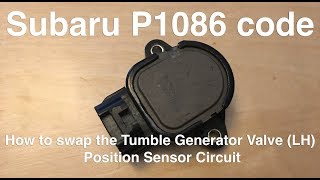
- Replacing the Bank 1 (driver's side) sensor. P1098 is specific to Bank 2 (passenger side). 🎬 Watch: Passenger side TGV sensor replacement walkthrough Bank 1 has its own codes, like P1086 (Circuit Low) 🎬 Watch: How to swap the TGV position sensor or P1088 (Circuit High).
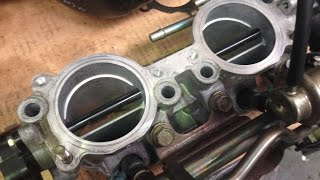
- Performing a TGV delete. While this is a common performance modification, it is not a 'fix' for the code. Deleting the TGVs requires a professional ECU tune to disable the codes, which is a different path than repairing the stock system. 🎬 Watch: How the Subaru TGV system works
Most Likely Causes
- Failed TGV Position Sensor (Bank 2) 🔴 High Probability The sensor is a plastic electronic component located inches away from the turbocharger, which is a major source of heat. Over thousands of heat cycles, the sensor's internal components fail, leading to an open circuit and a 'Circuit High' code.
How to confirm: After checking the connector, test the sensor's output. With a multimeter, back-probe the signal wire. A reading stuck near 5V confirms a failed sensor. With the ignition off, a healthy sensor should read around 4V, and with ignition on (engine off), it should be around 0.4V at rest. A reading that doesn't change indicates failure.
Typical fix: Replace the Bank 2 (passenger side) TGV position sensor. The entire TGV housing does not need to be replaced. The sensor is held on by two small 7mm bolts.
Est. part cost: $40-$80 - Damaged Wiring or Loose Connector 🟡 Medium Probability The same extreme heat that kills the sensor can make the wiring brittle and the plastic connector fragile. The locking tab on the connector often breaks, leading to a loose connection which can also cause a 'Circuit High' code.
How to confirm: Visually inspect the wiring harness and electrical connector for the Bank 2 TGV sensor. Check for any signs of melting, chafing, corrosion, or loose pins. Wiggle the connector with the engine running to see if it affects idle or triggers the code. Ensure the connector is fully seated and the locking tab is engaged.
Typical fix: Repair the damaged section of wiring or clean/re-seat the connector. If the connector itself is broken, it can be replaced with a pigtail kit.
Est. part cost: $0-$25
Rare But Worth Checking
- Sticking TGV Butterfly Valve: Carbon buildup can cause the valve inside the TGV housing to stick open or closed. This is less common for a P1098 code and usually triggers mechanical fault codes like P2005 ('Intake Manifold Runner Control Stuck Open Bank 2') alongside the sensor code.
- Failed TGV Motor: The electric motor that actuates the TGV butterfly valve can fail. This is much less common than sensor failure and would likely present with other TGV-related circuit codes, such as P2008 or P2009.
Diagnosis Steps
- Read the trouble codes with an OBD-II scanner to confirm P1098 is present.
- Locate the TGV position sensor on Bank 2 (passenger side of the engine, below the intercooler, next to the turbocharger). It is a small black plastic part with a green or grey 3-wire connector.
- CRITICAL FIRST STEP: Visually inspect the sensor's electrical connector and wiring. Check for a broken locking tab, melted plastic, or brittle wires. A disconnected plug is a common cause.
- If the wiring looks good, test the sensor. With a capable scan tool, monitor live data for 'TGV Position Sensor Bank 2'. A failed sensor will often show a fixed high voltage (e.g., 5.0V) or a percentage that doesn't change when the engine is started.
- If live data is unavailable, back-probe the sensor connector with a multimeter. A 'Circuit High' code usually points to a failed sensor that is internally open, causing the signal wire to read the full 5V reference voltage.
- If the wiring and connector are confirmed to be good, replace the TGV position sensor. It is held by two 7mm bolts. Access is very tight. Some owners remove the intercooler for better access.
- Installation Tip: The new sensor is spring-loaded. It must be installed onto the TGV shaft with the connector pointing up (12 o'clock), then rotated clockwise to the 3 o'clock position before the bolts are installed. This preloads the spring correctly. Failure to do this will result in poor engine operation and other TGV codes.
Parts You'll Likely Need
- Tumble Generator Valve (TGV) Position Sensor
(OEM #22633AA210)— This sensor is the most common failure point for code P1098 due to its location and heat exposure. It is often sold as a Throttle Position Sensor (TPS) but is identical and interchangeable. This part number also replaces the older 22633AA140.
Trusted brands: Subaru (OEM), Denso (OEM supplier), NTK (e.g., TH0056), Standard Motor Products
OEM price range: $60-$90
Aftermarket price range: $40-$70
Related Codes That Often Appear With This One
- P2005 — This code means 'Intake Manifold Runner Control Stuck Open Bank 2'. It can appear with P1098 if the TGV butterfly valve is mechanically stuck, causing the position sensor to report an out-of-range value that the ECU interprets as both a sensor circuit fault and a mechanical fault.
- P1099 — This code is for 'Tumble Generator Valve Position Sensor Circuit Low Input (Bank 2)'. While P1098 is 'Circuit High', seeing both codes intermittently could point to a wiring issue or a sensor that is failing erratically.
Technical Service Bulletins (TSBs) & Recalls
- While no TSB is specific to P1098, TSB 02-182-19 for newer models (2014+ Forester Turbo, 2015+ WRX) discusses TGV shaft corrosion causing related codes (P2004, P2005). This shows a history of TGV system issues, though the failure mode is different.
- TSB 11-194-20 and 02-182-19 mention TGV assembly changes and motor sourcing but do not directly address the P1098 sensor failure on the EJ255.
Platform-Specific Known Issues
- The passenger-side (Bank 2) TGV sensor is notoriously difficult to access due to its proximity to the turbocharger compressor housing and intake piping. Many owners find it necessary to remove the top-mount intercooler to gain enough room to work. A ratcheting 7mm wrench and various socket extensions are highly recommended. Some owners have had to grind down a socket to make it fit.
- It is common to drop the small 7mm mounting bolts into the engine bay. Placing a rag or magnetic tray underneath the work area is a wise precaution.
Mechanic-Grade Diagnostic Values
- TGV Sensor Signal Voltage (KOEO) — expected: ~0.4V (valve closed). Failure: A reading stuck at or near the 5V reference voltage indicates an open circuit or internal sensor failure, triggering P1098.
- TGV Valve Opening Angle (Live Data) — expected: The ECU expects to see the valve open more than 67.4 degrees from its closed position.. Failure: If the sensor does not report an angle change corresponding to this movement, it can trigger a fault.
Scan Tool Commands That Help
- Subaru Select Monitor (SSM): All System Diagnostic Check / Current Data Display / Clear Memory Mode — The SSM is the dealer-level tool used to perform a comprehensive health check, view live data from the TGV sensors to confirm their operation (or lack thereof), and properly clear stored and permanent DTCs after a repair. While a specific 'TGV Active Test' isn't named in sources, this tool provides the necessary functions to diagnose the system electronically.
Wiring & Ground Locations
- E50 / E54 / E6 — These are the Subaru wiring diagram identifiers for the Tumble Generator Valve sensor and motor connectors.. Knowing these identifiers helps a technician locate the correct connector pinouts on a factory wiring diagram for testing the signal, ground, and power wires. Replacement pigtails are available using these identifiers.
- Intake Manifold Ground Path — The engine's ECU grounding path partially runs through the intake manifold itself.. If the manifold is removed and reinstalled with poor contact, or if non-conductive phenolic TGV delete spacers are installed without a dedicated grounding strap, it can create a floating ground. This can cause erratic sensor readings, including a P1098, even if the sensor and its direct wiring are perfectly fine.
Real Owner Repair Stories
- LegacyGT.com user 'carnutsx2' (2005 Legacy GT (EJ255 engine)) — Check engine light for TGV sensor after a turbo failure.
❌ Tried (didn't work) Replacing the failed sensor with a new, cheap aftermarket sensor from eBay ('ISUMO Brand').
✅ What actually fixed it The code was finally resolved after replacing the faulty sensor with a used OEM sensor sourced from eBay, suggesting the cheap aftermarket part was not within spec. - LegacyGT.com user 'lowwill' (Legacy GT (EJ255 engine)) — Broken passenger-side TGV sensor.
✅ What actually fixed it The user broke the sensor while trying to access the turbo oil feed banjo bolt. The issue was fixed by purchasing a used set of TGV sensors and motors from Grimmspeed for around $30.
"I Checked Everything" — The Actual Cause
- For this electrical code, the equivalent of a 'smoke test clean' scenario is when the sensor and its harness test perfectly fine with a multimeter, yet the P1098 code persists. A documented cause for this is a poor engine ground path. The ECU grounds through the intake manifold, and if TGV delete spacers were installed without a ground strap, or if manifold bolts are corroded/loose, it can cause a floating ground and trigger the sensor code.
When the Usual Fixes Don't Work
- The Pass 2 guide suggests a consistent fix across the 2004-2013 range. However, evidence shows a significant change occurred with the 2009 model year (SH generation). While a failed Bank 2 TGV sensor is still the cause of P1098, the repair is different. On a 2009-2013 Forester XT, the technician cannot buy and replace just the small sensor; they must replace the entire integrated 5-pin TGV motor/sensor assembly, making the repair more involved and costly than on the earlier 2004-2008 models.
OEM Part Supersession History
22633AA140→22633AA210— Standard part revision and consolidation by Subaru.
Heads up: None. The new part number (22633AA210) is a direct, backward-compatible replacement for the old one.
Model Year Variations Within This Range
- 2004-2008 (SG Generation): These models use a TGV system with a separate 3-pin position sensor and a 2-pin actuator motor. For code P1098, only the 3-pin sensor (e.g., 22633AA210) needs to be replaced, which is a relatively inexpensive part.
- 2009-2013 (SH Generation): These models transitioned to a TGV system that uses an integrated 5-pin assembly combining the motor and sensor into a single unit. If the sensor fails and triggers P1098, the entire 5-pin TGV assembly must be replaced as the sensor is not sold separately. This makes the repair more expensive for these later model years.
- 2004-2005 vs 2006-2008: Within the SG generation, 2004-2005 models used B25 casting cylinder heads and an up-pipe with a catalytic converter that is prone to failure. 2006-2008 models had revised heads. While this does not directly change the P1098 fix, it's a notable difference in the engine bay where the TGV sensor resides.
Diagnostic Flowchart
Other Known Issues on This Vehicle
Issues unrelated to this code that are worth knowing about as an owner of this generation:
- Piston Ringland Failure 🔴 High — More common on modified vehicles or those driven aggressively, but can occur on stock engines. Caused by detonation, which fractures the part of the piston that holds the rings. (Ref: No TSB, but was the subject of a class-action lawsuit for 2009-2018 WRX/STI models.)
- Turbo Oil Starvation (Banjo Bolt Filter) 🔴 High — A small mesh filter in the banjo bolt that feeds oil to the turbo can clog with sludge, starving the turbo of oil and causing catastrophic failure. It is a widely recommended preventative maintenance item to remove this filter.
- Secondary Air Injection System Failure 🟠 Medium — Common on 2007+ models. The air pump or valves can fail, often due to moisture ingress, triggering codes like P2441, P2443, P2444. It's an expensive repair for an emissions component that only runs at startup.
- Valve Cover and Cam Carrier Oil Leaks 🟠 Medium — The flat-four engine design makes valve cover gaskets prone to leaking oil onto the hot exhaust manifold. Cam carrier seals are a more involved but also common leak source.
- Head Gasket Failure 🔴 High — While more famous on the naturally aspirated EJ25s, the turbo EJ255 is not immune, especially as they age. External oil and coolant leaks are common symptoms.
Used vs. New Parts: Buying Guide for This Vehicle
When a used part is the smart pick: For 2004-2008 models, a used OEM sensor from a reputable source or dismantler can be a good, cost-effective option, and is often more reliable than a cheap, new aftermarket part. Given the high failure rate from heat, a used part is still a gamble on remaining life.
Donor-vehicle mileage cap: roughly under 80000 miles for the part to have meaningful remaining life.
What to inspect on the donor part:
- Ensure the plastic housing is not cracked or showing signs of melting.
- Check that the electrical pins inside the connector are straight and free of corrosion.
- Avoid parts from engines that show signs of extreme overheating or fire.
- If possible, ask for the donor vehicle's mileage.
OEM-only on this vehicle (don't cheap out):
- For 2009-2013 models, the entire 5-pin TGV assembly is best sourced as an OEM part. The complexity of the integrated motor and sensor makes aftermarket quality a significant risk.
Aftermarket brands forum-validated for this vehicle:
- Denso (often the original OEM supplier)
- NTK
- Standard Motor Products (SMP)
Brands owners have reported issues with on this vehicle:
- Unbranded, low-cost sensors from marketplaces like eBay or Amazon have been reported by users to be out-of-spec or fail quickly, not resolving the trouble code.
Real Owner Stories
Aggregated from forums and TSBs cited above. Mileages and costs reflect what owners reported in those sources.
2004-2013 Subaru Forester XT EJ255
Symptoms: Check engine light and limp mode. Replacing the sensor avoided a costly dealer repair for the whole housing.
What fixed it: Replacing just the sensor (part #22633AA210).
Source hint: SubaruForester.org Forum Thread: 'P1098 TGV Sensor Bank 2'
2005-2009 Subaru Legacy GT EJ255
Symptoms: TGV code appeared after a turbo failure. An aftermarket eBay sensor did not fix the issue.
What fixed it: Installation of a quality OEM replacement sensor.
Source hint: LegacyGT.com Owner Experience
2006-2014 Subaru Impreza WRX EJ255
Symptoms: Difficulty accessing the sensor due to tight space and the need for specific tools like a ratcheting 7mm wrench.
What fixed it: Replacing the TGV sensor; experience directly applicable to the passenger side P1098 fix.
Source hint: NASIOC Forum Thread regarding P1088/P1098 fixes
Related OBD-II Codes
Frequently Asked Questions
Do TSB 02-182-19 or TSB 11-194-20 apply to my 2004-2013 Forester XT P1098 code?
Can I replace just the sensor on my Forester XT, or do I need the whole TGV housing?
Why is the Bank 2 TGV sensor failing so often on the Forester XT?
Is there a specific trick to installing the new sensor on the EJ255?
Do I need to remove the intercooler to fix P1098 on my 2004-2013 Forester?
Will a cheap aftermarket TGV sensor work for my Forester XT?
Helpful Videos
Used OEM Parts in Stock



New Aftermarket Parts Available

The information in this article is provided for general reference and educational purposes only. Vehicle specifications, procedures, and part compatibility can vary by production date, trim level, and region. Always consult your vehicle's factory service manual and verify part numbers before purchasing or performing repairs. Safety-critical components such as airbags, seat belts, and braking systems should be installed by a qualified professional.
- Subaru Forester XT:
- 🎬 Helpful Videos
- 🛍️ Shop This Part
- What's Unique About the 2004-2013 Subaru Forester XT
- Symptoms You May Notice
- Most Likely Causes
- Rare But Worth Checking
- Diagnosis Steps
- Parts You'll Likely Need
- Related Codes That Often Appear With This One
- Technical Service Bulletins (TSBs) & Recalls
- Platform-Specific Known Issues
- Mechanic-Grade Diagnostic Values
- Scan Tool Commands That Help
- Wiring & Ground Locations
- Real Owner Repair Stories
- "I Checked Everything" — The Actual Cause
- When the Usual Fixes Don't Work
- OEM Part Supersession History
- Model Year Variations Within This Range
- Diagnostic Flowchart
- Other Known Issues on This Vehicle
- Used vs. New Parts: Buying Guide for This Vehicle
- Real Owner Stories
- 2004-2013 Subaru Forester XT EJ255
- 2005-2009 Subaru Legacy GT EJ255
- 2006-2014 Subaru Impreza WRX EJ255
- Related OBD-II Codes
- Frequently Asked Questions
- 🎟️ Get 5% Off