

OBD-II Code P1098: Intake Runner Control System Malfunction
What P1098 means, why it triggers, and how to fix it
- Code P1098 indicates the Intake Manifold Runner Control (IMRC) flaps are stuck open, restricting engine airflow and killing low-end torque.
- On 2019+ GM 3.0L Duramax and 2.7L engines, P1098 flags a failed Engine Coolant Flow Control Valve, causing cooling fans to run at 100% speed.
- Carbon buildup physically jamming the flaps or broken plastic linkage clips (especially on Ford V8s) are the top mechanical failures.
- Expect a 5-10% drop in fuel economy, sluggish acceleration below 3,000 RPM, and an automatic emissions test failure.
- Driving with P1098 is safe temporarily, but ignoring it for over 6 months causes rich fuel mixtures that melt catalytic converters, adding $1,500+ to repair bills.
What Does P1098 Mean?

P1098 is a manufacturer-specific code indicating the Engine Control Unit (ECU) detects a failure in the Intake Manifold Runner Control (IMRC) system. This system uses small flaps inside the intake manifold to alter air passage length, optimizing torque and horsepower. The ECU reports these flaps are stuck open and unresponsive to commands.
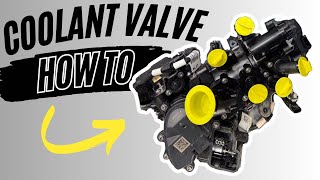
Technical definition: P1098 indicates a fault within the Intake Manifold Runner Control (IMRC), Tumble Generator Valve (TGV), or swirl flap system, typically meaning Bank 1 is stuck open. However, on General Motors vehicles, it flags an Engine Coolant Flow Control Valve failure 🎬 Watch: Everything you need to know about replacing this valve., and on BMWs, it relates to pre-catalyst fuel trim.
Can I Drive With P1098?
Yes, But With Caution. You can drive, but expect reduced engine power, poor fuel economy, and a rough idle. Ignoring a stuck intake runner causes excessive carbon buildup and destroys the catalytic converter over time, adding $800-$2,500 to repair costs. On affected GM diesels, this triggers a limp mode with reduced acceleration, creating a safety hazard.
Common Causes

- Carbon Buildup (Very Common) — Soot and oil deposits from PCV and EGR systems accumulate and physically jam the runner flaps.
- Failed IMRC Actuator or Solenoid (Common) — The electric motor or vacuum solenoid powering the flaps burns out or fails mechanically.
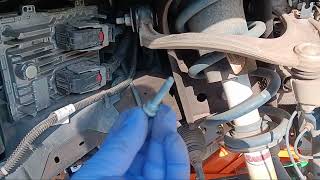
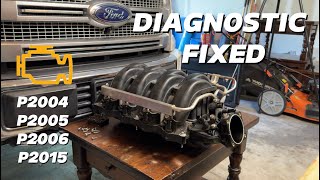
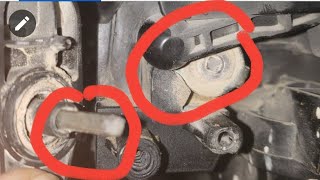
- Broken or Disconnected Linkage (Common) — Plastic arms and clips connecting the actuator to the flaps snap or pop off due to heat cycles, a notorious issue on Ford V8 engines. 🎬 See how to fix IMRC issues on Ford F-150 trucks.
- Dried/Contaminated Actuator Grease (Common) — Internal grease on plastic worm gears dries out or contaminates with shavings, binding the mechanism. This is the primary root cause for GM Coolant Control Valve failures.
- Faulty IMRC Position Sensor (Less Common) — The position sensor sends erratic or dead signals to the ECU, triggering the code even if the flaps move correctly. Common on Subaru TGV systems.
- Control Module Software Anomaly (Less Common) — ECM software glitches falsely trigger P1098. GM frequently issues Technical Service Bulletins (TSBs) requiring a software flash before replacing hard parts.
- Vacuum Leak (Rare) — Cracked vacuum lines or faulty solenoids starve vacuum-actuated IMRC systems of the pressure needed to move the flaps.
- Wiring or Connector Issues (Rare) — Chafed wires, corroded connectors, or misrouted harnesses (common on F-150s) sever communication between the ECU and the IMRC.
Symptoms
- Check Engine Light is On — The ECU illuminates the Malfunction Indicator Lamp (MIL) immediately upon detecting the fault.
- Reduced Engine Power — The vehicle feels sluggish below 3,000 RPM because a stuck-open valve destroys low-end torque.
- Cooling Fans Running at High Speed — On GM models with the Coolant Control Valve issue, the ECU enters a fail-safe mode, blasting cooling fans at 100% speed even on cold starts.
- Decreased Fuel Economy — Unoptimized air velocity forces the engine to run rich, dropping fuel economy by 5-10%.
- Rough Idle — The engine shakes or idles unevenly due to an improper air-fuel mixture.
- Failed Emissions Test — Incomplete combustion spikes harmful emissions, triggering an automatic state inspection failure.
- Audible Change in Engine Note — The characteristic shift in engine intake pitch at 3,000-3,500 RPM disappears.
Diagnostic Flowchart

Tap your situation to follow the diagnostic path that matches what you're seeing on this code.
Common Fixes & Costs
- Replacing the Engine Coolant Flow Control Valve (GM) — Parts: $200-$350, Labor: $700-$1150, ~4.5 hr book time (Professional)
- Replacing the IMRC Actuator/Solenoid — Parts: $50-$355, Labor: $100-$250, ~1.5 hr book time (DIY)
- Replacing Broken Linkage or Bushings — Parts: $20-$60, Labor: $75-$150, ~0.8 hr book time (DIY)
- Cleaning Carbon from Intake Runners and Flaps — Parts: $20-$40, Labor: $400-$900+, ~5.5 hr book time (Advanced)
- Replacing the Entire Intake Manifold Assembly — Parts: $300-$1000+, Labor: $300-$600+, ~3.5 hr book time (Professional)
DIY vs Professional
- Replacing Broken Linkage or Bushings (Ford) — Beginner:
- Replacing the IMRC Actuator/Solenoid — Beginner:
- Replacing the Entire Intake Manifold (VW/Audi, Ford) — Beginner:
- Replacing the Engine Coolant Flow Control Valve (GM) — Beginner:
Used vs. New Parts: Buying Guide
When a used part is worth it: For complex assemblies like a complete intake manifold or the GM Coolant Control Valve, a used part from a low-mileage salvage yard offers significant savings on older vehicles.
Donor-vehicle mileage cap: roughly under 75000 miles for the part to have meaningful remaining life.
Donor quality checklist:
- Verify the part number matches exactly, including superseded numbers.
- Obtain the donor VIN to check for accident history.
- Inspect plastic components for heat brittleness and connectors for corrosion.
Decision logic:
- If The failed part is a simple actuator or linkage clip and the new part costs less than $200. → Buy new. The labor to replace a faulty used part negates any savings.
- If The vehicle is over 150,000 miles and the repair is over $1,000 with new parts. → A used part is a reasonable option, but accept its unknown lifespan.
- If The part is known for high failure rates due to wear (e.g., GM Coolant Valve, VW/Audi manifold). → Favor a new part with a warranty, as a used part likely has similar wear.
Warranty tradeoff: Used parts typically come with a 30-90 day warranty. Aftermarket new parts offer 1-year to limited lifetime warranties. New OEM parts carry a 1-2 year warranty.
Worst-case if a used part fails: 400-1500. If a used part fails after the warranty period, you pay for the part and labor a second time.
What Happens If You Wait — Timeline
- 0-1 month: Intermittent Check Engine Light (P1098). On GM vehicles, fans run fast occasionally. The fault is temporary and resets on the next drive cycle. (MPG impact: 0-2%% · Added cost: $0)
- 1-4 months: Check Engine Light stays on permanently. Fuel economy drops 5-10%, accompanied by sluggishness at low RPMs or constant high fan noise. (MPG impact: 5-10%% · Added cost: $50-150 in wasted fuel)
- 4-12 months: Inefficient combustion creates richer fuel mixtures, accelerating carbon buildup. Spark plugs foul, and the catalytic converter begins to overheat. (MPG impact: 10-15%% · Added cost: $400-$900 (Cost for intensive intake cleaning))
- 12+ months: Sustained inefficient combustion melts the internal structure of the catalytic converter, triggering a permanent P0420 code. Broken flaps can fall into the engine, causing catastrophic damage. (MPG impact: 15-25%% · Added cost: $1,000-$4,000+ (Catalytic converter replacement and engine damage))
Cost of Not Fixing It
- 0-3 months: Reduced fuel economy (5-15% drop), poor low-RPM torque, rough idle, and a guaranteed failed emissions test. (Added cost: Negligible, besides increased fuel costs.)
- 3-12 months: Inefficient combustion increases carbon buildup on valves and pistons. The engine runs rich, overheating the catalytic converter. (Added cost: $400-$900 (If intake manifold cleaning becomes necessary))
- 12+ months: Sustained rich running conditions permanently melt the catalytic converter substrate, triggering a P0420 code. Broken IMRC flaps can enter the engine, causing catastrophic damage. (Added cost: $1,000-$4,000+)
Diagnosis Steps
- Scan for Codes & Review Freeze Frame Data
Use an OBD-II scanner to confirm P1098. Check for P2004 (generic IMRC stuck open), P26BB (GM Coolant Valve), or misfire codes (P030x). Review freeze frame data to identify engine conditions when the code set.
Tools: OBD-II Scanner (Beginner) - Visual Inspection
Locate the IMRC actuator on the intake manifold. Inspect the linkage arms and electrical connector for broken plastic clips or frayed wires. Use a mirror to check the backside of the manifold on Ford V8s. On GM diesels, inspect the Engine Coolant Control Valve.
Tools: Flashlight, Inspection Mirror (Beginner) - Manually Test Valve Movement
With the engine off, gently move the IMRC linkage by hand. It must move smoothly without binding. Stiff movement indicates carbon buildup. Do not force electronic systems, as this strips actuator gears.
Tools: None (Intermediate) - Command Actuation with a Scan Tool
Use a bi-directional scan tool to command the IMRC actuator or GM Coolant Control Valve to open and close. Observe the linkage movement and listen for the motor. On Fords, run the KOEO (Key-On, Engine-Off) self-test.
Tools: Bi-directional Scan Tool (Advanced) - Check Position Sensor Voltage
While commanding the actuator, monitor the IMRC position sensor PID on your scan tool. Voltage must sweep smoothly from 0.5V to 4.5V. Stuck or erratic voltage confirms a faulty sensor.
Tools: Scan Tool (Advanced) - Test Sensor Connector Voltage (VW/Audi)
For VW/Audi G336 sensor faults, test the electrical connector with the ignition on. Check voltage between terminals 1 and 3; it must read 5.0V. If voltage is correct, the integrated manifold sensor is dead.
Tools: Multimeter, Wiring Diagram (Advanced) - Test Actuator Motor Resistance (Ford)
Test the Ford actuator motor with an ohmmeter. A functional unit reads approximately 75 ohms when both banks are open. Readings of 127 or 182 ohms indicate one bank is closed, pointing to a mechanical jam.
Tools: Ohmmeter, Alligator Clips, Wiring Diagram (Advanced) - Check for Vacuum Leaks
On vacuum-operated systems, use a smoke machine to check for leaks in the lines running to the IMRC actuator and solenoid. Vacuum leaks perfectly mimic a failed IMRC.
Tools: Smoke Machine (Intermediate) - Inspect for Carbon Buildup
If the valve is physically stuck, remove the IMRC assembly or the entire intake manifold to clean carbon deposits from the flaps and runners. This is mandatory on direct-injection engines.
Tools: Socket Set, Wrenches, Intake Cleaner, Gaskets (Advanced) - Scope the Actuator and Sensor
For intermittent faults, graph the PCM command signal and position sensor feedback simultaneously with an oscilloscope. A flat line from the sensor during an actuation command confirms a dead sensor or actuator.
Tools: Automotive Oscilloscope (Professional)
When This Code Triggers (Freeze-Frame Conditions)
- Engine Coolant Temp: 180-210°F (Fully warmed up)
- RPM: 1500-2500 RPM (Cruise / steady throttle, when the ECU expects the runners to be in the 'long' (closed) position)
- Engine Load: 20-50% (Light to moderate load, not under heavy acceleration)
- Vehicle Speed: 30-60 mph (City or highway cruising speed)
Related Codes
- P2004 — The generic SAE code for 'Intake Manifold Runner Control Stuck Open Bank 1'. P1098 is the manufacturer-specific equivalent. Diagnosis is identical.
- P2006 — Indicates the IMRC is stuck closed. P2006 causes a loss of high-RPM power, whereas P1098 (stuck open) destroys low-RPM performance.
- P26BB — On GM vehicles, this code for 'Engine Coolant Flow Control Valve Position' appears alongside P1098. Seeing both confirms the Coolant Control Valve is dead.
- P0300-P0306 — Random or specific cylinder misfire codes. Improperly positioned IMRC flaps cause air turbulence, leading to misfires at idle.
Climate & Environmental Factors
- Cold Weather: Extreme cold makes plastic IMRC linkage arms brittle and susceptible to snapping. It also thickens internal actuator grease, increasing motor strain.
- Engine Design (GDI): Gasoline Direct Injection (GDI) engines lack the cleaning effect of fuel spraying over intake valves, making them highly prone to carbon buildup that jams IMRC flaps.
How to Talk to a Mechanic About This Code
Say this: "I have a P1098 code. For a GM 3.0L Duramax, say: 'My check engine light is on and cooling fans run at full speed. Please check the Coolant Control Valve and verify if I fall under Special Coverage N252508341.' For a VW/Audi 2.0T, say: 'I know this is often the intake manifold position sensor. Can you check if my VIN is covered by the extended warranty before diagnosing?' For a Ford V8, say: 'I have a loss of low-end power. Please visually inspect the IMRC linkage clips at the back of the manifold for breakage before testing the actuator.'"
This signals you are an informed consumer. It directs the shop to the most likely cause for your specific vehicle, saving diagnostic time and preventing unnecessary repairs. Mentioning warranty programs ensures they perform the correct first steps.
Avoid saying:
- My check engine light is on, can you just fix it?
- I think I need a new intake manifold.
- Just do whatever you think is best.
Questions to ask before authorizing the repair:
- Can you show me the broken part or a photo of the carbon buildup?
- Did you use a scan tool to command the actuator/valve, and did it fail to respond?
- If replacing the intake manifold (VW/Audi), does your estimate include the 'Basic Setting' adaptation?
- For the GM coolant valve, does the repair include the required 'coolant control valve learn' procedure?
- What is the warranty on the parts and labor for this specific repair?
Where to Take It: Dealer vs Independent vs Chain
- Dealer:
Mandatory for GM and VW/Audi owners with active warranties or special coverage programs. Dealers possess the proprietary software required for post-repair recalibrations.
Best for: Vehicles under warranty or covered by a manufacturer's special coverage program (GM Coolant Valve, VW intake manifold)., Complex issues requiring special software for recalibration after the fix (VW/Audi 'Basic Setting')., First-time failures on newer cars where a Technical Service Bulletin (TSB) applies.
Downsides: Highest labor rates, often 1.5x to 2x more than an independent shop., May default to replacing an entire expensive assembly when a smaller component is the only issue. (Typical cost: +50% vs. baseline) - Independent Shop:
The best route for out-of-warranty Ford and Subaru repairs. Ensure the shop specializes in intake system diagnostics to avoid unnecessary manifold replacements.
Best for: Out-of-warranty vehicles with well-documented common failures (Ford IMRC linkage, Subaru TGV motor)., Owners with a trusted mechanic experienced on their specific make., Getting a second opinion on a high-cost dealer quote.
Downsides: Shop quality varies widely; vetting is crucial., May lack the latest manufacturer-specific software for recalibration. (Typical cost: +0% vs. baseline) - Chain Shop:
Avoid entirely. Chain shops lack the bi-directional scanners and specific manufacturer knowledge required to diagnose P1098 accurately, leading to expensive misdiagnoses.
Best for: Simple, bolt-on part replacements like an easily accessible IMRC actuator on a non-German car.
Downsides: Technician skill varies dramatically., Lack advanced diagnostic tools and specific knowledge for complex P1098 causes., High pressure to upsell services. (Typical cost: -10% vs. baseline)
When to Walk Away From the Repair
If the repair cost exceeds 40% of the car's private-party value, sell or trade it in.
- Car worth $4000, fix is $1700: Borderline. The repair is 43% of the car's value. Get a second opinion before authorizing, as another major repair could total the car.
- Car worth $15000, fix is $1200: Fix it. The repair cost is only 8% of the vehicle's value and is a worthwhile investment to maintain performance.
- Car worth $2500, fix is $1500: Walk away. The repair cost is 60% of the car's value. It is not financially sensible to invest this much into an older vehicle.
What Scan Tool You Need for This Code
Minimum: A scanner that reads manufacturer-specific codes, views live data streams (sensor voltage), and has bi-directional control to command the actuator.
A basic $20 code reader provides the 'P1098' code but cannot view position sensor voltage or command the actuator to test its function, leaving you guessing which part failed.
Budget: BlueDriver Pro (~$100) — Reads manufacturer-specific codes and provides live data graphing to monitor the position sensor's voltage as you manually move the linkage.
Mid-range: Foxwell NT510 Elite / Kingbolen SVS (~$180) — Provides full bi-directional control to command the IMRC actuator or GM Coolant Control Valve. Performs the critical 'Basic Setting' adaptation for VW/Audi.
Professional: Autel MaxiCOM MK808 / MK906BT (~$500-1200) — Offers full OEM-level diagnostics, bi-directional control, coding, and adaptations. Advanced data logging makes diagnosing intermittent faults or wiring issues easy.
Rent vs buy: AutoZone offers free basic scanning, but diagnosing P1098 requires live data and bi-directional control. You must buy a capable scanner or use a Loan-A-Tool program.
How to Clear the Code After You Fix It
- Use an OBD-II scan tool to clear the diagnostic trouble codes.
- Perform a complete drive cycle to allow the vehicle's readiness monitors to run.
- Check the readiness monitor status with a scan tool before going for an emissions test.
Drive cycle (~30 minutes): A generic drive cycle includes a cold start (engine sits for 8+ hours), 2-3 minutes of idling, 10-15 minutes of mixed city/highway driving including steady-state cruising (e.g., 55 mph for 3-5 minutes), and a period of deceleration without braking.
Readiness monitors affected: Catalyst (CAT) monitor, Oxygen (O2) Sensor monitor, Evaporative (EVAP) System monitor
Before emissions retest: drive at least 50 miles to fully set monitors.
Watch out for:
- Disconnecting the battery clears the code but resets all readiness monitors to 'Not Ready', causing an automatic emissions failure.
- The code returns immediately if the underlying mechanical issue was not repaired.
- Failing to drive the vehicle under the correct conditions leaves monitors 'Not Ready'.
Will This Fail Emissions / State Inspection?
Yes — this code typically fails an OBD-II emissions inspection.
- California: An active Check Engine Light results in an automatic smog check failure. After repairs, a full OBD-II drive cycle must set all readiness monitors before a retest.
- New York: A vehicle automatically fails inspection if the Check Engine Light is on. After clearing codes, the inspection computer fails the vehicle if readiness monitors are not set.
- Texas: In emissions-testing counties, an illuminated Check Engine Light is an automatic failure. Recently cleared codes fail the vehicle if too many monitors report 'Not Ready'.
Most Commonly Affected Vehicles
- GMC / Chevrolet Sierra, Silverado, Tahoe, Yukon, Escalade (3.0L Duramax LM2/LZ0) (2020-2024) — P1098 points exclusively to a failed Engine Coolant Flow Control Valve. The issue persists on the redesigned 2023+ LZ0 engine.
- Subaru Forester, Impreza, Legacy, WRX (Non-Turbo and Turbo) (2005-2019) — The Tumble Generator Valve (TGV) motor and position sensor fail frequently. Repair requires precise sensor alignment.
- Ford F-150 (5.4L & 5.0L V8), Mustang GT (5.0L V8) (2004-2017) — Plastic linkage clips at the back of the manifold break easily. On 2015-2017 5.0L engines, sticking flaps require full manifold replacement.
- Volkswagen / Audi GTI, Jetta, A3, A4 (2.0L TFSI/TSI) (2008-2016) — P1098 relates to the intake manifold position sensor (G336) or carbon buildup. VW extended the manifold warranty to 10 years/120,000 miles.
- Honda Accord (V6 with Manual Transmission) (2003-2012) — These specific V6 manual models use a two-stage intake manifold prone to actuator and linkage failure.
- Acura TL (V6) (2004-2008) — Shares the J-series V6 engine and failure-prone IMRC system with the Honda Accord.
- Kia Sorento (3.5L V6) (2011-2013) — The IMRC motor is a documented failure point, causing severe performance restrictions.
- Subaru WRX / STI (EJ25 Turbo) (2006-2021) — TGV failures lead owners to install 'TGV delete' kits, requiring an ECU tune to disable fault codes.
Manufacturer-Specific Notes

- General Motors (GM): On 3.0L Duramax, 2.7L, and 2.0L engines, P1098 flags the Engine Coolant Flow Control Valve, NOT the intake runners. GM Special Coverage Program N252508341 extends the warranty to 15 years/150,000 miles for this exact issue.
- Subaru: Subaru calls this the Tumble Generator Valve (TGV). When replacing the failure-prone position sensor, it must be installed with precise rotational alignment to tension the internal spring.
- Volkswagen / Audi: VW extended the intake manifold warranty to 10 years/120,000 miles for 2.0T engines. After replacing the manifold or sensor, a 'Basic Setting' recalibration via VCDS is mandatory, or the code returns instantly.
- BMW: P1098 is defined as 'Pre-catalyst fuel trim, bank 2', an oxygen sensor and air-fuel mixture fault completely unrelated to the intake manifold.
- Ford: V8 IMRC actuator linkage is plastic and sits in a high-heat zone at the rear of the manifold, guaranteeing eventual breakage. The system only activates under engine load, not when revving in neutral.
Real Owner Stories
2021 GMC Sierra 3.0L Duramax at 63K miles
Check Engine Light came on with code P1098, and the engine cooling fans started running at 100% power constantly. Restarting the truck temporarily cleared the issue, but it became permanent.
What they tried:
- Restarted the engine to reset the fans.
- Discovered the replacement Coolant Control Valve (PN 24001355) was on a 5-month backorder.
- Attempted a DIY repair to bypass the wait.
Outcome: The owner removed the Coolant Control Valve (a 7-hour job), disassembled the gearbox, cleaned out dried grease from the worm gears, and re-lubricated with white lithium grease. This permanently fixed the problem.
Lesson: On the GM 3.0L Duramax, P1098 is the Coolant Control Valve, not an intake issue. The root cause is dried internal grease. For mechanically inclined owners out of warranty, DIY cleaning and re-greasing is a viable fix when parts are backordered.
2015 VW GTI (Mk7) with 2.0TSI engine
Check Engine Light on with a related IMRC code. The owner replaced the entire intake manifold assembly, which includes the failure-prone position sensor.
What they tried:
- Replaced the intake manifold with a new OEM part.
- Cleared the codes and drove the car for 60 miles.
Outcome: The car failed the state emissions inspection because the readiness monitors were 'Not Ready'. The Check Engine Light stayed off, but the computer had not completed its self-checks.
Lesson: After replacing a major engine management component and clearing codes, you must perform a specific drive cycle (often 50-100+ miles of mixed driving) to reset the ECU's readiness monitors. Clearing the code guarantees an emissions test failure.
2021 GMC Sierra 3.0L Duramax with 24K miles
A recently purchased used truck threw a P1098 code and a 'reduced power' dash message. The light toggled intermittently.
What they tried:
- Cleared the code before the first dealer visit; the dealer found nothing wrong.
- Returned to the dealer when the light reappeared.
- Dealer performed an ECM reprogram per a GM bulletin. The light returned.
- Dealer confirmed a faulty Coolant Control Valve on the third visit.
Outcome: The dealer replaced the Coolant Control Valve under the powertrain warranty in one day.
Lesson: Never clear a Check Engine Light before visiting a mechanic. The stored history code is crucial for diagnosis. For GM vehicles, a software update is the mandatory first step, but a returning P1098 requires replacing the Coolant Control Valve.
How to Prevent This Code From Triggering
- Use Top Tier gasoline with high-quality detergents (Every fill-up) — Quality fuel keeps injectors clean, ensuring proper fuel atomization. This promotes complete combustion, reducing the soot that contributes to carbon deposits.
- Perform regular oil changes with high-quality synthetic oil (Every 5,000 miles) — The PCV system routes oil vapors into the intake. Fresh synthetic oil resists vaporization, reducing the deposit-forming gunk that reaches the intake runners.
- Install an oil catch can on the PCV line (One-time installation; empty every oil change) — A catch can physically filters oil and fuel vapors from the recirculated air, directly eliminating the primary source of carbon deposits on the intake valves and runner flaps.
- Perform periodic professional intake system cleaning (Every 30,000-40,000 miles) — Walnut shell blasting or chemical soaks remove carbon accumulation before it jams the IMRC flaps, addressing the inherent design weakness of GDI engines.
- Avoid excessive short trips (Daily habit) — Engines failing to reach full operating temperature accumulate moisture and carbon. Longer drives burn off these deposits, reducing the load on the PCV and EGR systems.
Frequently Asked Questions
What is an Intake Manifold Runner Control (IMRC) system?
It is a set of flaps inside the intake manifold that changes the airflow path. At low RPMs, flaps close to create a narrow path for better torque. At high RPMs, they open wide for maximum horsepower.
I have a P1098 on my GM truck, but it's not the intake runners. What else is it?
On 2019+ GM trucks, especially the 3.0L Duramax, P1098 flags the Engine Coolant Flow Control Valve. Symptoms include cooling fans running at full speed. GM warranty program N252508341 covers this repair for free.
Should I clear the Check Engine Light before going to the mechanic?
No. Clearing the code erases 'freeze frame' data that reveals the exact engine conditions during the fault. Leave the code active so the technician can diagnose it accurately.
My mechanic replaced the part, but the code came back. What went wrong?
There are a few possibilities. VW/Audi vehicles require a 'Basic Setting' recalibration, while GM trucks need a 'coolant control valve learn' procedure. Alternatively, the new part is faulty or an underlying wiring issue was missed.
Can I fix P1098 myself?
Replacing external linkage clips on a Ford is a beginner DIY task. However, replacing a VW intake manifold or a GM Coolant Control Valve are advanced jobs requiring specialized tools and software recalibrations.
How much does it cost to fix P1098?
Costs range from $200 for simple linkage repairs to $1,500 for a GM Coolant Control Valve replacement. Replacing a faulty IMRC actuator averages $260. Full intake manifold replacements or deep carbon cleaning easily surpass $1,000.
Will a fuel additive or intake cleaner spray fix a stuck IMRC valve?
No. Spray cleaners cannot fix broken mechanical actuators, snapped linkages, or dried-out internal motor grease. Physical manual cleaning or part replacement is required.
Is it worse for the IMRC to be stuck open or stuck closed?
Being stuck open (P1098) destroys low-end torque and efficiency but is safer for driving. Being stuck closed (P2006) chokes high-end power, severely restricting highway acceleration.
Why did the P1098 Check Engine Light turn on and off by itself?
Intermittent lights mean a part is in the early stages of failure, such as a binding motor or a sensor dead spot. The ECU turns the light off if the fault temporarily resolves, but stores the code in history. Eventually, the part fails completely.
Key Takeaways
- Code P1098 indicates the Intake Manifold Runner Control (IMRC) flaps are stuck open, restricting engine airflow and killing low-end torque.
- On 2019+ GM 3.0L Duramax and 2.7L engines, P1098 flags a failed Engine Coolant Flow Control Valve, causing cooling fans to run at 100% speed.
- Carbon buildup physically jamming the flaps or broken plastic linkage clips (especially on Ford V8s) are the top mechanical failures.
- Expect a 5-10% drop in fuel economy, sluggish acceleration below 3,000 RPM, and an automatic emissions test failure.
- Driving with P1098 is safe temporarily, but ignoring it for over 6 months causes rich fuel mixtures that melt catalytic converters, adding $1,500+ to repair bills.
Helpful Videos


The information in this article is provided for general reference and educational purposes only. Vehicle specifications, procedures, and part compatibility can vary by production date, trim level, and region. Always consult your vehicle's factory service manual and verify part numbers before purchasing or performing repairs. Safety-critical components such as airbags, seat belts, and braking systems should be installed by a qualified professional.
- 🎬 Helpful Videos
- What Does P1098 Mean?
- Can I Drive With P1098?
- Common Causes
- Symptoms
- Diagnostic Flowchart
- Common Fixes & Costs
- DIY vs Professional
- Used vs. New Parts: Buying Guide
- What Happens If You Wait — Timeline
- Cost of Not Fixing It
- Diagnosis Steps
- When This Code Triggers (Freeze-Frame Conditions)
- Related Codes
- Climate & Environmental Factors
- How to Talk to a Mechanic About This Code
- Where to Take It: Dealer vs Independent vs Chain
- When to Walk Away From the Repair
- What Scan Tool You Need for This Code
- How to Clear the Code After You Fix It
- Will This Fail Emissions / State Inspection?
- Most Commonly Affected Vehicles
- Manufacturer-Specific Notes
- Real Owner Stories
- 2021 GMC Sierra 3.0L Duramax at 63K miles
- 2015 VW GTI (Mk7) with 2.0TSI engine
- 2021 GMC Sierra 3.0L Duramax with 24K miles
- How to Prevent This Code From Triggering
- Frequently Asked Questions
- What is an Intake Manifold Runner Control (IMRC) system?
- I have a P1098 on my GM truck, but it's not the intake runners. What else is it?
- Should I clear the Check Engine Light before going to the mechanic?
- My mechanic replaced the part, but the code came back. What went wrong?
- Can I fix P1098 myself?
- How much does it cost to fix P1098?
- Will a fuel additive or intake cleaner spray fix a stuck IMRC valve?
- Is it worse for the IMRC to be stuck open or stuck closed?
- Why did the P1098 Check Engine Light turn on and off by itself?
- Key Takeaways
- 🎟️ Get 5% Off