

OBD-II Code P1075: Engine Control System Fault
What P1075 means, why it triggers, and how to fix it
What Does P1075 Mean?

P1075 is a manufacturer-specific code. For BMW, it indicates a variable valve timing (VANOS) or Valvetronic fault. For VW/Audi, it points to a failing fuel pump control module. For Hyundai/Kia, it flags an electronically controlled variable valve timing (ECVVT) circuit issue. For GM and Ford, it means a rich fuel mixture on Bank 2, identical to generic code P0175.
Technical definition: Because P1075 is not a universal code, its official definition varies by automaker: * **BMW:** Valvetronic (VVT) Overload Protection Bank 1 or general VANOS fault. The engine computer detects excessive current draw or a mechanical malfunction in the camshaft timing system. * **Volkswagen/Audi:** Fuel Pump Control Module fault. The module interrupts power to the fuel pump, causing a stall. Subject to NHTSA recall 20V-472. * **Hyundai/Kia:** ECVVT Actuator Relay Circuit Range/Performance. Indicates an electrical fault in the intake camshaft actuator motor or its control circuit. * **General Motors & Ford:** System Too Rich (Bank 2). Functionally identical to code P0175, meaning the engine is injecting too much fuel or receiving too little air on the side of the engine containing cylinder #2. * **Nissan/Infiniti:** Relates to a fault in the throttle control system, such as the throttle position sensor. * **Mack/Volvo Trucks:** Clutch System - Emergency position not reachable (automated transmission fault).
Can I Drive With P1075?
Yes, But With Caution. Driving is possible, but strongly discouraged. For rich-running conditions (GM/Ford), ignoring the code allows unburnt fuel to enter the exhaust, destroying the catalytic converter and adding $1,000-$3,000 to repair costs. For VW/Audi, a failing fuel pump module causes sudden engine stalling at any speed, creating a severe safety risk. All makes experience poor fuel economy, reduced power, and a potential limp mode restriction.
Common Causes

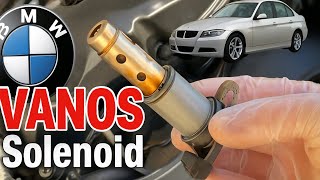
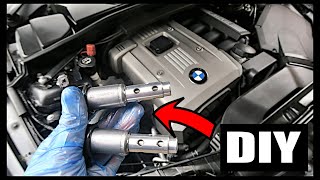
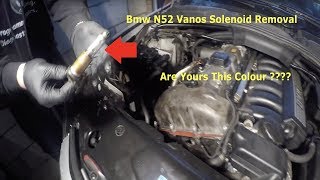
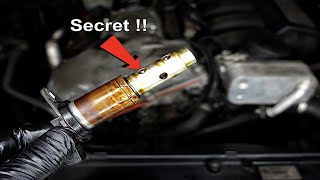
- Failing VANOS or Valvetronic Solenoid (BMW) (Very Common) — The electronically controlled valve directing oil flow to adjust cam timing gets clogged with dirty oil or fails electrically.
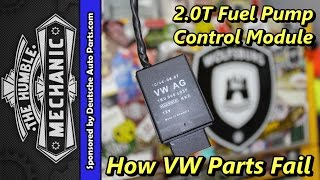
- Failing Fuel Pump Control Module (VW/Audi) (Very Common) — The electronic module controlling fuel pump speed overheats or fails internally, causing improper fuel delivery or sudden engine stalls.
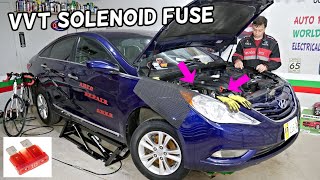
- Blown ECVVT Fuse or Relay (Hyundai/Kia) (Common) — A blown 20A fuse or a faulty relay in the engine bay fuse box cuts power to the electronic camshaft actuator.
- Low or Sludgy Engine Oil (BMW/Hyundai) (Common) — VVT systems rely on pressurized engine oil. Low oil levels or heavy sludge prevent the system from actuating the camshafts correctly.
- Leaking Fuel Injector (GM/Ford) (Common) — A fuel injector on Bank 2 sticks open, dumping excess unburnt fuel into the cylinder and triggering a rich condition.
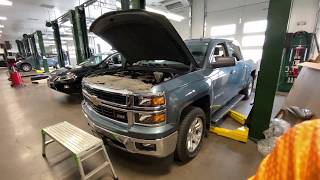
- Failing High-Pressure Fuel Pump (GM 5.3L/6.0L) 🎬 Watch this diagnosis of GM rich codes and fuel pump failure. (Less Common) — The high-pressure fuel pump fails internally, leaking raw fuel into the crankcase. Fuel vapor is drawn into the intake, causing a rich condition on both banks.
- Worn Camshaft Bearing Ledges (BMW) (Less Common) — On higher-mileage N-series engines, aluminum camshaft bearing ledges wear out, creating an internal oil pressure leak that starves the VANOS phasers.
- Failing Eccentric Shaft Sensor (BMW) (Less Common) — Oil leaks into the sensor's connector, preventing the engine computer from reading the valve lift mechanism's position.
- Faulty Mass Airflow (MAF) Sensor (Less Common) — A dirty MAF sensor incorrectly reports incoming air volume, forcing the computer to miscalculate the fuel mixture.
Symptoms

- Check Engine Light is On — The engine computer logs the fault and illuminates the dashboard indicator.
- Engine Stalling (VW/Audi) — The engine shuts off completely while driving due to fuel pump module failure.
- Rough or Unstable Idle — The engine shakes, sputters, or holds a persistently high idle (1300-1600 RPM on Hyundai/Kia).
- Reduced Engine Power / Limp Mode — Acceleration feels sluggish, or the vehicle restricts speed to protect the engine.
- Engine Rattling on Startup (BMW) — A failing VANOS unit produces a brief marble-like rattling sound from the front of the engine on cold starts.
- Strong Smell of Raw Fuel (GM/Ford) — Unburnt fuel exiting the engine creates a noticeable gasoline odor from the tailpipe.
Common Fixes & Costs
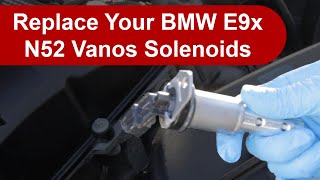
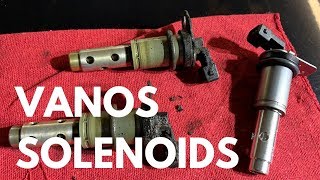
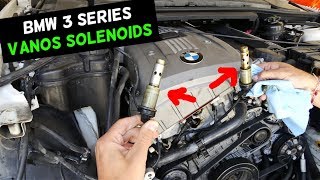
- Replace VANOS Solenoid(s) (BMW) — Parts: $130-$250, Labor: $150-$250, ~1.0 hr book time (DIY)
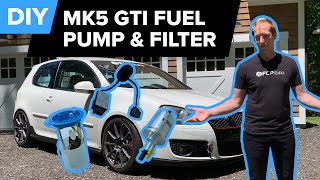
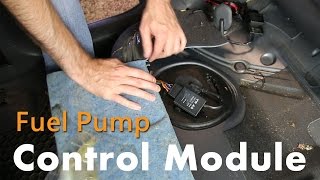
- Replace Fuel Pump Control Module (VW/Audi) 🎬 See how to access and replace the VW fuel pump module. — Parts: $150-$250, Labor: $250-$400 (Includes programming), ~1.5 hr book time (Professional Recommended)
- Replace ECVVT Fuse or Relay (Hyundai/Kia) — Parts: $5-$25, Labor: $0-$50, ~0.1 hr book time (DIY)
- Perform Engine Oil and Filter Change — Parts: $40-$80, Labor: $40-$80, ~0.5 hr book time (DIY)
- Replace ECVVT Actuator Assembly (Hyundai/Kia) — Parts: $250-$400, Labor: $300-$900, ~3.5 hr book time (Intermediate)
- Replace Leaking Fuel Injector (GM/Ford) — Parts: $70-$250, Labor: $150-$400, ~2.0 hr book time (Intermediate)
DIY vs Professional
- Replace VANOS Solenoid(s) (BMW) — Beginner: Yes
Tools: 10mm socket, Torx T20, flashlight, rags. - Replace Fuel Pump Control Module (VW/Audi) — Beginner: No
Tools: Basic hand tools. - Replace ECVVT Actuator Assembly (Hyundai/Kia) — Beginner: No
Tools: Socket set, torque wrench, jack and jack stands. - Replace ECVVT Fuse or Relay (Hyundai/Kia) — Beginner: Yes
Tools: Fuse puller.
Used vs. New Parts: Buying Guide
When a used part is worth it: For expensive electronic modules on older vehicles (>150k miles) where budget is the primary concern.
Donor-vehicle mileage cap: roughly under 80000 miles for the part to have meaningful remaining life.
Donor quality checklist:
- Verify the exact OEM part number matches.
- Source from a recycler providing vehicle history to avoid flood-damaged parts.
Decision logic:
- If The part has internal mechanical wear (e.g., VANOS solenoids). → Buy new OEM or OEM-supplier parts. The risk of premature failure with used parts is too high.
- If The part requires vehicle-specific programming (e.g., VW Fuel Pump Module). → Buy new from a dealer who can program it. Sourcing used and finding an independent programmer is often more expensive.
Warranty tradeoff: Used parts offer 30-90 day part-only warranties. New aftermarket parts offer 1-year warranties. New OEM parts installed by a dealer carry the best warranty.
Worst-case if a used part fails: $400-$1000 for repeat labor and a second replacement part.
What Happens If You Wait — Timeline
- 0-1 month: Check Engine Light appears. Minor drop in fuel economy. BMWs experience a slightly rough idle. VWs operate normally with an intermittent fault stored. (MPG impact: 0-5%% · Added cost: $0-$40 in wasted fuel)
- 1-3 months: Symptoms become consistent. BMWs feel sluggish. VWs experience occasional hesitation. GM/Ford exhaust smells like raw fuel, and the catalytic converter begins overheating. (MPG impact: 5-15%% · Added cost: $50-$150 in wasted fuel)
- 3-6 months: Secondary damage begins. GM/Ford catalytic converters melt and clog. VWs stall unpredictably, creating safety risks. BMW/Hyundai oil thins from fuel dilution. (MPG impact: 15-25%% · Added cost: $1,200-$3,000 (Catalytic converter replacement))
- 6+ months: Catastrophic failure. GM/Ford oil dilution washes cylinder walls, destroying piston rings. BMW timing components fail. VW fuel pump modules die completely, stranding the vehicle. (MPG impact: 25-50%+% · Added cost: $3,000-$8,000+ (Engine replacement))
Cost of Not Fixing It
- 0-1 Month: Noticeable drop in fuel economy, rough idle, and sluggish performance. VW/Audi owners risk being stranded by a sudden stall. (Added cost: $20-$60 in wasted fuel)
- 1-6 Months: Unburnt fuel overheats and destroys the catalytic converter on GM/Ford vehicles. BMWs suffer fouled spark plugs and oil sludge. (Added cost: $1,200-$3,000 for catalytic converter replacement)
- 6+ Months: Severe rich conditions dilute engine oil with fuel, causing accelerated wear on piston rings and bearings, leading to catastrophic engine failure. (Added cost: $3,000-$8,000+ for engine replacement)
Diagnosis Steps

- Verify Code and Vehicle Make
Confirm P1075 is active. Identify the vehicle make (BMW, VW, Hyundai, GM), as this dictates the entire diagnostic path.
Tools: OBD-II Scanner (Beginner) - Check Engine Oil Level and Condition (BMW/Hyundai)
Ensure engine oil is full and clean. Low or sludgy oil is the primary cause of VVT/VANOS faults.
Tools: Rag, Owner's Manual (Beginner) - Check Fuses and Relays (Hyundai/Kia)
Inspect the designated ECVVT fuse (usually 20A) in the engine bay fuse box. Replace if blown.
Tools: Owner's Manual, Fuse Puller (Beginner) - Test or Swap VANOS Solenoids (BMW)
Swap the intake and exhaust VANOS solenoids. Clear codes and drive. If the fault moves to the other camshaft, the solenoid is bad.
Tools: Basic socket set, Torx bits (Intermediate) - Inspect for High-Pressure Fuel Pump Leak (GM)
Pull the engine oil dipstick and smell for gasoline. A strong fuel odor confirms the high-pressure fuel pump is leaking into the crankcase.
Tools: Rag (Beginner) - Analyze Live Fuel Trim Data (GM/Ford)
Observe Short-Term (STFT) and Long-Term (LTFT) fuel trims for Bank 2 at idle. Values more negative than -15% confirm a severe rich condition.
Tools: OBD-II scanner with live data (Advanced) - Check Fuel Pump Module Function (VW/Audi)
Monitor the fuel pump control module via scan tool. Compare commanded vs. actual fuel pressure. Unresponsiveness indicates module failure.
Tools: Advanced OBD-II scanner (Advanced) - Inspect Wiring and Connectors
Visually inspect harnesses for VANOS solenoids, ECVVT actuators, or the fuel pump module (under the rear seat on VWs) for oil contamination or frayed wires.
Tools: Flashlight (Beginner) - Test VANOS Solenoid Resistance (BMW)
Measure resistance between the solenoid pins. A healthy unit reads 8-12 Ohms. 'OL' indicates an internal open circuit.
Tools: Multimeter (Advanced) - Test the ECVVT Relay (Hyundai/Kia)
Check resistance between relay coil terminals (70-120 Ohms). Apply 12V power and verify continuity across the switch terminals.
Tools: Multimeter, 12V power source (Advanced) - Test Fuel Injector Resistance (GM/Ford)
Measure resistance across the suspected leaking injector's terminals. High-impedance injectors should read 11-18 Ohms.
Tools: Multimeter (Advanced) - Check Fuel Pressure (VW/Audi/GM/Ford)
Connect a gauge to the fuel rail. VW/Audi low-pressure systems should read ~55 PSI. GM 5.3L should read 50-60 PSI. High pressure causes rich codes.
Tools: Fuel Pressure Gauge Kit (Advanced)
When This Code Triggers (Freeze-Frame Conditions)
- Engine Coolant Temp: 180-210°F (82-99°C) (Triggers when the engine is fully warmed up and operating in closed-loop fuel control.)
- Engine RPM: 1500-3000 RPM (Typically logs during steady-state cruise or light acceleration, rarely at idle.)
- Engine Load: 25-60% (Logs under moderate engine load consistent with normal city or highway driving.)
- Vehicle Speed: 40-65 mph (65-105 km/h) (VVT and fuel system self-tests frequently run during steady highway driving.)
Related Codes
- P0175 — Generic code for 'System Too Rich (Bank 2)'. For GM and Ford, P1075 is functionally identical.
- P1072 — GM code for a rich condition on Bank 1. Often appears alongside P1075.
- P0012 / P0015 — Generic codes for 'Camshaft Position - Timing Over-Retarded'. Often appear on BMWs alongside P1075.
Climate & Environmental Factors
- Cold Weather: Engines run richer on cold starts, exacerbating GM/Ford rich conditions. Thicker cold oil worsens BMW VANOS startup rattles. Cold temperatures shrink Hyundai ECVVT seals, causing oil leaks into electrical connectors.
- High Humidity: Accelerates corrosion on exposed electrical connectors, increasing resistance in VW fuel pump modules or Hyundai ECVVT circuits.
How to Clear the Code After You Fix It
- Use an OBD-II scan tool to clear diagnostic trouble codes.
- Ensure the fuel tank is between 30% and 70% full.
- Perform a complete OBD-II drive cycle to allow readiness monitors to run.
Drive cycle (~30 minutes): 1) Cold start (engine off 8+ hours). 2) Idle 3 minutes with A/C on. 3) 15 minutes of stop-and-go city driving. 4) 10 minutes of steady highway speed (55-60 mph). 5) Coast down without braking.
Readiness monitors affected: Catalyst (CAT) monitor, Oxygen (O2) Sensor monitor, EGR/VVT System monitor
Before emissions retest: drive at least 100 miles to fully set monitors.
Watch out for:
- Testing immediately after clearing codes results in a 'Not Ready' failure.
- Disconnecting the battery clears codes but erases learned adaptations, making monitors harder to set.
Will This Fail Emissions / State Inspection?
Yes — this code typically fails an OBD-II emissions inspection.
- California: An illuminated Check Engine Light is an automatic failure. All readiness monitors must be 'Ready' to pass.
- New York: An active code causes automatic failure. The vehicle must complete a drive cycle to set readiness monitors before re-inspection.
- Texas: Testing is required in 17 counties. One non-continuous monitor may be 'Not Ready' for 2001+ vehicles, but the active P1075 code will cause a failure.
Most Commonly Affected Vehicles
- BMW 3-Series (E90, E92) (2006-2013) — Extremely common on the N52 engine. 2009-2011 models had recalls for weak VANOS phaser bolts.
- BMW 1-Series, 5-Series, X3, X5 (2004-2015) — Models with N52/N54/N55 engines share VANOS vulnerabilities related to solenoids and camshaft ledge wear.
- Volkswagen Jetta / GTI / Golf / Passat (2015-2021) — Prone to fuel pump control module failure (Part 5Q0906093H), prompting a safety recall for sudden stalling.
- Audi A3 / S3 / TT (2015-2020) — Shares the faulty fuel pump control module and recall with VW counterparts.
- Hyundai Sonata / Elantra (2015-2020) — The 2.4L GDI triggers P1075 due to ECVVT circuit faults or blown fuses.
- Chevrolet / GMC Silverado 1500 / Sierra 1500 (2014-2018) — P1075 often appears with P1072, indicating a failing high-pressure fuel pump leaking into the crankcase.
Manufacturer-Specific Notes

- BMW: Code relates exclusively to VANOS or Valvetronic systems. BMW extended the warranty for VANOS adjustment units to 10 years/unlimited mileage for certain models.
- Volkswagen / Audi: Code points to a failing fuel pump control module, subject to NHTSA recall 20V-472. Replacement modules require dealer 'Component Protection' programming.
- Hyundai / Kia: Code is specific to the ECVVT system. A blown 20A fuse in the engine bay is the most common and cheapest fix.
- General Motors: Used as a manufacturer-specific code for 'System Too Rich Bank 2'. A unique cause on V8 trucks is a high-pressure fuel pump leaking into the crankcase.
Real Owner Stories
2011 BMW 328i at 115K miles
Check Engine Light illuminated with P1075. The engine had a rough idle, felt sluggish, and rattled briefly on cold starts.
What they tried:
- Checked engine oil level, which was full.
- Swapped the intake and exhaust VANOS solenoids.
- The code changed to a fault for the other camshaft, confirming the solenoid was dead.
Outcome: Replaced the faulty VANOS solenoid with a Pierburg OEM part ($140). The repair took 30 minutes. The idle smoothed out and power was restored.
Lesson: Swapping the intake and exhaust solenoids is a definitive, zero-cost diagnostic step to isolate a bad VANOS solenoid before buying parts.
2016 VW GTI at 80K miles
Car stalled without warning in an intersection. It restarted but failed to start later that day. Code P1075 was active.
What they tried:
- Checked for recalls and found NHTSA 20V-472 for the fuel pump module, but the dealer claimed the GTI VIN wasn't covered.
- Inspected the module under the rear seat; it was extremely hot to the touch.
Outcome: Paid the dealer $650 to replace and program a new fuel pump control module. The car ran perfectly afterward.
Lesson: On VW/Audi, P1075 is almost always the fuel pump control module. Replacement requires dealer programming, making it a difficult DIY job.
2016 Hyundai Sonata 2.4L at 100K miles
Developed a rough, high idle (1300 RPM) and terrible gas mileage. Code P1075 was present.
What they tried:
- Searched forums and learned P1075 points to the ECVVT circuit.
- Checked the engine bay fuse box.
Outcome: Found a blown 20A ECVVT fuse. Replaced it for $5. The idle immediately returned to normal.
Lesson: Always check the inexpensive ECVVT fuse and relay first on Hyundai/Kia vehicles before assuming the actuator motor has failed.
2015 Chevy Silverado 5.3L at 120K miles
Truck threw codes P1075 and P1072 (rich condition on both banks). It shifted hard and ran for a few seconds after turning the key off.
What they tried:
- Cleaned the MAF sensor and replaced the air filter, but codes returned.
- Pulled the engine oil dipstick and noticed a strong smell of raw gasoline.
Outcome: The gasoline smell confirmed the high-pressure fuel pump was leaking internally into the crankcase. An independent shop replaced the HPFP, resolving both codes.
Lesson: If you have rich codes on both banks on a GM truck, check the oil for a fuel smell immediately to prevent severe engine damage from oil dilution.
How to Prevent This Code From Triggering
- Change engine oil every 5,000 miles using OEM-spec synthetic (Every 5,000 miles) — Clean oil of the correct viscosity is essential for hydraulic VVT/VANOS systems. Sludgy oil clogs solenoid screens, causing most P1075 faults.
- Use Top-Tier certified gasoline (Every fill-up) — Top-Tier fuels contain detergents that prevent carbon deposits on fuel injectors, reducing the chance of a leaky injector causing a rich condition.
- Replace VANOS solenoid o-rings (BMW) (Every 60,000 miles) — Rubber o-rings harden and degrade, causing internal oil pressure leaks that prevent proper camshaft actuation.
Helpful Videos





The information in this article is provided for general reference and educational purposes only. Vehicle specifications, procedures, and part compatibility can vary by production date, trim level, and region. Always consult your vehicle's factory service manual and verify part numbers before purchasing or performing repairs. Safety-critical components such as airbags, seat belts, and braking systems should be installed by a qualified professional.
- 🎬 Helpful Videos
- What Does P1075 Mean?
- Can I Drive With P1075?
- Common Causes
- Symptoms
- Common Fixes & Costs
- DIY vs Professional
- Used vs. New Parts: Buying Guide
- What Happens If You Wait — Timeline
- Cost of Not Fixing It
- Diagnosis Steps
- When This Code Triggers (Freeze-Frame Conditions)
- Related Codes
- Climate & Environmental Factors
- How to Clear the Code After You Fix It
- Will This Fail Emissions / State Inspection?
- Most Commonly Affected Vehicles
- Manufacturer-Specific Notes
- Real Owner Stories
- 2011 BMW 328i at 115K miles
- 2016 VW GTI at 80K miles
- 2016 Hyundai Sonata 2.4L at 100K miles
- 2015 Chevy Silverado 5.3L at 120K miles
- How to Prevent This Code From Triggering
- 🎟️ Get 5% Off