

P1061 on 2020 Jeep Renegade: Cylinder 1 Oil Supply Solenoid Stuck Causes and Fixes
On a 2020 Jeep Renegade, code P1061 is most often caused by outdated engine computer software. The primary fix is a simple software update at a Jeep dealership, as specified in Technical Service Bulletin #18-057-23. If that doesn't work, the cause is likely low/incorrect oil, a clogged oil filter, or a failed MultiAir actuator assembly.
- First, check for a PCM software update. TSB #18-057-23 indicates this is the most common and simplest fix for P1061.
- Always check your engine oil. The MultiAir system is very sensitive to oil level and quality.
- The oil supply solenoid is not a separate part. If it has failed mechanically, the entire MultiAir actuator assembly ('brick') must be replaced, which is a costly repair.
- This code is often accompanied by P1065 and a cylinder 1 misfire (P0301), which helps confirm the issue is isolated to the cylinder 1 valvetrain control.
What's Unique About the 2020-2020 Jeep RENEGADE

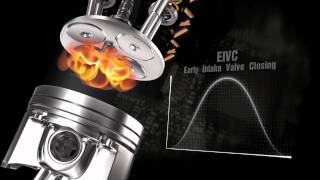
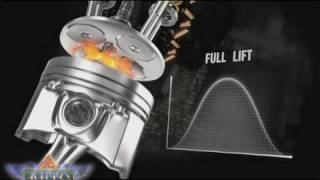
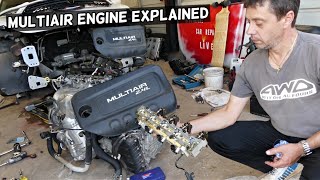
The 2020 Jeep Renegade uses the 1.3L MultiAir engine, an electro-hydraulic system that is exceptionally sensitive to the quality, level, and pressure of the engine oil to function. 🎬 Watch: A deep dive into how MultiAir technology works. Unlike conventional engines where a valvetrain code often implies a major mechanical issue, on this platform, a simple issue like low oil, an incorrect aftermarket oil filter, or a software glitch can directly cause valvetrain-related fault codes. For this specific code, Jeep has identified that the most common root cause is not a mechanical failure but a software calibration issue within the Powertrain Control Module (PCM), which can be resolved with an update.
Diagnostic Flowchart

Tap your situation to follow the diagnostic path that matches what you're seeing on this vehicle.
Symptoms You May Notice
- Check Engine Light (MIL) is on
- Poor engine performance or hesitation
- Engine Stop/Start (ESS) system is automatically deactivated
- Engine misfire, possibly with a rough idle
- Vehicle may crank repeatedly but fail to restart when ESS is active
- Replacing only the ignition coil or spark plug for cylinder 1. While a misfire might be present (P0301), if code P1061 is also stored, the root cause is in the MultiAir system, not the ignition system.
Most Likely Causes

- Outdated Powertrain Control Module (PCM) Software 🔴 High Probability Multiple Technical Service Bulletins (TSBs) from the manufacturer identify software calibration as the primary cause for this specific code on this vehicle. The PCM's sensitivity thresholds are too tight and incorrectly flag a fault.
How to confirm: A Jeep dealership or a qualified shop with a wiTECH scan tool can check if TSB #18-057-23 applies to your vehicle's VIN and if a software update is available.
Typical fix: Reprogramming the PCM with the latest available software. This is a 0.4-hour labor operation according to the TSB.
Est. part cost: $0 (if under warranty), $100-$250 (if out of warranty for labor/diagnostics) - Low, Incorrect, or Degraded Engine Oil 🟡 Medium Probability The MultiAir system is an electro-hydraulic system that uses engine oil to actuate the intake valves. Incorrect viscosity (spec is full synthetic), low oil level, or degraded oil can cause the solenoids to stick or respond slowly.
How to confirm: Check the engine oil level on the dipstick. Verify the oil type used during the last oil change matches the manufacturer's specification (e.g., full synthetic 0W-20). Ensure oil change intervals are followed, especially with high idle time.
Typical fix: Perform an oil and filter change with the correct OEM-specified oil and a quality filter (Mopar or equivalent).
Est. part cost: $50-$100 - Failed MultiAir Actuator Assembly ('Brick') 🟡 Medium Probability If a software update and correct oil don't fix the issue, the mechanical actuator itself may have failed. The oil supply solenoid is integrated into this assembly and is not serviced separately.
How to confirm: This is a diagnosis of exclusion. If software and oil are correct, and the code persists, the actuator is the likely culprit. Advanced diagnostics may involve monitoring solenoid response with a high-level scan tool.
Typical fix: Replace the entire MultiAir actuator assembly.
Est. part cost: $550-$800 - Clogged MultiAir Oil Supply Filter or Incorrect Main Oil Filter ⚪ Low Probability A small filter screen protects the MultiAir actuator. If it becomes clogged with sludge, it can restrict oil flow. Additionally, some owners of similar engines have reported that using cheap aftermarket main oil filters can cause oil pressure deviations sufficient to trigger codes.
How to confirm: The small filter must be removed and visually inspected for blockage. For the main filter, confirm a quality OEM or equivalent filter was used.
Typical fix: Replace the MultiAir actuator oil supply filter. For the main filter, perform an oil change using an OEM filter.
Est. part cost: $30-$45
Rare But Worth Checking
- Wiring Harness or Connector Issue:
Diagnosis Steps
- Read all fault codes with an OBD-II scanner. Note if P1061 is accompanied by misfire codes (P0301) or codes for other cylinders.
- Check the engine oil level and condition. Ensure it is full, clean, and of the correct viscosity (full synthetic).
- Verify the brand of the oil filter. If it is a low-quality aftermarket filter, consider this a potential cause.
- Contact a Jeep dealer with your VIN to determine if it is covered by TSB #18-057-23 for a PCM software update. This is the most common and primary fix.
- If scheduling a dealer visit, ensure they are aware of the TSB. During the flash, a battery charger must be used to maintain voltage between 13.2 and 13.5 volts.
- If software is up to date, inspect the electrical connector and wiring going to the MultiAir actuator for any signs of damage, corrosion, or looseness.
- If the code returns after a software update and oil change, consider replacing the small MultiAir actuator oil supply filter as a low-cost next step.
- If all previous steps fail to resolve the code, the MultiAir actuator assembly ('brick') has likely failed and will need to be replaced.
Parts You'll Likely Need
- MultiAir Actuator Assembly
(OEM #68439137AA)— This is the complete component that houses the faulty oil supply solenoid. If a software update or oil change doesn't fix the issue, this part has likely failed mechanically. This part is shared with other Jeep, Dodge, and Fiat models.
Trusted brands: Mopar
OEM price range: $540-$782
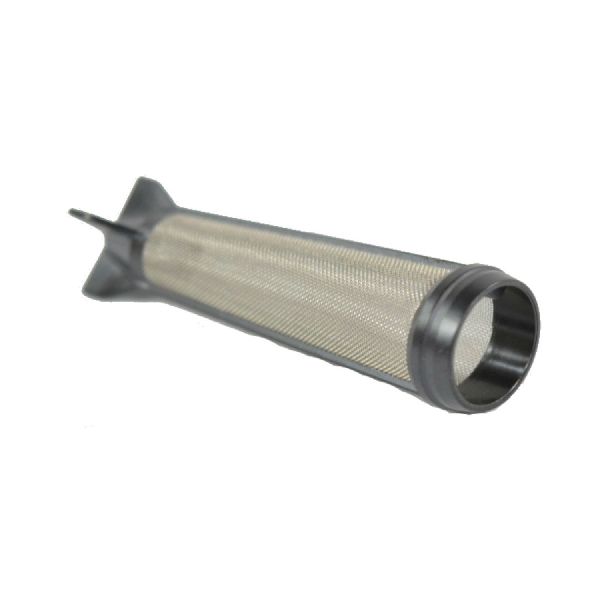
Aftermarket price range: $550-$800 - MultiAir Actuator Oil Supply Filter
(OEM #68440265AA)— This inexpensive filter can become clogged with sludge, starving the actuator of oil and causing it to stick. It's a wise, low-cost part to replace during diagnosis, especially if oil change history is unknown.
Trusted brands: Mopar
OEM price range: $30-$45
Aftermarket price range: $20-$35
Related Codes That Often Appear With This One
- P1065 — This code for 'Cylinder 1 Oil Supply Solenoid Valve Switch On Time Out Of Range' is often triggered along with P1061 as they both relate to the function of the same component, and is explicitly listed in TSB 18-057-23.
- P0301 — When the oil supply solenoid for cylinder 1 is stuck, it prevents proper intake valve operation, leading to a misfire in that cylinder. This is also listed as an expected related code in the TSB.
- P1062, P1063, P1064 — These are identical codes for cylinders 2, 3, and 4. It is common for the PCM software issue to flag faults on multiple cylinders simultaneously.
Technical Service Bulletins (TSBs) & Recalls
- 18-057-23: States that P1061 (and related codes for other cylinders) can be caused by PCM software and the repair is to reprogram the PCM. It specifies a 0.4 hour labor time.
- 18-007-23: Also identifies P1061 as a code that can be resolved by a PCM software update, and adds 'Stop/start function deactivated' and 'Poor engine performance' as specific symptoms.
- 1801621: An earlier, superseded version of the TSB also pointing to a software update as the fix for P1061.
Platform-Specific Known Issues
- A widely documented issue where a PCM software calibration fault incorrectly flags a 'stuck' solenoid, when in fact no mechanical part has failed. The fix is a software update per TSB #18-057-23.
- High sensitivity to oil filter quality. Some owners of related FCA engines have reported that certain aftermarket oil filters can cause oil pressure deviations that trigger faults, which are resolved by switching to an OEM Mopar filter.
Mechanic-Grade Diagnostic Values
- Solenoid Current Response (Conceptual) — expected: When the solenoid is commanded ON (high duty-cycle), current should rise above a minimum threshold (e.g., 0.4 A). When commanded OFF (low duty-cycle), current should fall below a maximum threshold (e.g., 1.6 A). This variation must occur within a specified time.. Failure: If the current remains stable, fails to cross the thresholds, or does not vary with the command over several cycles, the ECU flags the solenoid as 'stuck' and sets code P1061.
Scan Tool Commands That Help
- wiTECH (Dealer Tool): Reprogram the PCM with the latest available software. — This is the primary repair step identified in TSB #18-057-23 and should be performed first, as a software glitch is the most common cause of P1061 on this vehicle.
- High-End Bidirectional Scanner (e.g., Autel, Foxwell): Active Test / Actuator Test for MultiAir Solenoids (Cylinder 1, 2, 3, 4). — After confirming software is up-to-date, this command is used to individually activate each solenoid with the engine off (key on). A healthy solenoid will produce an audible 'click'. Lack of a click from the cylinder 1 solenoid points to a failed solenoid or a wiring issue, helping to confirm a mechanical/electrical fault in the MultiAir actuator before replacement.
Wiring & Ground Locations
- MultiAir Solenoid Connectors — On top of the engine, plugged directly into the MultiAir actuator assembly ('brick'). There is one connector for each cylinder's solenoid.. These connectors and their associated wiring are exposed to engine heat and vibration. A loose connection, corroded pin, or damaged wire at the cylinder 1 connector can interrupt the signal and cause the PCM to incorrectly flag a P1061 code.
Real Owner Repair Stories
- YouTube Channel 'LEONARDI high performance' (Fiat 500 with 1.4L MultiAir engine (same technology)) — Check engine light, misfire codes on cylinders 1 and 4, and code P1061 for the cylinder 1 solenoid.
❌ Tried (didn't work) The mechanic noted that simply clearing the codes was not a solution as they would return.
✅ What actually fixed it The mechanic removed and repaired the MultiAir actuator unit, performed an oil and filter change using OEM parts, and reinstalled the assembly. The customer later confirmed via audio message that the car ran perfectly on the highway with no return of the issue.
Helpful Videos


We Have This Part in Stock


The information in this article is provided for general reference and educational purposes only. Vehicle specifications, procedures, and part compatibility can vary by production date, trim level, and region. Always consult your vehicle's factory service manual and verify part numbers before purchasing or performing repairs. Safety-critical components such as airbags, seat belts, and braking systems should be installed by a qualified professional.
- Jeep RENEGADE:
- 🎬 Helpful Videos
- 🛍️ Shop This Part
- What's Unique About the 2020-2020 Jeep RENEGADE
- Diagnostic Flowchart
- Symptoms You May Notice
- Most Likely Causes
- Rare But Worth Checking
- Diagnosis Steps
- Parts You'll Likely Need
- Related Codes That Often Appear With This One
- Technical Service Bulletins (TSBs) & Recalls
- Platform-Specific Known Issues
- Mechanic-Grade Diagnostic Values
- Scan Tool Commands That Help
- Wiring & Ground Locations
- Real Owner Repair Stories
- 🎟️ Get 5% Off