

OBD-II Code P1061: Variable Valve Lift & Critical Engine Fault Guide
What P1061 Means for Ford, BMW, and Fiat, Why It Triggers, and How to Fix It
- P1061 is a manufacturer-specific code that signals a repairable valve lift issue on BMW, Hyundai, and Fiat vehicles, but indicates an imminent, catastrophic engine failure on 2020-2023 Ford Hybrids.
- Check your engine oil immediately; using the wrong viscosity (like 5W-30 instead of 0W-20 in a Dodge Dart) is the number one cause of this code and can be fixed with a $70-$150 oil change.
- Never replace a BMW Valvetronic motor without physically inspecting the eccentric shaft; installing a $500 new motor on a worn shaft guarantees a repeat failure.
- If you own a 2020-2023 Ford or Lincoln 2.5L hybrid, stop driving immediately and tow the vehicle to a dealer to claim a free engine replacement under Customer Satisfaction Program 23N06.
What Does P1061 Mean?

P1061 is a manufacturer-specific diagnostic trouble code (DTC) signaling a failure in the engine's variable valve lift (VVL) system or a critical internal engine defect. VVL systems—like BMW's Valvetronic, Hyundai's CVVL, and Fiat's MultiAir—dynamically adjust intake valve opening height to control engine power, replacing a traditional throttle plate. When P1061 triggers, the engine's computer (PCM/DME) detects the system cannot reach its commanded position, defaults to a low-power 'limp-home' mode, and illuminates the Check Engine Light to prevent further damage.
Technical definition: The exact definition of P1061 depends entirely on the manufacturer. For BMW, it is 'Valvetronic Limp Home Request RPM and Charge Limitation', indicating a fail-safe mode triggered by a VVT fault. For Fiat/Chrysler, it means 'Cylinder 1 Oil Supply Solenoid Valve Stuck'. For Hyundai/Kia, it indicates a CVVL system performance fault. Most critically, for 2020-2023 Ford and Lincoln 2.5L hybrids, it translates to 'Excessive Engine Component Deterioration', meaning the PCM has detected a failing connecting rod bearing—a precursor to complete engine seizure.
Can I Drive With P1061?
no_unless_necessary. You can technically drive, but the engine is in a protective 'limp mode' with severely reduced power, rough idling, and a high risk of stalling. For BMW, Fiat, and Hyundai, continued driving strains the engine and dumps unburnt fuel into the exhaust, causing a $1,200-$2,800 catalytic converter failure. For 2020-2023 Ford/Lincoln hybrids, stop driving immediately and tow the vehicle to a dealer; P1061 signals impending catastrophic engine failure.
Common Causes

- Low, Old, or Incorrect Engine Oil (Very Common) — VVL systems rely entirely on precise hydraulic oil pressure. Low oil levels, degraded sludge, or using the wrong viscosity (e.g., 5W-30 instead of 0W-20 in a Dodge Dart) clogs microscopic oil passages, starves hydraulic actuators, and forces solenoids to stick.
- Internal Engine Mechanical Failure (Ford 2.5L Hybrid) (Common For Specific Models) — On 2020-2023 Ford/Lincoln 2.5L hybrid models (Escape, Maverick, Corsair), P1061 means the PCM has detected a failing connecting rod bearing. This is a known manufacturing defect covered under Ford's Customer Satisfaction Program 23N06 and requires a full engine replacement. 🎬 See a detailed breakdown of Ford's CSP 23N06 engine replacement program.
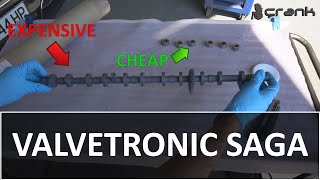
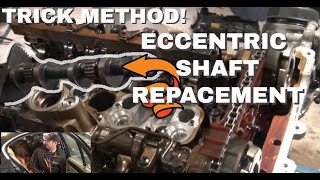
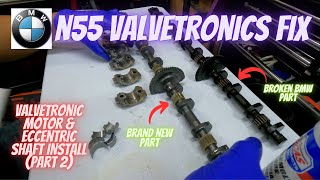
- Failing Valvetronic Motor and Worn Eccentric Shaft (BMW) (Common) — The BMW Valvetronic motor turns a geared eccentric shaft to adjust valve lift. The motor fails electrically from internal shorts, or the shaft's gear teeth wear down from poor lubrication. Both issues prevent accurate valve lift adjustments and trigger P1061, often requiring both parts to be replaced together. 🎬 Watch: Complete Valvetronic repair guide for BMW N55 and N20 engines.
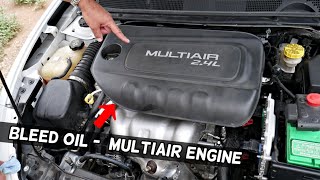
- Faulty Oil Control Solenoid or Clogged Strainer (Fiat/Hyundai) (Common) — In Hyundai CVVL and Fiat MultiAir systems, individual solenoids direct oil flow to the actuators. These solenoids, or the small oil filter screens protecting them, clog with sludge or fail electrically, disrupting operation for a specific cylinder. 🎬 Watch: How to change the MultiAir oil strainer screen.
- Faulty Eccentric Shaft Position Sensor (BMW) (Less Common) — This sensor provides position feedback for the eccentric shaft to the engine computer. It fails internally when engine oil wicks up through the sensor body from a leaking valve cover gasket, corrupting the electrical signal.
- Poor Battery Health or Ground Connection (Less Common) — VVL systems require stable, precise voltage. A dying battery, failing alternator, or a corroded engine ground strap causes erratic voltage drops, triggering fault codes in sensitive control modules even when mechanical components are perfectly fine.
- Failing Engine Computer (DME/PCM) (Rare) — On BMWs, a seizing Valvetronic motor draws excessive electrical current (over 40A). This massive power draw burns out the driver circuits within the engine computer (DME), requiring a costly DME replacement or rebuild.
Symptoms

- Check Engine Light / Drivetrain Malfunction Warning — The dashboard illuminates the Check Engine Light or displays a specific message like 'Drivetrain Malfunction. Drive Moderately.'
- Reduced Engine Power (Limp Mode) — The vehicle feels sluggish and unresponsive. Acceleration is severely limited as the computer defaults to a fail-safe operating map.
- Rough or Unstable Idle — The engine shakes, stumbles, or has an erratic idle speed when stopped because the intake valves are not opening to the correct, uniform height.
- Engine Rattle, Clatter, or Knocking — A distinct mechanical noise indicates hardware failure. On a BMW, this is the worn eccentric shaft gear chattering. On a Ford Hybrid, a deep knock indicates a failing rod bearing.
- Engine Stalling — The engine stalls completely when coming to a stop or idling, as it cannot maintain stable combustion.
Diagnostic Flowchart
Tap your situation to follow the diagnostic path that matches what you're seeing on this code.
Common Fixes & Costs
- Engine Oil and Filter Change (with correct spec oil) — Parts: $70-$150, Labor: $50-$100, ~0.5 hr book time (DIY)
- Replace Oil Control Solenoid and Strainer (Hyundai/Kia/Fiat) — Parts: $150-$300, Labor: $100-$200, ~1.5 hr book time (Intermediate)
- Replace Valvetronic Motor and Eccentric Shaft (BMW) — Parts: $1,000-$1,500, Labor: $1,500-$3,000, ~8.5 hr book time (Professional)
- Replace CVVL Actuator Assembly (Hyundai/Kia) — Parts: $400-$800, Labor: $600-$900, ~6.5 hr book time (Professional)
- Replace MultiAir Actuator Assembly ('Brick') (Fiat/Dodge) — Parts: $800-$1,800, Labor: $500-$1,000, ~4.5 hr book time (Professional)
- Engine Long Block Replacement (Ford 2.5L Hybrid) — Parts: $0 (Covered under program 23N06), Labor: $0 (Covered under program 23N06), ~12 hr book time (Professional)
Used vs. New Parts: Buying Guide
When a used part is worth it: Buying used is highly discouraged for complex electro-mechanical parts like a Valvetronic motor or MultiAir brick. Internal wear or sludge is impossible to see. Only buy used for external oil control solenoids if budget is extremely tight.
Donor-vehicle mileage cap: roughly under 30000 miles for the part to have meaningful remaining life.
Donor quality checklist:
- Verify the donor vehicle was scrapped for accident damage, not engine failure.
- Match part numbers exactly; superseded parts contain critical updates.
- Avoid parts from engines known for sludge issues.
Decision logic:
- If The part is a BMW Valvetronic Motor, Eccentric Shaft, or Fiat MultiAir 'Brick' → Buy new OEM. A used part has the same wear patterns that caused the original to fail. The labor cost is too high to risk a repeat failure.
- If The part is an external oil control solenoid → A low-mileage used part is acceptable, but new aftermarket options are often inexpensive enough to justify buying new.
Warranty tradeoff: Used parts offer a 30-90 day warranty on the part only. New OEM parts carry a 1-2 year warranty, often including labor if installed at a dealer.
Worst-case if a used part fails: $1000-$3000 if a used part fails, as you pay for repeat labor and another replacement part.
What Happens If You Wait — Timeline
- 0-1 month: Code sets and MIL illuminates. Vehicle enters 'limp mode' with reduced power and rough idle. Driving is difficult but possible for short distances. (MPG impact: 10-20%% · Added cost: $0-$50 in wasted fuel)
- 1-3 months: Continued driving causes persistent misfires. Unburnt fuel enters the exhaust, overheating and degrading the catalytic converter. (MPG impact: 15-25%% · Added cost: $50-$150 in wasted fuel)
- 3-6 months: Catalytic converter substrate melts or clogs from raw fuel exposure. Exhaust flow is restricted, further reducing power. (MPG impact: 20-30%% · Added cost: $1,200-$2,800 for catalytic converter replacement)
- 6+ months: Catastrophic failure. On a BMW, the high current draw damages the DME. On a Ford Hybrid, the engine seizes completely. (MPG impact: 30-50%% · Added cost: $4,000-$8,000+ for engine or DME replacement)
Cost of Not Fixing It
- 0-1 month: Significant drop in fuel economy (15-25%), poor drivability (stalling, no power), and failed emissions tests. (Added cost: $50-$100 in wasted fuel)
- 1-6 months: Constant misfires dump unburnt fuel into the exhaust, melting or clogging the catalytic converter. (Added cost: $1200-$2800)
- 6+ months: On BMWs, a binding eccentric shaft destroys the engine computer (DME). On Ford Hybrids, the engine seizes completely. (Added cost: $4000-$8000+)
Diagnosis Steps
- Check Engine Oil Level, Condition, and Specification
Check the oil level and condition. Verify the oil viscosity matches the manufacturer's exact specification (e.g., 5W-40 Fiat 9.55535-S2 for MultiAir, LL-01 for BMW). The wrong oil is the leading cause of this code.
Tools: Rag, Owner's Manual (Beginner) - Scan for All Stored and Pending Trouble Codes
Use an OBD-II scanner to read all codes. Companion codes for misfires (P030x), camshaft timing (P001x), or BMW-specific VVL faults (2DCE, 2E0F) provide essential clues to the root cause.
Tools: OBD-II Scanner (Beginner) - Check for PCM Software Updates
For models like the Dodge Dart 2.4L, manufacturers released PCM software updates to address cold start misfires that trigger P1061. Check with a dealership to see if a reflash is available before replacing hardware.
Tools: Dealer-level Scan Tool or J2534 Passthrough Device (Professional) - Inspect VVL System Wiring and Connectors
Visually inspect the wiring harness going to the VVL motor and related sensors. Look for brittle insulation, broken wires, or oil contamination inside the connectors (common on BMWs).
Tools: Flashlight (Beginner) - Perform System Relearn/Initialization with Stable Voltage
Command a system relearn (e.g., 'Valvetronic limit position relearn') using a bi-directional scanner. For BMWs, this requires a stable power supply of 13.4V+ using a dedicated voltage stabilizer. A failed test confirms a hard mechanical or electrical fault.
Tools: Advanced Bi-Directional Scan Tool, Voltage Stabilizer (Intermediate) - Actuate and Test Individual Solenoids (Fiat/Hyundai)
Use a bi-directional scanner to perform an 'active test' on cylinder 1's oil control solenoid. Listen for a distinct 'click'. Next, disconnect the solenoid and measure resistance with a multimeter; a healthy solenoid reads 10-12 Ohms. Infinite resistance (OL) means it has failed.
Tools: Advanced Bi-Directional Scan Tool, Multimeter (Intermediate) - Test the Actuator Motor Circuit (BMW)
Disconnect the Valvetronic motor. Measure resistance between the two pins; it should be 0-5 Ohms. Measure from each pin to a clean chassis ground; it must read infinite (OL). A reading of 0 Ohms to ground or infinite resistance between the pins confirms a failed motor.
Tools: Multimeter (Advanced) - Check BMW Eccentric Shaft Sensor Voltage
Monitor live data for the eccentric shaft sensor voltage. A healthy sensor shows a steady ~4.90V. If the sensor connector is full of oil, it has failed internally and must be replaced.
Tools: Advanced Scan Tool, Multimeter (Advanced) - Inspect Mechanical Components (Valve Cover Off)
Remove the valve cover. On a BMW, meticulously inspect the teeth on the eccentric shaft and the worm gear on the Valvetronic motor for wear or scoring. On a Fiat or Hyundai, inspect the actuator assembly for heavy sludge or broken springs.
Tools: Socket Set, Torque Wrench, Gaskets (Advanced)
When This Code Triggers (Freeze-Frame Conditions)
- Engine Coolant Temp: 180-210°F (82-99°C) (The fault is often detected after the engine reaches full operating temperature.)
- Engine RPM: 1500-3000 RPM (Triggers under steady-state cruising or light acceleration when the system actively adjusts valve lift.)
- Engine Load: 25-60% (Occurs under moderate load conditions as the computer compares expected versus actual actuator position.)
- Vehicle Speed: 30-60 mph (50-97 km/h) (Sets during city or highway driving as the system struggles to make precise adjustments.)
Related Codes
- P1062, P1063, P1064 — Companion codes in MultiAir and CVVL systems pointing to faults in cylinders 2, 3, and 4. Seeing these alongside P1061 confirms a system-wide failure like oil starvation rather than a single bad solenoid.
- 2DCE / 2E0F (BMW) — BMW-specific codes confirming the DME has detected a recurring mechanical or electrical fault and shut the Valvetronic system down as a precaution.
- P0300 / P0301 — Misfire codes are direct symptoms of P1061. The valve lift fault prevents the correct air charge, leading to incomplete combustion. Resolve the P1061 fault first.
- P0011 / P0014 — Camshaft timing codes appearing with P1061 strongly point to a systemic oil pressure issue (low level, wrong viscosity, or sludge) as the root cause.
- P0520 — Indicates a fault in the Engine Oil Pressure Sensor circuit. Seeing this alongside P1061 confirms the root cause is a lack of oil pressure.
Climate & Environmental Factors
- Cold Weather: Cold weather exacerbates P1061 issues on startup. Thicker, cold oil flows slowly, starving hydraulic VVL mechanisms like Fiat's MultiAir. Using the exact manufacturer-specified winter oil viscosity is critical.
- High Altitude: Reduced air density at altitude makes underlying performance issues like rough idling or reduced power from a VVL fault much more noticeable to the driver.
- High Humidity: Extreme humidity over long periods accelerates corrosion on electrical connectors and ground points, contributing to electrical faults in the VVL system.
How to Talk to a Mechanic About This Code
Say this: "My [Year, Make, Model] has a P1061 check engine light code and is in limp mode. I need to schedule a diagnostic appointment. Based on my research, the meaning of this code is very specific to my car's manufacturer, so I want to ensure you have experience with this particular system."
This shows you understand the code's complexity and encourages the shop to assign a technician familiar with your specific VVL system, preventing a generic misdiagnosis.
Avoid saying:
- 'My check engine light is on.' (Too vague, invites an expensive diagnostic process.)
- 'I think it's a bad sensor.' (Pre-diagnosing leads the mechanic down the wrong path.)
- 'Just fix it and let me know the cost.' (Gives up all control over repair costs.)
Questions to ask before authorizing the repair:
- Can you explain exactly what failed and why?
- For a BMW: Did you physically inspect the eccentric shaft for wear? Can you show me a picture?
- For a Fiat/Dodge: Did you verify the correct oil is being used and check for PCM software updates?
- For a Ford Hybrid: Have you confirmed this is covered under Customer Satisfaction Program 23N06?
Where to Take It: Dealer vs Independent vs Chain
- Dealer:
Best for: 2020-2023 Ford/Lincoln Hybrids (Mandatory for free engine replacement)., Vehicles under warranty., Complex diagnostics requiring PCM software updates.
Downsides: Highest labor rates, typically 1.5-2x more than independent shops., Defaults to replacing large, expensive assemblies rather than diagnosing smaller root causes. (Typical cost: +50% vs. baseline) - Independent Shop:
A strong choice for non-Ford cases, but only if the shop has proven experience with complex VVL systems.
Best for: Out-of-warranty BMWs, Fiats, and Hyundais, provided the shop specializes in that brand., Owners seeking lower labor costs.
Downsides: Quality varies widely. Must vet shops based on brand-specific certifications., May lack access to proprietary software for reflashing. (Typical cost: +0% vs. baseline) - Chain Shop:
AVOID. The risk of misdiagnosis is extremely high. This code requires specialized knowledge.
Best for: Simple maintenance like oil changes or tire rotations.
Downsides: Technician skill is inadequate for manufacturer-specific codes like P1061., High pressure to upsell leads to misdiagnosis. (Typical cost: -10% vs. baseline)
When to Walk Away From the Repair
If the estimated repair cost exceeds 50% of your car's current private-party value, consider selling or trading it in rather than repairing it.
- Car worth $8000, fix is $4500: Walk away. A $4,500 repair on an $8,000 BMW for a Valvetronic motor and shaft is a poor investment.
- Car worth $5000, fix is $1500: Borderline. A $1,500 MultiAir brick replacement on a $5,000 Dodge Dart is a significant percentage of the car's value. Get a second opinion to ensure it's not just wrong oil.
- Car worth $22000, fix is $0: Fix it. For a 2022 Ford Escape Hybrid, the engine replacement is covered by Ford's warranty program at no cost to you.
What Scan Tool You Need for This Code
Minimum: A manufacturer-specific scan tool with bi-directional control.
A basic $20 code reader only shows 'P1061' but lacks the bi-directional capability required for essential diagnostic tests like performing a 'Valvetronic relearn' on a BMW or an 'active test' on a Fiat's oil solenoids. Without these functions, you are guessing.
Budget: BlueDriver Pro (~$100) — Reads manufacturer-specific trouble codes and live data, but lacks the specific bi-directional commands needed for a full diagnosis.
Mid-range: Foxwell NT510 Elite (~$180) — Provides dealer-level diagnostics for a specific brand. Performs the mandatory 'Valvetronic limit relearn' on a BMW and 'active tests' on Fiat solenoids.
Professional: Autel MaxiCOM MK808 (~$500) — Offers broad manufacturer coverage with extensive bi-directional controls for serious DIYers or independent shops diagnosing P1061 on various brands.
Rent vs buy: Rent a basic scanner for free from a parts store to confirm the code. However, to diagnose it yourself, you must BUY a mid-range scanner with bi-directional capabilities for your vehicle's make.
How to Clear the Code After You Fix It
- Use a compatible OBD-II scan tool to clear the diagnostic trouble codes.
- Perform a system relearn or initialization if required by the manufacturer (e.g., BMW Valvetronic limit relearn).
- Perform a complete drive cycle to allow all readiness monitors to run.
Drive cycle (~30 minutes): 1) Cold start (engine off for 8+ hours). 2) Idle for 3 minutes. 3) Drive in mixed city traffic (stops, accelerations up to 40 mph) for 15 minutes. 4) Drive at a steady highway speed (55-60 mph) for 10 minutes. 5) Coast down to 20 mph without braking.
Readiness monitors affected: Catalyst (CAT), Oxygen Sensor (O2S), Evaporative System (EVAP), Comprehensive Component Monitor (CCM)
Before emissions retest: drive at least 100 miles to fully set monitors.
Watch out for:
- Clearing codes resets all readiness monitors to 'Not Ready', causing an automatic emissions test failure.
- The code returns immediately if the underlying mechanical fault is not repaired.
- Failing to use a battery voltage stabilizer during a BMW relearn procedure causes the test to fail.
Will This Fail Emissions / State Inspection?
Yes — this code typically fails an OBD-II emissions inspection.
- California: An illuminated Check Engine Light is an automatic failure. All readiness monitors must be 'Ready' to pass the OBD-II test. Drive 100+ miles after a repair for monitors to set.
- New York: An active P1061 code results in an automatic failure during the OBD-II scan, preventing you from receiving an inspection sticker.
- Texas: In emissions-testing counties, an illuminated Check Engine Light from P1061 is an automatic failure. You cannot renew your registration until fixed.
Most Commonly Affected Vehicles

- BMW 3-Series (E90, F30), 5-Series (E60, F10), X3, X5 (2006-2017) — Extremely common on N52 and N55 engines. Caused by wear on the eccentric shaft gear teeth and Valvetronic motor failure.
- Dodge / Fiat / Chrysler Dart, 500, 500L, 500X, Jeep Renegade/Compass (2012-2018) — 1.4L Turbo and 2.4L MultiAir engines trigger this due to a stuck cylinder 1 oil solenoid, often caused by incorrect oil viscosity.
- Hyundai Elantra, Veloster, Sonata (2011-2020) — 1.6L and 1.8L GDI engines experience CVVL actuator or oil control solenoid failures, exacerbated by oil sludge.
- Kia Forte, Soul, Optima (2012-2019) — Shares powertrains with Hyundai. 2014-2016 Forte models have a particularly high incidence of CVVL-related issues.
- Ford / Lincoln Escape Hybrid, Maverick Hybrid, Corsair Hybrid (2020-2023) — P1061 is a critical code indicating connecting rod bearing failure. Covered by Ford's Customer Satisfaction Program 23N06 for engine replacement.
- MINI Cooper, Countryman, Clubman (Non-S) (2007-2016) — Uses BMW-derived Valvetronic technology (N12, N16 engines) prone to the same motor and eccentric shaft failures.
- Alfa Romeo Giulietta, MiTo (2010-2020) — Uses Fiat 1.4L MultiAir technology and is susceptible to identical stuck solenoid failures caused by delayed oil changes.
Manufacturer-Specific Notes
- BMW: The most common misdiagnosis is replacing only the Valvetronic motor when the eccentric shaft gear is also worn. The new motor will quickly fail or the code will return. You must inspect and usually replace the shaft simultaneously.
- Ford / Lincoln: For 2020-2023 2.5L Hybrids, P1061 is NOT a valve lift code. It is a critical warning of connecting rod bearing failure. Do not diagnose this as a VVT issue; tow it to a dealer for engine replacement under program 23N06.
- Fiat / Chrysler / Dodge: MultiAir engines are extremely sensitive to oil type. Using oil that does not meet the specific Fiat 9.55535-S2 spec instantly clogs solenoids and damages the non-serviceable MultiAir 'brick' actuator.
- Hyundai / Kia: Problems are frequently linked to oil sludge buildup in GDI engines clogging the CVVL system. A PCM update is often available to improve system logic and prevent erroneous codes.
Real Owner Stories
2014 Dodge Dart 2.4L with P1061 after oil change
Check engine light with code P1061 appeared shortly after a routine oil change, accompanied by a rough idle on cold starts.
What they tried:
- Changed the oil and filter again, suspecting bad oil, but the code returned.
Outcome: Discovered the quick-lube shop used 5W-30 instead of the required 0W-20. After changing to the correct manufacturer-specified oil, the code cleared permanently.
Lesson: For Fiat/Dodge MultiAir engines, using the exact oil viscosity is a strict requirement. The wrong oil is a primary cause of P1061 and is a simple, inexpensive fix.
2011 BMW 335i (N55) with recurring Valvetronic faults
Car went into limp mode. A mechanic replaced the Valvetronic motor for $1,200, but the problem returned a week later.
What they tried:
- Replaced the Valvetronic motor.
- Authorized a deeper teardown when the code returned.
Outcome: The root cause was a worn eccentric shaft. The worn gear teeth prevented the new motor from functioning correctly. The owner had to pay an additional $3,500 to replace the shaft and another new motor.
Lesson: On BMWs, physically inspect the eccentric shaft for wear whenever replacing the Valvetronic motor. Replacing only the motor is a costly misdiagnosis.
2022 Ford Escape Hybrid with P1061 and engine knock
The vehicle displayed a check engine light with code P1061 and a loud engine knock at 110,000 miles.
What they tried:
- Towed the vehicle to a Ford dealership.
Outcome: The dealership confirmed P1061 indicated a connecting rod bearing failure. The repair was fully covered under Ford's Customer Satisfaction Program 23N06, resulting in a free engine replacement.
Lesson: If you own a 2020-2023 Ford/Lincoln 2.5L Hybrid, P1061 signals a critical engine defect. Stop driving immediately and contact a dealer to utilize program 23N06.
How to Prevent This Code From Triggering
- Use the exact OEM-specified engine oil and filter (Every oil change) — VVL systems are hydraulically actuated and extremely sensitive to oil viscosity. Using the wrong oil clogs solenoids and oil passages, leading to immediate failure.
- Perform regular engine oil changes at the 'severe' interval (Every 5,000 miles or 6 months) — Prevents the formation of oil sludge, the primary cause of clogged solenoids and actuators in Hyundai/Kia GDI engines and Fiat MultiAir systems.
- Maintain a healthy battery and clean electrical grounds (Annually) — The VVL system relies on precise voltage. A weak battery causes voltage drops that lead to control module errors and fault codes.
- For Fiat/Dodge, clean or replace the MultiAir oil filter screen (During valve cover gasket service) — This small filter protects the entire MultiAir 'brick'. If it clogs with sludge, it starves the assembly of oil, causing catastrophic failure.
Frequently Asked Questions
Can an oil change really fix a P1061 code?
Yes, especially on Fiat, Dodge, and Hyundai models. If the fault is triggered by low, dirty, or incorrect viscosity oil, an oil change with the exact manufacturer-specified oil restores hydraulic pressure. This often clears the code after a few drive cycles.
My mechanic replaced the Valvetronic motor on my BMW, but the P1061 code came back. What now?
This means the eccentric shaft, which the motor acts upon, is also worn or binding. The worn gear on the shaft prevents the new motor from operating correctly. The shaft must be replaced along with the motor for a complete repair.
What are common misdiagnosis mistakes for P1061?
On a BMW, it is replacing the motor but ignoring the worn eccentric shaft. On a Fiat/Dodge, it is replacing the expensive MultiAir 'brick' when the root cause was simply using the wrong engine oil. On a Ford Hybrid, it is treating it as a sensor issue instead of an imminent engine failure.
Could a bad battery cause a P1061 code?
Yes. Unstable or low voltage from a dying battery or poor ground connection causes the control module to malfunction and set a fault code, even if the mechanical parts are perfectly fine.
What is the 'MultiAir brick' on a Fiat/Dodge and why does it fail?
The 'MultiAir brick' is the entire electro-hydraulic valve lift actuator assembly. It fails when internal oil passages or electronic solenoids become clogged with sludge or fail electrically. It is replaced as a single, expensive unit because it cannot be serviced internally.
Why is the P1061 repair so expensive for a BMW?
The high cost is due to expensive parts and extensive labor. Replacing the eccentric shaft requires removing the valve cover and fuel injectors, with parts costing over $1,200. Total labor at a dealer pushes the bill past $4,000.
Can a bad oxygen sensor cause a P1061 code?
No. P1061 is a specific fault within the mechanical or hydraulic valve lift system. While a failing VVL system causes a rich or lean condition that triggers O2 sensor codes, a bad O2 sensor will never trigger a P1061.
Key Takeaways
- P1061 is a manufacturer-specific code that signals a repairable valve lift issue on BMW, Hyundai, and Fiat vehicles, but indicates an imminent, catastrophic engine failure on 2020-2023 Ford Hybrids.
- Check your engine oil immediately; using the wrong viscosity (like 5W-30 instead of 0W-20 in a Dodge Dart) is the number one cause of this code and can be fixed with a $70-$150 oil change.
- Never replace a BMW Valvetronic motor without physically inspecting the eccentric shaft; installing a $500 new motor on a worn shaft guarantees a repeat failure.
- If you own a 2020-2023 Ford or Lincoln 2.5L hybrid, stop driving immediately and tow the vehicle to a dealer to claim a free engine replacement under Customer Satisfaction Program 23N06.
Helpful Videos





The information in this article is provided for general reference and educational purposes only. Vehicle specifications, procedures, and part compatibility can vary by production date, trim level, and region. Always consult your vehicle's factory service manual and verify part numbers before purchasing or performing repairs. Safety-critical components such as airbags, seat belts, and braking systems should be installed by a qualified professional.
- 🎬 Helpful Videos
- What Does P1061 Mean?
- Can I Drive With P1061?
- Common Causes
- Symptoms
- Diagnostic Flowchart
- Common Fixes & Costs
- Used vs. New Parts: Buying Guide
- What Happens If You Wait — Timeline
- Cost of Not Fixing It
- Diagnosis Steps
- When This Code Triggers (Freeze-Frame Conditions)
- Related Codes
- Climate & Environmental Factors
- How to Talk to a Mechanic About This Code
- Where to Take It: Dealer vs Independent vs Chain
- When to Walk Away From the Repair
- What Scan Tool You Need for This Code
- How to Clear the Code After You Fix It
- Will This Fail Emissions / State Inspection?
- Most Commonly Affected Vehicles
- Manufacturer-Specific Notes
- Real Owner Stories
- 2014 Dodge Dart 2.4L with P1061 after oil change
- 2011 BMW 335i (N55) with recurring Valvetronic faults
- 2022 Ford Escape Hybrid with P1061 and engine knock
- How to Prevent This Code From Triggering
- Frequently Asked Questions
- Can an oil change really fix a P1061 code?
- My mechanic replaced the Valvetronic motor on my BMW, but the P1061 code came back. What now?
- What are common misdiagnosis mistakes for P1061?
- Could a bad battery cause a P1061 code?
- What is the 'MultiAir brick' on a Fiat/Dodge and why does it fail?
- Why is the P1061 repair so expensive for a BMW?
- Can a bad oxygen sensor cause a P1061 code?
- Key Takeaways
- 🎟️ Get 5% Off