

OBD-II Code P1060: A Comprehensive Guide to Valvetronic/VVT Power Supply Faults
The Ultimate Resource for Diagnosing and Fixing P1060 on BMW, VW, and Other Makes
- P1060 is a BMW-specific electrical fault indicating the Valvetronic motor is receiving irregular voltage, not necessarily that the motor itself has failed.
- Always test the $30 Valvetronic power relay and verify 12.0V+ at the DME supply pins before replacing the $1,500+ motor assembly.
- Never replace a Valvetronic motor without physically inspecting the eccentric shaft; a binding shaft destroys a new motor within weeks.
- Driving with P1060 forces the engine into limp mode, reducing fuel economy by up to 20% and risking catastrophic $4,000+ damage to the eccentric shaft.
What Does P1060 Mean?
P1060 is a manufacturer-specific code. For BMW, where it is most common, it signifies an electrical problem within the Valvetronic system. The engine computer (DME) detects an irregular power supply to the servomotor controlling variable valve lift. The system cannot fine-tune valve openings because it lacks stable voltage.
Technical definition: BMW defines P1060 as 'Valvetronic (VVT) Supply Voltage Control Motor Electrical (Bank 2)'. The engine control module (DME) detects irregular, shorted, or unstable supply voltage to the Valvetronic motor within a 50ms window after key-on. This is a critical electrical fault, though mechanical binding sometimes triggers it by causing excessive current draw.
Can I Drive With P1060?
Yes, But With Caution. Driving is possible but strongly discouraged. A BMW engine defaults to its conventional throttle body, resulting in limp mode, poor fuel economy, and stalling. Continuing to drive with a binding Valvetronic motor destroys the eccentric shaft, adding over $1,000 to repair costs. Prolonged limp mode operation causes misfires that destroy the catalytic converter, adding $1,200-$2,500 to the final bill.
Common Causes

- Failing Valvetronic Power Relay or Fuse (Very Common) — The Valvetronic motor receives power through a specific relay. This relay fails from age or electrical stress, causing an intermittent or total loss of voltage to the motor. This frequent, overlooked cause perfectly matches the code's definition.
- Low or Dirty Engine Oil (Very Common) — The variable valve timing and lift system relies on hydraulic pressure from clean engine oil. Low oil levels or sludgy oil fail to provide necessary pressure, causing components to bind and trigger electrical faults due to excessive motor load.
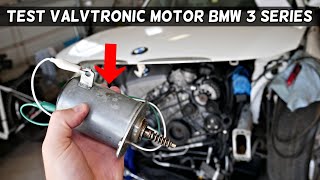
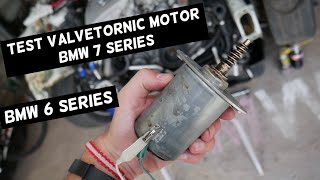
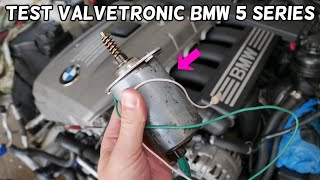
- Failing Valvetronic Motor (Servomotor) (Common) — The electric motor adjusting valve lift fails internally. A short circuit or excessive current draw from a dying motor triggers a power supply fault. 🎬 Watch: How to test the Valvetronic motor on E90 models A clicking or grinding noise from the engine cover upon unlocking the car is a classic sign of a failing motor.
- Faulty Electrical Wiring or Connectors (Common) — A short to ground, a broken wire, or a corroded connector at the Valvetronic motor, relay, or DME causes irregular voltage readings. Oil leaks from the valve cover gasket frequently saturate and destroy the harness.
- Failing Eccentric Shaft Position Sensor (Less Common) — This sensor reports the exact position of the eccentric shaft. If it provides faulty data, the DME commands the motor to move incorrectly, causing it to bind and overload. Engine oil leaking past the sensor's seal and contaminating its connector is the primary failure mode.
- Dirty, Clogged, or Failing VANOS Solenoids (Less Common) — Failing VANOS solenoids cause erratic engine timing that stresses the entire valvetrain. They clog with oil sludge, restricting movement and triggering a cascade of timing and voltage faults.
- Damaged or Binding Eccentric Shaft (Rare) — If the eccentric shaft or its gears wear down from poor lubrication, the shaft binds. This physical resistance forces the motor to draw excessive current, triggering the P1060 voltage code as a protective measure.
- Worn Camshaft Bearing Ledges (Rare) — On high-mileage BMW engines (especially the N52), camshaft bearing ledges wear down. This causes a critical loss of oil pressure at the camshafts, disabling the VANOS and Valvetronic systems even if all electrical components function perfectly.
- Defective Engine Computer (DME) (Very Rare) — A shorted Valvetronic motor sometimes damages the driver circuits within the DME, leading to persistent voltage codes even after replacing the motor and wiring.
Symptoms

- Reduced Engine Power and 'Limp Mode' — The car feels sluggish and unresponsive. A 'Drivetrain Malfunction' or half-engine light appears, indicating the engine is operating in a reduced power safety mode.
- Audible Clicking/Grinding from Engine — A distinct clicking, binding, or grinding noise emits from the top of the engine for a few seconds when locking or unlocking the car. This is the failing Valvetronic motor attempting its initialization cycle.
- Rough, Unstable, or Stalling Idle — The engine RPM fluctuates erratically at a stop, and the car shakes or shuts off completely, especially during hot starts.
- Check Engine Light is On — The DME logs a fault and illuminates the malfunction indicator lamp (MIL) on the dashboard.
- Increased Fuel Consumption — With the Valvetronic system disabled, the engine runs inefficiently on the throttle body, dropping fuel economy by 10-20%.
- Engine Misfires or Hesitation (also visible on scanner) — Incorrect valve lift causes incomplete combustion, leading to engine misfires (P030x codes) and hesitation during acceleration.
Diagnostic Flowchart
Tap your situation to follow the diagnostic path that matches what you're seeing on this code.
Common Fixes & Costs
- Replacing Valvetronic Power Relay — Parts: $20-$45, Labor: $0-$60, ~0.3 hr book time (DIY)
- Engine Oil and Filter Change — Parts: $60-$120, Labor: $40-$90, ~0.8 hr book time (DIY)
- Replacing Valvetronic Motor (Servomotor) — Parts: $250-$700, Labor: $600-$1,200, ~5.5 hr book time (Professional)
- Replacing Both VANOS Solenoids — Parts: $80-$350, Labor: $100-$200, ~1.0 hr book time (Intermediate)
- Replacing Valvetronic Motor and Eccentric Shaft — Parts: $1,200-$2,000, Labor: $1,200-$2,500, ~8.0 hr book time (Professional)
Used vs. New Parts: Buying Guide
When a used part is worth it: Buying a used Valvetronic motor is risky but serves as a budget-conscious choice for an older, high-mileage vehicle where a new part is cost-prohibitive. Only proceed if the donor part has verifiable low mileage and a functional warranty.
Donor-vehicle mileage cap: roughly under 60000 miles for the part to have meaningful remaining life.
Donor quality checklist:
- Obtain the VIN of the donor car to verify mileage and ensure it wasn't scrapped for a related engine failure.
- Look for a clean part from a vehicle with no signs of oil sludge or overheating.
- Match the part number exactly. Superseded part numbers are common.
- Ask for a video of the donor car running or a guarantee against DOA (Dead on Arrival).
Decision logic:
- If The vehicle is under 100K miles and you plan to keep it long-term → Buy a new OEM or high-quality OEM supplier (VDO/Continental) part. The longevity justifies the cost.
- If The budget is extremely tight and the repair is DIY → A used motor from a reputable salvage yard with a 90-day warranty is a viable risk.
- If The part is a cheaper aftermarket brand like URO → Consider it a short-term fix. Reliability and fitment are inconsistent compared to OEM.
Warranty tradeoff: Used parts typically offer a 30-90 day warranty on the part only, not labor. Aftermarket new parts offer a 1-2 year warranty. New OEM parts carry a 2-year warranty when installed at a certified shop.
Worst-case if a used part fails: $1000-$1800 if a used or cheap aftermarket motor fails shortly after installation, requiring repeat labor.
What Happens If You Wait — Timeline
- 0-1 month: Intermittent symptoms. Occasional rough idle on startup, a brief engine stumble, or a single 'Drivetrain Malfunction' warning that disappears after restarting. The P1060 code is stored but may not trigger a constant Check Engine Light. (MPG impact: 0-5%% · Added cost: $0)
- 1-3 months: Symptoms become frequent. The Check Engine Light is permanently on. The car enters limp mode often. A faint clicking noise emits from the engine when unlocking the car. Fuel consumption increases noticeably. (MPG impact: 10-15%% · Added cost: $50-$150 in wasted fuel)
- 3-6 months: The underlying issue worsens. If the cause is mechanical, the Valvetronic motor is under constant strain and at high risk of burning out. The clicking noise becomes a loud grinding. The car is permanently in limp mode. (MPG impact: 15-25%% · Added cost: $1,500-$2,500 (A simple relay fix is now a mandatory motor replacement. If the shaft is damaged, this cost is incurred.))
- 6+ months: Catastrophic failure. The Valvetronic motor fails completely. A seized eccentric shaft is highly probable. A shorted motor sends a voltage spike that damages the engine computer (DME). The car will not start. (MPG impact: N/A (car is likely undrivable)% · Added cost: $4,000-$6,500+ (Worst-case scenario requiring replacement of the motor, eccentric shaft, and potentially the DME.))
Cost of Not Fixing It
- 0-1 month: Noticeable drop in fuel economy (10-20%), poor throttle response, and stalling. Risk of being stranded. (Added cost: Negligible, besides increased fuel costs.)
- 1-6 months: Continued operation in limp mode causes excessive strain on the Valvetronic motor, leading to complete failure. A binding motor damages the eccentric shaft. (Added cost: $1,000-$2,500 (Eccentric shaft replacement).)
- 6+ months: Catastrophic failure of the Valvetronic system. A seized eccentric shaft causes valve-to-piston contact, leading to severe engine damage. A shorted motor damages the engine computer (DME). (Added cost: $5,000-$8,000+ (Engine computer replacement or significant internal engine repairs).)
Diagnosis Steps

- Scan for All Fault Codes
Use a BMW-capable OBD-II scanner to read all codes from the DME. P1060 rarely appears alone. Look for related Valvetronic codes (2A67, 2A6B) or VANOS codes (2A82, 2A87) to map the complete failure.
Tools: BMW-specific OBD-II Scanner (e.g., INPA, ISTA, Foxwell, Autel) (Beginner) - Inspect and Test Valvetronic Relay and Fuse
Locate the Valvetronic relay and fuse using a wiring diagram. Inspect for burning or corrosion. Swap the relay with an identical one (e.g., the horn relay) as a zero-cost test. If the problem resolves, replace the relay.
Tools: Vehicle wiring diagram, fuse puller, multimeter (Intermediate) - Test Valvetronic Motor Power Supply
Back-probe the Valvetronic motor's main power supply pins at the DME connector. With the ignition on, verify a stable battery voltage (12.0-14.5V). A reading below 12V points to a wiring or relay problem, not the motor.
Tools: Multimeter, back-probe kit, vehicle-specific wiring diagram (Advanced) - Check Engine Oil Level and Condition
Ensure the engine oil is full and clean. The VVT system is hydraulic; low or sludgy oil is a primary cause of timing-related faults.
Tools: Dipstick (if equipped), clean rag (Beginner) - Inspect Wiring and Connectors
Visually inspect the wiring harness to the Valvetronic motor and eccentric shaft sensor. Unplug the eccentric shaft sensor and check for oil inside the connector; oil wicking past the internal seal requires immediate sensor replacement.
Tools: Flashlight, contact cleaner (Intermediate) - Perform Valvetronic 'Run-in' Procedure
Using a bidirectional scanner, command the Valvetronic system to perform its limit relearn procedure. Listen for binding noises. If the procedure fails or P1060 immediately returns, it confirms a hard fault in the circuit or motor.
Tools: Advanced OBD-II Scanner with bidirectional controls (Advanced) - Clean and Swap VANOS Solenoids
If VANOS codes (2A82/2A87) are present, remove the intake and exhaust solenoids. Clean them with brake cleaner, swap their positions, and drive. If the code moves to the other camshaft, replace the faulty solenoid.
Tools: Socket set, brake cleaner, clean rags (Intermediate) - Inspect Motor and Eccentric Shaft (Valve Cover Off)
If electrical tests point to a motor issue, remove the valve cover. Inspect the eccentric shaft and gears for wear, scoring, or binding. A binding shaft destroys a new motor, making this inspection mandatory before replacement.
Tools: Comprehensive socket set, torque wrench, new valve cover gasket (Professional) - Analyze Motor with an Oscilloscope
Connect a lab scope to the motor's power and ground wires. Trigger the relearn procedure. A binding eccentric shaft causes high, erratic current spikes, while a failing motor shows an open circuit or short to ground.
Tools: Automotive oscilloscope, current clamp (Professional) - Test VW/Audi Camshaft Adjuster Solenoid (N319)
For VW/Audi vehicles, P1060 indicates a camshaft regulation fault. Disconnect the N319 solenoid and measure resistance between the pins. The expected value is 5.0 to 8.0 Ohms at 68°F. Readings outside this range require replacement.
Tools: Multimeter, service manual (Advanced)
When This Code Triggers (Freeze-Frame Conditions)
- Engine Coolant Temp: 185-210°F (85-99°C) (Fully warmed up, often during or after a drive.)
- Engine RPM: 700-1500 RPM (During idle or low-speed, stop-and-go driving.)
- Engine Load: 20-40% (Light to moderate load, not typically during heavy acceleration.)
- Ignition Event: Within 50ms of Key-On (The fault is detected immediately upon startup as the DME checks the circuit.)
Related Codes
- 2A67 / 2A6B (BMW) — These codes indicate the motor is commanded to a safe, limited state due to electrical instability or an internal motor fault.
- 2A87 / P0015 & 2A82 / P0012 (BMW) — These point to a mechanical blockage in the VANOS solenoids. Severe oil sludging affects the entire timing system, triggering both VANOS and Valvetronic codes.
- 2A98 / P0016 — Indicates a 'Crankshaft - Intake Camshaft Correlation' error. A non-functioning Valvetronic system prevents proper cam adjustment. Fix P1060 first.
- P1014, P1017, P1030 (BMW) — P1014 and P1017 point to the eccentric shaft sensor, while P1030 indicates sluggish movement. Seeing these alongside P1060 suggests a binding shaft causing the motor voltage fault.
Climate & Environmental Factors
- Cold Weather: Cold, thick engine oil exacerbates issues with a failing Valvetronic system. Increased viscosity makes it harder for the servomotor to move the eccentric shaft, triggering P1060 due to higher initial current draw.
- Oil Sludge Buildup: Extended oil change intervals create sludge that clogs the small passages lubricating the Valvetronic and VANOS systems. This oil starvation causes eccentric shaft binding, overloading the motor.
How to Talk to a Mechanic About This Code
Say this: "I have a BMW with a P1060 Valvetronic voltage supply code and it's in limp mode. I'd like to book a diagnostic appointment. Please start by testing the simple electrical components first, like the Valvetronic relay and fuse, and verifying stable voltage at the motor's power supply before condemning the motor itself."
This signals you understand the common failure points and that P1060 is an electrical code. It guides the technician to follow a logical diagnostic path, preventing them from jumping to the most expensive repair without justification.
Avoid saying:
- 'My check engine light is on, can you look at it?' (Too vague, invites a wide-ranging and expensive diagnostic).
- 'I heard a clicking noise, I think my Valvetronic motor is bad.' (Don't diagnose it for them; this leads them to replace an expensive part without checking for a cheaper root cause).
- 'Just fix whatever is wrong.' (This gives the shop a blank check to replace multiple parts).
Questions to ask before authorizing the repair:
- Did you test the Valvetronic relay and fuse? What were the results?
- What was the voltage reading at the motor's power supply? Was it stable?
- If you are recommending a motor replacement, have you checked for oil in the eccentric shaft sensor connector?
- Before replacing the motor, will you inspect the eccentric shaft for physical binding or wear to ensure a new motor isn't damaged?
Where to Take It: Dealer vs Independent vs Chain
- Dealer:
A safe but expensive choice. Recommended if the vehicle is under warranty or if cost is not the primary concern.
Best for: Vehicles still under factory or extended warranty., Complex cases where an independent shop has already failed to find the issue., When you prefer the assurance of genuine parts and factory-trained technicians, despite the higher cost.
Downsides: Highest labor rates, often 30-50% more than an independent specialist., More inclined to replace an entire assembly (motor and shaft) rather than diagnosing individual components. (Typical cost: +50% vs. baseline) - Independent Shop:
Best fit for most out-of-warranty cases, provided it is a reputable BMW specialist. They are more likely to follow a cost-effective diagnostic path.
Best for: Out-of-warranty vehicles where cost-effectiveness is important., Owners who want a more personal relationship with their technician., MUST be a BMW or German auto specialist with brand-specific diagnostic tools (like ISTA or Autel/Foxwell).
Downsides: Quality varies greatly; vetting the shop's reputation and BMW-specific experience is crucial., A general mechanic without the right tools cannot perform the mandatory Valvetronic relearn procedure. (Typical cost: +0% vs. baseline) - Chain Shop:
AVOID. This is not a suitable repair for a general-purpose chain shop due to the need for specialized tools and expertise.
Best for: Simple services like oil changes, tires, and brakes.
Downsides: Technicians lack the specialized training for complex systems like Valvetronic., They do not have the required BMW-specific scan tools for proper diagnosis or post-repair calibration., High risk of misdiagnosis, leading to unnecessary and expensive parts replacement. (Typical cost: -10% vs. baseline)
When to Walk Away From the Repair
If the estimated repair cost exceeds 40-50% of the car's current private-party market value, seriously consider selling the car as-is or trading it in rather than repairing it.
- Car worth $6000, fix is $4500: Walk away. The repair cost is 75% of the car's value. It is not economically viable.
- Car worth $15000, fix is $2200: Fix it. The repair cost is less than 15% of the car's value and is a worthwhile investment to restore full function.
- Car worth $8000, fix is $3500: Borderline. At 44% of the vehicle's value, get a second opinion from a certified BMW independent specialist before proceeding. Consider the car's overall condition.
What Scan Tool You Need for This Code

Minimum: A scan tool that reads manufacturer-specific BMW fault codes and performs special functions/adaptations. A generic OBD-II reader is not sufficient.
A basic $20 reader only shows a generic P1060 definition and cannot read the crucial BMW-specific codes that accompany it. Most importantly, it cannot perform the mandatory 'Valvetronic limit relearn' procedure required after replacing the motor.
Budget: BlueDriver Pro Scan Tool (~$100) — Reads BMW-specific engine codes and views live data for initial diagnosis. However, it lacks the bidirectional control needed for the Valvetronic relearn procedure.
Mid-range: Foxwell NT510 Elite for BMW (~$180) — The ideal DIY tool for this job. It offers full BMW-specific diagnostics and has the bidirectional capability to perform the 'Valvetronic limit relearn' and other adaptations.
Professional: Autel MaxiCOM MK808 / MK808BT (~$450-600) — A professional-level tablet scanner with extensive diagnostic capabilities. It easily handles all BMW-specific codes, live data graphing, and all necessary special functions.
Rent vs buy: Rentals from auto parts stores are typically basic code readers and are NOT suitable for this job. If you plan to DIY this repair, you must buy a capable scanner like the Foxwell NT510 Elite or an Autel.
How to Clear the Code After You Fix It
- Reconnect battery if it was disconnected for the repair.
- Use a BMW-capable scan tool to clear all fault codes from the DME.
- Perform the Valvetronic limit relearn procedure using the scan tool.
- Complete a full drive cycle to allow readiness monitors to set.
Drive cycle (~30 minutes): From a cold start, idle for 2-3 minutes. Drive at city speeds (20-30 mph) for 5-10 minutes. Accelerate to highway speed (50-60 mph) and maintain for 15 minutes without cruise control. Coast down, then idle for 5 minutes before shutting down.
Readiness monitors affected: Catalyst Monitor, Oxygen Sensor Monitor, EVAP System Monitor
Before emissions retest: drive at least 100 miles to fully set monitors.
Watch out for:
- Disconnecting the battery clears the code but resets all readiness monitors to 'Not Ready', guaranteeing an emissions test failure.
- The code returns immediately if the underlying electrical or mechanical issue is not fixed.
- Failure to perform the Valvetronic limit relearn procedure after replacing the motor causes the code to return.
Will This Fail Emissions / State Inspection?
Yes — this code typically fails an OBD-II emissions inspection.
- California: An illuminated Check Engine Light results in an automatic failure. All required readiness monitors must be set to 'Ready'. Expect to drive 50-100 miles after a repair before re-testing.
- New York: An illuminated Malfunction Indicator Lamp (MIL) is an automatic failure. For 2001+ vehicles, only one readiness monitor is allowed to be 'Not Ready'.
- Texas: In counties requiring an emissions test, an illuminated Check Engine Light is an automatic failure. You cannot pass inspection by simply clearing the code, as the readiness monitors will show 'Not Ready'.
Most Commonly Affected Vehicles
- BMW 3-Series (E90, E91, E92, E93) (2006-2013) — Extremely common on models with N52, N54, and N55 engines. Early N55s (2010-2013) are particularly noted for Valvetronic issues.
- BMW 1-Series (E82, E88) (2008-2013) — The 128i (N52) and 135i (N54/N55) share the same powertrain architecture and are equally prone to this fault.
- BMW 5-Series (E60, F10) (2006-2017) — Late E60 models with N52 engines and the F10 535i with the N55 engine frequently experience P1060.
- BMW X3 (E83, F25) and X5 (E70) (2007-2017) — SUVs equipped with the 6-cylinder N52 and N55 engines share the same VVT system and are highly susceptible.
- MINI Cooper, Cooper S (R56, R57, etc.) (2007-2015) — Models using the BMW-developed Prince engine (N12, N14, N16, N18) utilize Valvetronic and suffer from similar motor and sensor issues.
- Volkswagen / Audi Jetta, Golf, Passat, A4 (2008-2015) — On VW/Audi models, P1060 means 'Bank 2, exhaust camshaft regulation, Interruption'. This points to an issue with the camshaft adjustment valve (N319 solenoid), not Valvetronic.
- RAM Trucks 1500, 2500 (2002-2010) — On some RAM vehicles, P1060 is defined as 'A/C Request Circuit Hi', a fault related to the climate control system and completely unrelated to the engine.
Manufacturer-Specific Notes
- BMW: A clicking noise from the engine when unlocking the car is a tell-tale sign of a failing Valvetronic motor attempting its pre-start check. Recent emissions-related delivery stops for Valvetronic on 2021-2024 models suggest software updates are sometimes required.
- Volkswagen / Audi: P1060 means 'Bank 2, exhaust camshaft regulation, Interruption'. This points to a fault in the circuit for the camshaft adjustment valve (solenoid), similar to a P0015 but specific to an electrical interruption.
- Hyundai / Kia: P1060 is not a standard code. It is defined as 'Fuel Rail Pressure Control Valve Circuit Overheat' or a problem with the MAF sensor circuit, depending on the scanner used.
- RAM / Chrysler / Dodge: P1060 means 'A/C Request Circuit Hi', a fault within the climate control system's communication with the ECU and entirely unrelated to engine performance.
Real Owner Stories
2011 BMW 335i (N55) with Limp Mode and Multiple Codes
Owner experienced sudden limp mode and rough idle. A scan revealed P1060 along with Valvetronic position sensor and sluggish movement codes (P1017, P1030).
What they tried:
- Replaced the Valvetronic motor at an independent shop, fixing the issue for two weeks.
- The check engine light returned. Further diagnosis revealed the eccentric shaft was binding, which destroyed the original motor and strained the new one.
Outcome: The owner replaced both the Valvetronic motor and the eccentric shaft. The total repair cost quoted by a dealer was $5,300.
Lesson: Never replace the Valvetronic motor without inspecting the eccentric shaft for binding. A binding shaft destroys a new motor, leading to a massive repeat repair bill.
2009 BMW 328i (N52) with Intermittent Stalling and Electrical Faults
Car began acting erratically after a car wash caused a water leak into the passenger footwell. Symptoms included stalling, RPMs dropping, and multiple warning lights.
What they tried:
- A parts store scan only showed U0100 (Loss of communication with ECM).
- Disconnected the eccentric shaft sensor as a test, with no change.
- Replaced the battery, which did not solve the problem.
Outcome: The owner discovered a main power cable had come loose on the power distribution box on top of the battery. Securing the connection resolved all symptoms.
Lesson: P1060 is a voltage supply code. Verify the entire power path, starting from the battery terminals and main power distribution block. A loose connection mimics a major component failure.
BMW E90 with Valvetronic Faults and Oil Contamination
Owner's car had a rough idle, misfires, and Valvetronic fault codes. After replacing the eccentric shaft sensor with an aftermarket part, the faults returned within a week.
What they tried:
- Inspected the new sensor's electrical connector and found a droplet of oil on one of the pins.
- Confirmed no external leaks, concluding the oil was seeping through the aftermarket sensor itself.
Outcome: The owner returned the faulty aftermarket sensor and purchased a higher-quality VDO (OEM supplier) sensor to perform the repair again.
Lesson: Oil leaking past the eccentric shaft sensor's internal seal is a common cause of Valvetronic faults. Using low-quality aftermarket sensors leads to repeat failures.
How to Prevent This Code From Triggering
- Perform regular oil changes with BMW LL-01 approved oil. (Every 5,000-7,500 miles) — Prevents oil sludge from forming, which clogs the tiny oil passages lubricating the eccentric shaft and VANOS system. Lack of lubrication is the primary cause of eccentric shaft wear.
- Use a slightly thicker viscosity oil in high-mileage engines (e.g., 5W-40). (At oil changes for engines over 100k miles) — A thicker oil maintains oil pressure in engines with worn bearing ledges, ensuring better lubrication for the Valvetronic and VANOS systems.
- Replace the valve cover gasket and associated seals at the first sign of a leak. (As needed (typically 70k-100k miles)) — Oil leaking from a bad valve cover gasket saturates the Valvetronic motor wiring and the eccentric shaft sensor connector, causing short circuits.
- Address engine misfires immediately. (As needed) — Driving with misfires creates engine vibrations and operational stress that accelerates wear on sensitive components like the Valvetronic assembly.
Frequently Asked Questions
What is the clicking noise from my BMW's engine when I unlock it?
That is the Valvetronic motor performing its initialization sweep. A loud clicking or grinding sound during this process indicates a failing motor or a binding eccentric shaft.
Can I just clean the VANOS solenoids to fix P1060?
No. Cleaning VANOS solenoids resolves VANOS-specific codes (2A82/2A87), but P1060 is an electrical fault in the Valvetronic power supply. It requires diagnosing the relay, wiring, or motor.
What are the most common misdiagnosis mistakes for P1060?
The biggest mistake is replacing the expensive Valvetronic motor without testing its power supply, as a faulty $30 relay causes the exact same code. Failing to inspect the eccentric shaft for binding before installing a new motor is the second most common error.
Does a new Valvetronic motor need to be programmed?
Yes. A new motor requires a 'run-in' procedure using a bidirectional scan tool to calibrate its mechanical start and end stops. Skipping this calibration guarantees the fault code returns.
Why did my repair estimate for a P1060 fault suddenly double?
This happens when a technician discovers a damaged eccentric shaft during motor replacement. A $1,500 motor replacement jumps to over $4,000 because the shaft itself is expensive and requires extensive labor to replace.
Can a bad eccentric shaft sensor cause a P1060 code?
Yes, indirectly. If a faulty eccentric shaft sensor provides incorrect data, the motor jams against its limits. The resulting high current draw triggers the P1060 power supply fault as a protective measure.
My scanner shows a different definition for P1060. Why?
P1060 is a manufacturer-specific code. For BMW, it means Valvetronic voltage; for VW, it means camshaft regulation; for RAM, it indicates an A/C system fault. Always use a brand-specific scanner.
Key Takeaways
- P1060 is a BMW-specific electrical fault indicating the Valvetronic motor is receiving irregular voltage, not necessarily that the motor itself has failed.
- Always test the $30 Valvetronic power relay and verify 12.0V+ at the DME supply pins before replacing the $1,500+ motor assembly.
- Never replace a Valvetronic motor without physically inspecting the eccentric shaft; a binding shaft destroys a new motor within weeks.
- Driving with P1060 forces the engine into limp mode, reducing fuel economy by up to 20% and risking catastrophic $4,000+ damage to the eccentric shaft.
Helpful Videos

The information in this article is provided for general reference and educational purposes only. Vehicle specifications, procedures, and part compatibility can vary by production date, trim level, and region. Always consult your vehicle's factory service manual and verify part numbers before purchasing or performing repairs. Safety-critical components such as airbags, seat belts, and braking systems should be installed by a qualified professional.
- 🎬 Helpful Videos
- What Does P1060 Mean?
- Can I Drive With P1060?
- Common Causes
- Symptoms
- Diagnostic Flowchart
- Common Fixes & Costs
- Used vs. New Parts: Buying Guide
- What Happens If You Wait — Timeline
- Cost of Not Fixing It
- Diagnosis Steps
- When This Code Triggers (Freeze-Frame Conditions)
- Related Codes
- Climate & Environmental Factors
- How to Talk to a Mechanic About This Code
- Where to Take It: Dealer vs Independent vs Chain
- When to Walk Away From the Repair
- What Scan Tool You Need for This Code
- How to Clear the Code After You Fix It
- Will This Fail Emissions / State Inspection?
- Most Commonly Affected Vehicles
- Manufacturer-Specific Notes
- Real Owner Stories
- 2011 BMW 335i (N55) with Limp Mode and Multiple Codes
- 2009 BMW 328i (N52) with Intermittent Stalling and Electrical Faults
- BMW E90 with Valvetronic Faults and Oil Contamination
- How to Prevent This Code From Triggering
- Frequently Asked Questions
- What is the clicking noise from my BMW's engine when I unlock it?
- Can I just clean the VANOS solenoids to fix P1060?
- What are the most common misdiagnosis mistakes for P1060?
- Does a new Valvetronic motor need to be programmed?
- Why did my repair estimate for a P1060 fault suddenly double?
- Can a bad eccentric shaft sensor cause a P1060 code?
- My scanner shows a different definition for P1060. Why?
- Key Takeaways
- 🎟️ Get 5% Off