

OBD-II Code P1053: Variable Valve Timing Solenoid Circuit Malfunction
What P1053 means, why it triggers, and how to fix it
- P1053 indicates an electrical circuit fault with a VVT/VVL solenoid, most commonly affecting 2016-2021 Jeep, Dodge, and Chrysler 3.6L engines.
- Start by checking your engine oil, as low levels or incorrect viscosity (like using 5W-30 instead of 5W-20) directly trigger VVT circuit faults.
- Inspect the G927A ground wire on 2021 Jeep and Dodge 3.6L engines, as TSB 08-111-21 identifies a faulty factory eyelet that requires a 1.9-hour splicing repair.
- Test the solenoid with a multimeter before replacing it; a healthy Chrysler VVT solenoid reads between 5 and 15 Ohms, while an 'OL' reading confirms a dead part.
- Verify your vehicle's specific P1053 definition, as it means a VVT short circuit on BMWs but indicates a cylinder 2 fuel injection failure on Mazda diesels.
What Does P1053 Mean?

P1053 is a manufacturer-specific code indicating the Powertrain Control Module (PCM) detects an electrical open or short circuit in a Variable Valve Timing (VVT) or Variable Valve Lift (VVL) solenoid. This system dynamically adjusts engine valve timing to optimize performance. The circuit failure prevents the PCM from controlling the solenoid.
Technical definition: For Chrysler, Dodge, and Jeep, P1053 means 'Intake Valve Control Solenoid 2 Circuit/Open'. For BMW, it means 'VVT control circuit cables/ bank 2, short circuit'. On Mazda diesels, it indicates 'Injection quantity too low cylinder No.2', and on older Fords, 'Heated Oxygen Sensor Slow Response'. This guide focuses on the Stellantis and BMW VVT/VVL solenoid circuit definition.
Can I Drive With P1053?
Yes, But With Caution. You can drive, but immediate attention is required. The engine runs rough, stalls, loses power, or ticks loudly, creating safety risks in traffic. Driving with incorrect valve timing causes carbon buildup and destroys the catalytic converter, an $800-$2500 repair.
Common Causes

- Faulty VVT/VVL Solenoid (Very Common) — The solenoid fails internally from wear or an electrical short/open circuit, preventing it from directing oil flow to the camshaft phasers.
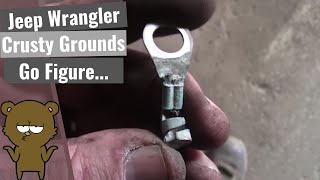
- Wiring Harness Damage or Poor Ground (Very Common) — Wires fray, break, or short against the engine, and plastic connectors crack from heat. On 2021 Jeep/Dodge vehicles, a poorly secured ground wire eyelet (G927A) is a known defect covered by TSB 08-111-21.
- Low, Dirty, or Incorrect Viscosity Engine Oil (Common) — VVT systems are hydraulic. Low oil, old sludge, or the wrong viscosity (e.g., 5W-30 instead of 5W-20) clogs the solenoid's fine mesh screens, causing it to stick and trigger circuit faults.
- Mechanical Failure in the Valvetrain (Rare) — A failing rocker arm, worn camshaft lobe, or damaged VVT phaser places mechanical stress on the system, triggering electrical faults as a secondary symptom.
- Faulty Powertrain Control Module (PCM) (Very Rare) — The internal PCM driver circuit that controls the solenoid fails. This is extremely rare and only suspected after exhausting all wiring and solenoid tests.
Symptoms

- Rough Idle or Engine Misfire — With valve timing locked in a non-optimal position, the engine shakes, misfires, or runs poorly at idle.
- Engine Stalling — The engine stalls unexpectedly at low speeds, when coming to a stop, or during gear shifts.
- Reduced Engine Power and Fuel Economy — The vehicle feels sluggish and unresponsive, causing a noticeable drop in gas mileage.
- Audible Clicking or Ticking Noise — A failing VVT solenoid or oil-starved valvetrain produces a distinct ticking sound from the upper engine. 🎬 Watch: See how a bad solenoid causes misfires and ticking.
- Check Engine Light is On (also visible on scanner) — The light illuminates immediately when the PCM logs the circuit fault.
- Start/Stop System Disabled — Vehicles equipped with automatic start/stop disable the feature when a P1053 code is active.
Diagnostic Flowchart

Tap your situation to follow the diagnostic path that matches what you're seeing on this code.
Common Fixes & Costs
- Engine Oil and Filter Change — Parts: $40-$80, Labor: $50-$100, ~0.5 hr book time (DIY)
- Replacing the VVT/VVL Solenoid — Parts: $50-$270, Labor: $130-$250, ~1.5 hr book time (DIY)
- Repairing Wiring or Ground Connection — Parts: $10-$30, Labor: $150-$400, ~1.9 hr book time (Intermediate)
- Replacing Upper Intake Manifold Gaskets — Parts: $20-$60, Labor: $0 (if done with solenoid replacement), ~2.5 hr book time (Intermediate)
- Replacing the Powertrain Control Module (PCM) — Parts: $600-$1,200, Labor: $150-$300, ~1.0 hr book time (Professional)
DIY vs Professional
- Replacing the VVT/VVL Solenoid — Beginner:
- Repairing Wiring or Ground Connection (TSB 08-111-21) — Beginner:
- Replacing the Powertrain Control Module (PCM) — Beginner:
Used vs. New Parts: Buying Guide
When a used part is worth it: Buy tested, used OEM parts only if the vehicle exceeds 150,000 miles and budget is extremely tight.
Donor-vehicle mileage cap: roughly under 100000 miles for the part to have meaningful remaining life.
Donor quality checklist:
- Verify the donor vehicle's mileage is reasonably low.
- Match the part number exactly, as there are subtle differences between model years.
- Inspect the part for physical damage, corrosion, or clogged oil screens before installation.
Decision logic:
- If The part is inexpensive new (under $100) and easily accessible → Buy new OEM or reputable aftermarket solenoids for the warranty and peace of mind.
- If Vehicle is over 150,000 miles and the budget is tight → A tested, used OEM part is a reasonable choice over a cheap, unbranded new part.
- If The part has a high failure rate or is known to wear out → Favor a new OEM or high-quality aftermarket part over a used one.
Warranty tradeoff: Used parts typically offer a 30-90 day functional warranty. Aftermarket new parts often come with a 1-year to limited lifetime warranty. New OEM parts carry a 1-2 year warranty.
Worst-case if a used part fails: $200-$500 if a used or cheap aftermarket solenoid fails shortly after installation, requiring repeat labor costs.
What Happens If You Wait — Timeline
- 0-1 month: Check Engine Light illuminates with code P1053. Start/Stop system is disabled. May be no other noticeable symptoms. (MPG impact: 0-5%% · Added cost: $0)
- 1-3 months: Engine develops a rough or unstable idle, especially when cold. A noticeable drop in fuel economy occurs. The engine hesitates during acceleration. (MPG impact: 5-15%% · Added cost: $50-$150 in wasted fuel)
- 3-9 months: Engine stalls at low speeds or when stopping. An audible ticking noise becomes apparent. Incomplete combustion overheats the catalytic converter. (MPG impact: 10-20%% · Added cost: $1,200-$2,800 (Risk of catalytic converter damage becomes significant))
- 9+ months: Prolonged operation with incorrect timing and oil pressure puts stress on mechanical valvetrain components, destroying the timing chain and camshaft phasers. (MPG impact: 15-25%% · Added cost: $2,000-$4,500+ (Cost to replace damaged catalytic converter and cam phasers).)
Cost of Not Fixing It
- 0-1 month: Reduced fuel economy (5-15% drop), rough idle, and potential stalling. Failed emissions test. (Added cost: Negligible, other than increased fuel costs.)
- 1-6 months: Increased engine wear due to improper lubrication and timing. Unburnt fuel overheats and damages the catalytic converter. (Added cost: $1200-$2800 (for catalytic converter replacement).)
- 6+ months: Severe engine damage occurs, including premature timing chain wear or camshaft phaser damage, from prolonged operation with incorrect oil pressure. (Added cost: $2000-$4000+ (for timing system or internal engine repairs).)
Diagnosis Steps
- Check Engine Oil Level and Condition
Ensure the engine oil is full, clean, and the correct viscosity. Low, dirty, or incorrect oil is a primary cause of VVT issues. If the oil is low, top it off. If it's old or dirty, perform an oil change.
Tools: Dipstick, Rag (Beginner) - Visual Inspection of Wiring and Connectors
Locate the VVT/VVL solenoid for cylinder 2. Inspect its electrical connector and wiring harness for frayed wires, cracked plastic, or corroded pins. On Jeep/Dodge models, check the G927A ground wire connection at the back of the engine (TSB 08-111-21).
Tools: Flashlight (Beginner) - Test the Solenoid's Resistance
Disconnect the solenoid connector. Measure resistance between the two pins on the solenoid. Chrysler solenoids typically read 5-15 Ohms. An 'OL' reading means an open circuit; under 2 Ohms means a short. Both confirm a dead solenoid.
Tools: Multimeter (Intermediate) - Swap Solenoids (The 'Mechanic's Trick')
Swap the cylinder 2 solenoid with a known good one from another cylinder. Clear codes and run the engine. If the code moves (e.g., to P1050), the solenoid is bad. If P1053 returns, the wiring is faulty.
Tools: Basic hand tools (socket set, wrenches) (Intermediate) - Test the Circuit for Power and Ground
With the key on/engine off, probe the harness connector. One pin must have 12V battery power from the PCM. The other is the ground control wire. Missing voltage indicates an upstream wiring or PCM issue.
Tools: Multimeter (Intermediate) - Clear Code and Test Drive
Clear the code and drive. Immediate return indicates a hard fault (broken wire or dead solenoid). Delayed return points to intermittent sticking or heat-related electrical expansion.
Tools: OBD-II Scanner (Beginner) - Advanced Circuit Integrity Test
Disconnect the solenoid and PCM C2 harness connector. Measure the resistance of the VVT circuit wire from the solenoid pin to the PCM pin. Resistance must be under 5.0 ohms. Higher resistance indicates a broken wire.
Tools: Multimeter, Vehicle-specific wiring diagram (Advanced) - Check Solenoid Command Signal with an Oscilloscope
Connect a lab scope to the solenoid's control wire. When the PCM commands the solenoid on, you see a square wave pattern. A flat line or noisy pattern proves a wiring issue or faulty PCM driver.
Tools: Oscilloscope, Back-probe pins (Expert) - Perform an In-Cylinder Pressure Transducer Test
Install a pressure transducer in the spark plug hole to graph cylinder pressure changes. An abnormality in the 'intake pocket' visually confirms the intake valve opens or closes incorrectly, proving a mechanical VVL/VVT failure.
Tools: Oscilloscope, Pressure Transducer (Expert)
When This Code Triggers (Freeze-Frame Conditions)
- Engine Coolant Temp: 180-210°F (Fully warmed up)
- RPM: 1200-3000 (Light acceleration or steady cruise)
- Engine Load: 25-70% (Moderate engine load, not at idle or full throttle)
- Vehicle Speed: 20-60 mph (City or highway driving)
Related Codes
- P1050, P1056, P1059 — Circuit fault codes for cylinders 1, 3, and 4. Seeing these together confirms a shared ground fault (like TSB 08-111-21) rather than multiple dead solenoids.
- P0010, P0013, P0020, P0023 — Generic camshaft position actuator circuit codes. Often appear alongside P1053 during widespread wiring failures.
- P105C — Mechanical fault (Intake Valve Stuck in Low Lift). A dead solenoid (P1053) causes P105C by failing to supply oil pressure. Fix P1053 first.
- P105D — Mechanical fault (Intake Valve Stuck in High Lift). Fix electrical codes like P1053 first.
Climate & Environmental Factors
- Temperature Extremes: In extreme cold, oil thickens, slowing the solenoid's response on cold starts. In extreme heat, oil thins out and degrades faster, reducing hydraulic pressure and creating sludge that clogs the solenoid's fine mesh screens.
How to Talk to a Mechanic About This Code
Say this: "I have a P1053 code, indicating a VVT solenoid circuit fault. Please test the solenoid's resistance and check for power and ground at the connector before replacing any parts."
This proves you know P1053 is a circuit fault, not just a bad part. It forces the mechanic to pinpoint the failure (solenoid, wiring, or ground) rather than blindly swapping the solenoid.
Avoid saying:
- 'Just fix whatever's wrong'
- 'My check engine light is on, can you look at it?'
- 'Whatever you recommend'
Questions to ask before authorizing the repair:
- Did you test the solenoid's resistance, and what was the reading?
- Did you confirm there is power and a ground signal at the harness connector?
- If the issue is wiring, can you show me where the damage is?
- What is the warranty on the recommended parts and labor?
Where to Take It: Dealer vs Independent vs Chain
- Dealer:
Best for: Vehicles still under powertrain or emissions warranty., Known manufacturer-specific issues covered by a TSB, like the ground wire fault on Jeeps (TSB 08-111-21)., Complex electrical diagnostics on newer or German vehicles.
Downsides: Highest labor rates, often 1.5-2x more than an independent shop., Refuses smaller-scale wiring repairs in favor of replacing the entire harness. (Typical cost: +50% vs. baseline) - Independent Shop:
Best fit for most cases. A reputable independent shop effectively handles a P1053, from testing the solenoid to tracing a wiring fault, at a lower cost than a dealer.
Best for: Out-of-warranty vehicles where cost is a major factor., Common, well-documented problems like a failed VVT solenoid on a 3.6L Pentastar engine., Owners who have a trusted relationship with a local mechanic.
Downsides: Quality and diagnostic capabilities vary widely. Vet the shop via reviews and ASE certifications., Lacks awareness of the latest TSBs for very recent model years. (Typical cost: +0% vs. baseline) - Chain Shop:
Acceptable for a simple solenoid replacement you already confirmed is bad; AVOID for initial diagnosis of a circuit fault.
Best for: Simple oil changes to clear sludge., Basic parts replacement if you already diagnosed the exact failure.
Downsides: Technician skill varies dramatically; incapable of advanced electrical diagnostics., High pressure to upsell services and parts. (Typical cost: -10% vs. baseline)
When to Walk Away From the Repair
If the estimated repair cost exceeds 50% of the car's private-party value, sell or trade it in rather than repairing it.
- Car worth $15000, fix is $520: Fix it. The repair cost is a small fraction of the vehicle's value.
- Car worth $6000, fix is $700: Borderline. The repair is significant relative to the car's value, but below the 50% threshold. Get a second opinion before proceeding.
- Car worth $3500, fix is $2000: Walk away. The repair cost is over 50% of the car's value and approaches the cost of a more reliable replacement.
What Scan Tool You Need for This Code
Minimum: A basic OBD-II code reader that reads and clears codes and shows freeze-frame data.
A $20 reader confirms the code exists but cannot test the circuit. Proper diagnosis requires live data to see PCM commands or bidirectional control to activate the solenoid manually.
Budget: BlueDriver Pro or Ancel BD310 (~$100) — Connects to your phone via Bluetooth to display live PCM data. You see if the computer attempts to command the solenoid on or off, isolating the problem to the circuit itself.
Mid-range: Foxwell NT510 Elite or Launch Creader Elite for Chrysler (~$170) — Offers manufacturer-specific diagnostics and bidirectional control. You command the VVT solenoid on and off with the scan tool, providing a definitive test of the wiring, PCM driver, and solenoid.
Professional: Autel MaxiCOM MK808BT or Launch X431 series (~$450-900) — Provides full professional-level bidirectional control, advanced ECU coding, and faster processing. Essential for technicians but overkill for DIY users facing a single code.
Rent vs buy: For a one-time diagnosis, borrow a basic OBD-II scanner for free from AutoZone's Loan-A-Tool program. Buy a scanner only if you diagnose vehicles more than once a year.
How to Clear the Code After You Fix It
- Use an OBD-II scan tool to clear the diagnostic trouble code.
- Disconnecting the battery is not recommended as it clears all readiness monitors.
- Perform a complete drive cycle to allow the vehicle's readiness monitors to reset.
Drive cycle (~30 minutes): A general drive cycle includes a cold start, 5 minutes of idling, 15 minutes of mixed city/highway driving with varied speeds and steady throttle, followed by a cool-down period. The fuel tank should be between 1/4 and 3/4 full.
Readiness monitors affected: Catalyst Monitor, Oxygen (O2) Sensor Monitor, Evaporative (EVAP) System Monitor
Before emissions retest: drive at least 50 miles to fully set monitors.
Watch out for:
- Clearing the code without fixing the underlying issue causes the code to return.
- Taking the vehicle for an emissions test immediately after clearing the code results in a 'Not Ready' failure.
- Not following the specific drive cycle procedure delays monitor readiness.
Will This Fail Emissions / State Inspection?
Yes — this code typically fails an OBD-II emissions inspection.
- California: An active Check Engine Light for code P1053 is an automatic failure. All required readiness monitors must be set to 'Ready'.
- New York: Vehicles with an illuminated Check Engine Light automatically fail. After repair, a full drive cycle is needed to set the readiness monitors before a re-test.
- Texas: An active P1053 code causes the vehicle to fail the OBD-II test. A vehicle passes with one monitor 'Not Ready', but a CEL is an automatic fail.
Most Commonly Affected Vehicles
- Jeep Grand Cherokee (2016-2021) — Extremely common on models with the 3.6L V6 engine. Often related to a faulty ground connection or the solenoid itself.
- Jeep Wrangler (JL) (2021) — TSB 08-111-21 covers models built between Oct 10, 2020 and Oct 14, 2020 with the 3.6L engine due to a faulty engine ground harness eyelet.
- Jeep Gladiator (JT) (2021) — Covered under TSB 08-111-21 for the faulty ground wire issue on 3.6L engines built between Oct 13, 2020 and Oct 17, 2020.
- Dodge Ram 1500, Durango, Charger, Challenger (2016-2021) — Models using the 3.6L Pentastar V6 engine share the same VVL system and are prone to identical solenoid and wiring issues.
- Chrysler Pacifica, 300 (2016-2021) — Equipped with the 3.6L Pentastar engine, these models are susceptible to identical P1053 faults.
- BMW 3-Series, 5-Series, X-Series (2006-2016) — P1053 points to a short circuit in the VVT (VANOS) control system for Bank 2, usually requiring a new VANOS solenoid.
- Hyundai Sonata, Santa Fe (2011-2019) — Hyundai GDI engines experience CVVT issues presenting similar symptoms, focusing on oil condition, solenoids, and wiring.
- Kia Optima, Sorento (2011-2019) — Sharing platforms with Hyundai, Kia models with GDI engines experience similar VVT system faults caused by oil sludge.
Manufacturer-Specific Notes
- Jeep/Dodge/Chrysler: TSB 08-111-21 addresses a faulty G927A ground wire eyelet causing multiple VVT codes. The fix requires splicing a new ground pigtail.
- BMW: P1053 specifically means a short circuit in the Bank 2 VANOS control system, usually requiring a new VANOS solenoid.
- Mazda: On SKYACTIV-D 1.5 diesels, P1053 means 'Injection quantity too low cylinder No.2', requiring fuel system diagnostics.
- Ford: On older models, P1053 means 'Heated Oxygen Sensor Slow Response Bank 2 Sensor 1', requiring O2 sensor or exhaust leak checks.
Real Owner Stories
2017 Jeep Grand Cherokee with 91K miles - The Straightforward Fix
Check Engine Light came on with code P1053. The owner did not report any major driving symptoms initially.
What they tried:
- The owner learned the code pointed to the intake valve control solenoid for bank 1, sensor 2.
- After confirming the location (passenger side, rear of the valve cover), they replaced the VVL 1/2 solenoid.
Outcome: Replacing the correct solenoid fixed the issue. The owner reported the car runs like new and the code cleared.
Lesson: If you have a circuit code, confirming the correct solenoid location and replacing it is a direct and effective fix when no other symptoms or codes are present.
2017 Jeep Grand Cherokee - The Misdiagnosis and Confusion
P1053 code appeared. Owner experienced intermittent engine misfiring and stalling.
What they tried:
- Owner replaced a solenoid on the driver's side, but the code returned.
- Took it to a shop, which stated all solenoids and wiring were good, then reset the code, but it came back on.
- A second opinion clarified that P1053 is for the passenger side (Bank 1) and that dirty oil or timing chain issues also cause it.
Outcome: The owner was advised to check the wiring and ground bolt per the TSB, then perform an oil change before replacing the correct solenoid on the passenger side.
Lesson: P1053 is specific to one solenoid's circuit. Replacing the wrong part won't work. If a shop says 'everything is good' but the code returns, they missed the true cause.
2021 Jeep Gladiator 3.6L - The TSB Ground Wire Fix
Owner experienced a Check Engine Light with multiple VVT/VVL codes, including P1053, P1050, and P1056, along with a rough running engine.
What they tried:
- This case is a direct example of a manufacturer-identified problem. Jeep issued Technical Service Bulletin (TSB) 08-111-21 for this specific issue.
Outcome: The official repair involves removing the upper and lower intake manifolds to access the G927A ground point, cutting the faulty wire eyelet, and splicing in a new ground pigtail. The book time is 1.9 hours.
Lesson: When multiple related circuit codes appear at once, suspect a common point of failure like a shared ground wire. Always check for TSBs before replacing multiple expensive parts.
How to Prevent This Code From Triggering
- Use high-quality full synthetic engine oil that meets the manufacturer's specification (e.g., Chrysler MS-6395). (Every oil change) — High-quality synthetics resist breakdown at high temperatures and contain superior detergents that prevent sludge formation, which is the primary enemy of VVT solenoids.
- Adhere to a strict oil change interval of 5,000-7,500 miles, or shorter. (Every 5,000-7,500 miles) — Extending oil change intervals allows contaminants to build up, degrading the oil and leading to sludge that clogs solenoid screens.
- Always replace the oil filter with a high-quality OEM or equivalent filter with every oil change. (Every oil change) — The oil filter is the only line of defense against contaminants circulating in the oil. A cheap filter allows debris to reach and clog sensitive VVT components.
- Avoid using chemical engine flush products, especially on high-mileage engines. (Never, unless for a specific, diagnosed problem) — Aggressive solvent-based flushes dislodge large pieces of hardened sludge that travel and permanently clog the microscopic passages in VVT solenoids.
Frequently Asked Questions
Can an oil change really fix a P1053 code?
Yes. The VVT system is hydraulic and extremely sensitive to oil pressure and cleanliness. If the oil is old, the wrong viscosity, or sludgy, it clogs the tiny passages in the solenoid and triggers the code. Starting with an oil and filter change using the manufacturer-specified oil is a smart first step.
I replaced the solenoid, but the P1053 code came back. Now what?
If the code returns immediately, the fault is in the wiring or the connector. Re-inspect the harness for breaks, corrosion, or a loose ground wire, especially the known ground issue on Jeep/Dodge products. If the wiring checks out, the next rare possibility is a failed driver in the PCM.
What's the most common mistake when diagnosing P1053?
The most common mistake is immediately replacing the solenoid without performing basic circuit tests. P1053 specifically indicates a circuit malfunction, meaning the problem is often the wiring, connector, or PCM. Swapping the suspect solenoid with an adjacent one is a free, definitive test to isolate the part from the wiring.
Where is the VVT solenoid for P1053 located?
On the Chrysler 3.6L Pentastar engine, there are four VVL solenoids on the valve covers. P1053 often refers to the solenoid for cylinder #2, typically on Bank 2 (the driver's side in a RWD vehicle). Accessing the rear solenoids requires removing the upper intake manifold.
How much does it cost to fix P1053?
The cost ranges from $50 for a DIY oil change to $520 for a shop to replace the VVT solenoid. If it's a complex wiring issue like the TSB ground repair, expect to pay $300-$500 due to the labor involved in accessing the harness.
Can I replace the VVT solenoid myself?
Yes, replacing a VVT solenoid is often a DIY-friendly job requiring basic hand tools. The solenoids sit on top of the engine and are held in by one or two bolts. However, accessing rear solenoids on engines like the 3.6L Pentastar requires removing the upper intake manifold.
Can a bad battery cause a P1053 code?
While not a direct cause, a failing battery creates low voltage conditions and electrical noise. On sensitive vehicles, this leads to communication errors or erroneous fault codes set by the PCM. Test your battery as part of a comprehensive diagnosis if it is over three years old.
Key Takeaways
- P1053 indicates an electrical circuit fault with a VVT/VVL solenoid, most commonly affecting 2016-2021 Jeep, Dodge, and Chrysler 3.6L engines.
- Start by checking your engine oil, as low levels or incorrect viscosity (like using 5W-30 instead of 5W-20) directly trigger VVT circuit faults.
- Inspect the G927A ground wire on 2021 Jeep and Dodge 3.6L engines, as TSB 08-111-21 identifies a faulty factory eyelet that requires a 1.9-hour splicing repair.
- Test the solenoid with a multimeter before replacing it; a healthy Chrysler VVT solenoid reads between 5 and 15 Ohms, while an 'OL' reading confirms a dead part.
- Verify your vehicle's specific P1053 definition, as it means a VVT short circuit on BMWs but indicates a cylinder 2 fuel injection failure on Mazda diesels.
Helpful Videos
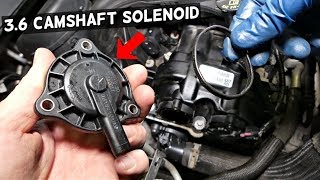
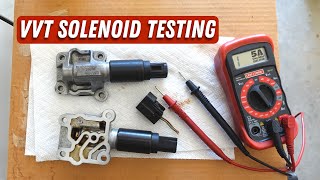

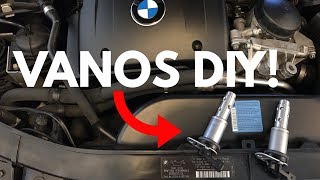
![Replacing BMW Vanos Solenoids [DIY]](https://img.youtube.com/vi/ZyAMAiBTco8/mqdefault.jpg)


The information in this article is provided for general reference and educational purposes only. Vehicle specifications, procedures, and part compatibility can vary by production date, trim level, and region. Always consult your vehicle's factory service manual and verify part numbers before purchasing or performing repairs. Safety-critical components such as airbags, seat belts, and braking systems should be installed by a qualified professional.
- 🎬 Helpful Videos
- What Does P1053 Mean?
- Can I Drive With P1053?
- Common Causes
- Symptoms
- Diagnostic Flowchart
- Common Fixes & Costs
- DIY vs Professional
- Used vs. New Parts: Buying Guide
- What Happens If You Wait — Timeline
- Cost of Not Fixing It
- Diagnosis Steps
- When This Code Triggers (Freeze-Frame Conditions)
- Related Codes
- Climate & Environmental Factors
- How to Talk to a Mechanic About This Code
- Where to Take It: Dealer vs Independent vs Chain
- When to Walk Away From the Repair
- What Scan Tool You Need for This Code
- How to Clear the Code After You Fix It
- Will This Fail Emissions / State Inspection?
- Most Commonly Affected Vehicles
- Manufacturer-Specific Notes
- Real Owner Stories
- 2017 Jeep Grand Cherokee with 91K miles - The Straightforward Fix
- 2017 Jeep Grand Cherokee - The Misdiagnosis and Confusion
- 2021 Jeep Gladiator 3.6L - The TSB Ground Wire Fix
- How to Prevent This Code From Triggering
- Frequently Asked Questions
- Can an oil change really fix a P1053 code?
- I replaced the solenoid, but the P1053 code came back. Now what?
- What's the most common mistake when diagnosing P1053?
- Where is the VVT solenoid for P1053 located?
- How much does it cost to fix P1053?
- Can I replace the VVT solenoid myself?
- Can a bad battery cause a P1053 code?
- Key Takeaways
- 🎟️ Get 5% Off