

OBD-II Code P1040: Comprehensive Guide to VVT and Injector Circuit Faults
What P1040 means, why it triggers, and how to fix it for good
- Verify your vehicle's specific P1040 definition first, as it means a VVT fault on BMWs and Mitsubishis, but a Cylinder 1 fuel injector failure on Fords, Chevys, and Toyotas.
- Check your engine oil level and condition immediately if your vehicle uses a VVT system, as dirty or low oil causes 80% of VVT-related P1040 codes.
- Inspect the wiring harness leading to the cylinder 1 fuel injector for chafing or melting before replacing the $200+ injector itself.
- Take Mitsubishi vehicles directly to a shop with a M.U.T.-III scan tool to perform a 30-minute idle relearn procedure if the code appeared after a battery disconnect.
What Does P1040 Mean?

P1040 is a manufacturer-specific code with two primary definitions. For European brands like BMW, it indicates a Variable Valve Timing (VVT) or Valvetronic system failure. For Ford, Chevrolet, Toyota, Volkswagen, and Hyundai/Kia, it indicates an electrical fault with the fuel injector in cylinder 1.
Technical definition: The SAE/OBD-II definition for P1040 varies by manufacturer. On BMW models, it means 'Valvetronic Monitoring Sluggish Movement' or 'VVT CAN Time-out'. On Mitsubishi vehicles, it means 'Minimum Valve Lift Not Learned Yet'. For Hyundai, Kia, Volkswagen/Audi, Ford, Chevrolet, and Toyota models, it indicates 'Injector 1, Supply Voltage - Circuit Malfunction'.
Can I Drive With P1040?
Yes, But With Caution. You can drive temporarily, but expect poor engine performance and reduced fuel economy. For vehicles where P1040 indicates a misfire (e.g., Chevrolet, Ford, Toyota), continued driving floods the exhaust with unburnt fuel, destroying the catalytic converter. This adds a $800 to $2,500 repair cost.
Common Causes

- Low or Dirty Engine Oil (Very Common) — The VVT system uses hydraulic oil pressure to adjust timing. Low, old, or sludgy oil clogs the small passages in the VVT solenoids and phasers, preventing them from working and triggering VVT-related P1040 codes.
- Faulty Fuel Injector (Cylinder 1) (Very Common) — For Ford, Chevy, Toyota, Hyundai/Kia, and VW, P1040 points directly to an electrical problem with the #1 fuel injector. This is usually an internal short or open circuit within the injector coil. 🎬 Watch: How to diagnose a fuel injector circuit malfunction.
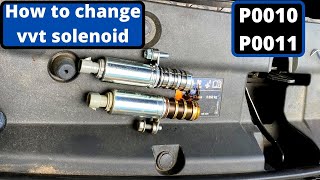
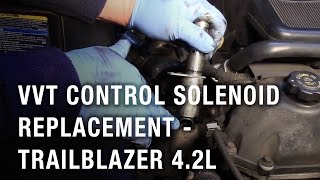
- Failed VVT Solenoid (Oil Control Valve) (Very Common) — This electronically controlled valve directs oil flow to the camshaft phasers. It fails electrically (internal short/open) or becomes mechanically stuck from debris, making it the most common hardware failure for VVT faults. 🎬 See this quick tutorial on changing a VVT solenoid.
- Failed Relearn Procedure (Mitsubishi) (Common) — On Mitsubishi models, P1040 specifically means the idle relearn for the valve lift system is incomplete. This occurs after a battery disconnect or major engine repair, wiping the ECU's learned values.
- Damaged Wiring or Connectors (Common) — The wiring harness for the VVT solenoid or fuel injector often becomes damaged, corroded, or loose. Chafing against hot engine components or oil contamination swelling the connector are frequent culprits.
- Faulty VVT Actuator (Cam Phaser) (Less Common) — The VVT actuator physically changes the camshaft's timing. Internal seals wear out or the locking pin fails, causing it to stick or rattle, especially if oil changes are neglected.
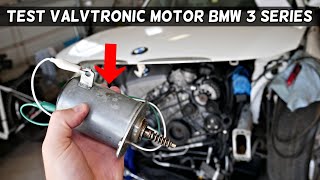
- Faulty Eccentric Shaft Sensor (BMW) (Less Common) — Specific to BMW's Valvetronic system, this sensor monitors the eccentric shaft position. Its failure triggers a host of VVT-related codes, including P1040, often leading to misdiagnosis of the Valvetronic motor. 🎬 Watch: BMW Valvetronic system explained, diagnosed, and fixed.
- Worn Timing Chain or Guides (Less Common) — A stretched timing chain or broken plastic guides causes erratic camshaft timing. The ECU interprets this mechanical deviation as a VVT control problem.
- Internal PCM/ECU Malfunction (Very Rare) — If all components and wiring test perfectly, the Powertrain Control Module (PCM) itself has failed. The internal driver circuit responsible for grounding the VVT solenoid or fuel injector burns out.
Symptoms
- Check Engine Light is On — The ECU illuminates the Malfunction Indicator Lamp on the dashboard immediately after detecting the fault.
- Poor Acceleration and Reduced Power — The vehicle feels sluggish and hesitates when pressing the gas pedal because the engine cannot adjust valve timing or fuel delivery.
- Limp Mode (Mitsubishi) — Mitsubishi vehicles enter a 'fail-safe' mode, severely limiting engine power and RPMs to prevent damage until the required relearn procedure is completed.
- Engine Rattling Noises — A rattling or clicking sound from the top of the engine on startup indicates a malfunctioning VVT actuator (phaser) or a loose timing chain.
- Decreased Fuel Economy — With stuck valve timing or a misfiring cylinder, the engine burns fuel inefficiently, noticeably dropping MPG.
- Engine Misfire and Rough Idle (also visible on scanner) — If the code relates to a fuel injector, cylinder 1 misfires consistently, causing a rhythmic shudder and rough idle. This is often accompanied by code P0301.
Diagnostic Flowchart
Tap your situation to follow the diagnostic path that matches what you're seeing on this code.
Common Fixes & Costs
- Engine Oil and Filter Change — Parts: $30-$80, Labor: $30-$60, ~0.5 hr book time (DIY)
- Replace Fuel Injector (Cylinder 1)
— Parts: $80-$300, Labor: $150-$400, ~2.5 hr book time
(Intermediate)
: OEM - Replace VVT Solenoid
— Parts: $50-$200, Labor: $100-$250, ~1.2 hr book time
(Intermediate)
: OEM - Perform ECU/PCM Relearn Procedure — Parts: $0, Labor: $100-$200, ~1.0 hr book time (Professional)
- Repair Wiring Harness or Connector — Parts: $10-$50, Labor: $150-$350, ~2.0 hr book time (Professional)
- Replace Timing Chain and Tensioners — Parts: $400-$1000, Labor: $1,200-$2,500, ~10.0 hr book time (Professional)
DIY vs Professional
- Engine Oil and Filter Change — Beginner:
Tools: Wrench for drain plug, oil filter wrench, drain pan, funnel. - Replace VVT Solenoid — Beginner:
Tools: Basic ratchet and socket set, torque wrench, rags. - Replace Fuel Injector (Port Injection) — Beginner:
Tools: Socket set, pliers, fuel line disconnect tool, new O-rings. - Replace Fuel Injector (GDI) — Beginner:
Tools: Full tool set, torque wrench, special injector puller, seal sizing tools. - Repair Wiring Harness — Beginner:
Tools: Multimeter, wire strippers/cutters, soldering iron, heat shrink tubing. - Replace Timing Chain — Beginner:
Tools: Extensive engine tools, timing alignment tools, flywheel holder, torque wrenches.
Used vs. New Parts: Buying Guide
When a used part is worth it: For VVT solenoids and port fuel injectors, a used OEM part from a reputable salvage yard is a cost-effective option for older, high-mileage vehicles.
Donor-vehicle mileage cap: roughly under 80000 miles for the part to have meaningful remaining life.
Donor quality checklist:
- Verify the part is an OEM original, not a used aftermarket part.
- Ensure electrical connectors are not cracked, corroded, or oil-soaked.
- Match the part number exactly to your original component.
Decision logic:
- If The vehicle is less than 8 years old or has under 80,000 miles. → Buy new (OEM or quality aftermarket) for longevity and a longer warranty.
- If The vehicle is over 10 years old and the budget is a primary concern. → A tested, used OEM part is a reasonable choice, but accept its shorter remaining lifespan.
- If The part is a Gasoline Direct Injection (GDI) fuel injector. → Strongly favor new. GDI injectors are precision components sensitive to wear; used ones are a significant gamble.
Warranty tradeoff: Used parts typically come with a 30-90 day functional warranty. New aftermarket parts offer 1-year to limited lifetime warranties. New OEM parts have a 1-2 year warranty.
Worst-case if a used part fails: $300-$800 if a used part fails, requiring repeat labor costs plus a new replacement part.
What Happens If You Wait — Timeline
- 0-2 weeks: Check Engine Light illuminates. For VVT faults, a slight rattle on startup occurs. For injector faults, a subtle, intermittent rough idle is felt. (MPG impact: 0-5%% · Added cost: $0)
- 2 weeks - 3 months: Engine performance degrades significantly. Acceleration is sluggish, the idle is consistently rough, and fuel consumption increases. (MPG impact: 5-15%% · Added cost: $50-$150 in wasted fuel.)
- 3-8 months: Secondary damage begins. Unburnt fuel from injector faults overheats and degrades the catalytic converter. Prolonged incorrect timing from VVT faults stresses the timing chain. (MPG impact: 15-25%% · Added cost: $1,200 - $2,500 for catalytic converter replacement.)
- 8+ months: Catastrophic failure occurs. A completely failed timing system causes piston-to-valve contact, wrecking the engine. A severely leaking injector hydro-locks a cylinder, bending a connecting rod. (MPG impact: >25% (if drivable)% · Added cost: $4,000 - $8,000+)
Cost of Not Fixing It
- Short-Term (0-2 months): Noticeable drop in fuel economy (5-15%), rough idle, and poor acceleration. (Added cost: $50-$150 in wasted fuel.)
- Medium-Term (2-6 months): Raw fuel washes into the exhaust, overheating and destroying the catalytic converter. Prolonged incorrect timing damages the timing chain. (Added cost: $1,200 - $2,500 for catalytic converter replacement.)
- Long-Term (6+ months): Catastrophic engine damage. A hydro-locked cylinder from a leaking injector bends a connecting rod, or a failed timing system causes piston-to-valve contact. (Added cost: $4,000 - $8,000+)
Diagnosis Steps

- Confirm the Code's Meaning for Your Vehicle
Use a reliable service manual or online resource to confirm what P1040 means for your specific Year, Make, and Model. Determine if it is a VVT fault or an Injector #1 fault to avoid wasted diagnostic time.
Tools: OBD-II Scanner, Service Manual (Beginner) - Scan for Accompanying Trouble Codes
Read all stored codes. P1040 often appears with codes that pinpoint the problem, such as P0301 (Cylinder 1 Misfire) for an injector fault, or P0011/P0012 for a VVT fault.
Tools: OBD-II Scanner (Beginner) - Check Engine Oil Level and Condition
For VVT-related faults, ensure the engine oil is full. If the oil is very dark, thick, or gritty, it is overdue for a change and is likely the root cause of the sluggish VVT response.
Tools: Shop Towel (Beginner) - Inspect Component Wiring and Connectors
Locate either the VVT solenoid or the #1 fuel injector. Inspect the electrical connector and wiring for damage, corrosion, melting, or oil contamination. Wiggle the harness while the engine idles to check for loose connections.
Tools: Flashlight (Beginner) - Test Component Electrical Resistance
Disconnect the VVT solenoid or fuel injector. Use a multimeter to measure internal resistance. VVT solenoids generally measure 5-15 Ohms; port fuel injectors measure 10-20 Ohms. A reading of infinity (OL) indicates an open circuit, while near zero indicates a short.
Tools: Digital Multimeter (Intermediate) - Verify Power and Ground Pulse
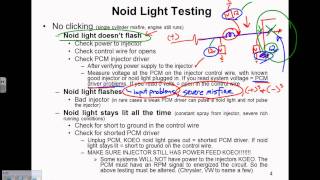
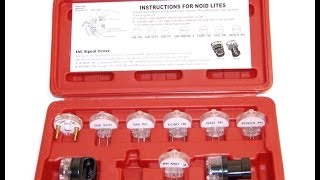
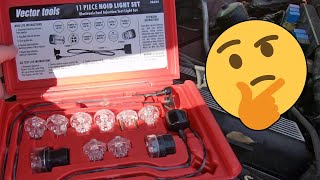
For injector faults, unplug the injector, plug in a noid light, and crank the engine. Rhythmic flashing indicates the ECU is sending the command signal. If it doesn't flash, check for constant 12V power on one pin with the key on, then check the signal wire for continuity back to the ECU.
Tools: Noid Light Set, Digital Multimeter (Advanced) - Perform System Relearn (Mitsubishi)
If diagnosing a Mitsubishi, perform the 'minimum valve lift position learning' procedure. This requires a compatible, high-level scan tool to initialize and execute the idle learn procedure.
Tools: Advanced Bi-Directional Scan Tool (Advanced) - Analyze Live Data with a Scan Tool
For injector faults, monitor the 'Injector Pulse Width' PID for cylinder 1 at idle (normally 2.0-4.0 ms). For BMW Valvetronic faults, monitor the eccentric shaft position; at idle, it should be less than 30 degrees.
Tools: Advanced Scan Tool (Advanced) - Analyze Injector Waveform
For intermittent injector faults, back-probe the signal wire with a lab scope. The waveform must show a sharp drop to near zero (on time) followed by a sharp inductive spike when the injector turns off. A missing spike indicates a weak injector coil.
Tools: Automotive Lab Scope (Professional)
When This Code Triggers (Freeze-Frame Conditions)
- Engine Coolant Temp: 180-210°F (82-99°C) (The fault is often detected after the engine reaches full operating temperature.)
- Engine RPM: 1500-3000 RPM (VVT faults typically set during steady-state cruising when the ECU commands a timing change and doesn't see the expected result.)
- Engine Load: 25-70% (The code appears under moderate load conditions, not typically at idle or full throttle.)
- Vehicle Speed: 40-65 mph (65-105 kph) (VVT and injector circuit tests run continuously during steady highway driving.)
Related Codes
- P0011 / P0012 — These codes mean 'Camshaft Position Timing - Over-Advanced/Retarded'. They indicate the result (bad timing), while a VVT-related P1040 points to the cause in the control system. If both are present, focus on VVT components.
- P0301 — This code means 'Cylinder 1 Misfire Detected'. If you have an injector-related P1040, you will almost always have P0301. With P1040 present, the fuel injector circuit is the prime suspect.
- P1030 — On BMWs, P1030 means 'Valvetronic Monitoring Sluggish Movement', pointing directly to a slow-acting Valvetronic motor. P1040 is a more general Valvetronic fault or CAN timeout.
- P0140 — Do not confuse P1040 with P0140, which relates to an O2 sensor circuit with no activity detected. The similar number causes confusion, but the faults are completely unrelated.
Climate & Environmental Factors
- Cold Weather: Extremely cold temperatures increase engine oil viscosity. This slows the hydraulic response of VVT solenoids and phasers, causing them to move sluggishly on startup and trigger timing deviation codes.
How to Talk to a Mechanic About This Code
Say this: "I have a P1040 code on my [Year, Make, Model]. I know this code has different definitions depending on the brand. Can you confirm the code's specific definition for my car and create a test plan before replacing any parts? I want to be sure if it's an injector circuit, a VVT issue, or a relearn procedure."
This signals you are an informed customer. It directs the mechanic to diagnose rather than guess and prevents them from immediately replacing a common part without confirming the root cause.
Avoid saying:
- 'My check engine light is on, can you just fix it?'
- 'My friend said it's probably the fuel injector, can you replace it?'
- 'Just do whatever you think is right.'
Questions to ask before authorizing the repair:
- Can you show me the test results that confirm this part has failed (e.g., multimeter reading, noid light test)?
- Did you inspect the wiring and connector for damage before recommending the part replacement?
- If this is a Mitsubishi, have you confirmed that a 'relearn' procedure isn't the required fix?
- What is the warranty on the parts and labor for this specific repair?
Where to Take It: Dealer vs Independent vs Chain
- Dealer:
Required for Mitsubishi P1040. Highly recommended for complex BMW electrical diagnoses. Otherwise, an independent shop is more cost-effective.
Best for: Mitsubishi vehicles requiring the M.U.T.-III 'relearn' procedure., BMW vehicles with 'CAN Timeout' faults requiring deep network diagnostics., Any vehicle still under powertrain or emissions warranty.
Downsides: Significantly higher labor rates., May recommend replacing entire assemblies instead of smaller failed components. (Typical cost: +50% vs. baseline) - Independent Shop:
Best choice for the majority of P1040 cases (injector and common VVT faults), provided the shop is reputable and well-equipped.
Best for: Out-of-warranty Ford, Chevy, Toyota, VW, or Hyundai injector circuit diagnosis., Standard VVT solenoid replacements on most non-European makes., Vehicles where cost is a primary concern.
Downsides: Quality and expertise vary; check for ASE certification and good reviews., May not own the specific high-end scan tools for manufacturer quirks. (Typical cost: +0% vs. baseline) - Chain Shop:
AVOID for P1040 diagnosis. The risk of misdiagnosis is high. Only use if you are certain an oil change is the first step you want to take.
Best for: Basic oil changes to fix a VVT issue caused by dirty oil.
Downsides: Technician skill varies widely., High pressure to upsell unnecessary services., Not equipped for complex electrical or manufacturer-specific diagnostic procedures. (Typical cost: -10% vs. baseline)
When to Walk Away From the Repair
If the estimated repair cost exceeds 50% of the car's private-party value, seriously consider selling or trading in the vehicle instead of repairing it.
- Car worth $3500, fix is $1800: Walk away. The repair cost is over 50% of the car's value. This money is better put toward a replacement vehicle.
- Car worth $12000, fix is $950: Fix it. The repair is well below the 50% threshold and restores the value and function of a significant asset.
- Car worth $5000, fix is $2500: Borderline. This is exactly at the 50% mark. Get a second opinion on the diagnosis and estimate before making a final decision.
What Scan Tool You Need for This Code
Minimum: A scanner that reads manufacturer-specific code definitions. A generic reader that only shows 'P1040' without the specific text is not sufficient.
A $20 code reader will not differentiate between the multiple, distinct meanings of P1040. Without knowing your vehicle's specific definition, you will waste time diagnosing the wrong system.
Budget: BlueDriver Pro (~$100) — Connects to your smartphone and provides manufacturer-specific code definitions. It displays live data, allowing you to monitor injector pulse width or VVT solenoid commands.
Mid-range: Foxwell NT510 Elite / Innova 5610 (~$150) — Offers full system diagnostics and live data graphing. Crucially, it includes bidirectional controls to actively test components like VVT solenoids.
Professional: Autel MaxiCOM MK808 (~$450) — Provides full bidirectional control and includes the special functions needed for system relearns. A tool at this level is required to perform the 'Minimum Valve Lift Position Learning' procedure on a Mitsubishi.
Rent vs buy: For a one-time diagnosis, auto parts stores offer free code reading services. However, to perform diagnostic tests (live data, bidirectional control), you need to own a capable scanner. If you have a Mitsubishi, you must pay a shop for the relearn procedure.
How to Clear the Code After You Fix It
- Reconnect the battery if it was disconnected for the repair.
- Use an OBD-II scan tool to erase the P1040 code from the ECU's memory.
- Perform a complete drive cycle to allow the vehicle's readiness monitors to run their self-tests.
Drive cycle (~30 minutes): A generic drive cycle includes a cold start, 3 minutes of idling, 15 minutes of mixed city/highway driving at steady speeds around 55 mph, and allowing the vehicle to cool down.
Readiness monitors affected: Catalyst Monitor, Oxygen (O2) Sensor Monitor, Comprehensive Component Monitor
Before emissions retest: drive at least 100 miles to fully set monitors.
Watch out for:
- Disconnecting the battery clears the code but resets all readiness monitors to 'Not Ready', guaranteeing an emissions test failure.
- For Mitsubishi, clearing the code without performing the specific 'valve lift learn' procedure with a scan tool causes the code to return instantly.
Will This Fail Emissions / State Inspection?
Yes — this code typically fails an OBD-II emissions inspection.
- California: An active Check Engine Light results in an automatic failure. After repair, most readiness monitors must be 'Ready'. For 2000+ model year vehicles, only the EVAP monitor can be incomplete.
- New York: A vehicle with an illuminated Check Engine Light automatically fails the emissions inspection. After clearing the code, a full drive cycle must be completed before re-inspection.
- Texas: In counties requiring emissions testing, an active P1040 code causes an automatic failure. For 2001 and newer vehicles, only one readiness monitor is allowed to be 'Not Ready'.
Most Commonly Affected Vehicles
- BMW X3 (F25), 3-Series (E90/F30), 5-Series (F10) (2006-2018) — Models with Valvetronic systems (N20, N52, N55 engines) are sensitive to oil quality. P1040 indicates a 'CAN Timeout', suggesting a communication issue between the DME and Valvetronic module.
- Mitsubishi Lancer, Outlander, Outlander Sport (2008-2020) — These vehicles set P1040 if the variable valve lift system's learning procedure is not completed after a battery disconnect. It is a procedural fix, not a parts failure.
- Chevrolet Cruze, Sonic, Aveo (2008-2019) — P1040 indicates 'Injector 1 Supply Voltage Circuit Malfunction'. Diagnosis focuses on the injector, wiring, or ECU.
- Ford Focus (2012-2018) — On models with the 2.0L GDI engine, P1040 means 'Injector 1, supply voltage - circuit malfunction'. Wiring harness chafing near the engine block is a known cause.
- Toyota Corolla, RAV4, Camry (2005-2019) — P1040 is defined as 'Injector 1 Supply Voltage Circuit Malfunction', requiring diagnosis of the fuel injector and its circuit. It is not a VVT-i system code.
- Hyundai / Kia Sonata, Elantra, Sportage, Optima (2011-2018) — On GDI engines, P1040 indicates an 'Injector 1 Supply Voltage Circuit Malfunction', pointing to a wiring or electrical issue with the first fuel injector.
- Audi/Volkswagen A4, A6, Jetta, Golf (2009-2017) — P1040 signifies an 'Injector 1, supply voltage - circuit malfunction', requiring diagnosis of the fuel injector's electrical circuit.
- Nissan Sentra, Note, Versa (2002-2019) — P1040 relates to the fuel injector circuit. However, the similar code P1140 points to the 'Intake Timing Sensor', highlighting the need to verify exact code definitions.
Manufacturer-Specific Notes

- BMW: For N20/N26 engines (2012-2015), premature failure of the plastic timing chain guides causes a distinct whining noise and catastrophic engine failure. Separately, P1040 means 'VVT CAN Timeout', indicating a communication breakdown on the CAN bus requiring electrical diagnosis.
- Mitsubishi: The code almost always means 'Minimum Valve Lift Not Learned Yet' and sets after a battery disconnect. The only fix is performing an idle relearn procedure with a M.U.T.-III scan tool; replacing parts will not solve the issue.
- Ford / Chevrolet / Toyota: P1040 is consistently an electrical fault for the #1 fuel injector. On 2012-2014 Ford Focus 2.0L GDI models, check for a chafed engine wiring harness per TSB 18-2062, a known cause for injector codes.
- Nissan: Code definitions are inconsistent. While P1040 points to an injector circuit, the similar code P1140 indicates a fault with the 'Intake Timing Sensor'. Verify the exact code definition for your specific vehicle.
Real Owner Stories
2015 Mitsubishi Outlander at 75K miles
Check Engine Light and 'Limp Mode' appeared immediately after the owner replaced the battery. The car would not accelerate past 20 mph.
What they tried:
- Checked all fuses and connections.
- Took the car to a general mechanic who read the P1040 code but suggested a VVT solenoid failure.
Outcome: The owner took the vehicle to a dealership, which performed the 'Minimum Valve Lift Position Learning' procedure with a M.U.T.-III scan tool in under an hour. The code cleared, limp mode disabled, and the car ran perfectly.
Lesson: For Mitsubishi vehicles, P1040 after a battery disconnect is a procedural issue, not a parts failure. Do not replace VVT components before performing the relearn procedure.
2013 Ford Focus 2.0L GDI at 110K miles
Engine developed a rough idle and threw codes P1040 and P0301 (Cylinder 1 Misfire). Symptoms worsened in damp weather.
What they tried:
- Replaced the spark plug and ignition coil for cylinder 1.
- Swapped the #1 fuel injector with the #2 fuel injector; the misfire stayed on cylinder 1.
Outcome: A mechanic inspected the engine wiring harness near the intake manifold and found a spot where it chafed through, exposing the wires for the #1 injector. The mechanic repaired the damaged wires and protected the harness with conduit, permanently resolving the codes.
Lesson: When an electrical fault code is present, always inspect the wiring harness for known problem areas (chafing, melting) before replacing expensive components.
2014 BMW 328i (F30) with N20 Engine at 85K miles
Car intermittently had a rough start, sluggish performance, and eventually triggered P1040.
What they tried:
- Performed an oil change using BMW-spec synthetic oil.
- Replaced both VVT (VANOS) solenoids.
Outcome: A BMW specialist found the P1040 code was the 'VVT CAN Timeout' definition. A diagnostic scan of the CAN bus network revealed intermittent signal loss caused by a corroded pin in a major harness connector under the hood. Cleaning and securing the connector restored communication and resolved the code.
Lesson: On complex vehicles like BMW, a 'CAN Timeout' fault points to an electrical communication network issue, not a mechanical failure. This requires advanced electrical diagnosis.
How to Prevent This Code From Triggering
- Use high-quality, full synthetic engine oil and change it at or before the manufacturer's recommended interval. (Every 5,000-7,500 miles.) — Clean, correct-viscosity oil is essential for the hydraulic operation of the VVT system. Old oil clogs the tiny passages in VVT solenoids and phasers.
- Use 'Top Tier' certified gasoline and a PEA-based fuel injector cleaner additive. (Top Tier fuel at every fill-up; injector cleaner every 5,000 miles.) — High-quality fuel contains detergents that prevent deposit buildup. PEA-based cleaners dissolve existing carbon deposits that cause injector circuit faults and misfires.
- Perform visual inspections of the engine bay wiring harnesses. (During every oil change.) — Injector circuit faults are frequently caused by the wiring harness chafing against an engine bracket. Catching this wear early prevents a future P1040 code.
Frequently Asked Questions
Can I fix P1040 myself?
If the cause is dirty oil, a simple-to-access VVT solenoid, or an accessible fuel injector, it is a manageable DIY repair. However, if the cause is a timing chain, an internal BMW Valvetronic issue, or requires a dealer-level scan tool for a relearn procedure, take it to a professional.
What are common misdiagnosis mistakes for P1040?
The most common mistake is replacing expensive VVT parts on a Mitsubishi when only a simple ECU relearn procedure is needed. For injector faults, mechanics often replace the injector when the actual problem is a broken wire. Finally, many confuse P1040 with the O2 sensor code P0140.
My Mitsubishi has P1040 and is in limp mode after a repair. What now?
This confirms the 'Minimum Valve Lift Not Learned Yet' procedure failed or was skipped after a battery disconnect. A special procedure must be run using a high-level scan tool (like the dealer's M.U.T.-III) to allow the ECU to relearn the valve lift mechanism's limits. Without this 30-minute procedure, the car remains in limp mode.
Will an oil change fix code P1040?
If the code is VVT-related and caused by low, old, or sludgy oil, a fresh oil and filter change resolves the issue. It is the cheapest and best first step. If the code is for a fuel injector circuit, an oil change has no effect.
Will P1040 cause my car to fail an emissions test?
Yes. An active P1040 code and the illuminated Check Engine Light cause an automatic failure of an OBD-II emissions test.
What is the difference between P1040 and P0140?
They are completely different codes. P1040 is a manufacturer-specific code related to either the VVT system or a fuel injector. P0140 is a generic code for 'O2 Sensor Circuit No Activity Detected', pointing to a problem with the downstream oxygen sensor.
What is a CAN bus and why does it matter for a BMW P1040 code?
The CAN bus is a communication network that allows electronic modules, like the engine computer and the Valvetronic controller, to talk to each other. For BMWs, P1040 means 'VVT CAN Timeout', indicating a fault in the communication wiring rather than the VVT motor itself.
Key Takeaways
- Verify your vehicle's specific P1040 definition first, as it means a VVT fault on BMWs and Mitsubishis, but a Cylinder 1 fuel injector failure on Fords, Chevys, and Toyotas.
- Check your engine oil level and condition immediately if your vehicle uses a VVT system, as dirty or low oil causes 80% of VVT-related P1040 codes.
- Inspect the wiring harness leading to the cylinder 1 fuel injector for chafing or melting before replacing the $200+ injector itself.
- Take Mitsubishi vehicles directly to a shop with a M.U.T.-III scan tool to perform a 30-minute idle relearn procedure if the code appeared after a battery disconnect.
Helpful Videos





The information in this article is provided for general reference and educational purposes only. Vehicle specifications, procedures, and part compatibility can vary by production date, trim level, and region. Always consult your vehicle's factory service manual and verify part numbers before purchasing or performing repairs. Safety-critical components such as airbags, seat belts, and braking systems should be installed by a qualified professional.
- 🎬 Helpful Videos
- What Does P1040 Mean?
- Can I Drive With P1040?
- Common Causes
- Symptoms
- Diagnostic Flowchart
- Common Fixes & Costs
- DIY vs Professional
- Used vs. New Parts: Buying Guide
- What Happens If You Wait — Timeline
- Cost of Not Fixing It
- Diagnosis Steps
- When This Code Triggers (Freeze-Frame Conditions)
- Related Codes
- Climate & Environmental Factors
- How to Talk to a Mechanic About This Code
- Where to Take It: Dealer vs Independent vs Chain
- When to Walk Away From the Repair
- What Scan Tool You Need for This Code
- How to Clear the Code After You Fix It
- Will This Fail Emissions / State Inspection?
- Most Commonly Affected Vehicles
- Manufacturer-Specific Notes
- Real Owner Stories
- 2015 Mitsubishi Outlander at 75K miles
- 2013 Ford Focus 2.0L GDI at 110K miles
- 2014 BMW 328i (F30) with N20 Engine at 85K miles
- How to Prevent This Code From Triggering
- Frequently Asked Questions
- Can I fix P1040 myself?
- What are common misdiagnosis mistakes for P1040?
- My Mitsubishi has P1040 and is in limp mode after a repair. What now?
- Will an oil change fix code P1040?
- Will P1040 cause my car to fail an emissions test?
- What is the difference between P1040 and P0140?
- What is a CAN bus and why does it matter for a BMW P1040 code?
- Key Takeaways
- 🎟️ Get 5% Off