

P1025 on 2006-2013 VW Touareg: Fuel Pressure Too High & Potential Timing Chain Failure
For 3.6L Touareg models, code P1025 often indicates excessively high fuel pressure caused by stretched timing chains, which throws the high-pressure fuel pump out of sync. This is a serious issue requiring extensive engine repair, not just a simple fuel pump replacement.
- P1025 on a VW Touareg means fuel pressure is dangerously high, not low.
- For the popular 3.6L engine, this code is a strong indicator of stretched timing chains, a major and expensive repair.
- Do not replace any fuel pumps until you have used a proper scan tool to check camshaft phase deviation, as outlined in VW's service bulletins.
- This is not a DIY-friendly repair. Due to the high-pressure fuel system and potential for major engine work, professional service is strongly recommended.
What's Unique About the 2006-2013 Volkswagen TOUAREG

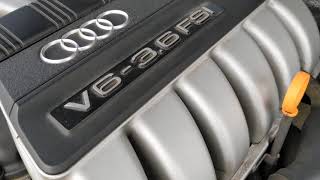
On the direct-injection (FSI) gasoline engines in the Touareg, particularly the 3.6L V6 (engine codes BHK, CGRA), the High-Pressure Fuel Pump (HPFP) is driven mechanically by a lobe on the camshaft. This design means that the engine's mechanical timing is directly linked to fuel system timing. As documented in multiple Volkswagen Technical Service Bulletins, stretched timing chains can cause the camshafts to go out of phase, which in turn drives the HPFP incorrectly and causes dangerous spikes in fuel pressure, triggering the P1025 code.
Diagnostic Flowchart

Tap your situation to follow the diagnostic path that matches what you're seeing on this vehicle.
Generation note: This range covers the first generation facelift (2006-2010, platform 7L) and the second generation (2011-2013, platform 7P). The severe timing chain issue causing P1025 is specifically documented for the 3.6L VR6 FSI engine (engine codes like BHK, CGRA), which was used across both generations.
Symptoms You May Notice
- Check Engine Light (MIL) is on
- Engine sputtering or hesitating during acceleration
- Rough or unstable idle
- High-pitched whining noise from the engine bay
- Loss of engine power or limp mode
- Engine may stall unexpectedly
- Hard starting condition
- Flashing glow plug light (on diesel models, but indicative of similar pressure issues)
- Replacing the in-tank low-pressure fuel pump. This code is almost always related to the high-pressure side of the fuel system.
- Replacing only the High-Pressure Fuel Pump on a 3.6L engine without first checking the timing chain adjustment values. If the chains are stretched, a new pump will not solve the problem and the code will return.
Most Likely Causes

- Stretched Timing Chains (3.6L Engine) 🔴 High Probability The 3.6L VR6 FSI engine (BHK, CGRA) used in this generation of Touareg is known for timing chain stretch over time, a problem documented by VW in TSBs TT 01-16-05 and TT 01-20-05. While the chains are marketed as a 'lifetime' part, they are a known failure point.
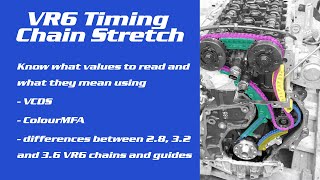
How to confirm: Using a VW-compatible scan tool (like VCDS), monitor fuel rail pressure at idle. If it is excessively high (e.g., over 60 bar, sometimes spiking to 125 bar), check camshaft phase adjustment values (MVB 208/209 on older controllers, IDE00182/IDE00184 on newer ones). 🎬 Watch: How to check timing chain stretch using VCDS. If the deviation exceeds 8 degrees, the engine is out of time, confirming chain stretch. This is the definitive diagnostic step before considering any other cause.
Typical fix: This is a major, engine-out repair that involves replacing both timing chains, all tensioners and guides. Per TSB TT 01-20-05, it is also recommended to replace the oil pump, its gears, and the oil pump bolt as a preventative measure on 2006-2007 models while the engine is accessible. After replacement, the oil pump must be primed.
Est. part cost: $800-$1500 for a full timing kit - Faulty High-Pressure Fuel Pump (HPFP) 🟡 Medium Probability The HPFP operates under extreme stress and can fail internally. The integrated Fuel Pressure Regulator Valve (N276) can stick, causing the pressure spike. This is a more likely cause if timing is confirmed to be within specification.
How to confirm: If timing is confirmed to be correct (camshaft deviation is less than 8 degrees), but fuel pressure is still excessively high and cannot be controlled by the ECM, the HPFP is the primary suspect. A resistance check across the N276 valve terminals should read between 1.0 and 5.0 Ohms; a reading outside this range indicates a faulty valve. This is often a diagnosis of exclusion after ruling out the more common timing chain issue.
Typical fix: Replacement of the High-Pressure Fuel Pump. The OEM part number is often cited as 03H127025C 🎬 Watch: Step-by-step guide to replacing the high-pressure fuel pump. for the 3.6L engine.
Est. part cost: $300-$700 - Faulty Fuel Rail Pressure Sensor (G247) ⚪ Low Probability While less common for this code, a sensor can fail and send an erroneously high pressure reading to the ECM, causing it to trigger the fault. This can happen without any actual fuel pressure problem.
How to confirm: With the engine off (key on), the fuel rail pressure reading should be low (near the low-pressure system's value). If it reads an impossibly high value, the sensor is likely faulty. Compare the sensor's live data reading to a mechanical gauge if possible. A faulty sensor is often suspected if there are no other driveability symptoms despite the code.
Typical fix: Replacement of the fuel rail pressure sensor.
Est. part cost: $50-$150
Rare But Worth Checking
- Damaged non-return valve in camshaft bearing bracket or cylinder head, which can cause oil pressure issues that affect the camshaft adjusters, indirectly impacting timing.
- Worn HPFP Cam Follower: While a more notorious issue on 2.0T FSI engines, the cam follower that rides on the camshaft lobe to drive the HPFP can wear out, though it is less common on the 3.6L VR6. If it wears through, it can damage the pump and camshaft, leading to pressure issues.
Diagnosis Steps
- Connect a VW-compatible diagnostic scan tool (like VCDS) and confirm the presence of P1025 and any other codes like P0088.
- Access live data and monitor 'Fuel Rail Pressure (actual)' and 'Fuel Rail Pressure (specified)' at idle.
- Critical Step for 3.6L Engine: If the actual pressure is excessively high (over 60 bar, potentially spiking to 125 bar), immediately check the camshaft phase position/adaptation values (e.g., Measuring Value Blocks 208 and 209).
- If the camshaft adaptation value exceeds 8 degrees, the timing chains are stretched and must be replaced. The diagnosis stops here as the root cause is found.
- If timing is within spec (< 8 degrees deviation), perform an electrical check on the HPFP's Fuel Pressure Regulator Valve (N276). Disconnect its connector and measure resistance between its two terminals. The value should be between 1.0 and 5.0 Ohms. If the value is out of spec, the HPFP is faulty.
- If the N276 resistance is good, check for battery voltage at terminal 1 of the N276 harness connector with the engine running. Lack of voltage points to a wiring or fuse issue (check fuse SB14).
- If all timing and HPFP electrical checks pass, the Fuel Rail Pressure Sensor (G247) becomes a suspect. Check its reading with the engine off. If it reads high pressure when there should be none, the sensor is likely faulty.
- If the sensor is good and timing is correct, the mechanical fault lies within the High-Pressure Fuel Pump (HPFP) itself, which will require replacement.
Parts You'll Likely Need
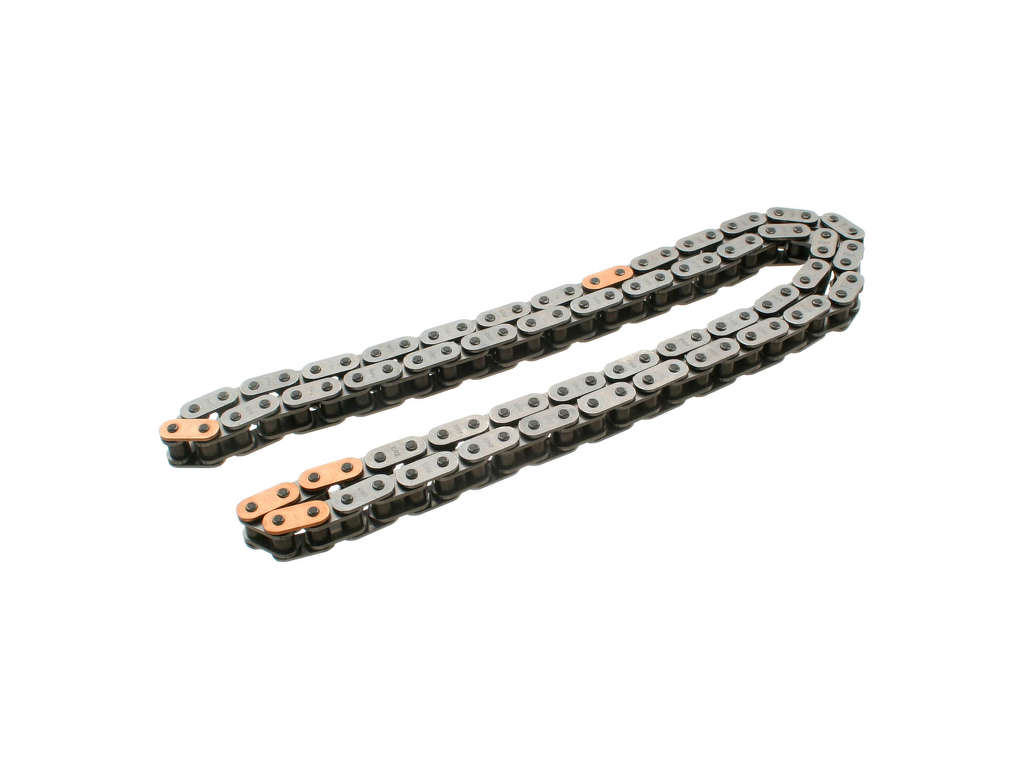
- Timing Chain Kit
(OEM #Various, e.g., 03H198503 (kit components))— On 3.6L engines, this is the most likely root cause of P1025, as documented in VW TSBs. A complete kit includes chains, guides, and tensioners. Aftermarket kits often list compatible OEM numbers like 021109469, 03H109503, and 03H109465.
Trusted brands: Iwis (often OEM supplier), Febi Bilstein, Genuine VW, Vaico
OEM price range: $1000-$1500
Aftermarket price range: $700-$1000 - High-Pressure Fuel Pump (HPFP)
(OEM #03H127025C)— If timing is not the issue, the mechanical fault is likely within the pump or its integrated regulator valve (N276). This part number is widely cross-referenced for the 3.6L engine in the Touareg, Q7, and Cayenne.
Trusted brands: Bosch, Hitachi (OEM supplier), Genuine VW
OEM price range: $500-$700
Aftermarket price range: $300-$500 - Fuel Rail Pressure Sensor
(OEM #06J906051C (example, verify by VIN))— A less common but possible cause if the sensor fails and reports an incorrectly high pressure.
Trusted brands: Bosch, Genuine VW
OEM price range: $100-$150
Aftermarket price range: $50-$100
Related Codes That Often Appear With This One
- P0088 — P0088 is the generic SAE code for 'Fuel Rail/System Pressure - Too High'. P1025 is the manufacturer-specific code that often provides more detail. They frequently appear together as confirmed in VW TSBs.
- P0087 — Generic code for 'Fuel Rail/System Pressure - Too Low'. While less common, it can appear alongside P1025 if the failing HPFP or timing issue causes erratic pressure fluctuations. TSB TT 01 20 05_4 notes it can be set by the same out-of-sync HPFP condition.
Technical Service Bulletins (TSBs) & Recalls
- TT 01 20 05_4: Notes that DTCs P0087, P0088, and P1025 may set due to the high pressure fuel pump being out of time (sync).
- TT011605_2045487 (also known as TT 01-16-05): Provides enhanced diagnostic assistance for P1025 and P0088, linking them to stretched timing chains on the 3.6L engine. It gives the specific diagnostic criteria: check fuel pressure (if >60 bar) then check cam deviation (if >8 degrees, replace chains). It also recommends replacing the oil pump and gears during the repair.
- TT 01-20-05 (Transaction No: 2060799/1): A broader Tech Tip covering Passat, CC, Touareg, and Atlas with the 3.6L engine, reiterating that P0088 and P1025 can be caused by the HPFP being out of time and to suspect timing issues if pressure exceeds 60 bar at idle.
Platform-Specific Known Issues
- On 2006-2009 Touaregs with the 3.6L engine, Volkswagen TSBs TT 01-16-05 and TT 01-20-05 explicitly state that codes P1025 and P0088 can be caused by the engine being out of time due to stretched timing chains.
- Owners on forums for the shared VW PL71 platform (Touareg, Audi Q7, Porsche Cayenne) frequently discuss the link between P1025/P0088 and timing chain failure on the 3.6L VR6 engine.
Mechanic-Grade Diagnostic Values
- Camshaft Phase Adaptation (Deviation) — expected: Less than +/- 8 degrees at warm idle. Failure: A value greater than +/- 8 degrees indicates stretched timing chains.
- High-Pressure Fuel Rail Pressure at Idle — expected: Approx. 40-50 bar. Failure: Sustained or spiking pressure over 60 bar, often as high as 125 bar, strongly suggests a timing or HPFP mechanical issue.
- Fuel Pressure Regulator Valve (N276) Resistance — expected: 1.0 to 5.0 Ohms at approx. 20°C (68°F). Failure: A reading near zero or significantly outside the specified range indicates an internal short or open circuit in the valve.
- Fuel Pressure Regulator Valve (N276) Supply Voltage — expected: Battery Voltage (approx. 12V+). Failure: No voltage at terminal 1 of the connector (with engine running) indicates a wiring or fuse (SB14) issue.
- Low-Side Fuel Pressure (Static, Engine Off) — expected: Minimum of 3.0 bar (approx. 43 PSI) after 10 minutes. Failure: Pressure dropping below 3.0 bar indicates a leak in the low-pressure system or a faulty check valve.
- Wiring Harness Resistance (N276 to ECM) — expected: Max 1.5 Ohms. Failure: Higher resistance indicates a problem in the wiring harness between the HPFP and the Engine Control Module.
Hidden / Shadow Codes Worth Checking
- 17433: This is the VAG-specific fault code number that corresponds to the OBD-II code P1025. (see via A VAG-compatible scan tool like VCDS or ODIS will display this alongside the P-code.)
Scan Tool Commands That Help
- VCDS/ODIS: Read Camshaft Adaptation Values (MVB 208/209 or IDE00182/IDE00184) — This is the critical diagnostic step for the 3.6L engine when P1025 is present and high fuel pressure is observed. It directly confirms or denies timing chain stretch as the root cause.
- ODIS (VW/Audi Dealer Tool): N276 – Fuel Pressure Regulator Valve Test Plan — This is a guided function test that actively commands the N276 valve. The technician is prompted to listen for an audible 'click' from the HPFP, which confirms the valve is mechanically responding to electrical commands. Use this when timing is confirmed to be good, to test the HPFP's internal regulator.
- VCDS: Output Test - Fuel Pump (G6) — This command can be used to test the functionality of the low-pressure in-tank fuel pump, helping to rule out issues on the low-pressure side of the system.
Wiring & Ground Locations
- Fuse SB14 — In the E-box (fuse box) in the engine compartment.. This fuse supplies the +12V power to the Fuel Pressure Regulator Valve (N276). If this fuse is blown, the valve will not operate, which can lead to pressure control faults.
- G18 / Engine Block Ground — On the engine block, right side, near the starter (7L platform).. A poor engine ground can cause a variety of sensor and actuator issues for components mounted on the engine, including the HPFP and its sensors.
- G645 / G646 / G647 Firewall Grounds — Located in the air plenum/cowl area near the firewall (both 7L and 7P platforms).. These are critical ground points for the engine control harness and ECM. Corrosion or looseness here can cause erratic behavior from the ECM and the systems it controls, including fuel pressure regulation.
- G608 / Center Plenum Chamber Ground — Located in the center of the plenum chamber under the cowl cover (7L platform).. This is another key ground point for engine electronics. A bad connection here can lead to incorrect sensor readings or actuator commands.
Real Owner Repair Stories
- Ross-Tech Forums user 'Damadster' (2012 VW Passat 3.6L (same engine family)) — Low fuel pressure codes (opposite but related issue).
❌ Tried (didn't work) Replacing the High-Pressure Fuel Pump (HPFP) previously.
✅ What actually fixed it Temporarily solved by unplugging the HPFP regulator valve connector, running the engine to set an open-circuit fault, then turning off and plugging it back in. This suggests the root cause was a poor electrical connection at the N276 valve, not a complete failure of the pump itself. - Ross-Tech Forums user 'pamchuck' (2007 Touareg V6, 129k miles) — Rough idle, flashing CEL above 3000 RPM, P2293 (related to N276), P12A4, and misfires.
❌ Tried (didn't work) Checked cam follower (looked good)., Replaced the HPFP. This made the engine run better but did not resolve the high fuel pressure code or a high-pitched squeal.
✅ What actually fixed it The story was left unresolved, but it serves as a valuable counter-example showing that replacing the HPFP, even when it seems logical, may not fix the issue if the root cause is something else (like timing or another mechanical problem).
Model Year Variations Within This Range
- 2006-2007: When performing a timing chain replacement for a P1025 fault, VW TSB 01-20-05TT specifically recommends also replacing the oil pump, oil pump gears (2x), and the oil pump bolt as a preventative measure. This is not explicitly required for 2008 and newer models.
- 2006-2010 vs 2011-2013: The method for reading camshaft adaptation values in VCDS differs. Pre-2011 models (KWP2000 protocol) use Measuring Value Blocks (MVB) 208 and 209. 2011 and newer models (UDS protocol) use Advanced Measuring Values with labels IDE00182 and IDE00184.
Helpful Videos
Used OEM Parts in Stock


New Aftermarket Parts Available



The information in this article is provided for general reference and educational purposes only. Vehicle specifications, procedures, and part compatibility can vary by production date, trim level, and region. Always consult your vehicle's factory service manual and verify part numbers before purchasing or performing repairs. Safety-critical components such as airbags, seat belts, and braking systems should be installed by a qualified professional.
- Volkswagen TOUAREG:
- 🎬 Helpful Videos
- 🛍️ Shop This Part
- What's Unique About the 2006-2013 Volkswagen TOUAREG
- Diagnostic Flowchart
- Symptoms You May Notice
- Most Likely Causes
- Rare But Worth Checking
- Diagnosis Steps
- Parts You'll Likely Need
- Related Codes That Often Appear With This One
- Technical Service Bulletins (TSBs) & Recalls
- Platform-Specific Known Issues
- Mechanic-Grade Diagnostic Values
- Hidden / Shadow Codes Worth Checking
- Scan Tool Commands That Help
- Wiring & Ground Locations
- Real Owner Repair Stories
- Model Year Variations Within This Range
- 🎟️ Get 5% Off