

OBD-II Code P1025: BMW Valvetronic System Malfunction
What P1025 means, why it triggers, and how to fix it on BMW vehicles
- Code P1025 on a BMW confirms a hard failure in the Valvetronic variable valve lift system, requiring immediate diagnosis to prevent further damage.
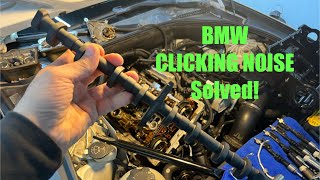
- Listen for a rapid clicking or grinding noise from the top of the engine when unlocking the car; this confirms the Valvetronic motor is failing its self-test.
- Driving with an active P1025 code forces the engine into limp mode and risks destroying the $1,500+ engine computer (DME) if the Valvetronic motor shorts out.
- Always test the battery first; a voltage drop below 10V during cranking causes the Valvetronic self-test to fail, triggering a false P1025 code.
- On VW and Audi 2.0T engines, P1025 indicates a high-pressure fuel pump failure, often caused by a worn $40 cam follower that must be inspected immediately.
What Does P1025 Mean?
Code P1025 indicates a critical failure in a BMW's Valvetronic system, which controls intake valve lift. The system failed its self-learning test and cannot determine its physical range of motion. This forces the engine into 'limp mode,' relying on the backup throttle body, causing sluggish performance and poor fuel economy.
Technical definition: VVT-Self-Learning Function No Positions Stored (Bank 1).
Can I Drive With P1025?
Yes, But With Caution. You can drive, as the engine defaults to the traditional throttle body, but performance drops significantly. Continued driving is dangerous: a struggling Valvetronic motor destroys the engine computer's (DME) control circuit, turning a $1,500 repair into a $4,000+ nightmare. A binding eccentric shaft also strips the motor's worm gear, sending metal fragments into the engine.
Common Causes
- Low or Weak Battery Voltage (Very Common) — The Valvetronic self-test requires full battery power. A weak battery causes the test to fail due to insufficient voltage, logging P1025 even if mechanical components are perfect.
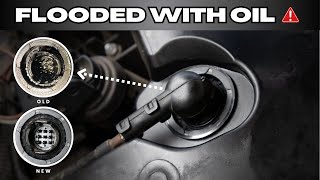
- Faulty Eccentric Shaft Sensor & Leaking Seals (Very Common) — This sensor reports the Valvetronic system's position. Its external seal hardens and fails, allowing engine oil to contaminate the electronics, causing incorrect readings or complete failure. 🎬 Watch: How to replace the eccentric shaft sensor gasket
- Failed Valvetronic Motor (Actuator) (Common) — This electric motor physically moves the eccentric shaft. The worm gear wears out, or the motor fails electrically, preventing valve adjustment. 🎬 See a full diagnosis and repair of the Valvetronic motor
- Worn or Binding Eccentric Shaft (Less Common) — Infrequent oil changes cause sludge buildup, seizing the eccentric shaft's bearings. This binding puts immense strain on the Valvetronic motor, causing it to fail.
- Failed Engine Computer (DME) (Rare) — A shorted Valvetronic motor draws excessive electrical current, overloading and destroying the H-Bridge driver circuit inside the main engine computer.
Symptoms
- Reduced Engine Power / Limp Mode — The car feels sluggish, hesitates, and consumes more fuel. A 'Drivetrain Malfunction' warning appears on the iDrive screen.
- Check Engine Light Is On — The computer triggers the check engine light immediately when this fault is detected.
- Clicking, Grinding, or Buzzing Noise — A distinct mechanical noise comes from the top of the engine when unlocking the car, indicating the system is failing to initialize.
- Rough Idle and Stalling — The engine runs unevenly, shakes at stoplights, or stalls completely.
- Hard Starting or No-Start Condition — The engine cranks for a long time before starting, or fails to start entirely.
Diagnostic Flowchart
Tap your situation to follow the diagnostic path that matches what you're seeing on this code.
Common Fixes & Costs
- Battery Replacement and System Re-initialization — Parts: $200-$400, Labor: $100-$200, ~1 hr book time (Beginner)
- Replace Valvetronic Motor and Gaskets — Parts: $350-$600, Labor: $700-$1,400, ~7 hr book time (Professional)
- Replace Eccentric Shaft Sensor and Gaskets — Parts: $300-$450, Labor: $600-$1,200, ~6.5 hr book time (Professional)
- Replace Valvetronic Motor, Eccentric Shaft, and Gaskets — Parts: $1,200-$2,000, Labor: $1,500-$3,000+, ~9.5 hr book time (Professional)
- DME (Engine Computer) Repair or Replacement — Parts: $800-$2,000+, Labor: $300-$600, ~2.5 hr book time (Professional)
Used vs. New Parts: Buying Guide
When a used part is worth it: Buying used Valvetronic motors or eccentric shaft sensors is highly discouraged due to internal electronic wear and high labor replacement costs. Only consider a used eccentric shaft if visually flawless and sourced from a low-mileage engine.
Donor-vehicle mileage cap: roughly under 60000 miles for the part to have meaningful remaining life.
Donor quality checklist:
- For an eccentric shaft, visually inspect the worm gear teeth for any signs of wear, chipping, or scoring. It must be perfectly smooth.
- Always match the OEM part number exactly. Superseded numbers are often incompatible.
Decision logic:
- If The part is electronic with a high failure rate (motor, sensor). → Buy a new OEM or high-quality aftermarket (VDO, INA) part. The risk of premature failure outweighs the savings.
- If The part is purely mechanical (eccentric shaft) AND from a verified low-mileage (<60k) vehicle. → A used shaft is acceptable if a thorough visual inspection confirms perfectly smooth gear teeth.
Warranty tradeoff: Salvage yards offer 30-90 day warranties. New OEM parts include 1-3 year warranties, which is mandatory given the 6+ hours of labor required for this repair.
Worst-case if a used part fails: $800-$1500 if a used motor or sensor fails after installation, requiring a second payment for labor and parts.
What Happens If You Wait — Timeline
- 0-1 month: Code P1025 is set. Engine enters 'limp mode,' relying on the throttle body. Acceleration is sluggish. (MPG impact: 10-20%% · Added cost: $0-50 in wasted fuel)
- 1-3 months: If the shaft binds, the Valvetronic motor overheats and its internal worm gear wears down. Clicking or grinding noises become frequent. (MPG impact: 10-20%% · Added cost: $350-$600 (Cost to replace the motor, which is now at high risk of failure))
- 3-6 months: The Valvetronic motor fails completely, potentially stripping its worm gear and sending metal fragments into the cylinder head. (MPG impact: 10-20%% · Added cost: $1,500-$2,200 (Motor replacement required. Metal fragments increase costs.))
- 6+ months: Worst-case scenario: The failing motor develops an internal short, drawing excessive current and destroying the H-Bridge driver circuit in the main computer (DME). (MPG impact: 10-20%% · Added cost: $4,000-$6,000+ (Requires new Valvetronic motor, eccentric shaft, AND a new DME.))
Cost of Not Fixing It
- 0-1 month: Noticeably reduced engine power and a 10-20% drop in fuel economy. The car remains in 'limp mode.' (Added cost: Negligible, besides increased fuel costs.)
- 1-6 months: Continued strain on a binding eccentric shaft destroys the Valvetronic motor. A stripped motor gear sends metal fragments into the engine. (Added cost: $350-$600 (for the motor if it fails due to a bad shaft).)
- 6+ months: A shorted Valvetronic motor overloads and destroys the H-Bridge driver circuit within the main engine computer (DME). A seized eccentric shaft causes piston-to-valve contact, destroying the engine. (Added cost: $2,000-$6,000+ (for DME replacement or a full motor, shaft, and DME repair).)
Diagnosis Steps
- Check Battery Health and Scan for Codes
Ensure the battery is fully charged (above 12.4V at rest). A weak battery causes a failed Valvetronic self-test. Use a BMW-compatible scanner to read all codes. P1025 accompanied by P1030 pinpoints a mechanical bind.
Tools: Multimeter, BMW-compatible OBD-II Scanner (Beginner) - Listen for the 'Valvetronic Click'
Unlock the car without starting it. Listen closely to the top of the engine for a rapid clicking or grinding sound. This confirms a failing motor or a binding eccentric shaft.
Tools: Stethoscope or bare ear (Beginner) - Inspect the Eccentric Shaft Sensor Connector for Oil
Locate the round eccentric shaft sensor on the front of the valve cover. Unplug it and look for engine oil inside the pins. Oil confirms the sensor or its seal has failed.
Tools: Flashlight (Beginner) - Run the Valvetronic Limit Relearn Test
Use a bidirectional scanner to command the DME to perform the Valvetronic limit relearn procedure. If this test fails, it confirms a hard mechanical or electrical fault in the system.
Tools: Advanced Diagnostic Scan Tool (Intermediate) - Test Valvetronic Motor Resistance
Disconnect the Valvetronic motor. Measure the resistance between the two pins. A healthy motor has under 1.0 Ohm. Infinite resistance or near zero Ohms indicates internal electrical failure.
Tools: Multimeter (Advanced) - Remove Valve Cover & Check Shaft Binding
Remove the valve cover. Inspect the motor's worm gear for stripped teeth. Use a 27mm open-ended wrench to manually move the eccentric shaft. If it feels gritty or gets stuck, the shaft is seized and requires replacement.
Tools: Socket Set, Torx Sockets, 27mm Open-ended Wrench (Advanced) - Check VW/Porsche Fuel Pressure (Non-BMW Only)
For VW/Porsche, P1025 is a fuel pressure code. View live data at idle; high-pressure fuel rail pressure should be ~40-50 bar. Spikes to 120+ bar or camshaft adaptation deviations greater than +/- 8.0 degrees indicate stretched timing chains.
Tools: VCDS or VW/Porsche-specific Scan Tool (Advanced)
When This Code Triggers (Freeze-Frame Conditions)
- Engine State: Ignition ON, Engine OFF (The primary self-test runs immediately when the car is unlocked or the ignition is turned to accessory mode, before the engine starts.)
- System Voltage: < 12.0V (Insufficient voltage prevents the motor from cycling properly, causing the self-test to fail.)
- Engine Coolant Temp: Any (The fault triggers on cold or warm engines, but heat soak causes an intermittent motor to fail only when hot.)
- RPM: 0 (The initial 'limit learning' test happens before cranking. Related codes like P1030 occur while driving.)
Related Codes
- P1030 — Indicates 'Control Deviation'. P1025 means the system failed its limit-learning test; P1030 means it passed the test but fails to track the target position, strongly suggesting a binding eccentric shaft.
- 2DCE / 2E0F — BMW-specific codes for 'Valvetronic system: no adjustment possible'. They confirm the DME has shut the system down and reverted to throttle body control.
- P1017 — Indicates 'Sluggish Movement'. A precursor to P1025, showing the motor is struggling to move a binding shaft before the system gives up entirely.
- P1014 / P1023 / P1024 — Closely related codes indicating failures to learn the mechanical stops. They point to the exact same set of core Valvetronic hardware failures.
Climate & Environmental Factors
- Cold Weather: Cold temperatures exacerbate weak battery issues, increasing the likelihood of a failed Valvetronic self-test. Thickened oil sludge also increases strain on the motor during cold starts.
- Heat Soak: A failing Valvetronic motor becomes heat-sensitive. It functions correctly when cold but fails once the engine bay reaches full operating temperature, causing intermittent faults.
How to Talk to a Mechanic About This Code
Say this: "I have a BMW with a P1025 Valvetronic code and a 'drivetrain malfunction' message. I'd like to book a diagnostic appointment. Can you please start by checking the battery under load, inspecting the eccentric shaft sensor connector for oil, and if the valve cover needs to come off, manually checking the eccentric shaft for smooth movement before quoting a full motor or shaft replacement?"
This directs the technician to check the most common and least expensive failure points first (battery, sensor leak) before jumping to a costly motor/shaft replacement.
Avoid saying:
- 'Just fix whatever's wrong'
- 'My check engine light is on, can you look at it?'
- 'The internet said it's the Valvetronic motor, please replace it'
Questions to ask before authorizing the repair:
- If you're recommending a motor replacement, did you confirm the eccentric shaft moves smoothly by hand?
- If you're recommending an eccentric shaft replacement, what were the symptoms of it binding?
- Does your quote include replacing the valve cover gasket, motor gasket, and sensor seal? They should all be replaced at the same time.
- What is the warranty on the parts and labor for this repair?
- Will you be performing the Valvetronic limit relearn procedure with a scan tool after the repair?
Where to Take It: Dealer vs Independent vs Chain
- Dealer:
Recommended ONLY if your vehicle qualifies for SULEV warranty coverage. Otherwise, an independent specialist is a better financial choice.
Best for: Vehicles potentially under the 15yr/150k mile SULEV emissions warranty (N51/N26 engines), Complex cases where the DME is fried or specialist programming is required
Downsides: Highest labor rates, often 1.5-2x an independent shop., May recommend a full motor and shaft replacement ($5,000+) as a default. (Typical cost: +75% vs. baseline) - Independent Shop:
Best fit. An independent BMW specialist provides the best balance of expert-level knowledge and reasonable cost for this specific, complex repair.
Best for: Out-of-warranty BMWs where cost is a major factor., Getting an expert diagnosis that isn't driven by dealer service quotas.
Downsides: You MUST choose a shop that specializes in BMW or German vehicles. General mechanics lack the specific tools (ISTA) and experience. (Typical cost: +0% vs. baseline) - Chain Shop:
AVOID. This is a manufacturer-specific, complex repair. A chain shop is not equipped to diagnose or repair it correctly.
Best for: Battery testing and replacement (ensure they can do BMW battery registration).
Downsides: Technicians lack the specialized training for Valvetronic systems., Do not have the required BMW-specific diagnostic software (ISTA) or special tools., High risk of misdiagnosis and being sold unnecessary parts. (Typical cost: -10% vs. baseline)
When to Walk Away From the Repair
If the estimated repair cost exceeds 50% of the car's private-party market value, seriously consider selling the car as-is or trading it in.
- Car worth $7000, fix is $5500: Walk away. The repair cost is nearly 80% of the car's value. It's not an economically sound decision.
- Car worth $15000, fix is $2200: Fix it. The repair cost is less than 15% of the car's value, which is a reasonable investment to restore full function.
- Car worth $4000, fix is $1800: Borderline. At 45% of the vehicle's value, this is a tough call. Get a second opinion and consider the car's overall condition before proceeding.
What Scan Tool You Need for This Code
Minimum: A BMW-specific bidirectional scan tool that can perform the 'Valvetronic limit relearn' service function and new battery registration.
A basic $20-$50 code reader cannot perform the mandatory 'limit relearn' procedure required after a repair, so the code returns instantly. It also cannot command the motor to move for diagnostic testing.
Budget: BlueDriver Pro (~$100) — Reads BMW-specific codes and performs battery registration. It may NOT have the bidirectional 'Valvetronic relearn' function. Check compatibility for your specific model.
Mid-range: Foxwell NT510 Elite / NT710 (with BMW Software) (~$250) — The sweet spot for DIYers. It has full BMW-specific diagnostics, registers a new battery, and performs the 'Valvetronic limit relearn' procedure.
Professional: Autel MaxiCOM MK808 / MK906BT (~$500-1200) — Full professional-level tool. Provides complete bidirectional control to command the Valvetronic motor, performs the limit relearn, and includes detailed live data graphing.
Rent vs buy: Auto parts stores rent basic scanners incapable of BMW-specific functions like Valvetronic relearn. You must buy a capable scanner or pay a shop with the right equipment.
How to Clear the Code After You Fix It
- Reconnect the battery.
- Use a BMW-compatible scan tool to clear all fault codes.
- Perform the 'Valvetronic limit relearn' procedure using the scan tool.
- Alternatively, turn the ignition on (engine off) and press the accelerator pedal to the floor 10 times within 15 seconds.
Drive cycle (~30 minutes): Perform a cold start, idle for 5 minutes, drive 15 minutes in mixed city traffic, and maintain steady highway speeds for 10 minutes to set emissions readiness monitors.
Readiness monitors affected: Comprehensive Component Monitor, Misfire Monitor, Catalyst Monitor, Oxygen Sensor Monitor
Before emissions retest: drive at least 50 miles to fully set monitors.
Watch out for:
- Clearing the code without performing the Valvetronic limit relearn procedure causes the fault to return instantly.
- Disconnecting the battery resets all emissions readiness monitors, causing an automatic emissions test failure until a full drive cycle is completed.
Will This Fail Emissions / State Inspection?
Yes — this code typically fails an OBD-II emissions inspection.
- California: An illuminated Check Engine Light results in an automatic smog check failure. A complete drive cycle must be performed post-repair to set readiness monitors.
- New York: A vehicle automatically fails the NYS inspection if the Check Engine Light is on. Clearing the code just before the test results in a failure due to 'Not Ready' monitors.
- Texas: In emissions-testing counties, an active P1025 code and illuminated Check Engine Light is an automatic failure of the OBDII test.
Most Commonly Affected Vehicles
- BMW 3 Series (E90/F30) (2006-2015) — Very common on N51, N52, N55, and N20/N26 engines. N51 and N26 models may have this repair covered under the SULEV warranty (15yr/150k miles) in certain states.
- BMW X3 (E83/F25) (2007-2017) — Affects models across two generations equipped with Valvetronic, particularly the xDrive28i and xDrive35i.
- BMW 5 Series (E60/F10) (2006-2017) — Common on non-M models like the 528i and 535i using the N52 and N55 engines.
- BMW 1 Series (E82) (2008-2013) — The 128i (N51/N52) and 135i (N55) are frequently cited for Valvetronic motor and shaft failures.
- BMW X5 (E70/F15) (2007-2018) — The xDrive35i model using the N55 engine is particularly prone to these faults.
- Volkswagen Passat, CC, Touareg, Atlas (2006-2021) — On VW, P1025 means 'Fuel Pressure Regulation Valve Mechanical Failure'. On 2.0T engines, it's typically a worn HPFP cam follower. On 3.6L VR6 engines, it indicates stretched timing chains.
- Porsche Cayenne, Macan (2009-2018) — Points to 'Fuel high pressure adaptation exceeds limit value,' indicating a failing High-Pressure Fuel Pump (HPFP).
- Ford F-150, Explorer (1999-2010) — Related to a bad thermostat preventing the engine from reaching operating temperature, often appearing with P0125.
Manufacturer-Specific Notes
- BMW: In states adopting California emissions standards, this repair is often covered under the SULEV/PZEV (N51, N26 engines) extended emissions warranty for up to 15 years/150,000 miles, saving thousands.
- Volkswagen / Audi: P1025 means 'Fuel Pressure Regulation Valve Mechanical Failure.' On 2.0T engines, inspect the $40 cam follower immediately to prevent destroying the HPFP and camshaft. On 3.6L VR6 engines, it indicates stretched timing chains.
- Porsche: P1025 means 'Fuel high pressure adaptation exceeds limit value,' pointing to a problem with the high-pressure fuel pump (HPFP). Diagnose both low and high pressure systems before replacing the HPFP.
- Ford: On early 2000s trucks and SUVs, P1025 indicates a bad thermostat causing coolant temperature issues, often alongside code P0125.
- Mitsubishi: Indicates a fault in the 'Exhaust Engine Oil Control Valve Circuit,' part of the MIVEC variable valve timing system, typically caused by a failed solenoid.
Real Owner Stories
2007 BMW 328xi with 94K miles, hard starting
Car struggled to start when cold, taking multiple attempts, and threw a Check Engine Light. It started fine when warm.
What they tried:
- Inspected the eccentric shaft sensor connector and found no visible oil.
- Scanned for codes, revealing multiple Valvetronic faults (P1017, P1023, P1030).
Outcome: The owner concluded the eccentric shaft sensor failed internally from prior oil contamination. Replacing the sensor resolved the issue.
Lesson: An eccentric shaft sensor fails internally even if the external connector appears clean. Multiple Valvetronic codes strongly point to a hardware failure over a simple electrical glitch.
2006 VW GTI (2.0T FSI) with 240K km, new owner maintenance
New owner inspected the high-pressure fuel pump (HPFP) cam follower as baseline maintenance.
What they tried:
- Removed the HPFP to access the cam follower.
Outcome: The cam follower was completely worn through, scoring the HPFP piston and damaging the camshaft lobe. The $40 preventative check turned into a major repair requiring a new HPFP and intake camshaft.
Lesson: On VW/Audi 2.0T engines, P1025 is a fuel pressure code caused by a worn cam follower. Inspect the follower every 20,000-30,000 miles to prevent catastrophic engine damage.
BMW F30 N55, intermittent Valvetronic codes
Owner experienced persistent, intermittent Valvetronic error codes and drivability issues.
What they tried:
- Took the car to multiple shops. One misdiagnosed it as a failed DME.
Outcome: The final diagnosis was a failed Valvetronic motor AND a worn eccentric shaft. The repair cost was quoted at ~$6,500 by two shops.
Lesson: A failing Valvetronic motor and a worn eccentric shaft are linked. A binding shaft destroys the motor. Always inspect the shaft for smooth movement when replacing the motor.
2016 BMW 320i, struggling to start
The car hesitated during startup. A hardwired dash-cam shut down within 30 minutes of parking.
What they tried:
- Monitored battery voltage. Resting voltage was 12.4V, but dropped to 7.75V during engine cranking.
Outcome: The severe voltage drop confirmed a dying battery. This low voltage caused the Valvetronic system to fail its startup self-test, logging a false P1025 code.
Lesson: Always rule out the battery first. A healthy battery stays above 10V during cranking. Significant drops indicate the battery is the culprit, not the Valvetronic system.
How to Prevent This Code From Triggering
- Perform oil changes every 5,000-7,500 miles. (5,000-7,500 miles) — Extended intervals lead to oil sludge buildup, clogging small oil passages that lubricate the Valvetronic assembly, causing the eccentric shaft to bind.
- Use high-quality, manufacturer-approved synthetic oil (e.g., BMW LL-01). (Every oil change) — Properly specified oils contain detergents that prevent sludge formation and ensure proper lubrication of the eccentric shaft bearings.
- Replace the battery every 4-5 years. (Every 4-5 years) — The Valvetronic self-test requires strong voltage. An aging battery causes this test to fail and log a P1025 code, even with healthy mechanical parts.
- For VW/Audi 2.0T FSI engines, proactively inspect/replace the HPFP cam follower. (Every 20,000-30,000 miles) — This $40 part protects the expensive HPFP and camshaft. Letting it wear through causes thousands of dollars in engine damage.
- Address oil leaks from the valve cover or eccentric shaft sensor seal immediately. (As needed) — Oil leaking into the eccentric shaft sensor's electrical connector is a primary cause of sensor failure.
Frequently Asked Questions
What does P1025 mean in simple terms for my BMW?
It means the Valvetronic system, which controls air intake for efficiency and power, is broken. The engine has switched to a backup system, making it feel sluggish and consume more fuel.
Is it safe to drive my BMW with code P1025?
You can drive short distances to a repair shop, but do not ignore it. Continued driving risks destroying the Valvetronic motor, eccentric shaft, or the main engine computer (DME).
How much does it cost to fix P1025 on a BMW?
A new battery costs $300-$600. A Valvetronic motor replacement at an independent shop is $1,050-$2,000. If the eccentric shaft requires replacement, dealer costs escalate to over $5,000.
Could a weak battery cause code P1025?
Yes. The Valvetronic system runs a self-test requiring full battery voltage. If your battery drops below 10V during cranking, the test fails and triggers a false P1025 code.
What is the BMW SULEV warranty and does it cover P1025?
The SULEV warranty covers emissions-related parts for 15 years or 150,000 miles on specific engines (N51, N26) in certain states. Valvetronic components are critical for emissions and are frequently covered. Check with a BMW dealer using your VIN.
Can I fix code P1025 myself?
This is not a beginner-friendly DIY repair. It requires removing the valve cover, specialized tools, and careful procedures to avoid oil leaks or catastrophic engine damage. Take the vehicle to a specialized BMW independent shop unless you are a highly experienced mechanic.
The shop replaced the Valvetronic motor, but the code came back. What's next?
The root cause is likely a worn or binding eccentric shaft that the new motor cannot move. Less common causes include a damaged wiring harness or a damaged engine computer (DME).
Can I just reset the P1025 code?
You can clear the code, but it returns immediately. P1025 indicates a 'hard fault' from a failed mechanical or electrical test that must be repaired first.
Key Takeaways
- Code P1025 on a BMW confirms a hard failure in the Valvetronic variable valve lift system, requiring immediate diagnosis to prevent further damage.
- Listen for a rapid clicking or grinding noise from the top of the engine when unlocking the car; this confirms the Valvetronic motor is failing its self-test.
- Driving with an active P1025 code forces the engine into limp mode and risks destroying the $1,500+ engine computer (DME) if the Valvetronic motor shorts out.
- Always test the battery first; a voltage drop below 10V during cranking causes the Valvetronic self-test to fail, triggering a false P1025 code.
- On VW and Audi 2.0T engines, P1025 indicates a high-pressure fuel pump failure, often caused by a worn $40 cam follower that must be inspected immediately.
Helpful Videos


The information in this article is provided for general reference and educational purposes only. Vehicle specifications, procedures, and part compatibility can vary by production date, trim level, and region. Always consult your vehicle's factory service manual and verify part numbers before purchasing or performing repairs. Safety-critical components such as airbags, seat belts, and braking systems should be installed by a qualified professional.
- 🎬 Helpful Videos
- What Does P1025 Mean?
- Can I Drive With P1025?
- Common Causes
- Symptoms
- Diagnostic Flowchart
- Common Fixes & Costs
- Used vs. New Parts: Buying Guide
- What Happens If You Wait — Timeline
- Cost of Not Fixing It
- Diagnosis Steps
- When This Code Triggers (Freeze-Frame Conditions)
- Related Codes
- Climate & Environmental Factors
- How to Talk to a Mechanic About This Code
- Where to Take It: Dealer vs Independent vs Chain
- When to Walk Away From the Repair
- What Scan Tool You Need for This Code
- How to Clear the Code After You Fix It
- Will This Fail Emissions / State Inspection?
- Most Commonly Affected Vehicles
- Manufacturer-Specific Notes
- Real Owner Stories
- 2007 BMW 328xi with 94K miles, hard starting
- 2006 VW GTI (2.0T FSI) with 240K km, new owner maintenance
- BMW F30 N55, intermittent Valvetronic codes
- 2016 BMW 320i, struggling to start
- How to Prevent This Code From Triggering
- Frequently Asked Questions
- What does P1025 mean in simple terms for my BMW?
- Is it safe to drive my BMW with code P1025?
- How much does it cost to fix P1025 on a BMW?
- Could a weak battery cause code P1025?
- What is the BMW SULEV warranty and does it cover P1025?
- Can I fix code P1025 myself?
- The shop replaced the Valvetronic motor, but the code came back. What's next?
- Can I just reset the P1025 code?
- Key Takeaways
- 🎟️ Get 5% Off