

OBD-II Code P1016: Engine Control System Fault
What P1016 means, why it triggers, and how to fix it
- Identify your vehicle's make first, as P1016 indicates a BMW Valvetronic failure, a Ford turbo vacuum leak, or an unplugged Audi/VW air filter connector.
- Inspect the BMW eccentric shaft sensor connector for oil contamination, which causes over 80% of P1016 Valvetronic faults and requires an $800+ gasket and sensor replacement.
- Perform a smoke test on Ford EcoBoost engines before replacing the turbocharger, as a cracked $20 plastic vacuum line is the most common culprit.
- Reconnect the N275 air filter bypass flap connector on Audi and VW models, a free 30-second fix for a plug frequently forgotten during routine air filter changes.
- Clear the code on 2017 GM 6.6L diesel trucks before replacing parts, as GM bulletin PIP5466 identifies this as a one-time DEF communication glitch.
What Does P1016 Mean?

P1016 is a manufacturer-specific code. For BMWs, it signals a Valvetronic system failure. For Ford EcoBoost engines, it points to a turbo wastegate control pressure issue. For Audi and VW, it indicates an electrical open circuit at the air filter flap. For 2017 GM diesel trucks, it flags an intermittent DEF system communication fault.
Technical definition: As a manufacturer-specific code, P1016 lacks a universal SAE definition. Common definitions include 'Valvetronic Eccentric Shaft Sensor Plausibility' (BMW), 'Wastegate Control Pressure Higher Than Expected' (Ford), 'Air Filter Bypass Flap N275: Open Circuit' (Audi/VW), and 'DEF Quality Sensor Communication Fault' (GM).
Can I Drive With P1016?
Yes, But With Caution. You can drive temporarily, but expect reduced engine power, poor fuel economy, and a rough idle. Address the issue promptly to prevent severe secondary damage. On Ford EcoBoost models, a hard brake pedal is a major safety risk requiring immediate towing. Continuing to drive a BMW with a Valvetronic fault damages the eccentric shaft, turning a $700 motor replacement into a $2,500 repair.
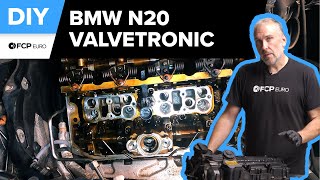
🎬 Watch: Step-by-step BMW Valvetronic motor replacement DIY.Common Causes


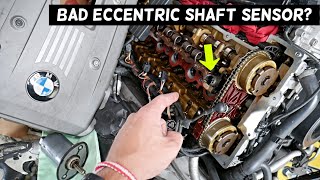
- Faulty Eccentric Shaft Sensor (BMW) (Very Common) — This sensor reports the position of the Valvetronic system to the engine computer. It fails when engine oil leaks from a degraded valve cover gasket and contaminates the sensor's electrical connector, permanently corrupting the signal.
- Damaged or Pinched Vacuum Hoses (Ford) (Very Common) — On Ford EcoBoost engines, vacuum controls the turbo wastegate. Brittle plastic hoses crack, split, or collapse, causing a vacuum leak. Ford TSB SSM 46438 also notes the hose is frequently pinched by a factory zip-tie 🎬 See this quick check for Ford EcoBoost vacuum lines. on the cam cover retainer.
- Disconnected Air Filter Flap Connector (Audi/VW) (Common) — On many Audi and VW models, this code triggers because the electrical connector for the N275 air filter bypass valve was left unplugged after a routine air filter change. 🎬 Watch: Locate the N275 bypass flap on your Audi.
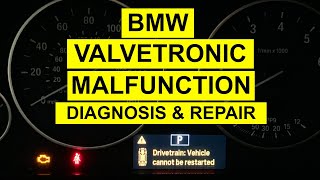
- Faulty Valvetronic Motor (BMW) (Common) — This electric motor moves the eccentric shaft to adjust valve lift. The internal gears wear out, or the motor fails electrically, causing it to move slowly, bind, or stop entirely.
- Faulty Turbocharger Wastegate Solenoid (Ford) (Less Common) — This solenoid electronically regulates the vacuum going to the wastegate. When it fails, it sticks closed and prevents vacuum from reaching the wastegate actuator, over-pressurizing the system.
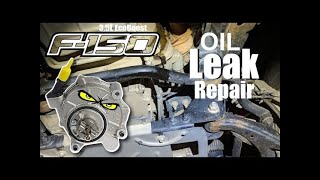
- Failed Mechanical Vacuum Pump (Ford) (Less Common) — The engine-driven vacuum pump fails internally when its plastic impeller blades disintegrate. This sends debris into the oiling system and causes a total loss of vacuum for both the brake booster and the turbo wastegate.
- Water/Ice in Wastegate Vacuum Lines (Ford) (Rare) — In freezing climates, condensation forms and freezes inside the small vacuum lines controlling the turbo wastegate. This ice blockage prevents wastegate operation, triggering the code per Ford TSB SSM 46438.
- Worn Eccentric Shaft (BMW) (Rare) — Neglected oil changes cause the eccentric shaft to develop worn spots on its gear teeth or bearings. This binds the Valvetronic motor, burning it out and triggering a plausibility fault.
Symptoms

- Check Engine Light is On — The Malfunction Indicator Lamp (MIL) illuminates on your dashboard.
- Reduced Engine Power / Limp Mode — The car feels sluggish and refuses to accelerate quickly because the engine computer intentionally limits power to prevent internal damage.
- Hard Brake Pedal (Ford) — The vacuum pump supplies both the turbo wastegate and the brake booster. A significant vacuum leak or pump failure results in a stiff, hard-to-press brake pedal with dangerously reduced stopping power.
- Rough or Unstable Idle — The engine shakes, stumbles, or idles at an erratic RPM when stopped at a light.
- Clicking/Rattling Noise from Engine (BMW) — A distinct mechanical clicking sound emits from the top of the engine when unlocking the car, indicating a struggling Valvetronic motor failing its self-test.
- Difficulty Starting the Engine — The engine takes significantly longer to crank before starting, or refuses to start entirely.
- Increased Fuel Consumption — Fuel efficiency drops by 10-20% because the engine defaults to inefficient throttle-body air management.
- Abnormal Valvetronic Sensor Voltage (scan-tool only — no driver-felt sign) — When viewed on a scanner, the voltage from the BMW eccentric shaft sensor remains stuck at one value or shows implausible jumps instead of a smooth sweep.
Diagnostic Flowchart
Tap your situation to follow the diagnostic path that matches what you're seeing on this code.
Common Fixes & Costs
- Replace Eccentric Shaft Sensor and Valve Cover Gasket (BMW) — Parts: $200-$400, Labor: $600-$900, ~5.5 hr book time (Professional)
- Repair Vacuum Leak (Ford) — Parts: $10-$120, Labor: $150-$350, ~2.0 hr book time (Intermediate)
- Reconnect Air Filter Bypass Valve Connector (Audi/VW) — Parts: $0, Labor: $0-$120, ~0.1 hr book time (DIY)
- Replace Valvetronic Motor (BMW) — Parts: $200-$500, Labor: $500-$1100, ~4.5 hr book time (Professional)
- Replace Turbocharger Wastegate Solenoid (Ford) — Parts: $55-$160, Labor: $60-$150, ~0.8 hr book time (DIY)
- Replace Mechanical Vacuum Pump (Ford) — Parts: $100-$250, Labor: $200-$400, ~2.2 hr book time (Intermediate)
DIY vs Professional
- Reconnect Air Filter Bypass Valve Connector (Audi/VW) — Beginner: Yes
Tools: None. - Replace Turbocharger Wastegate Solenoid (Ford) — Beginner: Yes
Tools: Basic socket set (8mm, 10mm), pliers. - Repair Vacuum Leak (Ford) — Beginner: With caution
Tools: Flashlight, pliers, new vacuum hose, smoke machine. - Replace Mechanical Vacuum Pump (Ford) — Beginner: No
Tools: Socket set, torque wrench, gasket scraper. - Replace Valvetronic Motor (BMW) — Beginner: No
Tools: Socket set, torque wrench, external Torx sockets, advanced BMW scanner. - Replace Eccentric Shaft Sensor (BMW) — Beginner: No
Tools: Extensive socket set, torque wrench, external Torx sockets, advanced BMW scanner.
Used vs. New Parts: Buying Guide
When a used part is worth it: Buying used is highly discouraged for BMW Valvetronic sensors/motors and Ford vacuum pumps. These are high-wear components where a used part carries a massive risk of premature failure.
Donor-vehicle mileage cap: roughly under 20000 miles for the part to have meaningful remaining life.
Donor quality checklist:
- For electronic sensors, there is no reliable way to assess remaining life.
- For mechanical vacuum pumps, there is no way to know if the internal impeller is already brittle.
- Always match part numbers exactly, as manufacturers frequently revise these components.
Decision logic:
- If The part is a BMW Valvetronic sensor or motor → Buy new OEM or from an OEM supplier like VDO. The labor is too intensive to risk a used part failing.
- If The part is a Ford vacuum pump → Buy new OEM or from an OEM supplier like Pierburg. The risk of engine damage from a failed used pump outweighs any savings.
- If The part is a simple vacuum hose or solenoid → New aftermarket parts are inexpensive and a much safer bet than brittle used plastic.
Warranty tradeoff: Salvage yard parts carry a 30-day warranty, which is insufficient for wear-related failures. New aftermarket parts offer 1-year to lifetime warranties.
Worst-case if a used part fails: $800-$2000 if a used part fails, forcing you to pay for the part and the significant labor costs a second time.
What Happens If You Wait — Timeline
- 0-2 weeks: Check Engine Light appears. Ford: Intermittent 'limp mode' under acceleration resets after restarting. BMW: Slight rough idle on cold starts. (MPG impact: 0-5%% · Added cost: $0)
- 2 weeks - 3 months: Ford: Limp mode becomes frequent; brake pedal becomes stiff. BMW: Rough idle is persistent, fuel economy drops, and a clicking noise emits when unlocking the car. (MPG impact: 5-15%% · Added cost: $50-$200 in wasted fuel.)
- 3-6 months: Ford: The failing vacuum pump disintegrates. BMW: The struggling Valvetronic motor burns itself out from fighting a bad sensor or binding shaft. (MPG impact: 10-20%% · Added cost: $700-$1500 (Cost of new Valvetronic motor or vacuum pump).)
- 6+ months: Ford: Vacuum pump plastic debris clogs oil passages, destroying the engine. BMW: The burnt-out motor causes wear on the eccentric shaft, requiring a massive teardown. (MPG impact: 15-25%% · Added cost: $2500-$8000+)
Cost of Not Fixing It
- 0-1 month: Reduced fuel economy (10-20% drop), poor acceleration, and potential stalling. (Added cost: Negligible, other than increased fuel costs.)
- 1-6 months: BMW: A failing Valvetronic motor wears out the eccentric shaft, turning a $700 motor repair into a $2500+ replacement. Ford: A failing vacuum pump causes a sudden loss of brake assist, creating a major safety hazard. (Added cost: $1500-$3500)
- 6+ months: Ford: The vacuum pump impeller shatters, sending plastic debris into the oiling system. This clogs oil passages and destroys the engine. (Added cost: $5000-$12000)
Diagnosis Steps
- Check for Other Codes
Use a scanner to check for related codes. For BMW, look for P1017 or P1030. For Ford, look for P1015 or P0012. This confirms which specific subsystem is failing.
Tools: OBD-II Scanner (Beginner) - Visual Inspection (All Makes)
On an Audi/VW, check the air filter box for an unplugged connector. On a Ford, inspect all small vacuum lines around the turbo for cracks or pinched zip-ties. On a BMW, look for oil leaking around the Valvetronic motor at the front of the valve cover.
Tools: Flashlight (Beginner) - Inspect BMW Eccentric Shaft Sensor Connector
Unplug the eccentric shaft sensor connector on the front of the valve cover. Shine a light inside the connector pins. If you see engine oil, the sensor and valve cover gasket are ruined and require replacement.
Tools: Flathead screwdriver, Flashlight (Beginner) - Test for Vacuum Leaks (Ford)
Feed low-pressure smoke into the intake and vacuum system. Smoke will pour out of cracked hoses, bad gaskets, or faulty valves, instantly pinpointing the leak.
Tools: Smoke Machine (Intermediate) - Listen for Valvetronic Motor Actuation (BMW)
With the engine off, have a helper unlock the car. Listen closely to the top of the engine. You should hear the Valvetronic motor run a smooth self-test. Grinding, clicking, or silence confirms a faulty motor or binding shaft.
Tools: A helper (Intermediate) - Test N275 Valve Circuit (Audi/VW)
If the connector is plugged in but the code persists, unplug it and measure the resistance across the two pins on the N275 valve. A reading of infinite resistance (OL) confirms an internal open circuit, requiring a new valve.
Tools: Multimeter (Intermediate) - Test Wastegate Actuator and Solenoid (Ford)
Apply vacuum directly to the wastegate actuator nipple; it must hold vacuum without leaking down. Next, with the engine running, command the solenoid on and off with a scanner to verify it passes vacuum to the outlet port.
Tools: Hand-held Vacuum Pump, Vacuum Gauge, Bi-directional Scanner (Advanced) - Test Vacuum Pump Output (Ford)
Connect a vacuum gauge to the main output of the mechanical vacuum pump. With the engine running, a healthy pump pulls at least 19-20 inHg. A reading below 17 inHg indicates a failing pump.
Tools: Vacuum Gauge (Advanced) - Check BMW Valvetronic Live Data
Monitor live data PIDs for the Valvetronic system. At idle, intake manifold vacuum should be steady at approximately 50 mbar. If the system defaults to the throttle body, vacuum spikes to 600-700 mbar and valve lift locks at a high value.
Tools: Advanced Bi-directional Scanner (Advanced) - Perform Valvetronic Relearn Procedure (BMW)
Command the Valvetronic system to perform a 'limit stop' relearn. The motor cycles the eccentric shaft to its mechanical end stops to re-calibrate. If the procedure fails, the scanner specifies whether the sensor, motor, or shaft is at fault.
Tools: Advanced Bi-directional Scanner (e.g., ISTA) (Professional)
When This Code Triggers (Freeze-Frame Conditions)
- Engine Coolant Temp: 180-210°F (Engine fully warmed up.)
- RPM: 1500-2800 (Ford: During steady cruise or light acceleration. BMW: During engine start or changes in throttle.)
- Engine Load: 25-60% (The fault logs under moderate, steady driving conditions, rarely at idle or full throttle.)
- Fault Trigger Duration (Ford): > 5 seconds (The wastegate control pressure must remain higher than expected for over 5 continuous seconds to set the code.)
Related Codes
- P1017 — Appears alongside P1016 on BMWs, indicating 'Valvetronic Eccentric Shaft Sensor Plausibility'. If both are present, the sensor is definitively the root cause.
- P1030 — A BMW code for 'Valvetronic Monitoring Sluggish Movement'. Seeing this with P1016 confirms the Valvetronic motor is failing or the eccentric shaft is physically binding.
- P1015 — On Fords, this means 'Wastegate Control Pressure Lower Than Expected'. Seeing P1015 and P1016 alternate points to an intermittent vacuum leak or a sticking control solenoid.
- P0012 — On Ford EcoBoosts, if the mechanical vacuum pump disintegrates, plastic debris clogs the VCT solenoids. This triggers timing code P0012 alongside P1016, indicating severe engine contamination.
Climate & Environmental Factors
- Cold Weather: On Ford EcoBoost engines, freezing temperatures turn condensation inside the wastegate vacuum lines into ice blockages, triggering P1016. Ford issued TSB SSM 46438 to address this specific winter issue.
- High Humidity: High humidity increases the volume of water vapor entering the Ford vacuum system, directly contributing to the icing issue when temperatures drop.
How to Talk to a Mechanic About This Code
Say this: "I have a P1016 code. For a Ford, please start with a smoke test on the turbo vacuum system. For a BMW, please inspect the eccentric shaft sensor for oil and check Valvetronic motor function. For an Audi, please check the N275 connector on the airbox first."
This directs the technician to the most likely, and often cheapest, cause first. It prevents them from starting with a costly, unnecessary diagnostic path like a turbo inspection on a Ford or a full engine teardown on a BMW.
Avoid saying:
- 'My check engine light is on, can you look at it?' (Too vague; invites a broad, expensive diagnostic process.)
- 'I think my turbo is bad.' (Leads a mechanic to skip simple checks and quote an expensive job you suggested.)
- 'Just fix whatever is wrong.' (Gives the shop a blank check to replace parts without approval.)
Questions to ask before authorizing the repair:
- For Ford: Did the vacuum system pass a smoke test? What was the vacuum pump's output in inches of mercury?
- For BMW: Can you confirm there is oil in the sensor connector? If not, did the Valvetronic relearn procedure fail, and what error did it give?
- Can you provide a detailed breakdown of the parts and labor costs?
- What is the warranty on the parts and the labor for this specific repair?
Where to Take It: Dealer vs Independent vs Chain
- Dealer:
Recommended for BMWs due to the complexity and need for specific relearn procedures. Unnecessary for the common Audi/VW issue.
Best for: Vehicles under warranty., Complex BMW Valvetronic repairs requiring brand-specific tools (ISTA)., Diagnosing issues covered by a known Technical Service Bulletin (TSB).
Downsides: Highest labor rates and parts costs., Quick to replace an entire assembly (like a turbo) instead of a smaller component (like a vacuum line). (Typical cost: +50% vs. baseline) - Independent Shop:
Best choice for Ford EcoBoost P1016. A strong choice for BMW or Audi/VW IF the shop specializes in German cars.
Best for: Out-of-warranty vehicles where cost is a factor., Ford EcoBoost vacuum leak diagnosis and repair., Shops specializing in German vehicles (for BMW/Audi issues).
Downsides: Quality and expertise vary widely., May lack the expensive, brand-specific diagnostic tools for advanced functions like a BMW Valvetronic relearn. (Typical cost: +0% vs. baseline) - Chain Shop:
AVOID for diagnosing P1016 on any make. They lack the specialized tools for BMW and the specific experience for Ford vacuum systems.
Best for: Simple, unrelated maintenance like oil changes and tires.
Downsides: Technician skill varies dramatically., High pressure to upsell unnecessary services., High risk of misdiagnosis (e.g., recommending a new turbo for a Ford). (Typical cost: -10% vs. baseline)
When to Walk Away From the Repair
If the estimated repair cost exceeds 50% of the car's private-party value, seriously consider selling or trading in the vehicle instead of repairing it.
- Car worth $3500, fix is $2500: Walk away. The repair cost is over 70% of the car's value. Sell as a 'mechanic special' or trade it in.
- Car worth $18000, fix is $450: Fix it. This is a relatively minor repair on a valuable vehicle.
- Car worth $8000, fix is $1800: Borderline, but likely fix it. The cost is ~23% of the car's value. Get a second opinion to confirm the diagnosis before proceeding.
What Scan Tool You Need for This Code
Minimum: For Audi/VW, a basic code reader confirms the code. For Ford and BMW, you need a scanner that reads live data and offers bidirectional control.
A basic $20 reader only gives you the code. For a Ford, you need to see live vacuum and pressure data. For a BMW, you need bidirectional control to perform the mandatory post-repair 'relearn' procedure.
Budget: BlueDriver Pro / FORScan with OBDLink adapter (~$100) — For Ford, FORScan provides in-depth diagnostics and live data PIDs. For BMW, BlueDriver reads live data but cannot perform the essential Valvetronic relearn function.
Mid-range: Foxwell NT510/NT530 (with BMW software) (~$180) — The sweet spot for a DIY BMW owner. It provides dealer-level diagnostics, shows Valvetronic live data, and crucially, performs the Valvetronic limit stop relearn procedure.
Professional: Autel MaxiCOM MK808 / MK906BT (~$500-1200) — Offers full bidirectional control for all makes. For BMW, it easily performs Valvetronic relearns. For Ford, it commands the wastegate solenoid directly for testing.
Rent vs buy: Auto parts stores loan basic OBD-II scanners for free. This is great for reading the code, but if you plan to DIY the repair on a BMW, you must buy a scanner with relearn capabilities.
How to Clear the Code After You Fix It
- Use an OBD-II scan tool to clear the diagnostic trouble code.
- For BMW, perform the Valvetronic 'limit stop relearn' procedure with a capable bidirectional scanner.
- Perform a complete drive cycle to allow readiness monitors to run.
Drive cycle (~30 minutes): A universal drive cycle includes a cold start, 3 minutes of idling, 15 minutes of mixed city driving, followed by 10 minutes of steady highway speed (55-60 mph), then allowing the car to cool down completely.
Readiness monitors affected: Catalyst Monitor, Evaporative System Monitor, Oxygen Sensor Monitor
Before emissions retest: drive at least 100 miles to fully set monitors.
Watch out for:
- Clearing the code by disconnecting the battery resets all readiness monitors, guaranteeing an emissions test failure.
- The code returns immediately if the underlying mechanical vacuum leak or electrical fault is not repaired.
- Failing to perform the Valvetronic relearn procedure on a BMW leaves the system inoperative.
Will This Fail Emissions / State Inspection?
Yes — this code typically fails an OBD-II emissions inspection.
- California: An illuminated Check Engine Light is an automatic failure. All readiness monitors must be set to 'Ready' to pass; clearing the code requires driving 50-100 miles to complete a new drive cycle.
- New York: The NYVIP3 inspection includes an OBD-II scan. An active P1016 code results in an automatic failure. For 2001 and newer vehicles, only one readiness monitor is allowed to be 'Not Ready'.
- Texas: In the 17 counties requiring emissions testing, an illuminated Check Engine Light is an automatic failure. After clearing the code, the vehicle must be driven 50-100 miles to reset monitors.
Most Commonly Affected Vehicles
- BMW 3 Series (E90, E91, E92) (2006-2013) — Extremely common on N52 and N55 engines. Valve cover oil leaks are the primary cause of sensor failure.
- Ford F-150 (2015-2020) — Common on 2.7L and 3.5L EcoBoost engines due to cracked vacuum lines or faulty wastegate solenoids.
- BMW X3, X5 (E83, E70, F25, F15) (2007-2018) — These SUVs share the N52 and N55 Valvetronic engines and suffer identical sensor and motor failures.
- Audi A4, A6, Q5 (TDI) (2009-2016) — P1016 on these diesel models almost exclusively points to an unplugged N275 air filter bypass flap connector.
- Ford Edge, Explorer (2015-2019) — EcoBoost engines (2.0L, 2.3L, 2.7L) trigger P1016 due to wastegate vacuum leaks or mechanical vacuum pump failures.
- Chevrolet / GMC Silverado 2500/3500, Sierra 2500/3500 (2017-2017) — On 6.6L L5P Duramax diesels, P1016 flags an intermittent DEF quality sensor communication fault (GM bulletin PIP5466).
- Ford Fusion, Escape, MKC, MKZ (2016-2017) — Included in TSB SSM 46438 for water or ice blocking wastegate control hoses.
Manufacturer-Specific Notes
- BMW: The fix requires replacing the valve cover gasket alongside the sensor to prevent fresh oil from destroying the new part. Continuing to drive with a bad motor physically destroys the eccentric shaft.
- Ford: The issue is almost always a leak in the small vacuum lines controlling the turbo wastegate, not a failed turbocharger. TSB SSM 46438 notes water/ice blocks these lines in cold weather.
- Audi/Volkswagen: Before buying parts, check the electrical connector on the air filter housing. Technicians frequently forget to plug it back in after changing the air filter.
- GM (Chevrolet/GMC): On 2017 6.6L Duramax diesels, GM bulletin PIP5466 states P1016 is often a one-time, intermittent DEF communication fault that can be cleared without replacing parts.
Real Owner Stories
2015 Ford F-150 2.7L EcoBoost at 110k miles with P1016
Check engine light illuminated with code P1016 and a loss of power. A dealership replaced the wastegate solenoid, but the light returned immediately.
What they tried:
- Dealer replaced wastegate solenoid - no change.
- Owner found a cracked plastic vacuum hose near the wastegate solenoid.
- Owner replaced the entire vacuum hose assembly (part FL3Z9S468B).
Outcome: Replacing the $55 vacuum hose assembly permanently fixed the issue.
Lesson: On Ford EcoBoost engines, P1016 is almost always caused by brittle, cracked plastic vacuum lines, not the solenoid or turbo itself. Inspect lines thoroughly before replacing expensive parts.
2014 Audi Q5 3.0 TDI with P1016
The check engine light and yellow glow plug light illuminated. A scan revealed code P1016, 'Air Filter Bypass Flap N275: Open Circuit'.
What they tried:
- The owner investigated the N275 valve located on the air filter housing.
Outcome: The electrical connector to the N275 valve was simply unplugged from a previous service. Plugging it back in cleared the code for $0.
Lesson: For Audi/VW owners, the very first step is locating the N275 valve on the air filter box and ensuring its electrical connector is securely plugged in.
2009 BMW 328i (E90) with N52 engine, multiple Valvetronic codes
Car exhibited rough idle and codes P1016 and P1017. The owner noticed oil inside the sensor's electrical connector.
What they tried:
- Owner cleaned the oil out of the connector with compressed air and applied dielectric grease.
- The permanent fix required replacing the leaking valve cover gasket, the eccentric shaft sensor, and the Valvetronic motor.
Outcome: Cleaning the connector was a temporary band-aid. The only permanent repair was replacing the leaking gasket and the oil-contaminated sensor.
Lesson: On BMWs, P1016 is almost always caused by oil leaking onto the eccentric shaft sensor. Cleaning the connector fails long-term; you must replace the gasket and the sensor.
2018 Ford Edge 2.0L EcoBoost with P1016 and repeat failures
Owner experienced intermittent loss of power and a rough idle. The P1016 code was present.
What they tried:
- Dealer replaced several solenoids, the vacuum pump, and a vacuum solenoid over multiple visits, costing $1400.
- The problem persisted after all repairs.
Outcome: Even after replacing multiple expensive components, the root cause (a simple vacuum leak) was missed by the dealership.
Lesson: Be wary of shops that immediately replace expensive parts without performing a smoke test. A tiny crack in a $10 hose is the most common cause of P1016 on Fords.
How to Prevent This Code From Triggering
- Perform regular oil changes with manufacturer-approved oil (Every 5,000 to 7,500 miles) — For BMWs, clean oil prevents sludge that wears the eccentric shaft. For Fords, it maintains the lubrication of the cam-driven mechanical vacuum pump.
- Replace the valve cover gasket at the first sign of a leak (BMW) (As needed (typically 60k-100k miles)) — Prevents engine oil from leaking onto and destroying the expensive eccentric shaft sensor. A $200 gasket job saves an $800 sensor repair.
- Periodically inspect plastic vacuum lines (Ford) (Every oil change) — EcoBoost vacuum lines become brittle with heat. A quick visual inspection catches cracks before they trigger limp mode, saving a tow and diagnostic fee.
Frequently Asked Questions
What does 'Plausibility' mean in the BMW definition?
It means the signal from the eccentric shaft sensor is so far out of range that the engine computer considers it physically impossible. This indicates a severe sensor malfunction, usually caused by oil intrusion.
Can I just clean the oil out of my BMW's sensor connector?
Cleaning it is a temporary band-aid. The oil permanently damages the sensitive electronics inside the sensor over time, and the leaking gasket will quickly refill the connector. The only permanent repair is replacing both the sensor and the gasket.
What is the most common misdiagnosis for P1016 on a Ford EcoBoost?
The most common misdiagnosis is blaming the turbocharger itself. Shops frequently quote thousands for a new turbo assembly when the actual problem is a $20 cracked vacuum line or a faulty control solenoid. Always demand a smoke test before replacing a turbo.
Why does my Ford lose power and then recover after restarting?
When the computer detects the wastegate pressure problem, it forces the engine into a low-power 'limp mode' to protect the turbo. Cycling the ignition temporarily resets the system until the fault triggers again under acceleration.
What are the symptoms of a bad vacuum pump on a Ford EcoBoost?
The most obvious symptom is a hard brake pedal that requires massive effort to stop the car. You may also hear hissing, see an oil leak at the back of the engine, or trigger timing codes like P0012 if the pump disintegrates internally.
Is the repair for P1016 covered under any recall?
No, this specific code is considered a wear-and-tear failure and is not covered by active safety recalls. However, Ford (TSB SSM 46438) and GM (PIP5466) issued technical bulletins to guide mechanics away from unnecessary part replacements.
A mechanic quoted me $6,000 to fix P1016 on my F-150. Is that reasonable?
That quote is extremely high and likely includes replacing both turbochargers, which is a common misdiagnosis. A typical repair for P1016 involves fixing a vacuum leak or replacing a solenoid, costing between $200 and $500. Ask for a detailed breakdown and confirmation that the hoses, pump, and solenoid were tested first.
Can a bad oil change cause P1016?
Yes, indirectly. In BMWs, neglecting oil changes creates sludge that wears the eccentric shaft and binds the Valvetronic motor. In Fords, old oil accelerates the failure of the cam-driven mechanical vacuum pump.
Key Takeaways
- Identify your vehicle's make first, as P1016 indicates a BMW Valvetronic failure, a Ford turbo vacuum leak, or an unplugged Audi/VW air filter connector.
- Inspect the BMW eccentric shaft sensor connector for oil contamination, which causes over 80% of P1016 Valvetronic faults and requires an $800+ gasket and sensor replacement.
- Perform a smoke test on Ford EcoBoost engines before replacing the turbocharger, as a cracked $20 plastic vacuum line is the most common culprit.
- Reconnect the N275 air filter bypass flap connector on Audi and VW models, a free 30-second fix for a plug frequently forgotten during routine air filter changes.
- Clear the code on 2017 GM 6.6L diesel trucks before replacing parts, as GM bulletin PIP5466 identifies this as a one-time DEF communication glitch.
Helpful Videos




The information in this article is provided for general reference and educational purposes only. Vehicle specifications, procedures, and part compatibility can vary by production date, trim level, and region. Always consult your vehicle's factory service manual and verify part numbers before purchasing or performing repairs. Safety-critical components such as airbags, seat belts, and braking systems should be installed by a qualified professional.
- 🎬 Helpful Videos
- What Does P1016 Mean?
- Can I Drive With P1016?
- Common Causes
- Symptoms
- Diagnostic Flowchart
- Common Fixes & Costs
- DIY vs Professional
- Used vs. New Parts: Buying Guide
- What Happens If You Wait — Timeline
- Cost of Not Fixing It
- Diagnosis Steps
- When This Code Triggers (Freeze-Frame Conditions)
- Related Codes
- Climate & Environmental Factors
- How to Talk to a Mechanic About This Code
- Where to Take It: Dealer vs Independent vs Chain
- When to Walk Away From the Repair
- What Scan Tool You Need for This Code
- How to Clear the Code After You Fix It
- Will This Fail Emissions / State Inspection?
- Most Commonly Affected Vehicles
- Manufacturer-Specific Notes
- Real Owner Stories
- 2015 Ford F-150 2.7L EcoBoost at 110k miles with P1016
- 2014 Audi Q5 3.0 TDI with P1016
- 2009 BMW 328i (E90) with N52 engine, multiple Valvetronic codes
- 2018 Ford Edge 2.0L EcoBoost with P1016 and repeat failures
- How to Prevent This Code From Triggering
- Frequently Asked Questions
- What does 'Plausibility' mean in the BMW definition?
- Can I just clean the oil out of my BMW's sensor connector?
- What is the most common misdiagnosis for P1016 on a Ford EcoBoost?
- Why does my Ford lose power and then recover after restarting?
- What are the symptoms of a bad vacuum pump on a Ford EcoBoost?
- Is the repair for P1016 covered under any recall?
- A mechanic quoted me $6,000 to fix P1016 on my F-150. Is that reasonable?
- Can a bad oil change cause P1016?
- Key Takeaways
- 🎟️ Get 5% Off