

Ultimate Guide to OBD-II Code P1013: Eccentric Shaft Sensor Malfunction
The Most Comprehensive P1013 Resource for BMW, Ford, GM & More
- Code P1013 on BMWs indicates a failed Valvetronic eccentric shaft sensor, triggering a 'Drivetrain Malfunction' warning and limiting engine RPM.
- Inspect the round sensor connector on the valve cover; oil contamination here is the root cause in over 80% of BMW P1013 cases.
- Verify your VIN with a BMW dealer for SULEV/PZEV warranty coverage, which fully pays for this $1,200+ repair up to 15 years or 150,000 miles.
- Fixing P1013 permanently requires replacing the sensor, valve cover gasket, and sensor seal simultaneously using OEM VDO/Continental parts.
- Never clear this code without performing a 10-minute 'Valvetronic limit stop relearn' using a bidirectional scan tool, or the code returns immediately.
What Does P1013 Mean?

P1013 is a manufacturer-specific diagnostic trouble code (DTC). For BMWs, it indicates a failure of the Valvetronic eccentric shaft sensor in Bank 1. This sensor acts as the brain of the Valvetronic system, reporting the exact position of the intake valve lift shaft to the engine computer (DME). For brands like Ford, GM, or Maserati, this code points to entirely different systems.
Technical definition: The official BMW definition is 'Valvetronic (VVT) Reference Sensor Reset Error (Bank 1)'. The sensor fails to report its correct position back to the DME during its self-test or 'relearn' cycle at engine startup or shutdown. The DME loses trust in the sensor's signal and disables the Valvetronic system.
Can I Drive With P1013?
Yes, But With Caution. You can drive the vehicle, but it is strongly discouraged for extended periods. The engine enters a 'limp mode,' severely limiting RPM and speed to prevent damage. Continuing to drive with a faulty Valvetronic system dumps unburned fuel into the exhaust, destroying the catalytic converters—a repair costing an additional $1,500-$3,000. Limit driving to short trips (under 50 miles) to a repair facility, avoiding heavy acceleration.
Common Causes

- Oil Contamination in Sensor Connector (Very Common) — The number one cause on BMWs is a leaking valve cover gasket or sensor seal. Engine oil wicks into the electrical connector and penetrates the sensor's internal electronics, causing a short-circuit.
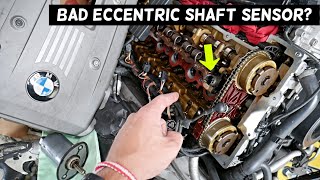
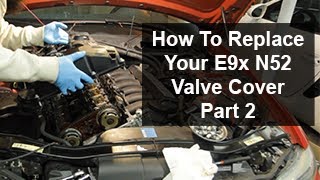
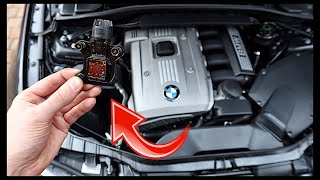
- Internal Eccentric Shaft Sensor Failure (Very Common) — Even without oil leaks, the sensor sits in a high-heat environment. Years of heat cycles and electronic stress cause internal components to fail, typically between 80,000 and 120,000 miles. 🎬 Watch: A complete walkthrough on replacing the eccentric shaft sensor.
- Damaged Wiring Harness or Poor Connection (Common) — Engine vibration and heat make the wiring harness brittle, leading to cracks, melted insulation, or frayed wires. This causes an open circuit or a short to ground, interrupting the signal.
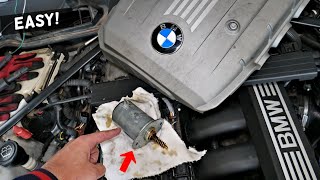
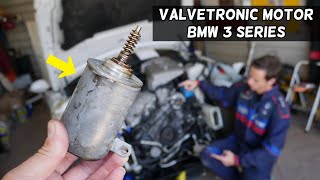
- Failing Valvetronic Motor (Actuator) (Less Common) — The electric motor that physically adjusts the eccentric shaft wears out. Its failure triggers sensor-related codes because the DME detects a mismatch between the commanded position and the actual position. 🎬 See how to properly replace the Valvetronic actuator motor.
- Worn or Binding Eccentric Shaft Mechanism (Less Common) — In high-mileage engines or those with poor oil change history, sludge builds up. This causes the mechanical eccentric shaft or its gears to bind, putting excessive strain on the motor and sensor.
- Low Battery Voltage or Failing Alternator (Uncommon) — BMW vehicles are extremely sensitive to system voltage. A weak battery or failing alternator causes a cascade of electronic fault codes, including P1013, as modules fail to initialize correctly.
- Engine Control Module (DME) Software Glitch (Rare) — After all hardware is verified as functional, the issue is sometimes a software bug within the DME. A dealer-level software update or re-flash resolves the fault logic.
- Failing Integrated Supply Module (IVM) (Rare) — On some BMW models, the IVM provides a stable power supply to critical engine electronics. A failing IVM causes intermittent voltage drops, leading to faults including P1013.
Symptoms

- Rough Idle and Engine Stalling — The engine idle fluctuates erratically, feels like it will stall, or dies completely when coming to a stop or starting cold. The Valvetronic system defaults to a fixed, inefficient position.
- Drastically Reduced Engine Power (Limp Mode) — The car feels sluggish and unresponsive. The DME activates a limp-home mode to protect the engine, defaulting to the throttle body for air control instead of the Valvetronic system.
- Noticeably Increased Fuel Consumption — With the Valvetronic system disabled, the engine's air intake is inefficient, leading to a significant drop in gas mileage.
- Whining/Clicking Noise from Engine Cover — A distinct mechanical whining or a series of clicks is heard from the top of the engine when locking or unlocking the car. This is the Valvetronic motor failing its relearn cycle.
- Change in Engine Note/Tone — The engine sounds different during acceleration, particularly at higher RPMs. The typical change in engine note as the variable lift engages is absent.
- Check Engine Light and Drivetrain Malfunction Message (also visible on scanner) — The dashboard illuminates the Check Engine Light, and BMW models display a 'Drivetrain Malfunction: Drive Moderately' warning.
Diagnostic Flowchart
Tap your situation to follow the diagnostic path that matches what you're seeing on this code.
Common Fixes & Costs
- Replace Eccentric Shaft Sensor and All Related Gaskets
— Parts: $300-$450, Labor: $600-$1,200, ~4.0 hr book time
(Intermediate)
: OEM - Replace Valve Cover and Gasket Set
— Parts: $400-$600, Labor: $600-$1,000, ~4.5 hr book time
(Intermediate)
: OEM - Repair or Replace Wiring Harness Connector — Parts: $30-$50, Labor: $150-$300, ~1.5 hr book time (Intermediate)
- Replace Valvetronic Motor (Actuator)
— Parts: $250-$450, Labor: $500-$1,000, ~2.5 hr book time
(Professional)
: OEM - Replace Eccentric Shaft, Sensor, and Motor Assembly — Parts: $1,000-$1,500, Labor: $2,500-$4,000, ~8.0 hr book time (Professional)
Used vs. New Parts: Buying Guide
When a used part is worth it: For the primary fix (Eccentric Shaft Sensor), buying used is strongly discouraged. The part has a finite lifespan and fails from internal wear and oil contamination. The high labor cost makes a used part a major gamble.
Donor-vehicle mileage cap: roughly under 40000 miles for the part to have meaningful remaining life.
Donor quality checklist:
- For a valve cover, ensure the donor lacks brittle plastic and a clogged integrated PCV.
- For any electronic part, verify the donor vehicle was not scrapped due to electrical or engine management issues.
- Match the part number exactly. Do not rely on visual similarity.
Decision logic:
- If The part is the Eccentric Shaft Sensor itself. → Buy a new OEM (VDO/Continental) or Genuine BMW part. The failure rate of aftermarket and used sensors is notoriously high.
- If The part is the plastic Valve Cover. → New is highly recommended due to the integrated PCV system and plastic becoming brittle.
- If The part is the Valvetronic Motor. → A low-mileage used OEM motor is a cost-effective option, as they are more robust than the sensor, but new is always safer.
Warranty tradeoff: Used parts typically offer a 30-90 day warranty at best. Aftermarket new parts offer a 1-year to limited lifetime warranty, but quality varies. A new OEM part ensures reliability, critical for a labor-intensive job.
Worst-case if a used part fails: $600-$1500 if a used sensor or valve cover fails prematurely, requiring a repeat of the entire labor-intensive repair.
What Happens If You Wait — Timeline
- 0-1 month: Check Engine Light appears, often with a 'Drivetrain Malfunction' message. The car has a slightly rough idle or occasional hesitation, especially when cold. (MPG impact: 5-10%% · Added cost: $0-$50 in wasted fuel.)
- 1-3 months: The engine consistently enters 'limp mode,' resulting in a severe lack of power and poor throttle response. Stalling at stops becomes frequent. The engine runs noticeably rich. (MPG impact: 15-25%% · Added cost: $50-$200 in wasted fuel.)
- 3-8 months: The rich-running condition damages the catalytic converters. The excess unburned fuel overheats the catalyst substrate, causing it to melt or crack internally. You hear rattling from the exhaust. (MPG impact: 20-30%% · Added cost: $1,500-$3,500 as catalytic converter replacement becomes necessary.)
- 8+ months: Catastrophic failure is imminent. The catalytic converter becomes completely clogged, creating extreme backpressure. The constant strain causes the Valvetronic motor to fail. The eccentric shaft itself seizes, leading to major internal engine damage. (MPG impact: 30%+% · Added cost: $2,500-$6,000+ for combined repairs of the catalytic converter, Valvetronic motor, and potentially the eccentric shaft assembly.)
Cost of Not Fixing It
- 0-1 month: Significant drop in fuel economy (15-25%), poor throttle response, and stalling. The vehicle is unpleasant and inefficient to drive. (Added cost: Negligible, besides extra fuel costs.)
- 1-6 months: Driving in limp mode causes the engine to run rich. Excess unburned fuel enters the exhaust and overheats the catalytic converters, causing internal failure. (Added cost: $1,500-$3,500 per catalytic converter.)
- 6+ months: Continued operation puts excessive strain on the Valvetronic motor, causing it to fail. A binding eccentric shaft leads to severe internal engine damage. (Added cost: $500-$1,000 for a Valvetronic motor replacement, or $2,500+ for eccentric shaft repairs.)
Diagnosis Steps
- Visual Inspection of Sensor Connector for Oil
This is the fastest, most definitive check for P1013 on BMWs. Locate the round eccentric shaft sensor connector on the valve cover. Unplug it and inspect both the harness and sensor sides for engine oil. If oil is present, the sensor and leaking gasket must be replaced.
Tools: Flashlight (Beginner) - Full System Code Scan
Use an OBD-II scanner to read all stored fault codes. Confirm P1013 and look for related codes like P1017, P1014, or P1030, which pinpoint the failure more accurately.
Tools: OBD-II Scanner or BMW ISTA Software (Beginner) - Check Battery and Charging System Voltage
Verify the vehicle's electrical health. Check the battery voltage (12.4V+ engine off) and alternator output (13.5V-14.5V engine running). Low voltage causes false codes on sensitive BMW modules.
Tools: Multimeter (Beginner) - Command a Valvetronic System Relearn
Using a bidirectional scan tool, command the Valvetronic system to perform its 'limit stop learn' procedure. A successful relearn is silent and quick. Grinding, binding, or loud clicking noises confirm a mechanical failure of the motor or shaft assembly.
Tools: Advanced BMW Scan Tool (ISTA, Autel, Launch) (Advanced) - Inspect Wiring Harness Integrity
Examine the wiring harness leading to the eccentric shaft sensor and Valvetronic motor. Look for heat damage, cracked insulation, melting, or chafing against other engine components.
Tools: Flashlight (Intermediate) - Monitor Live Data for Eccentric Shaft Position
Using a BMW-specific scan tool, monitor the live data parameter for 'Eccentric Shaft Position'. While commanding a relearn, watch for the angle to change smoothly. If the value is frozen or jumps erratically, it confirms a sensor or wiring fault.
Tools: Advanced BMW Scan Tool (ISTA, Autel, Launch) (Advanced) - Check Sensor's 5-Volt Reference and Ground
With the key on (engine off), unplug the sensor. Probe the connector's pins. You should find a stable 5-volt reference signal from the DME and a good ground. If the 5V reference is missing, the problem is in the wiring or the DME.
Tools: Multimeter, Wiring Diagram (Advanced) - Perform Physical Inspection Under the Valve Cover
Remove the valve cover for a direct inspection. Check the teeth on the eccentric shaft and the Valvetronic motor's gear for excessive wear. Look for heavy sludge buildup that impedes movement.
Tools: Socket Set (incl. E-Torx), Torque Wrench (Professional) - Analyze Sensor Signal with an Oscilloscope
Back-probe the sensor's signal wire with an oscilloscope. A healthy sensor produces a clean square wave pattern. A noisy, erratic, or absent pattern indicates a failed sensor or bad connection.
Tools: Oscilloscope, Back-probe Pins (Professional)
When This Code Triggers (Freeze-Frame Conditions)
- Engine Coolant Temp: 180-210°F (82-99°C) (The fault sets when the engine is fully warmed up and running.)
- RPM: 600-800 RPM (at idle) or during startup/shutdown (The code triggers when the DME performs its self-test at startup, shutdown, or prolonged idle.)
- Engine Load: 15-40% (The code sets under light to moderate load conditions.)
- System Voltage: Below 12.0V or fluctuating (Low voltage during engine cranking prevents the Valvetronic system from initializing, logging a false P1013.)
Related Codes
- P1017 — Means 'VVT-Sensors Plausibility' error. The DME receives a signal from the eccentric shaft sensor outside the expected range. It confirms the sensor is faulty.
- P1014 — Indicates a data communication or electrical signal integrity problem from the sensor.
- P1030 — Points to 'Valvetronic Monitoring Sluggish Movement,' meaning the Valvetronic motor struggles to make adjustments quickly. Suggests a mechanical issue.
- P0300-P0306 — Generic codes for cylinder misfires. Incorrect valve lift disrupts the air/fuel mixture, leading to incomplete combustion.
Climate & Environmental Factors
- High Heat Cycles: Prolonged exposure to high engine temperatures warps the plastic valve cover and hardens rubber gaskets. This degradation causes the oil leaks that destroy the eccentric shaft sensor.
- Extreme Cold: Cold weather exacerbates related issues. A weak battery struggling in the cold provides insufficient voltage during startup, triggering a false P1013 code. Oil leaks worsen as seals contract.
How to Talk to a Mechanic About This Code
Say this: "I have a BMW with a P1013 Valvetronic sensor code. Before quoting a large repair, could you please perform a preliminary diagnosis by checking the eccentric shaft sensor's electrical connector for oil contamination? Also, please check for related codes like P1017 or P1030."
This signals you've done your research and directs the technician to the most common, easily verifiable failure point first. It prevents them from immediately quoting a replacement of the entire Valvetronic motor or shaft.
Avoid saying:
- 'My check engine light is on, can you look at it?'
- 'The car is running rough, just fix whatever is wrong.'
- 'I think I need a new Valvetronic motor.'
Questions to ask before authorizing the repair:
- Was there oil in the sensor connector? If so, does the quote include replacing the valve cover gasket and sensor seal, not just the sensor?
- If the connector was dry, what other diagnostic steps did you perform to condemn the sensor (or motor)?
- Does your shop have the proper BMW-specific scan tool to perform the 'Valvetronic limit stop relearn' procedure after the repair?
- Are you using an OEM/VDO sensor, or an aftermarket brand? What is the warranty on the parts and labor?
Where to Take It: Dealer vs Independent vs Chain
- Dealer:
Recommended First Stop. The possibility of a free repair under the SULEV warranty is too significant to ignore. Let the dealer determine warranty eligibility first. If not covered, get their quote and compare it with an independent specialist.
Best for: Vehicles potentially covered under the SULEV/PZEV 15-year/150,000-mile emissions warranty., Complex diagnostic situations where the eccentric shaft itself is binding., Newer models or cases where a DME software update is required.
Downsides: Highest labor rates, typically 1.5-2x an independent shop., Less willing to try a simple fix (like a connector pigtail) and more likely to replace entire assemblies. (Typical cost: +75% vs. baseline) - Independent Shop:
Excellent Choice (if out of warranty). A good independent BMW specialist has performed this exact repair dozens of times. They provide dealer-level expertise at a much lower cost. Ensure they use OEM parts and can perform the Valvetronic relearn.
Best for: Out-of-warranty BMWs where cost is a major factor., Shops that specialize specifically in BMW or German vehicles., Getting a second opinion on a high dealer quote.
Downsides: Quality and expertise vary widely; vetting is crucial., May lack the latest, most expensive BMW-specific tooling for complex shaft or DME issues. (Typical cost: +0% vs. baseline) - Chain Shop:
Strongly Discouraged. This is not a generic repair. The risk of an incorrect diagnosis, improper installation, or inability to complete the mandatory 'relearn' procedure is extremely high.
Best for: Simple, non-engine-related maintenance like tires and oil changes.
Downsides: Technicians lack the specialized training for complex systems like Valvetronic., Unlikely to have the required BMW-specific scan tools for post-repair procedures., High risk of misdiagnosis, leading to unnecessary replacement of parts. (Typical cost: -10% vs. baseline)
When to Walk Away From the Repair
If the total estimated repair cost for the P1013 fault and any other known issues exceeds 50% of the vehicle's current private-party market value, seriously consider selling or trading in the car rather than repairing it.
- Car worth $8000, fix is $1800: Fix it. The repair cost is ~23% of the car's value, which is a reasonable investment to restore full function.
- Car worth $4500, fix is $2500: Borderline. The cost is over 55% of the car's value. Get a second opinion, and if the quote is firm, consider selling the car as-is to a DIYer or trading it in.
- Car worth $15000, fix is $5500: Walk Away (if other issues exist). While the cost is only ~37% of the value, a $5,500 repair for a binding eccentric shaft is substantial. If the car has other deferred maintenance, cut your losses.
What Scan Tool You Need for This Code

Minimum: A scan tool with BMW-specific software that can perform bidirectional control, specifically the 'Valvetronic limit stop learn' or 'adaptation' function.
A generic $20-$80 code reader only reads and clears the P1013 code. It cannot perform the mandatory relearn procedure required after replacing the sensor or motor. The code returns immediately without this step.
Budget: BlueDriver Pro (~$100) — Reads enhanced BMW codes (like P1013, P1017) and provides freeze-frame data. However, it lacks the bidirectional capability to perform the Valvetronic relearn, making it insufficient for completing the repair on its own.
Mid-range: Foxwell NT510 Elite (with BMW software) (~$180) — Considered a go-to for DIY BMW owners. It provides full-system diagnostics and has the specific service function to perform the 'Valvetronic limit positions' relearn procedure. This is the most affordable tool to properly complete the P1013 repair.
Professional: Autel MaxiCOM MK808 / MK808BT Pro (~$450-600) — A professional-level tablet scanner that offers extensive bidirectional controls. It easily performs the 'Valvetronic limit positions' adaptation and other advanced service functions for BMWs and many other brands.
Rent vs buy: For this specific code, you must have a tool capable of the Valvetronic relearn. Most auto parts store rental tools are basic readers and will not work. You must buy a capable scanner, pay a shop for the 10-minute procedure, or find a friend with the right tool.
How to Clear the Code After You Fix It
- Reconnect the battery if disconnected.
- Use a BMW-specific scan tool to clear the P1013 fault code from the DME.
- Perform the 'Valvetronic limit stop learn' procedure using the scan tool.
- Alternatively, perform a manual relearn: turn ignition on (engine off) and press the accelerator pedal to the floor 10 times within 15 seconds.
Drive cycle (~30 minutes): To reset readiness monitors for an emissions test, perform a specific BMW drive cycle: cold start (sit for 8+ hours), idle for 2-3 minutes with A/C and rear defroster on, drive at a steady 20-30 MPH for 3-4 minutes, accelerate to 40-60 MPH and hold a steady speed for 15-20 minutes, followed by a 5-minute idle in gear before shutdown.
Readiness monitors affected: Catalyst monitor, Oxygen (O2) Sensor Monitor, EVAP System Monitor
Before emissions retest: drive at least 100 miles to fully set monitors.
Watch out for:
- Clearing the code with a generic scanner without performing the Valvetronic relearn causes the code to return immediately.
- Disconnecting the battery clears the code but resets all emissions readiness monitors, causing an automatic smog test failure.
- If the root cause (e.g., oil-soaked sensor) remains, the code reappears instantly.
Will This Fail Emissions / State Inspection?
Yes — this code typically fails an OBD-II emissions inspection.
- California: An illuminated Check Engine Light for code P1013 is an automatic failure of the smog check. After repair, a complete drive cycle must be performed to set all readiness monitors before a re-test is possible.
- New York: NYS vehicle inspection includes an OBD-II scan. Any active Check Engine Light results in an automatic emissions inspection failure. After clearing the code, the vehicle's readiness monitors must be set to 'Ready'.
- Texas: In the 17 counties requiring emissions testing, an active P1013 code causes an automatic failure. As of 2025, while safety inspections are eliminated for non-commercial vehicles, this OBD-II emissions test remains mandatory in designated areas.
Most Commonly Affected Vehicles
- BMW 3 Series (E90, E91, E92, E93) (2006-2013) — Extremely common on models with the N52 engine (325i, 328i, 330i). Also affects N55-equipped models like the 335i within this range.
- BMW 5 Series (E60, E61) (2006-2010) — Primarily affects 6-cylinder models with the N52 engine, such as the 528i and 530i.
- BMW X3 (E83, F25) (2007-2013) — The E83 chassis (2007-2010) with the N52 engine is highly susceptible. The issue also appears on early F25 chassis models (2011-2013) with N52/N55 engines.
- BMW X5 (E70) (2007-2013) — Both the N52 (X5 3.0si) and N55 (X5 xDrive35i) engine variants experience this code during this model run.
- BMW 1 Series (E82, E88) (2008-2013) — The 128i, which uses the N52 engine, is a very common vehicle for this fault code. The 135i with the N55 also shares the Valvetronic architecture.
- Chevrolet / GMC / Buick Various models with V6 engines (2007-2017) — On GM vehicles, P1013 typically means 'Intake Camshaft Position Actuator Park Position Bank 2'. This is a VVT phaser issue, not related to BMW's eccentric shaft system.
- Ford F-150, Explorer (EcoBoost) (2011-Present) — For Ford, P1013 means 'Wastegate Control Pressure Circuit High', pointing to a turbocharger control problem. On other models, it means 'Two Wheel Drive High Range (2HI) Indicator Circuit Malfunction'.
- Maserati GranTurismo, Quattroporte (2006-2019) — On some Maserati models, P1013 is defined as 'Intake camshaft and right main bearing crankshaft correlation', indicating a critical timing correlation issue.
Manufacturer-Specific Notes
- BMW: The root cause is a design flaw where the valve cover gasket and sensor seal degrade, allowing oil to seep into the sensor's electronics.
- Ford: P1013 indicates a 'Wastegate Control Pressure Circuit High' on EcoBoost engines or a 'Two Wheel Drive High Range (2HI) Indicator Circuit Malfunction' on trucks.
- Chevrolet / GM: P1013 is 'Intake Camshaft Position Actuator Park Position Bank 2'. Relates to the camshaft phaser failing to return to its base position.
- Suzuki: P1013 means 'Lost Communication with Skid Control ECU', indicating a CAN bus network communication problem.
Real Owner Stories
2011 BMW 328i (N52) at 71k miles with hesitation and stalling
Car began to hesitate, cough, and die on startup. Check engine light was on with codes P1017 and P1030.
What they tried:
- Initial diagnosis pointed to either the Valvetronic motor or the sensor.
- A mechanic inspected the sensor's multi-plug connector and found it full of oil that had wicked up from the sensor itself.
Outcome: Replaced the eccentric shaft sensor and valve cover gasket. The old sensor's circuit board was covered in a jelly-like substance from oil contamination. The repair resolved the starting and running issues.
Lesson: Oil in the sensor connector is the classic 'smoking gun'. Don't just clean it; the sensor is internally damaged. Always replace the sensor and the gaskets to fix the root cause of the leak.
2011 BMW 328i xDrive at 65k miles with a dealer misdiagnosis attempt
Car was towed to a dealer with a bad eccentric shaft sensor. The dealer quoted $1,600 for the repair.
What they tried:
- The owner researched their SULEV warranty, which listed the 'Valvetronic sensor' and 'valve cover gasket' as covered.
- The dealer initially claimed the 'eccentric shaft sensor' was not the same as the 'Valvetronic sensor' and was not covered.
Outcome: After the owner pushed back, referencing the warranty booklet, the dealer acknowledged the parts were the same. The entire repair was covered at zero cost under the SULEV warranty.
Lesson: The eccentric shaft sensor IS the Valvetronic sensor. Dealers may try to avoid warranty work. If you have a SULEV vehicle in a participating state, be persistent and check your VIN with BMW of North America.
BMW N55 engine with recurring Valvetronic faults
Owner experienced constant Valvetronic error codes and was quoted $6,500 by a shop claiming the motor failed, shorted the DME, and the eccentric shaft was bad.
What they tried:
- A second opinion from a BMW specialist mechanic revealed a more nuanced diagnostic process.
- The specialist noted that the DME cuts power to the Valvetronic driver if it detects high current, making a 'back-feed' failure unlikely.
Outcome: The actual repair involved replacing the Valvetronic motor and the eccentric shaft, which was found to be binding. The DME was fine. The owner had the motor and shaft replaced for around $5,000.
Lesson: Be skeptical of any diagnosis claiming a failed Valvetronic motor has 'shorted' the main engine computer (DME). A more likely scenario is a failed motor and/or a mechanically binding shaft.
How to Prevent This Code From Triggering
- Perform regular oil changes with high-quality, BMW LL-01 approved synthetic oil. (Every 5,000-7,500 miles or annually, whichever comes first.) — Frequent changes prevent the formation of sludge, which causes the eccentric shaft mechanism to bind, putting strain on the motor and sensor. It also maintains the health of all engine seals.
- Proactively replace the valve cover gasket and eccentric shaft sensor seal. (Every 80,000-100,000 miles, or at the first sign of oil weeping.) — The gaskets are the primary failure point. They become brittle from heat and time, causing the oil leak that destroys the sensor. Replacing them proactively prevents P1013.
- Maintain a healthy battery and charging system. (Test battery annually after it is 3-4 years old.) — BMWs are highly sensitive to voltage. A weak battery causes the Valvetronic system to fail its startup initialization, throwing false P1013 codes.
- Inspect the eccentric shaft sensor connector for oil during other maintenance. (Whenever the engine cover is off for other service (e.g., spark plugs, ignition coils).) — Catching the first trace of oil in the connector allows you to schedule the gasket and sensor replacement before symptoms like stalling or limp mode become a critical issue.
Frequently Asked Questions
Is the eccentric shaft sensor covered under BMW's SULEV (PZEV) warranty?
Yes, in many cases it is. The SULEV warranty covers emissions-related components for up to 15 years or 150,000 miles in participating states. Have a BMW dealer check your VIN for eligibility, as this saves you thousands of dollars.
Can I just clean the oil out of the sensor and connector?
Cleaning the connector with electrical contact cleaner is almost always a temporary fix. By the time oil is visible, it has penetrated the sensor's internal electronics and caused permanent damage. The only reliable solution is replacing the sensor and gaskets.
Why do mechanics insist on using an OEM/VDO sensor for this repair?
The labor involved in replacing this sensor is significant, and aftermarket sensors have a notoriously high failure rate. Experienced technicians strongly recommend using the OEM supplier (VDO/Continental) to ensure reliability and avoid repeating the expensive job.
What is commonly misdiagnosed when P1013 appears?
A frequent misdiagnosis is replacing only the Valvetronic motor, especially when a 'sluggish movement' code like P1030 is present. The motor is often just a symptom, struggling because the sensor provides incorrect position data. The root cause is most often the oil-fouled sensor.
Is the eccentric shaft sensor the same as a camshaft position sensor?
No. The camshaft position sensor tracks the camshaft's rotation for fuel and ignition timing. The eccentric shaft sensor measures the rotational position of the Valvetronic shaft to control variable valve lift.
Do I need special tools to replace the eccentric shaft sensor?
You need an external Torx (E-Torx) socket set, a quality torque wrench for the aluminum bolts, and potentially fuel line disconnect tools. A BMW-specific scan tool is also mandatory to perform the Valvetronic 'relearn' procedure after installation.
Can a bad battery really cause code P1013?
Yes. BMWs use a sophisticated network of electronic modules that are very sensitive to voltage. A weak battery fails to provide the stable voltage required during startup, causing the Valvetronic system to fail its self-test and log a false P1013.
Key Takeaways
- Code P1013 on BMWs indicates a failed Valvetronic eccentric shaft sensor, triggering a 'Drivetrain Malfunction' warning and limiting engine RPM.
- Inspect the round sensor connector on the valve cover; oil contamination here is the root cause in over 80% of BMW P1013 cases.
- Verify your VIN with a BMW dealer for SULEV/PZEV warranty coverage, which fully pays for this $1,200+ repair up to 15 years or 150,000 miles.
- Fixing P1013 permanently requires replacing the sensor, valve cover gasket, and sensor seal simultaneously using OEM VDO/Continental parts.
- Never clear this code without performing a 10-minute 'Valvetronic limit stop relearn' using a bidirectional scan tool, or the code returns immediately.
Helpful Videos

The information in this article is provided for general reference and educational purposes only. Vehicle specifications, procedures, and part compatibility can vary by production date, trim level, and region. Always consult your vehicle's factory service manual and verify part numbers before purchasing or performing repairs. Safety-critical components such as airbags, seat belts, and braking systems should be installed by a qualified professional.
- 🎬 Helpful Videos
- What Does P1013 Mean?
- Can I Drive With P1013?
- Common Causes
- Symptoms
- Diagnostic Flowchart
- Common Fixes & Costs
- Used vs. New Parts: Buying Guide
- What Happens If You Wait — Timeline
- Cost of Not Fixing It
- Diagnosis Steps
- When This Code Triggers (Freeze-Frame Conditions)
- Related Codes
- Climate & Environmental Factors
- How to Talk to a Mechanic About This Code
- Where to Take It: Dealer vs Independent vs Chain
- When to Walk Away From the Repair
- What Scan Tool You Need for This Code
- How to Clear the Code After You Fix It
- Will This Fail Emissions / State Inspection?
- Most Commonly Affected Vehicles
- Manufacturer-Specific Notes
- Real Owner Stories
- 2011 BMW 328i (N52) at 71k miles with hesitation and stalling
- 2011 BMW 328i xDrive at 65k miles with a dealer misdiagnosis attempt
- BMW N55 engine with recurring Valvetronic faults
- How to Prevent This Code From Triggering
- Frequently Asked Questions
- Is the eccentric shaft sensor covered under BMW's SULEV (PZEV) warranty?
- Can I just clean the oil out of the sensor and connector?
- Why do mechanics insist on using an OEM/VDO sensor for this repair?
- What is commonly misdiagnosed when P1013 appears?
- Is the eccentric shaft sensor the same as a camshaft position sensor?
- Do I need special tools to replace the eccentric shaft sensor?
- Can a bad battery really cause code P1013?
- Key Takeaways
- 🎟️ Get 5% Off