

OBD-II Code P0997: Shift Solenoid 'F' Control Circuit Range/Performance
The Ultimate Guide to P0997: Meaning, Pro-Level Diagnosis, and Fixes
- P0997 indicates a mechanical, hydraulic, or electrical failure in the 'F' shift solenoid circuit, requiring immediate diagnosis to prevent a $3,500+ transmission rebuild.
- Check the transmission fluid level and condition first; dark, burnt fluid indicates severe internal clutch wear rather than a simple $300 solenoid failure.
- Do not drive the vehicle for more than 5 to 10 miles, as the computer locks the transmission into 2nd or 3rd gear (limp mode), which overheats the fluid at highway speeds.
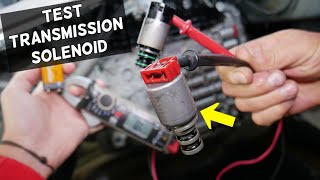
- Test the solenoid's electrical resistance with a multimeter before replacing it; a healthy solenoid reads between 5 and 30 ohms, while an infinite reading confirms a dead coil.
What Does P0997 Mean?

P0997 means the Powertrain or Transmission Control Module (PCM/TCM) detects a performance problem with the 'F' shift solenoid. This solenoid is an electronically controlled valve that directs transmission fluid to engage or disengage clutches, enabling gear shifts. When the module commands a gear change involving the 'F' solenoid, it monitors sensors to verify the shift happens correctly and within a specific timeframe. If the shift is too slow, too fast, or fails completely, the computer flags the solenoid's performance as out of range and triggers P0997.
Technical definition: The SAE/OBD-II definition is "Shift Solenoid 'F' Control Circuit Range/Performance". The TCM monitors the time required for a shift to complete and verifies the gear ratio using input and output shaft speed sensors. If the resulting gear ratio is incorrect or the shift is mechanically slow, the TCM sets this performance code.
Can I Drive With P0997?

Yes, But With Caution. You can drive, but do not exceed a few miles. The vehicle's computer engages 'limp mode' to protect the transmission from catastrophic damage. This mode locks the transmission into a single gear (usually 2nd or 3rd), limits engine RPM below 3,000, and restricts top speed to 30-50 mph. Continuing to drive forces the transmission to operate under high stress, overheating the fluid and burning out clutches. This turns a $400 solenoid repair into a $3,500+ transmission rebuild. Limp to a nearby repair shop, avoiding highways and aggressive acceleration.
Common Causes

- Failed Shift Solenoid 'F' (Common) — The solenoid fails electronically (internal coil shorts or opens) or mechanically (internal plunger sticks or return spring breaks) due to age, heat, and contaminants. This is the most frequent component failure for this code.
- Low, Dirty, or Starved Transmission Fluid (Very Common) — Old, contaminated, or low transmission fluid is a leading cause. Dirty fluid clogs the fine passages within the valve body and the solenoid itself. Low fluid levels or a severely clogged internal filter cause pressure drops and aeration, hindering solenoid performance.
- Wiring or Connector Issues (Common) — Wires leading to the solenoid fray, short to ground, or break. This includes the internal transmission harness bathed in hot fluid, and the external connector exposed to the elements.
- Internal Valve Body Issues (Less Common) — The solenoid screws into the valve body. Debris from clutch material causes a valve within the body to stick or wear out, meaning even a new solenoid cannot direct fluid properly.
- Faulty Vehicle Speed Sensor (Less Common) — The TCM compares input and output speed sensor data to verify a shift is complete. If the output speed sensor provides erratic data, the TCM mistakenly believes the shift failed and flags a solenoid performance code.
- Weak Battery or Charging System Issues (Rare) — Modern transmissions rely on precise voltage to operate solenoids. A weak battery or failing alternator provides low voltage, causing the solenoid to act sluggishly and triggering performance codes.
- Faulty Transmission Control Module (TCM) (Very Rare) — The computer controlling the transmission fails. The internal driver circuit commanding the 'F' solenoid malfunctions, though this typically sets other codes alongside P0997.
Symptoms
- Check Engine Light is On — An illuminated Check Engine Light (or Malfunction Indicator Lamp) on the dashboard is the primary indicator.
- Transmission Stuck in Gear ('Limp Mode') — The transmission refuses to shift up or down, locking itself in a single gear (often 2nd or 3rd) to prevent further damage. You lose the ability to engage certain forward gears or reverse entirely.
- Harsh, Delayed, or Erratic Shifting — The transmission slams into gear, hesitates before shifting, shifts at incorrect times, or feels jerky and unpredictable.
- Poor Acceleration and Fuel Economy — With the transmission unable to shift into the proper gear, the engine revs unusually high or feels bogged down, causing sluggish acceleration and a noticeable drop in fuel efficiency.
Diagnostic Flowchart
Tap your situation to follow the diagnostic path that matches what you're seeing on this code.
Common Fixes & Costs
- Replace Shift Solenoid 'F' — Parts: $30-$150, Labor: $200-$500, ~3 hr book time (Professional)
- Replace Shift Solenoid Pack (Block) — Parts: $250-$600, Labor: $250-$600, ~3.5 hr book time (Professional)
- Transmission Fluid and Filter Change — Parts: $75-$200, Labor: $125-$300, ~1.5 hr book time (Intermediate)
- Repair Wiring or Replace Connector — Parts: $15-$60, Labor: $150-$400, ~2.5 hr book time (Intermediate)
- Replace or Recondition Valve Body — Parts: $400-$1200, Labor: $400-$800, ~5 hr book time (Professional)
DIY vs Professional
- Transmission Fluid and Filter Change — Beginner:
Tools: ['Jack and jack stands', 'Socket set', 'Torque wrench', 'Fluid drain pan', 'Fluid pump or funnel'] - Replace Shift Solenoid 'F' / Solenoid Pack — Beginner:
Tools: ['All tools for a fluid change', 'Digital Multimeter (for verification)', 'Small pick set (for connectors/clips)', 'Vehicle-specific service manual (crucial for identifying the correct solenoid)'] - Repair Wiring or Replace Connector — Beginner:
Tools: ['Soldering iron and heat shrink tubing', 'Wire strippers/cutters', 'Depinning tools (for connectors)', 'Digital Multimeter'] - Replace or Recondition Valve Body — Beginner:
Tools: ['All tools for solenoid replacement', 'Inch-pound torque wrench (critical)', 'Extremely clean work environment', 'Specialized valve body assembly tools']
Used vs. New Parts: Buying Guide
When a used part is worth it: For an older, high-mileage vehicle (over 150,000 miles) with low resale value, a used solenoid or solenoid pack from a reputable recycler is a budget-conscious, short-term solution to get the car running again.
Donor-vehicle mileage cap: roughly under 80000 miles for the part to have meaningful remaining life.
Donor quality checklist:
- Purchase only from reputable auto recyclers who provide the donor vehicle's VIN and mileage.
- Visually inspect the part for external damage, but understand that internal condition is impossible to verify without testing.
- Ensure the part number matches your original part exactly, as many solenoids look similar but are not interchangeable.
- Ask about the warranty policy; a 30- to 90-day warranty is standard for used parts.
Decision logic:
- If Vehicle has under 100,000 miles and you plan to keep it long-term. → Buy a new OEM or high-quality aftermarket part. The reliability and longer warranty are worth the extra cost.
- If Vehicle has over 150,000 miles and a tight budget is the primary concern. → A used part from a low-mileage donor is a reasonable gamble, but understand it may not last as long as a new part.
- If The part is a solenoid pack for a Chrysler, Dodge, or Jeep. → Favor a new aftermarket or OEM part, as these packs are a known high-failure item and a used one carries significant risk.
Warranty tradeoff: Used parts typically offer a 30-90 day warranty that covers the part only, not the labor to install it. New aftermarket parts often come with a 1-year to limited lifetime warranty. New OEM parts usually have a 1-year warranty.
Worst-case if a used part fails: $400-$800
What Happens If You Wait — Timeline
- 0-1 month: Check Engine Light is on with code P0997. Transmission occasionally has a harsh or delayed shift, but returns to normal after restarting the car. Vehicle enters 'limp mode' intermittently. (MPG impact: 0-5%% · Added cost: $0)
- 1-3 months: Shifting problems become frequent and severe. 'Limp mode' activates often, limiting speed to 35-45 mph. The constant harsh shifting and incorrect pressures accelerate wear on the transmission's internal clutch packs. (MPG impact: 5-10%% · Added cost: $50-$150 in wasted fuel)
- 3-6 months: Transmission fluid overheats due to slipping clutches and high stress. The fluid degrades, darkens, and loses lubricating properties, causing damage to other solenoids and the valve body. Transmission slippage becomes noticeable. (MPG impact: 10-15%% · Added cost: $800-$1,500 (Damage extends beyond the original solenoid to clutch packs, requiring a minor rebuild).)
- 6+ months: Catastrophic failure is imminent. Debris from worn-out clutches circulates through the entire transmission, contaminating the valve body, torque converter, and oil pump. The transmission fails to engage any gear. (MPG impact: 15-25%+% · Added cost: $2,500-$5,000+ (The original sub-$500 solenoid repair becomes a full transmission rebuild or replacement).)
Cost of Not Fixing It
- 0-1 month: Poor drivability, including harsh shifting and entering 'limp mode'. A noticeable drop in fuel economy (5-15%) is common. Stress on transmission mounts and driveshaft components increases. (Added cost: $50-$150 in wasted fuel.)
- 1-6 months: Continued erratic shifting causes excessive wear on internal clutch packs and bands. Transmission fluid overheats and degrades, losing its lubricating properties and accelerating wear throughout the transmission. (Added cost: $1,500-$3,500 for a potential transmission rebuild that could have been avoided.)
- 6+ months: Catastrophic transmission failure is highly likely. Debris from worn clutches contaminates the entire hydraulic system, destroying the valve body, torque converter, and oil pump. A complete transmission replacement becomes the only option. (Added cost: $3,500-$7,000+ for a full transmission replacement instead of a sub-$500 solenoid repair.)
Diagnosis Steps

- Scan for All Powertrain & Transmission Codes
Use a professional-grade OBD-II scanner to read codes from both the Engine (ECU/PCM) and Transmission (TCM) modules. A P0700 code is a generic flag from the TCM. Look for specific codes like P0998 (Circuit Low) or P0999 (Circuit High), which point to electrical faults, or speed sensor codes like P0720, which provide crucial diagnostic clues.
Tools: ['Professional OBD-II Scanner'] - Check Transmission Fluid Level and Condition
With the engine warm and running in Park or Neutral (consult the owner's manual), check the dipstick. The fluid must be at the 'FULL' mark, bright red (or its specified color), and not smell burnt. Brown, black, or gritty fluid indicates internal wear and contamination that causes a solenoid to stick.
Tools: ['Clean white paper towel', 'Safety glasses'] - Check for Technical Service Bulletins (TSBs)
Search online for TSBs related to P0997 for the vehicle's make, model, and year. Manufacturers release bulletins for known issues, such as software updates, wiring harness problems, or updated parts, saving hours of diagnostic time.
Tools: ['Internet access', 'Vehicle VIN'] - Inspect the External Wiring Harness and Connectors
Visually inspect all wiring going to the transmission's main connector. Look for chafing against the frame, melting near the exhaust, or rodent damage. Disconnect the main connector and check for corroded, bent, or pushed-out pins. Ensure the connector is fully seated and the locking tab is secure.
Tools: ['Flashlight'] - Advanced: Analyze Live Scan Tool Data
Monitor relevant PIDs (Parameter IDs) on a scan tool. Key PIDs include: 'Commanded Gear', 'Current Gear', 'Line Pressure', 'TCM Voltage', and 'Solenoid F Status' (On/Off). When the TCM commands a shift to a gear using solenoid 'F', the solenoid status changes and the current gear matches the commanded gear within 1-2 seconds. A significant delay points to a performance issue. TCM voltage must be steady between 13.5V and 14.5V.
Tools: ['Professional OBD-II Scanner with Live Data'] (Advanced) - Pro Tip: Test the Solenoid's Resistance
Measure the resistance of the shift solenoid 'F' circuit at the transmission's main connector or directly at the TCM connector. Disconnect the connector and measure the resistance between the power and ground pins for solenoid 'F'. Most shift solenoids have a resistance between 5 and 30 ohms. A reading of infinity (OL) indicates an open circuit, while a reading near zero indicates a short.
Tools: ['Digital Multimeter', 'Vehicle-Specific Wiring Diagram'] - Advanced: Check Solenoid Circuit Voltage
With the key on and engine off, back-probe the power wire for solenoid 'F' at the transmission connector. When the solenoid is commanded OFF, you read battery voltage (approx. 12.6V). When the TCM commands the solenoid ON, the TCM supplies ground, and the voltage drops to near 0V. A voltage that doesn't change indicates a wiring problem or a faulty TCM driver.
Tools: ['Digital Multimeter', 'Back-probe pins'] (Advanced) - Pro Tip: Perform a Solenoid 'Click Test'
Drain the fluid and remove the transmission pan to access the solenoid. Disconnect it and use a 12V power source and jumper wires to briefly apply power and ground to the solenoid's pins. A healthy solenoid makes an audible, sharp 'click' as the internal plunger moves. No click, or a weak click, confirms a failed solenoid.
Tools: ['12V power source', 'Jumper wires', 'Basic hand tools', 'Drain pan'] - Advanced: Perform a Line Pressure Test
Connect a pressure gauge to the transmission's line pressure test port. Compare the readings at idle and stall speed to the manufacturer's specifications. Pressures significantly low (more than 10-15% below spec) indicate a problem with the pump, a clogged filter, or major internal leaks, preventing the solenoid from functioning correctly.
Tools: ['300+ PSI Fluid Pressure Gauge', 'Vehicle-Specific Service Manual'] (Advanced) - Advanced Diagnosis: Analyze the Solenoid Waveform
For intermittent issues, graph the voltage and amperage of the solenoid circuit during operation using an oscilloscope. A small 'hump' or disruption in the amperage ramp when the solenoid is energized confirms the internal plunger is physically moving. A smooth ramp with no disruption indicates the solenoid receives power but is mechanically stuck.
Tools: ['Oscilloscope', 'Back-probe pins'] - Inspect the Valve Body
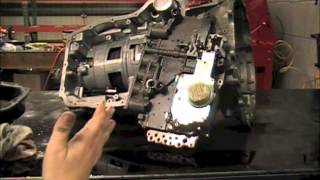
If the fluid is dirty and the solenoid tests good electrically and mechanically, the problem is a stuck valve or clogged passage in the valve body. This requires removing the valve body for a detailed inspection and cleaning, a job typically left to transmission specialists.
Tools: ['Basic hand tools', 'Inch-pound torque wrench']
When This Code Triggers (Freeze-Frame Conditions)
- Engine Coolant Temp: 180-200°F (82-93°C) (The code is typically set when the engine and transmission are at full operating temperature.)
- RPM: 1500-2500 RPM (The fault is detected during steady-state cruising or light to moderate acceleration when a gear shift is commanded.)
- Engine Load: 30-60% (Occurs under normal driving load, not typically during heavy acceleration or deceleration.)
- Vehicle Speed: 35-55 mph (56-88 km/h) (Shift performance is monitored at city or highway cruising speeds after the transmission shifts through lower gears.)
Related Codes
- P0700 — This is a generic 'handshake' code from the Engine Control Unit (ECU) meaning the Transmission Control Module (TCM) stored a fault. P0700 is an informational flag telling you to scan the TCM for the actual problem code (P0997). Diagnosis must focus on the specific transmission code.
- P0998 — This code for 'Shift Solenoid F Control Circuit Low' points to a specific electrical fault, usually a short to ground. While P0997 indicates the solenoid's performance is wrong, P0998 tells you the circuit's voltage is consistently lower than expected, pointing directly to a wiring short or an internally shorted solenoid coil.
- P0999 — This code for 'Shift Solenoid F Control Circuit High' points to an open circuit. The TCM sees higher-than-expected voltage because there is a break in the wire, a disconnected connector, or an internally broken solenoid coil. P0999 is a hard electrical failure indicating a complete loss of continuity.
- P0720 — This code for 'Output Speed Sensor Circuit Malfunction' is related to performance codes like P0997. The TCM uses the output speed sensor to verify a commanded shift occurred. If the sensor provides an erratic signal, the TCM cannot confirm the shift and incorrectly blames the solenoid's performance.
Climate & Environmental Factors
- Cold Weather: In very cold temperatures, transmission fluid becomes thicker (higher viscosity). This causes delayed shifts and sluggish solenoid movement on startup, triggering a P0997 code. The issue resolves itself as the transmission warms up.
- High Humidity / Water Exposure: Sustained high humidity or water intrusion leads to corrosion on external wiring connectors and pins. This corrosion increases electrical resistance, affecting the voltage signals the TCM sees and leading to performance codes.
- High Altitude: Reduced air density at altitude makes cooling less efficient, leading to higher transmission fluid temperatures. Overheated fluid loses its hydraulic properties and causes solenoids to perform poorly.
How to Talk to a Mechanic About This Code
Say this: "I have a P0997 code, and the transmission is shifting harshly and sometimes goes into limp mode. I'd like to schedule a diagnostic. Please start by checking the fluid condition, external wiring, and testing the solenoid circuit's resistance before recommending a major repair. I'd also like to know the cost for the initial diagnostic."
This signals you've done research and directs the shop toward a logical, step-by-step diagnosis rather than jumping to conclusions. It helps prevent the common scam of immediately quoting a full transmission rebuild without proper testing.
Avoid saying:
- 'My transmission is acting weird, can you fix it?' (Too vague, invites a high quote).
- 'Just replace the shift solenoid.' (Don't diagnose for the mechanic; the problem could be wiring).
- 'Do whatever it takes to fix it.' (This is a blank check for unnecessary repairs).
Questions to ask before authorizing the repair:
- What was the condition of the transmission fluid? Was it burnt or full of debris?
- Did you test the solenoid's resistance and voltage? What were the readings?
- Can you show me the damaged part or wiring after it's removed?
- What is the warranty on the parts and labor for this specific repair?
- Is this a firm quote, or could the price increase once you start the work?
Where to Take It: Dealer vs Independent vs Chain
- Dealer:
Recommended only if the vehicle is under warranty or has a known, manufacturer-specific quirk that requires dealer software or parts.
Best for: Vehicles still under powertrain warranty., Complex manufacturer-specific issues (e.g., Ford TCM, Nissan CVT valve body)., When a required software update is part of the fix.
Downsides: Highest labor rates, often 50-100% more than independent shops., Defaults to replacing an entire assembly (like a valve body) when only a single part (a solenoid) failed. (Typical cost: +75% vs. baseline) - Independent Shop:
Best fit for most P0997 repairs. A good independent transmission specialist offers the best balance of expertise and value for this type of internal, but manageable, repair.
Best for: Out-of-warranty vehicles where cost is a factor., Standard solenoid or wiring repairs on common vehicles., Getting a second opinion on a high dealer quote.
Downsides: Quality and expertise vary widely. Look for shops that specialize in transmissions and have ASE certifications., May not have access to the very latest manufacturer software updates. (Typical cost: +0% vs. baseline) - Chain Shop:
AVOID for P0997 diagnosis and repair. While a fluid change might be okay, they are not equipped for the proper electrical and mechanical diagnosis this code requires. The risk of a costly misdiagnosis is high.
Best for: Basic fluid and filter changes (if you verify they use the correct fluid).
Downsides: Technician skill is highly inconsistent from one location to another., Often lack the deep diagnostic tools and experience for internal transmission work., Reputation for upselling and misdiagnosis on complex issues. (Typical cost: -10% vs. baseline)
When to Walk Away From the Repair
If the estimated repair cost exceeds 50% of the car's private-party value (using a source like Kelley Blue Book), you should seriously consider selling or trading in the vehicle instead of repairing it.
- Car worth $8000, fix is $650: Fix it. This is a standard repair cost for a solenoid replacement and is well below the threshold.
- Car worth $4000, fix is $2800: Walk away. The shop found burnt fluid and is quoting a full rebuild. The repair cost is 70% of the car's value and not a sound investment.
- Car worth $6000, fix is $1200: Borderline. The quote is for a valve body replacement. Get a second opinion from another transmission shop before proceeding.
What Scan Tool You Need for This Code

Minimum: A scanner that can read manufacturer-specific transmission codes and view live transmission data PIDs (Parameter IDs).
A basic $20 code reader only shows the P0997 code. It cannot see crucial live data like 'Commanded vs. Current Gear' or 'Solenoid F Status', which are necessary to determine if the fault is mechanical or electrical. You will be guessing at the repair.
Budget: BlueDriver Pro Scan Tool (~$100) — Reads transmission-specific codes and displays live data streams on your phone, including some transmission PIDs, which is the minimum for effective diagnosis. It cannot perform bidirectional tests.
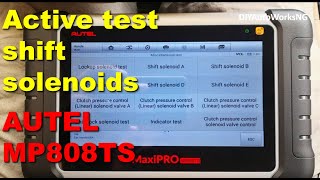
Mid-range: Foxwell NT604 Elite / XTOOL Anyscan A30M (~$150) — Offers full system diagnostics, including transmission, and bidirectional control. This allows you to command the 'F' solenoid on and off directly from the tool to confirm if it is working mechanically (you hear it click), confirming the solenoid itself is the point of failure.
Professional: Autel MaxiCOM MK808 / Launch CRP919 (~$500-800) — Provides full, OEM-level bidirectional control, advanced live data graphing, and access to manufacturer-specific functions. These tools record data during a test drive to catch intermittent faults and offer the most comprehensive diagnostic picture outside of a dealership tool.
Rent vs buy: Most auto parts stores offer free code reading, but their tools are basic and won't provide the live data needed. They do not rent out advanced bidirectional scanners. If you are serious about diagnosing this yourself, buying a mid-range scanner is the most effective path.
How to Clear the Code After You Fix It
- Use a quality OBD-II scan tool to erase the trouble codes.
- Perform a complete OBD-II drive cycle to allow the readiness monitors to run.
- Rescan the system to confirm P0997 and any related codes have not returned.
Drive cycle (~30 minutes): A generic drive cycle starts with a cold start (engine off for 8+ hours). Let the engine idle for 2-3 minutes. Drive for 15-20 minutes with mixed stop-and-go city driving. Then, drive for 5-10 minutes at a steady highway speed (55-60 mph). Allow the vehicle to cool down. This process helps the vehicle's computer run its self-tests.
Readiness monitors affected: Comprehensive Component Monitor, Transmission-related monitors
Before emissions retest: drive at least 100 miles to fully set monitors.
Watch out for:
- Simply disconnecting the battery may not clear the code from the TCM's permanent memory and will reset all readiness monitors, guaranteeing an emissions test failure.
- If the underlying mechanical or electrical fault is not properly repaired, the code will return as soon as the TCM re-runs the diagnostic test during the drive cycle.
Will This Fail Emissions / State Inspection?
Yes — this code typically fails an OBD-II emissions inspection.
- California: An active Check Engine Light results in an automatic Smog Check failure. After repairs, a complete drive cycle must be performed to set all readiness monitors before a retest is possible, which takes 100+ miles of driving.
- New York: A vehicle automatically fails the NYS inspection if the Check Engine Light is on. After clearing the code, you must complete a drive cycle, though NY allows 2001 and newer vehicles to pass with one monitor (except catalyst) not ready.
- Texas: In the 17 counties requiring emissions testing, an illuminated Check Engine Light is an automatic failure. Safety inspections are no longer required for most non-commercial vehicles as of 2025, but the emissions test is still mandatory in these areas.
Most Commonly Affected Vehicles
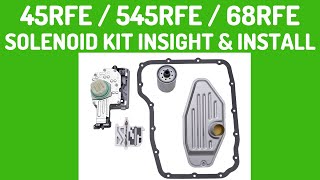
- Dodge/Chrysler/Jeep Ram 1500/2500, Durango, Grand Cherokee (and others with 45RFE/545RFE/68RFE) (2004-2018) — The solenoid packs on these transmissions are a very common failure point. For the 68RFE, there are different packs depending on the year: 2007.5-2018 models use a grey or white connector pack, while 2019+ models use a blue connector. Replacing the entire pack is standard procedure.
- Honda Odyssey, Accord, Pilot (2008-2017) — These models are known for electrical issues in the shift solenoid circuits. A P0997 code is frequently triggered by a failing pressure switch (e.g., 3rd or 4th gear clutch pressure switch) rather than the solenoid itself.
- Chevrolet/GM Cruze, Sonic, Malibu, Equinox (with 6T30/6T40/6T45) (2011-2019) — These 6-speed automatic transmissions experience P0997 due to solenoid failure or wiring harness chafing. The harness rubs against the transmission case or engine components, causing intermittent shorts.
- Ford Focus, Fiesta (2012-2018) — The dual-clutch DPS6 transmission is notorious for problems. The root cause is often a failing Transmission Control Module (TCM) or clutch actuator motor, not a traditional hydraulic solenoid. Ford issued extended warranty coverage for the TCM (14M02) to 10 years/150,000 miles.
- Nissan Altima, Maxima, Rogue, Sentra (2007-2017) — Vehicles with Continuously Variable Transmissions (CVTs) are prone to valve body and solenoid issues. A P0997 code points to a failing valve body assembly rather than just one solenoid. TSB NTB16-110P addresses related judder and codes like P0776.
- Volkswagen/Audi Jetta, Passat, Golf, A3 (with Aisin 09G/TF-60SN) (2005-2014) — The Aisin 09G 6-speed automatic develops sticky solenoids as they age, especially after 70,000 miles. This causes harsh shifting, flares, and performance codes. The issue is worn internal bushings within the solenoids.
- Kia / Hyundai Optima, Sorento, Sonata, Forte (with A6MF/A6LF) (2011-2020) — Models using the A6MF/A6LF series of 6-speed transmissions are susceptible to solenoid failures. The internal wiring harness becomes brittle from heat and fluid exposure, leading to intermittent electrical connections and performance codes.
- Subaru Outback, Forester, Impreza (2010-2018) — On certain Subaru models, P0997 is an indicator of internal valve body wear or a failing torque converter lock-up solenoid, affecting overall shift performance and triggering this code.
Manufacturer-Specific Notes
- Honda: On many Honda/Acura models, a solenoid performance code like P0997 is frequently caused by a faulty or failing clutch pressure switch (often for the 3rd or 4th gear clutch pack). Technicians test or replace these inexpensive switches before condemning a more expensive solenoid.
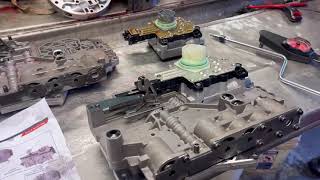
- Chrysler/Dodge/Jeep: On vehicles with 45RFE, 545RFE, and 68RFE transmissions, the solenoids are integrated into a single 'solenoid pack' or 'block'. It is standard practice to replace the entire pack as a unit, even if only one solenoid fails, as the internal circuitry of the pack is a common failure point.
- Nissan: For Nissan vehicles with a CVT, this code rarely points to a single, easily replaceable solenoid. It is almost always an indicator of a more serious internal failure of the valve body assembly, which is a complex and expensive repair often costing thousands of dollars.
- Volkswagen/Audi: The Aisin 09G transmission is infamous for sticky solenoids that cause harsh shifting and performance codes when hot. The root cause is wear in the solenoid's internal bushings. While replacement is the official fix, some specialists offer services to clean and resize these bushings.
- Ford: On Focus (2012-2018) and Fiesta (2012-2018) models with the DPS6 transmission, codes like P0997 are symptoms of a failing Transmission Control Module (TCM), not a hydraulic solenoid. Ford issued Customer Satisfaction Program 14M02, extending the TCM warranty to 10 years or 150,000 miles.
Real Owner Stories
2012 Dodge Ram 1500 at 110K miles
Truck went into limp mode (stuck in 4th gear) and threw a P0750 code. Owner decided to replace the solenoid pack.
What they tried:
- Replaced the transmission solenoid pack himself.
- After replacement, the truck would die when put into gear.
- Discovered the transmission fluid was extremely low after the repair.
Outcome: After adding a total of 9-10 quarts of ATF+4 fluid, the proper level was reached and the truck operated normally. The initial pan drop and drain, left for a week, removed much more fluid than anticipated.
Lesson: When replacing internal transmission components, a simple 'drain and fill' fluid volume is not enough. The system loses much more fluid, especially if the valve body is removed. Always refill based on the dipstick reading procedure.
2016 Honda Odyssey at 85K miles
Intermittent, very harsh shift around 20 mph (3rd gear). No other symptoms. Power cycling the vehicle temporarily fixed it.
What they tried:
- Replaced the 3rd gear pressure switch, based on common Honda forum advice.
- Performed a 2x drain and fill with Valvoline Maxlife ATF.
- The issue persisted, and eventually a P0776 code (Pressure Control Solenoid 'B' Stuck Off) appeared.
Outcome: The specific P0776 code pointed away from the previously replaced pressure switch and directly toward a failing pressure control solenoid or valve body issue, despite the symptoms being very similar.
Lesson: On many Hondas, harsh shifting is often a pressure switch issue, but wait for a specific trouble code to appear before replacing parts. Different solenoids and switches cause identical symptoms.
2016 MINI Countryman S (R60) with an Aisin automatic transmission
Recurring transmission fault put the car into limp mode daily. Shop diagnosed a faulty solenoid.
What they tried:
- The shop quoted $1200 for the repair.
Outcome: A professional confirmed that on this specific Aisin transmission, the solenoids are often not sold separately by the dealer and require sourcing from VW or replacing the entire valve body. The $1200 quote was deemed reasonable given the 4-6 hours of labor.
Lesson: A 'simple' solenoid replacement is complex and expensive depending on the manufacturer. On some European models, the part is not available individually, leading to a much higher repair cost than expected.
How to Prevent This Code From Triggering
- Perform regular transmission fluid and filter changes (Every 30,000-60,000 miles for normal use; 30,000 for severe use (towing, city traffic).) — Clean fluid maintains correct hydraulic pressure and prevents sludge from clogging the fine passages inside the solenoids and valve body, a primary cause of failure.
- Use only the manufacturer-specified transmission fluid (OEM or equivalent) (At every fluid change) — Different transmissions require fluids with specific friction modifiers and viscosity ratings. Using the wrong fluid causes seals to swell or shrink and creates shifting problems that damage solenoids.
- Install an auxiliary transmission fluid cooler (Once, especially for vehicles used for towing or in hot climates) — Heat is the number one killer of automatic transmissions. An external cooler significantly reduces fluid temperature, preventing it from breaking down and burning out the delicate electrical windings within the shift solenoids.
- Check for and apply any available TCM software updates (During routine service visits to a dealer or qualified shop) — Manufacturers release software updates to improve shift logic, adjust hydraulic pressures, and compensate for normal wear. An update fixes performance issues otherwise misdiagnosed as a faulty solenoid.
Frequently Asked Questions
Can I just clear the P0997 code and keep driving?
You can clear the code, but it returns as soon as the TCM runs its diagnostic monitor again. Ignoring the code allows the underlying problem, such as harsh shifting, to cause accelerated wear on clutches. This leads to much more expensive internal transmission repairs.
What is the difference between a 'performance' code (P0997) and an 'electrical' code (P0998/P0999)?
P0997 is a 'performance' code, meaning the TCM commanded the solenoid to work, but the measured physical result was incorrect due to hydraulic, mechanical, or electrical faults. P0998 (Low) and P0999 (High) are hard 'electrical' codes. They indicate the TCM detected an immediate problem in the electrical circuit itself, like a short or an open wire.
My fluid is clean and the solenoid is new, but the code came back. What now?
This indicates the problem lies in the wiring, the TCM, or the valve body. Meticulously inspect the internal and external wiring harness for intermittent shorts while wiggling the wires. If the wiring is intact, check for available TCM software updates or investigate a mechanical fault within the valve body.
Can a weak or bad battery cause a P0997 code?
Yes. Modern transmissions rely heavily on stable voltage to operate solenoids accurately. A weak battery or failing alternator causes voltage drops that lead to sluggish solenoid actuation, which the TCM interprets as a mechanical performance fault.
Where is the 'F' shift solenoid located?
Shift solenoid 'F' is located inside the automatic transmission, mounted directly onto the valve body. To access it, a technician must drain the transmission fluid and remove the transmission oil pan.
Can I replace a shift solenoid myself?
An experienced DIY mechanic with the right tools can perform this repair. The job requires draining fluid, removing the pan, correctly identifying the 'F' solenoid, and properly torquing all bolts upon reassembly. Due to the risk of contamination and the precision required, many owners leave this to a professional transmission shop.
What are the most common misdiagnosis mistakes for P0997?
The most common mistake is immediately replacing the shift solenoid without testing the electrical circuit first. The fault often lies in damaged wiring, a corroded connector, or a different component like a pressure switch. Another pitfall is ignoring burnt transmission fluid; replacing the solenoid won't fix the root cause of the contamination.
Key Takeaways
- P0997 indicates a mechanical, hydraulic, or electrical failure in the 'F' shift solenoid circuit, requiring immediate diagnosis to prevent a $3,500+ transmission rebuild.
- Check the transmission fluid level and condition first; dark, burnt fluid indicates severe internal clutch wear rather than a simple $300 solenoid failure.
- Do not drive the vehicle for more than 5 to 10 miles, as the computer locks the transmission into 2nd or 3rd gear (limp mode), which overheats the fluid at highway speeds.
- Test the solenoid's electrical resistance with a multimeter before replacing it; a healthy solenoid reads between 5 and 30 ohms, while an infinite reading confirms a dead coil.
Helpful Videos



The information in this article is provided for general reference and educational purposes only. Vehicle specifications, procedures, and part compatibility can vary by production date, trim level, and region. Always consult your vehicle's factory service manual and verify part numbers before purchasing or performing repairs. Safety-critical components such as airbags, seat belts, and braking systems should be installed by a qualified professional.
- 🎬 Helpful Videos
- What Does P0997 Mean?
- Can I Drive With P0997?
- Common Causes
- Symptoms
- Diagnostic Flowchart
- Common Fixes & Costs
- DIY vs Professional
- Used vs. New Parts: Buying Guide
- What Happens If You Wait — Timeline
- Cost of Not Fixing It
- Diagnosis Steps
- When This Code Triggers (Freeze-Frame Conditions)
- Related Codes
- Climate & Environmental Factors
- How to Talk to a Mechanic About This Code
- Where to Take It: Dealer vs Independent vs Chain
- When to Walk Away From the Repair
- What Scan Tool You Need for This Code
- How to Clear the Code After You Fix It
- Will This Fail Emissions / State Inspection?
- Most Commonly Affected Vehicles
- Manufacturer-Specific Notes
- Real Owner Stories
- 2012 Dodge Ram 1500 at 110K miles
- 2016 Honda Odyssey at 85K miles
- 2016 MINI Countryman S (R60) with an Aisin automatic transmission
- How to Prevent This Code From Triggering
- Frequently Asked Questions
- Can I just clear the P0997 code and keep driving?
- What is the difference between a 'performance' code (P0997) and an 'electrical' code (P0998/P0999)?
- My fluid is clean and the solenoid is new, but the code came back. What now?
- Can a weak or bad battery cause a P0997 code?
- Where is the 'F' shift solenoid located?
- Can I replace a shift solenoid myself?
- What are the most common misdiagnosis mistakes for P0997?
- Key Takeaways
- 🎟️ Get 5% Off