

OBD-II Code P0977: Shift Solenoid 'B' Control Circuit High
What P0977 means, why it triggers, and how to fix it
- P0977 indicates an open circuit or short to power in shift solenoid 'B', locking the transmission into a single gear and causing harsh shifts.
- Do not drive more than 10 miles with this code active; sustained driving in limp mode overheats the transmission and causes $3,000+ in internal damage.
- Before replacing a $250 solenoid, test the external wiring harness for resistance (typically 8.9 to 13.5 ohms) to rule out a broken wire or corroded connector.
- On 2020-2023 Subaru models, P0977 almost always requires a $1,500+ CVT valve body replacement due to moisture intrusion, which is often covered under a 10-year/100,000-mile warranty extension.
What Does P0977 Mean?

Your Transmission Control Module (TCM) detected abnormally high voltage in the 'Shift Solenoid B' electrical circuit. This means the computer cannot communicate with or control the solenoid responsible for changing gears, forcing the transmission into a protective fail-safe mode.
Technical definition: SAE/OBD-II defines P0977 as 'Shift Solenoid B Control Circuit High'. The TCM detects an open circuit, high resistance, or a short to power in the solenoid 'B' circuit. The code triggers when the TCM commands high current (e.g., >750mA) but measures low feedback current (e.g., <200mA), confirming the circuit is broken.
Can I Drive With P0977?
Yes, But With Caution. You can drive, but do not exceed 5 to 10 miles. The transmission enters 'limp mode,' locking into 2nd or 3rd gear, causing harsh shifting and high engine RPMs. Driving more than 50 miles overheats the transmission fluid and burns internal clutches, turning a $200 wiring repair into a $3,000+ transmission rebuild.
Common Causes

- Damaged or Corroded Wiring/Connectors (Common) — The wiring harness leading to the transmission or the connector at the solenoid becomes damaged, corroded, loose, or chafed, causing an open or high-resistance circuit. Always check this before replacing parts.
- Faulty Shift Solenoid 'B' (Common) — The solenoid fails internally. The coil windings develop an open circuit (infinite resistance) or an internal short to power, triggering the P0977 code.
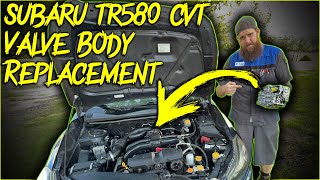
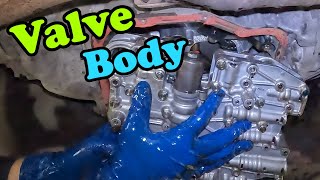
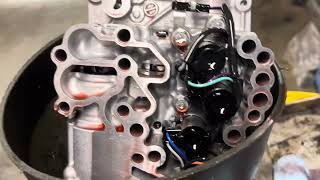
- Faulty Transmission Valve Body Assembly (Very Common) — Extremely common on 2020+ Subaru models with CVTs, where moisture intrusion into the harness connector ruins the assembly. The solenoids are integrated into the valve body, requiring replacement of the entire unit. 🎬 Watch: Step-by-step Subaru CVT valve body replacement tutorial.
- Internal Transmission Harness Failure (Less Common) — The wiring harness located inside the transmission oil pan becomes brittle from constant heat cycles and fluid exposure, leading to cracked insulation and open circuits.
- External Fluid Contamination on Connector (Less Common) — Fluids from the engine bay, such as battery acid on Toyota models, drip onto the transmission's external connectors, 🎬 See how battery acid causes P0977 in this Toyota case study. causing severe corrosion and electrical faults.
- Low or Dirty Transmission Fluid (Less Common) — Low fluid causes shifting issues and overheating, while contaminated fluid causes solenoids to stick, seize, or fail electrically over time.
- Blown Transmission-Related Fuse (Rare) — A blown fuse in the transmission control circuit causes a loss of expected voltage, triggering a circuit high code depending on the vehicle's wiring design.
- Faulty Transmission Control Module (TCM) (Rare) — A faulty driver circuit within the TCM sends incorrect signals or falsely reports a problem with the solenoid circuit. Test this only after eliminating all other possibilities.
Symptoms

- Transmission Stuck in Gear (Limp Mode) — The transmission defaults to a single safe gear (usually 2nd or 3rd) to prevent damage, resulting in poor acceleration and high engine RPMs at highway speeds.
- Harsh or Delayed Shifting — The transmission shifts abruptly, slams into gear, or hesitates noticeably when changing gears.
- Flashing 'AT OIL TEMP' Light — On Subaru models, this code is accompanied by a flashing 'AT OIL TEMP' light, indicating a critical transmission fault.
- Decreased Fuel Economy — Operating in limp mode prevents the transmission from using overdrive gears, causing the vehicle to consume significantly more fuel.
- Transmission Overheating — Driving for extended periods in limp mode overheats the transmission fluid, causing severe internal damage.
- Check Engine Light On (also visible on scanner) — The Malfunction Indicator Lamp illuminates immediately upon the TCM detecting the circuit fault.
Diagnostic Flowchart

Tap your situation to follow the diagnostic path that matches what you're seeing on this code.
Common Fixes & Costs
- Repair or Replace Damaged Wiring/Connector — Parts: $10-$100, Labor: $150-$400, ~2 hr book time (Intermediate)
- Replace Shift Solenoid 'B' — Parts: $25-$250, Labor: $200-$500, ~2.5 hr book time (Intermediate)
- Replace Transmission Valve Body Assembly — Parts: $900-$1600, Labor: $400-$1000, ~4.5 hr book time (Professional)
- Replace Internal Transmission Wiring Harness — Parts: $75-$200, Labor: $300-$600, ~3.5 hr book time (Professional)
- Transmission Fluid and Filter Change — Parts: $50-$150, Labor: $100-$250, ~1 hr book time (DIY)
Used vs. New Parts: Buying Guide
When a used part is worth it: Purchasing a used valve body from a reputable salvage yard is a budget-friendly option for an older, high-mileage vehicle. It is critical to get a part from a low-mileage donor vehicle that was not scrapped due to transmission failure.
Donor-vehicle mileage cap: roughly under 80000 miles for the part to have meaningful remaining life.
Donor quality checklist:
- Verify the donor vehicle's VIN to check its history and confirm it wasn't scrapped for a similar transmission issue.
- Match the part number exactly. Valve bodies are highly specific, and slight variations are incompatible.
- Visually inspect the part for signs of external damage, corrosion, or sludge around the connectors.
Decision logic:
- If Vehicle is under 8 years old or has less than 80,000 miles. → Buy a new OEM part. The reliability and long-term warranty justify the cost.
- If Vehicle is over 10 years old or has more than 150,000 miles and the budget is very tight. → A used part is a viable option, but accept the risk of a shorter lifespan.
- If The part is known for a high failure rate (like the Subaru CVT valve body). → Strongly favor a new, updated OEM part, as used parts likely have the same inherent defect.
Warranty tradeoff: Used parts typically come with a 30-90 day parts-only warranty. New aftermarket parts offer a 1-3 year warranty, while new OEM parts carry a 1-year warranty or longer, sometimes including labor if installed by a dealer.
Worst-case if a used part fails: $600-$1500 if the used part fails after the short warranty period, requiring repeat labor costs plus another part.
What Happens If You Wait — Timeline
- 0-1 week: Check Engine Light illuminates. The transmission occasionally has a harsh or delayed shift, but often operates normally. The vehicle enters 'limp mode' intermittently. (MPG impact: 0-5%% · Added cost: $0)
- 1 week - 2 months: Harsh shifting becomes frequent. The vehicle is consistently in 'limp mode,' stuck in 2nd or 3rd gear. Fuel economy drops noticeably, and the transmission runs hotter than normal. (MPG impact: 10-20%% · Added cost: $50-$200 in wasted fuel and accelerated fluid breakdown.)
- 2-6 months: Sustained operation in a single gear causes significant overheating. Internal clutches and seals wear at an accelerated rate due to high heat and mechanical stress. (MPG impact: 15-25%% · Added cost: $500-$1,500 for damage to other solenoids, clutch packs, and seals.)
- 6+ months: Catastrophic internal damage occurs. Constant overheating leads to burnt clutches, warped metal components, and widespread contamination. The transmission requires a full rebuild. (MPG impact: N/A (Vehicle may be undrivable)% · Added cost: $3,000-$7,000+ for a complete transmission replacement.)
Cost of Not Fixing It
- 0-1 Month: Noticeable decrease in fuel economy (5-15%), poor acceleration, and harsh shifting. The vehicle is stuck in 'limp mode,' making it unsafe for highway driving. (Added cost: $50-$150 in wasted fuel.)
- 1-6 Months: Driving in a single gear causes the transmission to run hotter than normal. This heat breaks down the transmission fluid and accelerates wear on internal clutches and seals. (Added cost: $200-$800 for potential damage to other solenoids, seals, or early clutch wear.)
- 6+ Months: Sustained overheating and mechanical stress lead to catastrophic internal transmission failure. Burnt clutches and warped components require a complete transmission rebuild. (Added cost: $3,000-$7,000+ for a complete transmission rebuild or replacement.)
Diagnosis Steps
- Scan for Codes & Review Freeze Frame Data
Use an OBD-II scanner to confirm P0977 and check for related transmission codes (e.g., P0700, P0974). Record the freeze-frame data to understand the vehicle's conditions when the code was set.
Tools: OBD-II Scanner (Beginner) - Visually Inspect External Wiring and Connectors
Thoroughly inspect the external wiring harness going to the transmission. Look for chafed, burnt, or broken wires. Check the main transmission connector for corrosion, bent pins, or battery acid contamination.
Tools: Flashlight, Mirror (Intermediate) - Quantitative Resistance Test
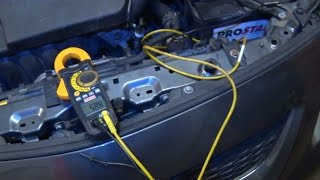
Disconnect the main transmission harness connector. Using a multimeter set to Ohms, measure the resistance of the shift solenoid 'B' circuit through the connector pins. An infinite (O.L.) reading indicates an open circuit. Compare the reading to the manufacturer's specifications (typically 8.9 to 13.5 Ohms).
Tools: Digital Multimeter, Vehicle-Specific Wiring Diagram (Advanced) - Test for a Short to Power
With the key ON and engine OFF, and the TCM connector unplugged, use a multimeter to check for voltage on the shift solenoid 'B' control wire. There should be zero volts. Reading battery voltage indicates a short to power in the harness.
Tools: Digital Multimeter, Vehicle-Specific Wiring Diagram (Advanced) - Perform a Harness 'Wiggle Test'
If tests are inconclusive, the fault is intermittent. Reconnect your multimeter and have a helper gently wiggle the wiring harness from the transmission to the TCM. If resistance or voltage readings jump, you've found the break.
Tools: Digital Multimeter, Helper (Advanced) - Check Transmission Fluid Level and Condition
Check the transmission fluid level and condition. Low, burnt, or dirty fluid indicates larger transmission problems. Top off low fluid and check for leaks.
Tools: Rag, Dipstick (if equipped) (Beginner) - Scan Tool Live Data Analysis
Using a professional scan tool, monitor the live data PIDs for shift solenoid 'B' command and feedback current. Observing a commanded high current with a low feedback current confirms an open circuit.
Tools: Professional Bi-Directional Scan Tool (Advanced) - Test the Solenoid's Function (Bench Test)
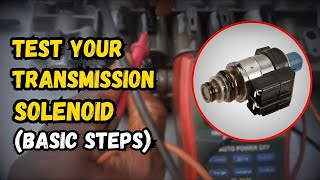
If the solenoid is accessible after removing the transmission pan, apply a 12V power source and ground to its terminals. A healthy solenoid makes an audible 'click'. If it doesn't click, it must be replaced.
Tools: Jumper Wires, 12V Battery, Safety Glasses (Advanced) - Check the TCM Connector and Driver Circuit
If all wiring and the solenoid test good, inspect the TCM connector for corrosion. In rare cases, the driver circuit inside the TCM has failed. This requires professional verification before replacing the module.
Tools: Digital Multimeter, Professional Scan Tool (Professional)
When This Code Triggers (Freeze-Frame Conditions)
- Engine Coolant Temp: 180-210°F (Vehicle is fully warmed up and at normal operating temperature.)
- RPM: 1500-2500 RPM (During steady-state cruise or light acceleration when a gear shift is expected or has just completed.)
- Vehicle Speed: 35-55 mph (Triggered at city or highway cruising speeds when the transmission is in a higher gear and the circuit is monitored for expected voltage.)
- Engine Load: 25-60% (The engine is under a moderate load, not idling or at wide-open throttle.)
Related Codes
- P0976 — This is the direct opposite of P0977, for 'Shift Solenoid 'B' Control Circuit Low'. P0977 indicates an open circuit or short to power. P0976 indicates a short to ground. If they appear together intermittently, it strongly suggests a wiring problem where the wire is alternately shorting and breaking contact.
- P0700 — This is a generic 'Transmission Control System Malfunction' code. It is an informational code set by the Engine Control Module (ECM) when the TCM stores a specific fault like P0977. It provides no diagnostic value on its own.
- P0756 — This code means 'Shift Solenoid 'B' Performance or Stuck Off'. This is a mechanical/performance fault, not an electrical one. An electrical fault (P0977) causes a performance fault (P0756) because the solenoid cannot actuate. Always fix electrical codes first.
- P0974 — This code is for 'Shift Solenoid 'A' Control Circuit High'. If you have P0977 and P0974 at the same time, you likely have a problem common to all solenoids, such as a bad power feed, a bad ground connection, or a major connector issue.
Climate & Environmental Factors
- Humidity and Condensation: On 2020-2023 Subarus, condensation accumulates inside the transmission's top cover and seeps into the main electrical connector for the valve body. This moisture intrusion is a direct cause of 'Circuit High' codes like P0977.
- Road Salt (Winter Climates): Salt spray creates a highly corrosive environment, accelerating the corrosion of external wiring harnesses and connector pins on the lower half of the vehicle. This corrosion creates high resistance or open circuits, triggering P0977.
How to Talk to a Mechanic About This Code
Say this: "I have a P0977 code and the transmission is in limp mode. I need a complete electrical diagnosis of the shift solenoid B circuit, including harness resistance and connector checks, before we discuss replacing any internal parts."
This signals that you are an informed customer. It directs the technician to perform a proper electrical diagnosis first, preventing them from immediately condemning an expensive part.
Avoid saying:
- My transmission is acting weird.
- My check engine light is on, can you just fix it?
- Just replace the shift solenoid.
Questions to ask before authorizing the repair:
- Did you test the resistance of the Shift Solenoid 'B' circuit, and what was the reading? How does it compare to the spec?
- Did you find any damage, corrosion, or contamination on the external wiring harness or connectors?
- If you are recommending a valve body or solenoid replacement, how did you rule out a problem with the wiring between the component and the TCM?
- Is there a warranty on the parts and labor for this repair?
- If this is a Subaru, have you checked for TSBs and warranty extensions related to the CVT?
Where to Take It: Dealer vs Independent vs Chain
- Dealer:
Best for: Vehicles under warranty (especially powertrain)., Newer Subaru models (2020+) with the known TSB for valve body failure, as they are most familiar with the issue and warranty process., Complex diagnostics requiring manufacturer-specific tools and information.
Downsides: Highest labor rates., Defaults to replacing a large assembly (valve body) when a smaller repair might be possible on other makes. (Typical cost: +50% vs. baseline) - Independent Shop:
Excellent choice for most vehicles, especially if you find a trusted transmission specialist. For a 2020+ Subaru, start at the dealer to check for warranty coverage first.
Best for: Out-of-warranty vehicles where cost is a major factor., Common makes like Honda, Toyota, or GM where the issue is likely a standard solenoid or wiring repair., Shops that specialize in transmission repair, as they have deep expertise in diagnostics.
Downsides: Quality and expertise vary widely; look for ASE certifications and good reviews., Lacks access to the very latest TSBs or warranty information for newer cars. (Typical cost: +0% vs. baseline) - Chain Shop:
AVOID for P0977 diagnosis and repair. This code requires specialized electrical and transmission knowledge lacking at chain shops.
Best for: Simple, unrelated maintenance like oil changes or tires.
Downsides: Technicians lack the specialized training for complex transmission diagnostics., High pressure to meet sales targets leads to misdiagnosis or upselling unnecessary repairs. (Typical cost: -10% vs. baseline)
When to Walk Away From the Repair
If the estimated repair cost exceeds 40-50% of the car's private-party value (use Kelley Blue Book or Edmunds), seriously consider selling or trading in the vehicle.
- Car worth $4500, fix is $2200: Walk away. The repair cost is nearly 50% of the car's value. It's not a financially sound investment.
- Car worth $15000, fix is $2500: Fix it. The repair cost is well below the threshold and restores a valuable asset.
- Car worth $3000, fix is $500: Fix it. A $500 wiring or single solenoid repair is a sensible investment to keep the car running.
What Scan Tool You Need for This Code
Minimum: A scanner that reads and clears transmission-specific DTCs and views live data for the transmission system.
A basic $20 code reader only shows the P0977 code. It won't let you see crucial live data like transmission fluid temperature or the command status of the solenoids, which is necessary for proper diagnosis.
Budget: BlueDriver Pro Scan Tool (~$100) — Reads and clears transmission codes, provides freeze-frame data, and displays live data PIDs for the transmission on your smartphone.
Mid-range: Foxwell NT510 Elite (~$180) — Offers brand-specific software with deeper access. It reads live transmission data and performs bi-directional tests to command the shift solenoids on and off, confirming mechanical function without disassembly.
Professional: Autel MaxiCOM MK808 / MP808 (~$500-800) — Provides full bi-directional control for active tests of all shift solenoids, displays live data in graphs, and offers advanced service functions like transmission adaptation relearns.
Rent vs buy: Many auto parts stores offer free code scanning, but their tools may not read transmission-specific codes or live data. Buying a budget or mid-range scanner is a wise investment for accurate diagnosis.
How to Clear the Code After You Fix It
- Perform the necessary mechanical or electrical repair.
- Use an OBD-II scan tool to clear the P0977 trouble code from the TCM/PCM memory.
- Perform a transmission-specific relearn procedure if required (especially after valve body replacement).
- Conduct a complete drive cycle to allow the vehicle's readiness monitors to run and complete.
Drive cycle (~30 minutes): Start the engine from a cold start and allow it to idle for 2-3 minutes. Drive in stop-and-go city traffic, including several gear shifts. Proceed to a highway and maintain a steady speed between 45-60 mph for 10-15 minutes. Safely pull over and allow the vehicle to idle for another 2 minutes before shutting it off. Allow the vehicle to cool completely.
Readiness monitors affected: Comprehensive Component Monitor, Catalyst Monitor, Oxygen Sensor Monitor
Before emissions retest: drive at least 100 miles to fully set monitors.
Watch out for:
- Simply clearing the code with a scanner will not fix the underlying electrical fault; the code returns quickly if the repair was not performed correctly.
- Disconnecting the battery to clear the code resets all OBD-II readiness monitors to 'incomplete', causing an automatic failure at an emissions testing station.
- Not performing the specific manufacturer's drive cycle leaves monitors 'incomplete' for an extended period.
Will This Fail Emissions / State Inspection?
Yes — this code typically fails an OBD-II emissions inspection.
- California: An illuminated Check Engine Light from code P0977 is an automatic test failure. After repair, all required readiness monitors must be 'complete.' You may need to drive 100-200 miles following a specific drive cycle.
- New York: The NYS DMV inspection includes an OBD-II scan. An active P0977 code results in an immediate failure of the emissions inspection.
- Texas: In counties requiring emissions testing, an active P0977 code causes an automatic failure. After clearing the code, Texas allows for one 'not ready' monitor on vehicles 2001 and newer to pass.
Most Commonly Affected Vehicles
- Subaru Crosstrek, Legacy, Outback, Forester Wilderness (2020-2023) — Extremely prone to this code due to a known issue with the TR580 CVT valve body. Subaru issued TSB 16-149-25 detailing how moisture enters the valve body harness connector. The fix is replacing the valve body.
- Honda Civic, CR-V, Accord, Pilot (2011-2022) — Commonly reported. The issue is often an electrical fault in the external circuit (open wire, bad connection at the main connector) or a failed solenoid. Specified solenoid resistance is typically between 8.9 and 13.5 ohms.
- Toyota Corolla, Tundra, FJ Cruiser (2008-2016) — Causes range from a failed solenoid to corrosion on the external transmission connector caused by a leaking battery dripping from above.
- Chevrolet / GM Traverse, Silverado, Equinox, HHR (2008-2017) — Appears on multiple GM vehicles with transmissions like the 4L60E and 6T70/6T75. The cause is often the internal transmission wiring harness becoming brittle and failing.
- Ford Focus, Fusion, Escape (2012-2018) — Often associated with issues in the transmission wiring harness or a failing Transmission Control Module (TCM), particularly on models with the DSP6 PowerShift transmission.
- Hyundai Veracruz, Elantra, ix55 (2007-2015) — Diagnostic procedures point to checking for a short to power or an open in the S2 solenoid circuit, with the fault often being the solenoid itself or the wiring harness.
- Volkswagen Golf, Jetta (2015-2018) — Owners report this code leading to misdiagnosis. Shops quote a $3,000 transmission replacement when the actual fault is a simple wiring issue repaired for a fraction of the cost.
- Mini Cooper (2007-2015) — Frequently reported by Mini Cooper owners, pointing to a failure of the solenoid pack within the Aisin automatic transmission. Sometimes the issue is simply a dirty electrical connector.
Manufacturer-Specific Notes
- Subaru: For 2020-2023 models with a CVT, P0977 is almost always caused by a faulty valve body due to moisture intrusion (TSB 16-149-25). Check with a dealer if your VIN is covered under the Subaru CVT Warranty Extension program (10 years/100,000 miles).
- Honda: This code points specifically to an electrical circuit problem (open wire, bad connection) rather than a mechanical solenoid failure. Diagnostics must focus on testing the wiring harness and connectors between the TCM and the solenoid.
- Toyota: Inspect the area around the transmission's main electrical connector. Leaks from above, particularly acidic vapor or fluid from the battery, drip down and corrode the connector pins, leading to a misdiagnosed P0977 code.
- Chevrolet / GM: On vehicles with transmissions like the 4L60E or 6T70/75, the internal transmission wiring harness is a common failure point. The harness becomes brittle in hot transmission fluid, causing wires to crack and create an open circuit.
Real Owner Stories
2020 Subaru Crosstrek at 45K miles
Check Engine Light and flashing 'AT OIL TEMP' light appeared during a road trip. The car felt stuck in a low gear with poor acceleration.
What they tried:
- Took it to a local mechanic unfamiliar with the specific Subaru issue.
- Dealer diagnosed the problem by referencing Subaru TSB 16-149-25.
Outcome: The dealer replaced the entire CVT valve body assembly. The $2,200 repair was covered under Subaru's extended CVT warranty (10 years/100,000 miles).
Lesson: For 2020+ Subarus, P0977 is a known issue. Always check with a dealer for TSBs and warranty extensions before paying for a costly valve body replacement.
2007 Mini Cooper Base at 95K miles
Intermittent Check Engine Light with code P0977 appeared with no noticeable change in driving performance.
What they tried:
- The owner suspected a major transmission issue or a bad solenoid.
- Disconnected the electrical connector for the solenoid, cleaned it with degreaser, and applied dielectric grease to the pins.
Outcome: Cleaning the electrical connector resolved the issue. The intermittent fault was caused by a dirty connection, not a failed part.
Lesson: An intermittent 'Circuit High' code is often a simple wiring or connector issue. Inspect and clean connectors before replacing expensive components.
Toyota Corolla
Car presented with P0977 and shifting problems. Initial diagnosis pointed towards a failed shift solenoid inside the transmission.
What they tried:
- A technician inspected the engine bay before tearing into the transmission.
- Noticed blue, crusty corrosion on the main transmission wiring harness connector directly below the battery.
Outcome: The root cause was a leaking battery dripping acid onto the connector, causing an open circuit. The fix was cleaning the connector and replacing the battery.
Lesson: Always look for the root cause of wiring damage. Leaking batteries cause severe damage to components below them, leading to misdiagnosis.
2014 Acura TL at 100K+ miles
While cruising at 73 mph, the Check Engine Light, VSA light, and flashing 'D' light came on simultaneously.
What they tried:
- Owner checked transmission fluid (level was fine) and restarted the car. Lights cleared but returned on the next drive.
- A scan revealed code P0977.
Outcome: The issue was identified as a failing shift solenoid B assembly, an external part on this model, making a DIY replacement feasible.
Lesson: On some vehicles, shift solenoids are externally accessible and can be replaced without dropping the transmission pan.
How to Prevent This Code From Triggering
- Regular Transmission Fluid Changes (Every 30,000 to 60,000 miles) — Clean transmission fluid lubricates and cools the solenoids. Degraded fluid leads to sludge buildup, causing solenoids to stick and eventually fail electrically from overheating.
- Use Only OEM-Specified Transmission Fluid (Every fluid change) — Using the wrong fluid causes chemical incompatibilities, damaging solenoid seals. Incorrect viscosity causes improper hydraulic pressure, straining the solenoids.
- Annual Inspection of Wiring Harnesses (Once per year) — Visually inspect the wiring harness for chafing, melting, or corrosion, especially in areas with road salt exposure. Catching a potential short early prevents the code.
- Address Fluid Leaks Promptly (As needed) — Address fluid leaks in the engine bay, especially from the battery. Leaking fluids drip onto and corrode transmission connectors, causing electrical faults like P0977.
Frequently Asked Questions
What are the most common misdiagnosis mistakes for P0977?
The most common mistake is replacing the shift solenoid or valve body without performing a full electrical diagnosis. Technicians often find the actual problem is a corroded connector or broken wire. Always test circuit resistance before condemning expensive parts.
Do I have to replace the whole valve body or just the one bad solenoid?
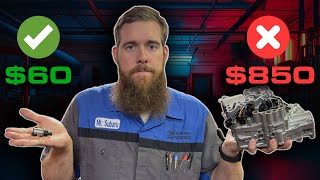
This depends entirely on your vehicle. On older vehicles, individual solenoids are easily replaced. On newer vehicles with CVTs (like modern Subarus), solenoids are integrated into the valve body, requiring complete assembly replacement.
What is a shift solenoid?
A shift solenoid is an electronically controlled valve inside your automatic transmission. It opens or closes to direct hydraulic fluid, applying clutches and bands to change gears. When it fails, the transmission cannot shift properly.
Will a transmission flush fix P0977?
No. P0977 is an electrical fault code indicating an open circuit or short to power. A fluid flush fixes sticky mechanical components but cannot repair a broken wire or failed electrical coil.
Can a bad battery or ground cause P0977?
Yes. A weak battery or poor engine ground causes unstable voltage throughout the electrical system. This leads to unpredictable behavior from the TCM and triggers false or intermittent solenoid codes.
How much does it cost to fix P0977?
A simple wiring repair costs $150 to $400. Replacing a single solenoid ranges from $250 to $750 for parts and labor. Replacing an entire valve body assembly costs $1,500 to $3,000 at a dealership.
Will ignoring P0977 cause more damage?
Yes. Driving with this code forces the transmission to operate inefficiently and overheat. This burns internal clutches and bands, turning a simple electrical fix into a $3,000+ transmission rebuild.
What is the difference between shift solenoid A, B, C, etc.?
Each lettered solenoid controls a specific hydraulic circuit within the transmission, such as the 1-2 shift or torque converter lockup. Their exact function is unique to the vehicle's make and transmission design.
Key Takeaways
- P0977 indicates an open circuit or short to power in shift solenoid 'B', locking the transmission into a single gear and causing harsh shifts.
- Do not drive more than 10 miles with this code active; sustained driving in limp mode overheats the transmission and causes $3,000+ in internal damage.
- Before replacing a $250 solenoid, test the external wiring harness for resistance (typically 8.9 to 13.5 ohms) to rule out a broken wire or corroded connector.
- On 2020-2023 Subaru models, P0977 almost always requires a $1,500+ CVT valve body replacement due to moisture intrusion, which is often covered under a 10-year/100,000-mile warranty extension.
Helpful Videos

The information in this article is provided for general reference and educational purposes only. Vehicle specifications, procedures, and part compatibility can vary by production date, trim level, and region. Always consult your vehicle's factory service manual and verify part numbers before purchasing or performing repairs. Safety-critical components such as airbags, seat belts, and braking systems should be installed by a qualified professional.
- 🎬 Helpful Videos
- What Does P0977 Mean?
- Can I Drive With P0977?
- Common Causes
- Symptoms
- Diagnostic Flowchart
- Common Fixes & Costs
- Used vs. New Parts: Buying Guide
- What Happens If You Wait — Timeline
- Cost of Not Fixing It
- Diagnosis Steps
- When This Code Triggers (Freeze-Frame Conditions)
- Related Codes
- Climate & Environmental Factors
- How to Talk to a Mechanic About This Code
- Where to Take It: Dealer vs Independent vs Chain
- When to Walk Away From the Repair
- What Scan Tool You Need for This Code
- How to Clear the Code After You Fix It
- Will This Fail Emissions / State Inspection?
- Most Commonly Affected Vehicles
- Manufacturer-Specific Notes
- Real Owner Stories
- 2020 Subaru Crosstrek at 45K miles
- 2007 Mini Cooper Base at 95K miles
- Toyota Corolla
- 2014 Acura TL at 100K+ miles
- How to Prevent This Code From Triggering
- Frequently Asked Questions
- What are the most common misdiagnosis mistakes for P0977?
- Do I have to replace the whole valve body or just the one bad solenoid?
- What is a shift solenoid?
- Will a transmission flush fix P0977?
- Can a bad battery or ground cause P0977?
- How much does it cost to fix P0977?
- Will ignoring P0977 cause more damage?
- What is the difference between shift solenoid A, B, C, etc.?
- Key Takeaways
- 🎟️ Get 5% Off