

OBD-II Code P0969: Pressure Control Solenoid 'C' Performance Issue
What P0969 means, why it triggers, and how to fix it
- Code P0969 indicates a failure in Pressure Control Solenoid 'C', causing harsh shifting, slipping, and a Check Engine Light.
- Stop driving immediately; continuing to drive with slipping clutches generates extreme heat that turns a $300 solenoid fix into a $3,500 transmission rebuild.
- Always check the transmission fluid level and condition first, as dirty or low fluid is the leading cause of this hydraulic performance code.
- Do not replace the solenoid without testing; use a multimeter to verify the circuit resistance is within the typical 10-40 Ohm range to rule out wiring faults.
What Does P0969 Mean?

P0969 means your car's main computer (PCM or TCM) detected a performance problem with Pressure Control Solenoid 'C', the electronic valve responsible for managing hydraulic fluid pressure in the automatic transmission. This solenoid ensures smooth gear shifts by controlling fluid pressure; when it fails to perform, the transmission cannot shift correctly.
Technical definition: The official SAE/OBD-II definition is "Pressure Control Solenoid 'C' Control Circuit Range/Performance". This indicates the powertrain control module detected the actual performance of the solenoid's control circuit is outside the expected range. Unlike a hard electrical fault code, this 'performance' code means the computer sees the solenoid is electrically responsive, but the hydraulic result (actual pressure change) is incorrect, slow, or mismatched, confirming a mechanical or hydraulic issue.
Can I Drive With P0969?
No — Do Not Drive. Driving is not recommended. Your vehicle enters a 'limp mode' with limited gear availability. Continuing to drive with incorrect line pressure and slipping for more than 50 miles generates extreme heat. This degrades fluid, glazes clutches, and warps internal parts, turning a $300 solenoid repair into a $3,500+ transmission rebuild.
Common Causes

- Low, Dirty Fluid or Clogged Filter (Very Common) — Fluid is the transmission's lifeblood. Low, old, or contaminated fluid restricts flow and prevents the system from maintaining the hydraulic pressure the solenoids need to operate.
- Faulty Pressure Control Solenoid 'C' (Very Common) — The solenoid fails electrically (internal short/open) or mechanically (sticking valve, clogged internal filter). This is the primary cause when fluid and wiring are in good condition. 🎬 Watch: How to fix the pressure control solenoid circuit
- Damaged Wiring or Corroded Connectors (Common) — The electrical circuit controlling the solenoid is compromised by frayed wires, loose connections, or corrosion on the connector pins at the solenoid or the TCM.
- Failing Transmission Valve Body (Less Common) — The valve body is the hydraulic brain. Internal passages clog with sludge, or check balls wear out, causing pressure regulation issues even if the solenoid is perfectly functional.
- Poor TCM or Transmission Ground Connection (Less Common) — A corroded, loose, or broken ground strap for the transmission case or TCM causes erratic voltage, triggering performance codes like P0969. This is frequently overlooked.
- Failing Transmission Pump (Rare) — The pump creates the initial hydraulic pressure. If the pump is weak, none of the solenoids receive enough pressure to work properly.
- Faulty Transmission Control Module (TCM) (Rare) — The computer controlling the transmission fails. This is the absolute last item to diagnose after eliminating all other possibilities.
Symptoms

- Harsh, Erratic, or Delayed Shifting — The vehicle slams into gear, hesitates before shifting, or shifts at the wrong times. This is the most common symptom.
- Transmission Slipping — Engine RPMs increase, but the vehicle doesn't accelerate accordingly, as if stuck between gears.
- Vehicle Enters 'Limp Mode' — The transmission locks into a single gear (usually 2nd or 3rd) to prevent further damage, severely limiting speed.
- Check Engine Light On — The computer illuminates the Malfunction Indicator Lamp (MIL) to alert the driver of the fault.
- Decreased Fuel Economy — When the transmission shifts inefficiently, the engine works harder, burning more fuel.
- Transmission Overheating (also visible on scanner) — Improper pressure and slipping gears create excess friction and heat, causing the transmission to overheat.
- Engine Stalls When Coming to a Stop — Pressure regulation issues cause the torque converter to remain partially engaged at a stop, loading the engine and causing it to stall.
Diagnostic Flowchart
Tap your situation to follow the diagnostic path that matches what you're seeing on this code.
Common Fixes & Costs
- Transmission Fluid and Filter Change — Parts: $45-$90, Labor: $120-$225, ~1.5 hr book time (Intermediate)
- Replace Pressure Control Solenoid 'C'
— Parts: $15-$100, Labor: $200-$600, ~3 hr book time
(Professional)
: OEM
: OEM - Repair Damaged Wiring or Connectors — Parts: $10-$50, Labor: $100-$300, ~2 hr book time (Intermediate)
- Replace Transmission Valve Body
— Parts: $300-$1000, Labor: $300-$600, ~4 hr book time
(Professional)
: OEM
: OEM - Reprogram or Replace Transmission Control Module (TCM)
— Parts: $500-$1200, Labor: $150-$250, ~1.5 hr book time
(Professional)
: OEM
Used vs. New Parts: Buying Guide
When a used part is worth it: Buying a used pressure control solenoid is not recommended due to the low cost of new aftermarket parts and high labor costs. A used valve body assembly from a low-mileage vehicle (under 80K miles) is a cost-effective option if the donor vehicle was scrapped for non-transmission reasons.
Donor-vehicle mileage cap: roughly under 80000 miles for the part to have meaningful remaining life.
Donor quality checklist:
- Verify the part number exactly, including any supersessions.
- Ask for the VIN of the donor car to check its history and mileage.
- Avoid parts from flood-damaged or high-mileage vehicles.
Decision logic:
- If The part is a single solenoid and new part is < $100 → Always buy new. The labor to replace a failed used part is too high to justify the small savings.
- If Vehicle is > 150K miles and budget is the primary concern → A used valve body from a reputable salvage yard with a 90-day warranty is a reasonable risk.
- If The vehicle is a newer model or you plan to keep it long-term → Favor a new OEM or high-quality remanufactured valve body for maximum reliability.
Warranty tradeoff: Used parts typically offer a 30-90 day warranty on the part only, not labor. New aftermarket parts offer a 1-3 year warranty. New OEM parts offer a 12-month/12,000-mile warranty.
Worst-case if a used part fails: 400-800 in repeat labor costs if a used solenoid or valve body fails after the warranty period.
What Happens If You Wait — Timeline
- 0-1 month: Code P0969 sets and the Check Engine Light illuminates. Drivers notice occasional, firm shifts or minor hesitation. Symptoms are intermittent. (MPG impact: 0-5%% · Added cost: $0-$50 in wasted fuel.)
- 1-3 months: Shifting becomes consistently harsh, erratic, or delayed. The transmission slips between gears (engine RPMs flare up without acceleration). The vehicle occasionally enters 'limp mode'. (MPG impact: 5-15%% · Added cost: $50-$200. Increased slipping generates heat, degrading the transmission fluid.)
- 3-6 months: Frequent slipping causes significant heat. Transmission fluid burns (dark color, acrid smell). Internal clutch packs glaze and lose grip. The vehicle frequently enters limp mode. Damage becomes irreversible. (MPG impact: 15-25%% · Added cost: $400-$1,200. The valve body is contaminated with clutch debris, requiring replacement alongside the solenoid.)
- 6+ months: Catastrophic failure. Burnt fluid and debris from destroyed clutches circulate throughout the transmission, ruining the valve body, torque converter, and pump. The vehicle stops moving entirely. (MPG impact: >25%% · Added cost: $3,500-$7,000+. A simple solenoid issue forces a full transmission rebuild or replacement.)
Cost of Not Fixing It
- 0-1 month: Noticeable decrease in fuel economy (5-15%), increasingly harsh shifting, and potential for getting stuck in limp mode. (Added cost: 50-150)
- 1-6 months: Continued slipping generates extreme heat, burning the transmission fluid and glazing internal clutch packs. This causes irreversible damage to friction materials. (Added cost: Turns a $400 solenoid repair into an $800-$2000 valve body or clutch pack replacement.)
- 6+ months: Catastrophic transmission failure. Heat and debris from failing clutches damage hard parts like gears, drums, and the torque converter. The vehicle stops moving. (Added cost: A full transmission rebuild or replacement becomes necessary, costing $3,500 to $7,000+.)
Diagnosis Steps

- Read Trouble Codes & Live Data
Use an OBD-II scanner to confirm P0969 is active and check for related transmission codes. Note the freeze frame data to see the vehicle's condition when the code set.
Tools: OBD-II Scanner (Beginner) - Check Transmission Fluid Level and Condition
Check the transmission fluid dipstick or service plug. Fluid must be at the correct level, pink/red, and not smell burnt. Dark or metallic-smelling fluid confirms a serious internal problem.
Tools: Rag, Gloves, White Paper Towel (Beginner) - Visually Inspect Wiring and Connectors
Trace the wiring harness from the TCM to the transmission housing. Look for chafing, melting, or corrosion on the main connector. Inspect ground straps bolted to the chassis and transmission case.
Tools: Flashlight (Intermediate) - Test Solenoid Circuit Resistance
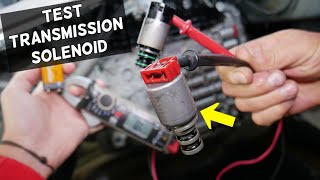
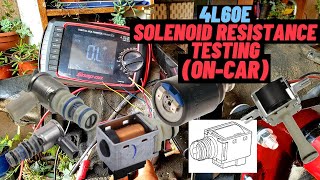
Disconnect the transmission harness and test the resistance of the Pressure Control Solenoid 'C' circuit. Compare to the manufacturer's specification (typically 10-40 Ohms). Infinite reading means an open circuit; near 0 Ohms indicates a short.
Tools: Digital Multimeter, Vehicle-Specific Wiring Diagram (Intermediate) - Command Solenoid with a Scan Tool
Use a bidirectional scan tool to command the solenoid on and off. Monitor voltage and pressure sensor data to see if the solenoid responds electrically and hydraulically, differentiating a performance code from a circuit code.
Tools: Advanced Bidirectional Scan Tool (Advanced) - Check System Voltage and Grounds
Verify the charging system is stable (13.2-14.8 volts running). Check for voltage drops on the main TCM power and ground circuits. Readings over 0.1V on ground or 0.2V on power indicate excessive resistance causing erratic module behavior.
Tools: Digital Multimeter (Advanced) - Check Transmission Line Pressure
Connect a pressure gauge to the transmission's test ports. This confirms if the pump generates correct pressure and if the solenoid regulates it properly when commanded by the scan tool.
Tools: Transmission Pressure Gauge Set (Advanced) - Perform Solenoid Circuit Voltage Drop Test
With the circuit connected and solenoid commanded ON, measure voltage between the TCM power pin and the solenoid power pin. A reading above 0.2 volts indicates high resistance in the wire. Repeat for the ground side.
Tools: Digital Multimeter, Wiring Diagram (Professional) - Analyze Solenoid Waveform with a Lab Scope
Connect a lab scope to the solenoid's control wire. A healthy solenoid shows a distinct 'hump' in the current ramp pattern as the internal pintle moves. A missing hump indicates a mechanically sticking solenoid, even if resistance is normal.
Tools: Automotive Oscilloscope (Lab Scope), Current Probe (Professional)
When This Code Triggers (Freeze-Frame Conditions)
- Engine Coolant Temp: 180-210°F (Vehicle at full operating temperature.)
- RPM: 1500-2500 (During cruise, light acceleration, or right before a shift event.)
- Engine Load: 25-70% (Moderate engine load, not idle or full throttle.)
- Vehicle Speed: 30-60 mph (Steady state cruising or during upshifts at city/highway speeds.)
Related Codes
- P0700 — Transmission Control System (MIL Request). This generic code from the Engine Control Module (ECM) indicates the TCM has detected a fault (like P0969) and requested the Check Engine Light. Scan the TCM for specific codes.
- P0968 — Pressure Control Solenoid 'C' Control Circuit/Open. This is a specific electrical fault code. The TCM detected infinite resistance, meaning the circuit is broken due to a cut wire, unplugged connector, or burned-out solenoid coil.
- P0970 — Pressure Control Solenoid 'C' Control Circuit Low. This indicates a short to ground. The TCM detected abnormally low voltage, suggesting the control wire is touching the vehicle's chassis.
- P0971 — Pressure Control Solenoid 'C' Control Circuit High. This indicates a short to power. The TCM detected abnormally high voltage, suggesting the control wire is touching a power wire.
Climate & Environmental Factors
- Cold Weather: Extremely cold temperatures thicken transmission fluid, increasing hydraulic resistance. This causes sluggish solenoid operation on startup and triggers a performance code if the fluid is old. The TCM interprets the slow hydraulic response as a solenoid fault.
- High Humidity and Road Salt: Road salt splashes onto the undercarriage, acting as an electrolyte. This highly corrosive mixture accelerates the degradation of wiring harnesses and promotes galvanic corrosion between connector pins, causing high resistance or intermittent open circuits.
How to Talk to a Mechanic About This Code
Say this: "I have a P0969 transmission code and I'm experiencing harsh shifting. I need a diagnostic to determine if the cause is electrical, hydraulic, or mechanical. Please start by checking the fluid condition, testing the solenoid circuit resistance, and checking for related TSBs before recommending a repair."
This proves you understand P0969 is a 'performance' code requiring real diagnosis, not just parts replacement. It directs the shop to follow a logical process and prevents them from immediately jumping to the most expensive conclusion.
Avoid saying:
- 'My transmission is acting weird, just fix it.'
- 'The internet says I need a new solenoid, can you replace it?'
- 'Just do whatever you think is best.'
Questions to ask before authorizing the repair:
- What is the exact condition of the transmission fluid?
- What is the resistance reading on the solenoid 'C' circuit, and is it in spec?
- Did you inspect the wiring harness and connectors between the TCM and the transmission?
- Were you able to command the solenoid with a scan tool and verify its response?
- What is the warranty on the parts and labor for this specific repair?
Where to Take It: Dealer vs Independent vs Chain
- Dealer:
A strong option if the vehicle is under warranty or has a known TSB. Be cautious of immediate recommendations for full transmission replacement without thorough testing.
Best for: Vehicles under powertrain warranty., Known manufacturer-specific issues covered by a TSB., Complex repairs requiring TCM programming or specialized software.
Downsides: Highest labor rates, often 1.5-2x more than independent shops., Often defaults to replacing large, expensive assemblies (like a full transmission) instead of smaller components. (Typical cost: +50% vs. baseline) - Independent Shop:
Excellent choice, especially a well-regarded transmission specialist. They are more willing to perform component-level repairs (replacing a single solenoid or repairing wiring).
Best for: Out-of-warranty vehicles where cost is a factor., Shops specializing in transmission repair., Getting a second opinion on a dealership's expensive quote.
Downsides: Quality and expertise vary widely; vetting is crucial., Lacks access to the latest manufacturer software for brand-new models. (Typical cost: +0% vs. baseline) - Chain Shop:
AVOID for diagnosis. A chain shop is not equipped to properly diagnose a P0969 performance code. Use them only for a basic fluid change.
Best for: Simple fluid and filter changes ONLY.
Downsides: Technicians lack specialized training for complex transmission diagnostics., Business model favors fast part replacement over in-depth diagnosis., Highly likely to misdiagnose the issue or recommend an unnecessary transmission replacement. (Typical cost: -10% vs. baseline)
When to Walk Away From the Repair
If the repair estimate exceeds 50% of the car's private-party value, sell or trade it in.
- Car worth $5000, fix is $700: Fix it. This is a solenoid or wiring repair, well below the threshold and a common maintenance item.
- Car worth $5000, fix is $3500: Walk away. The diagnosis points to a full transmission rebuild. The repair cost is 70% of the car's value, making it financially irresponsible.
- Car worth $15000, fix is $3500: Borderline. A $3,500 rebuild is a significant investment (23% of value) but is worth it if the rest of the car is in excellent condition. Get a second opinion before authorizing.
What Scan Tool You Need for This Code

Minimum: A scanner that reads manufacturer-specific transmission codes and views live transmission data (e.g., fluid temperature).
A basic $20 code reader only displays the P0969 code. It cannot access live data (solenoid commanded state vs. actual pressure) or the transmission control module, which is necessary to understand why the code set.
Budget: BlueDriver Pro (~$100) — Reads and clears enhanced transmission codes and displays live data. It confirms the code but lacks the bidirectional control needed for a definitive diagnosis.
Mid-range: Foxwell NT510 Elite / Autel MaxiCOM MK808 (~$150) — Offers bidirectional control to command the solenoid on and off. You can listen for the solenoid 'click' or monitor pressure changes to confirm if it is mechanically stuck or electrically sound. This is the minimum level for confident DIY diagnosis.
Professional: Autel MaxiSys / Launch X431 (~$900-1500) — Provides full OEM-level diagnostics, advanced bidirectional control, waveform analysis, and TCM programming capabilities after a valve body replacement.
Rent vs buy: Auto parts stores rent basic code readers for free, but they are insufficient for this code. Buying a midrange bidirectional scanner is a worthwhile investment for serious DIYers. Otherwise, pay a diagnostic fee at a transmission shop.
How to Clear the Code After You Fix It
- Use an OBD-II scan tool to clear all diagnostic trouble codes.
- Perform a TCM reset procedure (if applicable for the vehicle).
- Conduct a transmission relearn drive cycle to allow the TCM to adapt to the new components.
Drive cycle (~30 minutes): After clearing codes, start the vehicle cold. Idle for 2-3 minutes. Drive in stop-and-go city traffic for 15 minutes, allowing the transmission to shift through all lower gears. Drive at a steady highway speed (55-65 mph) for 10-15 minutes. Come to a stop and let the vehicle cool down completely.
Readiness monitors affected: Comprehensive Component Monitor, Catalyst Monitor, Evaporative System Monitor
Before emissions retest: drive at least 100 miles to fully set monitors.
Watch out for:
- Disconnecting the battery does not guarantee a full TCM reset on modern vehicles.
- The code returns quickly if the underlying mechanical or hydraulic fault is not repaired.
- Skipping the relearn drive cycle results in continued poor shift quality.
Will This Fail Emissions / State Inspection?
Yes — this code typically fails an OBD-II emissions inspection.
- California: An active P0969 code causes an automatic failure of the smog check. The Check Engine Light must be off and all OBD-II readiness monitors must be set to 'Ready'.
- New York: The NYS DMV inspection includes an OBD-II scan. An illuminated Check Engine Light and a stored P0969 code result in an emissions test failure.
- Texas: In the 17 counties requiring emissions testing, a vehicle with code P0969 fails the OBD portion of the state inspection.
Most Commonly Affected Vehicles
- Honda Pilot, Odyssey (2016-2022) — On these models, codes P0969, P0970, and P0971 stem from wiring or connector faults, not internal transmission failures. Technicians must perform continuity checks before recommending transmission replacement.
- Chevrolet Traverse, Equinox, Malibu (2009-2020) — Equipped with 6T-series or 9T-series transmissions, which develop valve body issues (worn check balls or sticking valves) that trigger this code.
- GMC Acadia, Terrain (2009-2020) — Shares the platform and transmission with Chevy Traverse/Equinox and is susceptible to the exact same valve body and solenoid issues.
- Ford F-150, Fusion, Expedition, Mustang (2017-2021) — Vehicles with the 10R80 transmission exhibit harsh shifting related to solenoid performance. TSBs point to valve body overhaul or PCM reprogramming.
- Hyundai Elantra, Sonata, Tucson (2011-2019) — Commonly reported on various models, traced back to a faulty solenoid or internal transmission harness issues. The solenoid is sold as part of a larger pack.
- Kia Optima, Sorento, Sportage (2011-2019) — Sharing platforms with Hyundai, these models experience identical P0969 faults related to solenoids and wiring.
- Subaru Outback, Forester, Impreza (2010-2018) — Points to a failing solenoid pack or a complete valve body assembly, which contains the solenoids.
- Nissan Altima, Rogue, Sentra (2013-2019) — In Nissan CVTs, pressure control is critical. This code points to a failing solenoid within the valve body, and TSBs suggest valve body or full CVT replacement.
- Mitsubishi Outlander, Mirage (2014-2022) — The TCM sets P0969 if the difference between target and actual primary pressure exceeds 1.2 MPa (174 psi) for 10 seconds, pointing to a valve body or CVT assembly issue.
Manufacturer-Specific Notes
- Honda: On 2016-2022 Pilot and Odyssey models, codes P0969, P0970, and P0971 stem from wiring or connector faults, not internal transmission failures. A full transmission replacement is rarely the correct fix. Check for VIN eligibility for open campaigns.
- General Motors (Chevrolet/GMC): In 6T-series and 9T-series transmissions, a P0969 code is often caused by a small, worn check ball inside the valve body preventing correct pressure regulation, misleading technicians into thinking the solenoid is the only problem.
- Ford: For vehicles with the 10R80 transmission, harsh shifting triggering pressure-related codes is frequently addressed by a TCM software update or a valve body overhaul outlined in TSBs.
- Nissan: On CVT models, pressure control codes are taken very seriously. TSBs for related codes suggest a diagnostic flow leading to valve body or complete CVT assembly replacement if belt slippage is found.
- Mitsubishi: For CVT-equipped vehicles, the service manual has a specific diagnostic criterion for P0969: a pressure deviation of more than 1.2 MPa (174 psi) for 10 seconds. This points directly to a hydraulic/mechanical issue.
Real Owner Stories
2016 Mitsubishi Outlander with multiple codes (P0969, P0776, P2719)
Vehicle started hesitating shortly after a dealership performed a CVT recall software update. Within two weeks, the transmission failed completely.
Outcome: The codes pointed to a fault in the valve body or TCM. The situation confirmed a direct link between the software update and the subsequent failure.
Lesson: If a major failure occurs immediately after a dealership software update, persistently document the timeline and escalate the issue with corporate. The repair and the failure are often linked.
2019 Honda Pilot with P0969 history
An emissions light came on, the car wouldn't restart for a few minutes, and then drove fine. The check engine light went off on its own.
Outcome: The owner sought a second opinion. Forum feedback and Honda service data proved that for this specific vehicle, P0969 is an electrical wiring issue, not a catastrophic internal failure.
Lesson: Be skeptical of diagnoses that immediately jump to the most expensive repair without thorough electrical testing. For modern cars, a 'performance' code like P0969 is frequently a wiring or connector issue.
2008 Nissan Altima (CVT) at 138K miles with shifting issues
Car was purchased from a friend who neglected maintenance. It stuck in a high gear, requiring a restart to drive normally. The issue worsened over time.
Outcome: The fluid change resulted in significantly smoother shifting. The primary symptom of being stuck in gear was completely resolved.
Lesson: For high-mileage vehicles with unknown service history, a fluid and filter change is the most logical first step. Burnt, old fluid is a primary cause of solenoid performance codes.
How to Prevent This Code From Triggering
- Regular Transmission Fluid and Filter Changes (Every 30,000 to 60,000 miles, or per owner's manual.) — Clean fluid maintains proper lubrication, cooling, and hydraulic pressure. Degraded fluid contaminates the system with debris, clogging solenoid screens and directly causing P0969.
- Use ONLY Manufacturer-Specified Transmission Fluid (Every time fluid is added or changed.) — Generic fluids alter the hydraulic properties the TCM expects, leading to pressure deviations, seal degradation, and performance codes.
- Install an External Transmission Cooler (One-time installation for vehicles used for towing or in hot climates.) — Heat destroys automatic transmissions. An external cooler stabilizes fluid temperatures, preventing fluid breakdown and protecting sensitive electronic solenoids from heat-related failure.
- Practice Gentle Driving Habits (Daily habit.) — Avoiding aggressive acceleration and abrupt stops reduces sudden pressure spikes and mechanical stress on internal components, extending solenoid and clutch pack life.
- Annual Professional Inspection (Once per year.) — Technicians spot early signs of leaks, apply software updates (TSBs), and identify wiring harness corrosion before it causes a solenoid failure.
Frequently Asked Questions
Can I fix P0969 myself?
You can perform basic checks like inspecting the fluid and visually checking the wiring. However, replacing the solenoid requires removing the transmission pan and often the valve body. Stop DIY and go to a transmission shop if the fluid is full and clean but the code persists.
How much does it cost to fix P0969?
Costs range from $165 for a simple fluid change to over $3,500 for a full transmission rebuild. Replacing the faulty solenoid typically costs between $215 and $700. A valve body replacement averages $800 to $1,800.
Will changing the transmission fluid fix a P0969 code?
If the code stems from low or dirty fluid, a fluid and filter change fixes the problem. However, if the solenoid or wiring has failed, new fluid will not resolve the issue. Burnt fluid indicates internal damage that requires a rebuild.
What is a pressure control solenoid?
It is a small, computer-controlled electro-hydraulic valve inside your automatic transmission. It opens and closes to precisely manage the flow and pressure of transmission fluid. This precise pressure control is necessary to engage and disengage clutches smoothly.
What happens if I ignore code P0969?
Continued driving with incorrect transmission pressure causes slipping, which generates extreme heat. This heat quickly destroys clutches, seals, and other internal components. Ignoring this code turns a $300 repair into a $3,500+ transmission replacement.
What are the most common mistakes when diagnosing P0969?
The most common mistake is immediately replacing the pressure control solenoid without proper diagnosis. Because P0969 is a 'performance' code, the issue is often mechanical (clogged valve body) or hydraulic (low fluid). Always test the circuit and check line pressure before replacing parts.
I replaced the solenoid but the P0969 code came back. What now?
Thoroughly inspect the wiring harness for intermittent shorts or opens, especially where it rubs against the chassis. Check the main transmission connector and the TCM connector for bent or corroded pins. If wiring is intact, suspect internal valve body clogging or a failing TCM.
Where is the pressure control solenoid 'C' located?
The pressure control solenoid 'C' is located inside the transmission, bolted to or integrated into the transmission valve body. Accessing it requires draining the transmission fluid and removing the transmission oil pan. Some modern vehicles require replacing the entire valve body assembly.
Can a bad battery or alternator cause a P0969 code?
Yes. A failing alternator creates voltage spikes, and a weak battery causes low system voltage (below 13.2V). These electrical fluctuations disrupt the Transmission Control Module's ability to accurately control the solenoids, triggering performance codes.
What's the difference between P0969 and P0968/P0970?
P0969 is a 'Range/Performance' code, meaning the computer sees the solenoid working electrically, but the hydraulic result is wrong. P0968 (Open) and P0970 (Short/Low) are hard electrical fault codes. They indicate a definitive break or short in the wire or solenoid coil itself.
Key Takeaways
- Code P0969 indicates a failure in Pressure Control Solenoid 'C', causing harsh shifting, slipping, and a Check Engine Light.
- Stop driving immediately; continuing to drive with slipping clutches generates extreme heat that turns a $300 solenoid fix into a $3,500 transmission rebuild.
- Always check the transmission fluid level and condition first, as dirty or low fluid is the leading cause of this hydraulic performance code.
- Do not replace the solenoid without testing; use a multimeter to verify the circuit resistance is within the typical 10-40 Ohm range to rule out wiring faults.
Helpful Videos


The information in this article is provided for general reference and educational purposes only. Vehicle specifications, procedures, and part compatibility can vary by production date, trim level, and region. Always consult your vehicle's factory service manual and verify part numbers before purchasing or performing repairs. Safety-critical components such as airbags, seat belts, and braking systems should be installed by a qualified professional.
- 🎬 Helpful Videos
- What Does P0969 Mean?
- Can I Drive With P0969?
- Common Causes
- Symptoms
- Diagnostic Flowchart
- Common Fixes & Costs
- Used vs. New Parts: Buying Guide
- What Happens If You Wait — Timeline
- Cost of Not Fixing It
- Diagnosis Steps
- When This Code Triggers (Freeze-Frame Conditions)
- Related Codes
- Climate & Environmental Factors
- How to Talk to a Mechanic About This Code
- Where to Take It: Dealer vs Independent vs Chain
- When to Walk Away From the Repair
- What Scan Tool You Need for This Code
- How to Clear the Code After You Fix It
- Will This Fail Emissions / State Inspection?
- Most Commonly Affected Vehicles
- Manufacturer-Specific Notes
- Real Owner Stories
- 2016 Mitsubishi Outlander with multiple codes (P0969, P0776, P2719)
- 2019 Honda Pilot with P0969 history
- 2008 Nissan Altima (CVT) at 138K miles with shifting issues
- How to Prevent This Code From Triggering
- Frequently Asked Questions
- Can I fix P0969 myself?
- How much does it cost to fix P0969?
- Will changing the transmission fluid fix a P0969 code?
- What is a pressure control solenoid?
- What happens if I ignore code P0969?
- What are the most common mistakes when diagnosing P0969?
- I replaced the solenoid but the P0969 code came back. What now?
- Where is the pressure control solenoid 'C' located?
- Can a bad battery or alternator cause a P0969 code?
- What's the difference between P0969 and P0968/P0970?
- Key Takeaways
- 🎟️ Get 5% Off