

P0965 on 2013-2018 Nissan Sentra: CVT Pressure Solenoid 'B' Fault Guide
On 2013-2018 Sentras, P0965 almost always indicates an internal problem with the Continuously Variable Transmission (CVT), specifically the valve body. This is a known issue covered by Nissan Technical Service Bulletins. The fix typically involves replacing the CVT valve body or the entire transmission, and is not a simple DIY repair. The issue is so prevalent that Nissan extended the CVT warranty for many of these vehicles.
- P0965 on a 2013-2018 Sentra is a serious code that points directly to a known fault with the CVT.
- Symptoms include noticeable juddering, hesitation, and harsh shifting.
- Do not ignore this code. Continued driving can destroy the entire transmission.
- The repair is not DIY-friendly and almost always involves replacing the expensive CVT valve body or the entire transmission assembly.
- Always refer to Nissan TSB NTB17-034i for the official diagnostic procedure.
What's Unique About the 2013-2018 Nissan SENTRA

The 2013-2018 Nissan Sentra (B17 generation) is equipped with a Jatco-made RE0F11A CVT that is widely known for experiencing issues like juddering, hesitation, and premature failure. Code P0965 is frequently part of a pattern of codes associated with these known CVT problems. Nissan has issued multiple Technical Service Bulletins (TSBs), primarily NTB17-034i, that group P0965 with other codes (like P0746, P17F0, P0846), pointing to a required valve body or full CVT replacement, rather than just a single solenoid fix. This makes the diagnosis on this specific platform more direct and severe than on other vehicles where P0965 might be a simpler electrical fault. Due to widespread issues, Nissan extended the original 5-year/60,000-mile CVT warranty to 7 years/84,000 miles for many of these vehicles.
Diagnostic Flowchart

Tap your situation to follow the diagnostic path that matches what you're seeing on this vehicle.
Symptoms You May Notice
- Transmission judder (shaking, shuddering, or bumps).
- Hesitation or lack of response from the gas pedal, especially from a stop.
- Vehicle jolts or has harsh shifting.
- Fluctuating engine RPM without a change in speed.
- Lack of power, especially when going uphill.
- Transmission may enter 'limp mode', getting stuck in one gear ratio and limiting speed.
- Check Engine Light is on (though some owners report the code is stored without the light illuminating).
- Replacing only the single pressure control solenoid 'B'. On this CVT, the solenoids are integral to the valve body assembly and are not typically serviced individually. The fault is often in the valve body itself, and forum users have reported that replacing the entire valve body did not fix the issue until it was properly reprogrammed.
- Assuming it's an engine misfire. The juddering and hesitation can sometimes feel like an engine problem, but the presence of transmission-specific codes like P0965 points the diagnosis toward the CVT.
Most Likely Causes

- Defective CVT Control Valve Body 🔴 High Probability This is a well-documented failure point on the RE0F11A CVT. The pressure control solenoids are integrated into the valve body, and failure of the solenoid or passages within the body is common, often due to heat and wear.
How to confirm: Diagnosis requires a professional scan tool to monitor solenoid performance and following the diagnostic flowchart in Nissan TSB NTB17-034i. The TSB often leads to valve body replacement if other specific DTCs are present or if debris in the pan is minimal.
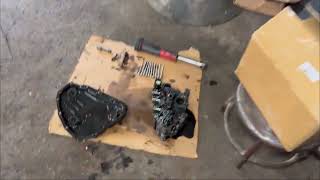
Typical fix: Replacement of the CVT control valve assembly. 🎬 Watch: Step-by-step guide to replacing the CVT valve body. After installation, the new valve body requires programming and calibration.
Est. part cost: $800-$1500 - Complete CVT Assembly Failure 🟡 Medium Probability If the valve body issue is ignored, or if there is a mechanical failure of other internal components like the belt or pulleys, the entire transmission may be compromised.
How to confirm: Following the procedure in TSB NTB17-034i, a technician will inspect the transmission fluid pan. If significant metal debris or pieces of broken parts are found (beyond fine metallic sludge on the magnets), it indicates a catastrophic internal failure.
Typical fix: Replacement of the entire CVT assembly.
Est. part cost: $3500-$5000 - Low or Contaminated CVT Fluid ⚪ Low Probability While low or dirty fluid can cause issues in any transmission, with this specific code and vehicle, it's more often a symptom of a larger internal problem or a consequence of neglected maintenance rather than the root cause itself. The fluid can break down from excessive heat, losing its ability to cool and lubricate internal components.
How to confirm: Check the CVT fluid level and condition. The fluid should be at the correct level and not smell burnt or contain excessive debris. This often requires a specific procedure as there is no traditional dipstick.
Typical fix: Perform a CVT fluid drain and fill using the correct Nissan-specific fluid (NS-3). This is often attempted as a first step but rarely resolves the P0965 code if a hard fault exists in the valve body.
Est. part cost: $150-$250
Rare But Worth Checking
- Wiring Harness or Connector Issue: While possible, wiring issues are less common than internal CVT faults for this specific code on this platform. A visual inspection of the main transmission harness connector for corrosion or damage is still a valid, though less likely, diagnostic step.
- Faulty Transmission Control Module (TCM): A failing TCM could theoretically cause this code, but it is very rare. Usually, a faulty TCM would be accompanied by other communication codes or more erratic behavior. Nissan's warranty extension does cover TCM reprogramming.
Diagnosis Steps
- Scan the vehicle for all stored DTCs. Note if P0965 is accompanied by P0746, P17F0, P0846, or others mentioned in TSB NTB17-034i.
- Check the level and condition of the CVT fluid. Note any burnt smell or visible debris. This must be done according to the factory procedure.
- Consult Nissan TSB NTB17-034i. This bulletin provides a detailed diagnostic flowchart based on the symptoms and codes present.
- Raise the vehicle and remove the CVT oil pan to inspect for debris. TSB NTB17-034i specifies that fine metallic sludge on the magnets is acceptable, but finding larger chunks of metal (pieces of bearings, clutch material, belt elements) indicates a full CVT replacement is necessary.
- If no significant debris is found, the TSB will likely direct the replacement of the CVT control valve body.
- After replacement, the new valve body or TCM must be programmed and calibrated using a compatible scan tool (like Nissan's CONSULT-III plus) to learn the new characteristics.
- Clear all codes and perform a test drive to confirm the repair.
Parts You'll Likely Need
- CVT Control Valve Assembly
(OEM #31705-28X2B)— This is the most common repair for code P0965 on this vehicle, as mandated by Nissan's own service bulletins for the associated symptoms. This part number supersedes previous versions like 31705-28X0A, 31705-28X0B, and 31705-28X0D.
Trusted brands: Nissan (OEM)
OEM price range: $1000-$1500
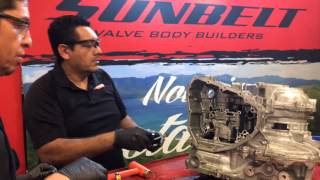
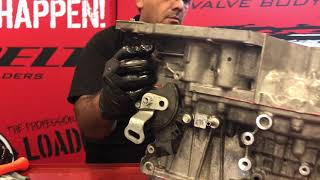
Aftermarket price range: $700-$1200 - CVT Assembly — Required if inspection reveals significant metal debris in the transmission pan, indicating catastrophic internal failure. 🎬 Watch: A detailed teardown of the RE0F11A transmission.
Trusted brands: Nissan (OEM), Jatco (Remanufactured)
OEM price range: $4000+
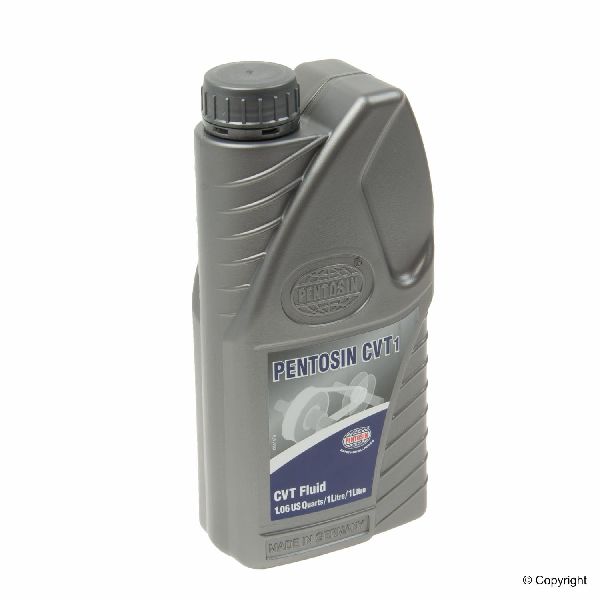
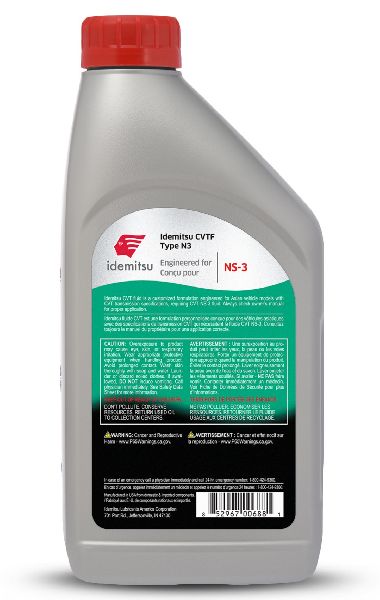
Aftermarket price range: $3000-$4500 - Nissan CVT Fluid NS-3 — The correct fluid is required for any service involving the CVT, whether it's a fluid change, valve body replacement, or full transmission swap. Using incorrect fluid can cause damage.
Trusted brands: Nissan (OEM)
OEM price range: $20-$25 per quart
Aftermarket price range: $15-$20 per quart
Related Codes That Often Appear With This One
- P0746 — Pressure Control Solenoid 'A' Function. This code is listed alongside P0965 in Nissan's TSBs for CVT judder, indicating a related fault within the valve body.
- P17F0 — CVT Judder. This is a manufacturer-specific code that Nissan uses to flag the specific symptom of transmission judder, directly pointing to the known CVT issues. 🎬 See how to fix common Nissan CVT judder codes.
- P0846 — Transmission Fluid Pressure Sensor/Switch 'B' Circuit Range/Performance. This sensor provides feedback on the pressure created by the solenoids. A fault here is often linked to the same valve body issues and is mentioned in the same TSBs.
Technical Service Bulletins (TSBs) & Recalls

- NTB17-034i: The primary TSB covering CVT judder and codes P0965, P0746, P17F0, and P0846 for 2013-2017 Sentras. It provides the main diagnostic and repair flowchart.
- NTB17-034h, g, f, e, d: Earlier revisions of the same bulletin, showing the evolution of
Platform-Specific Known Issues
- A widespread, known issue with the RE0F11A CVT causes juddering, hesitation, and premature failure. Nissan has addressed this with multiple TSBs (NTB17-034 series) and, in some cases, extended warranties or class-action lawsuit settlements.
- Nissan extended the CVT warranty for 2013-2017 Sentra models from the original 60 months/60,000 miles to 84 months/84,000 miles, whichever comes first. This extension covers the CVT assembly, valve body, and TCM reprogramming.
- A class-action lawsuit (Minerva Martinez, v. Nissan North America, Inc.) alleged issues including acceleration problems, jerking, and shuddering, leading to a settlement that included the warranty extension.
Mechanic-Grade Diagnostic Values
- Pressure Control Solenoid 'B' (PCSB) resistance — expected: 3-9 ohms. Failure: A reading outside this range indicates an electrical fault in the solenoid itself.
Scan Tool Commands That Help
- Nissan CONSULT-III plus: WRITE IP CHARA – REPLACEMENT AT/CVT — This function is mandatory after replacing the CVT assembly or the control valve body. It writes the new component's specific calibration data (from an included CD or downloaded from Nissan) to the TCM.
- Nissan CONSULT-III plus: CLUTCH POINT LEARNING — This procedure is required after replacing the valve body or TCM (but not the full CVT assembly). It recalibrates the clutch engagement point. Failure to perform this correctly can result in the vehicle not moving when put in gear.
- Nissan CONSULT-III plus: Conform CVTF Deteriortn — This is a reset of the CVT fluid deterioration counter, which should be performed after a fluid change or major transmission service like a valve body replacement.
Wiring & Ground Locations
- BCM (Body Control Module) — Behind the left end of the dashboard.. The BCM communicates with the TCM and other modules over the CAN bus. While not a direct cause of P0965, issues with the BCM or its connections can sometimes cause communication errors that may be related to other transmission symptoms.
- IPDM E/R (Intelligent Power Distribution Module Engine Room) — Located in the left front of the engine compartment, forward of the battery.. The IPDM E/R contains fuses and relays that supply power to various vehicle systems, including the TCM and its related components. A fault in this module could potentially interrupt power to the transmission control circuits.
Real Owner Repair Stories
- Reddit user in r/MechanicAdvice (2017 Nissan Sentra, ~100,000 miles) — Car had trouble accelerating from a stop ('limp mode'), couldn't accelerate past 2000 RPM, gas pedal was unresponsive for seconds after stopping, struggled going uphill. Check engine light was NOT on, but code P0965 was stored.
❌ Tried (didn't work) An oil change seemed to temporarily fix the issue, but the problem returned the next day.
✅ What actually fixed it The owner replaced the CVT valve body. However, after replacement, the car would not rev in neutral. The final, necessary step was to have the transmission reprogrammed/recalibrated, which they planned to do with a dealer or mobile mechanic. This confirms that the part replacement alone is insufficient without the software calibration.
OEM Part Supersession History
31705-28X0D→31705-28X2B— Part revision and update by the manufacturer.
Heads up: The new part number is the correct replacement for the old one.31705-28X1C, 31705-3VX4A→31705-28X2A— Part revision and update by the manufacturer. Note: This part number applies to Sentra (B18), Altima (L34), and Rogue Sport (J11).
Heads up: This is another part number chain for valve bodies in this era of Nissan vehicles. It's critical to verify the correct part number for the specific vehicle's VIN.
Helpful Videos
We Have This Part in Stock

The information in this article is provided for general reference and educational purposes only. Vehicle specifications, procedures, and part compatibility can vary by production date, trim level, and region. Always consult your vehicle's factory service manual and verify part numbers before purchasing or performing repairs. Safety-critical components such as airbags, seat belts, and braking systems should be installed by a qualified professional.
- Nissan SENTRA:
- 🎬 Helpful Videos
- 🛍️ Shop This Part
- What's Unique About the 2013-2018 Nissan SENTRA
- Diagnostic Flowchart
- Symptoms You May Notice
- Most Likely Causes
- Rare But Worth Checking
- Diagnosis Steps
- Parts You'll Likely Need
- Related Codes That Often Appear With This One
- Technical Service Bulletins (TSBs) & Recalls
- Platform-Specific Known Issues
- Mechanic-Grade Diagnostic Values
- Scan Tool Commands That Help
- Wiring & Ground Locations
- Real Owner Repair Stories
- OEM Part Supersession History
- 🎟️ Get 5% Off