

OBD-II Code P0961: Transmission Pressure Control Solenoid 'A' Performance/Range
The Ultimate Expert Guide: What P0961 Means, Why It Triggers, and Exactly How to Fix It
- Stop driving immediately when P0961 triggers; operating with incorrect hydraulic pressure burns clutch packs and escalates a $300 solenoid fix into a $3,000+ transmission rebuild.
- Verify your transmission fluid level and battery voltage before buying parts, as a 2-quart fluid deficit or a weak 11.5V battery frequently triggers false solenoid performance codes.
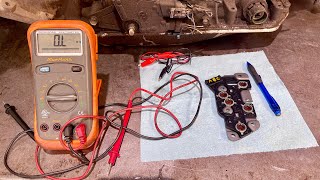
- Test the solenoid's electrical resistance using a digital multimeter against OEM specifications (typically 3.5-5.0 ohms) to confirm internal failure before removing the transmission pan.
- If diagnosing a 2007-2019 Nissan or 2010-2018 Subaru CVT, expect to replace the entire valve body assembly ($700-$1,800) rather than a single solenoid, and verify active warranty extensions first.
What Does P0961 Mean?

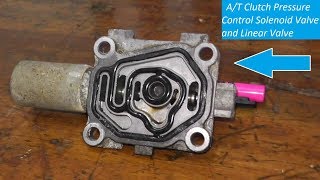
P0961 means your vehicle's computer (PCM or TCM) detected a performance problem with the transmission pressure control solenoid 'A' control circuit. This electro-hydraulic valve manages the fluid pressure required for smooth gear shifts. When the computer commands a specific pressure but the resulting circuit voltage or performance falls outside the expected range, it triggers this code.
Technical definition: The SAE/OBD-II definition is "Pressure Control Solenoid 'A' Control Circuit Range/Performance". The Powertrain Control Module (PCM) or Transmission Control Module (TCM) detects a mismatch between the commanded solenoid state and the actual state (monitored via voltage feedback). This is a performance fault—the circuit works, but incorrectly—differentiating it from open (P0960) or shorted (P0962/P0963) circuits. Some systems trigger the code if solenoid current exceeds a specific threshold, such as 3.5 amps.
Can I Drive With P0961?
No — Do Not Drive. Driving is not recommended. The vehicle enters a 'limp mode,' severely limiting speed and power, creating a safety hazard in traffic. Continuing to drive with a slipping or harshly shifting transmission generates extreme heat, burning clutch packs and damaging internal components. This quickly escalates a $300-$700 solenoid repair into a $2,500-$5,000+ transmission rebuild. Pull over and tow the vehicle for diagnosis.
Common Causes

- Faulty Pressure Control Solenoid 'A' (Very Common) — The solenoid itself is the most frequent culprit. It fails electrically (internal short/open), mechanically (sticking plunger), or wears out, preventing accurate pressure regulation.
- Low, Dirty, or Incorrect Transmission Fluid (Common) — Fluid is the hydraulic lifeblood. Low levels prevent adequate pressure creation. Old, burnt fluid contaminated with clutch material clogs the solenoid and valve body passages.
- Damaged Wiring or Corroded Connectors (Common) — Wires fray, short to ground, or break from heat and vibration. Connectors, especially the main plug at the transmission case, corrode or develop loose pins, disrupting the signal.
- Blocked Hydraulic Passages / Clogged Transmission Filter (Less Common) — A clogged transmission filter restricts fluid flow from the pan to the pump, starving the system of pressure. Debris also blocks the small valve body passages controlled by the solenoid.
- Failing Vehicle Battery or Alternator (Less Common) — Low system voltage from a weak battery or failing alternator causes erratic TCM behavior. The module misinterprets the low voltage as a solenoid circuit performance fault.
- Faulty Transmission Valve Body (Rare) — The valve body houses the solenoids and hydraulic channels. It develops cracks, sticking valves, or warps, causing internal pressure leaks that a functioning solenoid cannot overcome.
- Faulty Transmission Pump (Rare) — The pump creates primary hydraulic pressure. A weak or failing pump cannot supply enough base pressure for the solenoid to regulate.
- Internal Transmission Failure (Very Rare) — Worn-out clutch packs or seals cause major internal pressure leaks. The TCM sets P0961 because it cannot achieve target pressure even at maximum commanded solenoid pressure.
- Faulty Transmission Control Module (TCM) or Powertrain Control Module (PCM) (Very Rare) — A faulty driver circuit within the control module sends incorrect signals or fails to read solenoid feedback, triggering a false code.
Symptoms

- Harsh, Delayed, or Erratic Shifting — The transmission slams into gear, hesitates before shifting, or shifts at inappropriate times.
- Vehicle Enters 'Limp Mode' — The transmission defaults to a single gear (usually 2nd or 3rd) to prevent damage, severely limiting speed and acceleration.
- Transmission Slipping — Engine RPMs flare up between shifts without a corresponding increase in vehicle speed, mimicking a shift into neutral.
- Check Engine Light (MIL) On — The dashboard Malfunction Indicator Lamp illuminates immediately upon fault detection.
- Engine Stalling — Incorrect pressure control, particularly at the torque converter clutch, causes the engine to stall when coming to a stop.
- Transmission Fails to Shift — The transmission refuses to shift out of its current gear entirely.
- Transmission Overheating (also visible on scanner) — Improper pressure control and slipping generate excessive heat, triggering a transmission temperature warning light and accelerating fluid breakdown.
- Increased Fuel Consumption (also visible on scanner) — Inefficient shifting forces the engine to operate outside its optimal RPM range, reducing fuel economy by 5-15%.
Diagnostic Flowchart
Tap your situation to follow the diagnostic path that matches what you're seeing on this code.
Used vs. New Parts: Buying Guide
When a used part is worth it: A used solenoid or solenoid pack is a budget-friendly option for an older, high-mileage vehicle where a new part represents a significant portion of the car's value. Source it from a low-mileage, accident-damaged donor vehicle.
Donor-vehicle mileage cap: roughly under 80000 miles for the part to have meaningful remaining life.
Donor quality checklist:
- Verify the donor vehicle's mileage; lower is always better.
- Ensure the part number matches exactly, as slight variations cause incompatibility.
- Ask the seller if they test the solenoids. Reputable recyclers perform basic resistance checks.
- Avoid parts from vehicles scrapped due to transmission failure.
Decision logic:
- If Vehicle is < 100K miles OR the part is < $100 new → Buy new. Small savings do not justify the risk of premature failure and repeat labor costs.
- If Vehicle is > 150K miles AND budget is the primary concern → A tested, low-mileage used part is a reasonable gamble, but expect a shorter lifespan.
- If The part is a known high-failure item (e.g., CVT valve bodies) → Strongly favor a new or professionally remanufactured part over a used one, as used parts possess the same inherent flaws.
Warranty tradeoff: Used parts typically include a 30-90 day warranty covering only the part, not the labor to install it. New aftermarket parts offer 1-year to limited lifetime warranties. OEM parts provide the best guarantee at the highest cost.
Worst-case if a used part fails: $300-$700. If a used solenoid fails after the short warranty period, you pay for the part again and 2-4 hours of labor to re-access and replace it.
What Happens If You Wait — Timeline
- 0-1 month: Check Engine Light illuminates. Occasional hard shifts occur, especially when cold. No other major symptoms are consistently present. (MPG impact: 0-5%% · Added cost: $0-$50 in wasted fuel.)
- 1-3 months: Shifting becomes noticeably erratic and harsh. Transmission slips between gears, causing RPMs to flare. Vehicle occasionally enters limp mode under load or after long drives. (MPG impact: 5-10%% · Added cost: $100-$300 in wasted fuel and accelerated fluid breakdown.)
- 3-6 months: Vehicle frequently enters limp mode, making driving unsafe. Slipping and incorrect pressure generate significant heat, burning the transmission fluid and glazing internal clutch packs. (MPG impact: 10-20%% · Added cost: $500-$1,500 as a simple solenoid fix is no longer sufficient; minor internal damage has begun.)
- 6+ months: Catastrophic internal transmission failure occurs. The vehicle stops moving entirely. Burnt clutches, a warped valve body, and a failed transmission pump require a complete overhaul. (MPG impact: 20-30%+% · Added cost: $2,500-$5,000+ for a complete transmission rebuild or replacement.)
Cost of Not Fixing It
- 0-1 month: Noticeable harsh shifting, slipping, and a 5-15% drop in fuel economy. Vehicle unexpectedly enters limp mode, creating a safety risk. (Added cost: Negligible, but high risk of being stranded.)
- 1-3 months: Continued slipping generates excessive heat, causing transmission fluid to break down and burn. This glazes clutch packs and hardens internal seals. (Added cost: $250-$500 for a fluid flush and fill, but internal damage has already started.)
- 3+ months: Catastrophic internal transmission failure. Burnt clutches, damaged bands, warped valve body, and a failed transmission pump stop the vehicle entirely. (Added cost: $2,500-$5,000+ for a complete transmission rebuild or replacement.)
When This Code Triggers (Freeze-Frame Conditions)
- Engine Coolant Temp: 175-210°F (Vehicle is at full operating temperature.)
- RPM: 1200-2800 (During light acceleration, cruising, or right before/after a shift event.)
- Engine Load: 25-65% (Moderate engine effort, not at idle or full throttle.)
- Vehicle Speed: 30-60 mph (Steady state cruising or during upshifts at city/highway speeds.)
Related Codes
- P0700 — A general transmission fault code indicating the TCM requested the PCM to turn on the Check Engine Light. It is almost always present alongside P0961.
- P0960 — Indicates an OPEN circuit for solenoid 'A'. This means a complete break in the circuit, such as a broken wire or unplugged connector, showing infinite resistance (OL) on a multimeter.
- P0962 — Points to a LOW voltage condition (short to ground) in the solenoid 'A' circuit. Diagnosis requires finding a pinched or rubbed wire touching the vehicle's chassis.
- P0963 — Points to a HIGH voltage condition (short to power) in the solenoid 'A' circuit. The control wire is receiving constant battery voltage due to an internal short or wiring issue.
How to Talk to a Mechanic About This Code
Say this: "I have a P0961 code and harsh shifting. I'd like to schedule a diagnostic. Please start by checking the transmission fluid level and condition, and test the pressure control solenoid 'A' circuit, including its resistance and wiring, before recommending any part replacement."
This signals you understand the common causes and want a proper diagnosis, not a blind part swap. It directs the technician to follow a logical diagnostic path, reducing the chance they quote an expensive and unnecessary repair.
Avoid saying:
- 'My car is shifting weird, can you fix it?'
- 'The code says I need a new solenoid, can you replace it?'
- 'Just do whatever it takes to fix the check engine light.'
Questions to ask before authorizing the repair:
- What was the condition and level of the transmission fluid?
- What was the resistance measurement of the solenoid, and how does it compare to the OEM specification?
- Did you find good voltage and ground at the solenoid connector?
- Can you show me the old part after the repair is complete?
- What is the warranty on this repair, and does it cover both parts and labor?
Where to Take It: Dealer vs Independent vs Chain
- Dealer:
Best for: Vehicles under powertrain warranty., Vehicles with known TSBs or warranty extensions (e.g., Subaru CVTs)., Complex repairs requiring manufacturer-specific tools and software.
Downsides: Highest labor rates., Defaults to replacing larger, more expensive assemblies (like a full valve body) instead of smaller components. (Typical cost: +50% vs. baseline) - Independent Shop:
Best overall choice. An independent transmission specialist possesses the right expertise for a thorough diagnosis and repair without the high dealer markup. Ensure they have experience with your vehicle's make.
Best for: Out-of-warranty vehicles where cost is a factor., Shops specializing in transmissions., Getting a second opinion on a dealer's diagnosis.
Downsides: Quality and expertise vary greatly; look for ASE certifications and strong reviews., A general mechanic is less equipped for internal transmission work than a specialist. (Typical cost: +0% vs. baseline) - Chain Shop:
AVOID for diagnosis and repair. While they check fluid, they are not the right choice for diagnosing a nuanced performance code like P0961. There is a high risk of misdiagnosis or being sold unnecessary services.
Best for: Basic fluid changes (use with caution)., Simple, external part replacements like batteries or tires.
Downsides: Technician skill varies dramatically; they are rarely equipped for internal transmission diagnostics or repair., High pressure to upsell services; frequently misdiagnoses complex issues. (Typical cost: -10% vs. baseline)
When to Walk Away From the Repair
If the estimated repair cost exceeds 50% of the car's private-party value, seriously consider selling or trading it in rather than repairing it.
- Car worth $5000, fix is $600: Fix it. This is a standard repair cost and is well below the threshold.
- Car worth $4000, fix is $2800: Walk away. The repair cost is 70% of the car's value. A transmission rebuild is not a wise investment here.
- Car worth $15000, fix is $3500: Borderline. This is a significant repair, but still less than 25% of the vehicle's value. If the rest of the car is in excellent condition, it is worth fixing.
What Scan Tool You Need for This Code

Minimum: A scanner that reads manufacturer-specific transmission codes and views live data streams for transmission PIDs (Parameter IDs), such as solenoid commanded vs. actual pressure.
A basic $20 code reader only shows the P0961 code. It cannot display the live data (fluid temperature, solenoid duty cycle, line pressure) needed to determine if the fault lies with the solenoid, wiring, or the TCM itself. You will be guessing at the repair.
Budget: BlueDriver Pro (~$100) — Reads and clears transmission codes, views freeze-frame data, and displays live transmission data PIDs for many vehicles. It is a powerful tool for initial diagnosis but lacks bidirectional control.
Mid-range: Foxwell NT510 Elite (~$180) — Provides OE-level diagnostics for specific makes, including reading transmission codes and live data. Crucially, it offers bidirectional control to manually actuate solenoids to test their function, a key step in confirming a faulty solenoid.
Professional: Autel MaxiCOM MK808S (~$450) — Offers full bidirectional control to test solenoids, access to all vehicle modules, and performs advanced functions like transmission adaptive relearn procedures after a repair, which is often required.
Rent vs buy: For a one-time diagnosis, auto parts stores scan codes for free using basic readers. For a P0961, which requires advanced diagnostics, renting is not viable. If you are a serious DIYer, investing in a mid-range scanner with bidirectional control is highly recommended.
How to Clear the Code After You Fix It
- Use an OBD-II scan tool to clear Diagnostic Trouble Codes (DTCs).
- Perform a transmission adaptive pressure relearn procedure if specified by the manufacturer.
- Complete a full drive cycle to allow readiness monitors to become 'Ready'.
Drive cycle (~20 minutes): Cold start, let idle for 2-3 minutes. Drive in stop-and-go traffic with several light accelerations. Accelerate to highway speed (55 mph) and maintain for 5-10 minutes. Decelerate to a stop. Allow the vehicle to cool completely.
Readiness monitors affected: Comprehensive Component Monitor, Transmission
Before emissions retest: drive at least 100 miles to fully set monitors.
Watch out for:
- Disconnecting the battery clears the code but resets all readiness monitors, guaranteeing an emissions test failure.
- The code returns immediately if the underlying mechanical or electrical fault is not properly repaired.
- Failing to perform a manufacturer-specific transmission relearn procedure results in continued poor shift quality even after part replacement.
Will This Fail Emissions / State Inspection?
Yes — this code typically fails an OBD-II emissions inspection.
- California: An active P0961 code is an automatic smog check failure. After repairs, all readiness monitors must be 'Ready'. Drive 100-200 miles through mixed conditions before a retest.
- New York: The NYS DMV inspection includes an OBD-II scan. An illuminated Check Engine Light from a P0961 code results in an automatic failure.
- Texas: In the 17 counties requiring emissions testing, an active P0961 code causes the vehicle to fail the OBD-II portion of the inspection.
Manufacturer-Specific Notes
- Nissan/Jatco: On 2007-2019 vehicles with CVT transmissions, P0961 is a death sentence for the valve body. Debris from normal wear contaminates delicate pressure control valves, requiring technicians to replace the entire valve body assembly rather than a single solenoid.
- General Motors: On 2006-2019 6-speed transmissions (6L80/6T70), pressure control solenoids are integrated into the Transmission Electro-Hydraulic Control Module (TEHCM). TSBs recommend replacing the entire TEHCM assembly rather than attempting to service a single solenoid.
- Subaru: Subaru extended the CVT warranty from 5 years/60,000 miles to 10 years/100,000 miles for many 2010-2018 models (TSBs 16-115-18 and 16-107-17R). A P0961 code on an eligible vehicle is covered, resulting in a free valve body replacement and TCM reprogram.
- Ford: On 2009-2018 Ford models with 6R80 transmissions, solenoids are replaced as a complete pack. The TCM requires reprogramming and a strict adaptive relearn procedure after replacement to restore shift quality.
Real Owner Stories
2015 Ford F-150 with P0961 after service
Check Engine Light and harsh shifting appeared immediately after a transmission fluid change at a quick lube shop.
What they tried:
- Owner returned to the shop, who re-checked their work.
Outcome: The technician discovered the transmission was underfilled by nearly two quarts. Topping off the fluid to the correct level using the vehicle's specific fill procedure resolved the shifting issues and the code did not return.
Lesson: A P0961 code appearing right after a fluid service is a massive red flag for incorrect fluid level or type. Always verify the fluid level yourself or return to a trusted shop immediately.
2013 Chevy Cruze at 97K miles with P0961 and limp mode
Vehicle suddenly went into limp mode with harsh shifting. A local shop scanned the P0961 code and immediately recommended replacing the solenoid.
What they tried:
- The shop replaced the 'A' solenoid, but the code returned within a day.
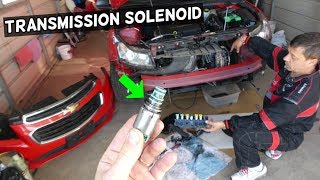
Outcome: A transmission specialist performed a full electrical diagnosis and found the replaced solenoid tested fine. However, measuring the resistance of all solenoids in the valve body revealed a different pressure control solenoid reading 6 ohms instead of the specified 4.5-5.75 ohms. Replacing the correct, out-of-spec solenoid fixed the problem permanently.
Lesson: Do not blindly replace the part named in the code. P0961 indicates a 'performance' issue caused by electrical faults elsewhere in the system. A full diagnosis prevents costly misdiagnosis and repeat repairs.
2016 Nissan Rogue at 110K miles with P0961 and slipping
Owner experienced transmission slipping and a 'CVT Reduced Power' alert. The dealership diagnosed a P0961 and quoted $3,100 for a valve body replacement.
What they tried:
- Owner sought a second opinion from an independent transmission shop.
Outcome: The independent shop confirmed the diagnosis. On modern CVTs, solenoids are integral to the valve body and are not serviced separately. Contamination and wear require replacing the entire assembly. The owner had the valve body replaced for $1,400 at the independent shop, resolving the issue.
Lesson: On CVT vehicles, P0961 is a symptom of a failing valve body, not just a single solenoid. Replacing one solenoid is not a viable repair. Always check for Technical Service Bulletins (TSBs) or warranty extensions.
How to Prevent This Code From Triggering
- Regular Transmission Fluid and Filter Changes (Every 30,000-60,000 miles, or per manufacturer's severe schedule.) — Clean fluid prevents the buildup of clutch material and metal shavings that clog solenoid screens and valve body passages, ensuring the solenoid moves freely and regulates pressure correctly.
- Use ONLY the Manufacturer-Specified Transmission Fluid (Every fluid change.) — Using a non-specified or 'universal' fluid alters frictional properties and damages seals, causing slipping and overheating that ultimately destroys pressure control solenoids.
- Install an Auxiliary Transmission Cooler (Once, especially if you tow or live in a hot climate.) — Excessive heat is the primary cause of transmission failure. An auxiliary cooler reduces operating temperatures by 30-50°F, significantly extending the life of fluid, seals, and electronic solenoids.
- Address Fluid Leaks Promptly (As soon as they are noticed.) — A small leak leads to a low fluid level, causing the transmission pump to aerate the fluid. This creates unstable hydraulic pressure, forcing the solenoid to work outside its intended range until it fails.
Frequently Asked Questions
What does the Pressure Control Solenoid 'A' actually do?
Think of it as a precise electronic faucet for transmission fluid pressure. The computer sends a duty cycle signal to the solenoid, dictating how much to open or close. This regulates main line pressure from the pump, ensuring clutches engage with the exact force needed for smooth shifts.
How much does it cost to fix code P0961?
Repair costs range from $160-$330 for a fluid change to $200-$600 for a single solenoid replacement. Wiring repairs cost $135-$450, while full valve body replacements (common in CVTs) run $700-$1,800. A complete transmission rebuild exceeds $2,500.
Can I fix P0961 myself?
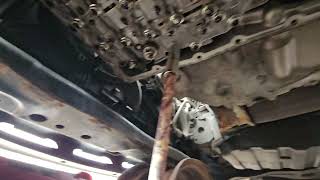
Checking and adding fluid is a simple DIY task, but replacing the solenoid requires intermediate skills. It involves safely lifting the vehicle, draining fluid, removing the transmission pan, and using specific tools like a torque wrench. Most owners prefer hiring a professional for this messy, precise job.
What are the most common misdiagnosis mistakes for P0961?
The biggest mistake is replacing the solenoid without a full diagnosis. Technicians and DIYers frequently overlook weak batteries, corroded ground wires, or contaminated fluid. These issues mimic a solenoid performance fault and cause the code to return immediately after replacement.
Can a bad battery cause a P0961 code?
Yes. The TCM is highly sensitive to system voltage fluctuations. A weak battery or failing alternator causes voltage drops that the TCM misinterprets as a solenoid electrical circuit fault, setting a false P0961.
What happens if I don't fix P0961?
Ignoring this code guarantees costly damage. Continued driving with incorrect line pressure causes transmission slipping and intense heat generation. This heat destroys clutches, seals, and bands, escalating a minor repair into a $2,500-$5,000+ transmission rebuild.
Will clearing the code make it go away?
Clearing the code only turns off the check engine light temporarily. The computer runs its self-tests continuously during operation. As soon as it detects the performance fault again, the light returns and limp mode re-engages.
Can P0961 cause the transmission to get stuck in one gear?
Yes. This is the primary symptom of 'limp mode.' When the TCM cannot reliably control shift pressure, it locks the transmission into a single gear (typically 2nd or 3rd) as a fail-safe to prevent catastrophic internal damage.
How long does it take to diagnose a P0961 code?
A professional diagnosis takes 1 to 2 hours. This includes scanning codes, checking fluid condition, inspecting wiring harnesses, and performing bidirectional electrical tests on the solenoid circuit. These steps pinpoint the exact cause before parts are replaced.
Are there any preventative measures to avoid P0961?
The best prevention is strictly following your vehicle's recommended transmission fluid and filter change intervals. Using the exact manufacturer-specified fluid prevents clutch debris buildup that clogs solenoids. Promptly repairing minor fluid leaks also prevents low-pressure conditions that overwork the solenoid.
Is Solenoid 'A' the same in every car?
No. The 'A' designation is generic and varies by manufacturer. In some transmissions, it controls main line pressure, while in others it operates a specific clutch pack. Always consult a vehicle-specific repair manual for the exact location and function.
Key Takeaways
- Stop driving immediately when P0961 triggers; operating with incorrect hydraulic pressure burns clutch packs and escalates a $300 solenoid fix into a $3,000+ transmission rebuild.
- Verify your transmission fluid level and battery voltage before buying parts, as a 2-quart fluid deficit or a weak 11.5V battery frequently triggers false solenoid performance codes.
- Test the solenoid's electrical resistance using a digital multimeter against OEM specifications (typically 3.5-5.0 ohms) to confirm internal failure before removing the transmission pan.
- If diagnosing a 2007-2019 Nissan or 2010-2018 Subaru CVT, expect to replace the entire valve body assembly ($700-$1,800) rather than a single solenoid, and verify active warranty extensions first.
Helpful Videos

The information in this article is provided for general reference and educational purposes only. Vehicle specifications, procedures, and part compatibility can vary by production date, trim level, and region. Always consult your vehicle's factory service manual and verify part numbers before purchasing or performing repairs. Safety-critical components such as airbags, seat belts, and braking systems should be installed by a qualified professional.
- 🎬 Helpful Videos
- What Does P0961 Mean?
- Can I Drive With P0961?
- Common Causes
- Symptoms
- Diagnostic Flowchart
- Used vs. New Parts: Buying Guide
- What Happens If You Wait — Timeline
- Cost of Not Fixing It
- When This Code Triggers (Freeze-Frame Conditions)
- Related Codes
- How to Talk to a Mechanic About This Code
- Where to Take It: Dealer vs Independent vs Chain
- When to Walk Away From the Repair
- What Scan Tool You Need for This Code
- How to Clear the Code After You Fix It
- Will This Fail Emissions / State Inspection?
- Manufacturer-Specific Notes
- Real Owner Stories
- 2015 Ford F-150 with P0961 after service
- 2013 Chevy Cruze at 97K miles with P0961 and limp mode
- 2016 Nissan Rogue at 110K miles with P0961 and slipping
- How to Prevent This Code From Triggering
- Frequently Asked Questions
- What does the Pressure Control Solenoid 'A' actually do?
- How much does it cost to fix code P0961?
- Can I fix P0961 myself?
- What are the most common misdiagnosis mistakes for P0961?
- Can a bad battery cause a P0961 code?
- What happens if I don't fix P0961?
- Will clearing the code make it go away?
- Can P0961 cause the transmission to get stuck in one gear?
- How long does it take to diagnose a P0961 code?
- Are there any preventative measures to avoid P0961?
- Is Solenoid 'A' the same in every car?
- Key Takeaways
- 🎟️ Get 5% Off