

OBD-II Code P0942: Hydraulic Pressure Unit Malfunction
The Ultimate 2026 Guide: What P0942 Means, Why It Triggers, and How to Fix It
- Code P0942 indicates a critical transmission hydraulic pressure failure; driving with it risks turning a $400 sensor repair into a $4,000 transmission rebuild.
- Always start diagnosis by checking the transmission fluid level and condition, as low or burnt fluid is the most common cause of pressure loss.
- On 2011-2020 Ford F-150s and 2008-2016 Chrysler/Dodge minivans, P0942 frequently points to a faulty $250 lead frame or solenoid pack rather than a dead transmission.
- For 2016-2021 Mazda CX-5 owners, P0942 (specifically P0942:49) is a known ABS module failure covered by TSB SA-008-21, not a transmission problem.
- A manual pressure test using a mechanical gauge is the only definitive way to prove whether the fault is a cheap electrical sensor or an expensive mechanical pump.
What Does P0942 Mean?

P0942 means your vehicle's Transmission Control Module (TCM) detected a critical malfunction within the transmission's hydraulic pressure system. Automatic transmissions use pressurized fluid to engage clutches and change gears. When this pressure is too low, unstable, or mismatched against the computer's commanded pressure, the transmission cannot shift correctly. Immediate attention is required to prevent irreversible transmission damage.
Technical definition: The official SAE/OBD-II definition for code P0942 is "Hydraulic Pressure Unit Malfunction." The TCM detects that the actual hydraulic line pressure, monitored by a fluid pressure sensor, does not match the desired pressure commanded by the computer. This points to a failure in the system responsible for generating, regulating, or monitoring that pressure, such as the pump, valve body, solenoids, or sensors.
Can I Drive With P0942?
No — Do Not Drive. Driving with this code is extremely risky. Your transmission will shift erratically, fail to shift, or disengage completely, leaving you stranded. Continuing to drive rapidly turns a minor issue like a bad sensor (a $400 repair) into catastrophic internal transmission failure requiring a rebuild or replacement costing $2,500 to $5,000+.
Common Causes

- Low or Dirty Transmission Fluid (Very Common) — If the fluid level is too low, the pump sucks in air and cannot create the required pressure. If the fluid is old, burnt, or contaminated, it loses its hydraulic properties and clogs vital passages, leading to pressure loss.
- Faulty Transmission Fluid Pressure (TFP) Sensor (Common) — The TFP sensor is the primary source of pressure information for the TCM. If the sensor provides inaccurate, erratic, or no signal, the TCM triggers P0942, even if the mechanical pressure is perfectly fine. This is a frequent failure point on Ford and Chrysler vehicles.
- Failing Pressure Control Solenoid (PCS) (Common) — The PCS is an electro-hydraulic valve the TCM uses to regulate line pressure. If the solenoid sticks open, sticks closed, or suffers an electrical fault, it cannot manage fluid pressure correctly.
- Clogged Transmission Filter (Common) — The transmission filter traps clutch material and debris. A clogged filter severely restricts fluid flow from the pan to the pump, starving the pump and causing a system-wide drop in hydraulic pressure.
- Failing Transmission Oil Pump (Less Common) — The pump is the heart of the hydraulic system. Worn internal gears or vanes prevent the pump from generating sufficient fluid volume and pressure to operate the transmission clutches under load.
- Worn or Sticking Valve Body Components (Less Common) — The valve body directs fluid through a maze of channels and valves. Debris causes pressure regulator valves to stick in their bores, leading to excessive or insufficient hydraulic pressure.
- Internal Hydraulic Leaks or Worn Seals (Less Common) — Internal seals, O-rings, and gaskets become hard and brittle over time. This allows high-pressure fluid to leak past clutch packs or servo pistons, preventing the system from holding the commanded pressure.
- Damaged Wiring or Connectors (Rare) — Frayed wires or fluid-contaminated connectors for the pressure sensor or solenoids interrupt critical signals to the TCM, leading to a false pressure fault code.
- Faulty Transmission Control Module (TCM) (Very Rare) — Software glitches or internal circuit failures cause the TCM to misinterpret sensor data or fail to command the pressure control solenoid properly.
Symptoms

- Check Engine Light or Transmission Warning Light On — This is the first and sometimes only sign that the TCM detected a fault.
- Vehicle Enters 'Limp Mode' — To protect the transmission from catastrophic damage, the TCM forces the transmission into a single gear (usually 2nd or 3rd), severely limiting speed and performance.
- Transmission Slipping — The engine revs higher than usual between shifts, but the vehicle fails to accelerate accordingly, indicating the gear is not fully engaged.
- Harsh, Erratic, or Missing Shifts — The vehicle slams into gear, shifts at incorrect RPMs, delays engagement from Park to Drive, or refuses to upshift/downshift entirely.
- Whirring or Buzzing Noises from Transmission — A high-pitched whirring noise that changes with engine RPM indicates a failing transmission pump cavitating (sucking air) due to low fluid or a clogged filter.
- Transmission Overheating — Insufficient hydraulic pressure allows clutches to slip excessively, generating massive heat and a distinct burning smell.
- Desired vs. Actual Pressure Mismatch (scan-tool only — no driver-felt sign) — An advanced scan tool shows the TCM commanding a specific pressure (e.g., 150 PSI) while the sensor reports a much lower or erratic value.
Diagnostic Flowchart
Tap your situation to follow the diagnostic path that matches what you're seeing on this code.
Common Fixes & Costs
- Transmission Fluid and Filter Change
— Parts: $50-$150, Labor: $100-$300, ~1.5 hr book time
(Intermediate)
: OEM
: OEM - Replace Transmission Fluid Pressure (TFP) Sensor / Lead Frame
— Parts: $40-$250, Labor: $150-$400, ~2.5 hr book time
(Intermediate)
: OEM
: OEM - Replace Pressure Control Solenoid (or Solenoid Pack)
— Parts: $200-$500, Labor: $250-$550, ~3.5 hr book time
(Professional)
: OEM
: OEM - Replace or Rebuild Valve Body — Parts: $300-$1500, Labor: $300-$600, ~4.5 hr book time (Professional)
- Replace Transmission Oil Pump — Parts: $300-$1000, Labor: $800-$1500, ~10 hr book time (Professional)
Used vs. New Parts: Buying Guide
When a used part is worth it: For a high-mileage vehicle where repair costs exceed the car's value, a used solenoid pack from a low-mileage donor vehicle is a budget-conscious option. Never use a used oil pump.
Donor-vehicle mileage cap: roughly under 80000 miles for the part to have meaningful remaining life.
Donor quality checklist:
- Verify the donor vehicle was not scrapped due to transmission failure.
- Match the part number exactly, including revisions.
- Inspect electrical connectors for corrosion or bent pins.
Decision logic:
- If The part is a Ford 6R80 lead frame → Buy new (OEM or Dorman). Used units are highly likely to have the same inherent flaws.
- If Vehicle is over 150,000 miles and budget is the primary concern → A used solenoid pack is a viable risk, but expect a shorter lifespan.
- If The part is electronic and requires programming (TCM or Mechatronics) → Buy new or professionally remanufactured. Used parts are often VIN-locked.
Warranty tradeoff: Used salvage parts offer a 30-90 day warranty on the part only. New aftermarket parts carry 1-year to lifetime warranties. New OEM parts usually have a 12-month/12,000-mile warranty.
Worst-case if a used part fails: $400-$800 in repeated labor costs if a used internal part fails shortly after installation.
What Happens If You Wait — Timeline
- 0-1 month: Code P0942 is set. Driver notices occasional harsh shifts or hesitation. Transmission slipping is infrequent. (MPG impact: 0-5%% · Added cost: $0-$100. At this stage, the fix is often a fluid change or a sensor.)
- 1-3 months: Slipping becomes frequent under load. Slipping clutches generate heat, causing fluid to darken and smell burnt. Degraded fluid worsens the pressure problem. (MPG impact: 5-15%% · Added cost: $500-$1,500. Clutch packs are damaged and fluid is burnt, requiring more than a sensor fix.)
- 3-6 months: Catastrophic overheating events occur. Abrasive fluid scores valve body bores and damages solenoid seals. Internal seals harden and crack. (MPG impact: 15-25%% · Added cost: $1,500-$3,500. The transmission requires a rebuild to replace clutches, seals, and the valve body.)
- 6+ months: Total transmission failure. Prolonged slipping destroys hard parts like the torque converter or pump. The vehicle fails to move. (MPG impact: N/A (vehicle is likely undriveable)% · Added cost: $3,500-$7,000+. The transmission requires a complete replacement.)
Cost of Not Fixing It
- 0-1 month: Continued erratic shifting and transmission slipping accelerates clutch wear and degrades fluid via overheating. (Added cost: $0-$100 in wasted fuel, but risk of stranding increases daily.)
- 1-3 months: Prolonged slipping destroys clutch packs. Burnt, abrasive fluid circulates, scoring the valve body and damaging solenoid seals. (Added cost: $1,500-$3,500 for a transmission rebuild.)
- 3+ months: Catastrophic failure of hard parts like gears, drums, and the torque converter. The vehicle becomes undriveable. (Added cost: $3,500-$7,000+ for a complete transmission replacement.)
Diagnosis Steps
- Check Transmission Fluid Level and Condition
With the engine running and warm, and the transmission in Park or Neutral, check the dipstick. The fluid must be at the 'Full' mark, appear clean and reddish/pink, and not smell burnt. Low, dark, or burnt-smelling fluid dictates an immediate fluid and filter change.
Tools: Rag or paper towel (Beginner) - Scan for All Trouble Codes
Use an OBD-II scanner to read all codes from the engine and transmission modules. Document accompanying codes like P0868 (low pressure) or P0730 (Incorrect Gear Ratio) to build a complete diagnostic picture.
Tools: OBD-II Scanner (Beginner) - Check for Technical Service Bulletins (TSBs)
Search for TSBs for your specific make, model, and year. Manufacturers frequently release bulletins for known P0942 issues, providing updated part numbers (like Ford lead frames) or software flashes that save hours of diagnostic time.
Tools: Online TSB Database (Intermediate) - Monitor Live Pressure Data
Observe the 'Desired' vs. 'Actual' transmission fluid pressure PIDs on an advanced scan tool. If the actual pressure is significantly lower than desired, erratic, or unresponsive to RPM changes, you have confirmed a pressure control problem.
Tools: Advanced OBD-II Scanner (Intermediate) - Inspect External Wiring and Connectors
Visually inspect the wiring harness going to the transmission case connector. Look for chafed wires, melted insulation, or fluid intrusion inside the connector, which shorts out sensor signals.
Tools: Flashlight, Mirror (Intermediate) - PRO TIP: Perform a Manual Pressure Test
Connect a mechanical pressure gauge to the transmission's line pressure test port. Compare the gauge reading to the live data on your scanner. If the gauge shows good pressure but the scanner shows low pressure, the TFP sensor is faulty. If both show low pressure, the problem is mechanical (pump, filter, internal leak).
Tools: Transmission Pressure Gauge Set, Service Manual (Advanced) - PRO TIP: Test Pressure Sensor Signal Voltage
Back-probe the sensor's signal wire at the connector using a multimeter set to DC volts. The signal voltage must change smoothly with engine RPM (e.g., 0.35V to 4.75V on Chrysler 62TE). A fixed voltage or erratic jumping confirms a failed sensor.
Tools: Digital Multimeter, Back-probe Kit, Service Manual (Advanced) - PRO TIP: Test Solenoid Resistance
With the transmission pan off and solenoid pack unplugged, measure the resistance of the pressure control solenoid. Compare the reading to the manufacturer's specification (typically 4-6 ohms). An out-of-spec reading means the solenoid coil is dead.
Tools: Digital Multimeter, Service Manual (Advanced) - Drop the Transmission Pan for Internal Inspection
Remove the pan to inspect the fluid for excessive metal shavings (indicating hard part failure). This step provides access to replace a clogged filter or swap out internal sensors and solenoids.
Tools: Socket Set, Drain Pan, Gasket Scraper, Torque Wrench (Advanced) - Inspect Valve Body for Wear
Remove and disassemble the valve body to inspect the pressure regulator valve and bore for scoring. A worn bore allows fluid to leak past the valve, preventing proper pressure regulation.
Tools: Comprehensive Tool Set, Valve Body Reaming Tools, Service Manual (Professional)
When This Code Triggers (Freeze-Frame Conditions)
- Engine Coolant Temp: 170-220°F (The engine has reached normal operating temperature.)
- RPM: 1300-2500 (During light to moderate acceleration or steady-state cruising.)
- Vehicle Speed: 30-60 mph (Steady highway or arterial road speed, often when the TCM commands a gear change or torque converter lockup.)
- Engine Load: 15-40% (The engine is under a moderate load, requiring significant hydraulic pressure but not full throttle.)
Related Codes
- P0700 — A generic request code from the TCM to the ECM to turn on the Check Engine Light. It is purely informational and always accompanies a specific code like P0942.
- P0868 — Means 'Transmission Fluid Pressure Low.' This confirms actual low pressure, whereas P0942 triggers for low pressure, erratic signals, or pressure mismatches.
- P0730 — Means 'Incorrect Gear Ratio.' This is a direct symptom of P0942. Low hydraulic pressure causes internal clutches to slip, preventing the correct gear ratio.
- P0944 — Means 'Hydraulic Pressure Unit Loss of Prime.' Points specifically to the transmission pump losing its ability to draw fluid, usually due to extremely low fluid or a clogged filter.
Climate & Environmental Factors
- Cold Weather: Extreme cold increases transmission fluid viscosity. If the fluid is old or degraded, it becomes too thick for the pump to draw on a cold start, causing temporary fluid starvation and triggering P0942 until the vehicle warms up.
- High Altitude: Lower air density reduces transmission cooler efficiency, leading to higher operating temperatures. Elevated temperatures accelerate fluid breakdown, contributing to pressure-related codes.
How to Talk to a Mechanic About This Code
Say this: "I have a P0942 code and transmission shifting issues. I need to schedule a diagnostic appointment. Specifically, I want you to perform a manual pressure test and compare the gauge reading to the live data from the pressure sensor to determine if this is a mechanical or electrical issue."
This signals you understand the critical diagnostic step. It directs the shop to perform the definitive test that separates a cheap sensor fix from an expensive pump rebuild, preventing immediate upsells.
Avoid saying:
- 'My transmission is acting weird, just fix it.'
- 'My check engine light is on, can you look at it?'
- 'A guy on the internet said I need a new solenoid pack.'
Questions to ask before authorizing the repair:
- What were the exact results of the manual pressure test versus the scanner's pressure reading?
- Can you provide a written estimate breaking down parts and labor?
- If the problem is a sensor or solenoid, can you show me the failed part?
- Did you check for Technical Service Bulletins (TSBs) related to this code for my specific VIN?
- What is the warranty on the recommended parts and labor?
Where to Take It: Dealer vs Independent vs Chain
- Dealer:
Recommended only for known TSB issues (like Mazda P0942:49) or if the vehicle is under warranty.
Best for: Vehicles under warranty., Complex manufacturer-specific issues (e.g., Mazda ABS fault for P0942, VW/Audi Mechatronics units)., Repairs requiring proprietary software flashes.
Downsides: Highest labor rates and parts costs., Defaults to replacing expensive assemblies rather than repairing individual components. (Typical cost: +50% vs. baseline) - Independent Shop:
Best overall choice. A reputable independent transmission specialist will perform a thorough diagnosis to isolate the specific failed component at a fair price.
Best for: Out-of-warranty vehicles, especially common Ford, Chrysler, and GM models., Owners seeking a balance between diagnostic expertise and reasonable cost.
Downsides: Expertise varies; you must find a shop with dedicated transmission diagnostic experience., May lack access to the latest OEM software updates. (Typical cost: +0% vs. baseline) - Chain Shop:
AVOID for initial diagnosis. The risk of misdiagnosis or being sold an unnecessary rebuild is too high for a complex code like P0942.
Best for: Simple, clear-cut repairs like a fluid and filter change if the problem is already diagnosed.
Downsides: Technician skill varies greatly., High pressure to upsell to a complete transmission rebuild without proper diagnosis., Lacks equipment for in-depth transmission diagnostics. (Typical cost: -10% vs. baseline)
When to Walk Away From the Repair
If the estimated repair cost exceeds 50% of the car's current private-party market value, sell the car as-is or trade it in rather than repairing it.
- Car worth $3000, fix is $2200: Walk away. The repair cost is 73% of the vehicle's value.
- Car worth $15000, fix is $900: Fix it. The repair cost is only 6% of the car's value.
- Car worth $8000, fix is $4500: Walk away. A full transmission replacement at 56% of the car's value is a poor investment.
What Scan Tool You Need for This Code

Minimum: A scanner that reads manufacturer-specific transmission codes and displays live data PIDs for the transmission system.
A $20 basic code reader only displays 'P0942'. It cannot show live data for 'Desired' vs. 'Actual' transmission pressure, which is mandatory for determining if the fault is a cheap sensor or an expensive pump.
Budget: BlueDriver Pro Scan Tool (~$90) — Reads and clears transmission codes and displays live data, allowing you to graph transmission parameters (OEM PID access varies by vehicle).
Mid-range: Foxwell NT510 Elite / Innova 5610 (~$150) — Provides OE-level diagnostics, giving reliable access to transmission PIDs (pressure, temperature) essential for DIY diagnosis of P0942.
Professional: Autel MaxiCOM MK808 (~$500) — Offers full bidirectional control to command solenoids, run active tests, and perform TCM adaptation relearn procedures required after a repair.
Rent vs buy: Auto parts stores scan codes for free but use basic readers incapable of live data analysis. Buying a mid-range scanner is cheaper than one hour of a shop's diagnostic fee and is required for this code.
How to Clear the Code After You Fix It
- Reconnect the battery if disconnected during repair.
- Use an OBD-II scan tool to select 'Clear Fault Codes' or 'Reset TCM'.
- Perform a complete drive cycle to allow the TCM to relearn shift parameters.
Drive cycle (~30 minutes): Start with a cold engine. Idle in Park for 3 minutes. Drive in stop-and-go traffic for 15 minutes. Accelerate to 55 mph and maintain steady speed for 10 minutes. Decelerate to 20 mph without braking, then stop. Allow the vehicle to cool completely.
Readiness monitors affected: Transmission-related monitors, Catalyst monitor, EVAP system monitor, O2 sensor monitor
Before emissions retest: drive at least 100 miles to fully set monitors.
Watch out for:
- Disconnecting the battery does not clear permanent fault codes (pDTCs) in modern vehicles.
- The code returns immediately if the underlying mechanical or electrical fault is not repaired.
- Failing to complete a full drive cycle leaves readiness monitors 'Not Ready', causing an automatic emissions test failure.
Will This Fail Emissions / State Inspection?
Yes — this code typically fails an OBD-II emissions inspection.
- California: An active Check Engine Light is an automatic failure. After repair, all readiness monitors must be 'Ready' and you must drive up to 200 miles to clear permanent codes before a retest.
- New York: An illuminated Check Engine Light for P0942 results in an automatic inspection failure.
- Texas: In emissions-testing counties, an active CEL is an automatic failure. The vehicle also fails if too many readiness monitors are 'Not Ready' after clearing the code.
Most Commonly Affected Vehicles
- Ford F-150 / F-250 / Transit (2011-2020) — Extremely common in 6R80 transmissions. The fault is almost always the molded lead frame containing the TFP sensor (OEM Part No. AL3Z-7G276-D).
- Ford Edge (2007-2015) — Related to the 6F50 transmission. Causes include a failing hydraulic pump, internal valve body wear, or a faulty lead frame assembly.
- Chrysler / Dodge Town & Country / Grand Caravan (2008-2016) — The 62TE transmission frequently sets this code due to a faulty solenoid pack (OEM Part No. 68376696AA) or pressure sensor (OEM Part No. 5078708AC).
- Dodge / Ram 1500 / 2500 / Journey (2006-2018) — Common in 545RFE, 65RFE, and 68RFE transmissions. Causes range from low fluid to failing solenoid packs (OEM Part No. 52119435AF).
- Jeep Grand Cherokee (1999-2013) — Typically caused by a failing pressure sensor within the main solenoid block on 45RFE/545RFE transmissions.
- Mazda CX-5 (2016-2021) — CRITICAL NOTE: P0942 (specifically P0942:49) is NOT a transmission code on these models. It indicates an internal failure of the ABS/DSC Hydraulic Unit Control Module covered by TSB SA-008-21.
- Chevrolet / GM Silverado, Equinox, Traverse (2007-2019) — Appears on 6L80 or 6T70 transmissions, pointing to issues within the complex valve body (TEHCM) or a failed pressure switch.
- Volkswagen / Audi Various with DSG (2006-2018) — Points to a fault in the Mechatronics unit, a sophisticated module integrating the TCM, sensors, and solenoids. This is a complex, expensive repair.
Manufacturer-Specific Notes
- Ford: On 6R80-equipped trucks, P0942 is overwhelmingly caused by a failed molded lead frame. Ford issued Customer Satisfaction Program 19N01 extending the warranty for this part on 2011-2013 models, proving replacing the lead frame is the standard fix, not overhauling the transmission.
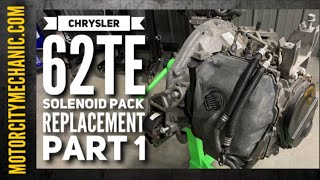
- Chrysler / Dodge / Jeep: In 62TE transmissions, P0942 is frequently caused by a faulty solenoid pack or screw-in pressure sensor. On RFE transmissions, the solenoid block containing the pressure sensor is the primary culprit.
- Mazda: For 2016-2021 CX-5 models, P0942:49 signals a known internal failure of the ABS/DSC module. Diagnosing this as a transmission problem is a major, costly misdiagnosis.
- Volkswagen / Audi: On DSG transmissions, P0942 traces to the Mechatronics unit. Repair requires replacing the entire unit, costing thousands.
Real Owner Stories
2012 Ford F-150 (6R80) at 130K miles
Check engine light came on, transmission shifted harshly, and occasionally went into limp mode.
What they tried:
- A local quick-lube shop performed a transmission flush.
- The problem returned within a day. A mechanic suggested a full transmission rebuild for $4,000.
Outcome: The owner researched F-150 forums and found the common molded lead frame issue. A transmission shop replaced the lead frame (Part No. AL3Z-7G276-D) and valve body seals for $850. Shifting returned to normal.
Lesson: On Ford 6R80 transmissions, P0942 is frequently the lead frame assembly. Do not agree to a full transmission rebuild without diagnosing this specific part.
2010 Dodge Grand Caravan (62TE) at 95K miles
Vehicle went into limp mode (stuck in 3rd gear) with harsh shifting leading up to the failure.
What they tried:
- The owner dropped the pan and changed the fluid and filter.
Outcome: The problem persisted. The owner replaced the solenoid pack (Mopar Part No. 68376696AA) and performed the TCM 'quick learn' procedure with a scan tool. This completely fixed the issue for $350 in parts.
Lesson: For Chrysler/Dodge 62TE transmissions, the solenoid pack is a common failure point. Replacing it is an advanced DIY job but saves thousands over a shop rebuild.
2017 Mazda CX-5 at 60K miles
Check engine light, ABS light, and traction control light illuminated simultaneously. Scanner showed P0942:49.
What they tried:
- The owner was confused because the transmission shifted perfectly fine.
Outcome: Forum research revealed TSB SA-008-21. The code indicates an internal failure of the ABS Hydraulic Unit Control Module. The dealer replaced the ABS module, resolving all lights.
Lesson: Always research the code for your specific make and model. Trusting the generic code definition leads to costly and incorrect transmission diagnoses.
How to Prevent This Code From Triggering
- Perform regular transmission fluid and filter changes. (Every 30,000-60,000 miles, or more often if towing.) — Clean fluid maintains hydraulic properties and dissipates heat. A clean filter ensures unrestricted fluid flow to the pump, preventing pressure loss.
- Use only the OEM-specified transmission fluid. (Every fluid change.) — Using generic or incorrect fluid leads to seal degradation, clutch slippage, and incorrect hydraulic pressure.
- Install an auxiliary transmission cooler. (Once, especially if you tow or live in a hot climate.) — Overheating destroys transmissions. An external cooler keeps fluid temperatures stable, preventing fluid breakdown.
- Come to a complete stop before shifting from Drive to Reverse. (Daily habit.) — Shifting while moving puts immense stress on transmission bands and clutches, generating debris that causes hydraulic pressure issues.
Frequently Asked Questions
Can I just add transmission fluid to fix P0942?
If the fluid is low, adding the correct ATF temporarily resolves symptoms. However, transmission fluid is a sealed system; low fluid means you have a leak. Ignoring the leak guarantees the code will return.
Will clearing the code make the problem go away?
No. Clearing the code only erases the fault from the computer's memory. Because P0942 triggers from a real-time physical or electrical fault, the TCM detects the problem again immediately upon driving.
What is the most common misdiagnosis for P0942?
The most costly misdiagnosis is immediately condemning the entire transmission. The fault frequently stems from a cheaper, accessible component like a faulty pressure sensor, a bad solenoid, or low fluid. Demand a manual pressure test before authorizing a rebuild.
How much does it cost to fix a P0942 code?
Costs range from $150 for a fluid change to over $5,000 for a full transmission replacement. Replacing an external sensor or solenoid typically costs $300 to $900. If the transmission pump fails, expect a $1,500 to $2,500 repair bill.
What's the difference between P0942 and P0868?
P0868 specifically means the sensor reports pressure below the minimum threshold. P0942 is broader and triggers from low pressure, an erratic pressure signal, or a disagreement between desired and actual pressure.
Why does my Mazda CX-5 show a P0942 transmission code if it's an ABS problem?
Mazda assigned code P0942:49 to an ABS/DSC module failure, creating widespread confusion. If you have a 2016-2021 CX-5, this code points to the ABS hydraulic unit, not the transmission.
Can a bad battery cause a P0942 code?
Yes. Low battery voltage causes the TCM to behave erratically, triggering false codes including P0942. If the car is hard to start, test the battery and charging system before diving into transmission diagnostics.
Key Takeaways
- Code P0942 indicates a critical transmission hydraulic pressure failure; driving with it risks turning a $400 sensor repair into a $4,000 transmission rebuild.
- Always start diagnosis by checking the transmission fluid level and condition, as low or burnt fluid is the most common cause of pressure loss.
- On 2011-2020 Ford F-150s and 2008-2016 Chrysler/Dodge minivans, P0942 frequently points to a faulty $250 lead frame or solenoid pack rather than a dead transmission.
- For 2016-2021 Mazda CX-5 owners, P0942 (specifically P0942:49) is a known ABS module failure covered by TSB SA-008-21, not a transmission problem.
- A manual pressure test using a mechanical gauge is the only definitive way to prove whether the fault is a cheap electrical sensor or an expensive mechanical pump.
Helpful Videos





The information in this article is provided for general reference and educational purposes only. Vehicle specifications, procedures, and part compatibility can vary by production date, trim level, and region. Always consult your vehicle's factory service manual and verify part numbers before purchasing or performing repairs. Safety-critical components such as airbags, seat belts, and braking systems should be installed by a qualified professional.
- 🎬 Helpful Videos
- What Does P0942 Mean?
- Can I Drive With P0942?
- Common Causes
- Symptoms
- Diagnostic Flowchart
- Common Fixes & Costs
- Used vs. New Parts: Buying Guide
- What Happens If You Wait — Timeline
- Cost of Not Fixing It
- Diagnosis Steps
- When This Code Triggers (Freeze-Frame Conditions)
- Related Codes
- Climate & Environmental Factors
- How to Talk to a Mechanic About This Code
- Where to Take It: Dealer vs Independent vs Chain
- When to Walk Away From the Repair
- What Scan Tool You Need for This Code
- How to Clear the Code After You Fix It
- Will This Fail Emissions / State Inspection?
- Most Commonly Affected Vehicles
- Manufacturer-Specific Notes
- Real Owner Stories
- 2012 Ford F-150 (6R80) at 130K miles
- 2010 Dodge Grand Caravan (62TE) at 95K miles
- 2017 Mazda CX-5 at 60K miles
- How to Prevent This Code From Triggering
- Frequently Asked Questions
- Can I just add transmission fluid to fix P0942?
- Will clearing the code make the problem go away?
- What is the most common misdiagnosis for P0942?
- How much does it cost to fix a P0942 code?
- What's the difference between P0942 and P0868?
- Why does my Mazda CX-5 show a P0942 transmission code if it's an ABS problem?
- Can a bad battery cause a P0942 code?
- Key Takeaways
- 🎟️ Get 5% Off