

P0935 on 2009-2013 Ram 3500: Line Pressure Sensor Circuit High Causes and Fixes
On a 2009-2013 Ram 3500 with a 68RFE transmission, code P0935 almost always points to a failed line pressure sensor, which is integrated into the transmission solenoid pack/valve body assembly. The fix involves replacing the entire solenoid pack, which costs between $300-$600 for the part. This is a moderately difficult DIY job that requires dropping the transmission pan and working with the valve body.
- P0935 on a 2009-2013 Ram 3500 indicates the transmission's line pressure sensor circuit is sending a voltage signal that is too high.
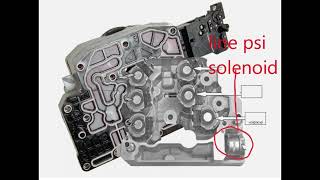
- The most common cause is a failure of the sensor itself, which is integrated into the transmission solenoid pack inside the oil pan.
- This is a serious code that can cause limp mode and harsh shifting; driving should be limited until the issue is repaired to prevent further transmission damage.
- The fix involves replacing the entire solenoid pack, along with the transmission filters and fluid.
- Always check for other related transmission codes (like P0933 or P0869), as they often appear together and confirm a fault within the valve body's electronics.
What's Unique About the 2009-2013 Ram 3500
For this generation of Ram 3500, typically equipped with the 68RFE automatic transmission, the P0935 code is a well-documented issue. The line pressure sensor is not a standalone part but is integrated into the main solenoid block (also called a solenoid pack) inside the transmission. This design means a simple sensor failure requires the replacement of the entire electronic pack. Multiple Technical Service Bulletins (TSBs) have been issued by the manufacturer acknowledging this code, often in conjunction with other pressure-related codes (like P0933, P0869), which strongly suggests a common failure of this internal electronic assembly rather than an external wiring issue.
🎬 Watch: A breakdown of P0935 causes and common symptoms.Diagnostic Flowchart
Tap your situation to follow the diagnostic path that matches what you're seeing on this vehicle.
Generation note: This range covers the end of the third generation (2009) and the start of the fourth generation (2010-2013) Ram trucks. However, the P0935 code is consistently related to the 68RFE automatic transmission used in both generations (and beyond), so the causes and fixes are largely the same. The control strategy shifted in 2010 from a separate TCM to an integrated PCM, but the core failure mode of the solenoid pack remains consistent.
Symptoms You May Notice
- Check Engine Light or Transmission Warning Light is on
- Vehicle enters "limp mode" (stuck in a single gear, often 4th).
- Harsh, erratic, or delayed shifting.
- Transmission slipping between gears
- Buzzing sound from the transmission area when in Park or Neutral, caused by the main regulator valve being maxed out due to uncontrolled pressure in limp mode.
- Reduced fuel economy
- Replacing the entire transmission when only the solenoid pack is faulty.
- Replacing the PCM before thoroughly testing the sensor and wiring harness.
- Replacing only the transmission fluid and filters, which will not resolve an electrical fault code.
- Replacing the solenoid pack with a cheap, non-OEM or non-Rostra aftermarket part, which may be faulty out of the box.
Most Likely Causes
- Failed Line Pressure Sensor (within the Solenoid Pack) 🔴 High Probability The sensor is part of a complex electronic assembly (solenoid pack) located inside the transmission, subject to constant heat cycles, vibration, and submersion in fluid. It's a known common failure point on 68RFE transmissions.
How to confirm: Use a high-end scan tool to monitor live data for the 'Transmission Line Pressure Sensor Voltage'. A reading stuck at or near 5 volts (e.g., 4.98V), even with the engine off, points to a failed sensor or an open/shorted circuit. Compare 'desired' vs 'actual' line pressure; a large discrepancy where actual pressure is unresponsive also indicates a fault.
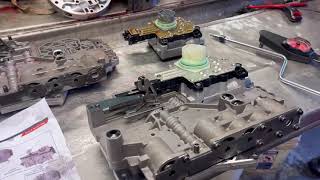
Typical fix: Replace the entire transmission solenoid pack assembly. This part is located on the valve body and is accessed by removing the transmission oil pan.
Est. part cost: $300 - $600 - Wiring Harness Issue 🟡 Medium Probability The main transmission wiring harness connector is susceptible to corrosion, especially in regions with high humidity or road salt. Internal corrosion inside the connector can cause a short to voltage or an open circuit, mimicking a failed sensor. Wires can also chafe against the chassis or engine components.
How to confirm: Visually inspect the main transmission connector for green or white corrosion after disconnecting it. Disconnect the harness at the PCM and the transmission, and use a multimeter to check the signal wire (often Yellow/Pink or similar) for a short to a power source or for high resistance (open). A resistance check of the sensor signal circuit and ground circuit should show less than 5.0 ohms.
Typical fix: Repair the damaged section of the wire or replace the affected connector pigtail. If corrosion is severe, the entire engine or transmission harness may need replacement.
Est. part cost: $20 - $250 - Faulty Powertrain Control Module (PCM) ⚪ Low Probability
How to confirm: This should only be considered after the sensor and wiring have been definitively ruled out. A specialized shop may need to test the PCM's driver circuit for the sensor using a transmission simulator tool (like Miller tool #8333) to see if the PCM correctly interprets simulated pressure signals.
Typical fix: Replace and reprogram the PCM. This requires dealer-level tools.
Est. part cost: $500 - $1200
Diagnosis Steps
- Connect a compatible OBD-II scanner and confirm P0935 is present. Note any other transmission-related codes, especially P0933 and P0869.
- Using the scanner's live data function, observe the 'Transmission Line Pressure Sensor Voltage'. A reading stuck near 5V (e.g., 4.98V) indicates a circuit high fault.
- Turn the ignition off. Disconnect the main transmission wiring harness connector. Inspect both sides of the connector for bent pins, moisture, or corrosion. Corrosion inside the yellow cap is a known issue.
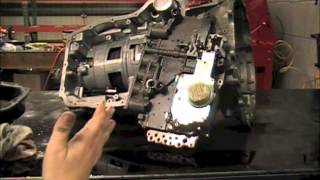
- If external wiring looks good, drop the transmission oil pan to access the valve body and solenoid pack. This will be messy.
- Inspect the internal wiring and the connector at the solenoid pack for any visible damage.
- If no visible issues are found, the most probable cause is the line pressure sensor itself. Since it is integrated, the entire solenoid pack must be replaced.
- After replacing the solenoid pack, refill with ATF+4 fluid, install new filters, and perform a transmission 'Quick Learn' procedure with a capable scan tool to reset adaptive values.
- If the code returns, a more in-depth diagnosis of the wiring harness for a short-to-voltage between the PCM and transmission connector is required.
- As a final step, if all wiring and the sensor are confirmed to be good, the PCM may be at fault and requires professional testing.
Parts You'll Likely Need
- Transmission Solenoid Block / Pack
(OEM #68353383AC)— This is the most common failure. The line pressure sensor that causes code P0935 is an integral part of this assembly and cannot be replaced separately. This part number supersedes several previous versions including 5170877AD and 52119435AF.
Trusted brands: Mopar, RevMax, Rostra, Dorman
OEM price range: $450 - $600
Aftermarket price range: $300 - $500 - Transmission Filter Kit (Spin-on and Pan Filter)
(OEM #Mopar 5013470AE (Sump), Mopar 5015267AD (Spin-on))— These must be replaced whenever the transmission pan is removed to service the solenoid pack.
Trusted brands: Mopar, Wix, ATP
OEM price range: $40 - $70
Aftermarket price range: $25 - $50 - ATF+4 Transmission Fluid — The transmission fluid must be drained to replace the solenoid pack and refilled with the correct fluid type (typically 7-8 quarts for a pan drop).
Trusted brands: Mopar, Valvoline, Castrol
OEM price range: $10 - $15 per quart
Aftermarket price range: $7 - $12 per quart
Related Codes That Often Appear With This One
- P0933 — This code for 'Hydraulic Pressure Sensor Range/Performance' is often set alongside P0935 because they both relate to implausible signals from the same sensor.
- P0869 — This code for 'Line Pressure High' indicates the transmission is actually experiencing high pressure, which can be a cause or a result of the sensor circuit fault.
- P0934 — This code for 'Line Pressure Sensor Circuit Low' is the opposite of P0935 but can appear if there is an intermittent wiring issue causing the signal to fluctuate wildly from open to shorted.
- P1775 / P1776 — These codes relate to solenoid switch valves being latched in position and are listed in TSBs alongside P0935, indicating a broader electronic or hydraulic issue within the valve body assembly.
Technical Service Bulletins (TSBs) & Recalls
- 18-091-16: Lists P0935 - Line Pressure Sensor Circuit High among other transmission codes and changes its fault-setting logic to reduce erroneous check engine lights.
- 18-093-15: Notes P0935 - Line Pressure Sensor Circuit High for all RFE transmissions.
- 18-057-15 REV A: Cites P0935 as part of a group of potential hydraulic pressure sensor faults.
Platform-Specific Known Issues
- Multiple manufacturer TSBs (including #18-091-16, #18-093-15, and #18-057-15 REV A) list P0935 as a known fault code for these vehicles, often appearing with a cluster of other transmission pressure codes, pointing to a common issue with the valve body electronics.
- TSB 18-091-16 specifically addresses changing the logic for P0935 (and related codes) from a one-trip fault to a two-trip fault to 'prevent or reduce MIL illumination when no defect is present', suggesting the sensor can be prone to intermittent glitches.
Mechanic-Grade Diagnostic Values
- Line Pressure Sensor (LPS) Voltage Range — expected: 0.35V to 4.75V. Failure: A voltage reading greater than or equal to 4.75V for 0.18 seconds will set code P0935.
- LPS Signal Wire Voltage (Key On, Engine Off, Sensor Unplugged) — expected: ~5.0V. Failure: A reading of 0V could indicate an open in the signal circuit from the PCM. A reading significantly different from 5V could indicate a short.
- Resistance of Sensor Ground Circuit (T160) — expected: Below 5.0 ohms. Failure: Resistance above 5.0 ohms indicates an open or high resistance in the ground circuit.
- Resistance of Line Pressure Sensor Signal Circuit (T38) — expected: Below 5.0 ohms. Failure: Resistance above 5.0 ohms indicates an open or high resistance in the signal circuit.
Scan Tool Commands That Help
- wiTECH, Autel, Snap-on, Launch X431: Quick Learn — This procedure is mandatory after replacing the solenoid pack or valve body. It resets and relearns the clutch volume indexes (CVIs) and adaptive values for proper shift quality. Failure to perform this can result in poor shifting and damage to the new components.
- Miller Tool #8333 (Transmission Simulator): Simulate Pressure Signals — Used in advanced diagnostics to rule out a faulty PCM. The tool sends known-good pressure signals to the PCM; if the PCM reads the simulated signals correctly on a scan tool, the PCM is likely good, and the fault is in the harness or sensor.
Wiring & Ground Locations
- Line Pressure Sensor Signal Circuit — Pin on the main transmission connector, running to the PCM.. This is the wire (circuit T38) that carries the voltage signal from the sensor to the PCM. A short to voltage on this wire will cause a constant high reading and trigger P0935.
- Sensor Ground Circuit — Pin on the main transmission connector, providing ground reference from the PCM.. This wire (circuit T160) provides the ground reference for the sensor. An open or high resistance in this circuit can cause the sensor's signal voltage to float high, triggering P0935.
- PCM Connector C4 — On the Powertrain Control Module (PCM).. This is one of the main connectors where the transmission harness interfaces with the PCM. It's a critical point for testing circuit continuity back to the transmission.
Real Owner Repair Stories
- YouTube video by 'National Transmission' (2008 Ram 2500HD with 68RFE) — Check engine light on, laundry list of codes, consistently setting P0935.
❌ Tried (didn't work) Initial visual inspection showed no obvious damage.
✅ What actually fixed it The technician diagnosed the issue by monitoring live data showing 4.98V. He unplugged the sensor and the voltage remained high. By jumpering the signal wire to ground, the voltage on the scan tool dropped to zero, proving the wiring from the connector to the PCM was intact. This confirmed the failure was internal to the line pressure sensor, requiring the replacement of the solenoid pack.
OEM Part Supersession History
5170877AA, 5170877AB, 5170877AC, 5170877AD, 5170877AF, 52119435AA, 52119435AF, 68353383AB→68353383AC— Standard component revisions for improved reliability and manufacturing updates.
Heads up: The solenoid pack for 2011+ models is physically different (OD solenoid removed) and will set codes if installed in a 2007-2010 truck without swapping other valve body components. Ensure the correct part is ordered for the specific model year.
Model Year Variations Within This Range
- 2009: The 2009 model year truck uses a separate Transmission Control Module (TCM) mounted on the passenger side firewall to control the 68RFE transmission.
- 2010-2013: Starting in 2010, Ram integrated the transmission control functions into the main Powertrain Control Module (PCM), eliminating the separate TCM. While the P0935 fault remains the same, the diagnostic path for a suspected module failure points directly to the PCM.
Helpful Videos
We Have This Part in Stock


The information in this article is provided for general reference and educational purposes only. Vehicle specifications, procedures, and part compatibility can vary by production date, trim level, and region. Always consult your vehicle's factory service manual and verify part numbers before purchasing or performing repairs. Safety-critical components such as airbags, seat belts, and braking systems should be installed by a qualified professional.
- Ram 3500:
- 🎬 Helpful Videos
- 🛍️ Shop This Part
- What's Unique About the 2009-2013 Ram 3500
- Diagnostic Flowchart
- Symptoms You May Notice
- Most Likely Causes
- Diagnosis Steps
- Parts You'll Likely Need
- Related Codes That Often Appear With This One
- Technical Service Bulletins (TSBs) & Recalls
- Platform-Specific Known Issues
- Mechanic-Grade Diagnostic Values
- Scan Tool Commands That Help
- Wiring & Ground Locations
- Real Owner Repair Stories
- OEM Part Supersession History
- Model Year Variations Within This Range
- 🎟️ Get 5% Off