

P0935 on 2009-2013 Ram 2500: Line Pressure Sensor Circuit High Fixes
This code indicates the transmission line pressure sensor is sending a voltage signal that is too high, typically stuck near 5 volts. The most common fix is replacing the line pressure sensor, which is located on the transmission valve body. Expect to pay between $50 and $150 for the part. The OEM Mopar part is highly recommended over aftermarket alternatives to avoid premature failure.
- P0935 on a 2009-2013 Ram 2500 almost always points to a problem with the transmission line pressure sensor or its circuit.
- The most probable cause is a failed line pressure sensor, which is a common issue on the 68RFE transmission.
- Do not drive extensively with this code, as it can lead to poor shifting and potentially serious transmission damage.
- Repair involves dropping the transmission pan, so it's wise to replace the transmission filters and fluid at the same time.
- Always check for wiring issues before condemning the sensor or the more expensive control module.
What's Unique About the 2009-2013 Ram 2500

This issue is very common on the 68RFE automatic transmission found in many 2009-2013 Ram 2500 trucks, particularly those with the Cummins diesel engine. While the 68RFE was designed for the high-torque output of the Cummins, its line pressure sensor is a well-documented failure point. The sensor is mounted on the valve body inside the transmission, where it is subjected to constant heat cycles and fluid pressure, leading to electronic failure. A key diagnostic point is that a failing sensor will often read a steady 4.9V+, even with the engine off, indicating an internal short rather than a true pressure problem. The provided NHTSA technical service bulletins (TSBs) confirm that this code is frequently seen alongside other transmission pressure-related codes, indicating a pattern of issues with the hydraulic control system on these RFE transmissions.
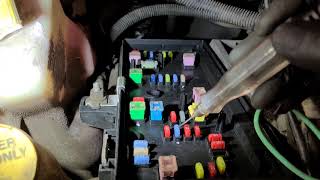
🎬 Watch: A mechanic's guide to diagnosing common 68RFE issues.Diagnostic Flowchart

Tap your situation to follow the diagnostic path that matches what you're seeing on this vehicle.
Generation note: This range covers the end of the third-generation (2009) and the start of the fourth-generation (2010-2013) Ram 2500. Both generations used the 68RFE transmission with the 6.7L Cummins engine, and this P0935 fault is common to the transmission itself, regardless of the truck's generation in this year span.
Symptoms You May Notice
- Check Engine Light is on
- Transmission stuck in one gear (limp mode, often 4th gear)
- Harsh or erratic shifting
- Delayed engagement when shifting into Drive or Reverse
- Transmission slipping
- Inability to shift into higher gears (e.g., 5th or 6th)
- Scan tool shows line pressure sensor voltage stuck at ~4.9 volts
- Replacing the entire valve body or transmission solenoid pack when only the line pressure sensor is faulty. While the sensor is on the valve body, it can often be replaced separately.
- Assuming a new aftermarket sensor is good. Many forum users report chasing wiring issues after an aftermarket sensor was dead on arrival or failed quickly.
Most Likely Causes

- Faulty Line Pressure Sensor 🔴 High Probability The line pressure sensor on the 68RFE transmission is a well-documented, common failure item. Aftermarket sensors are also known to fail prematurely, making the OEM Mopar part the recommended replacement.
How to confirm: Using a scan tool, monitor the line pressure sensor voltage. If it reads high (near 5 volts) regardless of engine RPM or gear, the sensor is likely faulty. A real-world example from a forum user showed the code setting immediately on a cold start when the scan tool read 252psi and the voltage was maxed out, confirming a sensor failure before the truck even moved.
Typical fix: Replace the line pressure sensor. This sensor is located on the valve body inside the transmission oil pan. The OEM Mopar part number is 4799758AF (which superseded 04799758AD).
Est. part cost: $70-$160 - Wiring or Connector Issue 🟡 Medium Probability The main transmission wiring harness connector is susceptible to corrosion. Moisture can get trapped inside the connector, causing pins to corrode, which can lead to a short to voltage on the sensor signal wire. A thorough inspection requires disconnecting the harness and checking for corrosion inside the connector, not just externally.
How to confirm: Visually inspect the main transmission harness connector for any signs of damage or corrosion. Disconnect the sensor and check for 5V on the signal wire with the key on; if voltage is present, there is a short to voltage in the harness. A Reddit user described this exact diagnostic process, finding 5V on both the supply and signal wires with the sensor disconnected, pointing to a wiring short.
Typical fix: Repair the damaged section of the wiring harness or clean/replace the corroded connector pins. Applying dielectric grease during reassembly is recommended.
Est. part cost: $20-$150 - Faulty Powertrain/Transmission Control Module (PCM/TCM) ⚪ Low Probability While less common, module failure can cause a variety of erroneous codes. This is typically a diagnosis of exclusion after the sensor and wiring have been proven to be good.
How to confirm: This is a diagnosis of exclusion. If a new OEM sensor and verified good wiring do not resolve the code, the PCM/TCM may be the culprit. This requires advanced diagnostic tools to rule out all other possibilities.
Typical fix: Replace and reprogram the control module.
Est. part cost: $500-$1500
Rare But Worth Checking
- Worn Solenoid Switch Valve (SSV) Bore:
Diagnosis Steps
- Connect a high-quality OBD-II scanner to read the code and check for any other related transmission codes like P0933, P0934, or P0869.
- Use the scanner's live data function to monitor the 'Line Pressure Sensor' voltage. With the key on, engine off, a faulty sensor will often read a static ~4.9 volts.
- If the voltage is stuck high, turn the ignition off and disconnect the main transmission electrical connector. Inspect the connector pins (both male and female sides) for any green or white corrosion. This is a known issue.
- If the connector is clean, test the sensor circuit. With the connector still unplugged and key on, probe the signal wire terminal on the harness side. If you read 5 volts, there is a short to voltage in the wiring harness that must be traced and repaired.
- If the wiring tests good, the line pressure sensor itself is the most likely cause.
- To confirm before disassembly, you can compare the scan tool's pressure reading to a mechanical gauge. A special adapter (like Miller tool 8259) is needed to install a gauge alongside the sensor. If the gauge shows normal pressure while the scan tool shows high pressure, the sensor is bad.
- To replace the sensor, safely lift the vehicle, drain the transmission fluid, remove the oil pan, and then unbolt the sensor from the valve body.
- After replacing the sensor (preferably with an OEM Mopar part), reinstall the pan with a new gasket, replace the transmission filters, and refill with the correct amount of ATF+4 fluid.
- Clear the codes, and it's recommended to perform a 'Quick Learn' procedure with a capable scan tool to reset transmission adaptive values. Then, perform a test drive to verify the repair.
Parts You'll Likely Need

- Transmission Line Pressure Sensor
(OEM #4799758AF (supersedes 04799758AD))— This is the most frequent failure point for the P0935 code on 68RFE transmissions.
Trusted brands: Mopar (Highly Recommended), Rostra, Dorman
OEM price range: $100-$180
Aftermarket price range: $50-$120 - Transmission Pan Gasket and Filter Kit
(OEM #5013470AC (Kit))— Required for servicing the line pressure sensor, as the pan must be removed. It is best practice to replace the spin-on and pan filters and the gasket at the same time.
Trusted brands: Mopar, ATP, Wix
OEM price range: $60-$100
Aftermarket price range: $30-$60
Related Codes That Often Appear With This One
- P0933 — This code for 'Hydraulic Pressure Sensor Range/Performance' is often triggered along with P0935 because they both relate to implausible signals from the same sensor system.
- P0934 — This is the opposite code, 'Line Pressure Sensor Circuit Low.' Seeing it with P0935 can indicate an intermittent wiring problem or a failing sensor that is fluctuating wildly between an open circuit and a short.
- P0869 — This code for 'Line Pressure High' indicates the TCM is commanding high pressure, or believes the pressure is high based on the faulty sensor reading. It frequently appears with P0933 and P0935 as a trio of codes pointing to the line pressure sensor circuit.
Technical Service Bulletins (TSBs) & Recalls
- 18-091-16: Mentions P0935 in a list of transmission-related diagnostic trouble codes.
- 18-093-15: Lists P0935 for all RFE transmissions.
- 18-057-15 REV A: Includes P0935 among several hydraulic pressure and sensor circuit codes.
- 1803014REVB: Cites P0935 as a possible transmission fault code.
- 18-030-14 REV. B: Also lists P0935 with other transmission electrical faults.
Platform-Specific Known Issues
- Multiple Technical Service Bulletins (TSBs) including #18-091-16, #18-093-15, and #18-057-15 REV A have been issued by the manufacturer for Ram trucks with RFE transmissions, listing P0935 as a potential fault code related to various transmission and system issues.
Mechanic-Grade Diagnostic Values
- Line Pressure Sensor (LPS) Voltage — expected: 0.35 to 4.75 volts. Failure: Voltage is greater than or equal to 4.75 volts for 0.18 seconds. A reading stuck near 5V, even with the engine off, points to a failed sensor or a short to voltage.
- Sensor Ground Circuit Resistance — expected: Less than 5.0 Ohms. Failure: Resistance is above 5.0 Ohms, indicating an open or high resistance in the ground circuit (T160).
- Line Pressure Sensor Signal Circuit Resistance — expected: Less than 5.0 Ohms. Failure: Resistance is above 5.0 Ohms, indicating an open in the signal circuit (T38) between the sensor and the PCM.
Scan Tool Commands That Help
- wiTECH (or equivalent high-level scanner): Transmission Simulator (using Miller tool #8333) — To test the PCM and wiring independently of the vehicle's transmission sensors. The tool simulates sensor inputs, allowing a technician to see if the PCM responds correctly, thereby isolating the fault to the wiring/PCM or the sensor itself.
- wiTECH (or equivalent high-level scanner): 68RFE TRANSMISSION VERIFICATION TEST — This is a guided test procedure to be performed after a repair (like replacing the sensor) to verify that the transmission is operating correctly and that the fault has been resolved.
- wiTECH (or equivalent high-level scanner): Quick Learn — After replacing the line pressure sensor or valve body, a Quick Learn procedure should be performed to reset the transmission's adaptive values and ensure smooth shifting with the new components.
Wiring & Ground Locations
- (T38) Line Pressure Sensor Signal Circuit — This wire runs from the line pressure sensor on the valve body, through the main transmission connector, to the Powertrain Control Module (PCM).. This is the specific circuit that carries the voltage signal. A short to a 5V reference or power wire in the harness will cause the P0935 code.
- (T160) Sensor Ground Circuit — This wire provides the ground reference for the line pressure sensor and runs from the sensor to the PCM.. High resistance or an open in this ground circuit can cause the sensor's signal voltage to float high, potentially triggering a P0935 code.
- Main Transmission Connector — Located on the driver's side of the transmission case.. This is a known point for moisture intrusion and corrosion, which can cause shorts or high resistance in the sensor circuits, including the T38 signal wire.
Real Owner Repair Stories
- Turbo Diesel Register user 'jmorse' (2015 Ram 2500 with 68RFE (44,000 miles)) — Check Engine Light with codes P0933, P0869, and P0935.
❌ Tried (didn't work) Checked connector (was clean), Dropped pan, inspected, and replaced both Mopar filters, Refilled with new ATF+4 fluid
✅ What actually fixed it The user suspected a faulty sensor and was taking it to a shop for advanced scanning to confirm, which is the correct next step when basic checks fail. The combination of P0933, P0869, and P0935 strongly points to a sensor/circuit failure rather than a true mechanical pressure issue.
OEM Part Supersession History
4799758 / 4799758AC / 4799758AD→4799758AF— Standard part revision and improvement over time.
Heads up: The newest part number, 4799758AF, is the correct replacement for all previous versions for this application.
Model Year Variations Within This Range
- 2011-2013: For the 2011 model year, the Overdrive (OD) solenoid was removed from the 68RFE valve body assembly. Swapping a 2011+ transmission or valve body into a 2009-2010 truck without also swapping the old solenoid module and separator plate will cause an immediate P0760 (OD solenoid circuit) fault and put the transmission in limp mode.
- 2012-2013: The torque converter was upgraded for the 2012 model year to handle higher engine torque ratings. While compatible with older models, using a 2012+ converter is considered an upgrade.
Helpful Videos
We Have This Part in Stock


The information in this article is provided for general reference and educational purposes only. Vehicle specifications, procedures, and part compatibility can vary by production date, trim level, and region. Always consult your vehicle's factory service manual and verify part numbers before purchasing or performing repairs. Safety-critical components such as airbags, seat belts, and braking systems should be installed by a qualified professional.
- Ram 2500:
- 🎬 Helpful Videos
- 🛍️ Shop This Part
- What's Unique About the 2009-2013 Ram 2500
- Diagnostic Flowchart
- Symptoms You May Notice
- Most Likely Causes
- Rare But Worth Checking
- Diagnosis Steps
- Parts You'll Likely Need
- Related Codes That Often Appear With This One
- Technical Service Bulletins (TSBs) & Recalls
- Platform-Specific Known Issues
- Mechanic-Grade Diagnostic Values
- Scan Tool Commands That Help
- Wiring & Ground Locations
- Real Owner Repair Stories
- OEM Part Supersession History
- Model Year Variations Within This Range
- 🎟️ Get 5% Off