

P0933 on 2014-2020 Ram 3500: Hydraulic Pressure Sensor Range/Performance Fixes
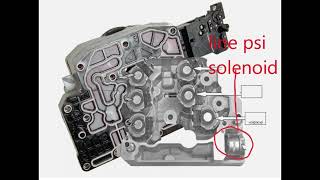
On a 2014-2020 Ram 3500, especially with the 68RFE transmission, P0933 almost always points to a faulty transmission line pressure sensor (transducer). The fix requires replacing the sensor, which is located inside the transmission on the valve body. A key symptom is the pressure reading being stuck at 252 psi on a cold start. Expect to pay $80-$300 for the part and $400-$900 for labor.
- P0933 on a 2014-2020 Ram 3500 almost always points to a faulty line pressure sensor, especially on trucks with the 68RFE transmission.
- Symptoms include harsh shifting, a lit Check Engine Light, and the truck possibly entering 'limp mode'.
- Diagnosis should be confirmed with a scan tool by comparing 'Desired' vs. 'Actual' line pressure readings.
- The repair is moderately difficult as it requires removing the transmission pan and valve body; using a genuine Mopar replacement part is strongly recommended.
- Before replacing parts, always check the transmission fluid level/condition and inspect the main electrical connector for damage.
What's Unique About the 2014-2020 Ram 3500

Ram 3500s in this year range were equipped with either the Chrysler-built 68RFE or the heavy-duty Aisin AS69RC automatic transmission. While the code applies to both, it is an exceptionally common and well-documented issue on the 68RFE transmission. The line pressure sensor (transducer) on the 68RFE is a known high-failure item. The problem is so frequent that many owners and technicians immediately suspect this sensor when the code appears, especially when accompanied by P0869 (Line Pressure High). 🎬 Watch: Troubleshooting P0933 line pressure performance on Ram trucks. In contrast, issues with the Aisin AS69RC are less frequent and typically relate to internal mechanical parts like clutch hubs or snap rings rather than sensor failures.
Diagnostic Flowchart

Tap your situation to follow the diagnostic path that matches what you're seeing on this vehicle.
Generation note: The 2014-2020 range covers the end of the fourth generation (2014-2018) and the beginning of the fifth generation (2019-2020) Ram trucks. The primary distinction regarding this code is the transmission option: the standard 68RFE or the optional Aisin AS69RC. The line pressure sensor failure is most commonly associated with the 68RFE across both generations. A major change occurred in 2019 for the 68RFE, with an updated valve body and a new solenoid pack using a blue connector, making it incompatible with pre-2019 gray-connector parts.
Symptoms You May Notice
- Check Engine Light is on
- Transmission warning light is on
- Harsh or erratic gear shifting
- Vehicle enters 'limp mode' (stuck in a single gear, often 3rd or 4th)
- Delayed engagement when shifting into Drive or Reverse
- Transmission slipping
- Reduced acceleration power or poor throttle response
- Replacing the entire transmission when only the sensor is bad.
- Replacing the Transmission Control Module (TCM) before verifying the sensor and wiring.
- Using a low-quality aftermarket sensor that fails quickly, leading to a repeat diagnosis.
- Assuming the new sensor that came with a replacement transmission is good; some remanufactured units are shipped with faulty clone sensors.
Most Likely Causes

- Faulty Hydraulic Pressure Sensor (Line Pressure Transducer) 🔴 High Probability This is a very common failure point on the 68RFE transmission. The sensor is known to fail or degrade over time, often providing erratically high readings. Aftermarket sensors are particularly noted for premature failure.
How to confirm: Use a high-quality scan tool (like AlfaOBD) to monitor 'Desired Line Pressure' and 'Actual Line Pressure' live data. A definitive failure symptom is the actual pressure being stuck at a high reading (e.g., 252 psi) on a cold start, when it should be much lower. Normal idle pressure should be around 60 PSI with less than a 5 PSI variance from desired.
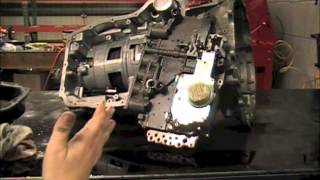
Typical fix: Replace the line pressure sensor. This requires removing the transmission pan and valve body to access the sensor. It is highly recommended to use a genuine Mopar part, as aftermarket sensors have a reputation for premature failure.
Est. part cost: $80-$180 - Low or Dirty Transmission Fluid 🟡 Medium Probability The 68RFE is sensitive to fluid condition and level. Incorrect levels or fluid contaminated with clutch material can affect hydraulic pressure readings or clog passages.
How to confirm: Check the transmission fluid level and condition using the dipstick. The fluid should be at the correct level, bright red in color (Mopar ATF+4), and not smell burnt.
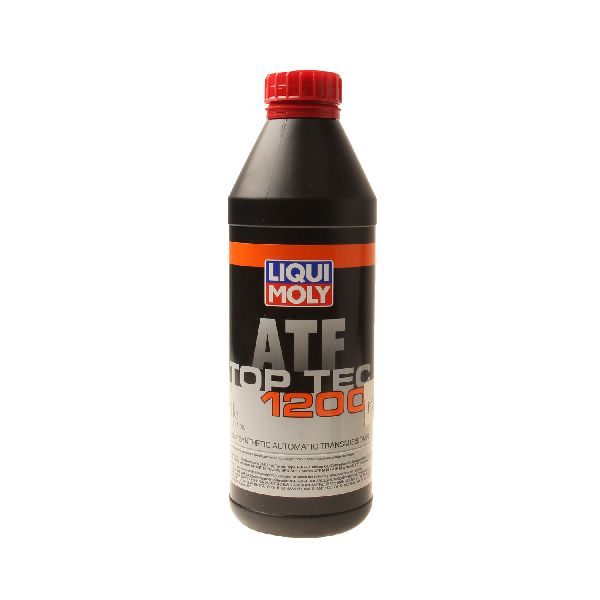
Typical fix: Perform a transmission fluid and filter change using the correct Mopar ATF+4 fluid. This is always done as part of the sensor replacement.
Est. part cost: $100-$200 - Wiring Harness or Connector Issues ⚪ Low Probability The main round transmission connector on the driver's side of the case is exposed to the elements. Corrosion, moisture, or damaged/spread pins can disrupt the signal from the sensor. Technicians check for 'pin drag' to ensure a tight connection.
How to confirm: Visually inspect the main round transmission connector for corrosion, damage, or pushed-out pins. With a scan tool monitoring sensor voltage, wiggle the harness to see if the reading fluctuates, which would indicate a wiring fault. In some cases, a broken wire between the PCM and sensor has been the root cause.
Typical fix: Clean the connector terminals with electrical contact cleaner and apply dielectric grease. Repair the damaged section of the wiring harness or replace the connector itself.
Est. part cost: $20-$100
Rare But Worth Checking
- Faulty Transmission Solenoid Pack: The pressure sensor is often integrated into or mounted on the solenoid pack. A failure within the pack's pressure control solenoid can cause this code. Sometimes, replacing the entire solenoid pack is the recommended repair, especially if multiple codes are present.
- Faulty Powertrain Control Module (PCM) or outdated software: Multiple TSBs mention reprogramming the PCM to adjust fault tolerances for this code, sometimes changing it to a two-trip fault to avoid flagging intermittent issues. While rare, a hardware failure in the PCM is possible, but all other causes should be ruled out first.
- Internal Transmission Mechanical Failure: A sticking valve in the valve body, a failing oil pump, or internal cross-leaks can cause actual pressure problems that the sensor correctly reports, triggering the code. This is more likely if the code persists after replacing the sensor and verifying wiring.
Diagnosis Steps

- Check the transmission fluid level and condition. Ensure it is full and the fluid is bright red (ATF+4) and not burnt or dirty.
- Use a quality scan tool to read all transmission-related DTCs. Note any other codes present, especially P0869, P0934, or P0935.
- With the scan tool, monitor the live data for 'Desired Line Pressure' and 'Actual Line Pressure'.
- Perform a cold start test. Start the engine after it has sat overnight. If the 'Actual Line Pressure' immediately reads a static high value like 252 psi, the sensor has failed.
- If the cold start test is inconclusive, observe the pressure readings at idle in Park or Neutral. They should be stable and nearly identical (within 5 psi). Rev the engine gently; the pressures should track each other.
- Inspect the main round transmission electrical connector on the driver's side for corrosion, moisture, or damage. Check for good pin tension ('pin drag') to ensure a solid connection.
- If sensor readings are erratic, stuck, or clearly incorrect, and the wiring connector looks good, the next step is to replace the line pressure sensor.
- While replacing the sensor, it is best practice to also replace the transmission filters (sump and spin-on) and pan gasket.
- For advanced diagnosis, a technician can connect a mechanical pressure gauge to the transmission's line pressure port to verify if the sensor's electronic reading matches a true mechanical reading.
- After the repair, clear the codes, perform a transmission quick-learn procedure if the scan tool supports it, and perform a test drive to ensure the issue is resolved.
Parts You'll Likely Need
- Transmission Hydraulic Pressure Sensor (Line Pressure Transducer)
(OEM #5078336AC)— This is the most common failure point for code P0933 on the 68RFE transmission. Note: Some sources list 4799758AD, which may be for a different RFE family or an older part number.
Trusted brands: Mopar, ATS Diesel
OEM price range: $80-$150
Aftermarket price range: $50-$100 - Transmission Solenoid Pack Assembly
(OEM #68456067AB (supersedes 68367309AA))— The pressure sensor mounts to this assembly. If the solenoid pack is also suspect or if you prefer a more comprehensive repair, the entire block is replaced. Note the connector color (gray for pre-2019, blue for 2019+) as they are not interchangeable.
Trusted brands: Mopar
OEM price range: $350-$550
Aftermarket price range: $250-$400
Related Codes That Often Appear With This One
- P0869 — Indicates 'Line Pressure High'. This is very common with P0933 because a faulty sensor often sends an erroneously high pressure reading, triggering both codes.
- P0934 — Indicates 'Line Pressure Sensor Circuit Low'. This points to a specific electrical fault (low voltage) in the same circuit, often due to a short or a failed sensor.
- P0935 — Indicates 'Line Pressure Sensor Circuit High'. This points to a specific electrical fault (high voltage). One owner reported this code appears if the truck is restarted with P0933 active without clearing codes first.
- P0868 — Indicates 'Transmission Fluid Pressure Low'. This can appear if the sensor is failing erratically or if there is an actual pressure leak. TSB #18-064-25 links this code with P0933.
Technical Service Bulletins (TSBs) & Recalls
- 18-064-25
- 18-091-16
- 18-057-15 REV A
- 18-030-14 REV. B
Platform-Specific Known Issues
- The line pressure sensor on the 68RFE transmission is a well-documented, high-failure part, making P0933 a very common code for these trucks.
- Several Technical Service Bulletins (TSBs) have been issued by Ram that involve reprogramming the PCM to address various transmission codes, including P0933, often to prevent intermittent conditions from setting a fault.
- A definitive diagnostic check shared by owners is the 'cold start test': if the scan tool shows line pressure is stuck at 252 PSI immediately after a cold start, it confirms the sensor is bad.
Mechanic-Grade Diagnostic Values
- Line Pressure Sensor (LPS) Voltage — expected: 0.35V to 4.75V. Failure: Voltage below 0.35V may set P0934; voltage above 4.75V may set P0935.
- Pressure Control Solenoid (PCS) Resistance — expected: 4.0 to 4.9 Ohms. Failure: A resistance reading significantly outside this range indicates a faulty solenoid coil.
- Pressure Control Solenoid (PCS) Current Draw — expected: Up to 1.0 Amp when commanded by scan tool. Failure: Inability to draw close to 1 amp indicates a problem in the control circuit (wiring, PCM driver) rather than the solenoid itself.
- Line Pressure at Idle (in Park/Neutral, engine warm) — expected: Approximately 60 PSI. Failure: Actual pressure is stuck at a high value (e.g., 252 PSI) on a cold start, or varies more than +/- 5 PSI from the desired pressure at idle.
- Pressure Control Solenoid (PCS) Duty Cycle at Idle — expected: 20% - 25%. Failure: A duty cycle maxed out near its limit (e.g., 38%) shows the TCM is commanding minimum pressure but the actual pressure remains too high, suggesting a mechanical or sensor issue.
Scan Tool Commands That Help
- wiTECH (Dealer Tool): Reprogram PCM — Multiple TSBs call for a PCM reflash to update software, which can change the fault from a one-trip to a two-trip fault to prevent flagging intermittent issues.
- wiTECH (Dealer Tool): Program Torque Converter Solenoid PI Curve — For 2019 and newer models, this routine is mandatory after replacing the TCC solenoid, valve body, or the entire transmission to input the new component's character code into the PCM.
- Generic High-End Scanner: Transmission Quick Learn — After replacing the solenoid pack, valve body, or PCM to allow the controller to learn the new components' hydraulic and electrical characteristics.
- wiTECH with Miller Tool #8333: Transmission Simulator Test — This is an advanced diagnostic step to isolate a faulty PCM from the transmission harness by using a special tool to simulate sensor inputs and verify PCM response.
Wiring & Ground Locations
- Transmission Solenoid/TRS Assembly Connector — The main round electrical connector on the driver's side of the 68RFE transmission case.. This is the primary connection point for the line pressure sensor and all solenoids. Corrosion, moisture, spread pins, or a poor connection here can directly cause P0933 and related electrical codes. A 'pin drag' test is essential.
- PCM Connector C1, Pin 27 — The C1 (Black) connector at the Powertrain Control Module (PCM).. This pin provides the power reference wire to the line pressure sensor. At least one owner found a broken wire at this pin to be the root cause of P0933 after extensive diagnosis.
- G304 — A major body ground point located under the center of the vehicle.. While not specific to this circuit, a poor main ground can cause a variety of difficult-to-diagnose electrical issues in the powertrain control system.
Real Owner Repair Stories
- RamForum.com user 'Midnight_rex' (2011 Ram 1500 4.7L (similar RFE architecture)) — Check Engine Light with code P0933, hard shifting, limp mode.
❌ Tried (didn't work) Initial visual inspections.
✅ What actually fixed it The power reference wire from the ECM (C1 Black plug, pin #27) to the transmission sensor connector was broken. The user discovered the break in the wire near the connector pin, ran a new wire, and the code was resolved. - YouTube channel 'OCD AUTO' (2013 Ram w/ 6.7L Cummins and 68RFE) — P0933 Line Pressure Performance code, limp mode when revved.
❌ Tried (didn't work) Checked for pin drag on the main connector (it was good)., Verified the line pressure solenoid control circuit could draw 1 amp (it could), ruling out a PCM driver or wiring issue.
✅ What actually fixed it The truck had a recently replaced transmission that came with a cheap, clone-style line pressure sensor. The sensor was providing skewed readings. Replacing the faulty new sensor with a quality aftermarket sensor from Weller resolved the issue, and the actual pressure then matched the desired pressure. - Turbo Diesel Register user 'jmorse' (2015 Ram 2500 w/ 68RFE, 44,000 miles) — Check Engine Light with codes P0933, P0869, and P0935.
❌ Tried (didn't work) Checked fluid level (was good)., Inspected connector (was clean), applied dielectric grease., Dropped pan and replaced Mopar filters and fluid.
✅ What actually fixed it The definitive fix was replacing the line pressure sensor. The owner confirmed with a scan tool that on a cold start (~45°F), the transmission pressure was stuck at 252 psi, which immediately set the codes.
"I Checked Everything" — The Actual Cause
- In the context of P0933, the equivalent of a 'smoke test clean' scenario is when the line pressure sensor is replaced, but the code persists. One owner replaced both the solenoid pack and the sensor, yet the code returned, pointing to a more elusive underlying issue in the wiring harness or the PCM itself. Another user replaced the sensor and all related wiring, only to have the code change from P0934 (circuit low) to P0935 (circuit high), indicating a complex electrical fault not solved by replacing the most common parts.
OEM Part Supersession History
68367309AA, 68456067AA→68456067AB— Standard part revision and update for the 68RFE Solenoid Pack Assembly.
Heads up: Part number 68456067AB is for 2019+ models with a blue connector and is not compatible with pre-2019 models that use a gray connector.5078336AA→5078336AC— Standard part revision for the Line Pressure Sensor.
Heads up: These parts are generally considered interchangeable.
Model Year Variations Within This Range

- 2019-2020: The 68RFE transmission was significantly updated for the 2019 model year. It features a new valve body and a new solenoid pack assembly (PN 68456067AB) which uses a blue electrical connector instead of the gray connector used on 2014-2018 models. These parts are not interchangeable. The PCM software and shift logic were also refined.
Helpful Videos

Used OEM Parts in Stock

New Aftermarket Parts Available


The information in this article is provided for general reference and educational purposes only. Vehicle specifications, procedures, and part compatibility can vary by production date, trim level, and region. Always consult your vehicle's factory service manual and verify part numbers before purchasing or performing repairs. Safety-critical components such as airbags, seat belts, and braking systems should be installed by a qualified professional.
- Ram 3500:
- 🎬 Helpful Videos
- 🛍️ Shop This Part
- What's Unique About the 2014-2020 Ram 3500
- Diagnostic Flowchart
- Symptoms You May Notice
- Most Likely Causes
- Rare But Worth Checking
- Diagnosis Steps
- Parts You'll Likely Need
- Related Codes That Often Appear With This One
- Technical Service Bulletins (TSBs) & Recalls
- Platform-Specific Known Issues
- Mechanic-Grade Diagnostic Values
- Scan Tool Commands That Help
- Wiring & Ground Locations
- Real Owner Repair Stories
- "I Checked Everything" — The Actual Cause
- OEM Part Supersession History
- Model Year Variations Within This Range
- 🎟️ Get 5% Off