

OBD-II Code P0929: Gear Shift Lock Solenoid/Actuator Circuit Problem
What P0929 means, why it triggers, and how to fix it
- Code P0929 physically locks your gear shifter in Park, preventing you from driving the vehicle.
- On pre-2020 vehicles, a $30 faulty brake light switch is the most common misdiagnosis for a failed shift lock solenoid.
- On 2020+ Ford models with rotary dials, P0929 almost always requires a $150-$250 Gear Shift Module (GSM) software update at a dealership.
- Do not drive with an intermittent P0929 fault; use the manual shift lock override slot near your shifter only to reach a repair shop.
What Does P0929 Mean?

Your vehicle's Powertrain Control Module (PCM) detected a malfunction in the gear shift lock solenoid circuit. This safety mechanism prevents shifting out of Park without the brake pedal depressed. Code P0929 triggers when the computer registers unexpected voltage or resistance in this circuit, indicating the lock mechanism is not functioning.
Technical definition: SAE/OBD-II defines P0929 as "Gear Shift Lock Solenoid/Actuator Control Circuit 'A' Range/Performance". The control module detected the circuit's voltage, resistance, or performance falls outside the programmed operational range. It indicates a general fault but requires further testing to pinpoint an open circuit, short circuit, or mechanical bind.
Can I Drive With P0929?
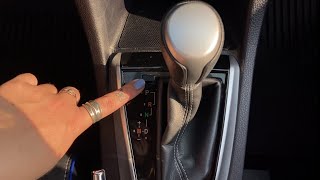
No — Do Not Drive. Do not drive with this code. The primary risk is the inability to shift the vehicle out of Park, leaving you stranded. 🎬 Watch: How to use the manual shift lock release The fault progresses rapidly from intermittent to a hard failure, making the vehicle unreliable and unsafe to operate.
Common Causes


- Faulty Gear Shift Module (GSM) or Software Glitch (Very Common) — On 2020+ Ford models with rotary shifters, a software glitch or hardware failure within the electronic Gear Shift Module (GSM) causes this code. This widely documented issue requires a dealer-level software update or complete module replacement. 🎬 See this common Ford Explorer rotary shifter failure
- Faulty Brake Light Switch (Common) — The computer requires a signal from the brake light switch to activate the shift lock solenoid. A broken switch fails to send this signal, locking the car in Park. This is the most frequent misdiagnosis point for this code.
- Faulty Gear Shift Lock Solenoid (Common) — The solenoid fails electrically (open or shorted coil) or mechanically (stuck plunger), preventing it from retracting to release the shifter. This is the primary failure point on pre-2020 vehicles with traditional stick shifters.
- Damaged Wiring or Connectors (Common) — Wires leading to the solenoid or GSM fray, corrode, or short out. This occurs frequently in the center console area due to stress from shifter movement or exposure to spilled liquids.
- Blown Fuse or Faulty Relay (Less Common) — A blown fuse or a failing relay in the circuit powering the shift lock solenoid or brake lights instantly disables the system.
- Mechanical Obstruction or Binding (Rare) — Debris, sticky residue from spills, or a misaligned shifter component physically blocks the shift lock actuator from moving, even when receiving the correct electrical signal.
- Low Battery Voltage or Poor Ground (Rare) — The solenoid and control modules require a stable 12V supply. A weak battery, failing alternator, or poor ground connection creates low voltage conditions that trigger this code.
- Faulty Transmission Control Module (TCM) or Powertrain Control Module (PCM) (Very Rare) — The output driver within the control module that sends the signal to the solenoid fails. Suspect this only after thoroughly testing all other circuit components.
Symptoms

- Cannot Shift Out of Park — The gear shifter physically locks in the Park position, even with your foot firmly on the brake pedal.
- Check Engine Light or Powertrain Malfunction (Wrench) Light is On — The vehicle's computer illuminates a warning light on the dashboard. Newer Fords typically display the wrench light for this specific fault.
- No 'Click' Sound from Shifter — A functioning solenoid emits a faint click from the shifter area when you press the brake pedal. The absence of this sound confirms the solenoid is not activating.
- Shifter Moves Without Brake Pedal Depressed — On electronic rotary shifters, a failing GSM allows the dial to rotate without pressing the brake, though the transmission remains locked in Park.
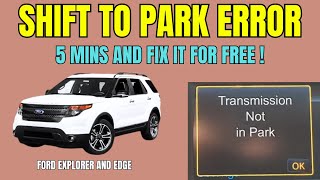
- Key is Stuck in the Ignition — Vehicles with physical keys lock the key in the ignition cylinder if the system cannot confirm the shifter is securely in Park. 🎬 Watch: Quick fix for Ford 'Transmission Not In Park' errors
- Shifter is Stuck in a Gear — The fault occurs while driving, leaving the vehicle stuck in Drive, Neutral, or Reverse and preventing a shift back into Park.
Diagnostic Flowchart
Tap your situation to follow the diagnostic path that matches what you're seeing on this code.
Common Fixes & Costs
- Update or Replace Gear Shift Module (GSM) — Parts: $0 (update) - $500 (replacement part), Labor: $150-$350, ~1.5 hr book time (Professional)
- Replace Brake Light Switch — Parts: $20-$70, Labor: $80-$150, ~0.8 hr book time (DIY)
- Replace Gear Shift Lock Solenoid — Parts: $50-$150, Labor: $100-$250, ~1.5 hr book time (Intermediate)
- Replace Blown Fuse — Parts: $1-$10, Labor: $0-$50, ~0.1 hr book time (DIY)
- Repair Damaged Wiring Harness — Parts: $10-$50, Labor: $150-$600+, ~3 hr book time (Professional)
DIY vs Professional
- Replace Blown Fuse — Beginner: Yes
Tools: Fuse puller or small pliers. - Replace Brake Light Switch — Beginner: Yes
Tools: Basic hand tools (screwdriver, pliers). - Replace Gear Shift Lock Solenoid — Beginner: No
Tools: Trim removal tools, socket set, screwdrivers. - Update or Replace Gear Shift Module (GSM) — Beginner: No
Tools: Ford's proprietary FDRS diagnostic software. - Repair Damaged Wiring Harness — Beginner: No
Tools: Multimeter, wire strippers, soldering iron, heat shrink tubing, wiring diagrams.
Used vs. New Parts: Buying Guide
When a used part is worth it: Buy a used traditional shift lock solenoid for budget repairs. Never buy a used Ford Gear Shift Module (GSM) due to high failure rates and VIN-specific programming.
Donor-vehicle mileage cap: roughly under 60000 miles for the part to have meaningful remaining life.
Donor quality checklist:
- Verify the donor vehicle lacked electrical or transmission issues.
- Match solenoid part numbers exactly.
- Avoid parts from vehicles with liquid damage in the center console.
Decision logic:
- If The faulty part is a Ford Gear Shift Module (GSM) → Buy a new OEM part. Used modules fail frequently and require dealer programming that negates any savings.
- If The faulty part is a traditional solenoid and labor for access is high (>2 hours) → Buy a new OEM or high-quality aftermarket part to avoid repeat labor costs.
- If The faulty part is a traditional solenoid and labor is low (<1 hour) → A used part from a low-mileage donor is an acceptable risk.
Warranty tradeoff: Salvage yard parts carry a 30-90 day warranty. New aftermarket parts offer 1-year warranties. New OEM parts installed by a dealer include a 12-month/12,000-mile warranty.
Worst-case if a used part fails: $300-$900. If a used GSM fails, you pay for the part, installation, and programming twice.
What Happens If You Wait — Timeline
- 0-4 weeks: Intermittent failure. The shifter gets stuck in Park occasionally, resolving after a few attempts. A wrench or check engine light appears briefly. (Added cost: $0)
- 1-3 months: Frequent failure. The shifter sticks multiple times a week, requiring the manual override. The check engine light remains illuminated permanently. (Added cost: $150 for a tow truck if you cannot engage the manual override.)
- 3-6 months: Hard failure. The shift lock system fails completely. The shifter is permanently locked in Park unless the manual override is used every single time. (Added cost: $200 for broken plastic shifter trim caused by repeatedly forcing the override mechanism.)
- 6+ months: The primary fault remains static. No downstream engine or transmission damage occurs, but the vehicle is unusable without repair. (Added cost: The inevitable cost of towing and repairing the original fault.)
Cost of Not Fixing It
- Immediate: The vehicle becomes stuck in Park, leaving you stranded. (Added cost: $150 for a tow truck.)
- 1-3 months: Repeatedly forcing the shifter or using the manual override causes mechanical damage to the shifter assembly. (Added cost: $200 for broken shifter assembly plastics.)
- 3+ months: No downstream engine or transmission damage occurs, but the vehicle remains unusable until repaired. (Added cost: No escalating costs, but the initial repair is unavoidable.)
Diagnosis Steps

- Check the Brake Lights
Press the brake pedal and have a helper confirm the brake lights illuminate. If they fail, replace the brake light switch or its fuse. This eliminates the most common misdiagnosis trap.
Tools: Helper (or a reflective surface) (Beginner) - Inspect the Fuses
Locate the fuse box and visually inspect the fuses related to the brake lights, transmission controls, and Body Control Module (BCM). Replace any blown fuses.
Tools: Fuse puller or needle-nose pliers (Beginner) - Scan for Codes and TSBs
Use an OBD-II scanner to read P0929. Note manufacturer-specific suffixes like :77 on Fords, which dictate module updates. Search for Technical Service Bulletins (TSBs) matching your VIN and code.
Tools: OBD-II Scanner (Beginner) - Visually Inspect the Shifter Area
Remove the center console trim. Inspect the shift lock solenoid or Gear Shift Module (GSM) for spilled liquids, corroded connectors, or frayed wires.
Tools: Trim removal tools, screwdriver, flashlight (Intermediate) - Test the Solenoid/Actuator Circuit Voltage
Backprobe the power supply wire at the solenoid/GSM connector. With the ignition on and brake pressed, the multimeter must read 12V. Zero voltage indicates an upstream wiring, fuse, or module failure.
Tools: Multimeter (Intermediate) - Test the Solenoid Resistance
Disconnect the solenoid and measure its internal resistance in Ohms. Compare to the service manual (typically 5-100 Ω). An infinite reading (O.L.) means the coil is open; near-zero means it is shorted.
Tools: Multimeter, Service Manual (Advanced) - Advanced: Check Live Data for Brake Signal
Monitor the Brake Pedal Position (BPP) sensor PID on an advanced scan tool. The status must change to 'Active' when pressing the brake. If the module doesn't see the brake signal, it will never command the solenoid.
Tools: Advanced OBD-II Scan Tool (Advanced) - Advanced: Perform a Voltage Drop Test
Connect the multimeter's positive lead to the battery negative and the negative lead to the solenoid ground wire. Energize the circuit. A reading above 0.2V (200mV) indicates high resistance in the ground circuit.
Tools: Multimeter (Advanced) - Pro Tip: Use a Scope to Check the Brake Switch Signal
Connect an oscilloscope to the brake pedal position sensor signal wire. Actuate the pedal to verify a clean square wave pattern. Glitches or dropouts indicate a failing switch that a multimeter misses.
Tools: Oscilloscope (Professional)
When This Code Triggers (Freeze-Frame Conditions)
- Ignition Status: ON (The code sets when the ignition is on, as the module actively monitors the circuit.)
- Gear Selector Position: Park (The fault is detected when the system attempts to release the shifter from Park.)
- Brake Pedal Status: Pressed/Active (The fault occurs when the brake is pressed to authorize shifting, and the module detects incorrect solenoid circuit voltage.)
- Solenoid Circuit Voltage: <9V or >16V (The module commands the solenoid and measures a voltage outside the expected range, indicating a short, open, or high resistance.)
Related Codes
- P0928 — Indicates 'Gear Shift Lock Solenoid/Actuator Control Circuit 'A' Open.' P0928 points directly to a broken wire or open coil, whereas P0929 is a broader performance fault.
- P0919 — Indicates 'Gear Shift Position Control Error.' Frequently pairs with P0929 on modern Fords when the computer cannot verify the shifter's position due to the lock mechanism failing.
- U0100 — Indicates 'Lost Communication With ECM/PCM.' On vehicles with electronic shifters, the GSM failure causing P0929 disrupts the CAN bus network, triggering this code.
- P0705 — Indicates 'Transmission Range Sensor Circuit Malfunction.' A faulty range sensor sends incorrect gear data, conflicting with the shift lock system and triggering P0929 as a secondary fault.
Climate & Environmental Factors
- High Temperature: On modern Fords, the electronic Gear Shift Module (GSM) fault triggers more frequently in hot weather as failing internal electronics become heat-sensitive.
- High Humidity / Liquid Spills: High humidity and spilled liquids accelerate corrosion on electrical connectors and circuit boards within the shifter assembly, causing shorts and high resistance.
- Cold Weather: Cold weather causes plastics and mechanical parts within traditional shifter assemblies to stiffen, leading to mechanical binding of the lock plunger.
How to Talk to a Mechanic About This Code
Say this: "I have a P0929 code and my car is stuck in Park. If it's a newer Ford with a rotary dial, please check for TSBs related to a Gear Shift Module (GSM) software update before quoting a replacement. If it's an older model, please verify the brake lights and their fuse work correctly before diagnosing the shift solenoid."
Directs the shop to the most cost-effective fixes first. For Fords, it prioritizes a $150 software update over a $700 module replacement. For other cars, it prevents replacing an expensive shifter assembly for a $30 faulty brake light switch.
Avoid saying:
- 'Just fix whatever's wrong'
- 'My check engine light is on, can you look at it?'
- 'Replace the transmission shifter'
Questions to ask before authorizing the repair:
- For a Ford: Did you check for TSBs like 22-2343, and did the software update fail?
- For other cars: Did you confirm the brake lights work and test for 12V power at the solenoid connector?
- If replacing a module or shifter, are you using a new OEM unit?
- What is your warranty on parts and labor for this specific repair?
Where to Take It: Dealer vs Independent vs Chain
- Dealer:
Mandatory for modern Ford software updates. Best choice for in-warranty vehicles.
Best for: 2020+ Ford, Lincoln, and Mercury vehicles with rotary shifters requiring proprietary FDRS software for GSM updates., Vehicles under powertrain or bumper-to-bumper warranty.
Downsides: Highest labor rates., Service advisors often default to expensive module replacement instead of attempting software updates. (Typical cost: +50% vs. baseline) - Independent Shop:
Best choice for most vehicles, excluding modern Fords requiring software flashes.
Best for: All non-Ford vehicles and pre-2020 Fords with traditional stick shifters., Diagnosing brake light switches, wiring faults, and traditional solenoids.
Downsides: Lacks the proprietary software required for modern Ford GSM updates. (Typical cost: +0% vs. baseline) - Chain Shop:
Avoid for initial diagnosis. Acceptable only if you have confirmed the fault is a simple brake switch or fuse.
Best for: Replacing a pre-diagnosed brake light switch or blown fuse.
Downsides: High pressure to upsell entire shifter assemblies for simple switch or wiring faults., Inconsistent diagnostic capabilities for electrical circuit codes. (Typical cost: -10% vs. baseline)
When to Walk Away From the Repair
If the estimated repair cost for P0929 exceeds 40-50% of your car's private-party value, sell or trade it in.
- Car worth $18000, fix is $850: Fix it. A 2021 Ford Explorer needing a GSM replacement falls well below the threshold.
- Car worth $4000, fix is $450: Fix it. A 2015 Chevy Malibu needing a new shifter assembly is a reasonable percentage of the car's value.
- Car worth $2000, fix is $900: Walk away. The repair cost consumes nearly half the vehicle's value.
What Scan Tool You Need for This Code
Minimum: A scanner capable of reading manufacturer-specific codes (to view Ford suffixes like :77) and displaying live data for the Brake Pedal Position (BPP) sensor.
A $20 code reader only displays 'P0929'. It cannot read the critical Ford suffixes that distinguish software glitches from mechanical failures, nor can it verify if the computer registers your foot on the brake.
Budget: ANCEL FD500 or BlueDriver Pro (~$100) — Reads manufacturer-specific codes and live data. The ANCEL is tailored for Ford, making it perfect for reading Ford-specific suffixes and system data.
Mid-range: Innova 5610 or XTOOL D7 (~$350) — Provides bidirectional control to manually command the shift lock solenoid to activate. This instantly confirms if the solenoid works, isolating the fault to wiring or module commands.
Professional: Autel MaxiCOM MK808-series (~$500-1200) — Offers full bidirectional control, advanced live data graphing, and access to all vehicle modules for deep electrical diagnostics.
Rent vs buy: Buy the ANCEL FD500 if you own a modern Ford to read specific code suffixes. For older vehicles, a free scan at an auto parts store suffices if you manually test the brake lights and fuses.
How to Clear the Code After You Fix It
- Use an OBD-II scan tool to clear the P0929 trouble code.
- With the ignition on and engine off, press the brake pedal and shift from Park to the lowest gear and back several times.
- Listen for the solenoid 'click' each time the brake is pressed in Park.
- Perform a short test drive to ensure the code does not return.
Drive cycle (~10 minutes): No specific drive cycle is required. If the code does not return immediately after clearing it and repeatedly operating the shifter, the repair is successful.
Readiness monitors affected: None
Before emissions retest: drive at least 100 miles to fully set monitors.
Watch out for:
- Disconnecting the battery does not reliably clear this code from the TCM/PCM memory.
- Disconnecting the battery resets all emissions monitors, requiring a 50-100 mile drive cycle before passing an inspection.
- The code returns immediately if the underlying electrical or mechanical fault remains unfixed.
Will This Fail Emissions / State Inspection?
Yes — this code typically fails an OBD-II emissions inspection.
- California: An illuminated Check Engine or Powertrain Malfunction (wrench) light causes an automatic failure of the OBD-II inspection.
- New York: An active P0929 code with the malfunction indicator lamp on is an automatic failure.
- Texas: In emissions-testing counties, an illuminated check engine light results in an automatic failure.
Most Commonly Affected Vehicles
- Ford Explorer (2020-2025) — Extremely common GSM issue. TSBs SSM 54367 and SSM 51935 target 2022-2023 models for software updates. TSB 26-2066 mandates module authentication for 2024-2025 models after replacement.
- Ford F-150 (2021-2025) — Code P0929 almost always points to a failed GSM. Acknowledged in TSB 25-2045, TSB 25-2276, and TSB 26-2066. Often requires module replacement.
- Ford Escape (2020-2025) — Caused by a software fault in the rotary GSM. TSBs SSM 54403, SSM 49157, and TSB 22-2343 direct technicians to attempt a software update before replacement.
- Ford Bronco Sport (2021-2024) — Code P0929:77 is caused by a GSM software fault. TSBs SSM 54403, TSB 22-2343, and SSM 51191 recommend reprogramming. Recall 24S24 also involves related PCM/BCM updates.
- Ford Mustang Mach-E (2021-2024) — Code P0929:77 points to a GSM software glitch. TSB 22-2343 and SSM 51057 specify a software update as the primary fix.
- Ford Maverick (2022-2024) — Affected by the same GSM software issue. TSB 22-2343 and SSM 51057 recommend a GSM software update to resolve P0929:77.
- Chevrolet Malibu (2008-2022) — Caused by a faulty shift lock solenoid, wiring issues, or a failing brake light switch. Follow traditional diagnostic paths.
- Honda Accord (2008-2017) — Points to a standard failure of the shift lock solenoid or brake light switch, though occasional TCM software glitches occur.
- Subaru Outback / Forester (2010-2024) — Often linked to a faulty brake light switch, blown fuse, or spilled liquids damaging the shifter assembly electronics.
- Toyota Camry / Corolla (2007-2023) — Typically caused by a straightforward failure of the shift lock solenoid or the brake light switch.
Manufacturer-Specific Notes
- Ford: On 2020+ models with rotary dials, P0929 guarantees a Gear Shift Module (GSM) failure. Ford issued numerous TSBs (TSB 22-2343, TSB 26-2066) directing dealers to reprogram the GSM before replacing it.
- Volkswagen/Audi: P0929 sometimes refers to an internal ECU RAM integrity fault, indicating a malfunction in the engine's main control module, not the shifter.
- Chrysler/Dodge/Jeep: A weak shift interlock solenoid triggers a 'Service Shifter' message on the EVIC display alongside code P0929.
- General Motors (Chevrolet/GMC): A failing driver circuit within the Body Control Module (BCM) mimics a bad solenoid, leading to misdiagnosis.
Real Owner Stories
2021 Ford F-150 at 45K miles
Wrench light appeared on the dash, and the truck became stuck in Park intermittently, especially on warm days. The shifter dial felt loose.
Outcome: The dealer diagnosed a failed Gear Shift Module (GSM). The GSM was replaced, resolving the issue for $700.
Lesson: On modern Fords with electronic shifters, P0929 almost always points to the GSM. Check for TSBs first, as a software update often fixes it before requiring a full module replacement.
2015 Chevrolet Malibu at 110K miles
Car would not shift out of Park. The owner heard no 'click' sound from the shifter when pressing the brake.
Outcome: The brake lights were dead. The owner replaced the faulty brake light switch for $30, fixing the problem completely.
Lesson: Always verify brake light operation before replacing the solenoid or shifter assembly. A faulty brake light switch is the most common and inexpensive cause of this exact symptom.
2018 Subaru Outback at 80K miles
Check engine light illuminated, and the shifter became difficult to move from Park after a road trip.
Outcome: The mechanic found sticky soda residue coating the shift lock solenoid and corroding the connector pins. Cleaning the assembly and replacing the wiring pigtail fixed it for $250.
Lesson: Liquid spills in the center console directly cause P0929 by gumming up mechanical parts or corroding electrical connections.
How to Prevent This Code From Triggering
- Use cupholder liners and console covers (One-time installation) — Blocks spilled liquids from seeping into the shifter assembly, preventing wiring corrosion and mechanical binding.
- Clean the center console area regularly (Monthly) — Removes debris and sticky residues that fall into the shifter mechanism and jam the lock plunger.
- Engage the parking brake before shifting to Park (Every time you park) — Transfers the vehicle's weight to the brakes instead of the transmission's parking pawl, reducing mechanical stress on the shifter linkage and lock solenoid.
- Maintain a healthy battery and charging system (Annually) — Ensures the stable 12V supply required by the shift lock solenoid and control modules, preventing low-voltage electronic glitches.
Frequently Asked Questions
Can I bypass the shift lock to get my car moving?
Yes, most vehicles feature a manual shift lock release slot near the shifter. Insert your key or a small screwdriver to manually release the lock and shift into gear. Use this temporary fix only to reach a repair shop.
What is the most common misdiagnosis for P0929?
Replacing the shift lock solenoid or entire shifter assembly when the actual problem is a $30 faulty brake light switch or a blown fuse.
I replaced the shift solenoid, but the code came back. What now?
The problem lies elsewhere in the circuit. Inspect the wiring harness for damage and verify the brake light switch functions correctly. On modern Fords, the issue is a software glitch requiring a dealer GSM update.
Will replacing the battery fix a P0929 code?
No. While low voltage triggers electronic codes, the root cause of P0929 is almost always the solenoid, wiring, brake switch, or a control module.
Is the gear shift lock solenoid inside the transmission?
No. It is located in the center console next to the gear shifter assembly, or within the steering column on vehicles with a column shifter.
Can spilling a drink cause this code?
Yes. Sugary liquids seep into the shifter assembly, corroding wiring, shorting the solenoid, or physically gumming up the mechanical lock.
Why does the code have a suffix like :77 on my Ford?
Suffixes provide critical diagnostic detail. P0929:77 means 'Commanded Position Not Reachable,' pointing directly to the electronic shifter module failing to move. Multiple TSBs explicitly link this suffix to GSM software updates.
How much does it cost to fix P0929?
Costs range from $10 for a fuse to $900+ for a Ford GSM replacement. A brake light switch replacement averages $150, while a traditional solenoid costs $250. Ford GSM software updates typically cost $150-$250 at a dealership.
Key Takeaways
- Code P0929 physically locks your gear shifter in Park, preventing you from driving the vehicle.
- On pre-2020 vehicles, a $30 faulty brake light switch is the most common misdiagnosis for a failed shift lock solenoid.
- On 2020+ Ford models with rotary dials, P0929 almost always requires a $150-$250 Gear Shift Module (GSM) software update at a dealership.
- Do not drive with an intermittent P0929 fault; use the manual shift lock override slot near your shifter only to reach a repair shop.
Helpful Videos

The information in this article is provided for general reference and educational purposes only. Vehicle specifications, procedures, and part compatibility can vary by production date, trim level, and region. Always consult your vehicle's factory service manual and verify part numbers before purchasing or performing repairs. Safety-critical components such as airbags, seat belts, and braking systems should be installed by a qualified professional.
- 🎬 Helpful Videos
- What Does P0929 Mean?
- Can I Drive With P0929?
- Common Causes
- Symptoms
- Diagnostic Flowchart
- Common Fixes & Costs
- DIY vs Professional
- Used vs. New Parts: Buying Guide
- What Happens If You Wait — Timeline
- Cost of Not Fixing It
- Diagnosis Steps
- When This Code Triggers (Freeze-Frame Conditions)
- Related Codes
- Climate & Environmental Factors
- How to Talk to a Mechanic About This Code
- Where to Take It: Dealer vs Independent vs Chain
- When to Walk Away From the Repair
- What Scan Tool You Need for This Code
- How to Clear the Code After You Fix It
- Will This Fail Emissions / State Inspection?
- Most Commonly Affected Vehicles
- Manufacturer-Specific Notes
- Real Owner Stories
- 2021 Ford F-150 at 45K miles
- 2015 Chevrolet Malibu at 110K miles
- 2018 Subaru Outback at 80K miles
- How to Prevent This Code From Triggering
- Frequently Asked Questions
- Can I bypass the shift lock to get my car moving?
- What is the most common misdiagnosis for P0929?
- I replaced the shift solenoid, but the code came back. What now?
- Will replacing the battery fix a P0929 code?
- Is the gear shift lock solenoid inside the transmission?
- Can spilling a drink cause this code?
- Why does the code have a suffix like :77 on my Ford?
- How much does it cost to fix P0929?
- Key Takeaways
- 🎟️ Get 5% Off