

OBD-II Code P0914: Gear Selector Circuit Malfunction
The Ultimate 2026 Guide to Meaning, Causes, and Fixes
- Code P0914 indicates an electrical fault in the gear selector circuit, not an internal mechanical failure of the transmission's gears or clutches.
- Over 80% of P0914 cases stem from damaged wiring, a faulty $50-$150 position sensor, or a misaligned shifter cable.
- Driving with an active P0914 code forces the vehicle into limp mode and causes harsh shifting that adds over $1,500 in secondary mechanical damage if ignored.
- Always perform a multimeter voltage test on the sensor harness before authorizing a $500+ shifter assembly or TCM replacement.
What Does P0914 Mean?

P0914 means your car's Powertrain Control Module (PCM) detects an electrical fault in the circuit reporting the gear shifter's position. The computer cannot verify if you selected Park, Reverse, or Drive, causing shifting failures and preventing the engine from starting.
Technical definition: The SAE definition for P0914 is "Gear Shift Position Circuit." It indicates the PCM or Transmission Control Module (TCM) detects a generic electrical fault in the circuit communicating the physical position of the gear shifter. The signal is implausible, but not specifically identified as shorted low (P0916) or shorted high (P0917).
Can I Drive With P0914?
Yes, But With Caution. You can drive short distances if the transmission engages, but do so only to reach a safe location. This fault causes the vehicle to lock in one gear, shift unexpectedly, or fail to move entirely, creating a severe safety risk. Driving with incorrect gear engagement strains internal components and causes catastrophic transmission damage, adding over $1,500 in repair costs.
Common Causes

- Damaged or shorted wiring (Very Common) — The wires connecting the gear position sensor to the computer suffer damage from heat, vibration, or friction against the chassis, creating an open or short circuit.
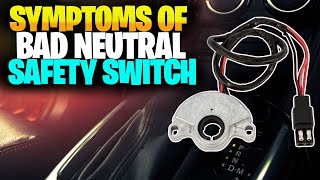
- Faulty Gear Shift Position Sensor (Common) — Also known as a neutral safety switch, this sensor fails internally due to mechanical wear or electrical degradation, sending incorrect voltage signals to the computer. 🎬 Watch: How to test your neutral safety switch for faults.
- Corroded connectors and water intrusion (Common) — Moisture seeping into the shifter assembly, sensor plugs, or TCM causes pin corrosion and short circuits, directly triggering the code.
- Mechanical shifter misalignment (Common) — A bent shifter cable, worn linkage bushings, or debris prevents the shifter from reaching its intended detent. The sensor sends an 'in-between' signal the PCM flags as an electrical fault.
- Blown fuse or faulty relay (Less Common) — A short circuit blows the fuse protecting the gear selector circuit, cutting power to the sensor entirely.
- Low system voltage (Less Common) — A failing battery or alternator drops system voltage below 12 volts, causing communication errors between modules and triggering a false P0914 code.
- Faulty Transmission Control Module (TCM) (Rare) — The transmission computer misinterprets a valid signal from the sensor. Consider this only after exhaustively testing the wiring and sensor.
Symptoms

- Check Engine Light is on — The primary indicator that the PCM detects a circuit fault.
- Stuck in one gear (Limp Mode) — The transmission locks into 2nd or 3rd gear to prevent internal damage, severely limiting vehicle speed.
- Engine won't start — The starter refuses to crank because the computer cannot confirm the transmission is safely in Park or Neutral.
- Incorrect or flashing gear indicator — The dashboard PRNDL display flashes, goes blank, or shows a gear different from the physical shifter position. 🎬 Watch: How to fix a flashing PRNDL gear indicator.
- Harsh or erratic shifting — The transmission slams into gear or hesitates because the computer lacks accurate data on the driver's selected gear.
- Inability to shift out of Park — The circuit fault prevents the shift interlock solenoid from releasing, trapping the physical lever in Park.
Diagnostic Flowchart
Tap your situation to follow the diagnostic path that matches what you're seeing on this code.
Common Fixes & Costs
- Repairing or replacing damaged wiring/connectors — Parts: $10-$50, Labor: $150-$300, ~1.5 hr book time (Intermediate)
- Replacing the Gear Shift Position Sensor (Neutral Safety Switch) — Parts: $40-$150, Labor: $150-$450, ~1.5 hr book time (DIY)
- Adjusting or repairing shifter linkage/cable — Parts: $20-$100, Labor: $150-$300, ~1.5 hr book time (Intermediate)
- Replacing the shifter assembly — Parts: $150-$500, Labor: $200-$400, ~2.0 hr book time (Intermediate)
- Replacing and reprogramming the Transmission Control Module (TCM) — Parts: $400-$900, Labor: $200-$400, ~2.0 hr book time (Professional)
DIY vs Professional
- Repairing or replacing damaged wiring/connectors — Beginner:
Tools: Multimeter, wire strippers, crimpers, heat shrink tubing. - Replacing the Gear Shift Position Sensor — Beginner:
Tools: Socket set, wrenches, vehicle-specific alignment tool. - Adjusting or repairing shifter linkage/cable — Beginner:
Tools: Basic hand tools, pliers. - Replacing the shifter assembly — Beginner:
Tools: Socket set, trim removal tools, screwdrivers. - Replacing and reprogramming the TCM — Beginner:
Tools: Advanced scan tool with dealer-level programming capabilities.
Used vs. New Parts: Buying Guide
When a used part is worth it: Buy a used part for a complete shifter assembly, which costs over $400 new. For the sensor itself, buy a new aftermarket part for reliability.
Donor-vehicle mileage cap: roughly under 80000 miles for the part to have meaningful remaining life.
Donor quality checklist:
- Verify the part number matches exactly.
- Ensure all electrical connectors are intact and free of corrosion.
- Check that mechanical linkages move freely without binding.
Decision logic:
- If The failed part is the sensor and a new aftermarket part is under $100 → Buy new for the warranty and reliability.
- If The failed part is the entire shifter assembly and a new OEM unit costs over $400 → Buy a used assembly from a donor with under 80k miles.
Warranty tradeoff: Salvage yards offer 30-90 day warranties. New aftermarket parts include 1-year to lifetime warranties.
Worst-case if a used part fails: $200-400 if a used part fails, requiring you to pay labor costs a second time.
What Happens If You Wait — Timeline
- 0-1 month: Intermittent Check Engine Light. Occasional hesitation when shifting. No major drivability symptoms. (MPG impact: 0-2%% · Added cost: $0)
- 1-3 months: Check Engine Light remains on. Noticeable harsh shifting. Gear indicator flickers. Occasional no-crank condition. (MPG impact: 3-8%% · Added cost: $50 - $150 (Wasted fuel))
- 3-6 months: Vehicle frequently enters limp mode, locking into 2nd or 3rd gear. Harsh shifts put severe mechanical stress on transmission mounts and clutch packs. (MPG impact: 10-20%% · Added cost: $500 - $1,500 (Accelerated wear on clutch packs and mounts))
- 6+ months: Catastrophic failure. The vehicle fails to move, gets permanently stuck in gear, or refuses to start. Repeated stress destroys internal transmission components. (MPG impact: 20-30%+% · Added cost: $2,500 - $5,000+ (Transmission rebuild or replacement))
Cost of Not Fixing It
- Immediate: Vehicle refuses to start or gets stuck in a single gear, requiring a tow. (Added cost: $75 - $250 (Towing))
- 1-3 months: Harsh shifting puts severe strain on transmission clutches, bands, and solenoids, causing accelerated wear. (Added cost: $500 - $1000 (Solenoid pack or valve body repairs))
- 6+ months: Prolonged strain causes catastrophic internal transmission failure. (Added cost: $2500 - $5000+ (Transmission rebuild or replacement))
Diagnosis Steps

- Read Fault Codes & Freeze Frame Data
Use an OBD-II scanner to confirm P0914. Check for related codes (P0916, P0705) and analyze freeze frame data to see vehicle speed and gear position when the code set.
Tools: OBD-II Scanner (Beginner) - Visually Inspect Wiring and Connectors
Examine the wiring harness running to the transmission and shifter. Look for frayed wires, melted insulation, and corrosion on the sensor and TCM connectors.
Tools: Flashlight, Mirror (Beginner) - Check for Mechanical Shifter Issues
Ensure the shifter linkage and cables are not bent, loose, or binding. Mechanical misalignment prevents the sensor from reading the correct gear.
Tools: Basic Hand Tools (Intermediate) - Inspect Fuses and Relays
Locate and check fuses related to the transmission controls or ignition switch. A blown fuse indicates an underlying electrical short.
Tools: Owner's Manual, Fuse Puller (Beginner) - Perform a "Wiggle Test"
While monitoring the sensor's signal voltage with a multimeter, gently wiggle the wiring harness along the circuit path. A sudden voltage jump indicates an intermittent open or short.
Tools: Multimeter (Intermediate) - Test Sensor Circuit Voltage
Backprobe the gear position sensor connector. Verify the 5V reference voltage and ground. Measure the signal wire's voltage as you move the shifter through each gear. 0V or a constant 5V indicates a short.
Tools: Multimeter, Vehicle Service Manual (Intermediate) - Test Sensor and Circuit Resistance
With ignition OFF, test the sensor's internal resistance between specified pins while moving the shifter. Check continuity of the signal wires from the sensor to the TCM (should be <5 ohms).
Tools: Multimeter, Vehicle Service Manual (Advanced) - Analyze Scan Tool Live Data PIDs
Monitor live data for 'Transmission Range Sensor Voltage'. The value must change smoothly as you move the shifter and match the 'Commanded Gear' PID from the TCM.
Tools: Advanced Scan Tool (Advanced) - Analyze Sensor with an Oscilloscope
Connect an oscilloscope to the signal wire. You must see a clean, distinct voltage step for each gear position. A noisy pattern indicates a failing sensor.
Tools: Oscilloscope, Service Manual (Advanced) - Test the Transmission Control Module (TCM)
If the sensor, wiring, and mechanical linkages test perfectly, the TCM is failing to process the signal. Stop DIY diagnosis and take the vehicle to a shop with dealer-level programming tools.
Tools: Advanced Scan Tool (Advanced)
When This Code Triggers (Freeze-Frame Conditions)
- Engine Coolant Temp: 180-210°F (82-99°C) (The code sets when the engine reaches full operating temperature and runs for several minutes.)
- RPM: 1500-2500 RPM (The fault triggers during steady-state cruising or light acceleration, rather than at idle.)
- Vehicle Speed: 35-55 mph (56-88 km/h) (The inconsistent signal registers at city or highway cruising speeds when the transmission expects a stable gear.)
- Gear Position: Drive (D) (The fault logs while the vehicle is in Drive attempting to shift, as this is when signal accuracy is critical.)
Related Codes
- P0915 — Indicates a 'Range/Performance' issue. The sensor's signal is active but erratic, pointing to a failing sensor rather than a completely broken wire.
- P0916 — Indicates circuit voltage is 'Low'. Points directly to a short to ground in the signal wire. A multimeter shows near zero volts regardless of shifter position.
- P0917 — Indicates circuit voltage is 'High'. Points to a short to power. A multimeter shows a constant 5V or 12V on the signal wire.
- P0705 — The generic code for 'Transmission Range Sensor Circuit'. It represents the exact same physical fault as P0914.
Climate & Environmental Factors
- High Humidity / Rain: Moisture penetrates weathered connector seals, causing pin corrosion and short circuits. This triggers intermittent P0914 faults during wet conditions.
- Road Salt Regions (Rust Belt): Road salt accelerates corrosion of undercarriage wiring harnesses and the sensor housing, destroying electrical connections.
- Cold Weather: Extreme cold makes wire insulation brittle and prone to cracking. It also causes mechanical shifter linkages to bind.
How to Talk to a Mechanic About This Code
Say this: "I have a P0914 code and shifting issues. Please start by testing the gear position sensor circuit, including the wiring and connectors, before recommending major component replacements."
This directs the technician to perform a proper electrical diagnosis first, preventing them from immediately quoting an expensive shifter or control module replacement.
Avoid saying:
- 'My transmission is broken'
- 'My check engine light is on, can you look at it?'
- 'Just replace the sensor'
Questions to ask before authorizing the repair:
- Did you find the fault in the wiring, the sensor, or a mechanical linkage?
- Can you show me the damaged wire or the voltage readings from the sensor?
- If replacing the TCM, what tests ruled out a simple wiring problem?
- What is the warranty on this specific repair?
Where to Take It: Dealer vs Independent vs Chain
- Dealer:
Use for warranty work or confirmed TCM replacements. Avoid for basic out-of-warranty diagnosis.
Best for: Vehicles under warranty, Vehicles with known TSBs (Ford Focus TCM, Nissan Rogue ESM), Complex repairs requiring TCM programming
Downsides: Highest labor rates, Defaults to replacing entire assemblies rather than repairing wires (Typical cost: +50% vs. baseline) - Independent Shop:
Best overall fit. Independent technicians excel at finding specific wire or connector faults, which is the most affordable fix.
Best for: Out-of-warranty vehicles, Diagnosing and repairing wiring, sensor, or mechanical linkage issues, Getting a second opinion
Downsides: May lack expensive tools to program a new TCM (Typical cost: +0% vs. baseline) - Chain Shop:
Avoid for comprehensive diagnosis. Acceptable only for straightforward external sensor swaps.
Best for: Simple, clear-cut external sensor replacements you diagnosed yourself
Downsides: Technicians lack deep electrical diagnostic experience, High pressure to upsell transmission flushes (Typical cost: -10% vs. baseline)
When to Walk Away From the Repair
If the estimated repair cost exceeds 50% of your car's private-party value, sell or trade in the vehicle instead of repairing it.
- Car worth $4000, fix is $2200: Walk away. The repair cost is over 50% of the car's value.
- Car worth $12000, fix is $800: Fix it. The repair cost is well below the 50% threshold.
- Car worth $3000, fix is $450: Fix it. The repair cost is significantly less than buying another car.
What Scan Tool You Need for This Code

Minimum: A scanner that reads transmission-specific codes and displays live data PIDs for the gear position sensor.
A $20 code reader cannot show the live voltage signal from the sensor as you move the shifter, which is essential for determining if the sensor or wiring is at fault.
Budget: BlueDriver Pro (~$100) — Connects via Bluetooth to display and graph live data for the transmission range sensor, showing voltage changes as you shift gears.
Mid-range: Foxwell NT510 Elite (~$180) — Offers full-system diagnostics and performs bi-directional tests to activate specific solenoids and confirm functionality.
Professional: Autel MaxiCOM MK808 (~$500-1200) — Provides professional-level bidirectional control, accesses manufacturer-specific data, and performs adaptations required after TCM replacement.
Rent vs buy: For a one-time diagnosis, borrow a scanner from AutoZone's 'Loan-A-Tool' program. If you perform regular maintenance, buy the BlueDriver.
How to Clear the Code After You Fix It
- Use an OBD-II scan tool to clear the P0914 code and related fault codes.
- Perform a complete OBD-II drive cycle to allow readiness monitors to run.
Drive cycle (~30 minutes): Start the engine cold and idle for 3 minutes. Drive for 15 minutes in mixed city conditions with several complete stops. Drive for 10 minutes at a steady highway speed (55-60 mph). Allow the vehicle to cool down.
Readiness monitors affected: Comprehensive Component Monitor, Catalyst Monitor, EVAP System Monitor
Before emissions retest: drive at least 100 miles to fully set monitors.
Watch out for:
- Clearing the code without fixing the hardware fault causes the code to return immediately upon shifting.
- Disconnecting the battery resets all readiness monitors, requiring a lengthy drive cycle before passing an emissions test.
Will This Fail Emissions / State Inspection?
Yes — this code typically fails an OBD-II emissions inspection.
- California: An active Check Engine Light from P0914 is an automatic failure. All readiness monitors must complete before a re-test.
- New York: A P0914 code causes an automatic failure during the OBD-II scan portion of the inspection.
- Texas: An illuminated Check Engine Light for P0914 results in an automatic failure in the 17 counties requiring emissions testing.
Most Commonly Affected Vehicles
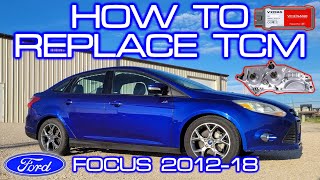
- Ford Focus (2012-2018) — Models with the DPS6 transmission suffer frequent TCM failures that trigger this code. Check for extended warranty coverage.
- Smart Fortwo (2008-2015) — Clutch actuator and gear selector motor failures trigger P0914. A clutch re-adaptation with a diagnostic tool sometimes resolves it.
- Volkswagen Golf / Jetta / GTI (2010-2015) — DSG transmission models experience failures in the mechatronic unit or shifter assembly, causing flashing PRNDS indicators.
- Nissan Rogue (2021-2024) — Electronic shifter module (ESM) wiring harnesses pinch easily after front-end collisions, triggering the code.
- Chevrolet Silverado / GMC Sierra (1999-2013) — On 2009-2013 models, the sensor sits inside the transmission oil pan, making replacement highly labor-intensive.
- Toyota Corolla / MR2 Spyder (2002-2007) — Sequential Manual Transmission (SMT) hydraulic pumps or gear position sensors fail, causing an inability to shift.
- Lexus IS300 (2001-2005) — The shifter assembly's internal circuit board fails, causing faults in the gear position circuit.
- Hyundai i20 / Elantra (2014-2020) — Water intrusion into the TCM connector causes corrosion and circuit failure.
Manufacturer-Specific Notes
- Ford: On 2012-2018 Focus models, Ford issued extended warranty 14M02 for the TCM. Always check with a dealer for VIN-specific coverage before paying for a repair.
- Mercedes-Benz / Smart: A software glitch or clutch actuator requires re-adaptation using a dealer-level computer, fixing the problem without replacing parts.
- Chevrolet / GMC: On 2009-2013 trucks, the sensor sits inside the transmission oil pan, requiring fluid drainage and pan removal for access.
- Nissan: TSB NTB21-069 advises that replacing the electronic shifter assembly on 2021+ Rogues is covered under factory warranty.
Real Owner Stories
2013 Ford Focus at 110K miles with intermittent no-start
The car occasionally refused to crank, and the dash gear indicator went blank. It eventually started after several tries, storing a P0914 code.
What they tried:
- A local shop tested the starter and battery, finding no issues.
- The shop quoted $700 to replace the entire shifter assembly.
Outcome: The owner took it to a dealer. The dealer diagnosed a faulty Transmission Control Module (TCM) causing communication errors with the sensor. Ford covered the repair under extended warranty program 14M02.
Lesson: For 2012-2018 Ford Focus/Fiesta models, check for manufacturer TSBs and extended warranties before paying for repairs. The TCM is the primary culprit.
2009 GMC Sierra 1500 at 155K miles stuck in 3rd gear
The truck shifted hard, triggered the check engine light, and locked into 3rd gear (limp mode) with a P0914 code.
What they tried:
- The owner replaced the external transmission wiring harness connector.
- He purchased a new Neutral Safety Switch.
Outcome: He discovered the 2009 model houses the sensor inside the transmission oil pan. The fix required draining fluid, dropping the pan, and replacing the internal sensor. Total cost was $150 in parts but required 4 hours of messy labor.
Lesson: Verify the exact sensor location for your model year. Internal sensors turn a simple 1-hour job into a complex, fluid-draining procedure.
2011 VW Jetta with flashing 'PRNDS' light
The dashboard gear indicator lights flashed continuously. The car drove erratically, storing codes P0914 and P0705.
What they tried:
- The owner prepared to order a $400 replacement shifter assembly.
- They inspected the center console area first.
Outcome: Sticky coffee residue from a prior spill seeped into the shifter's internal circuit board, causing a short. The owner cleaned the board with electronic contact cleaner. The flashing lights stopped, and the codes cleared permanently.
Lesson: Spilled liquids cause strange electrical faults in center console shifters. Always clean the assembly before replacing expensive parts.
2022 Nissan Rogue at 30K miles, no-start after minor accident
After front-end collision repairs, the engine refused to start, the car wouldn't shift into Park, and it displayed P0914.
What they tried:
- The body shop installed a used electronic shifter module (ESM), triggering an immobilizer code.
- They tested the shift actuator motor.
Outcome: The issue stemmed from damaged wiring and a faulty relay in the main power distribution box damaged in the crash. The fix required repairing the wires and installing a brand new, dealer-programmed ESM per TSB NTB21-069.
Lesson: On newer vehicles, collision damage often pinches wiring harnesses. Using second-hand electronic modules introduces immobilizer lockouts.
How to Prevent This Code From Triggering
- Apply dielectric grease to connectors (During any related repair or every 3-5 years) — Dielectric grease seals electrical connectors from moisture and road salt, preventing the pin corrosion that causes intermittent circuit faults.
- Clean the center console and shifter area (Annually) — Spilled drinks seep into the shifter assembly, shorting out internal electronics and position sensors.
- Inspect and secure wiring harnesses (During oil changes) — Ensuring the transmission wiring harness is secured prevents wires from rubbing against hot exhaust components or vibrating against the chassis.
- Ensure battery and charging system health (Annually) — Modern transmissions require stable voltage. A weak battery causes communication errors and false diagnostic codes.
Frequently Asked Questions
What is the most common misdiagnosis when fixing P0914?
The most costly mistake is replacing the shifter assembly or TCM without testing the wiring. The actual problem is usually a broken wire, corroded pin, or misaligned cable. Thorough multimeter testing prevents unnecessary $500+ expenses.
Can a mechanical problem cause the P0914 electrical code?
Yes. If the shifter linkage bends or binds, the gear selector cannot physically move the sensor into its correct detent. The sensor sends an illogical signal that the computer flags as an electrical fault.
Can a low battery cause a P0914 code?
Yes, a weak battery causes low system voltage, leading to communication errors in electronic modules like the TCM. This triggers a false P0914 code. Always ensure the battery tests above 12.4 volts before starting diagnostics.
Can a bad ground cause a P0914 code?
Yes. The gear position sensor relies on a stable ground connection to provide an accurate signal. A corroded or broken ground wire causes the sensor's voltage signal to drop out, directly triggering the code.
What is 'limp mode' and why does P0914 cause it?
Limp mode is a self-preservation feature where the computer limits transmission function to prevent damage. Because P0914 means the computer cannot verify the gear position, it locks the transmission into 2nd or 3rd gear to avoid a dangerous shift.
What is the difference between a Gear Shift Position Sensor and a Neutral Safety Switch?
They are the exact same physical part. It tells the computer the gear position while simultaneously preventing the engine from starting unless the vehicle is in Park or Neutral.
Will clearing the code fix the problem?
No. Clearing the code only turns the check engine light off temporarily. Because the fault is hardware-based, the computer detects the problem immediately upon the next shift attempt and the code returns.
Key Takeaways
- Code P0914 indicates an electrical fault in the gear selector circuit, not an internal mechanical failure of the transmission's gears or clutches.
- Over 80% of P0914 cases stem from damaged wiring, a faulty $50-$150 position sensor, or a misaligned shifter cable.
- Driving with an active P0914 code forces the vehicle into limp mode and causes harsh shifting that adds over $1,500 in secondary mechanical damage if ignored.
- Always perform a multimeter voltage test on the sensor harness before authorizing a $500+ shifter assembly or TCM replacement.
Helpful Videos



The information in this article is provided for general reference and educational purposes only. Vehicle specifications, procedures, and part compatibility can vary by production date, trim level, and region. Always consult your vehicle's factory service manual and verify part numbers before purchasing or performing repairs. Safety-critical components such as airbags, seat belts, and braking systems should be installed by a qualified professional.
- 🎬 Helpful Videos
- What Does P0914 Mean?
- Can I Drive With P0914?
- Common Causes
- Symptoms
- Diagnostic Flowchart
- Common Fixes & Costs
- DIY vs Professional
- Used vs. New Parts: Buying Guide
- What Happens If You Wait — Timeline
- Cost of Not Fixing It
- Diagnosis Steps
- When This Code Triggers (Freeze-Frame Conditions)
- Related Codes
- Climate & Environmental Factors
- How to Talk to a Mechanic About This Code
- Where to Take It: Dealer vs Independent vs Chain
- When to Walk Away From the Repair
- What Scan Tool You Need for This Code
- How to Clear the Code After You Fix It
- Will This Fail Emissions / State Inspection?
- Most Commonly Affected Vehicles
- Manufacturer-Specific Notes
- Real Owner Stories
- 2013 Ford Focus at 110K miles with intermittent no-start
- 2009 GMC Sierra 1500 at 155K miles stuck in 3rd gear
- 2011 VW Jetta with flashing 'PRNDS' light
- 2022 Nissan Rogue at 30K miles, no-start after minor accident
- How to Prevent This Code From Triggering
- Frequently Asked Questions
- What is the most common misdiagnosis when fixing P0914?
- Can a mechanical problem cause the P0914 electrical code?
- Can a low battery cause a P0914 code?
- Can a bad ground cause a P0914 code?
- What is 'limp mode' and why does P0914 cause it?
- What is the difference between a Gear Shift Position Sensor and a Neutral Safety Switch?
- Will clearing the code fix the problem?
- Key Takeaways
- 🎟️ Get 5% Off