

OBD-II Code P0908: Gate Select Position Circuit Intermittent
What P0908 means, why it triggers, and how to fix it
- Code P0908 indicates the transmission computer lost the gear shifter's position due to an intermittent electrical signal.
- Stop driving immediately; this fault forces the transmission into neutral or locks it in a single gear, creating a severe collision risk.
- Check wiring and grounds first, but expect a failed Transmission Control Module (TCM) on 2012-2018 Ford Focus/Fiesta and 2006-2014 Mazda 3/5 models.
- Repair costs range from $150 for a simple ground wire fix to over $1,200 for a full TCM replacement and programming at a dealership.
What Does P0908 Mean?
Code P0908 means the powertrain or transmission control module (PCM/TCM) receives an unreliable, intermittent signal from the gear selector sensor. Without knowing the shifter's exact position, the computer cannot control the transmission, resulting in erratic shifts, limp mode, or a no-start condition.
Technical definition: The SAE/OBD-II definition for P0908 is "Gate Select Position Circuit Intermittent". The PCM or TCM detects a sporadic electrical dropout in the signal from the transmission gate selector position switch. The computer requires this continuous signal to confirm gear selection and actuate clutches in automated manual transmissions.
Can I Drive With P0908?
No — Do Not Drive. It is not safe to drive with this code. The transmission gets stuck in one gear, fails to shift, or shifts erratically, creating a serious safety risk. A critical danger is the transmission unexpectedly shifting into Neutral while driving, causing a sudden loss of power. This specific failure prompted a major recall for the Dodge Dart (NHTSA Campaign #15V542000).
Common Causes
- Damaged, corroded, or loose wiring and connectors (Very Common) — Wires leading to the gate select sensor fray, short, or corrode over time. This is the most common cause for an intermittent signal fault, easily revealed by wiggling the harness during live data testing.
- Poor TCM/Chassis Ground Connection (Common) — A corroded or loose ground strap on the transmission case causes floating voltage and unpredictable electrical dropouts. This known issue on Ford models is frequently misdiagnosed as a failed module.
- Faulty Transmission Control Module (TCM) (Common) — The TCM controls the transmission. In Ford (DPS6), Dodge, and Mazda models, the TCM fails due to internal solder joint fractures or heat damage, triggering this code. 🎬 Watch: How to replace and program a Ford Focus TCM.
- Faulty Gate Select Position Sensor/Actuator (Common) — The sensor or actuator assembly fails internally, sending sporadic or out-of-range signals to the computer.
- Misaligned Gate Select Position Sensor or Shift Linkage (Less Common) — If recent transmission work occurred, incorrectly adjusted mechanical linkages or sensors cause readings to fall out of range or bind intermittently.
- Low Battery Voltage (Rare) — A weak battery or failing alternator causes voltage drops, triggering false sensor readings and unrelated trouble codes across the vehicle.
- Contaminated Transmission Fluid or Internal Harness Failure (Rare) — On dry-clutch transmissions (Ford DPS6), leaking input shaft seals contaminate the actuator area. On GM 8L90 transmissions, a failing internal wiring harness triggers this intermittent code.
- Outdated TCM Software (Rare) — Manufacturers occasionally release software updates (re-flashes) to correct TCM logic bugs that trigger false intermittent codes.
Symptoms
- Transmission is stuck in one gear or in neutral — The transmission locks in a single gear or neutral, making the vehicle undrivable.
- Harsh, erratic, or delayed shifting — Gear changes are rough, unpredictable, or severely delayed.
- Engine will not start — The vehicle refuses to start because the computer cannot confirm the transmission is in Park or Neutral.
- Incorrect or flashing gear display — The dashboard gear indicator (P, R, N, D) flashes or displays the wrong gear, a hallmark symptom on Honda i-SHIFT and Toyota MMT models.
- Check Engine Light or Transmission Warning Light is on (also visible on scanner) — An illuminated warning light on the dashboard is the first indicator of a fault.
Diagnostic Flowchart
Tap your situation to follow the diagnostic path that matches what you're seeing on this code.
Common Fixes & Costs
- Repairing wiring, ground strap, or connector — Parts: $10-$50, Labor: $100-$300, ~1.5 hr book time (Intermediate)
- Replacing the Transmission Control Module (TCM)
— Parts: $300-$1200, Labor: $150-$400 (includes programming), ~2.5 hr book time
(Professional)
Ford Focus (2012-2018): OEM (Alt: {"brand": "Dorman", "part_number": "609-029 (Remanufactured)", "price_comparison": "Often less expensive than OEM, offer, {"brand": "Cardone", "part_number": "73-35004 (Remanufactured)"})
Mazda 3 (2010-2013): OEM (Alt: {"brand": "Cardone/A1 Cardone", "part_number": "73-4520 (Remanufactured)"}, {"brand": "Module Repair Pro, UpFix", "part_number": "Repair Service or Exchanged Unit", "price_comparison": "Repair ser) - Replacing the Gate Select Position Sensor/Actuator
— Parts: $30-$200, Labor: $100-$300, ~2 hr book time
(DIY)
Toyota Corolla/Auris/Yaris (MMT): OEM (Alt: {"brand": "Various (Repair Kits)", "part_number": "Kits with bushings and motor brushes are widely available (e.g., Klif) - Adjusting the shift linkage or sensor alignment — Parts: $0, Labor: $50-$150, ~1 hr book time (Intermediate)
- TCM Software/Firmware Update — Parts: $0, Labor: $100-$250, ~1.2 hr book time (Professional)
DIY vs Professional
- Repairing wiring, ground strap, or connector — Beginner: Yes, for accessible visible damage.
Tools: Multimeter, wire strippers, crimpers, solder, heat shrink tubing, basic hand tools. - Replacing the Transmission Control Module (TCM) — Beginner: No. Requires OEM software for programming.
Tools: Advanced scan tool (Ford IDS, etc.), socket set. - Replacing the Gate Select Position Sensor/Actuator — Beginner: Yes, for externally mounted sensors.
Tools: Basic socket set, torque wrench. For Toyota MMT, a 10mm socket, Allen keys, and a jumper wire for re-initialization.
Used vs. New Parts: Buying Guide
When a used part is worth it: For a Ford Focus/Fiesta TCM, a used OEM part with the updated 'K05' part number from a low-mileage donor is a reliable alternative to aftermarket units. For a Toyota MMT actuator, a professional rebuild service of your original part is superior to a used part or cheap clone.
Donor-vehicle mileage cap: roughly under 75000 miles for the part to have meaningful remaining life.
Donor quality checklist:
- For TCMs, verify the exact part number. For Ford, look for the redesigned version to ensure reliability.
- For actuators, prefer a professional rebuild service with a warranty over a used part from a junkyard.
- Ensure the seller offers at least a 90-day warranty on used electronic parts.
Decision logic:
- If The part is a Ford TCM and a used, redesigned OEM version is available for significantly less than new. → Buy the used OEM part, but verify the part number and warranty.
- If The part is a Toyota MMT actuator. → Use a professional rebuild service for your original part; this is cheaper than new and more reliable than used.
- If The part is a simple external sensor and a new OEM or reputable aftermarket part is under $150. → Buy new to avoid the risk and labor of installing a potentially faulty used part.
Warranty tradeoff: Used parts typically have a 30-90 day warranty. Aftermarket new parts offer 1-year to limited lifetime warranties. Professional rebuild services for actuators often come with a lifetime warranty.
Worst-case if a used part fails: $300-$600 if a used electronic module fails after installation, covering repeat labor and diagnostics.
What Happens If You Wait — Timeline
- 0-1 month: Intermittent fault. Check Engine Light toggles on and off. Occasional harsh shifts occur, but driving remains mostly normal. (MPG impact: 0-2%% · Added cost: $0)
- 1-3 months: Fault frequency increases. The Check Engine Light stays illuminated. Shifting becomes noticeably erratic, and the car temporarily locks in gear, requiring a restart. (MPG impact: 3-5%% · Added cost: $50-$150 in wasted fuel and potential towing.)
- 3-6 months: The vehicle frequently enters 'limp mode', locking in 2nd or 3rd gear. Erratic signals put severe mechanical stress on shift forks and clutches. (MPG impact: 5-15%% · Added cost: $300-$800 due to accelerated wear on internal transmission components.)
- 6+ months: Catastrophic failure. The initial electrical fault causes significant mechanical damage. The transmission fails to engage any gear, requiring a complete rebuild or replacement. (MPG impact: N/A (undrivable)% · Added cost: $2000-$4500+ for a major transmission rebuild or replacement.)
Cost of Not Fixing It
- 0-1 month: Intermittent and unpredictable shifting problems, including harsh shifts or getting stuck in gear. High potential for being stranded. (Added cost: Towing costs ($100-$300).)
- 1-6 months: Continued erratic operation puts excessive mechanical stress on internal transmission components like shift forks, synchronizers, and clutches. (Added cost: $500-$1500 in additional internal parts damage.)
- 6+ months: Catastrophic transmission failure. The initial intermittent electrical fault cascades into a major mechanical failure. (Added cost: $2500-$5000+ for a rebuilt or new transmission.)
Diagnosis Steps
- Read the Trouble Codes and Freeze Frame Data
Use an OBD-II scanner to confirm P0908. Note accompanying codes (e.g., P0810 on Toyotas, U-codes on Fords). Review freeze frame data to identify the exact speed and temperature when the fault occurred.
Tools: OBD-II Scanner (Beginner) - Check Battery and System Voltage
Use a multimeter to verify battery voltage exceeds 12.4V (engine off) and 13.7V-14.7V (engine running). A weak battery causes unpredictable electronic failures and must be ruled out first.
Tools: Multimeter (Beginner) - Inspect Wiring, Connectors, and Grounds
Visually inspect the harness between the shifter, actuator, and TCM. Locate the main TCM and transmission case ground straps. Clean them to bare metal and tighten securely.
Tools: Flashlight, Basic hand tools (Beginner) - Test Sensor Circuit with Live Data (Wiggle Test)
Monitor the gate select position sensor voltage on a scan tool. Wiggle the wiring harness from the sensor to the TCM. A sudden voltage dropout or spike pinpoints the intermittent open or short.
Tools: Advanced scan tool, Vehicle-specific wiring diagram (Intermediate) - Check Mechanical Linkage and Sensor Alignment
Inspect the gear selector mechanism for excessive wear or binding. Verify the gate select sensor aligns with manufacturer specifications, especially after recent repairs.
Tools: Basic hand tools (Intermediate) - [PRO TIP] Check Sensor Reference Voltage
Backprobe the sensor connector (ignition on, engine off). Verify a steady 5V reference signal from the TCM and a solid ground (<0.1V). A missing reference voltage indicates a wiring or TCM failure.
Tools: Multimeter, Back-probe pins, Wiring diagram (Advanced) - [PRO TIP] Perform a Connector Terminal Drag Test
Disconnect suspect connectors and use a matching male terminal to 'drag' through each female pin. If any terminal feels loose, re-tension or replace it to restore connection.
Tools: Terminal test kit or spare male terminal pins (Advanced) - [PRO TIP] Analyze Sensor Signal with an Oscilloscope
Monitor the sensor's signal wire while wiggling the harness. Look for sharp dropouts to 0V or spikes to 5V/12V. A broken waveform proves an intermittent connection.
Tools: Graphing Multimeter or Oscilloscope, Back-probe pins (Advanced) - [PRO TIP] Resistance Test (Toyota MMT Actuator)
Disconnect the actuator motor and measure resistance across its terminals. An 'OL' (Over Limit) reading indicates an open circuit and a failed internal motor.
Tools: Multimeter (Advanced) - Test the Transmission Control Module (TCM)
If wiring and sensors pass, suspect the TCM. On Fords, U0101 or P0606 codes confirm internal TCM failure. Verify proper power and ground at the TCM connector before condemning the module.
Tools: Advanced scan tool, Multimeter, Professional diagnostic equipment (Advanced)
When This Code Triggers (Freeze-Frame Conditions)
- Engine Coolant Temp: 180-210°F (82-99°C) (The fault frequently appears when the vehicle is fully warmed up, as heat expands wiring and exposes loose connections.)
- RPM: 1200-2500 RPM (The intermittent signal drop-out occurs during steady-state cruise or light acceleration, rather than during aggressive shifts.)
- Engine Load: 25-55% (Occurs under normal driving load, where engine vibrations expose poor electrical connections.)
- Vehicle Speed: 30-60 mph (48-97 kph) (Logged during city or highway cruising speeds when the system expects a stable sensor signal.)
Related Codes
- P0909 — 'Gate Select Control Error.' P0908 is an input (sensor) problem, while P0909 is an output (control) problem. If the computer lacks a reliable gear position signal (P0908), it fails to control it and logs P0909.
- P0905 — 'Gate Select Position Circuit Range/Performance.' The sensor's voltage is stable but outside the expected range. P0908 means the signal cuts out entirely.
- P0904 — A general 'Gate Select Position Circuit' fault. P0908 is a specific version pointing to an intermittent problem rather than a constant, hard fault.
- P0810 — 'Clutch Position Control Error.' Extremely common on Toyota MMT and Honda i-SHIFT systems. P0908 refers to the gear selector, while P0810 refers to the clutch actuator. They appear together when the actuator assembly fails.
Climate & Environmental Factors
- High Heat: A primary cause of failure for Mazda 3/5 TCMs mounted directly on the transmission case. Constant heat cycles crack internal solder joints. Relocating the module to a cooler location is the professional fix.
- High Humidity: Moisture penetrates poorly sealed connectors and wiring insulation, causing corrosion on pins and circuit boards, leading to intermittent signals and short circuits.
- Extreme Cold: Low temperatures make wiring insulation brittle and prone to cracking. Moving a vehicle from extreme cold to a warm garage causes condensation inside connectors, leading to moisture-related failures.
How to Talk to a Mechanic About This Code
Say this: "I have a P0908 code and I'd like to schedule a diagnostic. I want to rule out the simple things first. Please perform a wiggle test on the wiring harness to the transmission while monitoring sensor data, and inspect the main TCM and transmission ground points before recommending part replacements."
This signals you know P0908 is often a wiring or ground issue, not a hard part failure. It directs the technician to perform a proper electrical diagnosis first, preventing you from paying for an expensive sensor or TCM you don't need.
Avoid saying:
- 'Just fix whatever's wrong'
- 'My check engine light is on, can you look at it?' (too vague — invites upsell)
- 'Whatever you recommend'
Questions to ask before authorizing the repair:
- Did you perform a wiggle test, and did the sensor voltage drop out?
- Did you check the 5-volt reference and ground at the sensor connector?
- If you are recommending a TCM or actuator, what specific tests confirmed the original part failed?
- Does the repair estimate include the cost of any required programming or a transmission re-learn procedure?
Where to Take It: Dealer vs Independent vs Chain
- Dealer:
Recommended if you have a Ford, Dodge, or GM with a known TSB/recall, or if a new TCM needs programming. Otherwise, an independent shop is a better value.
Best for: Vehicles under warranty (e.g., Ford Focus/Fiesta TCM, Dodge Dart recall)., Repairs requiring manufacturer-specific software for TCM programming or updates.
Downsides: Highest labor rates., Prefers replacing whole modules rather than performing detailed wiring repairs. (Typical cost: +50% vs. baseline) - Independent Shop:
Best fit for most P0908 scenarios, especially for wiring, ground, or external sensor issues. For known module failures, a specialist indie or mail-in service is ideal.
Best for: Out-of-warranty vehicles where cost is a major factor., Diagnosing and repairing wiring or ground faults., Mail-in repair services for specific components like Mazda TCMs or Toyota actuators.
Downsides: Diagnostic skill varies greatly; choose a shop specializing in transmission or electrical work., Lacks expensive, dealer-level programming tools for all makes. (Typical cost: +0% vs. baseline) - Chain Shop:
AVOID for this code. The complexity of P0908 diagnosis is a poor match for their business model.
Best for: Simple, unrelated maintenance like oil changes or tires.
Downsides: Technicians lack training for complex intermittent electrical diagnosis., High risk of misdiagnosis, leading to unnecessary replacement of expensive parts. (Typical cost: -10% vs. baseline)
When to Walk Away From the Repair
If the estimated repair cost exceeds 50% of the car's private-party value, seriously consider selling the car as-is or trading it in.
- Car worth $4000, fix is $2200: Walk away. The repair cost is over half the car's value. A major transmission repair on an older, lower-value car is rarely a good investment.
- Car worth $12000, fix is $1800: Fix it. The repair cost is well below the 50% threshold and restores the function of a valuable vehicle.
- Car worth $2500, fix is $400: Fix it. A low-cost repair (like a wiring or ground fix) that makes the car drivable is a smart investment, even on an older car.
What Scan Tool You Need for This Code
Minimum: A scanner that displays and graphs live data for the transmission sensors.
A basic $20 code reader only confirms the P0908 code exists. It cannot show live sensor voltage, which is essential for performing a 'wiggle test' to find the intermittent wiring fault.
Budget: BlueDriver Pro Scan Tool (~$100) — Connects to your smartphone via Bluetooth and provides excellent live data graphing capabilities. Perfect for monitoring sensor voltage while wiggling wires to pinpoint an intermittent open or short.
Mid-range: Foxwell NT510 Elite / NT809BT (~$180) — Offers brand-specific diagnostics, allowing deeper access into the TCM. It reads manufacturer-specific codes and performs system-specific functions or re-learn procedures needed after replacing a sensor.
Professional: Autel MaxiCOM MK808S / MK808BT (~$500) — Provides bidirectional control, allowing you to command the transmission to perform specific tests. Essential for performing TCM re-learns, resets, and programming functions required after major component replacement.
Rent vs buy: For P0908, buying a tool with live data (like BlueDriver) is recommended. The fault is intermittent, requiring testing over several trips. A free rental from an auto parts store is insufficient for detailed diagnosis.
How to Clear the Code After You Fix It
- Use an OBD-II scan tool to clear the P0908 code from the TCM's memory.
- Perform the vehicle-specific transmission re-learn procedure if a sensor, actuator, or TCM was replaced.
- Complete a full drive cycle to allow the system's readiness monitors to become 'Ready'.
Drive cycle (~20 minutes): Start the engine cold and idle for 2-3 minutes. Drive in stop-and-go city traffic for 10 minutes, shifting through all gears. Drive for 5-10 minutes at a steady highway speed (55-65 mph). Allow the vehicle to cool down completely.
Readiness monitors affected: Comprehensive Component Monitor (CCM), Transmission
Before emissions retest: drive at least 50 miles to fully set monitors.
Watch out for:
- Clearing the code without performing a drive cycle results in a 'Not Ready' status for emissions testing.
- The code returns immediately if the underlying intermittent electrical fault remains unfixed.
- Skipping the manufacturer's required re-learn procedure causes the new component to function incorrectly and re-trigger the code.
Will This Fail Emissions / State Inspection?
Yes — this code typically fails an OBD-II emissions inspection.
- California: An active Check Engine Light for a powertrain code like P0908 is an automatic failure. All required readiness monitors must be set to 'Ready', which is impossible with an active fault.
- New York: The NYS DMV inspection includes an OBD-II scan. Any active diagnostic trouble code illuminating the Malfunction Indicator Lamp (MIL) results in an emissions test failure.
- Texas: In counties requiring emissions testing, an illuminated Check Engine Light is an automatic fail. Clearing the code right before the test results in a 'Not Ready' failure.
Most Commonly Affected Vehicles
- Ford Focus (2012-2018) — Uses the problematic PowerShift (DPS6) dual-clutch transmission, known for TCM and shift actuator failures triggering P0908. Ford extended the TCM warranty on many of these vehicles.
- Ford Fiesta (2011-2019) — Uses the same PowerShift (DPS6) transmission as the Focus. Always check for extended warranty coverage on the TCM before paying for repairs.
- Toyota Corolla, Yaris, Auris, Verso (2005-2014) — Models with the Multi-Mode Transmission (MMT) have known issues with the clutch and gear select actuators, causing P0908 and P0810. Repair kits and rebuild services are available.
- Chevrolet / GMC Silverado, Sierra, Camaro, Corvette (2015-2019) — Models with the 8L45 or 8L90 8-speed automatic transmission log P0908 due to a known issue with the internal transmission wiring harness (GM service document PIP5700E).
- Honda Civic, Jazz (2006-2015) — Models with the 'i-SHIFT' automated manual transmission suffer from clutch actuator failures, typically throwing P0810 accompanied by P0908. Requires a 're-learn' procedure after replacement.
- Mazda 3, 5 (2006-2014) — High rate of TCM failure due to the module's location on the hot transmission case. The professional fix relocates the new module to a cooler spot.
- Dodge Dart (2013-2015) — Recalled (NHTSA #15V542000) for a faulty TCM mounting bracket that damaged the module, causing unexpected shifts to neutral.
- Smart Fortwo (2008-2015) — Uses an automated manual transmission where gear and clutch actuator failures are common. Cleaning and re-lubricating the mechanism sometimes fixes the issue.
Manufacturer-Specific Notes
- Ford: On Focus and Fiesta models with the PowerShift (DPS6) transmission, P0908 is frequently caused by a faulty TCM or poor ground. Ford issued TSB 16-0129 and extended the TCM warranty to 10 years/150,000 miles (Customer Satisfaction Program 14M02).
- Toyota: On Multi-Mode Transmission (MMT) models, this code is almost always related to a failing clutch or gear select actuator. Specialized repair services rebuild the original actuator for a fraction of the dealer cost.
- Mazda: On 2006-2014 Mazda 3 and 5 models, the TCM is mounted directly to the transmission case, baking the module and causing solder joints to fail. The fix requires relocating the new module to a cooler spot.
- Chevrolet / GMC: On 2015-2019 trucks and SUVs with the 8L45/8L90 transmission, intermittent shifting codes are caused by a failing internal transmission wiring harness, requiring transmission pan removal to replace.
- Dodge: A recall (NHTSA Campaign #15V542000) was issued for 2013-2015 Dart models. Internal solder joint failure in the TCM caused unexpected shifts to neutral. The remedy replaced the TCM and mounting bracket.
Real Owner Stories
2011 Mazda 3 at 210K miles with multiple warning lights
The Check Engine, AT, and traction control lights illuminated simultaneously. The car locked in 3rd gear (limp mode) and shifted harshly into Drive and Reverse.
Outcome: A mail-in service repaired and reprogrammed the original TCM for $300. After reinstallation, the car worked correctly.
Lesson: For Mazda 3/5 TCM failure, professional repair services offer a reliable, low-cost alternative to expensive dealership replacements. Ensure the repair includes relocating the module away from transmission heat.
2014 Ford Focus with intermittent loss of gears
The transmission periodically lost gears 2, 4, 6, and Reverse. A service manager suggested continuing to drive and resetting the battery when it acted up.
Outcome: The owner ultimately used a FORscan tool to attempt a re-learn procedure on the original TCM rather than risk further damage.
Lesson: Never continue driving on a failing TCM. It causes expensive mechanical damage to internal clutches and shift forks, and a simple battery reset ignores the underlying risk.
Toyota Yaris with MMT, P0908 and flashing 'N'
The car intermittently failed to start, displaying a flashing 'N' on the gear indicator. A slight push on the gear selector sometimes allowed it to start.
Outcome: The clutch actuator was replaced. This common failure on Toyota MMT systems often presents with both P0908 and P0810 codes.
Lesson: On Toyota MMT or Honda i-SHIFT systems, a flashing gear indicator and starting issues point directly to a failed clutch/gear actuator assembly.
Generic vehicle - an easy wiring fix
After driving through heavy rain, the Check Engine Light for P0908 appeared. The transmission shifted erratically.
Outcome: A connector near the bottom of the engine bay was loose and full of water. The owner dried it, applied dielectric grease, and reconnected it securely. The code cleared and did not return.
Lesson: Always perform a thorough visual inspection of wiring and connectors before ordering expensive parts, especially after heavy rain or driving through deep puddles.
How to Prevent This Code From Triggering
- Apply dielectric grease to key electrical connectors (During any related repair or service) — Dielectric grease protects connector pins and rubber gaskets from moisture, dirt, and corrosion, which are primary causes of intermittent electrical faults.
- Install protective sleeving on vulnerable wiring (Once, as a proactive upgrade) — In high-heat areas, adding a high-temperature PET braided sleeve over the wiring harness prevents insulation from becoming brittle and cracking.
- Change automated manual transmission fluid (Every 30,000-60,000 miles) — Clean fluid cools and lubricates mechanical parts. Burnt fluid in systems like Ford's DPS6 indicates overheating clutches, leading to actuator and electronic failures.
- For Mazda 3/5 owners, proactively relocate the TCM (Once, before failure occurs) — The primary failure mode for the Mazda 3/5 TCM is heat damage. Relocating the module to a cooler spot (e.g., zip-tied to brake lines) dramatically reduces thermal stress.
- Maintain a healthy battery and charging system (Ongoing) — The TCM requires stable voltage. A weak battery causes voltage drops and spikes, leading to erratic behavior and false trouble codes.
Frequently Asked Questions
What is a Gate Select Actuator?
In an automated manual transmission, it's a small electric motor that physically moves the shift forks inside the transmission to select the correct gear path based on the computer's commands.
How much does it cost to fix code P0908?
Costs depend on the root cause. Wiring or ground repairs cost $150-$400, while sensor replacements run $150-$500. Replacing a failed TCM on a Ford or Mazda costs $1,000-$1,500 at a dealer, though mail-in repair services offer fixes for under $500.
What are the most common misdiagnosis mistakes for P0908?
The biggest mistake is replacing the gate select sensor without performing a full diagnosis. Technicians often fail to check for simple issues like a corroded ground strap or performing a 'wiggle test' on the wiring harness. On Ford and Mazda models, assuming it's the sensor when it's actually the TCM is a costly error.
My Ford Focus has this code. Is it worth fixing?
First, verify if your Ford dealer covers the TCM under the 10-year/150,000-mile extended warranty. If not covered, expect a $1,000+ repair bill. Weigh this cost against the vehicle's total value before proceeding.
Can I fix P0908 myself?
A DIYer can handle inspecting grounds, checking connectors, and replacing externally mounted sensors. However, replacing a Transmission Control Module (TCM) requires special VIN programming and is best left to a professional shop.
Can a weak or bad battery really cause a P0908 code?
Yes. Modern transmissions rely heavily on electronics. A weak battery providing unstable voltage causes the TCM and sensors to malfunction, generating a wide range of electrical fault codes including P0908.
What is a TCM re-flash and why is it needed?
A TCM re-flash is a software update for the transmission's computer. Manufacturers release these updates to fix programming bugs, improve shifting performance, or make a new TCM compatible with the vehicle.
Key Takeaways
- Code P0908 indicates the transmission computer lost the gear shifter's position due to an intermittent electrical signal.
- Stop driving immediately; this fault forces the transmission into neutral or locks it in a single gear, creating a severe collision risk.
- Check wiring and grounds first, but expect a failed Transmission Control Module (TCM) on 2012-2018 Ford Focus/Fiesta and 2006-2014 Mazda 3/5 models.
- Repair costs range from $150 for a simple ground wire fix to over $1,200 for a full TCM replacement and programming at a dealership.
Helpful Videos




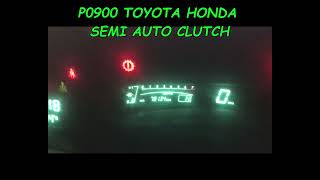



The information in this article is provided for general reference and educational purposes only. Vehicle specifications, procedures, and part compatibility can vary by production date, trim level, and region. Always consult your vehicle's factory service manual and verify part numbers before purchasing or performing repairs. Safety-critical components such as airbags, seat belts, and braking systems should be installed by a qualified professional.
- 🎬 Helpful Videos
- What Does P0908 Mean?
- Can I Drive With P0908?
- Common Causes
- Symptoms
- Diagnostic Flowchart
- Common Fixes & Costs
- DIY vs Professional
- Used vs. New Parts: Buying Guide
- What Happens If You Wait — Timeline
- Cost of Not Fixing It
- Diagnosis Steps
- When This Code Triggers (Freeze-Frame Conditions)
- Related Codes
- Climate & Environmental Factors
- How to Talk to a Mechanic About This Code
- Where to Take It: Dealer vs Independent vs Chain
- When to Walk Away From the Repair
- What Scan Tool You Need for This Code
- How to Clear the Code After You Fix It
- Will This Fail Emissions / State Inspection?
- Most Commonly Affected Vehicles
- Manufacturer-Specific Notes
- Real Owner Stories
- 2011 Mazda 3 at 210K miles with multiple warning lights
- 2014 Ford Focus with intermittent loss of gears
- Toyota Yaris with MMT, P0908 and flashing 'N'
- Generic vehicle - an easy wiring fix
- How to Prevent This Code From Triggering
- Frequently Asked Questions
- What is a Gate Select Actuator?
- How much does it cost to fix code P0908?
- What are the most common misdiagnosis mistakes for P0908?
- My Ford Focus has this code. Is it worth fixing?
- Can I fix P0908 myself?
- Can a weak or bad battery really cause a P0908 code?
- What is a TCM re-flash and why is it needed?
- Key Takeaways
- 🎟️ Get 5% Off