

OBD-II Code P0900: Clutch Actuator Circuit/Open
The Ultimate 2026 Guide to What P0900 Means, Why It Triggers, and How to Fix It
- P0900 flags a complete electrical break in the clutch actuator circuit, immediately disabling gear shifts and making the vehicle unsafe to drive.
- Over 70% of P0900 codes stem from a failed internal actuator motor, melted wiring near the exhaust, or a blown 40A transmission fuse.
- Expect severe drivability symptoms, including the transmission locking in neutral, a flashing 'N' on the dashboard, or the engine refusing to crank.
- Diagnose the root cause by testing the actuator motor's internal resistance with a multimeter; an infinite (OL) reading confirms a dead motor.
- Replacing the actuator or TCM requires a mandatory software relearn procedure using a bidirectional scan tool to calibrate the new component.
What Does P0900 Mean?

P0900 means the Powertrain Control Module (PCM) or Transmission Control Module (TCM) detected a break or 'open' in the clutch actuator's electrical circuit. This actuator acts as a robotic foot in automated manual (AMT) and dual-clutch (DCT) transmissions, engaging and disengaging the clutch based on TCM commands. When this circuit is open, the electrical signal cannot reach the motor, causing a total loss of clutch control.
Technical definition: The official SAE/OBD-II definition is "Clutch Actuator Circuit/Open". The PCM or TCM detects a loss of electrical continuity in the clutch actuator motor or solenoid control circuit. The module sets this code when voltage and current readings fall outside expected ranges, indicating a broken electrical path.
Can I Drive With P0900?
No — Do Not Drive. Do not drive. The clutch cannot engage or disengage gears, causing a sudden loss of propulsion, getting stuck in gear, or shifting into neutral unexpectedly. Most vehicles engage a 'fail-safe' mode that prevents the engine from starting to avoid unintended movement.
Common Causes

- Failed Clutch Actuator Motor (Very Common) — The electric motor inside the actuator assembly burns out from overuse, or internal carbon brushes wear down and contaminate the motor, causing an internal open circuit. This is a highly documented failure point on Toyota MMT and Ford DPS6 transmissions.
- Damaged or Melted Wiring Harness (Very Common) — The wiring harness routes near the transmission and exhaust, exposing it to intense heat, moisture, and vibrations. Wires frequently fray, break, or melt against hot engine components, severing the electrical connection.
- Blown High-Amperage Fuse or Relay (Common) — A high-amperage fuse (often 30A or 40A) protects the clutch actuator circuit. A blown fuse or a failed control relay cuts all power to the actuator, immediately triggering a P0900 code.
- Corroded Electrical Connectors (Common) — The electrical connector at the actuator or TCM becomes loose or contaminated with oil, dirt, or water. Corrosion on the pins physically blocks the flow of electricity.
- Faulty Transmission Control Module (TCM) (Rare) — The internal driver circuit inside the TCM—the transistor responsible for sending power to the actuator—can burn out. This requires replacing and reprogramming the entire TCM.
- Poor Chassis Ground Connection (Rare) — The actuator circuit requires a solid ground connection to the vehicle's chassis. A loose or rusted ground strap interrupts the electrical path, creating an open circuit fault.
Symptoms

- Transmission Stuck in Gear or Neutral — The vehicle completely loses the ability to shift. It locks into its current gear or defaults to neutral, leaving you stranded.
- Engine Will Not Crank or Start — The TCM prevents the starter motor from engaging because it cannot confirm the transmission is safely in neutral.
- Transmission Enters 'Limp Mode' — The vehicle restricts itself to a single gear (usually 2nd or 3rd) and limits engine power to prevent internal transmission damage.
- Check Engine and Transmission Warning Lights — The Malfunction Indicator Lamp (MIL) illuminates immediately, often accompanied by a flashing gear icon or an 'N' on the dashboard display.
- Harsh or Delayed Shifting — Prior to total failure, the transmission exhibits jerky shifts, severe hesitation from a stop, or a sensation of a slipping clutch.
Diagnostic Flowchart

Tap your situation to follow the diagnostic path that matches what you're seeing on this code.
Common Fixes & Costs
- Replacing the Clutch Actuator
— Parts: $150-$600, Labor: $200-$500 (includes diagnostic fee and mandatory relearn), ~2.5 hr book time
(Professional)
: OEM
: OEM
: OEM - Repairing Damaged Wiring or Connectors — Parts: $10-$50, Labor: $150-$400, ~2.0 hr book time (Intermediate)
- Replacing a Blown Fuse or Faulty Relay — Parts: $5-$30, Labor: $0-$150, ~0.5 hr book time (DIY)
- Performing a Clutch Actuator Relearn Procedure — Parts: $0, Labor: $100-$200, ~1.0 hr book time (Professional)
- Replacing the Transmission Control Module (TCM)
— Parts: $400-$1000, Labor: $200-$500 (includes programming), ~2.5 hr book time
(Professional)
: OEM
Used vs. New Parts: Buying Guide
When a used part is worth it: Never recommended for known high-failure units like the Ford DPS6 or Toyota MMT. Only consider a used actuator for a vehicle worth less than $3,000 where budget is the absolute priority.
Donor-vehicle mileage cap: roughly under 50000 miles for the part to have meaningful remaining life.
Donor quality checklist:
- Verify the donor vehicle was scrapped for an engine or collision issue, not transmission failure.
- Match the OEM part number exactly.
- Inspect the connector pins for green corrosion and the housing for cracks.
Decision logic:
- If Vehicle is a Ford, Toyota, or Smart model → Buy new OEM or a quality remanufactured unit. The failure rate of used parts is too high to justify the labor cost.
- If Vehicle is >15 years old and budget is strictly limited → A low-mileage used part is a gamble but economically justifiable. Accept the risk of premature failure.
Warranty tradeoff: Salvage yards offer 30-day warranties. New OEM parts carry 12-month/12,000-mile warranties.
Worst-case if a used part fails: $500-$800 if a used part fails, requiring you to pay for a second part, a second installation, and a second software relearn.
What Happens If You Wait — Timeline
- First Occurrence (Intermittent): Occasional harsh shifting or a delay engaging gear from a stop. Restarting the car temporarily clears the symptom. (MPG impact: 0-2%% · Added cost: $0)
- 1-4 Weeks: The transmission enters 'limp mode' or refuses to shift into Drive/Reverse, requiring multiple restarts. The vehicle is unreliable. (MPG impact: 3-5%% · Added cost: $150 for diagnostic fees.)
- 1-2 Months: The fault becomes permanent. The vehicle is stuck in neutral or will not crank. It is completely undrivable. (MPG impact: N/A% · Added cost: $150 for a tow truck.)
- 6+ Months (Ignored Intermittent Fault): Repeated harsh clutch engagements destroy the clutch disc, pressure plate, and release bearing. (MPG impact: N/A% · Added cost: $1500 for a full mechanical clutch replacement.)
Cost of Not Fixing It
- Immediate: The vehicle is completely undrivable. The transmission locks in neutral or the engine refuses to start. (Added cost: $100-$200 for a tow truck.)
- 1-3 Months (if intermittent): Ignoring intermittent harsh shifting causes severe premature wear on the clutch disc, pressure plate, and throw-out bearing. (Added cost: $1000-$2000 for a full mechanical clutch replacement.)
- 6+ Months (if intermittent): A failing actuator motor draws excessive current, eventually burning out the driver circuit inside the Transmission Control Module (TCM). (Added cost: $500-$1000 to replace and program a new TCM.)
Diagnosis Steps
- Scan for Codes and Freeze Frame Data
Use a bidirectional OBD-II scanner to read all codes from the Engine (ECU) and Transmission (TCM) modules. Document the freeze frame data for P0900. Note related codes like P0810 (Position Error) or P0902 (Short Circuit), as they dictate the diagnostic path.
Tools: Bidirectional OBD-II Scanner (Beginner) - Inspect Transmission Fuses and Relays
Locate the dedicated TCM and clutch actuator fuses (often 30A-40A) in the under-hood fuse box. Test them for continuity using a multimeter. Swap the actuator relay with an identical relay from a non-critical system (like the horn) to test for failure.
Tools: Owner's Manual, Digital Multimeter, Fuse Puller (Beginner) - Perform Visual and Wiggle Tests on Wiring
Inspect the wiring harness from the TCM to the clutch actuator. Look for melted insulation, chafing against metal brackets, or exposed copper. Disconnect the actuator plug and check for green corrosion. While monitoring live voltage data on a scanner, aggressively wiggle the harness to expose intermittent breaks.
Tools: Flashlight, OBD-II Scanner (Intermediate) - Test Power and Ground at Connector
Turn the ignition to 'On' (engine off). Disconnect the actuator harness. Use a multimeter to probe the power supply pin; it must read battery voltage (~12.6V). Probe the ground pin for continuity to the chassis (must be less than 0.5 ohms).
Tools: Digital Multimeter, Vehicle-Specific Wiring Diagram (Intermediate) - [PRO TIP] Measure Actuator Motor Resistance
Set your multimeter to Ohms (Ω). Measure the resistance between the two motor pins directly on the actuator. An infinite (OL) reading confirms the internal motor is broken. Also, measure from each pin to the metal housing; any reading other than OL indicates an internal short to ground.
Tools: Digital Multimeter, OEM Repair Manual (Advanced) - Verify TCM Power and Ground Inputs
If the wiring and actuator test perfectly, the TCM is suspect. Before condemning it, back-probe the TCM connector to verify it receives stable 12V power and has less than 0.5 ohms of resistance on all ground pins.
Tools: Digital Multimeter, Back-Probe Pins, Wiring Diagram (Advanced) - [PRO TIP] Scope the TCM Driver Signal
Connect an oscilloscope to the control wire at the TCM. Command a gear shift. You must see a Pulse Width Modulation (PWM) square wave pattern. A flat line confirms the TCM's internal driver circuit has failed and the module requires replacement.
Tools: Oscilloscope, Wiring Diagram (Professional)
When This Code Triggers (Freeze-Frame Conditions)
- Vehicle Speed: 0 mph (During startup sequence; TCM tests circuit before allowing engine crank.)
- Commanded Gear: 1 or R (During the first shift attempt from a stop.)
- Battery Voltage: 11.8-12.5V (Key On, Engine Off (KOEO) during initial system self-check.)
Related Codes
- P0901 — Clutch Actuator Circuit Range/Performance. Indicates the circuit is live, but the actuator's physical movement is slow or illogical, pointing to mechanical binding rather than an electrical break.
- P0902 — Clutch Actuator Circuit Low. Indicates a short to ground. Diagnostically, this is the opposite of P0900; you must find where a power wire is touching the chassis, rather than looking for a broken wire.
- P0810 — Clutch Position Control Error. A common companion to P0900. P0900 is the electrical cause (open circuit), while P0810 is the mechanical effect (the TCM cannot control the clutch position). Fix P0900 first.
- P0700 — Transmission Control System Malfunction. A generic flag set in the Engine Control Unit (ECU) indicating a specific transmission fault (like P0900) is stored in the separate TCM.
Climate & Environmental Factors
- Component Location: The actuator and wiring sit directly on the transmission bell housing, absorbing extreme engine heat, road salt, and vibration. This environment physically degrades wire insulation and connector seals over time.
- Fluid Contamination: Engine oil or coolant leaks dripping onto the actuator harness degrade the plastic connectors and cause pin corrosion, leading directly to open circuit faults.
How to Talk to a Mechanic About This Code
Say this: "I have a P0900 code and my car won't shift. Please test the actuator circuit for power, ground, and resistance before recommending a new part. Also, check for any applicable TSBs or warranty extensions for this VIN."
Directs the technician to perform a thorough electrical diagnosis instead of blindly swapping a $600 part. Mentioning TSBs protects you from paying for a repair the manufacturer might cover.
Avoid saying:
- 'My car won't move, I think it's the transmission.'
- 'The internet said to replace the clutch actuator.'
- 'Just do whatever it takes to fix it.'
Questions to ask before authorizing the repair:
- What were the resistance readings on the actuator motor?
- Did you find any damage to the wiring harness or connectors?
- Does the estimate include the mandatory software relearn procedure?
Where to Take It: Dealer vs Independent vs Chain
- Dealer:
Mandatory first stop for Ford and Toyota owners to check for free warranty repairs. Otherwise, too expensive.
Best for: Ford and Toyota vehicles with known extended warranty coverage, Complex software programming for new TCMs
Downsides: Highest labor rates, May default to replacing expensive components rather than repairing wiring (Typical cost: +40% vs. baseline) - Independent Shop:
Excellent choice for out-of-warranty vehicles, provided they confirm they can perform the final software relearn.
Best for: Out-of-warranty vehicles, Electrical diagnosis and wiring repairs
Downsides: Must verify they own the specific bidirectional scan tool required for the clutch relearn (Typical cost: +0% vs. baseline) - Chain Shop:
Not recommended. P0900 requires specialized diagnostic procedures beyond the scope of general chain shops.
Best for: Basic fluid changes and brakes
Downsides: Technicians lack experience with complex transmission electronics, Rarely possess the scan tools required for the relearn procedure (Typical cost: -10% vs. baseline)
When to Walk Away From the Repair
If the total estimated repair cost exceeds 50% of your car's current private-party market value, seriously consider replacing the vehicle.
- Car worth $4000, fix is $2200: Walk away. The repair cost is too high relative to the car's value.
- Car worth $10000, fix is $800: Fix it. This repair is well within a reasonable cost and restores primary function.
What Scan Tool You Need for This Code
Minimum: A bidirectional scanner capable of reading TCM codes and performing transmission relearn procedures.
A cheap $20 code reader only accesses the engine computer and will show a generic P0700 code. You need a scanner that accesses the TCM to see P0900 and perform the mandatory clutch relearn.
Budget: BlueDriver Pro (~$100) — Reads the specific P0900 code from the TCM and provides freeze-frame data. Cannot perform the relearn procedure.
Mid-range: Foxwell NT510 Elite (~$180) — Offers bidirectional controls to command the actuator and can perform the mandatory clutch relearn procedure on most makes.
Professional: Autel MaxiCOM MK808S (~$450) — Professional-level tool with full bidirectional control, live data graphing, and comprehensive relearn capabilities for all modern transmissions.
Rent vs buy: You cannot rent a tool with relearn capabilities. Buy the Foxwell if you plan to replace the actuator yourself, or pay a shop $150 to perform the relearn for you.
How to Clear the Code After You Fix It
- Perform the physical repair (replace actuator, fix wiring, replace fuse).
- Perform the mandatory clutch relearn/initialization procedure with a bidirectional scan tool.
- Clear all fault codes from the TCM and ECU.
- Cycle the ignition off for 60 seconds, then start the vehicle and test gear engagement.
Drive cycle (~20 minutes): 1) Cold start and idle for 3 minutes. 2) Drive in stop-and-go traffic to force multiple 1-2-3 gear shifts. 3) Drive at a steady 55 mph for 10 minutes. 4) Decelerate to a complete stop without braking hard.
Readiness monitors affected: Comprehensive Component Monitor
Before emissions retest: drive at least 50 miles to fully set monitors.
Watch out for:
- Clearing the code without performing the software relearn guarantees the code will return immediately upon shifting into gear.
- Disconnecting the battery resets emissions monitors to 'Not Ready', causing an automatic smog test failure.
Will This Fail Emissions / State Inspection?
Yes — this code typically fails an OBD-II emissions inspection.
- California: An illuminated Check Engine Light results in an automatic Smog Check failure. The vehicle must complete a drive cycle to set readiness monitors to 'Ready' before re-testing.
- New York: Vehicles with an active P0900 automatically fail the OBDII inspection. 2001 and newer vehicles are allowed only one 'Not Ready' monitor to pass.
Most Commonly Affected Vehicles
- Toyota Yaris, Auris, Corolla, Aygo (2005-2014) — Models with the Multi-Mode Transmission (MMT) frequently log P0900 due to the actuator motor failing from internal carbon brush contamination. TSB CP-0022T-0411 details a cleaning procedure and protective cover installation.
- Ford Focus (2012-2018) — Equipped with the DPS6 PowerShift transmission. P0900 is a hallmark symptom of failing clutch fork actuators or a dead TCM. Check with a dealer for coverage under extended warranty 14M02 or Customer Satisfaction Program 20B23.
- Ford Fiesta (2011-2017) — Uses the same DPS6 transmission as the Focus and suffers identical actuator and TCM failures. Verify warranty extensions before authorizing independent repairs.
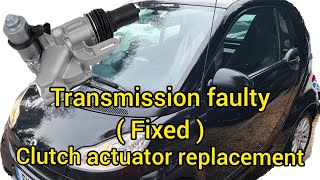
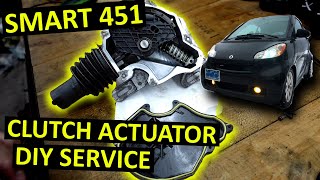
- Smart Fortwo (2007-2015) — The automated manual transmission in the 451 chassis has a high actuator failure rate. Replacement requires a strict mechanical pre-tensioning process and a software relearn using a STAR diagnostic tool.
- Hyundai Veloster, Elantra, Ioniq (2012-2020) — Models with 6-speed and 7-speed DCTs log P0900 when the actuator motor shorts out. This short frequently damages the TCM driver circuit, requiring replacement of both components.
- Kia Niro, Forte, Soul (2017-2022) — Shares DCT technology with Hyundai. Diagnosis requires testing both the actuator motor resistance and the TCM output signal.
- Chevrolet Cruze, Sonic (2012-2017) — P0900 on these models is most commonly traced to wiring harness chafing near the transmission bell housing or a heavily corroded chassis ground.
- Citroën/Peugeot C1, 107 (2005-2014) — Shares the MMT platform with the Toyota Aygo. Highly susceptible to actuator motor failure and requires the same initialization procedure after replacement.
Manufacturer-Specific Notes
- Toyota: On MMT systems, carbon brush dust mixes with bearing grease inside the actuator motor, creating a conductive sludge that shorts it out. TSB CP-0022T-0411 outlines cleaning the motor rather than replacing the entire $600 assembly.
- Ford: On DPS6 transmissions, swap the 'A' and 'B' clutch actuators. If the code changes from P0900 to P090C, the actuator is dead. If the code remains P0900, the wiring or TCM has failed.
- Smart: Replacing the actuator requires pushing the unit against the clutch fork with exactly 50N of force before tightening the bolts to 10 Nm. Failing to pre-tension it correctly will cause the software relearn to fail.
- Hyundai/Kia: A shorted clutch actuator motor frequently sends a voltage spike back to the TCM, frying the internal driver circuit. Always test the TCM output after replacing a dead actuator to ensure it survived.
Real Owner Stories
2008 Toyota Auris MMT at 110,000 miles
Car refused to start, displaying a flashing 'N'. OBD scan revealed P0900 and P0810.
What they tried:
- Checked transmission fuses.
- Attempted to clear codes, but they returned immediately.
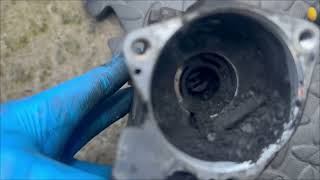
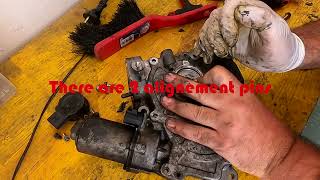
Outcome: The owner removed the actuator motor, opened it, and cleaned out a thick paste of carbon brush dust and grease. After reassembling, the car started and shifted perfectly. The DIY cleaning saved $600 on a new part.
Lesson: On Toyota MMT systems, P0900 is frequently caused by internal motor contamination. A DIY cleaning is highly effective before buying a new actuator.
2014 Ford Focus DPS6 at 85,000 miles
Experienced intermittent harsh shifting. The Check Engine Light illuminated with code P0900.
What they tried:
- Paid an independent shop $150 for diagnostics, but they couldn't pinpoint the fault.
Outcome: The owner researched Ford's warranty extensions and took the car to a dealership. The dealer replaced the 'A' clutch actuator under Customer Satisfaction Program 20B23 at zero cost.
Lesson: Always check for Technical Service Bulletins (TSBs) and extended warranties before paying for repairs on known problematic transmissions like the Ford DPS6.
2009 Smart Fortwo at 75,000 miles
Car would not shift out of neutral. Code P0900 present.
What they tried:
- Replaced the clutch actuator with a new Sachs unit.
- Cleared the code, but the car still wouldn't shift and P0900 returned.
Outcome: The owner towed the car to a specialist who performed the mandatory 'clutch teach-in' procedure using a STAR diagnostic tool. The car immediately began shifting perfectly. The relearn cost $150.
Lesson: Replacing the part is only half the job. A software-based relearn procedure is mandatory. Skipping this step makes a perfect repair look like a failure.
How to Prevent This Code From Triggering
- Change automated manual transmission fluid (Every 40,000 miles) — Clean fluid preserves internal seals. Leaking seals contaminate the dry clutch area and actuator mechanisms, leading to premature failure.
- Avoid inching forward in heavy traffic (Daily habit) — Inching forward forces the actuator to constantly slip the clutch, generating massive heat that burns out the actuator motor.
- Address engine oil and coolant leaks immediately (As needed) — Fluids dripping onto the transmission bell housing degrade the actuator's wiring harness and cause connector pin corrosion.
Frequently Asked Questions
What is the most common misdiagnosis for P0900?
The most frequent mistake is replacing the expensive clutch actuator without performing basic electrical checks. A blown fuse, corroded ground, or broken wire often causes the exact same code. Always test the circuit before buying parts.
My mechanic replaced the actuator, but the P0900 code came back. What now?
If a new actuator doesn't solve it, the fault lies in the wiring or the TCM. Perform a 'wiggle test' on the harness to find intermittent breaks. Ensure the mechanic completed the mandatory post-replacement software relearn procedure.
Can I fix a P0900 code myself?
A DIYer can check fuses, inspect wiring, and test for power or ground with a multimeter. However, replacing the actuator requires a proprietary relearn procedure using a professional bidirectional scan tool. Leave the final component replacement to a qualified technician.
What is the difference between an open circuit and a short circuit?
An open circuit (P0900) is a complete break—like a cut wire—that stops electricity from flowing. A short circuit (P0902) occurs when a power wire touches a ground source, causing electricity to take an unintended path.
Why did my car stop shifting and show a flashing 'N' on the dash?
A flashing 'N' (Neutral) indicates the transmission has entered a fail-safe mode. Because the computer lost control of the clutch, it defaults to neutral to prevent internal damage or unintended acceleration.
Can a bad ground cause a P0900 code?
Yes, a poor or missing ground connection prevents the circuit from completing. The control module detects this missing ground as an open circuit and logs the P0900 code.
Is a clutch relearn procedure always necessary for a P0900 fix?
Yes, a relearn or initialization is mandatory after replacing the actuator or TCM. This procedure teaches the computer the exact physical travel limits of the new components. Skipping this step guarantees the new part will not function.
Is a P0900 code covered under a powertrain warranty?
The clutch actuator and TCM are integral powertrain components and usually covered under powertrain warranties. Always check with a dealer for extended warranties or Customer Satisfaction Programs, especially for known issues on Ford and Toyota models.
Key Takeaways
- P0900 flags a complete electrical break in the clutch actuator circuit, immediately disabling gear shifts and making the vehicle unsafe to drive.
- Over 70% of P0900 codes stem from a failed internal actuator motor, melted wiring near the exhaust, or a blown 40A transmission fuse.
- Expect severe drivability symptoms, including the transmission locking in neutral, a flashing 'N' on the dashboard, or the engine refusing to crank.
- Diagnose the root cause by testing the actuator motor's internal resistance with a multimeter; an infinite (OL) reading confirms a dead motor.
- Replacing the actuator or TCM requires a mandatory software relearn procedure using a bidirectional scan tool to calibrate the new component.
Helpful Videos



The information in this article is provided for general reference and educational purposes only. Vehicle specifications, procedures, and part compatibility can vary by production date, trim level, and region. Always consult your vehicle's factory service manual and verify part numbers before purchasing or performing repairs. Safety-critical components such as airbags, seat belts, and braking systems should be installed by a qualified professional.
- 🎬 Helpful Videos
- What Does P0900 Mean?
- Can I Drive With P0900?
- Common Causes
- Symptoms
- Diagnostic Flowchart
- Common Fixes & Costs
- Used vs. New Parts: Buying Guide
- What Happens If You Wait — Timeline
- Cost of Not Fixing It
- Diagnosis Steps
- When This Code Triggers (Freeze-Frame Conditions)
- Related Codes
- Climate & Environmental Factors
- How to Talk to a Mechanic About This Code
- Where to Take It: Dealer vs Independent vs Chain
- When to Walk Away From the Repair
- What Scan Tool You Need for This Code
- How to Clear the Code After You Fix It
- Will This Fail Emissions / State Inspection?
- Most Commonly Affected Vehicles
- Manufacturer-Specific Notes
- Real Owner Stories
- 2008 Toyota Auris MMT at 110,000 miles
- 2014 Ford Focus DPS6 at 85,000 miles
- 2009 Smart Fortwo at 75,000 miles
- How to Prevent This Code From Triggering
- Frequently Asked Questions
- What is the most common misdiagnosis for P0900?
- My mechanic replaced the actuator, but the P0900 code came back. What now?
- Can I fix a P0900 code myself?
- What is the difference between an open circuit and a short circuit?
- Why did my car stop shifting and show a flashing 'N' on the dash?
- Can a bad ground cause a P0900 code?
- Is a clutch relearn procedure always necessary for a P0900 fix?
- Is a P0900 code covered under a powertrain warranty?
- Key Takeaways
- 🎟️ Get 5% Off