

P0894 on 2003-2007 GMC Sierra Denali: Transmission Slipping Causes and Fixes
P0894 means your transmission is slipping, most often due to a failing torque converter clutch or worn internal components. This is a serious issue that typically requires a transmission overhaul or replacement, with costs ranging from $1,800 to $4,500 or more.
- P0894 indicates a serious internal transmission problem, not a simple sensor failure.
- The most likely cause on a Sierra Denali is a worn-out torque converter clutch.
- Do not continue to drive with this code, as it will lead to more severe and expensive transmission damage.
- Diagnosis requires a professional scan tool to monitor transmission slip data.
- The fix will almost certainly involve removing the transmission for repair or replacement.
What's Unique About the 2003-2007 Gmc SIERRA DENALI
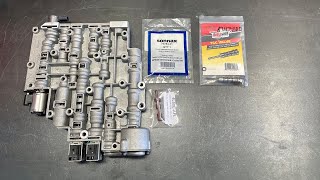
The 2003-2007 GMC Sierra Denali primarily uses the 4L65-E automatic transmission, a heavier-duty version of the common 4L60-E. While robust, these transmissions are known for specific wear points that can lead to a P0894 code. The most frequent culprit is the torque converter clutch (TCC) wearing out. Additionally, the TCC regulator valve bore within the aluminum valve body is highly prone to wear from the constant oscillation of the steel valve. This wear creates a hydraulic leak, preventing full pressure from reaching the TCC, causing slippage even with a new torque converter. This valve body issue is so common that aftermarket companies like Sonnax have developed specific oversized valve and sleeve kits (e.g., part #77754-04K) to repair the worn bore. Another critical and often-missed wear point is the Actuator Feed Limit (AFL) valve bore, which can also wear and cause widespread pressure loss affecting TCC lockup.
Diagnostic Flowchart
Tap your situation to follow the diagnostic path that matches what you're seeing on this vehicle.
Generation note: This range covers the end of the first-generation Sierra (GMT800, 2003-2006 and 2007 'Classic') and the first year of the second-generation (GMT900, 2007 'New Body Style'). Both generations in this period typically used a 4-speed automatic (like the 4L65-E) where this code is a known issue. The fundamental causes, particularly TCC and valve body wear, are identical across these models. When ordering parts for a 2007, it is critical to distinguish between the 'Classic' (GMT800) and the 'New Body Style' (GMT900), as they have different frames and body panels, and some drivetrain components may differ.
Symptoms You May Notice
- Check Engine Light is on
- Engine RPMs flare up during or between shifts
- Harsh or delayed gear engagement
- Very harsh 1-2 shift after the code has been set (due to the TCM commanding maximum line pressure as a protective measure)
- Vehicle feels like it's losing power or not accelerating properly
- A feeling of shuddering or vibration at highway speeds as the TCC attempts to lock and fails
- Transmission overheating warning on the dash
- Reduced fuel efficiency
- A strong, burnt smell from the transmission fluid
- Replacing only the speed sensors without checking internal components. While sensors can fail, they are not a common cause for this specific slip code.
- Replacing the Transmission Control Module (TCM). TCM failure is very rare and should only be considered after all mechanical and hydraulic issues have been ruled out.
Most Likely Causes
- Failing Torque Converter Clutch (TCC) 🔴 High Probability The clutch material inside the torque converter wears out or delaminates over time, especially under heavy loads common for a Sierra Denali. Once worn, it can no longer create a solid lock-up, causing slippage that the TCM detects. Debris from the failing clutch can also contaminate the entire transmission.
How to confirm: A professional technician will use a scan tool to monitor 'TCC Slip Speed' and 'TCC Duty Cycle %' live data. When the TCC duty cycle is commanded high (e.g., >90%), the slip RPM should be near zero (under 50 RPM). If it's significantly higher (e.g., 100+ RPM), the TCC is slipping.
Typical fix: Replace the torque converter. This requires removing the transmission from the vehicle. It is critical to also flush the transmission cooler and lines to remove any debris from the old converter.
Est. part cost: $250-$600 - Worn Valve Body / Faulty Solenoids 🔴 High Probability The aluminum bore for the TCC regulator valve in the valve body wears out, allowing apply pressure to leak. This is a very common failure point on the 4L60-E/4L65-E family. The Pressure Control Solenoid (PCS) or TCC PWM solenoid can also fail electrically or mechanically, leading to incorrect fluid pressure and slippage.
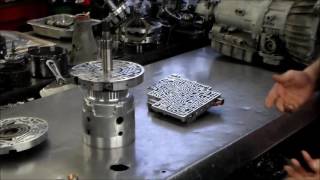
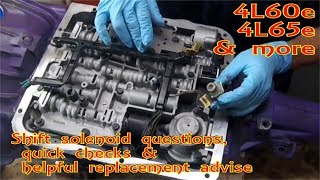
How to confirm: Technicians can test solenoids for proper resistance (see 'Specific Diagnostic Values'). The valve body must be removed and inspected for wear in the TCC regulator bore. A visible ridge or scoring in the bore is a clear sign of failure. Vacuum testing the valve body is the definitive method to find leaks. 🎬 Watch this guide on vacuum testing the 4L60E valve body.
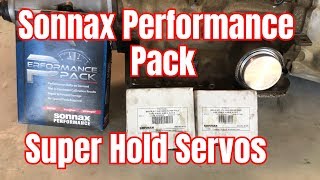
Typical fix: Install a re-sleeving kit like the Sonnax 77754-04K for the TCC regulator valve bore. 🎬 See how to install Sonnax performance parts during a rebuild. This is often done during a rebuild. If a solenoid is faulty, it is replaced. The TCC PWM solenoid (ACDelco #24227747) is a common replacement.
Est. part cost: $50-$400 - Worn Internal Clutch Packs or Bands 🟡 Medium Probability The friction materials on the internal clutch plates (particularly the 3-4 clutch pack in the 4L65-E) wear down over many miles, preventing them from holding under pressure. This is often a consequence of another issue, like low line pressure from a worn valve body or a cracked input drum.
How to confirm: Dropping the transmission pan and inspecting for excessive clutch material (looks like dark, fine sediment or sludge) is a key indicator. A transmission pressure test may also show pressure loss in specific gear circuits.
Typical fix: Complete transmission rebuild or replacement with a remanufactured unit. A rebuild is necessary to replace all worn friction components and seals.
Est. part cost: $1500-$3500 - Low or Burnt Transmission Fluid ⚪ Low Probability While not a specific prone issue, any vehicle can develop a transmission fluid leak. Low fluid levels prevent the hydraulic pump from creating the pressure needed to apply clutches firmly. If the fluid is burnt, it's a symptom of excessive slipping and heat, indicating internal damage has already occurred.
How to confirm: Check the transmission fluid level and condition with the engine running and the transmission warm. If the fluid is low, dark, and has a burnt smell, it indicates a problem.
Typical fix: Address the source of the leak and perform a transmission fluid and filter change. However, if the fluid is already burnt, this is a temporary measure at best, as internal damage is highly likely.
Est. part cost: $50-$150
Rare But Worth Checking
- Cracked TCC Solenoid Body:
Diagnosis Steps
- Verify the code with a quality OBD-II scanner.
- Check the transmission fluid level and condition. Note any burnt smell or dark color, which indicates friction material in the fluid.
- Use a scan tool to monitor live data while driving. Focus on Engine RPM, Transmission Output Speed, TCC Duty Cycle %, and TCC Slip Speed.
- At a steady cruise speed (above 45 mph), observe the TCC slip speed when the TCC Duty Cycle is commanded on (over 90%). If slip is consistently above 50-75 RPM, a slip is confirmed.
- Check for any related Technical Service Bulletins (TSBs) for your vehicle's VIN. TSBs exist for P0894 on these models.
- Perform a transmission line pressure test to check for low hydraulic pressure from the pump or internal leaks.
- Drop the transmission pan to inspect for metal shavings or excessive clutch material (a dark, muddy layer in the pan).
- Inspect the TCC solenoid for cracks in its plastic housing.
- If a valve body issue is suspected, it must be removed to inspect the TCC regulator valve bore for wear.
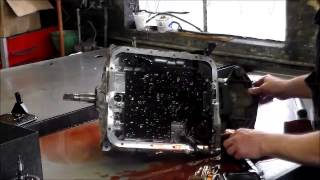
- If all external checks are inconclusive, the issue is internal (worn clutches or torque converter) and requires transmission removal for inspection and repair. 🎬 Watch a full teardown of a 4L60E with code P0894.
Parts You'll Likely Need
- Torque Converter
(OEM #24227628, 17804100, 12491319 (ACDelco numbers for various 4L65-E applications))— This is the most common single component to fail and cause P0894, due to the clutch lining wearing out.
Trusted brands: ACDelco, Transtar, Pro-King, Yank
OEM price range: $400-$600
Aftermarket price range: $250-$450 - TCC Regulator Valve Repair Kit
(OEM #Sonnax 77754-04K)— The valve body bore for the TCC regulator valve is a known high-wear area. This kit allows a machine shop or transmission specialist to repair the worn bore, restoring hydraulic integrity.
Trusted brands: Sonnax, TransGo
OEM price range: N/A
Aftermarket price range: $60-$100 - TCC PWM Solenoid
(OEM #24227747, 24234138)— This solenoid controls the application of the torque converter clutch. It can fail electrically or mechanically, causing slip or no lock-up.
Trusted brands: ACDelco, Rostra, ATP
OEM price range: $40-$80
Aftermarket price range: $25-$50 - Transmission Filter and Gasket Kit
(OEM #24208576 (for deep pan))— Required whenever the transmission pan is removed for inspection or repair of internal components like solenoids or the valve body.
Trusted brands: ACDelco, Wix, ATP
OEM price range: $30-$50
Aftermarket price range: $15-$30
Related Codes That Often Appear With This One
- P0700 — P0700 is a generic code that simply means the Transmission Control Module (TCM) has requested the Check Engine Light to be turned on. It will almost always be present with any specific transmission code like P0894.
- P0741 — This code specifically indicates 'Torque Converter Clutch Circuit Performance or Stuck Off'. It frequently accompanies P0894 because a failing TCC is a primary cause of the general component slippage detected by P0894.
- P1870 — This is an older GM-specific code for 'Transmission Component Slipping' that functions very similarly to P0894. It is often cited in literature for the 4L60E family as being caused by the same valve body wear issues.
Technical Service Bulletins (TSBs) & Recalls
- PIP4379M: Mentions that P0894, along with a host of other transmission codes, can be caused by a loss of prime in the transmission pump, especially after a fluid service or in cold weather. It suggests checking the fluid level first before proceeding with more complex diagnostics.
- FenderBender Article on P0894: Notes that 2005 and newer GM trucks with the 4L60/65/70E are particularly known for exhibiting TCC slip when hot, accompanied by DTC P0894, pointing to a common and recognized issue.
Platform-Specific Known Issues
- Owner Experience: P0894 after Rebuild: On PerformanceTrucks.net, a user reported getting a P0894 code shortly after a fresh transmission rebuild with a new torque converter. This scenario often points away from the converter itself and towards an issue with the installation, the valve body (e.g., an incorrectly installed valve from a shift kit), or the tune.
- Diagnostic Insight: The Harsh 1-2 Shift: Multiple forum users confirm that after a P0894 code is set, the transmission begins to shift very hard from 1st to 2nd gear. This is not a new failure but a programmed response from the TCM, which jacks up the line pressure to its maximum to prevent further slippage. Clearing the code temporarily restores normal shifts until the slip is detected again.
- Teardown Finding: Worn Stator Bushing and Wrong Filter: In a YouTube teardown of a 4L60E with code P0894, the technician found a severely worn stator support bushing, which can cause a loss of pressure to the converter. He also discovered that the wrong (shorter) transmission filter had been installed during a previous service, which can lead to fluid starvation under certain conditions.
Mechanic-Grade Diagnostic Values
- TCC PWM Solenoid Resistance — expected: 10 - 11 Ohms at ~68°F. Failure: An open circuit (no continuity) or resistance far outside the expected range.
- TCC Apply Solenoid (On/Off type) Resistance — expected: 20 - 40 Ohms. Failure: Reading significantly higher or lower than the specified range, or an open circuit.
- Pressure Control (EPC) Solenoid Resistance — expected: 3.5 - 8.0 Ohms. Failure: Resistance outside of this range indicates a faulty solenoid coil.
- 1-2 and 2-3 Shift Solenoid Resistance — expected: 20 - 40 Ohms. Failure: An open or shorted reading on the multimeter.
- TCC Solenoid Current Draw (via Bidirectional Test) — expected: Approx. 1 Amp change when commanded ON/OFF. Failure: No change in amperage indicates a problem with the solenoid, wiring, or PCM driver.
Scan Tool Commands That Help
- Tech2 / GDS2 or equivalent professional scanner: Solenoid Functional Test / Output Control — To individually command the TCC solenoid (and others) on and off while monitoring current draw through the appropriate fuse circuit. This can quickly verify the integrity of the electrical circuit (wiring, PCM driver, and solenoid coil) without removing the transmission pan.
Wiring & Ground Locations
- Engine-to-Firewall Ground Straps — Braided metal straps at the rear of the engine (both driver and passenger side on some models) connecting the cylinder head/block to the firewall.. A missing or corroded strap is a notorious GMT800 issue. It can force transmission solenoids to find an alternate ground path, leading to voltage spikes, erratic gauge behavior, and false transmission codes like P0894.
- G103 — On the right rear (passenger side) of the engine block or cylinder head.. This is a primary engine ground point. Poor connection here can affect sensor readings and actuator performance related to the powertrain.
- G104 — On the left rear (driver's side) of the engine block or cylinder head.. This ground serves multiple components, including the Vehicle Control Module (VCM/PCM) on some models. A bad connection can cause a host of electrical issues, including transmission control problems.
- Main Transmission Connector — On the passenger side of the transmission case, a large circular connector with a locking tab.. This is the main interface between the vehicle's wiring harness and all internal transmission electronics. It's the primary point for testing solenoid resistance without dropping the pan by using a breakout harness or probing the pins.
Real Owner Repair Stories
- PerformanceTrucks.net Forums (GMC Sierra with a freshly rebuilt 4L60E and a new Yank torque converter.) — P0894 code appeared twice shortly after the rebuild, setting on the freeway during deceleration after a hard pull.
❌ Tried (didn't work) The owner cleared the code, but it returned.
✅ What actually fixed it A forum moderator suggested the most likely culprit was that the lockup valve from the TransGo shift kit was installed backward in the valve body during the rebuild. The user was advised to check that the threaded end of the valve faces the end plug, a common mistake that causes TCC apply issues. - GMTNation Forums (Chevrolet Trailblazer with 4L60E at 260,000 miles.) — P0894 would set consistently only after a few minutes of highway driving at 65+ mph.
❌ Tried (didn't work) Clearing the code would work temporarily, but it always returned on the highway.
✅ What actually fixed it The owner found a TSB referencing the issue and replaced the TCC solenoid. The final fix was confirmed to be the new solenoid. The owner noted the original, failure-prone solenoid had a brown wire, and the replacement part used a different color, indicating a revised design. - YouTube Teardown by Gary Ferraro (Vehicle with a 4L60E transmission.) — P0894 (Transmission Component Slipping) confirmed with a scan tool showing significant TCC slip.
❌ Tried (didn't work) Clearing the code was not a solution as it would return before emissions monitors could be set for inspection.
✅ What actually fixed it Upon teardown, the primary cause was found to be a severely worn stator support bushing in the pump. This wear caused a significant loss of converter charge oil pressure, preventing the TCC from applying correctly and leading to the slip code. Replacing the bushing and overhauling the transmission was the fix.
OEM Part Supersession History
Unknown (associated with a brown wire connector)→Unknown (associated with a black/red wire connector)— The original TCC solenoid design was prone to developing hairline cracks in the plastic housing, leading to hydraulic leaks and P0894/P1870 codes.
Heads up: The replacement part may require splicing wires due to a different connector design, but kits are available.
Model Year Variations Within This Range
- 2007: 2007 was a transition year. The 'Classic' model is a GMT800 platform, identical to the 2003-2006 models. The 'New Body Style' (NBS) is a GMT900 platform with a completely different frame, body, and interior. While many NBS trucks still used the 4L65-E, some higher trims introduced the 6-speed 6L80. It is crucial to identify the body style before ordering parts.
- 2003-2004 vs 2005+: Around 2003-2005, GM transitioned from a cable-driven throttle body to an electronic throttle control (Drive-by-Wire). While this doesn't directly cause P0894, the PCM and wiring harnesses are different, which can affect diagnostic procedures.
Helpful Videos

We Have This Part in Stock



The information in this article is provided for general reference and educational purposes only. Vehicle specifications, procedures, and part compatibility can vary by production date, trim level, and region. Always consult your vehicle's factory service manual and verify part numbers before purchasing or performing repairs. Safety-critical components such as airbags, seat belts, and braking systems should be installed by a qualified professional.
- Gmc SIERRA DENALI:
- 🎬 Helpful Videos
- 🛍️ Shop This Part
- What's Unique About the 2003-2007 Gmc SIERRA DENALI
- Diagnostic Flowchart
- Symptoms You May Notice
- Most Likely Causes
- Rare But Worth Checking
- Diagnosis Steps
- Parts You'll Likely Need
- Related Codes That Often Appear With This One
- Technical Service Bulletins (TSBs) & Recalls
- Platform-Specific Known Issues
- Mechanic-Grade Diagnostic Values
- Scan Tool Commands That Help
- Wiring & Ground Locations
- Real Owner Repair Stories
- OEM Part Supersession History
- Model Year Variations Within This Range
- 🎟️ Get 5% Off