

P0894 on 2001-2008 GMC Sierra 2500: Transmission Slipping Causes and Fixes
This code means your transmission is slipping, most often due to a failing torque converter clutch. On 4L80-E models, this is frequently caused by a worn valve body. On Allison models, it can be a cracked internal filter. Expect to replace the torque converter and possibly repair the valve body or rebuild the transmission, costing from $1,500 to $4,500+.
- P0894 means a component inside your transmission is slipping, and on the 2001-2008 Sierra 2500, the torque converter is the most likely suspect.
- Diagnosis requires a scan tool to watch live data; specifically, the TCC slip speed.
- Do not ignore this code. Driving with a slipping transmission can quickly lead to complete failure and a much more expensive repair.
- If the torque converter has failed, it is essential to also flush the transmission cooler lines to prevent debris from damaging the new parts.
What's Unique About the 2001-2008 Gmc SIERRA 2500
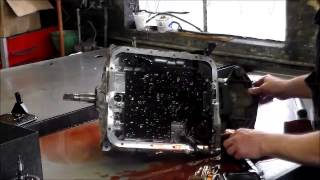
The 2001-2008 Sierra 2500 HD was equipped with two main automatic transmissions: the 4L80-E (common with gas engines) and the Allison 1000 (standard with Duramax diesel, optional on some big-block gas models). While P0894 can occur on both, the common failure points differ. On the 4L80-E, the TCC regulator valve bore 🎬 Watch: How the 4L80E valve bore wear causes slipping. in the valve body is a notorious wear point, causing a hydraulic leak that prevents the torque converter clutch from applying properly, even with a new converter. For the Allison 1000, while converters can fail, issues like a cracked internal suction filter (TSB PIP4379N) causing loss of pump prime, especially in the cold, are a documented cause. On tuned or hard-worked Duramax trucks, worn C3/C4 clutch packs can also be a cause.
Diagnostic Flowchart
Tap your situation to follow the diagnostic path that matches what you're seeing on this vehicle.
Generation note: This range covers the end of the first generation (GMT800, 2001-2007 Classic) and the start of the second generation (GMT900, 2007.5-2008). The core issues related to P0894 are more dependent on the specific transmission (4L80-E vs. Allison 1000) rather than the truck's generation, as these transmissions were used across the generation change.
Symptoms You May Notice
- Check Engine Light is on
- Transmission overheating warning on the dash
- Harsh or erratic shifting, particularly a hard 1-2 shift as the TCM commands max line pressure
- Engine RPMs flare up without an increase in vehicle speed, like the transmission is slipping out of gear
- A feeling of shudder or vibration during acceleration or at highway speeds (TCC shudder)
- Vehicle goes into 'limp mode,' limiting available gears
- Loss of 4th gear or failure to lock up the torque converter at cruising speed
- Reduced fuel economy
- Replacing only the torque converter on a 4L80-E without inspecting and repairing the worn TCC regulator valve bore in the valve body. The code will likely return as the root cause of the slip (low apply pressure) has not been fixed.
- Replacing only the TCC solenoid when the torque converter itself or the valve body is the actual problem.
Most Likely Causes
- Worn Transmission Valve Body (4L80-E) 🔴 High Probability On the 4L80-E, the bore for the TCC regulator valve in the aluminum valve body wears out over time from constant oscillation. This wear creates an internal pressure leak, preventing the TCC from applying with enough force, causing slip. This is a very common root cause.
How to confirm: This is difficult to confirm without disassembly. It's often diagnosed after a new torque converter fails to fix the issue. A definitive method is to remove the valve body and have it vacuum tested at a transmission shop to check for leaks at the TCC regulator bore. A worn bore will typically fail a vacuum test, showing less than 18-20 in-Hg.
Typical fix: The valve body must be reamed with a special tool and an oversized valve kit installed. The most common kit is from Sonnax, part number 34994-01K. Alternatively, a remanufactured valve body with this update already performed can be installed.
Est. part cost: $70-$150 for the kit, $300-$700 for a remanufactured valve body. - Failing Torque Converter / Worn Torque Converter Clutch (TCC) 🔴 High Probability The clutch material inside the torque converter can delaminate or wear out, preventing it from locking up properly. This is a well-documented issue on both the 4L80-E and Allison 1000. Often, this failure is a *symptom* of another problem, like a worn valve body in the 4L80-E causing low apply pressure.
How to confirm: Use a scan tool to monitor the 'TCC Slip Speed' data PID. When the TCC is commanded 'on' at cruising speed (typically above 45 mph), the slip should be less than 50 RPM. If it's significantly higher (e.g., 100+ RPM), the TCC is slipping.
Typical fix: Replace the torque converter. This requires removing the transmission. It is critical to thoroughly flush the transmission cooler and lines to remove any debris from the failed converter. If the valve body is worn (on a 4L80-E), it must be repaired or the new converter will fail prematurely.
Est. part cost: $200-$600 - Low or Burnt Transmission Fluid 🟡 Medium Probability Leaks from cooler lines, pan gaskets, or seals can lead to low fluid levels. Low fluid reduces the hydraulic pressure needed to apply clutches and the TCC, causing slip and overheating.
How to confirm: Check the transmission fluid level and condition with the engine running and transmission warm, following the procedure in the owner's manual. Fluid should be at the correct level, red/pink in color, and not smell burnt. Burnt fluid with fine, dark material in it indicates clutch wear.
Typical fix: Top off the fluid or perform a complete fluid and filter change if the fluid is old or burnt. Identify and repair any leaks. If the fluid is burnt, this is a sign of internal damage that a fluid change alone will not fix.
Est. part cost: $50-$200 - Failed TCC Control Solenoid ⚪ Low Probability
How to confirm: A scan tool can command the solenoid on and off. An ammeter can be used to check if the solenoid is drawing the correct amount of current (around 1 amp for the 4L80-E TCC solenoid). A failed solenoid will typically not respond to the command or have incorrect resistance. The resistance for a 4L80-E TCC PWM solenoid should be between 10 and 15 ohms.
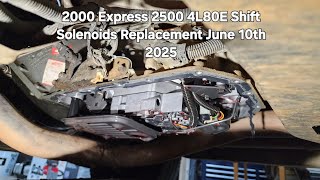
Typical fix: Replace the TCC solenoid, which is located inside the transmission oil pan. This is often attempted as a first step, but is less commonly the root cause than the valve body or converter itself.
Est. part cost: $30-$80
Rare But Worth Checking
- Cracked Internal Transmission Filter (Allison 1000): According to TSB #PIP4379N, a crack in the internal suction filter can cause a loss of pump prime, leading to low line pressure and setting a P0894, especially during cold starts or after the vehicle has been sitting. The filter is part number 29537966 for deep pan models. This can sometimes be identified by a whining noise from the transmission when cold.
- Wiring Harness Issue: A user on PerformanceTrucks.net found their P0894 was caused by an exposed wire for the TCC solenoid shorting out. Another user on Reddit documented chasing a P0894 that set on deceleration, with freeze-frame data suggesting a momentary loss of sensor signals, pointing to a potential wiring or PCM ground issue.
- Faulty Input or Output Speed Sensor: While less common, a faulty speed sensor can send erratic signals to the TCM, making it think there is a slip when there isn't. A user on Reddit chased this issue by replacing sensors first, which improved operation but did not ultimately solve the code.
Diagnosis Steps
- Check the transmission fluid level and condition. If low, top it off. If it smells burnt or is full of dark, metallic debris, a major internal problem is likely.
- Scan the vehicle for all stored trouble codes. Pay attention to any other transmission-related codes like P0741 or P0700.
- Use a capable scan tool to monitor live transmission data. Focus on TCC Slip Speed (RPM), TCC Duty Cycle (%), and Transmission Fluid Temperature.
- While driving at a steady cruise speed (above 45 mph), observe the TCC command status and the TCC slip speed. When the TCC is commanded ON, the slip should drop to below 50 RPM.
- If slip remains high (e.g., hundreds of RPMs) when the TCC is commanded on, the problem is confirmed to be TCC slippage.
- If TCC slip is high on a 4L80-E, the most likely causes are a worn-out torque converter, a worn valve body, or both. The valve body should be considered the primary suspect.
- If TCC slip is high on an Allison 1000, consider a failing torque converter or, especially if it occurs on cold starts, the possibility of a cracked internal filter per TSB PIP4379N.
- If the torque converter and/or valve body are deemed the cause, the transmission must be removed for service.
Parts You'll Likely Need
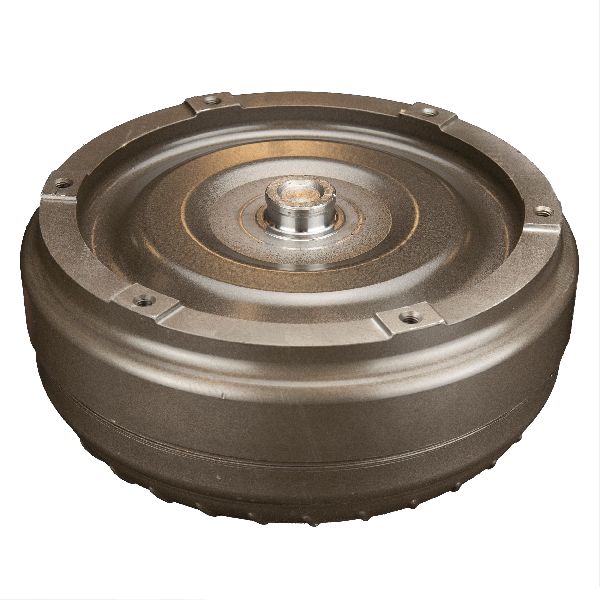
- Torque Converter — This is a primary failure point for code P0894, as the internal clutch wears out. It is often replaced alongside a valve body repair or transmission rebuild.
Related Codes That Often Appear With This One
- P0741 — P0741 specifically indicates 'Torque Converter Clutch Circuit Performance or Stuck Off,' which is a more direct electrical or hydraulic command issue, but it often accompanies P0894 when the root cause is TCC related.
- P1870 — This is an older GM-specific code for 'Transmission Component Slipping' that functions similarly to P0894 and was often seen on earlier 4L-series transmissions. It is also caused by wear in the TCC regulator valve bore.
- P0700 — This is a generic code indicating the TCM has requested the check engine light. It means there is a specific transmission code (like P0894) stored in the TCM.
Technical Service Bulletins (TSBs) & Recalls
- PIP4379N: This GM bulletin addresses conditions like no engagement, delayed shifts, or slipping (including P0894) on Allison 1000 transmissions. It suggests that after a fluid service, long storage, or in cold weather, a loss of pump prime can occur. The bulletin advises checking the fluid level meticulously and inspecting the internal suction filter for cracks or a stuck lube regulator valve in the pump cover as potential causes.
Platform-Specific Known Issues
- Repeat Failure from Improper Solenoid Installation (4L80-E): A user on LS1Tech.com with a 2006 2500HD replaced the torque converter and TCC solenoid for a P0894 code. The issue returned with overheating and slipping in all gears. Upon inspection, the TCC solenoid's inner o-ring was found to be improperly seated, causing a massive fluid leak, burnt fluid, and a pan full of fine clutch material, necessitating a full rebuild. This highlights the importance of careful reassembly.
- Chasing Electrical Gremlins (4L80-E): On r/MechanicAdvice, a 2006 Silverado 2500HD owner experienced P0894 only after highway driving, during deceleration. After replacing input/output speed sensors and cleaning grounds, the issue persisted. Freeze-frame data showed the ECU momentarily reporting 0 mph and 584 RPM while the truck was still at highway speed, indicating a potential wiring harness or intermittent sensor signal problem that can mimic a mechanical slip.
- Simple Shorted Wire Fix (4L80-E): A user on PerformanceTrucks.net resolved their P0894 code by finding an exposed wire for the TCC solenoid that was shorting out. A simple fix with electrical tape solved the problem, demonstrating that electrical faults should be ruled out.
Mechanic-Grade Diagnostic Values
- 4L80-E TCC PWM Solenoid Resistance — expected: 10 - 15 Ohms. Failure: A reading outside this range indicates a faulty solenoid coil.
- Allison 1000 TCC Solenoid Resistance — expected: 4.5 - 5.5 Ohms. Failure: Readings outside this range suggest the solenoid needs replacement.
- 4L80-E Valve Body Vacuum Test (TCC Regulator Valve Bore) — expected: 18 in-Hg or higher. Failure: A reading below 18 in-Hg indicates significant wear in the valve bore, causing a hydraulic leak that prevents proper TCC apply.
Scan Tool Commands That Help
- Tech2 / GDS2 or equivalent professional scanner: TCC Solenoid Control — This bidirectional command allows a technician to manually command the TCC solenoid on and off while monitoring TCC slip speed. This helps isolate whether the issue is with the solenoid itself, the wiring, or a hydraulic/mechanical problem. If the solenoid is commanded on and slip remains high, the solenoid is likely not the root cause.
- Tech2 / GDS2 or equivalent professional scanner: Line Pressure Control — When P0894 is set, the TCM often commands maximum line pressure as a protective measure, causing harsh shifts. A technician can use the scan tool to manually vary line pressure to see if the transmission responds correctly, which can help diagnose issues with the pressure control solenoid or valve body.
Wiring & Ground Locations
- G103, G104, G105 — On the GMT800 platform, these are key ground points located on the rear and front of the cylinder heads and on the engine block itself.. The PCM/TCM relies on clean grounds for accurate sensor readings and solenoid operation. A corroded or loose ground at one of these locations can cause erratic behavior, including phantom slip readings or incorrect solenoid commands, potentially triggering a P0894.
- Transmission Main Connector (Round, 20-pin on 4L80-E) — On the passenger side of the transmission case.. Pin 'T' on this connector is for the TCC PWM Solenoid Control. Checking for 12V at this pin (with the key on) and verifying continuity back to the PCM/TCM is a critical step in diagnosing an electrical fault vs. a mechanical one. A damaged pin or wire here will prevent the TCC from being commanded.
Real Owner Repair Stories
- DuramaxForum.com member (2004.5 GMC Sierra 2500HD with LLY Duramax and Allison 1000) — P0894 code, harsh shifting, and TCC slip.
❌ Tried (didn't work) Replaced the NSBU (Neutral Safety Back-Up) switch., Replaced the ignition switch., Checked and cleaned ground connections.
✅ What actually fixed it The owner had the transmission rebuilt. The shop found that the C3 clutches were worn and the torque converter was failing. After the rebuild with new clutches and a new torque converter, the code was resolved. - PerformanceTrucks.net member (2003 Silverado SS with 6.0L and 4L65E (similar principles to 4L80-E)) — P1870 and P0894 codes, no lockup, hard 1-2 shift.
❌ Tried (didn't work) Replacing the TCC solenoid., Installing a new remanufactured torque converter.
✅ What actually fixed it After the new converter didn't fix it, the owner installed the Sonnax TCC regulator valve fix kit (part 77754-04K for this trans) in the valve body. This resolved the hydraulic leak and fixed the code. This highlights that the valve body wear was the root cause, which destroyed the original converter and would have destroyed the new one if left unaddressed. - JustAnswer technician response (2005 GMC Sierra with 4L80-E) — P0894 code returned shortly after installing a new torque converter.
❌ Tried (didn't work) Replacing the torque converter.
✅ What actually fixed it The technician diagnosed the issue as a faulty remanufactured torque converter. The replacement converter was also bad out of the box. A third, different brand converter finally resolved the issue, indicating quality control problems with some aftermarket converters can cause a P0894 even on a new part.
OEM Part Supersession History
Multiple older versions→Sonnax 34994-01K (for 4L80-E TCC Regulator Valve)— The OEM valve design is prone to wearing the aluminum valve body bore. The Sonnax kit includes an oversized, more durable valve and a reamer to repair the worn bore, providing a more permanent solution than replacing with another OEM-style valve.
Heads up: This kit requires specialized tools (a reamer) to install and is not a simple drop-in replacement. It is intended for transmission repair shops or advanced DIYers.
Model Year Variations Within This Range
- 2001-2005 (Allison 1000): Models in this range used a separate, dedicated Transmission Control Module (TCM) located under the driver's side battery tray. This module is known to be susceptible to water intrusion and corrosion from battery acid, which can cause various transmission codes, including P0894.
- 2006-2008 (Allison 1000): Starting in 2006 with the LBZ Duramax, GM integrated the TCM functions into the Engine Control Module (ECM). This eliminated the separate TCM, changing the diagnostic process for wiring issues, as all signals now route to a single module.
Helpful Videos




We Have This Part in Stock

The information in this article is provided for general reference and educational purposes only. Vehicle specifications, procedures, and part compatibility can vary by production date, trim level, and region. Always consult your vehicle's factory service manual and verify part numbers before purchasing or performing repairs. Safety-critical components such as airbags, seat belts, and braking systems should be installed by a qualified professional.
- Gmc SIERRA 2500:
- 🎬 Helpful Videos
- 🛍️ Shop This Part
- What's Unique About the 2001-2008 Gmc SIERRA 2500
- Diagnostic Flowchart
- Symptoms You May Notice
- Most Likely Causes
- Rare But Worth Checking
- Diagnosis Steps
- Parts You'll Likely Need
- Related Codes That Often Appear With This One
- Technical Service Bulletins (TSBs) & Recalls
- Platform-Specific Known Issues
- Mechanic-Grade Diagnostic Values
- Scan Tool Commands That Help
- Wiring & Ground Locations
- Real Owner Repair Stories
- OEM Part Supersession History
- Model Year Variations Within This Range
- 🎟️ Get 5% Off