

P0894 on 2006-2010 GMC Sierra: Transmission Component Slipping Causes and Fixes
P0894 on a GMC Sierra means the transmission's torque converter clutch is slipping. This is a serious issue, most often caused by a failing torque converter, a worn valve body, or a bad TCC solenoid. On 4-speed (4L60E) models, the root cause is often a worn TCC regulator valve bore. On 6-speed (6L80) models, it's commonly a failing torque converter that sheds debris and damages the transmission. Expect a professional repair costing between $800 and $4,500, as it often requires removing the trans
- P0894 indicates a serious internal transmission slip, almost always from the torque converter clutch.
- DO NOT continue to drive the vehicle. Tow it to a shop to prevent turning a costly repair into a catastrophic transmission failure.
- The most common fix is replacing the torque converter, but the root cause is often a worn valve body. Ensure your mechanic diagnoses the entire TCC hydraulic circuit, not just the converter.
- When replacing the torque converter, it is mandatory to flush or replace the transmission cooler and lines to prevent debris from damaging the new parts.
- The specific cause and parts needed will depend on whether your Sierra has a 4-speed (likely 2006) or 6-speed (likely 2007-2010) transmission.
What's Unique About the 2006-2010 Gmc SIERRA
The 2006-2010 Sierra spans two distinct generations with different common failure points. The 2006 'Classic' (GMT800) typically uses a 4-speed (4L60E/4L80E), while the 2007-2010 models (GMT900) began using the 6-speed 6L80 transmission. On 6L80 models, a common scenario is the torque converter failing and shedding friction material, which contaminates the entire transmission, clogs solenoids, and sticks valves in the valve body, often requiring a full rebuild. On 4-speed models, a worn TCC regulator valve bore in the valve body is a frequent root cause that leads to converter failure by preventing adequate hydraulic apply pressure. In both cases, simply replacing the torque converter without addressing the underlying hydraulic issue can lead to a repeat failure.
Diagnostic Flowchart
Tap your situation to follow the diagnostic path that matches what you're seeing on this vehicle.
Generation note: This range covers two generations: the first-generation GMT800 ('Classic' body style, 2006) and the second-generation GMT900 (new body style, 2007-2010). The GMT800 models typically use the 4L60E, 4L65E, or 4L80E 4-speed automatic. The GMT900 models introduced the 6L80 6-speed automatic, though some configurations retained 4-speed units. The root causes and specific parts differ significantly between these transmissions.
Symptoms You May Notice
- Check Engine Light is on
- Engine RPMs fluctuate or rise 100-300 RPM without an increase in vehicle speed, especially at cruising speeds (40-60 mph).
- Vehicle shudders or vibrates like driving over a rumble strip during light acceleration.
- Harsh or delayed gear shifts, particularly a harsh 1-2 shift as the TCM increases line pressure.
- A burning smell from the transmission fluid
- Transmission may overheat
- Vehicle may enter 'limp mode,' getting stuck in one gear
- Replacing only the torque converter without inspecting the valve body. If the TCC regulator valve bore is worn, the new converter will soon fail from the same hydraulic leak.
- Replacing the TCC solenoid when the actual problem is a worn valve body bore or a mechanically failed torque converter.
- Performing a transmission fluid flush to 'fix' the problem. A flush cannot repair worn mechanical parts and is a waste of money if the root cause isn't addressed.
Most Likely Causes
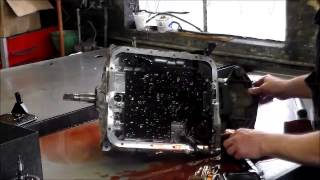
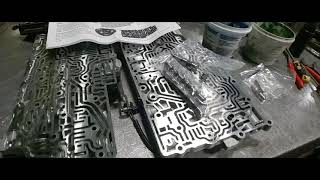
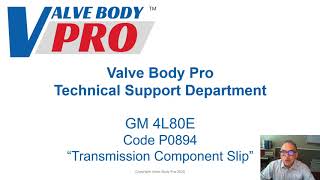
- Worn Torque Converter Clutch (TCC) Regulator Valve Bore 🔴 High Probability On both 4-speed (4L60E/4L80E) and 6-speed (6L80) transmissions, the valve bore in the aluminum valve body that regulates TCC apply pressure is a known wear point. This wear creates a hydraulic leak, preventing the TCC from applying with enough force, causing the slip. A pressure test on a worn 4L80E valve body showed it could only produce 86 PSI of apply pressure instead of the required 125+ PSI. 🎬 Watch: See a pressure test diagnose a worn 4L80E valve body.
How to confirm: This is difficult to confirm without transmission expertise. It's typically diagnosed after a new torque converter fails to solve the problem. A transmission specialist may use hydraulic pressure tests to identify the leak or find excessive debris in the pan pointing to a secondary failure.
Typical fix: The valve body must be removed, the worn bore must be reamed out, and an oversized valve kit must be installed to restore hydraulic integrity. For 4L60E/4L65E, the Sonnax 77754-04K kit is a common fix. For 6L80 transmissions, Sonnax offers kits like 104520-07K (now superseded by 104520-16K) or the drop-in Zip Kit 104740-46K.
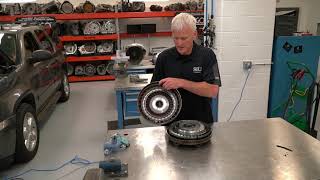
Est. part cost: $60-$150 for the valve kit - Failing Torque Converter 🔴 High Probability This is the most common part that fails, often as a *result* of the worn valve body or worn stator bushing. The constant slipping overheats and wears out the TCC's friction lining, which can delaminate or break apart entirely, contaminating the fluid with debris. 🎬 See how a 6L80 torque converter fails and sheds debris.
How to confirm: Use a scan tool to monitor TCC Slip Speed. Command the TCC to lock; if the slip RPM is high (e.g., over 100 RPM) while the TCC solenoid duty cycle is commanded high (e.g., 90%+), the converter is slipping. Burnt, dark fluid with metallic or friction material particles is also a strong indicator.
Typical fix: The transmission must be removed to replace the torque converter. It is critical to also flush the transmission cooler and lines to remove all debris from the old failed converter, as this is a primary cause of repeat failures.
Est. part cost: $250-$800 - Low or Burnt Transmission Fluid 🟡 Medium Probability
How to confirm: Check the transmission fluid level and condition using the dipstick. The fluid should be reddish-pink (Dexron VI) and not smell burnt. If it is low, dark brown/black, or contains metallic debris, it indicates a serious internal problem.
Typical fix: Topping off low fluid may temporarily help, but a fluid and filter change will NOT fix the mechanical problem causing the slip and P0894 code. Burnt fluid is a symptom of a larger failure (like a worn converter or clutches) and is not the root cause.
Est. part cost: $75-$200 for fluid (Dexron VI) and filter - Faulty TCC Solenoid ⚪ Low Probability The solenoid that controls hydraulic flow to the TCC can fail electrically or, more commonly, become clogged with debris from a failing converter. It is rarely the root cause on its own.
How to confirm: A technician can command the solenoid on and off with a scan tool while monitoring the amperage draw to test its electrical integrity. The solenoid can also be removed from the valve body (after dropping the pan) and inspected for debris on its screen.
Typical fix: Replace the TCC solenoid, which is located inside the transmission oil pan. This is often done along with a fluid and filter change, but if significant debris is found, the transmission must be inspected further.
Est. part cost: $40-$100
Rare But Worth Checking
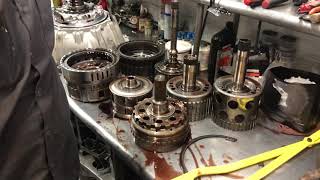
- Worn Stator Support Bushing: In 4L60E/4L80E transmissions, a worn stator support bushing in the pump is a well-documented cause of P0894. The wear creates a significant hydraulic leak in the TCC apply circuit, preventing the converter from locking even if the valve body and converter are good. A teardown video showed extreme play in the bushing, which was identified as the root cause of the code. 🎬 Watch: Teardown showing extreme play in the stator support bushing. This is typically found and fixed only during a full transmission teardown.
Diagnosis Steps
- Check the transmission fluid level and condition. If it is very low, black, or smells burnt, suspect a severe internal issue.
- Connect a professional scan tool capable of reading live transmission data.
- Monitor the 'TCC Slip Speed' or 'Converter Slip' PID while driving at a steady cruise speed (above 45 mph).
- Observe the slip RPM when the scan tool indicates the TCC is commanded 'On' or 'Locked'. A video demonstration on a 2004 Sierra showed slip RPMs of 130+ when the TCC was commanded at 99% duty cycle.
- If the slip speed is consistently above 100-200 RPM, a mechanical or hydraulic slip is confirmed.
- If the slip is confirmed, the next step is usually to drop the transmission pan to inspect for excessive metal or friction material debris. Significant debris points to converter or clutch pack failure.
- Test the TCC solenoid's resistance and function with a multimeter and scan tool commands.
- If the solenoid is good and debris is present, the transmission likely needs to be removed for torque converter replacement and/or valve body/pump inspection.
- If no debris is present, suspect a hydraulic leak at the TCC regulator valve bore or stator support bushing.
Parts You'll Likely Need
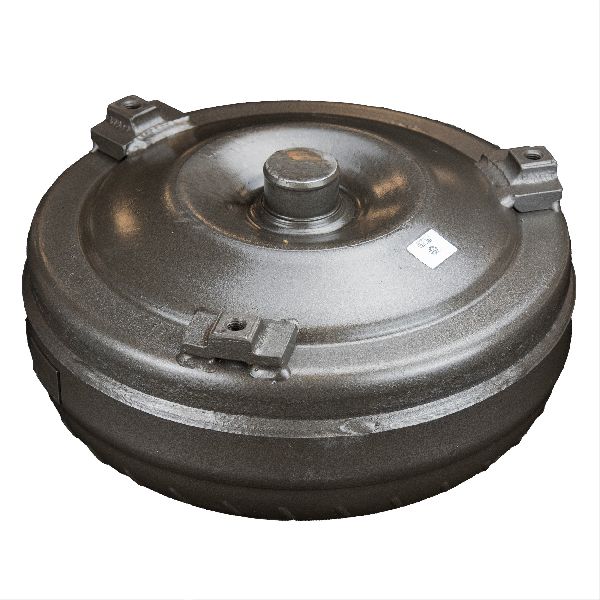
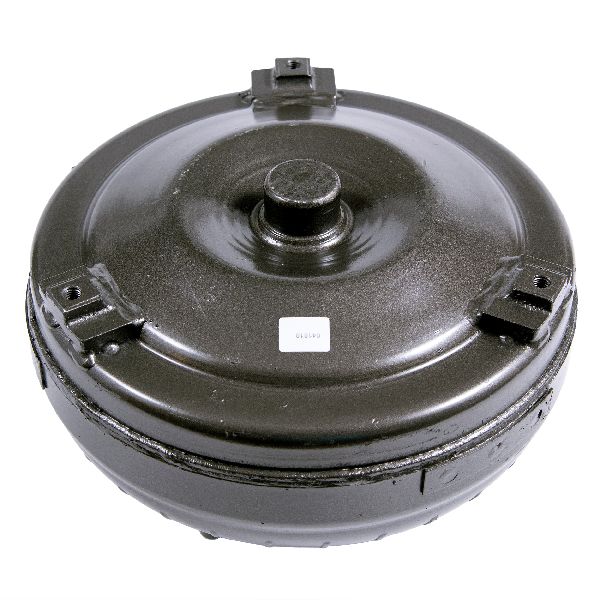
- Torque Converter
(OEM #24243222 (For 6L80, check specific VIN))— This is the most common component to fail, causing the slip. It is replaced when the internal lock-up clutch wears out or disintegrates.
Trusted brands: ACDelco, LuK, Power Torque
Related Codes That Often Appear With This One
- P0741 — Torque Converter Clutch Circuit Performance or Stuck Off. This code is very similar and points directly to the TCC system's inability to lock up as commanded, often appearing with P0894.
- P0700 — Transmission Control System Malfunction. This is a generic code indicating the TCM has stored a fault. It will almost always be present alongside a more specific transmission code like P0894.
- P1870 — Transmission Component Slipping (Older GM Code). On pre-2006 GM vehicles, P1870 was used for the same TCC slip condition. The causes and fixes, particularly the worn TCC regulator valve bore, are identical.
Technical Service Bulletins (TSBs) & Recalls
- PIP4379K: Addresses a range of transmission DTCs including P0894, often related to low pump pressure or a no-prime condition, especially in cold weather. It advises checking fluid level first and notes that a stuck lube regulator valve in the pump can be a cause.
Platform-Specific Known Issues
- For 6L80-equipped trucks (2007-2010), torque converter failure is notorious for sending a large amount of metallic debris throughout the transmission and cooler, often requiring a full rebuild or replacement, not just a new converter.
- For 4L80E-equipped trucks (HD models), a cracked TCC apply piston inside the torque converter is a known failure mode that can cause P0894, in addition to the worn friction lining.
- The provided Technical Service Bulletin (TSB) #PIP4379K groups P0894 with many other transmission codes, suggesting a wide range of potential internal faults and advising technicians to follow standard diagnostic procedures. [⭐ MANUFACTURER TSB — highest authority]
Mechanic-Grade Diagnostic Values
- 4L60E TCC Solenoid (On/Off type) Resistance — expected: 20-40 Ohms. Failure: 0 Ohms (shorted) or infinite/OL (open circuit).
- 4L60E TCC PWM Solenoid Resistance — expected: 7-20 Ohms. Failure: Reading outside of the specified range.
- 6L80 TCC Solenoid (PWM type) Resistance — expected: 3-8 Ohms (some sources state 5-6 Ohms). Failure: Reading outside of the specified range.
- 6L80 TCC Solenoid Current Draw (Amps) — expected: 1.5 - 4.0 Amps at 12V. Failure: Incorrect amperage draw indicates a failed solenoid within the TEHCM.
- 4L80E TCC Apply Pressure (at valve body test port) — expected: 125+ PSI. Failure: A pressure of only 86 PSI was measured on a valve body with a worn TCC regulator bore, indicating a significant hydraulic leak.
Scan Tool Commands That Help
- GM Tech2 / GDS2: Solenoid Cleaning Process — This is an automated function that cycles all solenoids to dislodge debris. It can be attempted if a solenoid performance code is present before replacing the entire TEHCM.
- Professional Scan Tool (e.g., Snap-on, Autel): TCC Solenoid Duty Cycle / TCC Apply — Used during a test drive to command the TCC on and off while monitoring TCC Slip RPM. This is the primary method to confirm a slip is occurring. A technician can command the duty cycle to 90%+ and see if the slip RPM drops below 50 RPM.
Wiring & Ground Locations
- Transmission Case Connector — The main electrical connector on the side of the transmission case.. This is the primary connection point for all solenoids and sensors. For the 4L60E, the TCC solenoid signal is on Pin T. For the 6L80, all solenoid controls are internal to the TEHCM, but the main power and data lines run through this connector. Corrosion or pushed pins can cause various transmission codes.
- G110 — On the rear of the driver's side cylinder head.. This is a major ground point for the engine and body harnesses. While not directly for the transmission on all models, a loose or corroded G110 has been noted by GM to cause various difficult-to-diagnose electrical issues and is a known issue on later model trucks.
- G103 — On the front of the engine block, near the starter motor.. This is a primary engine-to-chassis ground. A poor connection here can cause voltage drops and erratic behavior in electronic components, including the TCM, as it seeks a proper ground path.
Real Owner Repair Stories
- YouTube video by Gary Ferraro (2007 vehicle with a 4L60E transmission) — Check Engine Light with code P0894 (Transmission Component Slipping).
❌ Tried (didn't work) A valve body modification (blocking the isolator valve and TCC regulator valve) was performed as a quick fix attempt. The code returned 3-4 days later.
✅ What actually fixed it The transmission was removed and torn down. The front stator support bushing was found to be extremely worn, causing a major loss of converter charge oil pressure. Replacing the worn stator bushing (and the torque converter as a precaution) was the final fix. - YouTube video by WeberAuto (2006 Chevrolet Silverado 2500 with a 4L80E transmission) — P0894 code. Scan tool data confirmed TCC slip of ~540 RPM when the TCC was commanded on at 78% duty cycle.
❌ Tried (didn't work) An electrical test of the TCC PWM solenoid was performed by commanding it with a scan tool and measuring current draw at the fuse block. The solenoid and wiring passed the test, drawing close to 1 amp as expected.
✅ What actually fixed it The transmission was removed and the torque converter was cut open. The TCC friction material had completely delaminated from its backing plate, making it impossible for the clutch to apply and lock up. Replacing the torque converter was the definitive fix.
OEM Part Supersession History
104520-07K→104520-16K— This is the Sonnax oversized pressure regulator and boost valve kit for the 6L80 transmission pump. The updated part number reflects a revision to the kit.
Heads up: The kits are not directly interchangeable without ensuring you have the correct matching components. The installation requires specialized reaming tools (F-104520-TL7C) and a pump base plate (VB-06).
Model Year Variations Within This Range
- 2006-2010: The 6L80 transmission uses a TEHCM (Transmission Electro-Hydraulic Control Module) which combines the TCM and valve body solenoids into one unit. These TEHCMs are year- and model-specific and are not interchangeable. A replacement TEHCM must be programmed with the vehicle's VIN before it will function.
- 2006-2007 vs 2008+: For the 6L80, GM updated the 3-5-Reverse clutch piston design starting in the 2008 model year to reduce oil capacity by 20%, allowing for faster engagement. The TCM calibration was also changed to match. The older and newer pistons and seals will not back-service previous model years.
Helpful Videos

We Have This Part in Stock

The information in this article is provided for general reference and educational purposes only. Vehicle specifications, procedures, and part compatibility can vary by production date, trim level, and region. Always consult your vehicle's factory service manual and verify part numbers before purchasing or performing repairs. Safety-critical components such as airbags, seat belts, and braking systems should be installed by a qualified professional.
- Gmc SIERRA:
- 🎬 Helpful Videos
- 🛍️ Shop This Part
- What's Unique About the 2006-2010 Gmc SIERRA
- Diagnostic Flowchart
- Symptoms You May Notice
- Most Likely Causes
- Rare But Worth Checking
- Diagnosis Steps
- Parts You'll Likely Need
- Related Codes That Often Appear With This One
- Technical Service Bulletins (TSBs) & Recalls
- Platform-Specific Known Issues
- Mechanic-Grade Diagnostic Values
- Scan Tool Commands That Help
- Wiring & Ground Locations
- Real Owner Repair Stories
- OEM Part Supersession History
- Model Year Variations Within This Range
- 🎟️ Get 5% Off