

P0894 on 2001-2005 GMC Sierra: Transmission Component Slipping Causes and Fixes
On a 2001-2005 GMC Sierra, code P0894 almost always means the torque converter clutch is slipping. This is a serious internal transmission issue, often caused by a worn-out torque converter, a faulty TCC solenoid, or a worn TCC regulator valve bore in the valve body. Do not continue to drive, as it can lead to a full transmission rebuild.
- P0894 on a 2001-2005 Sierra indicates a serious internal transmission slip, most often the torque converter clutch.
- Do not drive the vehicle. Driving with this code can cause catastrophic transmission damage, escalating repair costs significantly.
- The most common fixes involve replacing the torque converter or repairing the valve body, both of which are labor-intensive jobs requiring professional service.
- A simple fluid and filter change will not resolve the underlying mechanical or hydraulic problem that causes this code.
What's Unique About the 2001-2005 Gmc SIERRA
The 2001-2005 GMC Sierra (GMT800 platform) primarily used the 4L60-E or the heavy-duty 4L80-E and Allison transmissions. While generally robust, a common failure point leading to P0894 is the Torque Converter Clutch (TCC) itself or the hydraulic circuit that controls it. The lining of the clutch can delaminate or break apart, contaminating the system. Critically, the TCC regulator valve bore in the aluminum valve body can wear out from the constant oscillation of the steel valve, causing a loss of apply pressure. This is a well-documented issue on this platform, so much so that aftermarket companies like Sonnax have created specific repair kits to address it.
Diagnostic Flowchart
Tap your situation to follow the diagnostic path that matches what you're seeing on this vehicle.
Symptoms You May Notice
- Check Engine Light is on
- Engine RPMs flare or surge by 150-300 RPM at highway speeds without a change in speed
- Harsh, erratic, or delayed shifting, especially a harsh 1-2 shift as the TCM increases line pressure
- A feeling of shuddering during TCC lock-up, sometimes described as driving over rumble strips
- Transmission overheating
- Vehicle may enter 'limp mode', locking it into a single gear
- Noticeable decrease in fuel efficiency
- On 4L80-E, vehicle may stall when put into 🎬 See how a 4L80E behaves with a P0894 code. gear if the TCC is stuck on
- Replacing only the transmission fluid and filter. While a good maintenance step, this will not fix the mechanical or hydraulic fault causing the slip.
- Replacing input or output speed sensors. If these sensors were faulty, they would typically set their own specific trouble codes.
- Replacing only the TCC solenoid when the valve body bore is worn. The new solenoid will not be able to overcome the hydraulic leak, and the P0894 code will return.
Most Likely Causes
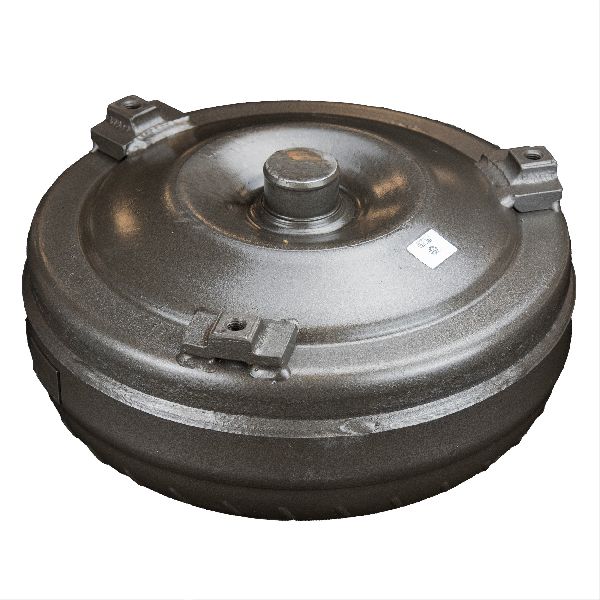
- Failing Torque Converter / Worn Torque Converter Clutch (TCC) 🔴 High Probability The friction material on the TCC can delaminate or break apart over time, preventing it from locking up completely. This material then circulates in the fluid, potentially clogging the filter, cooler, and valve body. This is the most common catastrophic failure leading to P0894 on these trucks.
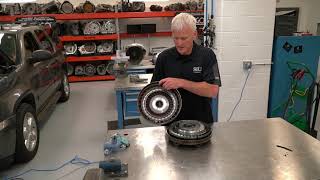
How to confirm: Use a scan tool to monitor 'TCC Slip Speed'. When the TCC is commanded to lock (steady cruise over 45 mph), the slip RPM should drop to near zero (typically <50 RPM). If it remains high (e.g., >100-500 RPM), the TCC is slipping. Cutting open a removed converter often reveals the destroyed lining. 🎬 Watch: See a full 4L60E teardown caused by this code.
Typical fix: Replace the torque converter. This requires removing the transmission. It is critical to thoroughly flush the transmission cooler and lines to remove all debris from the old converter to prevent failure of the new unit.
Est. part cost: $200-$500 - Worn TCC Regulator Valve Bore in Valve Body 🔴 High Probability On transmissions like the 4L60-E and 4L80-E, the steel regulator valve constantly oscillates in the aluminum valve body bore, causing wear. This wear creates a hydraulic leak, preventing the TCC from applying with sufficient force, leading to slip. This is so common that it's often addressed preventatively during a rebuild.
How to confirm: This is diagnosed after confirming TCC slip and ruling out the solenoid. A professional may use a vacuum test on the valve body to confirm the leak. A valve body dyno test can show a significant pressure loss; one case showed a 40 PSI drop in TCC apply pressure due to bore wear.
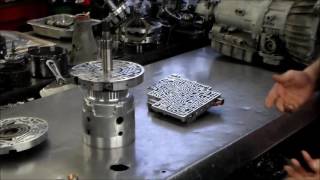
Typical fix: The valve body must be reamed and an oversized valve kit (e.g., Sonnax 77754-04K) installed. This kit includes a new, larger valve and a matching sleeve to create a new, durable seal. Simply replacing the valve body with another used one may lead to the same problem.
Est. part cost: $50-$150 for a repair kit, $300-$700 for a remanufactured valve body - Failed TCC Control Solenoid 🟡 Medium Probability The solenoid is an electronic component that can fail electrically (open/short circuit) or mechanically (sticking, clogged screen). It's a common service item.
How to confirm: Test the solenoid's resistance with a multimeter (compare to spec, typically 10-15 ohms for the PWM TCC solenoid used in these models). With a scan tool, command the solenoid on/off and listen for a click. A more advanced test involves checking the current draw, which should change by about 1 Amp when activated.
Typical fix: Replace the TCC solenoid, which is located inside the transmission oil pan and is often part of the internal wiring harness.
Est. part cost: $30-$80 - Low or Burnt Transmission Fluid ⚪ Low Probability While low fluid can cause slipping, P0894 is more specific than a general low-fluid condition. More often, burnt fluid is a *symptom* of TCC slippage and extreme heat rather than the root cause.
How to confirm: Check the transmission fluid dipstick. The fluid should be at the correct level, red in color, and not have a burnt smell. Burnt fluid with metallic 'glitter' is a strong indicator of torque converter or clutch pack failure.
Typical fix: If low, top off with DEXRON-VI fluid. If burnt, a fluid and filter change is needed, but this will not fix the underlying mechanical cause of the slipping. It is a temporary measure at best.
Est. part cost: $50-$150 for fluid and filter
Rare But Worth Checking
- Worn Front Stator Support Bushing: A severely worn front stator support bushing in the transmission pump can cause a major loss of converter charge oil and TCC apply pressure. In one documented case, this was the true cause of a P0894 after a valve body modification failed to fix the issue.
- Internal Transmission Mechanical Failure: While less common for an isolated P0894, worn clutches, failing seals, or a damaged oil pump can also lead to the pressure losses that cause this code. This is usually accompanied by other symptoms and codes.
- Faulty Transmission Control Module (TCM): This is very rare. The TCM should only be considered a potential cause after all mechanical and hydraulic issues have been definitively ruled out. GM TSBs also note that replacing the TCM is unlikely to correct this code.
Diagnosis Steps
- Check the transmission fluid level and condition. Note any burnt smell or fine, glitter-like metallic debris in the fluid, which indicates catastrophic converter or clutch failure.
- Connect a professional scan tool capable of reading live transmission data.
- Monitor the 'TCC Slip Speed' PID while driving. Command the TCC to lock (usually at steady cruising speed over 45 mph in 4th gear).
- Confirm if the slip speed exceeds the specification (e.g., > 50-100 RPM) when lockup is commanded. If it does, a slip is confirmed.
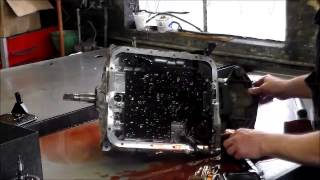
- If a slip is present, drop the transmission oil pan to inspect for excessive clutch material or metal debris. This indicates a severe mechanical failure.
- Test the TCC solenoid's resistance (should be ~10-15 ohms for PWM type) and function. Command it on and off with the scan tool to verify it clicks and draws the correct current (~1 Amp).
- If the solenoid tests good, the next most likely cause is hydraulic. The valve body should be removed and the TCC regulator valve bore inspected and vacuum tested for wear.
- If the solenoid and valve body are confirmed to be in good working order, the torque converter itself is the most likely point of failure.
Parts You'll Likely Need
- Torque Converter
(OEM #ACDelco 24228709 (Example for 4L60-E, verify by VIN))— This is the most frequent cause of P0894, as the internal clutch wears out or fails, requiring complete replacement.
Related Codes That Often Appear With This One
- P0700 — This is a generic code that means the Transmission Control Module (TCM) has stored a fault and requested the main Check Engine Light to be turned on. It acts as a flag for codes like P0894.
- P1870 — This is an older, GM-specific code for 'Transmission Component Slipping'. It describes the exact same fault as P0894, and the two are often used interchangeably in service literature for this era, particularly pointing to TCC regulator valve wear.
- P0741 — Stands for 'Torque Converter Clutch Circuit Performance or Stuck Off'. This code is more specific to the TCC electrical circuit and solenoid performance, but often accompanies P0894 as they are both related to the TCC's failure to lock up properly.
Technical Service Bulletins (TSBs) & Recalls
- This Preliminary Information bulletin from GM covers a wide range of DTCs, including P0894, for vehicles equipped with the Allison LCT1000 transmission. It suggests that codes could indicate low pump pressure from a loss of prime, especially in cold weather or after a fluid service. It directs technicians to check fluid levels and inspect for a stuck lube regulator valve in the pump cover. While it applies to the Allison transmission, not the more common 4L60-E/4L80-E, it is an official OEM document mentioning the code.
Platform-Specific Known Issues
- A GM Technical Service Bulletin (PIP4379K) notes that P0894 can appear with a host of other transmission codes. The bulletin advises that if code P0701 is also present, its diagnostic procedure should be followed first.
Mechanic-Grade Diagnostic Values
- TCC PWM Solenoid Resistance (4L60-E/4L80-E) — expected: 10-15 Ohms at 68°F (20°C).. Failure: A reading of zero (short) or infinite (open) resistance indicates a failed solenoid.
- TCC Solenoid Current Draw (Bidirectional Test) — expected: Approximately 1 Amp change when commanded ON versus OFF with a scan tool.. Failure: No change in amperage indicates an open circuit or stuck solenoid; significantly higher amperage suggests a short.
- TCC Slip Speed (Live Scan Data) — expected: < 50 RPM when TCC is commanded to full lock.. Failure: Consistent slip of 100-400 RPM often points to a hydraulic issue (valve body/solenoid). Slip > 400 RPM suggests a severe mechanical failure (torque converter clutch lining).
- Valve Body TCC Apply Pressure (Valve Body Dyno) — expected: Approximately 125 PSI on a healthy, repaired valve body.. Failure: A significant pressure loss (e.g., a drop to 86 PSI, a 40 PSI difference) indicates severe wear in the TCC regulator bore.
Hidden / Shadow Codes Worth Checking
- P1870: This is the earlier, GM-specific code for 'Transmission Component Slipping'. It is functionally identical to P0894 and is often triggered by the same TCC regulator valve bore wear. On 2001-2005 models, either code may be present depending on the specific software, but the diagnosis is the same. (see via Standard OBD-II scanner, GM Tech2)
Scan Tool Commands That Help
- GM Tech2 / Professional Scan Tool: TCC Solenoid ON/OFF Command — This is a key bidirectional test used after confirming TCC slip. By commanding the solenoid on and off with the engine running and transmission in gear (and vehicle safely secured), a technician can verify the electrical part of the circuit. It should produce an audible click from the transmission pan and a ~1 Amp change in current draw if the solenoid and wiring are good.
- GM Tech2 / Professional Scan Tool: Live Data Monitoring: TCC Slip Speed & TCC Duty Cycle % — This is the primary diagnostic step to confirm the fault. During a test drive at steady highway speed, the technician monitors both PIDs. When the Duty Cycle % commands lockup (e.g., >75%), the Slip Speed should drop below 50 RPM. If slip remains high while duty cycle is high, it confirms the slipping condition.
Wiring & Ground Locations
- Transmission Case Connector (20-pin) — The main round electrical connector on the passenger side of the transmission case.. This is the primary test point for the TCC solenoid without dropping the pan. Pin E (Pink wire) is the 12V+ power feed for multiple solenoids. Pin T is the control wire from the TCM for the TCC solenoid. Resistance between Pin E and Pin T should be 10-15 Ohms.
- IGN 0 Fuse — Located in the in-dash fuse panel.. This fuse supplies ignition voltage to the transmission solenoids via Pin E of the case connector. A faulty fuse or poor connection here can cause multiple transmission codes, including P0894, and prevent the TCC solenoid from functioning.
- G104 Ground — Located on the left rear of the engine.. This is a primary engine ground point. A poor ground here can cause erratic behavior in the PCM/TCM and its sensor readings, potentially leading to incorrect diagnosis or transmission control issues. While not a direct cause of slip, ensuring it's clean and tight is a foundational step.
Real Owner Repair Stories
- YouTube channel 'Gary Ferraro' (2007 GM Truck with 4L60-E (demonstrates a common P0894 failure path applicable to 2001-2005)) — Check Engine Light with code P0894, TCC slip of 175-200 RPM on scan tool.
❌ Tried (didn't work) A common 'quick fix' was attempted first: modifying the valve body to block the TCC isolator and regulator valves, turning it into a simple on/off system. The P0894 code returned after 3-4 days.
✅ What actually fixed it The transmission was removed. The true cause was found to be a severely worn front stator support bushing in the pump. This wear caused a major leak of converter charge oil, preventing the TCC from applying with enough force. Replacing the bushing and the torque converter resolved the issue. - YouTube channel 'siu automotive' (2006 Chevy Silverado 2500 with 4L80-E (diagnosis is directly applicable to 2001-2005 Sierra with 4L80-E)) — P0894, TCC slip of ~540 RPM while being commanded at 78% duty cycle.
❌ Tried (didn't work) The technician immediately suspected either the solenoid or the converter. Rather than guessing, a diagnostic path was followed.
✅ What actually fixed it The technician performed a bidirectional current test on the TCC solenoid circuit at the underhood fuse box, which passed with a ~1 Amp draw, confirming the solenoid, wiring, and TCM driver were all working correctly. Based on this, the torque converter was condemned. After removal, the converter was cut open, revealing that the clutch friction lining had broken into pieces, which was the root cause of the massive slip. The fix was a new torque converter and a thorough cooler flush.
OEM Part Supersession History
N/A (refers to valve body design)→Sonnax TCC Regulator Valve Kit 77754-04K— To repair the worn TCC regulator valve bore in the valve body, which causes hydraulic leaks and TCC slip.
Heads up: An earlier kit, 77754-03K, has an increased apply rate and should only be used in '97-earlier, non-EC3 transmissions. Using the -03K kit on a 2001-2005 Sierra can cause harsh TCC engagement. The -04K kit is the correct choice for this vehicle range as it matches the original OE apply rate.
Model Year Variations Within This Range
- 2001-2005 (with 6.0L Engine): Trucks equipped with the 6.0L V8 often received the heavier-duty 4L65-E (RPO M32) transmission instead of the 4L60-E. The 4L65-E features stronger 5-pinion planetary gearsets (vs. 4-pinion) and a hardened input shaft to better handle the engine's torque. While the P0894 diagnosis is identical, the internal parts are more robust.
- 2001-2005: All trucks in this range use the 300mm style input shaft and torque converter, which was introduced around 1998 for the new generation of V8 engines. This is not interchangeable with the older 298mm style found in pre-LS era transmissions.
- 2001-2005: These model years use a PWM (Pulse-Width Modulated) TCC apply strategy, also known as EC3. This requires using the correct valve body repair kit (Sonnax 77754-04K) that is designed for PWM operation, as opposed to older kits designed for a simple on/off TCC system.
Helpful Videos

We Have This Part in Stock

The information in this article is provided for general reference and educational purposes only. Vehicle specifications, procedures, and part compatibility can vary by production date, trim level, and region. Always consult your vehicle's factory service manual and verify part numbers before purchasing or performing repairs. Safety-critical components such as airbags, seat belts, and braking systems should be installed by a qualified professional.
- Gmc SIERRA:
- 🎬 Helpful Videos
- 🛍️ Shop This Part
- What's Unique About the 2001-2005 Gmc SIERRA
- Diagnostic Flowchart
- Symptoms You May Notice
- Most Likely Causes
- Rare But Worth Checking
- Diagnosis Steps
- Parts You'll Likely Need
- Related Codes That Often Appear With This One
- Technical Service Bulletins (TSBs) & Recalls
- Platform-Specific Known Issues
- Mechanic-Grade Diagnostic Values
- Hidden / Shadow Codes Worth Checking
- Scan Tool Commands That Help
- Wiring & Ground Locations
- Real Owner Repair Stories
- OEM Part Supersession History
- Model Year Variations Within This Range
- 🎟️ Get 5% Off