

P0894 on 2001-2005 GMC Safari: Transmission Component Slipping Causes and Fixes
P0894 on a 2001-2005 GMC Safari means the transmission is slipping, most often due to a worn Torque Converter Clutch (TCC) regulator valve in the valve body or a failing torque converter. This is a serious issue that requires professional diagnosis and repair to prevent complete transmission failure. The most common repair involves installing an aftermarket kit like the Sonnax 77754-04K to fix the worn valve body.
- P0894 on a GMC Safari indicates a serious internal transmission slip, most often related to the torque converter clutch system.
- The most common cause is a worn TCC regulator valve bore in the 4L60-E's valve body, a well-documented issue for this transmission.
- Do not continue to drive with this code. The slipping generates heat that can quickly lead to catastrophic transmission failure.
- A simple fluid change or solenoid replacement is unlikely to fix the problem. The repair almost always requires, at a minimum, removing the valve body.
- This is not a DIY-friendly repair and should be handled by a qualified transmission shop.
What's Unique About the 2001-2005 Gmc SAFARI
The GMC Safari and its twin, the Chevrolet Astro, use the GM 4L60-E automatic transmission in this year range. This transmission is notorious for a specific wear point in the valve body: the bore for the TCC regulator valve. Over time, this bore wears out, allowing hydraulic pressure to leak. This prevents the Torque Converter Clutch from applying firmly, causing the slippage that triggers code P0894. This code is often seen with the manufacturer-specific code P1870, which also indicates transmission component slippage and points to the exact same common failures.
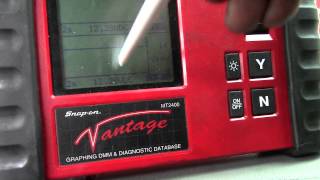
🎬 Watch: Understanding the P1870 code and common 4L60-E slip points.Diagnostic Flowchart
Tap your situation to follow the diagnostic path that matches what you're seeing on this vehicle.
Symptoms You May Notice
- Check Engine Light is on
- Harsh or delayed shifting, especially the 1-2 shift
- Transmission shuddering or a 'chuggle' at highway speeds when the TCC tries to engage
- A feeling of power loss, as if the engine is revving but the vehicle isn't accelerating properly
- Engine RPMs flare up slightly during steady cruising
- Transmission overheating
- Inability to shift into or out of a specific gear
- Replacing only the TCC solenoid when the valve body bore is worn. The new solenoid will not fix the hydraulic leak in the valve body, leading to a quick return of the code.
- Performing a fluid flush without addressing the root mechanical cause. This will not fix a worn valve body or a failing torque converter.
- Replacing the torque converter when the valve body is the actual problem. This leads to the new converter failing prematurely or the code returning.
Most Likely Causes
- Worn TCC Regulator Valve Bore in Valve Body 🔴 High Probability The 4L60-E valve body is a known weak point. The constant oscillation of the TCC regulator valve wears the aluminum bore, causing a loss of hydraulic pressure needed to lock the torque converter. This is the primary cause for P0894 and the related P1870 code.
How to confirm: A technician can monitor TCC slip RPM with a professional scan tool. If slip is consistently over 100 RPM when the TCC is commanded ON, and fluid/solenoids are good, the valve body is the likely culprit. Visual inspection of the bore after removal can also confirm wear.
Typical fix: The valve body must be removed. A common, highly-documented repair involves reaming the bore and installing an oversized TCC regulator valve kit, such as the Sonnax 77754-04K. Some shops may opt to replace the entire valve body with a remanufactured unit that already includes this update.
Est. part cost: $50-$150 for a valve kit, $250-$500 for a remanufactured valve body. - Failing Torque Converter or Torque Converter Clutch (TCC) 🟡 Medium Probability The friction material on the TCC can delaminate or break apart over time, especially under heavy use common for a utility van like the Safari. This prevents the clutch from locking up and can contaminate the entire transmission and cooler lines with debris.
How to confirm: Confirmed with a scan tool showing excessive TCC slip speed. If the valve body has been repaired or ruled out, the torque converter is the next likely cause. Finding significant metallic or clutch material debris in the transmission pan is another strong indicator.
Typical fix: The transmission must be removed to replace the torque converter. It is critical to also thoroughly flush the transmission cooler lines to remove any debris, which can take a significant amount of time and specialized equipment.
Est. part cost: $150-$400 for a new or remanufactured torque converter. - Failed TCC Solenoid ⚪ Low Probability The TCC solenoid (also called a PWM solenoid) controls the flow of fluid to apply the clutch. While electronic failure is less common than mechanical wear, the solenoid body can develop hairline cracks near the screen, causing pressure loss. Sometimes a new solenoid can be defective out of the box.
How to confirm: A technician can command the solenoid on and off with a scan tool while monitoring amperage draw to test its electrical function. Visual inspection for cracks is also necessary. In one documented case, a new, cracked solenoid was the cause of a persistent P1870 after other repairs were made.
Typical fix: The transmission pan and filter must be removed to access and replace the solenoid. It is often replaced as a 'while you're in there' part during a valve body repair.
Est. part cost: $30-$70 for a new solenoid. - Low or Degraded Transmission Fluid ⚪ Low Probability While not a component failure, low fluid level reduces hydraulic pressure, which can cause slipping. Old, burnt fluid loses its properties and can't provide proper lubrication or hydraulic function. Burnt fluid is usually a symptom of another problem, like TCC slippage generating excessive heat.
How to confirm: Check the transmission fluid dipstick for level and condition. The fluid should be reddish-pink and not smell burnt. If it's brown/black or low, this must be addressed first.
Typical fix: Top off the fluid or perform a transmission fluid and filter change. If the fluid is severely burnt, it often indicates a larger internal problem that a fluid change alone will not fix.
Est. part cost: $50-$150 for fluid and a filter kit.
Rare But Worth Checking
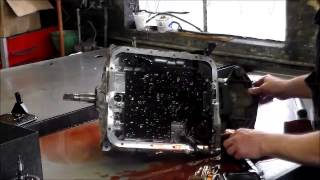
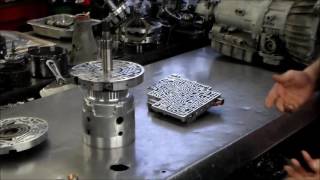
- Worn Stator Support Bushing: A worn bushing in the transmission pump's stator support shaft can cause a significant loss of converter charge oil pressure, leading to TCC slip and code P0894. In a teardown video of a 4L60-E with this code, a severely worn stator bushing was identified as the root cause. This is usually found during a transmission teardown. 🎬 See a full 4L60-E teardown diagnosing the P0894 code.
Diagnosis Steps
- Check the transmission fluid level and condition. Address any low or burnt fluid first.
- Connect a professional scan tool capable of reading live transmission data.
- Monitor the 'TCC Slip Speed' while driving at a steady speed above 45-50 MPH when the TCC is commanded ON.
- If slip is consistently above 100 RPM while the TCC solenoid duty cycle is high, a slip is confirmed. The slip should be near zero when the clutch is locked.
- Test the TCC solenoid. Command it ON and OFF with the scan tool to check for an electrical response (e.g., an audible click or a change in amperage of about 1 amp).
- If the fluid is good and the solenoid tests okay electrically, the next most likely cause is a worn TCC regulator valve bore in the valve body.
- Inspect the valve body for wear. If a reamer kit like the Sonnax 77754-04K is used, the wear will be obvious during the reaming process.
- If a valve body repair/replacement does not resolve the issue, the problem is likely the torque converter itself or, more rarely, internal pump bushings like the stator support bushing.
Parts You'll Likely Need
- TCC Regulator Valve Repair Kit — This is the most common failure point on the 4L60-E transmission that causes P0894. The kit includes an oversized valve and tools to ream the worn valve body bore, restoring hydraulic integrity.
Trusted brands: Sonnax (P/N: 77754-04K), TransGo, Teckpak
Aftermarket price range: $50-$150 - Torque Converter — If the internal clutch lining has failed, the torque converter must be replaced. This is a major job requiring transmission removal.
Trusted brands: ACDelco, Yank, Whatever the transmission shop recommends
OEM price range: $300-$500
Aftermarket price range: $150-$300 - TCC Lock-Up Solenoid
(OEM #24227747)— Though less common, the solenoid can fail electronically or develop hairline cracks, causing pressure loss. It's often replaced as a preventative measure during a valve body or torque converter job. 🎬 Watch: Step-by-step guide to replacing the TCC and shift solenoids.
Trusted brands: ACDelco, Bosch, Rostra
OEM price range: $50-$90
Aftermarket price range: $30-$70 - Transmission Filter and Gasket Kit — This must be replaced any time the transmission pan is removed for service.
Trusted brands: ACDelco
OEM price range: $30-$50
Aftermarket price range: $15-$30
Related Codes That Often Appear With This One
- P1870 — P1870 is a GM-specific code for 'Transmission Component Slipping.' It is often triggered by the exact same conditions as P0894, namely a worn TCC valve bore or failing torque converter in the 4L60-E transmission. For this platform, they can be considered the same code.
Technical Service Bulletins (TSBs) & Recalls
- Addresses MIL illumination with P0894 or P1870 and a harsh 1-2 shift that occurs *after* a transmission or torque converter has been replaced. It instructs technicians to contact the GM Technical Assistance Center, indicating GM is tracking a known issue with replacement components or procedures. It applies to the Safari, Astro, S-10, Blazer, and other GM trucks with the 4L60E/4L65E.
Platform-Specific Known Issues
- The provided TSB (PIP5340A) instructs technicians to contact the GM Technical Assistance Center when P0894 or P1870 is found, indicating that diagnosis can be complex and may require factory-level support.
Mechanic-Grade Diagnostic Values
- TCC Slip Speed (Live Scan Tool Data) — expected: Should be near 0 RPM (+/- 10) when TCC is commanded locked under steady cruise. Some sources note that up to 50 RPM can be normal depending on conditions.. Failure: Consistently over 100 RPM when the TCC is commanded ON (typically above 90% duty cycle). This indicates the torque converter clutch is not holding.
- TCC PWM Solenoid Resistance — expected: 7-20 Ohms when tested at the transmission case connector.. Failure: A reading that is significantly higher (open circuit) or lower (shorted) than the specified range indicates a failed solenoid coil.
Scan Tool Commands That Help
- GM Tech 2 or equivalent professional scanner: Transmission Output Controls > TCC Solenoid — This bidirectional control allows a technician to manually command the TCC solenoid ON and OFF to verify its electrical operation. When commanding it ON with the engine running in gear (like Reverse) at a stop, the engine should bog down or stall, confirming the solenoid and valve are actuating.
- GM Tech 2 or equivalent professional scanner: Reset Transmission Adaptive Pressure (TAP) Values — After replacing components like the valve body or solenoids, the learned shift pressure values should be reset. This forces the TCM to relearn the hydraulic characteristics of the new parts, ensuring proper shift feel and performance.
Wiring & Ground Locations
- G105 — On one of the thermostat housing nuts/studs on the engine.. This is a primary ground location for the Powertrain Control Module (PCM). A poor connection here can cause erratic PCM behavior, including incorrect transmission commands and false codes.
- G110 — On the left side of the engine compartment, located behind the battery.. This ground serves multiple components, including the A/T shift lock control solenoid and sometimes the Transfer Case Control Module (TCCM), which communicates on the same data bus as the PCM. A bad ground here can disrupt transmission-related electrical signals.
- Transmission Case Connector (Vehicle Harness Side) — The large round connector on the right side of the transmission case.. This is the main electrical interface for the transmission. The TCC solenoid circuit can be tested here at pins E and T without dropping the pan. Checking for corrosion or pushed-out pins is a critical step.
- G103, G104, G106 — Various points on the engine block and chassis.. A GM service bulletin specifically notes that improper battery grounding, particularly if the battery has been relocated, can cause multiple transmission DTCs. It emphasizes ensuring these grounds are clean, tight, and connected directly to the engine, not just the frame.
Real Owner Repair Stories
- GMTNation forum user (High-mileage (215k+) GM truck with 4L60-E) — Code P1870 and a violent, jolting 1-2 shift.
❌ Tried (didn't work) A complete transmission overhaul was performed, including the Sonnax valve body reaming fix.
✅ What actually fixed it The P1870 code returned after the rebuild. The final fix was replacing the internal transmission wiring harness (which included the TCC solenoid), the separate PWM solenoid, and the EPC (force motor) solenoid. - YouTube video by 'dannyboy 34' (Vehicle with 4L60-E transmission) — P1870 code due to TCC slip.
❌ Tried (didn't work) Standard valve body replacement was considered too complex or costly.
✅ What actually fixed it The creator installed a TCC PWM block-off valve, which converts the system to a simpler on/off lockup. This was done without removing the valve body by manipulating the retaining clip from below. The creator reported the fix was still working perfectly after 10,000 miles. - YouTube video by 'Automatic Transmission' (Vehicle with 4L60-E transmission) — P1870 code, no TCC lockup.
❌ Tried (didn't work) Initial diagnosis pointed towards the common valve body issue.
✅ What actually fixed it Upon inspection, the TCC solenoid itself had a physical crack in its plastic body, causing a pressure leak. Replacing only the TCC solenoid resolved the code and restored lockup function.
"I Checked Everything" — The Actual Cause
- The equivalent for this code is when all electrical tests pass, but the problem persists. For example, the TCC solenoid resistance may test perfectly within spec, and a scan tool can command it on and off (you can hear it click). However, the code P0894/P1870 still sets. The actual cause in this scenario is very often mechanical wear in the TCC regulator valve bore inside the aluminum valve body. This wear creates a hydraulic fluid leak that prevents the TCC from applying with enough pressure, causing the slip. An electrical test cannot detect this internal, hydraulic leak.
When the Usual Fixes Don't Work
- While the most common fix for P0894/P1870 is repairing the TCC regulator valve bore in the valve body, this is not a guaranteed solution. In one documented case involving a high-mileage truck, a complete transmission overhaul that included the standard Sonnax valve bore fix did not resolve the code. The P1870 code only went away after the technician also replaced the entire internal wiring harness (which contained the TCC solenoid), the EPC solenoid, and the PWM solenoid. This suggests that after many miles and heat cycles, multiple electronic components can degrade, and simply fixing the well-known mechanical wear point may not be enough.
OEM Part Supersession History
24214974→24227747— Part update/revision for the TCC PWM Solenoid.
Heads up: The more significant 'part story' for this P0894 code is not an OEM supersession, but the aftermarket's creation of oversized valve kits (like Sonnax 77754-04K) to permanently fix the valve body bore wear that OEM replacement parts alone did not address for many years. GM's official fix was often to replace the entire valve body assembly.
Model Year Variations Within This Range
- Late 2005: Beginning around February 2005, an Input Speed Sensor (ISS) was added to the 4L60-E pump assembly. A transmission from a late 2005 Safari may have this sensor. This transmission can be installed in an earlier 2001-2004 model, as the vehicle's PCM will not have the wiring for the sensor and will simply ignore it.
- 2001+: Starting in 2001, the stronger 4L65-E (RPO M32) was introduced for use with higher-torque engines like the 6.0L V8. It featured 5-pinion planetaries instead of the 4L60-E's 4-pinion sets and an improved input shaft. While most Safaris used the 4L60-E, it's possible some later models or special-order vans could have had a 4L65-E, which is externally identical but more robust internally.
Helpful Videos



We Have This Part in Stock



The information in this article is provided for general reference and educational purposes only. Vehicle specifications, procedures, and part compatibility can vary by production date, trim level, and region. Always consult your vehicle's factory service manual and verify part numbers before purchasing or performing repairs. Safety-critical components such as airbags, seat belts, and braking systems should be installed by a qualified professional.
- Gmc SAFARI:
- 🎬 Helpful Videos
- 🛍️ Shop This Part
- What's Unique About the 2001-2005 Gmc SAFARI
- Diagnostic Flowchart
- Symptoms You May Notice
- Most Likely Causes
- Rare But Worth Checking
- Diagnosis Steps
- Parts You'll Likely Need
- Related Codes That Often Appear With This One
- Technical Service Bulletins (TSBs) & Recalls
- Platform-Specific Known Issues
- Mechanic-Grade Diagnostic Values
- Scan Tool Commands That Help
- Wiring & Ground Locations
- Real Owner Repair Stories
- "I Checked Everything" — The Actual Cause
- When the Usual Fixes Don't Work
- OEM Part Supersession History
- Model Year Variations Within This Range
- 🎟️ Get 5% Off